
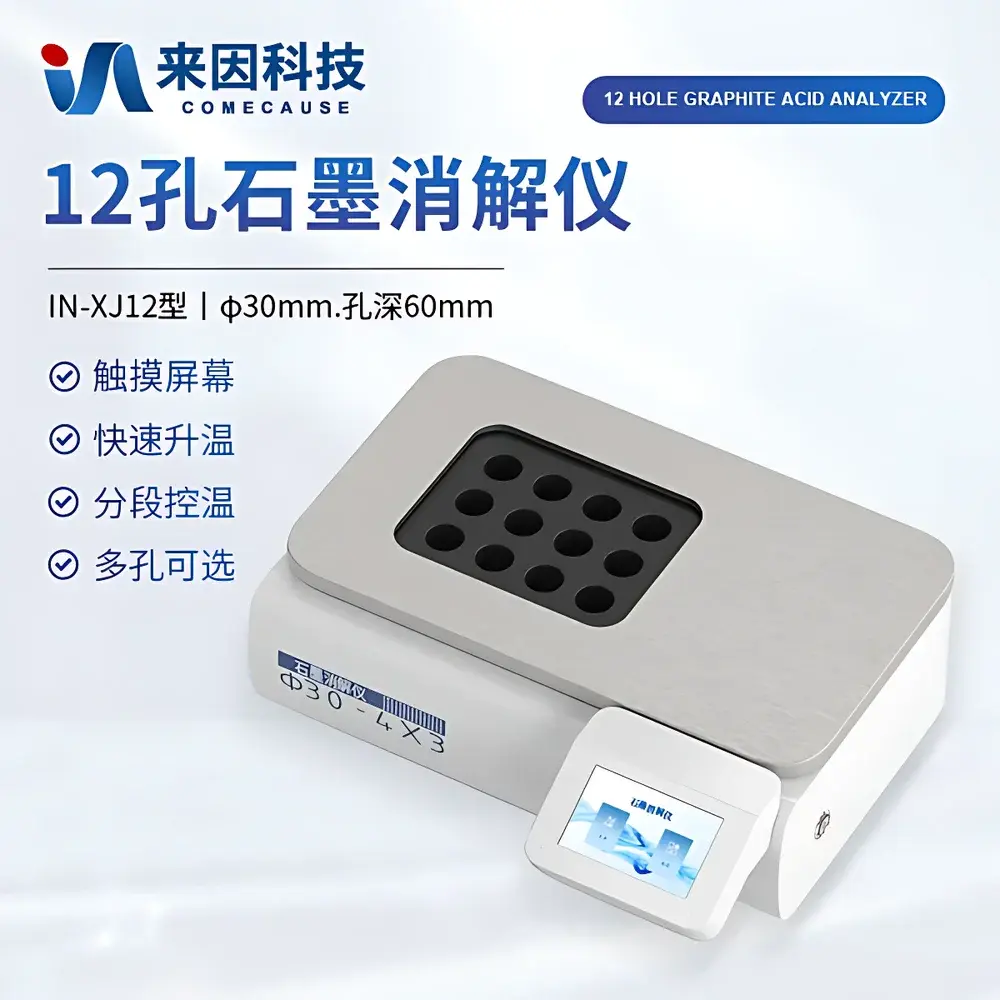
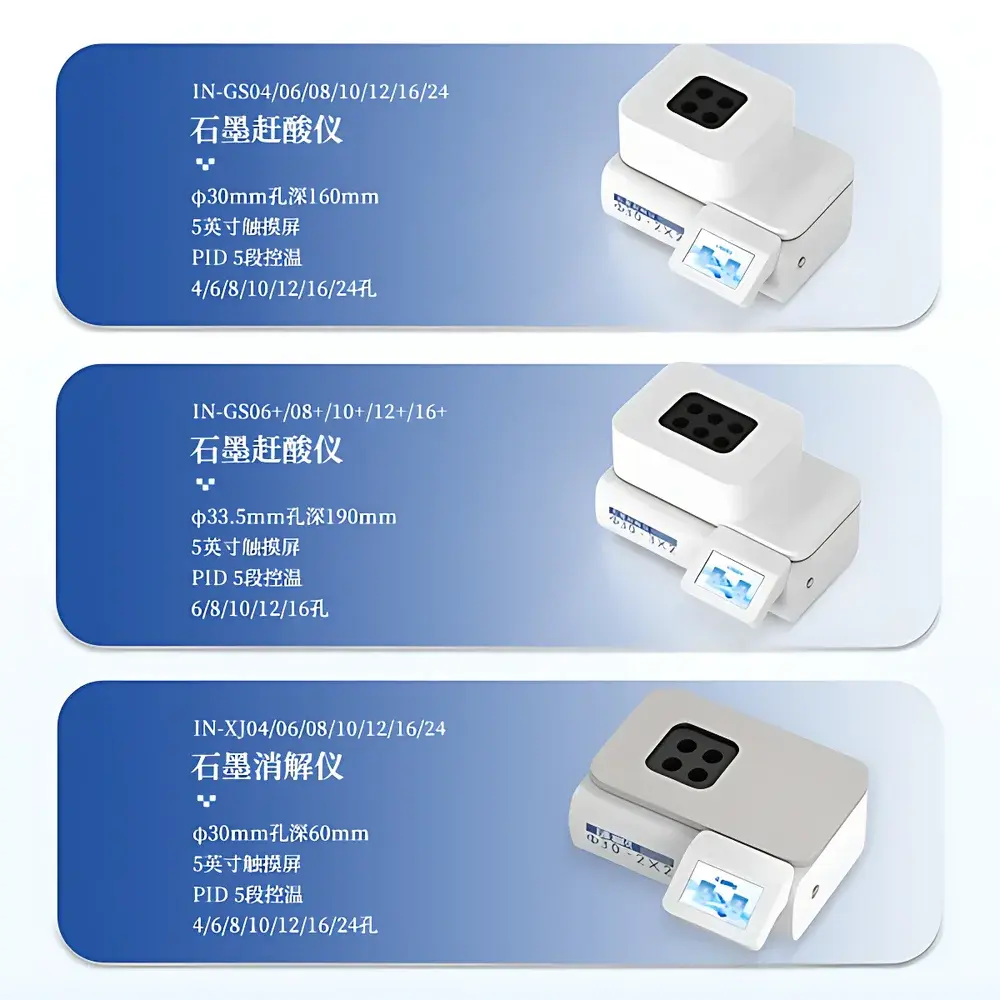
COMECAUSE IN-XJ12 Intelligent Graphite Block Digestion System
| Brand | COMECAUSE |
|---|---|
| Origin | Shandong, China |
| Manufacturer Type | Direct Manufacturer |
| Country of Origin | China |
| Model | IN-XJ12 |
| Heating Block Material | High-Purity Graphite |
| Number of Digestion Wells | 12 (4×3 array) |
| Well Diameter | 30 mm |
| Well Depth | 60 mm |
| Temperature Range | Ambient to 450 °C |
| Temperature Accuracy | ±1 °C |
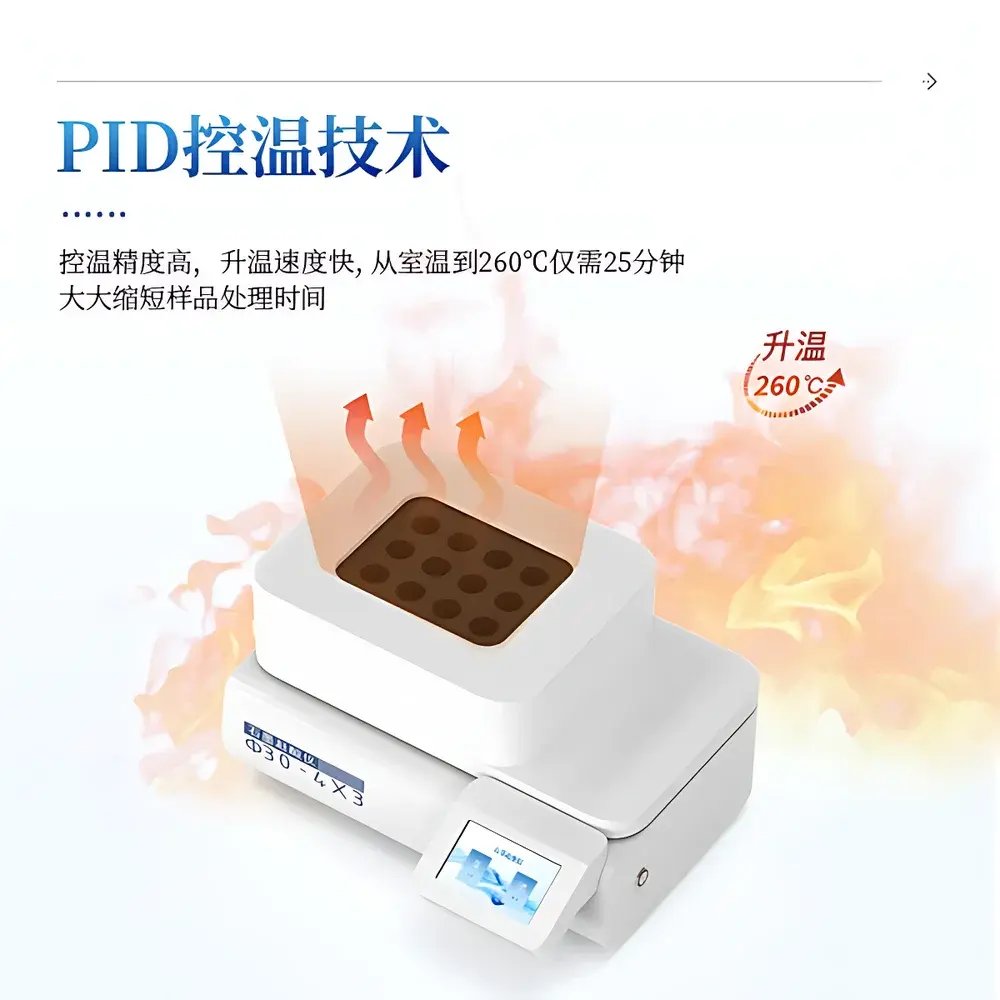
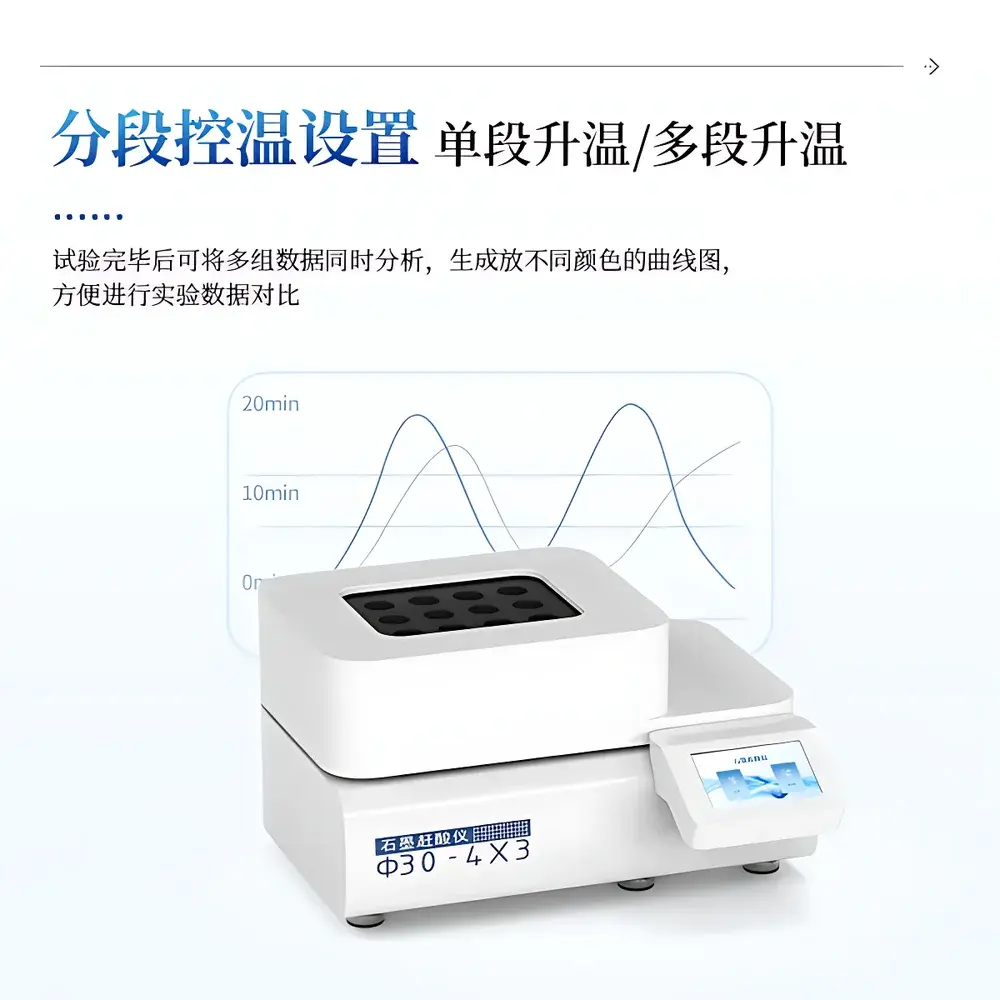
| Temperature Control | PID-based, 1–5 programmable ramp segments |
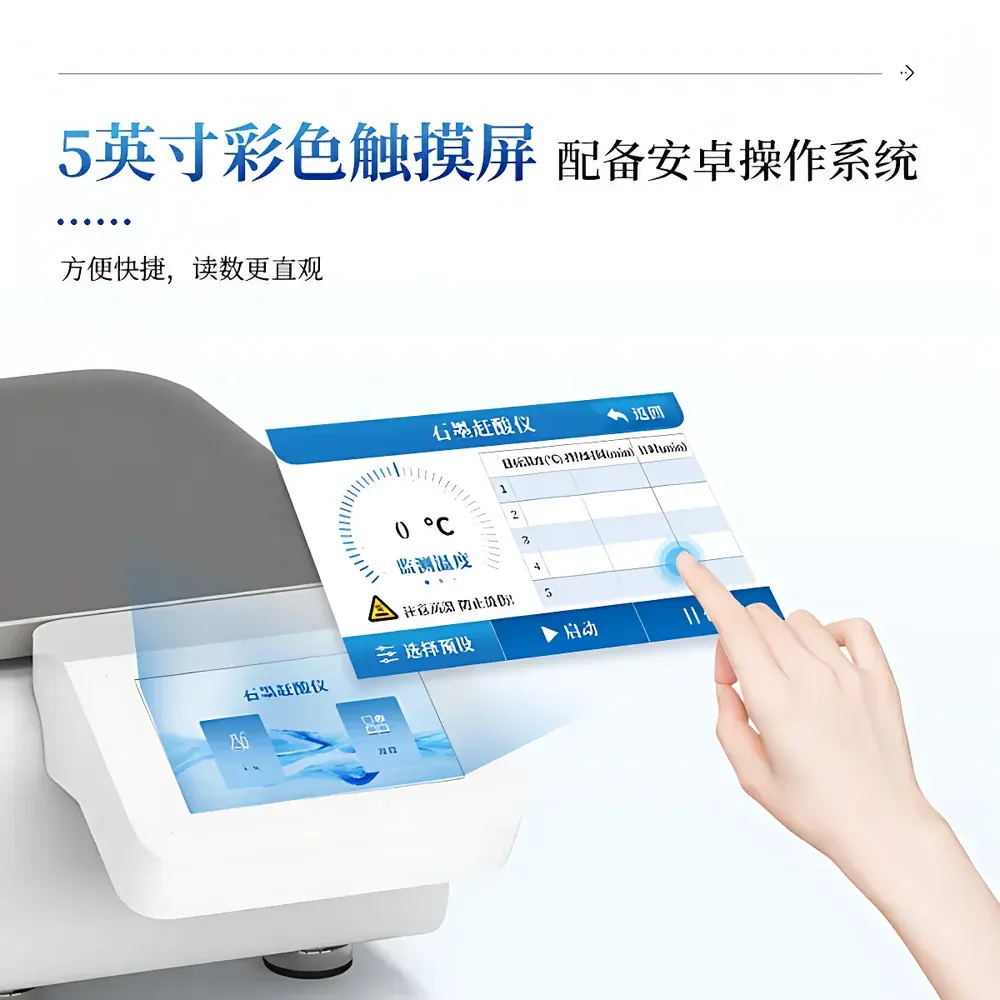
| Display | 5-inch color capacitive touchscreen (Android OS) |
| Power Supply | AC 220 V, 50 ±1 Hz |
| Rated Power | 1620 W |
| Dimensions (W×D×H) | 477 × 415 × 168 mm |
| Weight | 17.9 kg |
Overview
The COMECAUSE IN-XJ12 Intelligent Graphite Block Digestion System is a precision-engineered laboratory instrument designed for reproducible, high-throughput wet digestion and thermal extraction of solid and semi-solid samples. It operates on the principle of conductive heating via a monolithic high-purity graphite block, which provides uniform thermal mass distribution and minimizes inter-well temperature gradients—critical for analytical integrity in multi-sample workflows. Unlike conventional hot plates or ceramic heating mantles, the IN-XJ12 employs infrared radiation transfer through quartz-sheathed heating elements, enabling rapid thermal response and stable setpoint maintenance across the full operating range (ambient to 450 °C). Its architecture is optimized for compliance with standardized digestion protocols such as EPA Method 3050B, ISO 11466, and GB/T 5009.11–2014, supporting trace metal analysis by ICP-OES, ICP-MS, AAS, and HG-AFS. The system integrates safety-critical hardware features—including overtemperature cutoff, ground-fault circuit interruption, and corrosion-resistant surface coating—ensuring operational reliability in demanding routine QC and regulatory environments.
Key Features
- Monolithic high-purity graphite heating block engineered for minimal inter-well temperature deviation (<±1.5 °C at 200 °C), ensuring high parallelism in batch digestion.
- 5-inch capacitive color touchscreen interface running a dedicated Android-based firmware, supporting intuitive program creation, real-time temperature graphing, and user-accessible audit logs.
- Multi-segment PID temperature programming (1–5 ramps per method), enabling precise control over heating rate, dwell time, and cooling profiles—essential for optimizing digestion efficiency of recalcitrant matrices (e.g., silicates, organic-rich soils).
- Optimized well geometry: 12 wells arranged in a 4×3 configuration, each with 30 mm diameter and 60 mm depth—compatible with standard 50 mL and 100 mL PTFE, quartz, or borosilicate digestion tubes without adapter requirements.
- Robust electrical design: 1620 W rated power output with integrated 10 A slow-blow fuse (6×30 mm), CE-compliant insulation, and reinforced grounding for long-term stability under continuous operation.
Sample Compatibility & Compliance
The IN-XJ12 accommodates a broad spectrum of sample types requiring acid-mediated decomposition, including soil, sediment, sludge, plant tissue, animal tissue, food composites, fertilizers, geological powders, and polymer ash residues. Its thermal profile supports HNO₃/HCl/HF/H₂O₂-based digestion systems and low-acid thermal leaching procedures (e.g., TCLP, SPLP). Instrument design conforms to general laboratory safety standards (IEC 61010-1) and incorporates features aligned with GLP/GMP documentation requirements—such as timestamped method execution records and non-volatile parameter storage. While not pre-certified to FDA 21 CFR Part 11, its firmware architecture allows integration into validated workflows where electronic signature and audit trail functionality are implemented at the LIMS or data management layer.
Software & Data Management
The embedded Android OS provides local method storage for up to 100 user-defined digestion protocols, each configurable with segment-specific ramp rates (°C/min), target temperatures, hold durations (min), and auto-cool-to-ambient settings. All executed runs generate a timestamped log file (CSV exportable via USB port) containing start/end times, actual vs. setpoint temperature traces sampled at 10-second intervals, and fault event codes (e.g., “OT1” for overtemperature alert). No cloud connectivity or remote access is enabled by default—data remains fully on-device unless manually exported, supporting air-gapped lab environments and institutional IT security policies.
Applications
- Environmental laboratories performing heavy metal quantification (As, Cd, Cr, Cu, Ni, Pb, Zn) in EPA-regulated matrices.
- Food safety testing labs conducting elemental screening per EU Commission Regulation (EC) No 1881/2006 or China’s GB 2762–2022 limits.
- Agricultural research institutes analyzing nutrient cations (K⁺, Ca²⁺, Mg²⁺, Fe²⁺/³⁺) and micronutrient bioavailability in fertilizers and feedstuffs.
- Geochemical core facilities preparing rock digests for multi-element ICP-MS fingerprinting and isotopic ratio analysis.
- University teaching labs demonstrating standardized digestion theory, thermal kinetics, and QA/QC principles in analytical chemistry curricula.
FAQ
What materials are compatible with the digestion wells?
Standard 50 mL and 100 mL digestion vessels made of PTFE (Teflon™), quartz, borosilicate glass, or acid-washed polypropylene may be used. Avoid PVC, polycarbonate, or unlined metal containers.
Is the instrument suitable for hydrofluoric acid (HF) digestion?
Yes—when used with HF-compatible vessels (e.g., PTFE or quartz) and appropriate fume hood ventilation. The graphite block surface is chemically inert to concentrated mineral acids, including HF, under controlled temperature conditions.
Can digestion methods be transferred between instruments?
Method parameters (ramp rates, setpoints, dwell times) are portable across IN-XJ12 units. However, due to minor unit-to-unit thermal inertia differences, empirical validation is recommended when transferring critical AOAC or ISO methods.
Does the system support external data logging or SCADA integration?
No native RS-232, Ethernet, or Modbus interface is provided. Data export is limited to USB-host CSV files. Third-party analog signal tapping (0–5 V temperature output) is not supported.
What maintenance is required for long-term accuracy?
Annual verification of temperature calibration using a NIST-traceable thermocouple probe inserted into an empty well is advised. Graphite surface cleaning with dilute nitric acid followed by DI water rinse prevents residue buildup affecting thermal contact.



