
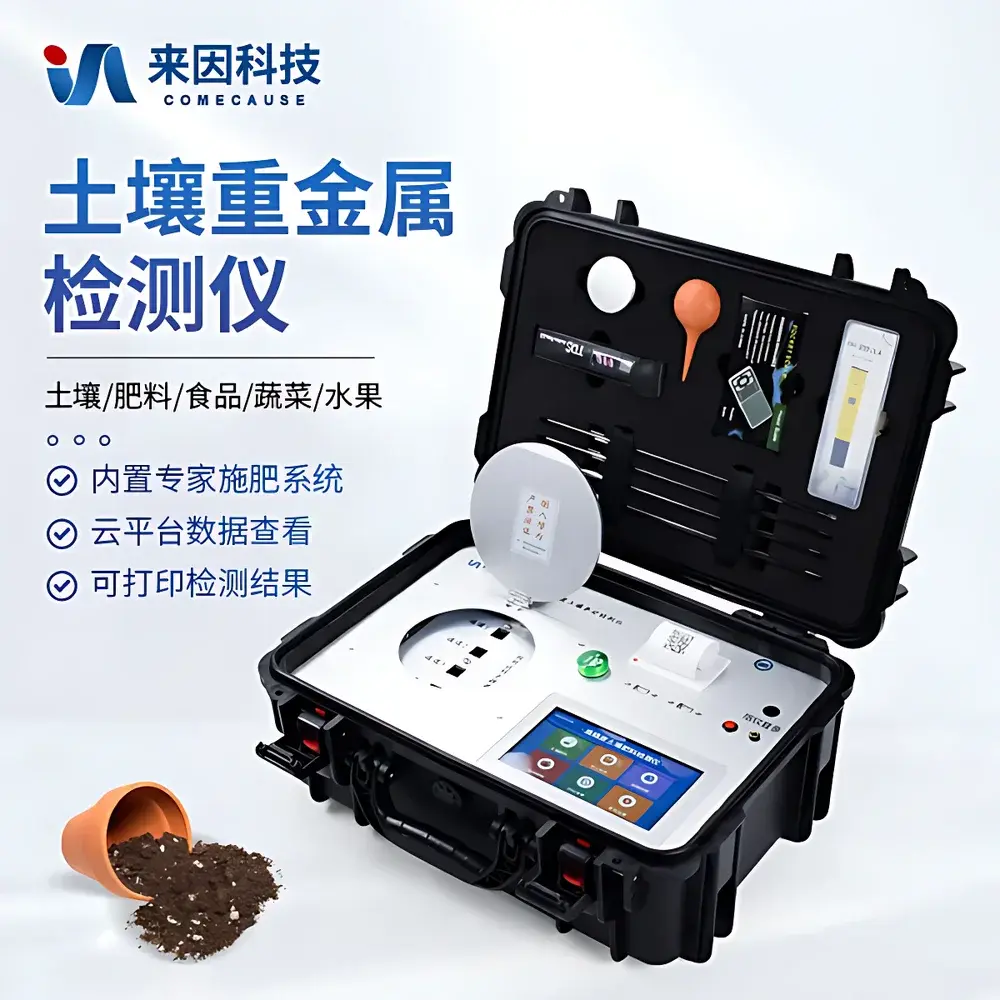
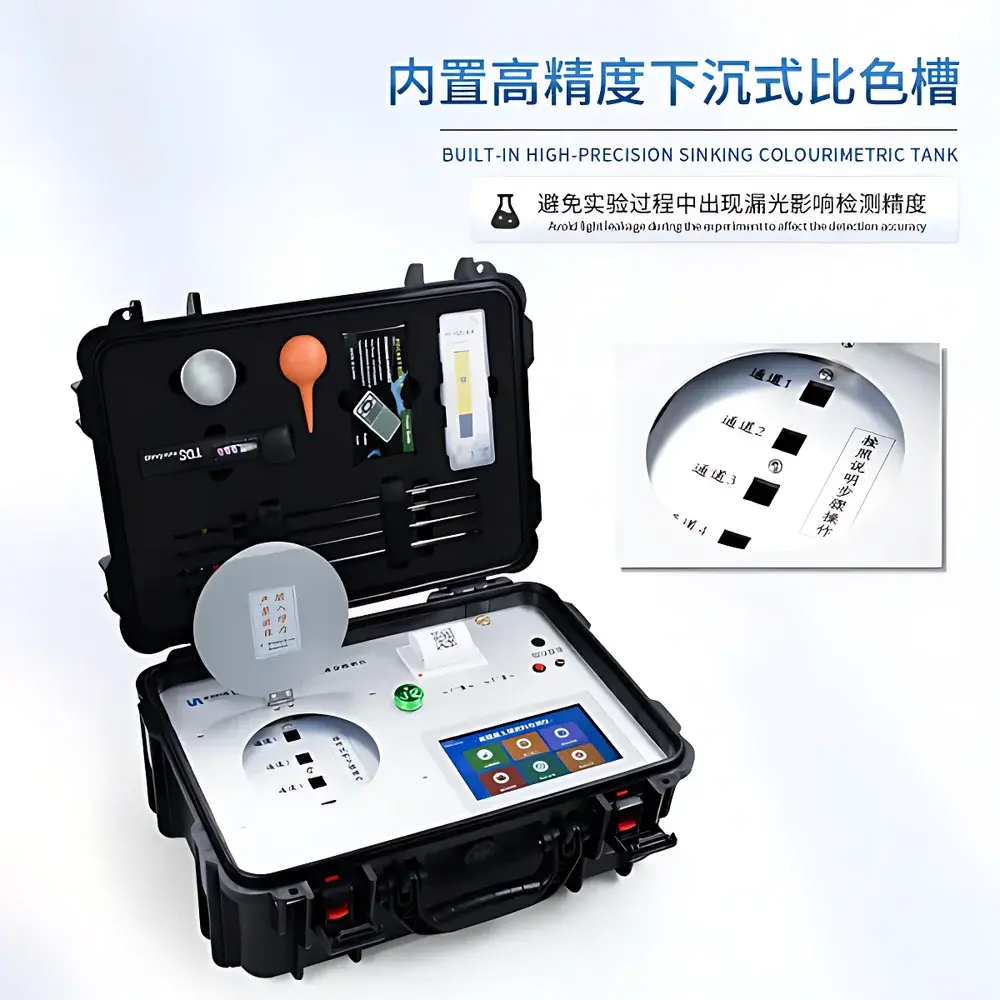
COMECAUSE IN-ZS300 Portable Soil Heavy Metal Analyzer with Integrated Colorimetric Detection System
| Brand | COMECAUSE |
|---|---|
| Model | IN-ZS300 |
| Origin | Shandong, China |
| Manufacturer Type | Direct Manufacturer |
| Detection Principle | Multi-Wavelength Reflectance-Based Colorimetry (4-channel fixed optical path) |
| Target Elements | Pb, As, Cr, Cd, Hg, Ni, Al, F, Ti, Se, Fe, Zn, Mn, Cu |
| Sample Matrix | Soil, Fertilizer, Food, Vegetables, Fruits |
| Analysis Time (Full Workflow) | ~60 min for Pb/As/Cr/Cd/Hg panel (incl. extraction & reagent prep) |
| Power Supply | AC 220 V ±10% / DC 12 V + 5 V (4800 mAh Li-ion battery, ≥10 h runtime) |
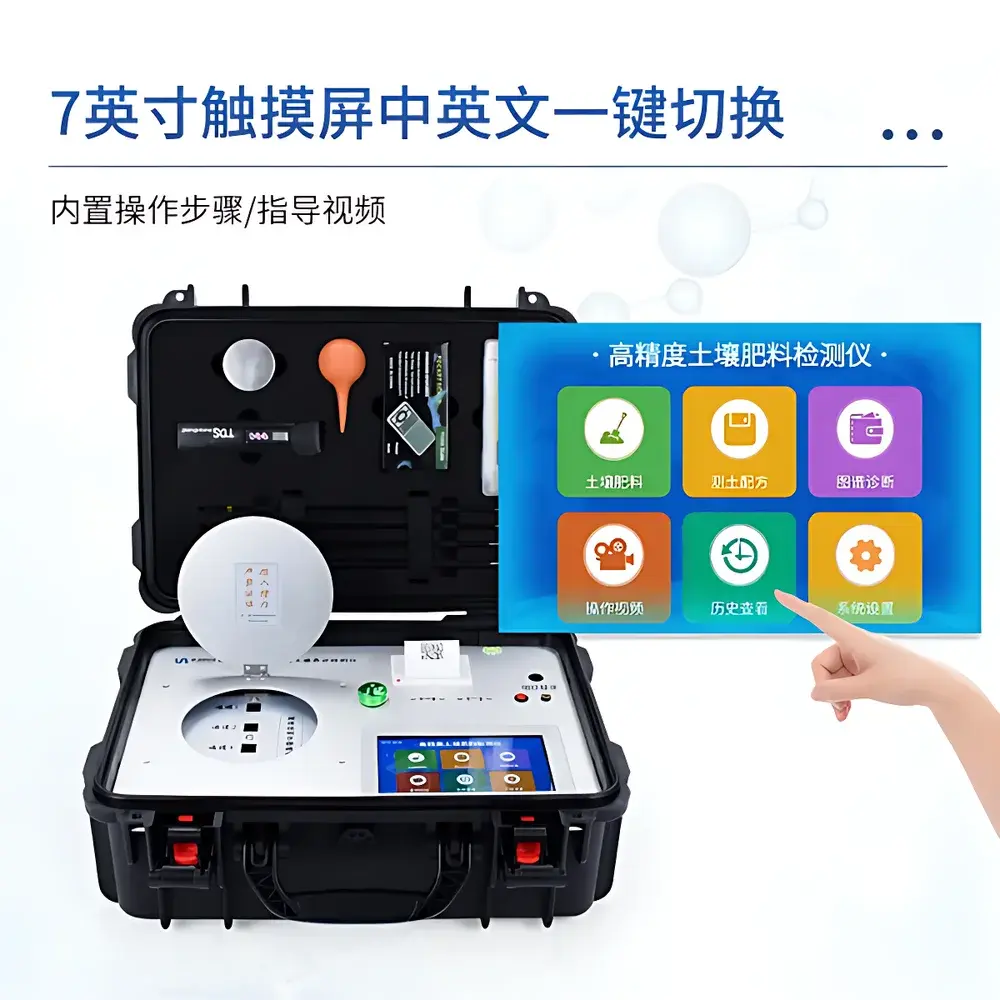
| Display | 7.0" TFT-LCD, 1024×600 resolution, dual-language UI (EN/CN) |
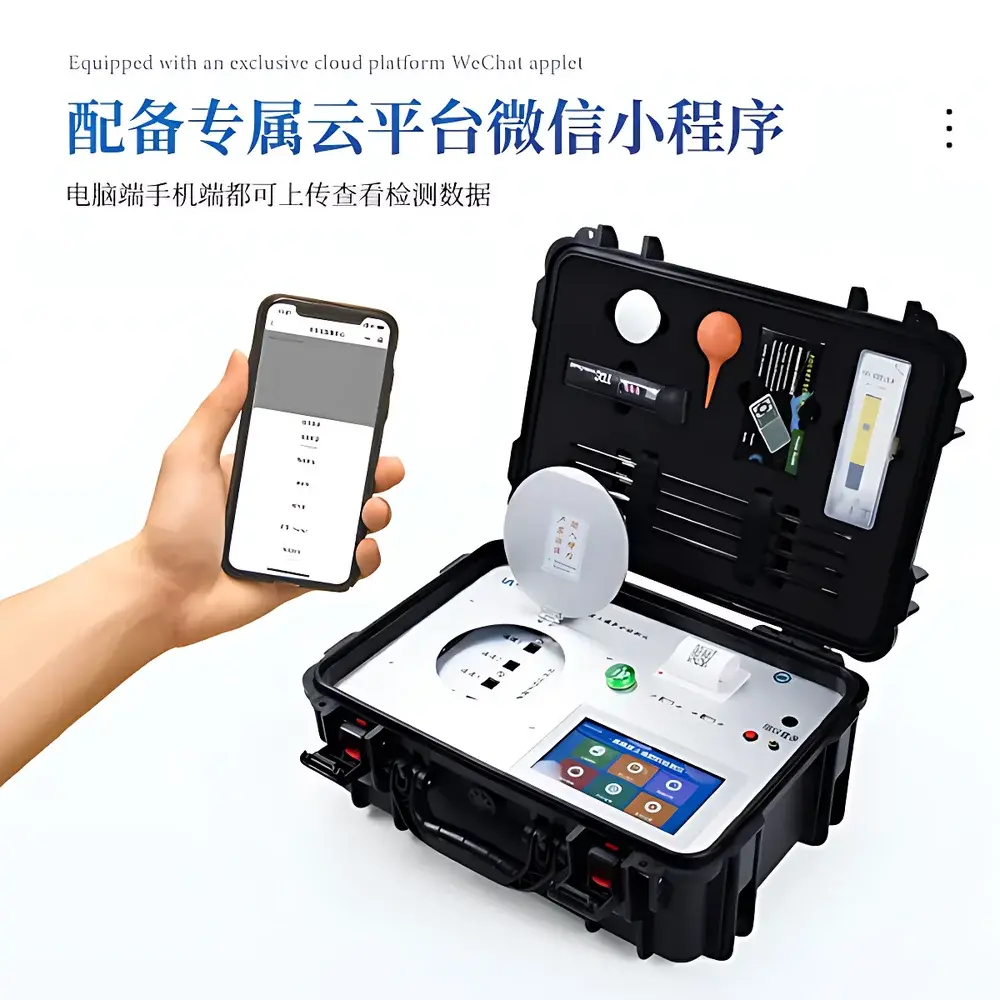
| Data Connectivity | Wi-Fi, USB ×2, thermal printer, GPS geotagging, cloud upload to dedicated agricultural data platform |
| Compliance | IP65 ingress protection, CE-marked electrical safety, software registered under China Copyright Protection Center (No. 2023SRXXXXXX) |
| Operating System | Android 5.1, quad-core CPU ≥1.8 GHz, 16 GB internal storage |
| Optical Sources | 4 stabilized LEDs (680±2 nm red, 420±2 nm blue, 510±2 nm green, 590±4 nm orange), >100,000 h lifetime |
| Photometric Stability | Drift ≤0.3% (transmittance) within 1 h |
| Dimensions | 470 × 340 × 210 mm (L×W×H) |
Overview
The COMECAUSE IN-ZS300 is a field-deployable, multi-element soil heavy metal analyzer engineered for rapid, on-site quantification of priority toxic elements—including Pb, As, Cd, Cr, and Hg—in environmental and agricultural matrices. Unlike laboratory-based atomic absorption spectroscopy (AAS) or inductively coupled plasma mass spectrometry (ICP-MS), the IN-ZS300 employs a validated colorimetric detection architecture with four independent, fixed-wavelength optical channels. This design leverages standardized wet-chemical extraction protocols followed by chromogenic reactions whose absorbance is measured at precisely calibrated wavelengths (420 nm, 510 nm, 590 nm, and 680 nm). The system does not perform elemental speciation or direct atomic detection; rather, it delivers quantitative results traceable to established colorimetric reference methods (e.g., APHA Standard Methods 3111B for arsenic, EPA Method 7062 for lead). Its operational envelope is optimized for regulatory screening—meeting threshold-based decision criteria under national soil quality standards (e.g., China’s GB 15618-2018, EU Soil Framework Directive Annex I screening values)—rather than ultra-trace research-grade quantification.
Key Features
- Integrated Field Workflow: On-device procedural guidance—including step-by-step extraction, reagent addition, incubation timing, and measurement sequencing—eliminates reliance on paper manuals and reduces operator-dependent variability.
- Dual-Mode Authentication: Role-based access control via password and fingerprint login ensures audit-ready data integrity and supports multi-user deployment across monitoring teams.
- Georeferenced Data Capture: Built-in GPS module embeds WGS84 coordinates into every record, enabling spatial mapping of contamination hotspots and compliance with ISO 18400-101 (field sampling documentation).
- Cloud-Enabled Data Governance: Wi-Fi-enabled upload to a secure, tenant-isolated agricultural data platform provides encrypted storage, time-stamped revision history, and exportable CSV/Excel reports—fully compatible with GLP-aligned data retention requirements.
- Robust Optical Architecture: Four solid-state LED sources and permanently aligned, recessed cuvette chambers minimize photometric drift and eliminate mechanical wear—critical for reproducible measurements in variable ambient light and temperature conditions (operating range: 0–45 °C).
- Power Resilience: Dual-mode power (AC adapter + rechargeable Li-ion battery) with real-time voltage monitoring and auto-save upon power loss ensures uninterrupted operation during extended field campaigns.
Sample Compatibility & Compliance
The IN-ZS300 is validated for use with air-dried, sieved (<2 mm) soil samples subjected to standardized acid digestion (e.g., HNO₃–HCl mixture per ISO 11466) or rapid leaching protocols (e.g., EDTA-acetate extraction for bioavailable fractions). It also supports analysis of fertilizers, vegetable homogenates, fruit pulps, and irrigation water—provided matrix interferences are mitigated via dilution or masking agents per method instructions. All onboard assays comply with Chinese national standardization guidelines for field screening instruments (JJF 1572-2016) and align with performance thresholds defined in US EPA Region 10 Field Screening Guidance (2021). While not certified for regulatory enforcement under ISO/IEC 17025, its documented repeatability (≤0.03% RSD) and linearity (R² ≥0.999 over working range) support Tier 1 site assessment and triage applications under ASTM D6842 and ISO 17294-2 frameworks.
Software & Data Management
Running Android 5.1 on a dedicated quad-core embedded platform, the IN-ZS300’s firmware includes full audit trail functionality: each measurement logs user ID, timestamp (auto-synchronized via NTP over Wi-Fi), GPS coordinates, instrument serial number, and raw absorbance values. Data exports retain cryptographic hash signatures to prevent post-acquisition tampering—supporting basic 21 CFR Part 11 readiness when deployed in GxP-aligned workflows. The companion cloud portal enables role-based dashboards, automated PDF report generation, and integration with third-party GIS tools via RESTful API. Historical datasets are retained for ≥5 years per default policy, with optional encryption-at-rest enabled for sensitive deployments. Firmware updates are delivered OTA with version-controlled release notes and SHA-256 checksum verification.
Applications
- Regulatory Field Screening: Rapid prioritization of contaminated sites prior to confirmatory lab analysis—reducing analytical cost by up to 70% in large-scale soil surveys.
- Agricultural Risk Assessment: Mapping Cd and As accumulation in paddy soils or Pb hotspots near orchards to inform crop selection and remediation scheduling per FAO/WHO Joint Expert Committee on Food Additives (JECFA) tolerable intake thresholds.
- Industrial Site Monitoring: Pre- and post-remediation verification at brownfield locations, especially where mobility of Cr(VI) or leachable Zn must be tracked against local discharge limits.
- Education & Capacity Building: Used in university environmental science labs and extension training programs to demonstrate principles of chemical speciation, extraction efficiency, and method validation—without requiring fume hoods or certified lab infrastructure.
- Supply Chain Due Diligence: Supporting corporate ESG reporting by enabling first-tier suppliers to document baseline soil health metrics prior to contract award in agri-input manufacturing or food processing.
FAQ
Does the IN-ZS300 require annual calibration by an accredited lab?
No. The instrument uses factory-calibrated optical modules with built-in self-diagnostic routines. Users perform daily blank verification using supplied reference solutions; formal recalibration is recommended only after physical impact or exposure to extreme thermal shock (>60 °C).
Can it quantify total vs. bioavailable metal fractions?
The IN-ZS300 measures extractable concentrations based on the selected digestion or leaching protocol loaded into its workflow engine. Total metal content requires full aqua regia digestion; bioavailable fractions require weak-acid or chelant-based extractions—all supported via configurable method templates.
Is the cloud platform compliant with GDPR or CCPA?
Data residency is configurable per deployment: EU customers may select Frankfurt-hosted instances with ISO 27001-certified infrastructure and DPA execution; all data transfers employ TLS 1.2+ encryption and pseudonymized identifiers.
What maintenance is required beyond routine cleaning?
LED intensity and detector response are monitored continuously; the system alerts users if photometric deviation exceeds ±2% of baseline. No consumable optics or lamps require replacement within the first 5 years of normal use.
How does it handle high-organic-matter soils?
The onboard method library includes modified digestion protocols with H₂O₂ pretreatment to oxidize humic substances, reducing color interference in As and Cr assays—validated against NIST SRM 2710a (Montana Soil).
Related Products







