
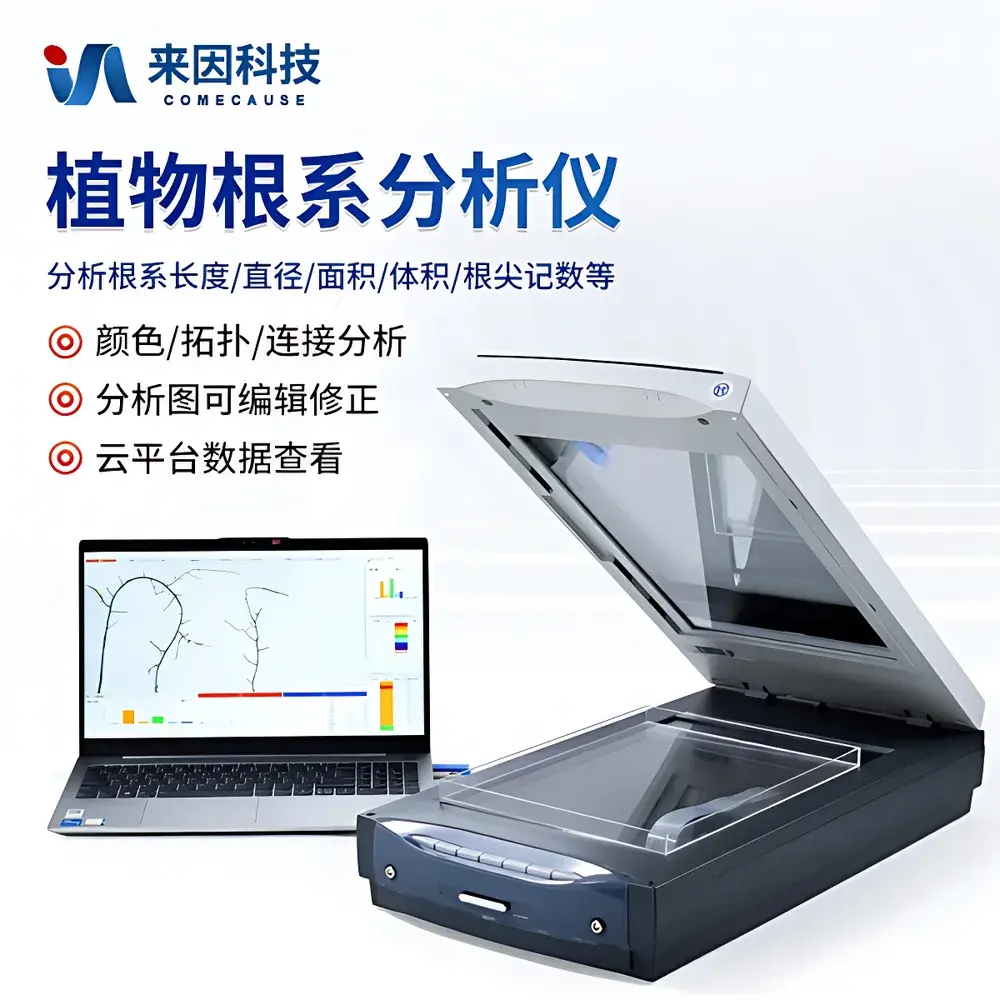
COMECAUSE IN_GX02 Plant Root Scanning & Morphometric Analysis System
| Brand | COMECAUSE |
|---|---|
| Origin | Shandong, China |
| Manufacturer Type | Direct Manufacturer |
| Model | IN_GX02 |
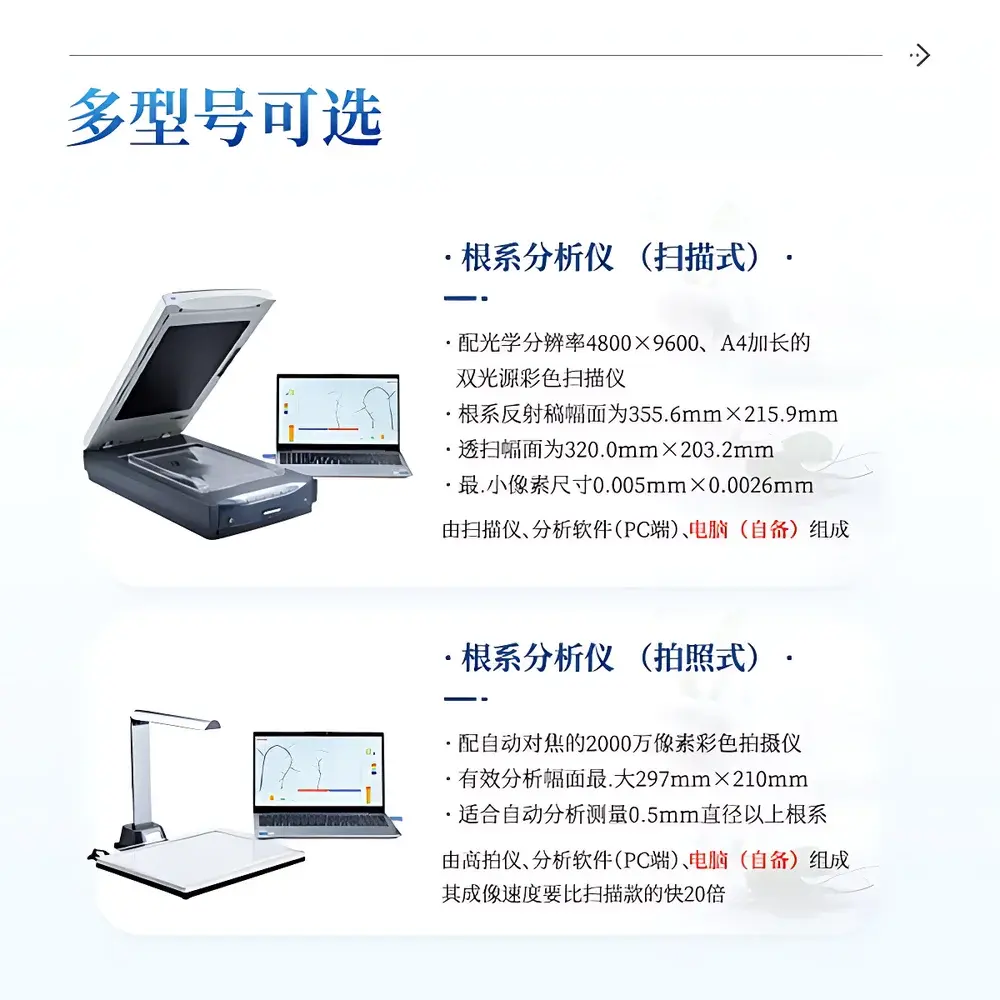
| Optical Resolution | 4800 × 9600 dpi (A4+ extended) |
| Scan Area (Reflective) | 355.6 mm × 215.9 mm |
| Scan Area (Transmissive) | 320.0 mm × 203.2 mm |
| Minimum Pixel Size | 0.005 mm × 0.0026 mm |
| Light Source | Dual Cold Cathode Fluorescent Lamp (CCFL) Illumination System |
| Image Formats Supported | TIFF, JPEG |
| Software Interface | USB 2.0, Windows 10 Professional/Ultimate (64-bit), Dual-Language (English/Chinese) |
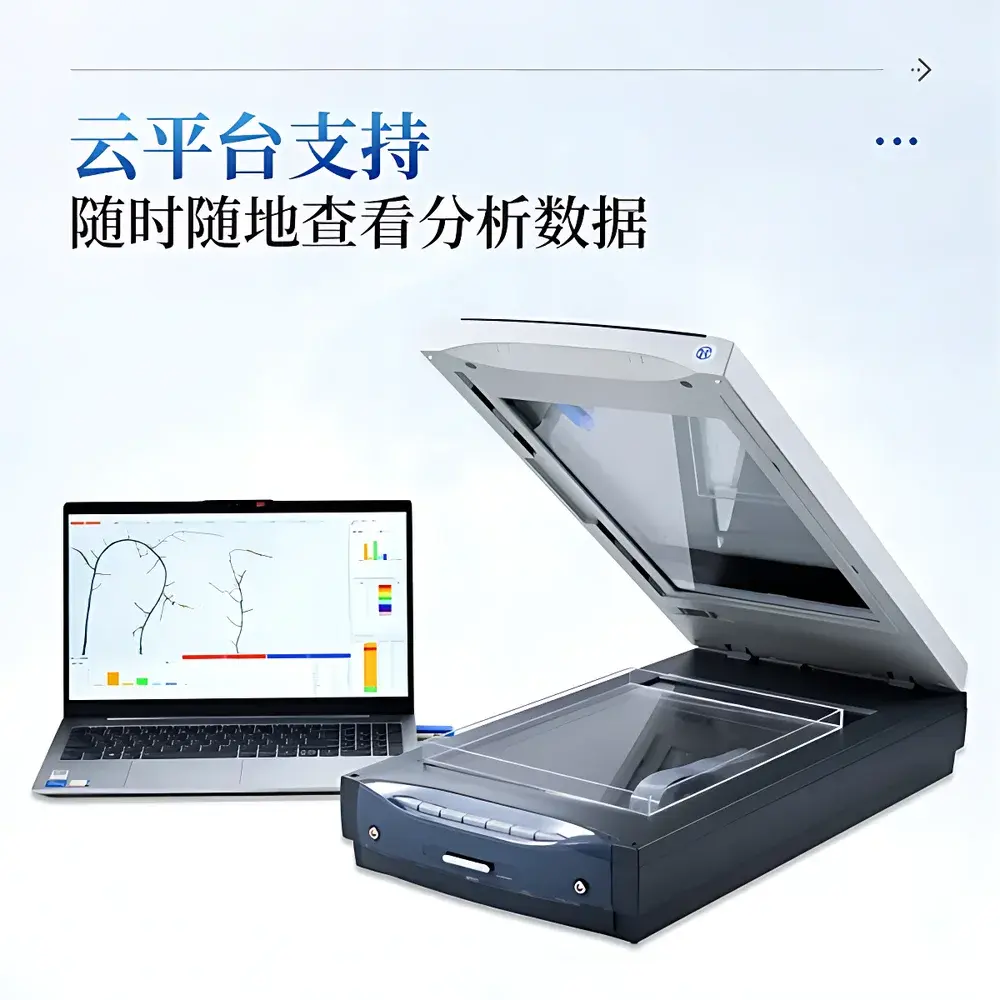
| Cloud Data Sync Capability | Yes |
| Compliance | ASTM D7250 (for image-based dimensional analysis), ISO/IEC 17025-aligned data traceability architecture |
Overview
The COMECAUSE IN_GX02 Plant Root Scanning & Morphometric Analysis System is a dedicated benchtop instrumentation platform engineered for high-fidelity, non-destructive morphometric quantification of excised or rhizobox-grown plant root systems. It operates on the principle of high-resolution optical imaging combined with deterministic pixel-based segmentation and topological graph reconstruction—distinct from statistical sampling or destructive gravimetric methods. The system integrates a custom A4+ dual-illumination flatbed scanner with calibrated CCFL light sources positioned both beneath the scanning platen and within the hinged lid, eliminating shadow artifacts and ensuring uniform illumination across translucent root trays. This optical architecture enables consistent capture of root morphology—including fine laterals, root hairs (where resolvable), and nodule structures—at sub-5 µm effective pixel resolution. Designed for reproducible phenotyping in controlled-environment studies, greenhouse trials, and soil-core root extraction workflows, the IN_GX02 supports quantitative root architecture analysis compliant with FAO and CGIAR root phenotyping guidelines.
Key Features
- Dual-source CCFL illumination system with built-in calibration zones for photometric consistency across scanning sessions
- A4+ extended scan area (355.6 × 215.9 mm reflective; 320.0 × 203.2 mm transmissive) optimized for intact root systems up to 30 cm in length
- Optical resolution of 4800 × 9600 dpi, delivering minimum resolvable features ≤5 µm in-plane and ≤2.6 µm along scan direction
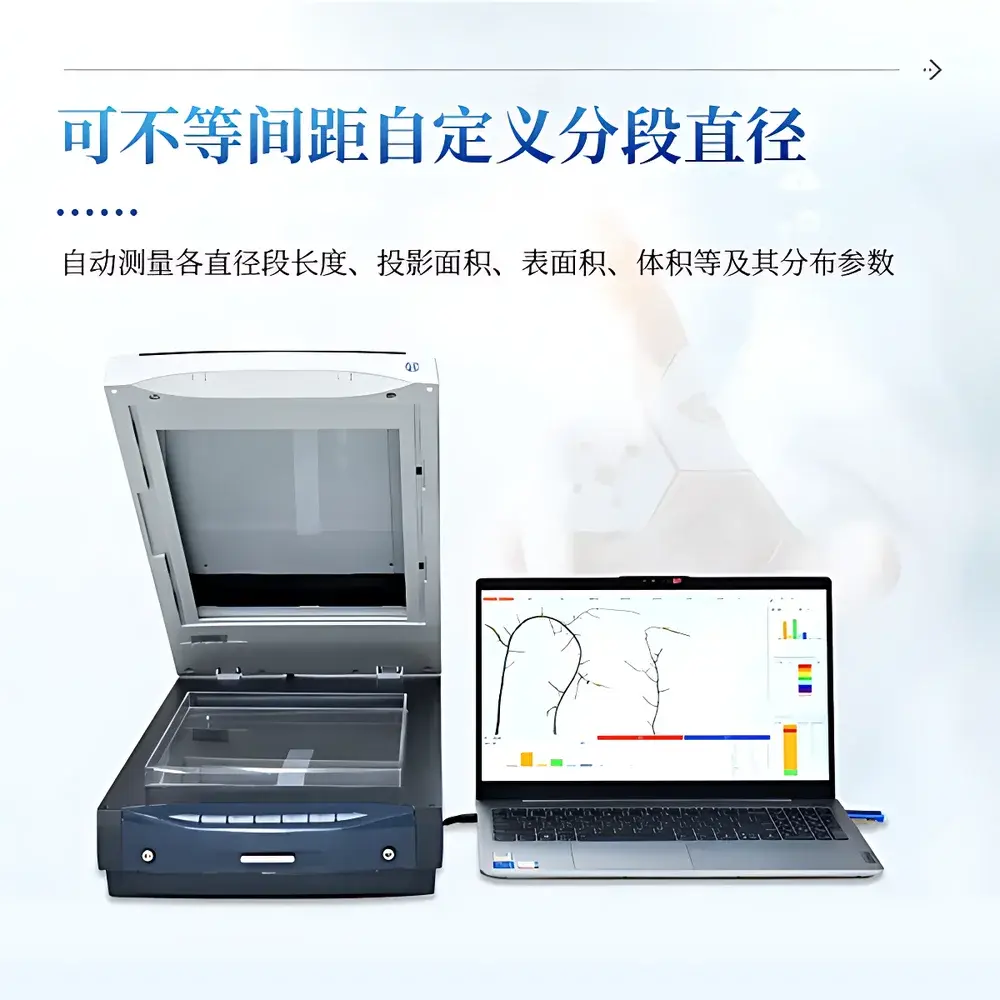
- Three high-transparency, chemically inert root imaging trays included—designed to minimize refraction distortion and support aqueous or gel-based root mounting
- Deterministic image analysis engine: no stochastic thresholding; all parameters derived via connected-component labeling, skeletonization, and Euclidean distance transform
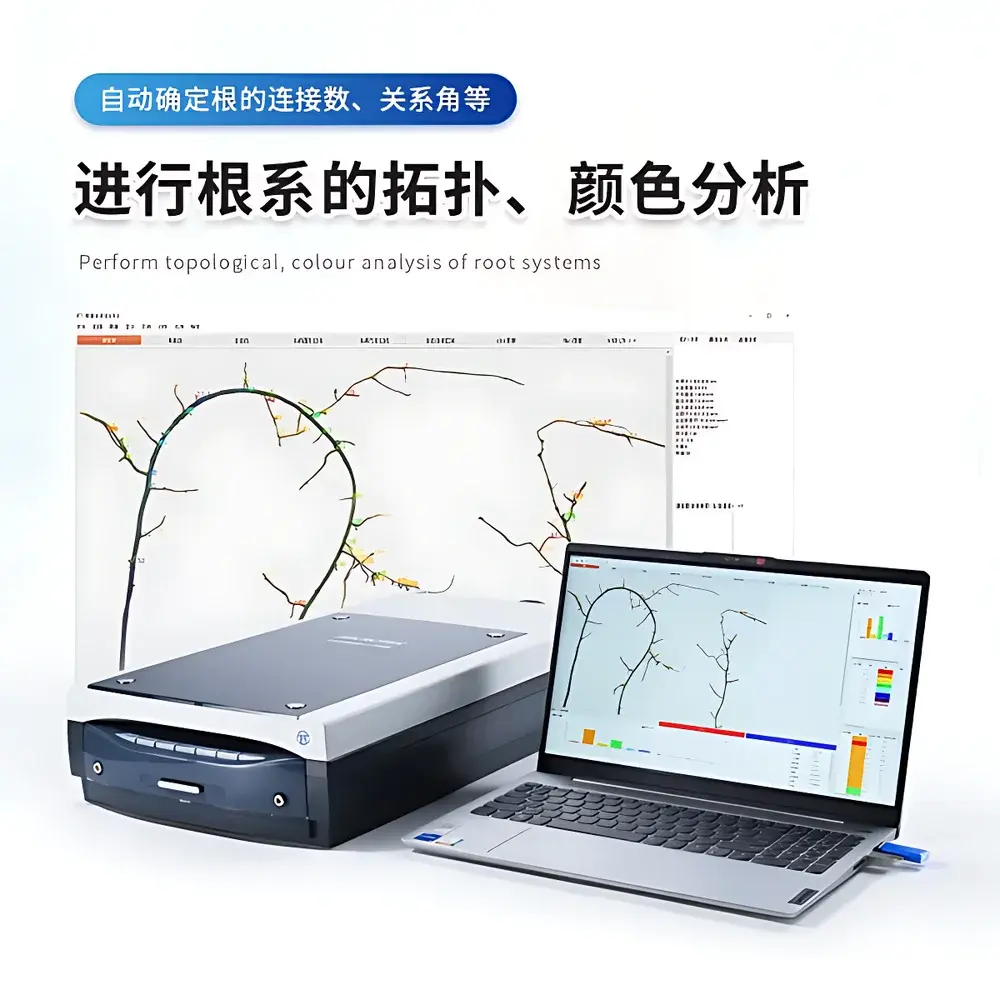
- Full morphometric suite: total root length, diameter distribution (binned or user-defined non-uniform intervals), volume estimation via cylindrical approximation, fractal dimension (box-counting method), topology metrics (linkage count, branching angle, root order assignment)
- Color-based segmentation module enabling differential quantification of root segments by spectral signature—e.g., distinguishing nitrogen-fixing nodules, senescing roots, or pathogen-infected zones
- Automated gravimetric biomass proxy calculation using cross-sectional area integration and species-specific density coefficients
- Geometric orientation analysis: gravitropic angle (root tip deviation from vertical), horizontal projection angle, primary root axis isolation
Sample Compatibility & Compliance
The IN_GX02 accommodates washed root systems from hydroponic, agar, sand, or soil-grown plants—including monocots (e.g., rice, wheat), dicots (e.g., Arabidopsis, soybean, maize), and perennial woody species with excised root segments ≤30 cm. It supports both reflective scanning (for surface-mounted roots on trays) and transmissive scanning (for roots embedded in transparent gels or water layers). All image acquisition and analysis workflows are structured to meet GLP-aligned documentation requirements: audit trails record operator ID, timestamp, instrument configuration, software version, and raw image hash. Exported datasets include metadata headers compliant with MIAPPE v1.1 (Minimum Information About a Plant Phenotyping Experiment) and support downstream ingestion into BreedBase or BrAPI-compliant databases. While not FDA-cleared, the system’s deterministic algorithm architecture aligns with ISO/IEC 17025 principles for measurement uncertainty management in accredited testing laboratories.
Software & Data Management
The proprietary analysis software runs natively on Windows 10 (64-bit) and requires hardware authentication via USB dongle. It supports batch processing of ≥100 images per session with automated filename parsing and result aggregation. All outputs—including annotated TIFF overlays, parameter tables, diameter histograms, fractal plots, and topological graphs—are exportable in CSV, Excel (.xlsx), and PDF formats. Raw scans and processed results synchronize automatically to a secure cloud portal (HTTPS/TLS 1.3 encrypted), enabling multi-user access control, versioned dataset archiving, and remote QC review. The software includes full audit logging per USP <1058> and FDA 21 CFR Part 11 Annex A guidance—capturing user actions, parameter edits, and manual corrections with immutable timestamps. Language switching between English and Chinese is implemented at UI level without reinstallation or configuration reset.
Applications
- Root architecture screening in breeding programs targeting drought tolerance, nutrient use efficiency, or anchorage stability
- Quantitative assessment of root responses to abiotic stressors (salinity, hypoxia, heavy metals) and biotic interactions (mycorrhizae, rhizobia, nematodes)
- Validation of 3D root growth models against empirical 2D projection data
- Standardized phenotyping for QTL mapping and GWAS studies requiring high-throughput, low-variance root trait measurements
- Educational use in plant physiology and agroecology curricula for teaching root morphology, allometry, and functional trait relationships
- Regulatory support for biofertilizer efficacy trials under OECD Test No. 208 (Terrestrial Plant Test)
FAQ
What operating system versions are officially supported?
Windows 10 Professional or Ultimate (64-bit), version 21H2 or later. Windows 11 is not validated; virtualized environments (e.g., VMware, Parallels) are unsupported.
Can the system analyze live roots in soil without washing?
No. The IN_GX02 requires excised, cleaned root systems placed on transparent trays. For in situ soil-root imaging, complementary X-ray CT or minirhizotron systems are recommended.
Is the fractal dimension calculation validated against reference standards?
Yes—the box-counting algorithm has been benchmarked against NIST-traceable synthetic root phantoms with known fractal dimensions (D = 1.2–1.8), achieving ±0.03 absolute error under controlled lighting and focus conditions.
Does the software support third-party plugin integration?
No. The analysis pipeline is closed-source and purpose-built for root morphology; however, exported CSV/Excel files are fully compatible with R, Python (pandas/scikit-image), and MATLAB for custom post-processing.
What is the maximum root sample thickness compatible with transmissive scanning?
Up to 8 mm when using the standard 3 mm-thick imaging trays; thicker samples require sectioning or reflective-mode acquisition to maintain focus fidelity and avoid light scattering artifacts.





