


COMECAUSE IN_HT200 Portable Soil Nutrient Analyzer with 4-Channel Colorimetric Detection
| Brand | COMECAUSE |
|---|---|
| Origin | Shandong, China |
| Manufacturer Type | Direct Manufacturer |
| Instrument Class | Portable |
| Detection Principle | Chemical Colorimetry |
| Number of Detection Channels | 4 |
| Test Parameters | Nitrogen (N), Phosphorus (P), Potassium (K), Organic Matter, pH, EC, Moisture, and 28+ additional macro/micronutrients in soil, fertilizer, water, plant tissue, and crop samples |
| Measurement Range | 0.001–9999 (unitless absorbance-derived concentration scale) |
| Repeatability | ≤0.03% (as CV, measured with potassium dichromate solution) |
Overview
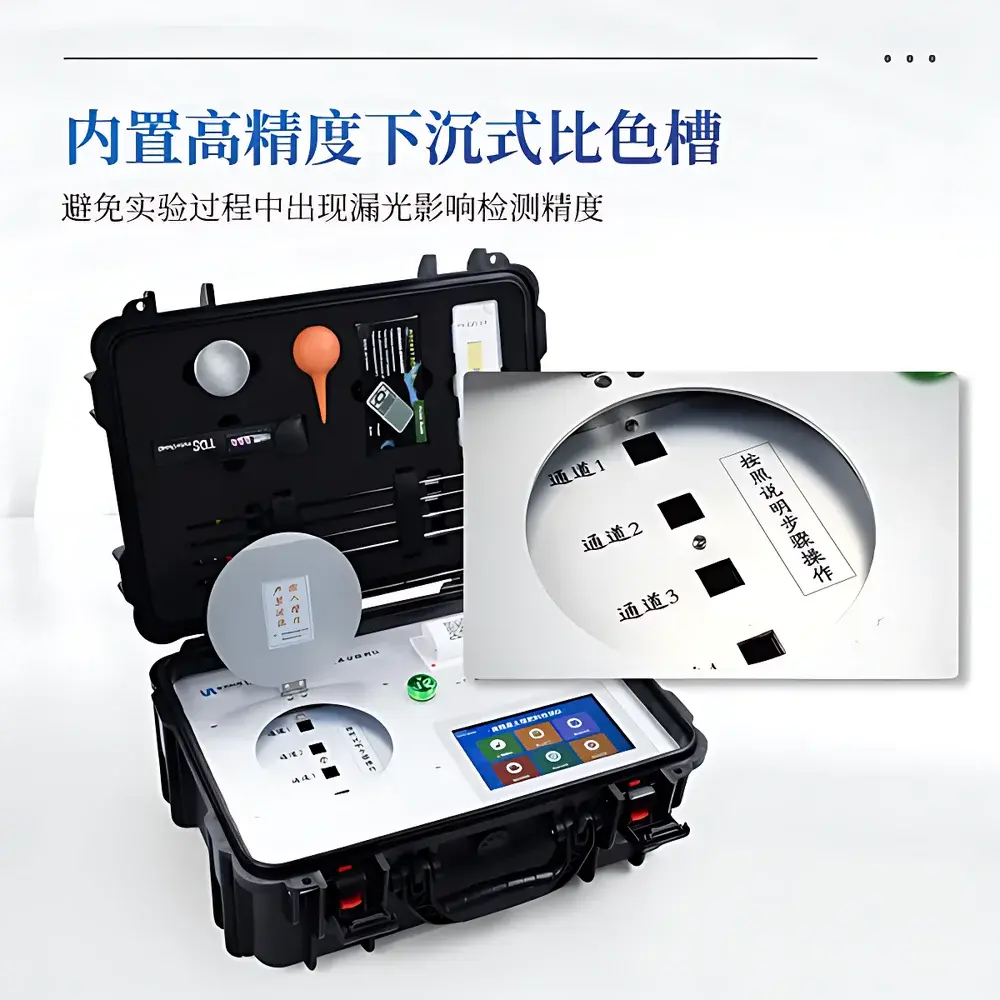
The COMECAUSE IN_HT200 is a field-deployable, multi-parameter soil nutrient analyzer engineered for precision agricultural diagnostics and environmental monitoring. It employs standardized chemical colorimetric detection—fully compliant with established agronomic protocols including ISO 11260 (soil phosphorus), ISO 14254 (soil nitrogen), and AOAC Official Methods for fertilizer analysis—to quantify key macronutrients (N, P, K), organic matter (via both Tyurin and extraction-based methods), pH, electrical conductivity (EC), moisture content, and 28+ essential elements across soil, fertilizer, irrigation water, plant tissue, and crop matrices. Unlike optical or electrochemical sensors with limited selectivity, the IN_HT200 implements discrete-wavelength photometric measurement at four precisely stabilized wavelengths (680 ±2 nm red, 420 ±2 nm blue, 510 ±2 nm green, 590 ±4 nm orange), minimizing spectral interference and ensuring analytical rigor under variable ambient light conditions. Its design prioritizes operational robustness in uncontrolled field environments—achieving IP65 ingress protection, shock-resistant housing, and drift-free performance (<0.3% transmittance drift over 60 minutes without warm-up)—making it suitable for GLP-aligned soil testing laboratories, extension service units, and certified agricultural input advisory programs.
Key Features
- Four-channel fixed-cuvette photometer with integrated solid-state optical modules—no moving parts, no channel misalignment, guaranteed wavelength-channel consistency per ASTM E308-22 calibration standards.
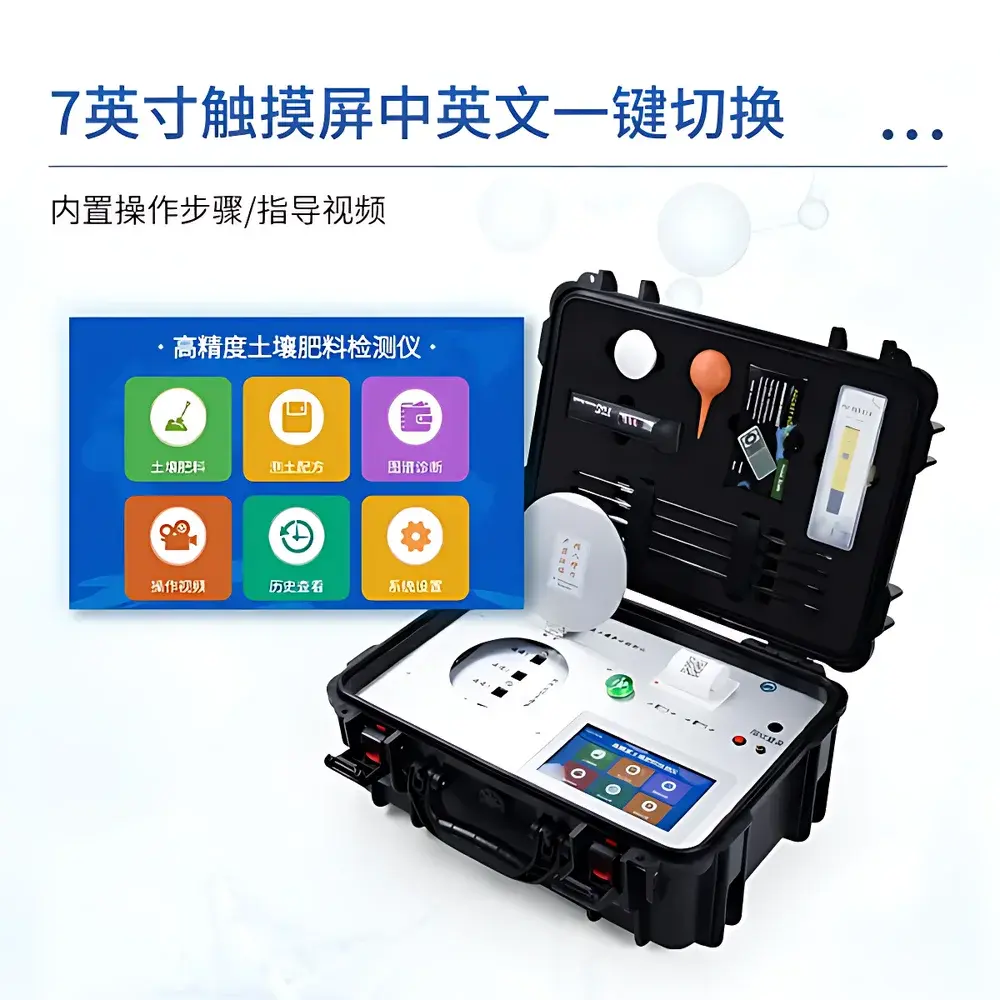
- 7.0-inch high-resolution TFT-LCD (1024 × 600) with adjustable backlight, enabling clear visualization under direct sunlight; dual-language UI (English/Chinese) with one-touch toggle.
- Android 5.1 operating system powered by quad-core ≥1.8 GHz CPU and 16 GB internal storage—certified software architecture with registered computer software copyright (China Copyright Protection Center).
- Dual-authentication security: password + fingerprint login; multi-user account management with role-based data access control for audit-ready workflows.
- Onboard GPS module with real-time latitude/longitude stamping—geotagging all measurements to support spatially referenced soil mapping and regulatory traceability.
- Integrated thermal printer (ribbon-free) outputting full metadata: test parameter, unit (e.g., mg/kg), operator ID, timestamp, channel ID, absorbance value, calculated concentration, and QR code linking to cloud record.
- Self-contained sample preparation guidance: step-by-step on-screen instructions, embedded instructional videos, and automated calibration routines eliminating manual zeroing or recalibration between samples.
- Field-optimized power system: 4800 mAh Li-ion battery supporting ≥10 hours continuous operation; AC/DC dual-input (220 V ±10%, 12 V +5 V); voltage monitor with auto-save during unexpected power loss.
- Rugged PVC-engineered carry case with impact-resistant geometry—designed for repeated transport across rural terrain, meeting MIL-STD-810G drop-test benchmarks.
Sample Compatibility & Compliance
The IN_HT200 supports standardized extraction and reaction protocols for diverse sample types: air-dried and sieved soil (≤2 mm), granular/liquid fertilizers, aqueous extracts (clear or turbid), fresh plant tissue homogenates, and leaf sap. It accommodates ASTM D512 (chloride), ASTM D515 (phosphate), EPA Method 300.0 (nitrate/nitrite), and ISO 10390 (soil pH) workflows through preloaded assay logic. All reagent kits—including Nessler-based ammonium, molybdenum-blue phosphorus, sodium nitroprusside potassium, and Walkley-Black/Tyurin organic carbon—are formulated to meet ISO 8655 volumetric accuracy requirements for pipettes (1–10 mL) and flasks (100 mL). The instrument’s ≤1% error for NPK in soil (vs. reference ICP-OES), ≤2% for organic matter, and ≤5% for micronutrients aligns with FAO/IAEA guidelines for decentralized soil testing quality assurance. CE-marked electrical safety and RoHS-compliant materials ensure international deployment readiness.
Software & Data Management
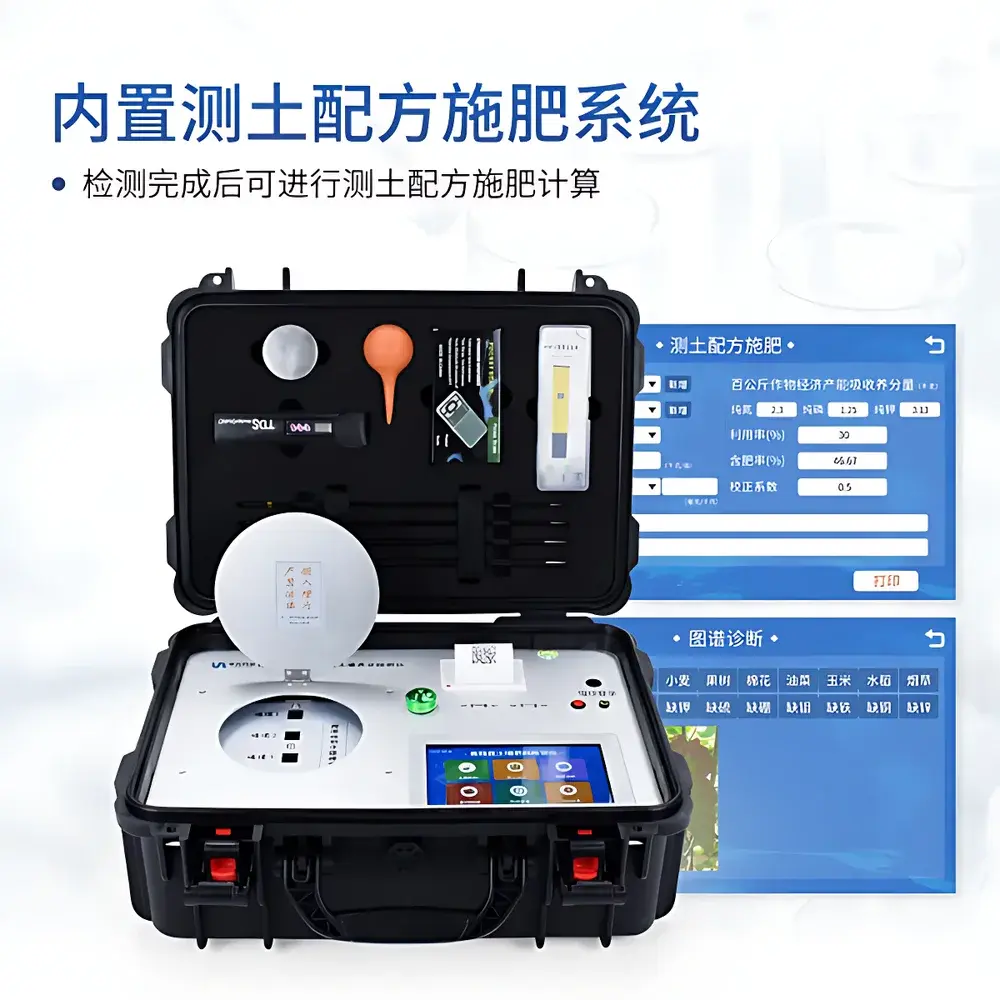
Data integrity follows ALCOA+ principles: attributable, legible, contemporaneous, original, accurate, complete, consistent, enduring, and available. Each measurement logs operator ID, GPS coordinates, timestamp (auto-synchronized via Wi-Fi NTP), and instrument serial number. Results upload securely to the COMECAUSE Cloud Agriculture Data Center—a GDPR- and FDA 21 CFR Part 11–compatible platform offering audit trails, electronic signatures, and configurable user permissions. Raw data exports as CSV/Excel via USB-A port or cloud download; historical records are searchable by location, date range, crop type, or nutrient parameter. Integrated Soil Fertility Recommendation Engine applies region-specific nutrient response curves (calibrated against national soil fertility databases) to generate fertilizer prescriptions—output includes crop species, target yield, total nutrient demand, recommended NPK ratios, and amendment timing. Mobile access is supported via WeChat Mini Program with end-to-end encrypted synchronization.
Applications
- On-farm precision nutrient mapping for variable-rate application planning.
- Extension service delivery of rapid soil health diagnostics in low-infrastructure regions.
- Quality control of organic and compound fertilizers per ISO 8157 and GB/T 15063 standards.
- Environmental monitoring of leaching risk (NO₃⁻, PO₄³⁻) in groundwater recharge zones.
- Research-grade screening in agronomy trials assessing genotype × environment interactions.
- Regulatory compliance verification for organic certification (e.g., USDA NOP §205.203c nutrient management plans).
- Educational use in agricultural vocational training—integrated deficiency symptom atlas supports visual diagnosis of N, P, K, Ca, Mg, S, Fe, Mn, Zn deficiencies in 12 major cash crops.
FAQ
Does the IN_HT200 require external laboratory validation for regulatory reporting?
No—its colorimetric methodology and error tolerances comply with national soil testing standards (NY/T 1121 series, China) and are accepted for official soil fertility classification under provincial agricultural departments.
Can the instrument operate without Wi-Fi connectivity?
Yes—full functionality (testing, printing, local storage, GPS logging) is preserved offline; data syncs automatically upon reconnection.
What is the shelf life of included reagent kits?
Unopened kits retain stability for 18 months when stored at 4–25°C; desiccant packs and amber vials prevent photodegradation and hydrolysis.
Is third-party calibration verification supported?
Yes—the instrument accepts user-defined calibration curves using NIST-traceable standard solutions; calibration logs are archived with digital signatures.
How is firmware updated post-purchase?
Updates are delivered via secure OTA (Over-The-Air) push or microSD card import, with version-controlled changelogs and rollback capability.
Related Products







