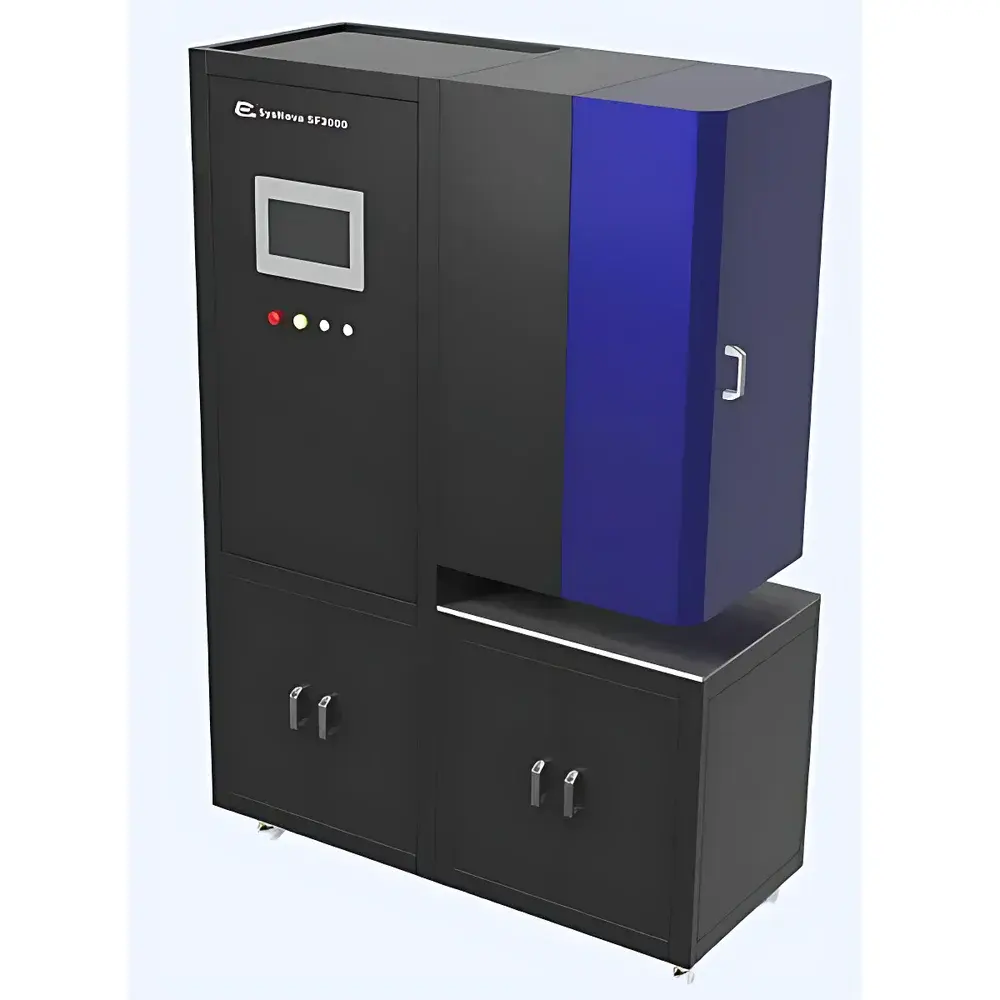



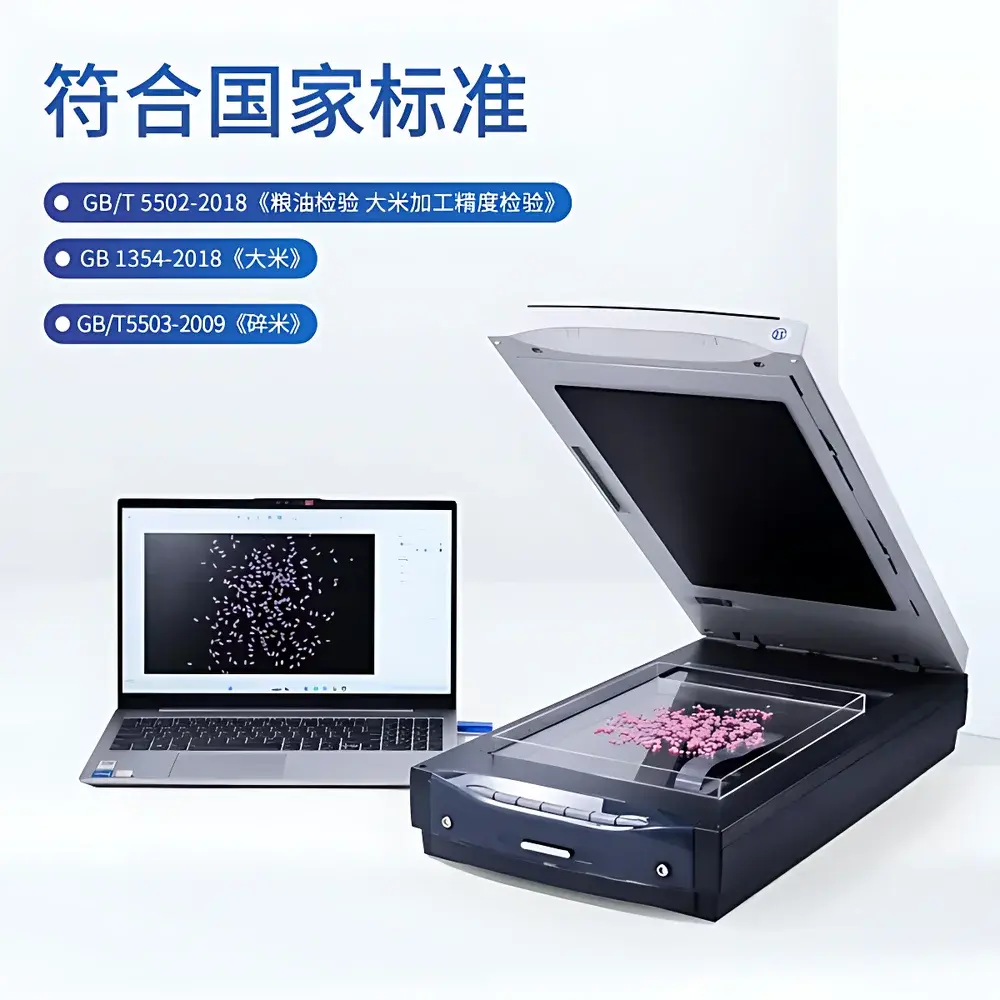
COMECAUSE IN~DMJ Rice Milling Precision Analyzer
| Brand | COMECAUSE |
|---|---|
| Origin | Shandong, China |
| Manufacturer Type | Direct Manufacturer |
| Product Origin | Domestic (China) |
| Model | IN~DMJ |
| Price | USD 2,600 (approx.) |
Overview
The COMECAUSE IN~DMJ Rice Milling Precision Analyzer is an ISO- and GB-compliant digital imaging instrument engineered for objective, quantitative assessment of rice milling degree—the extent to which bran layers (pericarp, seed coat, and aleurone layer) are removed from milled rice kernels. Unlike subjective visual inspection, this analyzer applies standardized optical metrology grounded in the principles of high-resolution reflectance scanning and spectral-based pixel classification. It operates per the physical optics of visible-light interaction with stained rice surfaces, where differential dye affinity (Eosin Y–Methylene Blue staining) produces chromatic contrast between residual bran (blue-green) and endosperm (purple-red). The system captures A4-format, 4800 × 9600 dpi color reflectance scans at a minimum pixel size of 5 µm × 2.6 µm, enabling sub-millimeter spatial resolution across heterogeneous grain populations. Its measurement principle aligns with the fundamental definition of milling precision in cereal science: the ratio of bran-covered surface area to total kernel surface area—expressed as “bran retention percentage” or “milling degree index”—which directly correlates with whiteness, cooking behavior, shelf life, and nutrient retention (e.g., thiamine, niacin, and dietary fiber loss during over-milling).
Key Features
- High-fidelity dual-source CCD scanner with 48-bit color depth, 4800 × 9600 dpi optical resolution, and A4+ extended scan area (355.6 mm × 215.9 mm)
- Automated single-grain segmentation and classification without manual alignment; supports 1–2000 grains per batch (up to 18 g)
- GB/T 5502–2018–compliant analysis engine for milling degree quantification, including bran coverage mapping, histogram-based distribution profiling, and statistical aggregation
- Interactive correction mode: mouse-driven reclassification of misidentified grains ensures 100% analytical traceability and audit-ready validation
- Multi-parameter output: milling degree (%), whole-kernel rate, broken kernel rate, bran area ratio, and dimensional metrics (length, width, area) per grain
- Cloud-integrated data architecture supporting remote access, version-controlled report archiving, and multi-site result synchronization
- Full experimental reproducibility: screen recording functionality captures real-time software operation and user interaction for GLP-compliant documentation
Sample Compatibility & Compliance
The IN~DMJ analyzer accommodates all major Oryza sativa subspecies—indica, japonica, and glutinous rice—without hardware modification. Sample preparation follows standardized GB/T 5502–2018 protocol: grains are uniformly stained using certified Eosin Y–Methylene Blue reagent (100 mL supplied), then air-dried prior to scanning. The instrument’s optical path and algorithmic training set are validated against reference standards including ten certified calibration grains with pre-measured surface area values (Sr). Regulatory compliance extends beyond GB/T 5502–2018 to encompass GB 1354–2018 (Rice Specifications), GB/T 5503–2009 (Broken Kernels), and ASTM D7250 (for image-based particulate surface characterization methodology). All software operations support audit trail generation and electronic signature capability, meeting baseline requirements for FDA 21 CFR Part 11–aligned environments when deployed in regulated quality control laboratories.
Software & Data Management
The proprietary COMECAUSE RiceVision™ software (v4.2+) serves as the analytical core. It features a modular GUI with role-based access control, configurable report templates (PDF/CSV/Excel), and embedded statistical functions (mean, SD, CV%, confidence intervals). Raw scan images—including full-resolution TIFF files—are stored with unique grain-level identifiers, enabling retrospective pixel-level reanalysis. Each grain receives a persistent ID linked to its geometric parameters, colorimetric profile, and classification status. Data export supports pivot-table generation in Excel for multivariate correlation studies (e.g., milling degree vs. amylose content or pasting viscosity). The cloud module implements TLS 1.2 encryption, automatic daily backups, and granular permission settings—allowing centralized oversight while preserving site-specific data sovereignty. Software validation documentation (IQ/OQ/PQ summary) is available upon request for GMP/GLP implementation.
Applications
This instrument delivers measurable value across the rice value chain. In milling facilities, it enables closed-loop process control: real-time feedback on abrasive pressure, roll gap, and feed rate adjustments minimizes over-milling while maintaining grade consistency and maximizing head rice yield. For national grain inspection agencies and third-party testing labs, it provides legally defensible, inter-laboratory comparable results required under China’s Grain Circulation Supervision Regulations. In breeding programs, researchers use its granular output to quantify genotype–processing trait relationships—e.g., correlating hull adhesion strength with bran retention under identical milling conditions. Food scientists apply its datasets to model glycemic index shifts or antioxidant retention relative to milling degree. Furthermore, the system supports traceability initiatives: barcode-integrated sample logging links physical batches to digital records, satisfying HACCP prerequisite program requirements.
FAQ
Does the IN~DMJ require consumables other than the supplied staining reagent?
Only the initial Eosin Y–Methylene Blue staining solution is required; no proprietary cartridges, filters, or disposables are needed for routine operation.
Can the system differentiate between natural chalkiness and bran residue?
Yes—through multispectral reflectance analysis and spatial texture modeling, the software distinguishes optical scattering from chalky endosperm (low-density starch matrix) versus pigmented bran layers based on hue saturation and edge gradient profiles.
Is offline operation supported if cloud connectivity is unavailable?
Fully functional standalone mode is available; all image processing, reporting, and data storage occur locally. Cloud sync resumes automatically upon network restoration.
What environmental conditions are required for stable performance?
Ambient temperature: 10–30 °C; relative humidity ≤85% RH; vibration- and EMI-shielded benchtop placement; 220 V ±10%, 50 Hz power supply with surge protection recommended.
How is method verification performed during installation qualification?
COMECAUSE provides a certified reference set of 10 calibrated rice grains with NIST-traceable surface area values, along with SOPs for repeatability (within-lab CV ≤2.1%) and intermediate precision (between-operator CV ≤3.4%) testing.