
COMECAUSE IN*DMJ Rice Milling Precision Analyzer
| Brand | COMECAUSE |
|---|---|
| Model | IN*DMJ |
| Origin | Shandong, China |
| Manufacturer | COMECAUSE Technology Co., Ltd. |
| Optical Resolution | 4800 × 9600 dpi |
| Scan Area (Reflective) | 355.6 mm × 215.9 mm |
| Pixel Size | ≥0.005 mm × 0.0026 mm |
| Sample Capacity | 1–2000 grains per scan (max. 18 g) |
| Analysis Time | ≤90 s per batch |
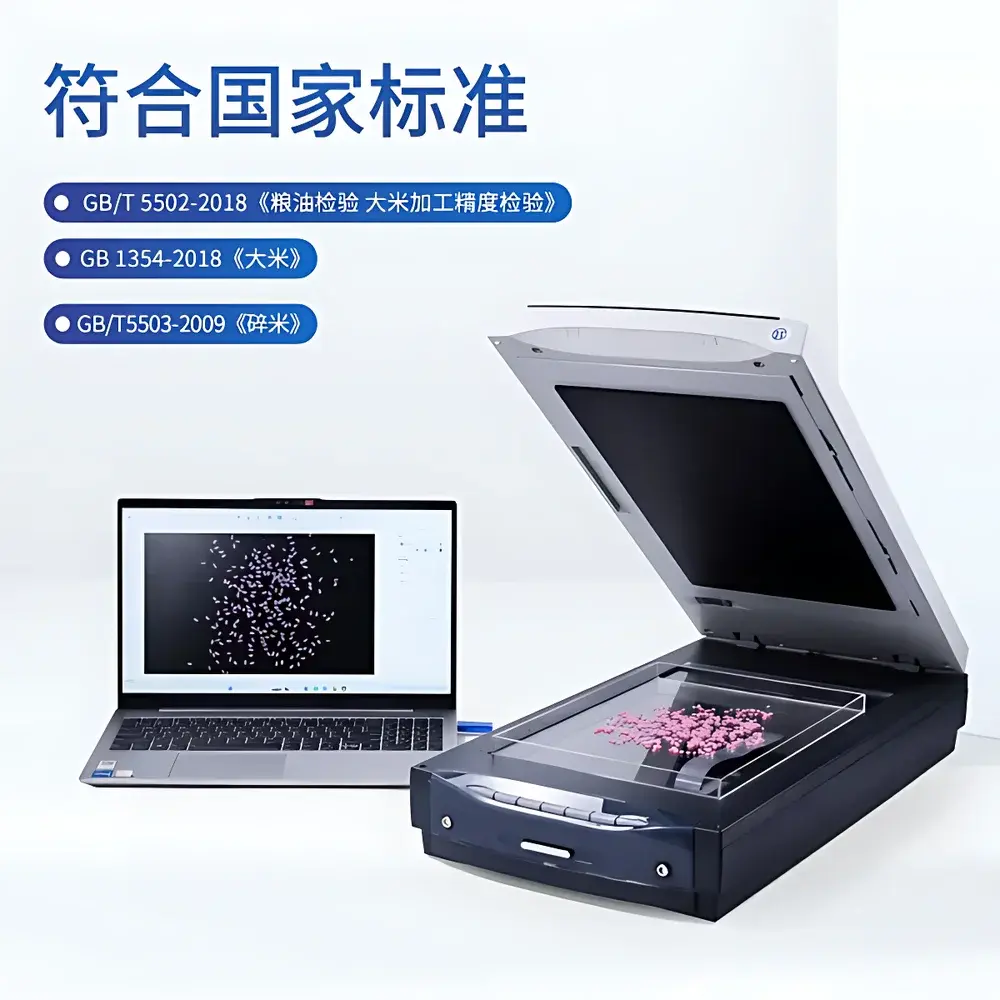
| Compliance | GB/T 5502–2018, GB 1354–2018, GB/T 5503–2009 |
| Software Platform | Proprietary Windows-based image analysis suite with cloud synchronization |
| Data Export | CSV, Excel-compatible formats |
| Interface | USB 2.0, barcode scanner port, screen recording support |
Overview
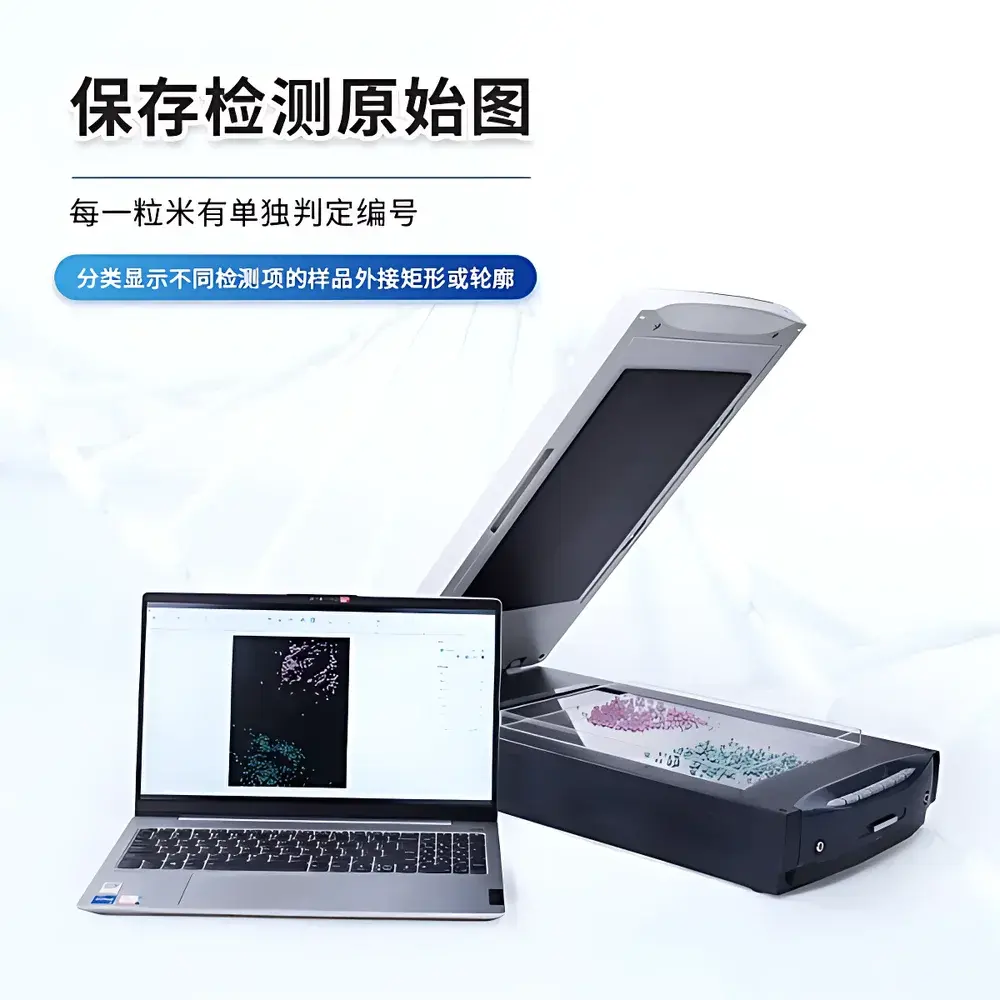
The COMECAUSE IN*DMJ Rice Milling Precision Analyzer is an automated, standardized optical measurement system engineered for objective quantification of rice milling degree—defined as the extent of bran layer and germ removal during polishing. It operates on the principle of chromatic contrast imaging: after staining with a standardized eosin Y–methylene blue reagent, residual bran and germ absorb dye to appear bluish-green, while the starchy endosperm stains reddish-purple. The instrument captures high-fidelity reflective scans of stained rice samples using a dual-illumination A4+ flatbed scanner equipped with a 6-line alternating microlens CCD sensor. Its proprietary software performs pixel-level segmentation, grain-by-grain morphological classification, and statistical aggregation of surface-area-based husk retention—directly aligned with the visual assessment criteria defined in GB/T 5502–2018. Unlike subjective manual grading under magnification, the IN*DMJ delivers traceable, repeatable, and audit-ready results suitable for regulatory reporting, process validation, and inter-laboratory comparison.
Key Features
- High-resolution optical imaging: 4800 × 9600 dpi reflective scanning with sub-5 µm effective pixel size (≥0.005 mm × 0.0026 mm), enabling precise edge detection of thin bran remnants on individual kernels.
- Automated grain segmentation without pre-alignment: Robust algorithm handles random sample dispersion across the scan bed; no manual arrangement or spacing required.
- Compliance-driven analysis engine: Fully implements the decision logic and metric definitions specified in GB/T 5502–2018—including calculation of per-grain bran coverage ratio and population-level milling grade assignment.
- Interactive correction mode: Mouse-driven manual override allows operators to reclassify missegmented grains or adjust boundary contours—ensuring 100% analytical accuracy where required for certification or dispute resolution.
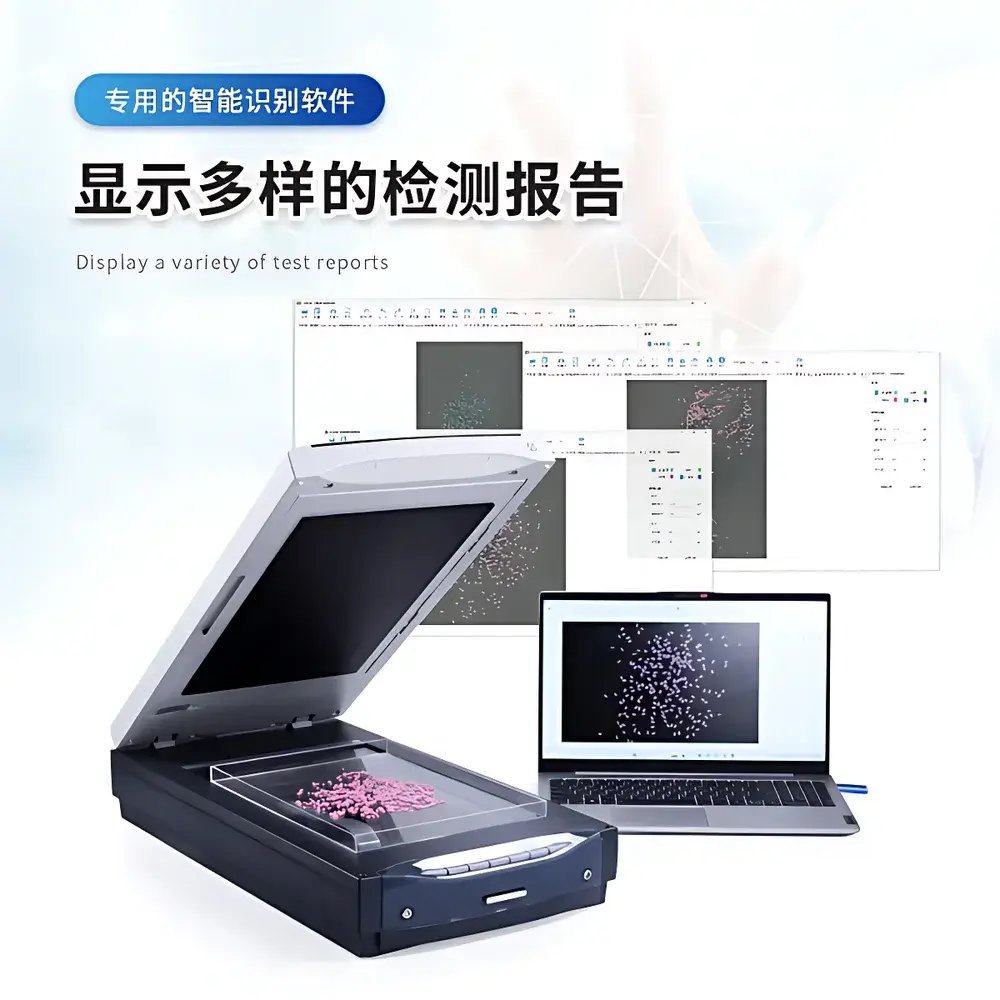
- Multi-parameter output: Generates standardized reports on milling degree classification, bran coverage histogram, head rice percentage (whole milled kernel rate), and broken grain ratio—all exportable to Excel for further statistical evaluation.
- Cloud-enabled data management: Encrypted upload to secure COMECAUSE Cloud platform supports remote access, longitudinal trend analysis, and centralized QA/QC dashboarding across multi-site operations.
- Full audit trail: Timestamped raw image archives (with unique grain ID tagging), operator log, and parameter revision history comply with GLP documentation requirements.
Sample Compatibility & Compliance
The IN*DMJ is validated for use with all major Oryza sativa cultivars, including O. sativa subsp. japonica (non-glutinous short/medium-grain), indica (non-glutinous long-grain), and glutinosa (waxy rice). Sample preparation follows the staining protocol specified in GB/T 5502–2018: rice grains are immersed in eosin Y–methylene blue solution for controlled duration, rinsed, and air-dried prior to scanning. The system’s measurement uncertainty has been verified against reference standards traceable to national metrology institutes. All hardware and software components meet electromagnetic compatibility (EMC) Class B requirements per GB/T 17626 series and operate within environmental specifications of 10–30 °C ambient temperature and ≤85% RH. Instrument design adheres to IEC 61010-1 safety standards for laboratory electrical equipment.
Software & Data Management
The IN*DMJ runs on a dedicated Windows-based application built with Qt framework and OpenCV-powered computer vision libraries. The software architecture supports 21 CFR Part 11–compliant user authentication (role-based access control), electronic signatures, and immutable audit logs—including full metadata capture for each analysis session (scan timestamp, operator ID, calibration status, software version). Raw TIFF images are stored with embedded EXIF tags and linked grain-level annotations. Users may define custom report templates, select specific output fields (e.g., only head rice % and average bran area), and schedule automated batch exports. Integration with LIMS is supported via configurable CSV/XML schema mapping. Screen recording functionality captures full workflow sequences—including operator interactions and real-time segmentation previews—for training, SOP verification, or internal audit purposes.
Applications
- Quality assurance in rice milling facilities: Real-time monitoring of polishing line performance and early detection of over-/under-milling deviations.
- Regulatory testing laboratories: Generation of legally defensible test reports compliant with GB 1354–2018 labeling requirements for commercial rice grades.
- Agricultural research institutions: Phenotypic screening of breeding lines for milling yield and kernel integrity traits.
- Grain inspection agencies: Standardized evaluation of imported/exported rice consignments per national and regional trade specifications.
- Academic teaching labs: Hands-on instruction in digital image analysis, food quality metrics, and ISO/IEC 17025-compliant testing procedures.
FAQ
Does the IN*DMJ require daily calibration with physical standards?
No—system stability is maintained through fixed optical geometry and factory-characterized illumination uniformity. A 10-grain reference set with certified area values (Sr) is provided for periodic verification; users may update Sr values if validating against alternate metrological references.
Can the software distinguish between bran residue and surface scratches or milling defects?
Yes—the algorithm applies multi-threshold color-space clustering (CIELAB + HSV) combined with morphological filtering to reject non-biological artifacts based on shape continuity, edge sharpness, and spectral signature consistency.
Is offline operation supported?
Yes—full functionality is available without internet connectivity. Cloud sync occurs only upon explicit user initiation or scheduled background upload.
What is the maximum throughput for routine QC testing?
With optimized workflow (sample loading → staining → scanning → analysis), one operator can process 30–40 samples per hour, assuming average grain count of 500–800 per assay.
Are third-party LIMS integrations documented?
Yes—technical integration guides, API specifications, and sample HL7/CSV mapping files are included in the software developer kit (SDK) supplied with enterprise licenses.