
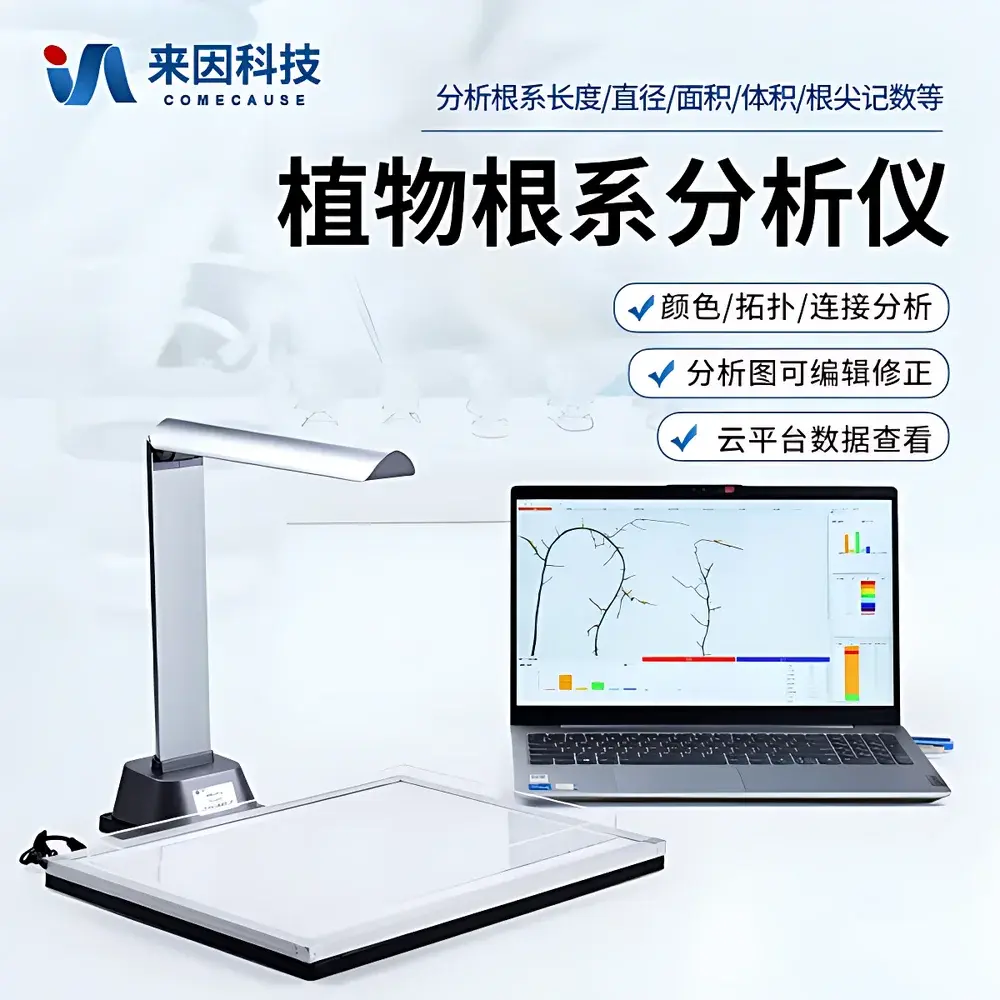
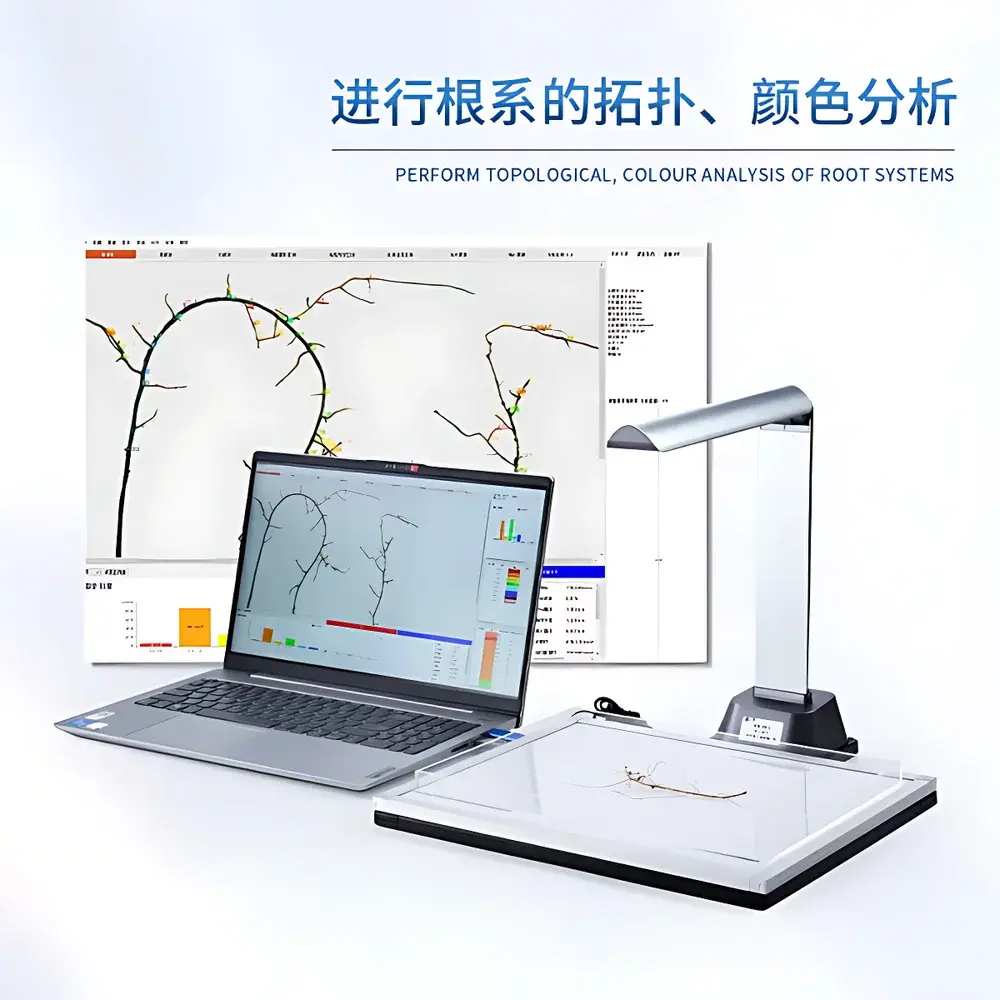
COMECAUSE IN*GX01 High-Speed Root Imaging & Morphometric Analysis System
| Brand | COMECAUSE |
|---|---|
| Origin | Shandong, China |
| Manufacturer | Yes |
| Country of Origin | China |
| Model | IN*GX01 |
| Imaging Sensor | 20 MP color CMOS with auto-focus |
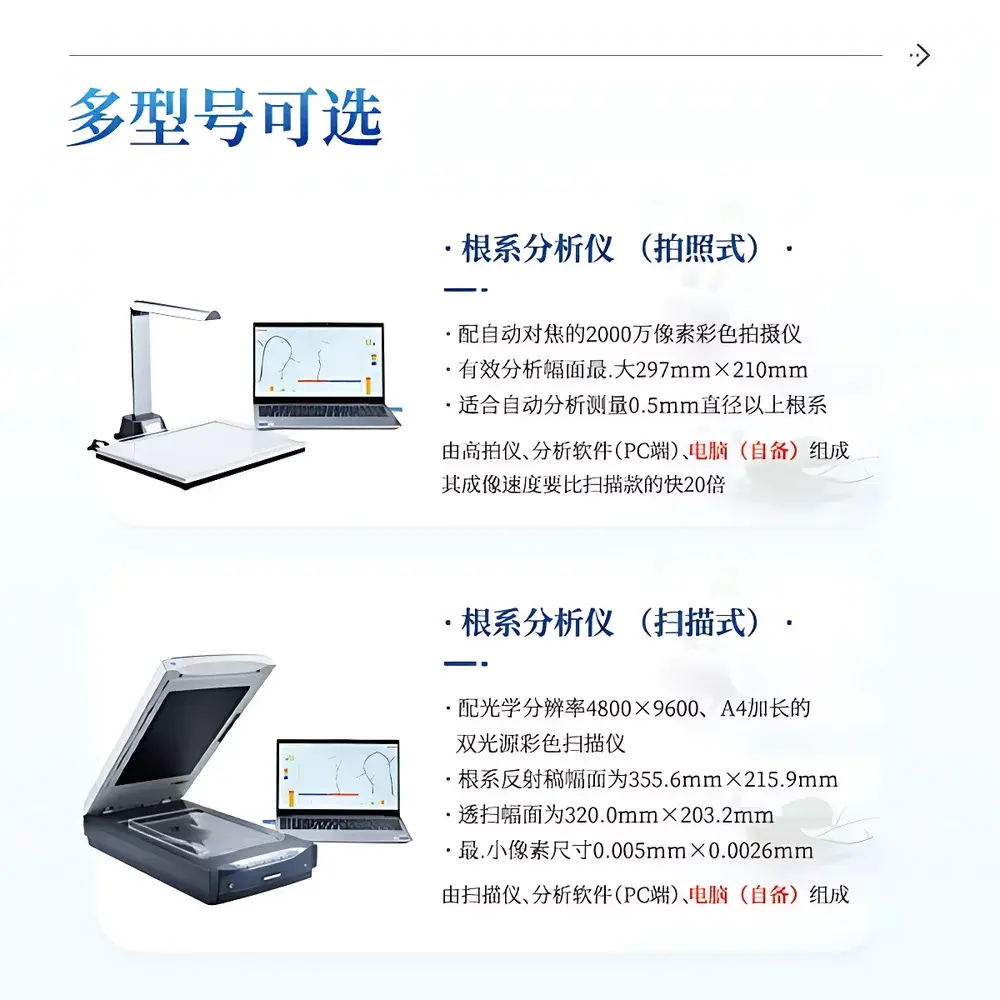
| Max Imaging Area | 297 mm × 210 mm |
| Minimum Resolvable Root Diameter | ≥ 0.5 mm |
| Analysis Parameters | Total root length, branch frequency, mean/median/max diameter, total surface area, projected area, volume, tip count, fork count, overlap count, diameter-class distribution (user-defined non-uniform bins), color-based segmentation analysis, topological connectivity & angle metrics, fractal dimension (box-counting method), nodule counting, gravitropic/horizontal angle quantification |
| Software | PC-based desktop application with cloud sync, bilingual UI (EN/CN), Excel export, annotated image output, audit-trail-capable data logging |
| Compliance | Designed for GLP-aligned plant phenotyping workflows |
Overview
The COMECAUSE IN*GX01 High-Speed Root Imaging & Morphometric Analysis System is a dedicated digital phenotyping platform engineered for quantitative, non-destructive morphological characterization of excised plant root systems. It operates on the principle of high-resolution digital imaging coupled with deterministic computer vision algorithms—distinct from scanning-based systems—to deliver rapid, reproducible root architecture quantification. Unlike flatbed scanners constrained by mechanical movement and limited depth-of-field, the IN*GX01 employs a fixed-position, auto-focusing 20-megapixel color imaging module with uniform LED illumination, enabling consistent capture of washed root samples placed directly on a standard A4-sized (297 mm × 210 mm) imaging stage. The system is optimized for roots ≥ 0.5 mm in diameter—covering primary roots, lateral branches, and coarse adventitious structures common in agronomic species such as maize, wheat, soybean, and Arabidopsis thaliana under controlled-environment or field-collected conditions. Its throughput exceeds scanning-based alternatives by approximately 20×, supporting high-volume experimental designs typical in QTL mapping, drought-response screening, nutrient-use efficiency trials, and rhizobial symbiosis studies.
Key Features
- 20 MP auto-focusing color CMOS imaging sensor with uniform white-light illumination ensures consistent contrast and minimal shadow artifacts across the full 297 × 210 mm field of view.
- Deterministic image segmentation engine supports multi-threshold adaptive binarization, noise suppression, and sub-pixel edge refinement for robust root skeletonization—even in overlapping or coiled configurations.
- Comprehensive morphometric suite calculates 21 standardized parameters per sample, including total length, volume (via cylinder-model approximation), fractal dimension (box-counting algorithm), topological indices (connection number, branching angles), and gravitropic angle distributions.
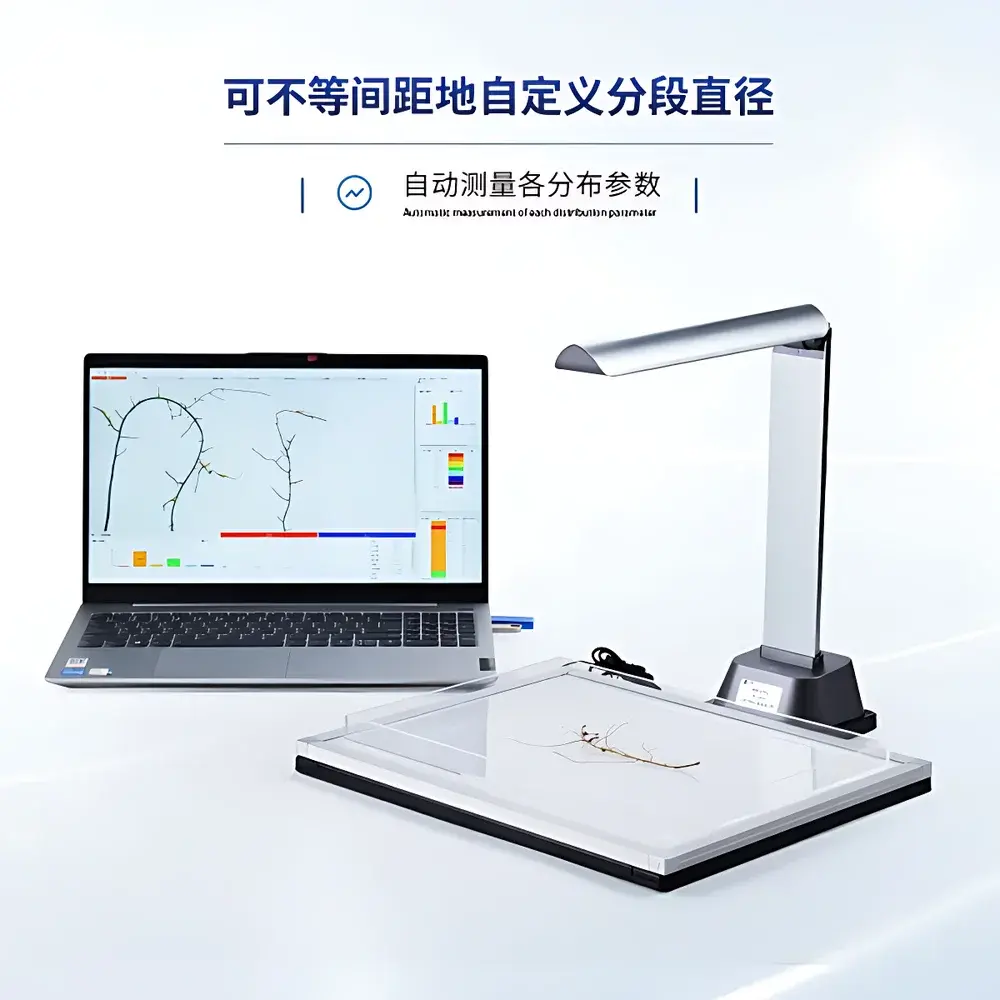
- User-configurable diameter classification: non-uniform diameter bins can be defined to isolate functional root classes (e.g., transport vs. absorptive zones), with automatic computation of length, surface area, projected area, and volume per bin.
- Color-based segmentation capability enables differential analysis of root segments by hue/saturation/value—supporting studies of senescence, pathogen colonization, or mycorrhizal colonization where pigmentation correlates with physiological status.
- Interactive correction tools—including branch splitting, merging, reconnection, and manual node editing—with full undo/redo history ensure analytical accuracy without compromising workflow speed.
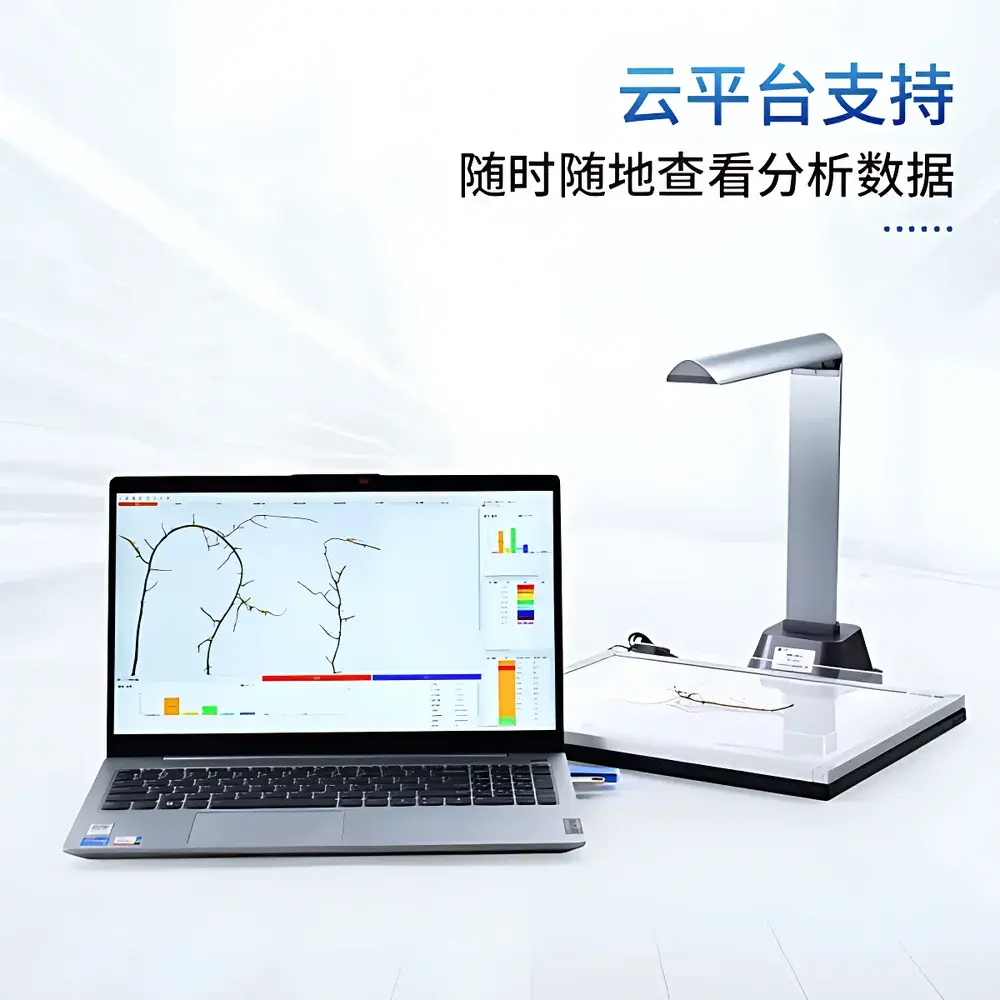
- Cloud-integrated architecture allows secure synchronization of raw images, processed masks, metadata, and numerical outputs to a role-based web portal accessible via browser or mobile client.
Sample Compatibility & Compliance
The IN*GX01 accommodates washed, air-dried or water-immersed root systems mounted on translucent or matte-white backgrounds. It is validated for dicot and monocot species with root diameters ≥ 0.5 mm; finer root hairs (< 0.3 mm) fall below reliable detection thresholds due to optical resolution limits. Sample preparation follows established protocols (e.g., USDA-ARS Root Washing Guidelines, ISO 21528-2:2020 Annex B for soil-root separation). Data output formats comply with MIAPPE 1.1 metadata standards for plant phenotyping. Audit trails—including operator ID, timestamp, software version, and parameter configuration—are embedded in exported Excel files and cloud logs to support GLP and ISO/IEC 17025-aligned laboratory practices.
Software & Data Management
The IN*GX01 Desktop Suite (v4.2+) runs on Windows 10 Professional or Enterprise (64-bit), requiring Intel Core i5-9th Gen or higher, 16 GB RAM, and dual-monitor support. The interface provides real-time preview, batch queue management, and template-driven analysis pipelines. All operations generate immutable log entries compliant with FDA 21 CFR Part 11 requirements for electronic records—enabling signature-enabled approval workflows and version-controlled protocol archiving. Export options include .xlsx (with formula-locked summary sheets), .csv (for R/Python ingestion), .tif (annotated binary masks), and .png (high-res overlay images). Cloud synchronization uses TLS 1.3 encryption and OAuth 2.0 authentication; data residency defaults to EU-hosted servers unless otherwise configured.
Applications
- Genetic mapping of root architectural traits in biparental populations and GWAS panels.
- Phenotypic screening for drought tolerance, phosphorus acquisition efficiency, or aluminum resistance.
- Quantitative assessment of rhizobial or mycorrhizal colonization efficacy via nodule counting and spatial distribution metrics.
- Time-series root development studies using sequential harvests (e.g., daily sampling from hydroponics or rhizotrons).
- Validation of 3D root reconstruction models by providing ground-truth 2D projection benchmarks.
- Teaching laboratories requiring standardized, repeatable root morphology exercises aligned with ASPB and ESA curriculum frameworks.
FAQ
What root preparation methods are recommended prior to imaging?
Roots must be thoroughly washed free of soil particles using gentle agitation in deionized water, followed by brief blotting to remove excess surface moisture. Avoid chemical clearing agents, as they may alter reflectance properties and interfere with color segmentation.
Can the system analyze live roots in transparent media such as agar or gellan gum?
Yes—when imaged against high-contrast backgrounds (e.g., black acrylic base plates), the IN*GX01 reliably segments roots embedded in optically clear solid media up to 10 mm thick. Refractive index mismatches may require minor threshold adjustment.
Is the fractal dimension calculation validated against published reference datasets?
The box-counting implementation follows the methodology described in Giesbrecht et al. (Plant Methods, 2021) and has been cross-verified using synthetic root networks generated via L-system modeling (L-Root v3.0) and benchmarked against manual caliper measurements on maize crown root systems.
Does the software support integration with LIS or ELN platforms?
Native API endpoints (RESTful JSON over HTTPS) enable bidirectional data exchange with major ELN systems (e.g., LabArchives, Benchling) and LIMS via configurable webhooks. Custom field mapping and metadata injection are supported through XML/JSON schema definitions.
What is the minimum hardware specification for offline operation without cloud dependency?
A standalone configuration requires Windows 10 Pro (v22H2+), 16 GB RAM, 512 GB SSD, and an Intel Core i5-9400 or AMD Ryzen 5 3600 processor. Cloud features are disabled by default in air-gapped environments; all processing and storage occur locally.
Related Products





