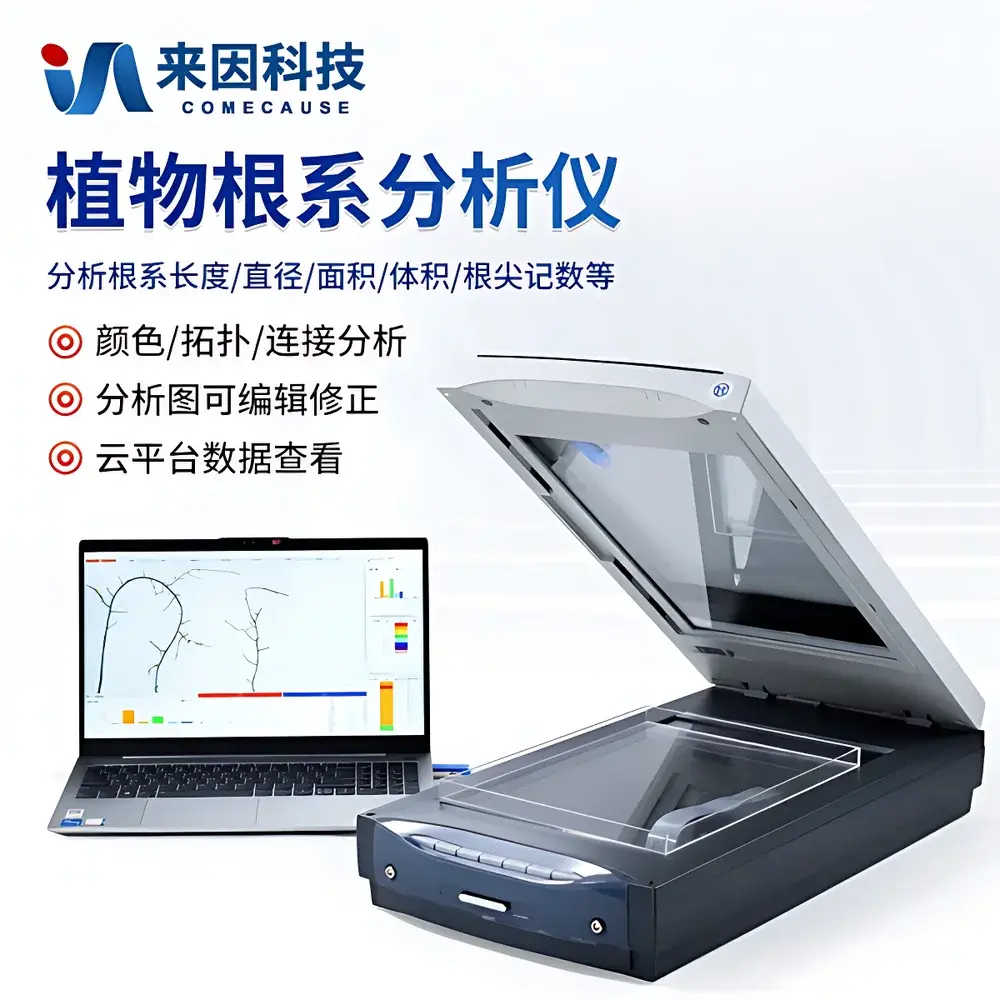
COMECAUSE IN*GX02 Plant Root Imaging & Analysis System
| Brand | COMECAUSE |
|---|---|
| Origin | Shandong, China |
| Manufacturer Type | Direct Manufacturer |
| Model | IN*GX02 |
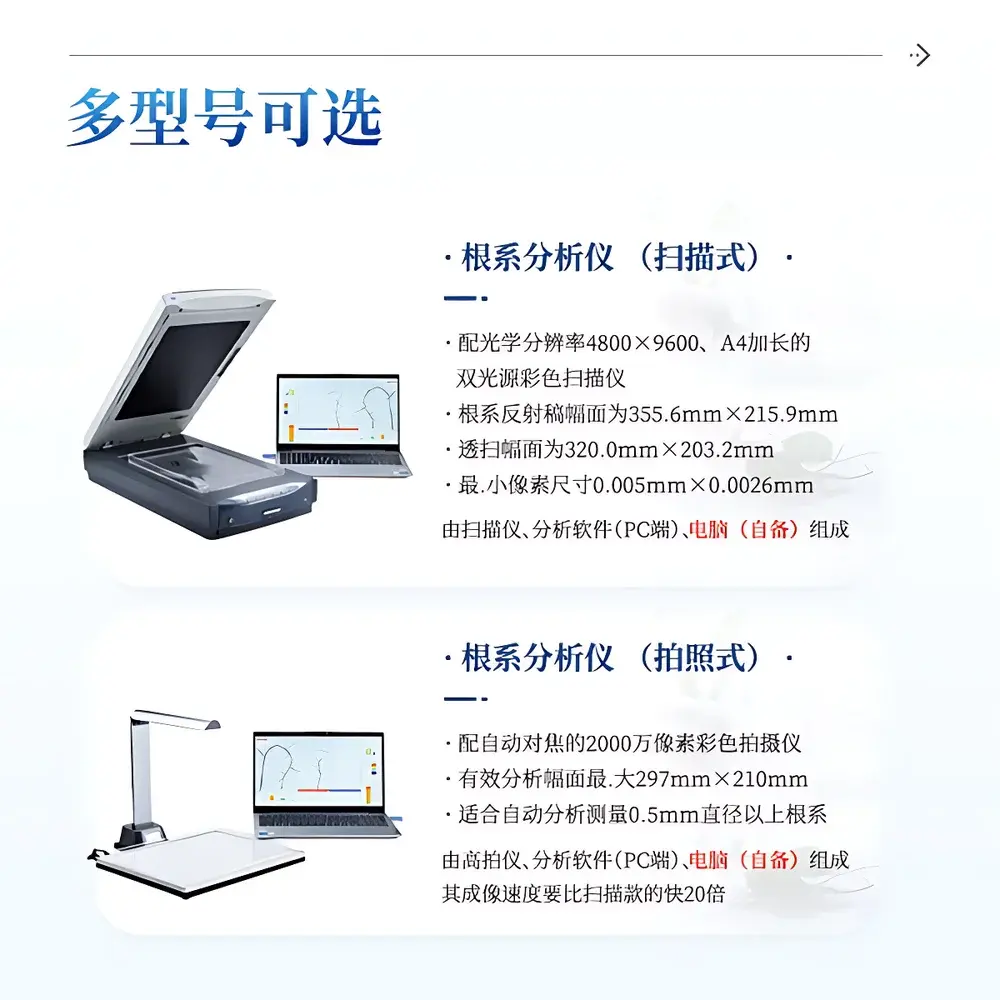
| Optical Resolution | 4800 × 9600 dpi (A4+ extended) |
| Scan Area (Reflective) | 355.6 mm × 215.9 mm |
| Scan Area (Transmissive) | 320.0 mm × 203.2 mm |
| Minimum Pixel Size | 0.005 mm × 0.0026 mm |
| Software | Proprietary root phenotyping suite with USB hardware key encryption |
| Output Formats | TIFF, JPEG |
| Data Export | Excel (.xlsx), annotated image overlays, fractal dimension reports, topology graphs, diameter-class distribution tables |
| Cloud Sync Capability | Yes |
| UI Language | Switchable bilingual (English/Chinese) |
| OS Compatibility | Windows 10 Professional/Enterprise (64-bit), ≥16 GB RAM, ≥4× USB 2.0 ports |
Overview
The COMECAUSE IN*GX02 Plant Root Imaging & Analysis System is a benchtop digital phenotyping platform engineered for non-invasive, high-resolution morphometric quantification of plant root systems. It operates on the principle of high-fidelity optical scanning combined with deterministic image segmentation and topology-aware morphological analysis—bypassing statistical approximations in favor of pixel-accurate measurement of root architecture. Unlike destructive excavation or low-throughput manual tracing methods, the IN*GX02 enables reproducible, operator-independent characterization of washed roots or rhizobox-grown specimens under controlled laboratory conditions. Its dual-source illumination architecture eliminates shadow artifacts and ensures uniform contrast across heterogeneous root samples—including fine laterals, root hairs, nodules, and pigmented or senescent tissues—thereby supporting rigorous comparative studies in root biology, crop physiology, and soil–plant interaction research.
Key Features
- Dual-source cold-cathode fluorescent (CCFL) illumination system with dedicated calibration zones, ensuring consistent brightness and minimal glare across reflective and transmissive scanning modes.
- A4+ extended scanning area (355.6 mm × 215.9 mm reflective; 320.0 mm × 203.2 mm transmissive) optimized for intact root systems from seedlings to mature herbaceous plants.
- Optical resolution of 4800 × 9600 dpi (minimum pixel size: 5 µm × 2.6 µm), enabling sub-millimeter discrimination of root diameter classes and accurate detection of root tips and branching points.
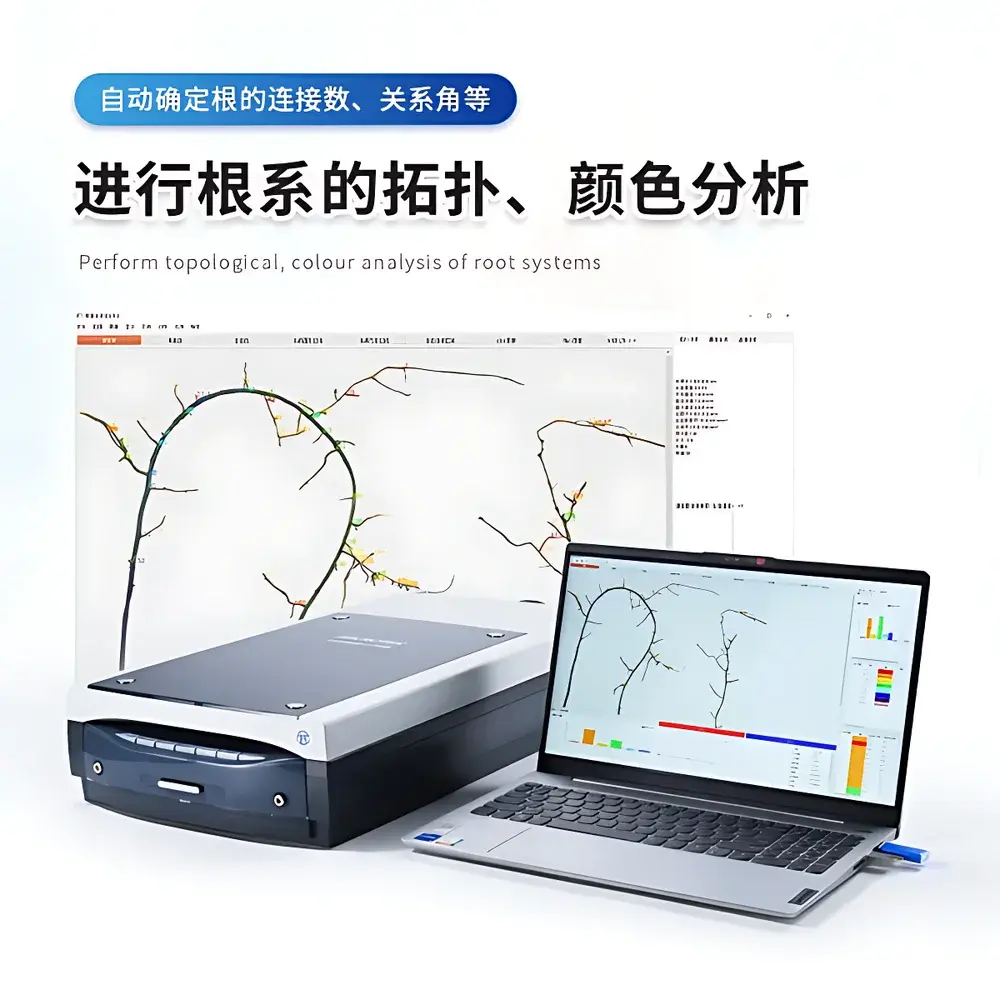
- Proprietary analysis software with hardware-encrypted USB dongle, supporting deterministic (non-statistical) computation of 22 primary and derived root traits—including total length, average diameter, volume, fractal dimension, topological indices (link number, branching angle), and color-based segmentation for nodule or stress-response phenotyping.
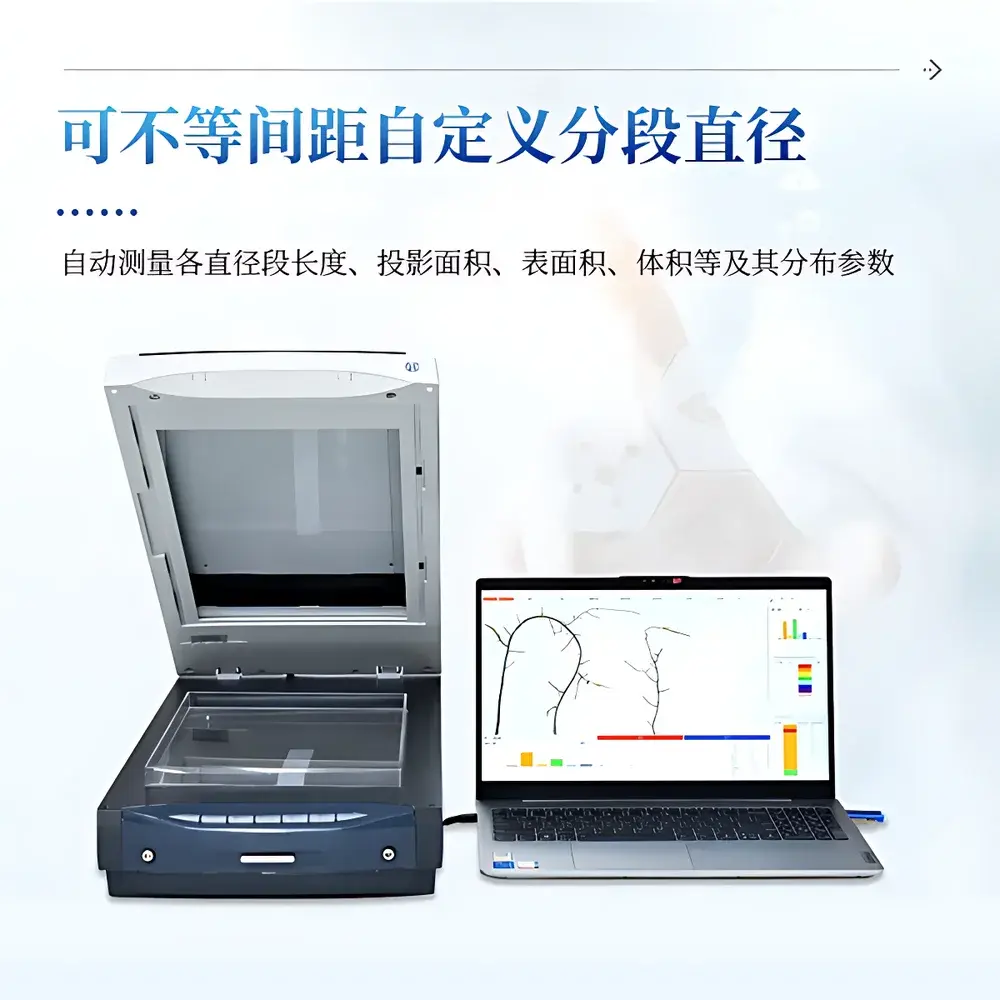
- Configurable diameter binning: users may define unequal-width diameter intervals and automatically compute cumulative length, surface area, volume, and projection area per class—critical for modeling hydraulic conductance or nutrient uptake efficiency.
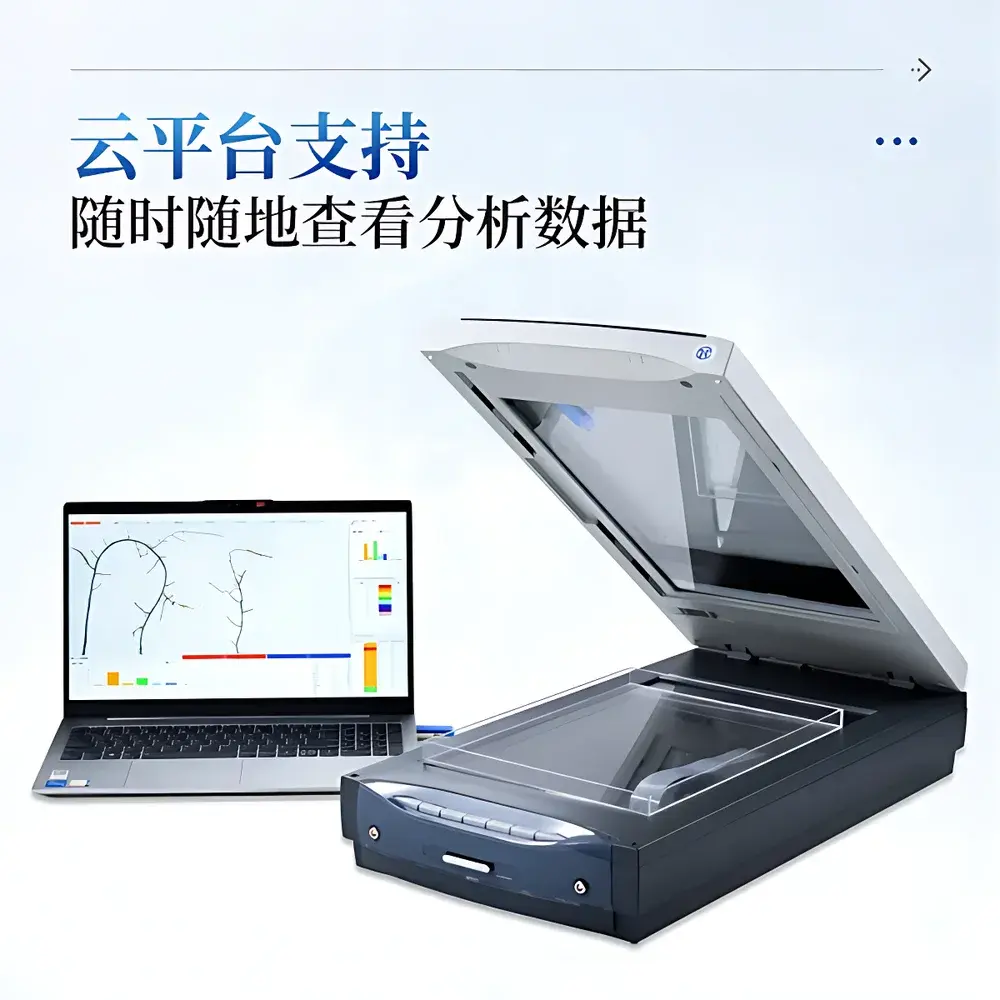
- Integrated cloud synchronization module for secure remote data backup, cross-lab collaboration, and longitudinal dataset management compliant with FAIR (Findable, Accessible, Interoperable, Reusable) principles.
- Bilingual UI (English/Chinese) with one-click language switching, facilitating international deployment without localization overhead.
Sample Compatibility & Compliance
The IN*GX02 accommodates both excised root systems (post-wash) and intact roots grown in transparent rhizoboxes or gel-based media. It supports monocots (e.g., rice, maize), dicots (e.g., Arabidopsis, soybean), and perennial species (e.g., poplar, alfalfa) within standard root mass limits (< 50 g fresh weight). The system complies with ISO/IEC 17025-aligned documentation practices for instrument validation and traceability. While not FDA 21 CFR Part 11-certified out-of-the-box, its audit trail functionality—including timestamped analysis logs, user ID tagging, and immutable export metadata—enables customization for GLP/GMP environments upon site-specific validation. All output files (Excel, TIFF, annotated PNG) retain embedded EXIF and analysis parameter headers, satisfying minimum reporting requirements for peer-reviewed publications and grant-funded phenotyping consortia.
Software & Data Management
The IN*GX02’s software suite implements a deterministic image processing pipeline: grayscale conversion → adaptive thresholding → skeletonization → branch point detection → diameter profiling along centerlines → topological graph generation. No machine learning inference is used; all measurements derive directly from calibrated pixel geometry. Outputs include: (i) tabular datasets (.xlsx) with full parameter definitions per root sample; (ii) overlay images marking root tips, forks, and diameter segments; (iii) fractal dimension heatmaps via box-counting algorithm; (iv) angular distribution histograms (gravitropic and azimuthal); and (v) biomass distribution profiles across soil depth layers when paired with stratified rhizobox imaging. Data exports conform to MIAPPE (Minimum Information About a Plant Phenotyping Experiment) v1.1 metadata schema. Cloud sync uses TLS 1.3 encryption and role-based access control (RBAC), supporting institutional SSO integration.
Applications
- Crop Breeding Programs: High-throughput screening of root architectural QTLs—e.g., deep rooting index, specific root length, or lateral root density—correlated with drought resilience or phosphorus acquisition efficiency under controlled stress assays.
- Ecological Research: Quantifying interspecific root segregation in mixed-species communities, vertical root length density profiles across soil horizons, and plasticity metrics (e.g., root foraging precision) in response to nutrient patchiness.
- Soil Health & Remediation Studies: Assessing root–microbe interface dynamics via nodule volumetric fraction analysis, heavy metal accumulation gradients along root axes, and mycorrhizal colonization extent using color-thresholded segmentation.
- Precision Agronomy: Validating irrigation scheduling models by correlating root depth distribution with soil moisture sensor arrays; calibrating variable-rate fertilizer algorithms using root surface area–nutrient uptake coefficients.
- Digital Twin Development: Generating geometrically accurate 3D root architecture proxies (via stacked 2D slices) for integration into functional–structural plant models (FSPMs) simulating water/nutrient transport.
FAQ
What sample preparation protocols are recommended for optimal image quality?
Roots should be gently washed free of soil using deionized water and a soft brush; excess moisture removed with blotting paper. For rhizobox imaging, roots must be fully hydrated but not waterlogged. Avoid ethanol fixation unless pigment retention is required—this may induce shrinkage artifacts.
Can the system analyze live roots in situ without extraction?
Yes—when used with transparent growth substrates (e.g., agar, hydroponic gels, or acrylic rhizoboxes), the IN*GX02 supports time-series imaging of root development. Transmissive scanning mode is required for gel-embedded specimens.
Is the software compatible with macOS or Linux operating systems?
No—the current release supports only Windows 10 Professional or Enterprise (64-bit), with verified compatibility up to Windows 11. Virtual machine deployment is unsupported due to USB dongle driver constraints.
How is measurement accuracy validated across laboratories?
COMECAUSE provides a NIST-traceable calibration target (polystyrene microsphere grid, 10–100 µm) and standardized SOP templates for inter-laboratory ring trials. Users are advised to perform daily grayscale reference scans and weekly spatial calibration checks.
Does the system support batch processing of >100 samples?
Yes—unattended queue-based analysis is supported. Each scan is auto-tagged with timestamp, operator ID, and experimental batch code; results populate a centralized SQLite database prior to Excel export.
Related Products