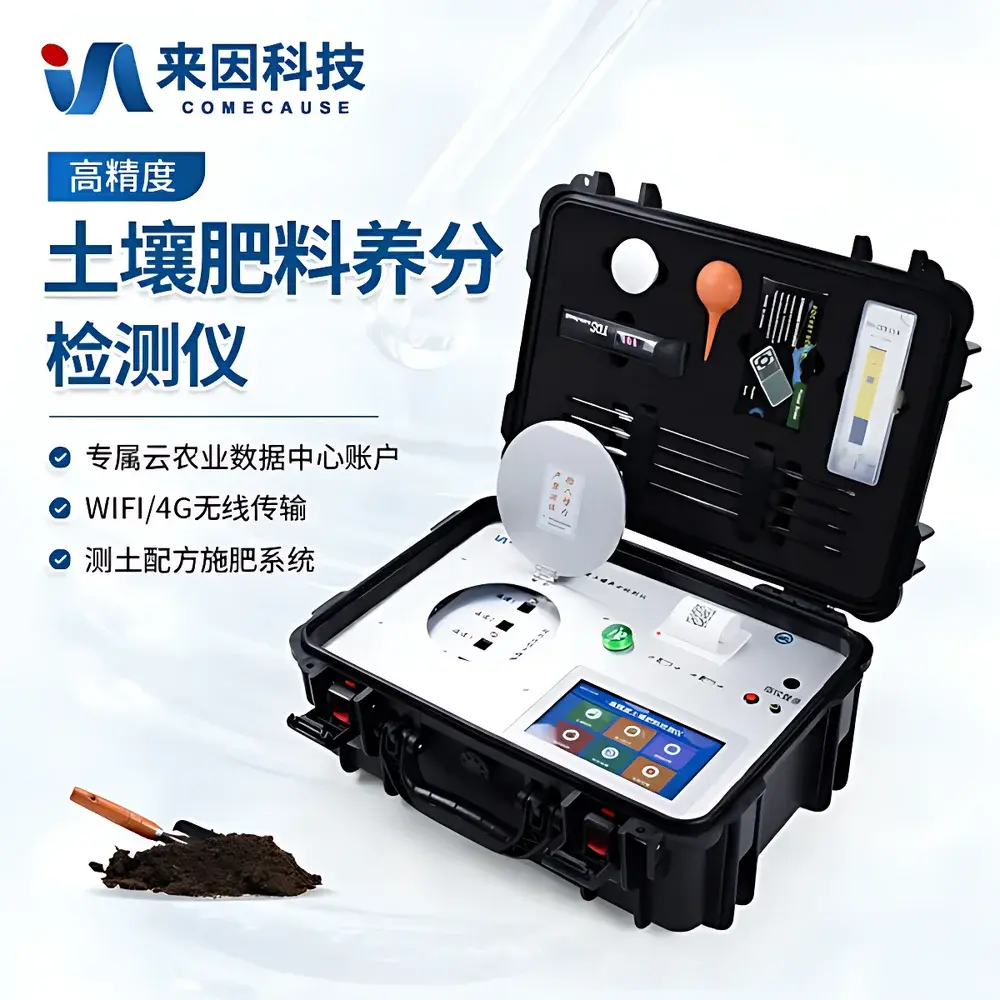
COMECAUSE IN~HT500 Portable Soil Nutrient Analyzer
| Brand | COMECAUSE |
|---|---|
| Model | IN~HT500 |
| Type | Portable Multi-Channel Soil & Fertilizer Nutrient Analyzer |
| Detection Channels | 4 |
| Measurable Parameters | N, P, K (ammonium-N, nitrate-N, available-P, exchangeable-K), organic matter (Tiemann & extraction methods), pH, EC, moisture, temperature, Ca, Mg, S, B, Fe, Cu, Mn, Zn, Cl, Mo, Pb, As, Cr, Cd, Hg, Ni, Al, F, Ti, Se, and more |
| Measurement Range | 0.001–9999 (unitless absorbance-derived concentration scale) |
| Repeatability | ≤0.03% (using potassium dichromate standard) |
| Power Supply | AC 220 V ±10% / DC 12 V + 5 V (built-in 4800 mAh Li-ion battery, ≥10 h runtime) |
| Operating System | Android 5.1, quad-core CPU ≥1.8 GHz, 16 GB internal storage |
| Display | 7.0″ color LCD, 1024×600 resolution |
| Environmental Rating | IP65 |
| Dimensions | 470 × 340 × 210 mm |
| Weight | ~5.2 kg |
| Optical Sources | 4 fixed-wavelength LEDs (680±2 nm red, 420±2 nm blue, 510±2 nm green, 590±4 nm orange) |
| Photometric Stability | Drift <0.3% in 1 h (transmittance), <0.001 in 2 h (absorbance) |
| Linearity Error | ≤0.1% (CuSO₄ calibration) |
| Sensitivity | Red ≥4.5×10⁻⁵, Blue ≥3.17×10⁻³, Green ≥2.35×10⁻³, Orange ≥2.13×10⁻³ |
| Soil Moisture Range | 0–100% (m³/m³), Accuracy ±2% (0–50%), ±3% (50–100%), Resolution 0.1% |
| Soil Temperature Range | −40 to +120 °C, Accuracy ±0.2 °C, Resolution ±0.1 °C |
| Soil EC Range | 0–20 mS/cm, Accuracy ±1%, Resolution ±0.01 mS/cm |
| pH Range | 0–14, Resolution 0.1, Accuracy ±0.2 |
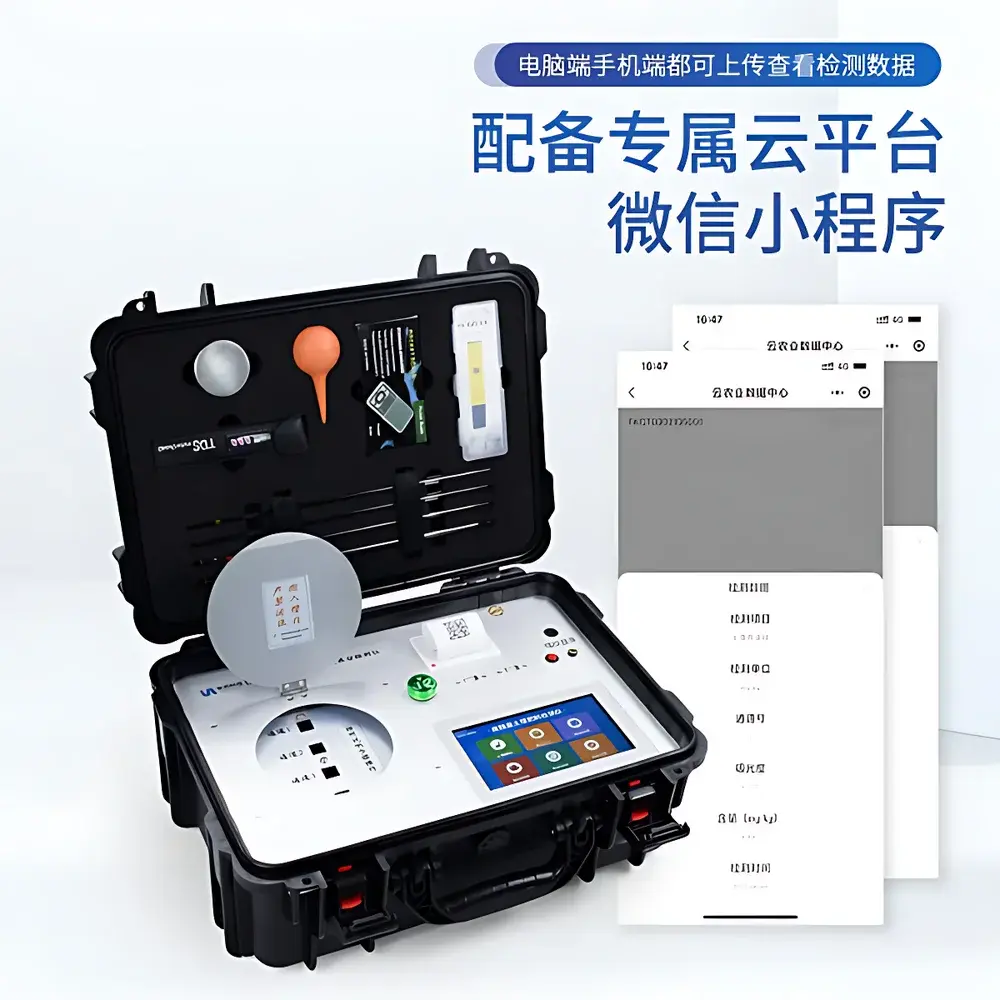
| Data Connectivity | Wi-Fi, Ethernet (RJ45), dual USB, cloud sync via proprietary AgriCloud platform |
| Compliance | CE-marked design principles |
Overview
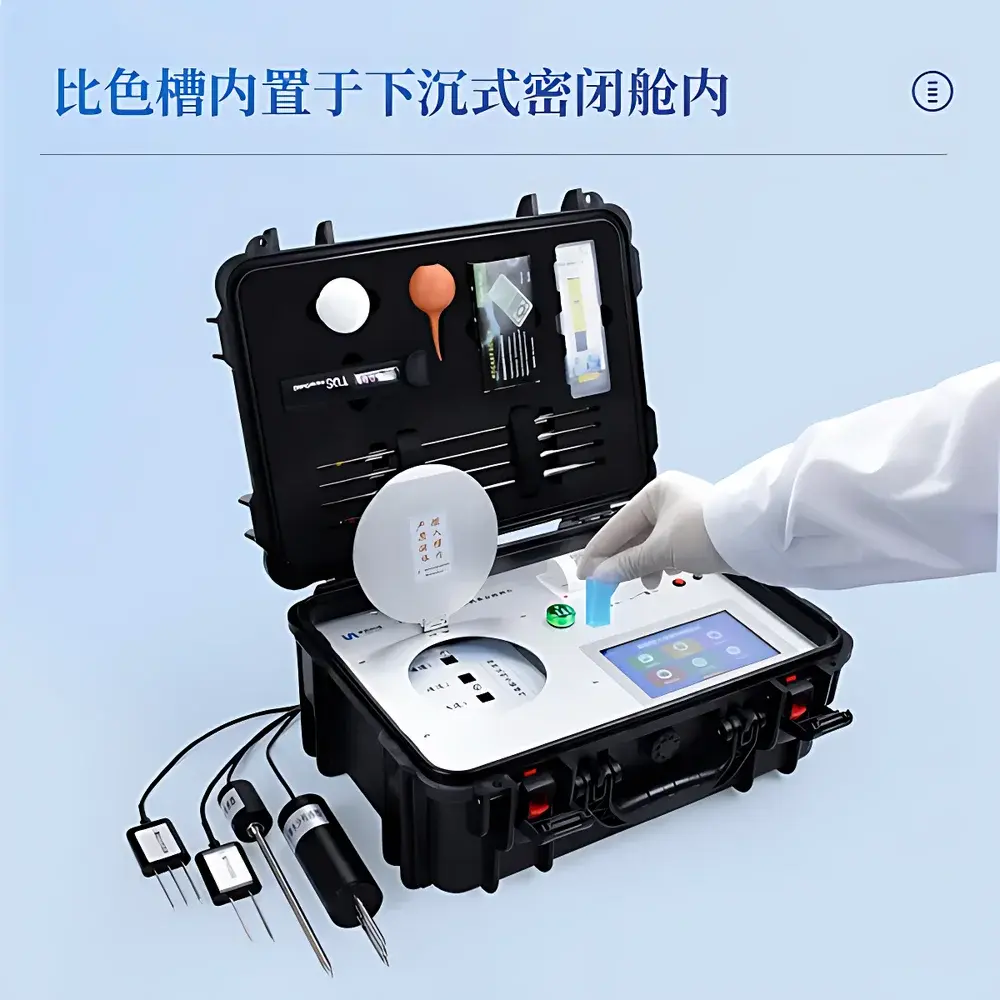
The COMECAUSE IN~HT500 Portable Soil Nutrient Analyzer is a field-deployable, multi-parameter spectrophotometric analyzer engineered for rapid, on-site quantification of macro- and micronutrients, organic matter, physicochemical properties, and contaminants in soil, fertilizer, plant tissue, and aqueous extracts. It operates on the principle of reflectance-absorbance photometry using four discrete, thermally stabilized LED light sources—red (680±2 nm), blue (420±2 nm), green (510±2 nm), and orange (590±4 nm)—optimized for common colorimetric assays including indophenol blue (NH₄⁺), molybdenum blue (PO₄³⁻), flame photometric analogs (K⁺), dichromate oxidation (organic carbon), and heavy metal chelation complexes. Unlike benchtop ICP or AAS systems, the IN~HT500 delivers lab-grade repeatability (≤0.03% CV) and calibrated linearity (≤0.1% error) without requiring external gas supplies, high-voltage lamps, or solvent-intensive digestion. Its integrated solid-state 4-channel cuvette module eliminates mechanical movement, ensuring optical path consistency across repeated measurements—a critical requirement for regulatory-compliant field screening under ISO 11260, ASTM D5088, and FAO-recommended soil testing protocols.
Key Features
- Four independent optical channels with factory-calibrated, 100,000-hour-life LEDs—no lamp replacement or warm-up required.
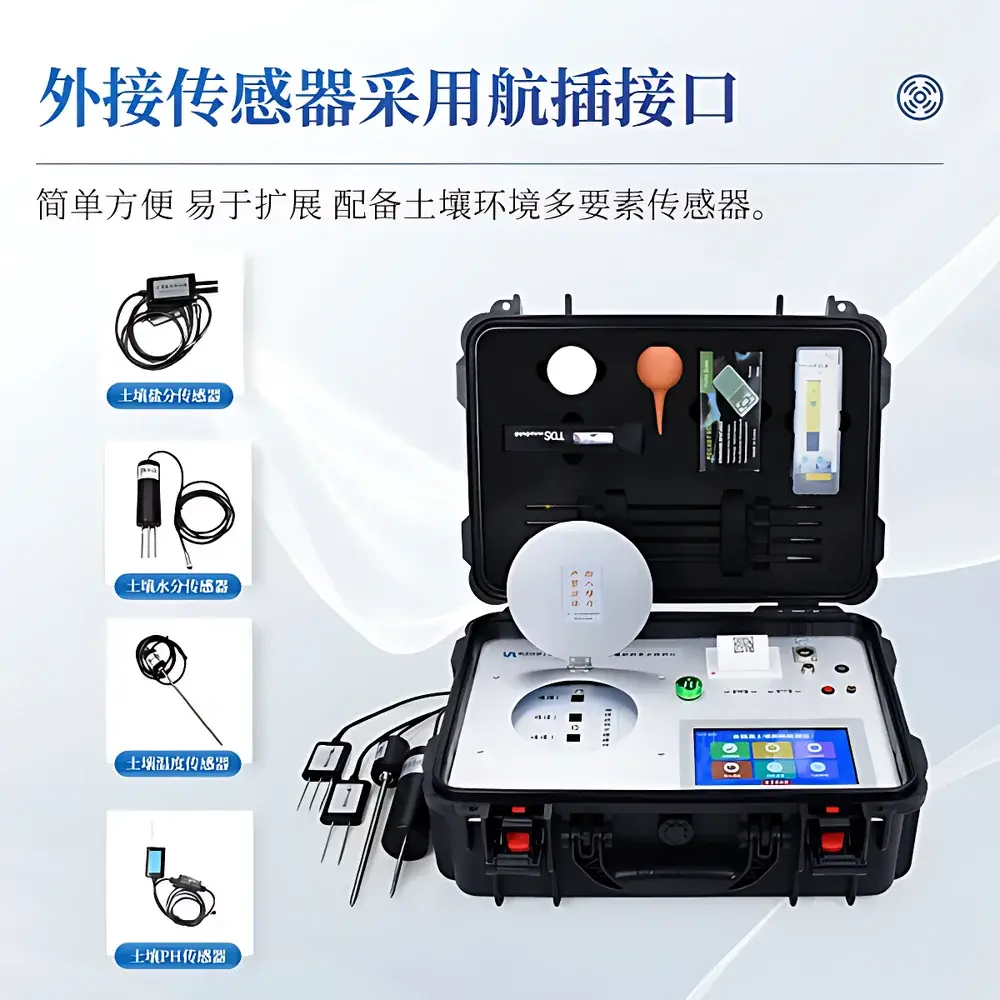
- Integrated environmental sensors: direct-insertion volumetric soil moisture probe (6.5 cm stainless steel rods), temperature sensor (23 cm probe), graphite-based EC electrode, and solid-state soil pH electrode (no hydration needed).
- Android 5.1 OS with quad-core ≥1.8 GHz processor, 16 GB onboard memory, and 7.0″ sunlight-readable display (1024×600) enabling guided workflows, video tutorials, and real-time diagnostics.
- Dual authentication: password + fingerprint login; multi-user account support with role-based access control for lab managers and field technicians.
- Onboard thermal printer with QR-code generation—outputs test ID, channel number, absorbance, concentration (mg/kg or %), operator, GPS coordinates, timestamp, and calibration status.
- IP65-rated rugged housing with shock-absorbing PVC carry case; operational in −10 to +50 °C ambient conditions.
- Built-in power management: 4800 mAh Li-ion battery (≥10 h continuous use), voltage monitoring, and auto-save during unexpected power loss.
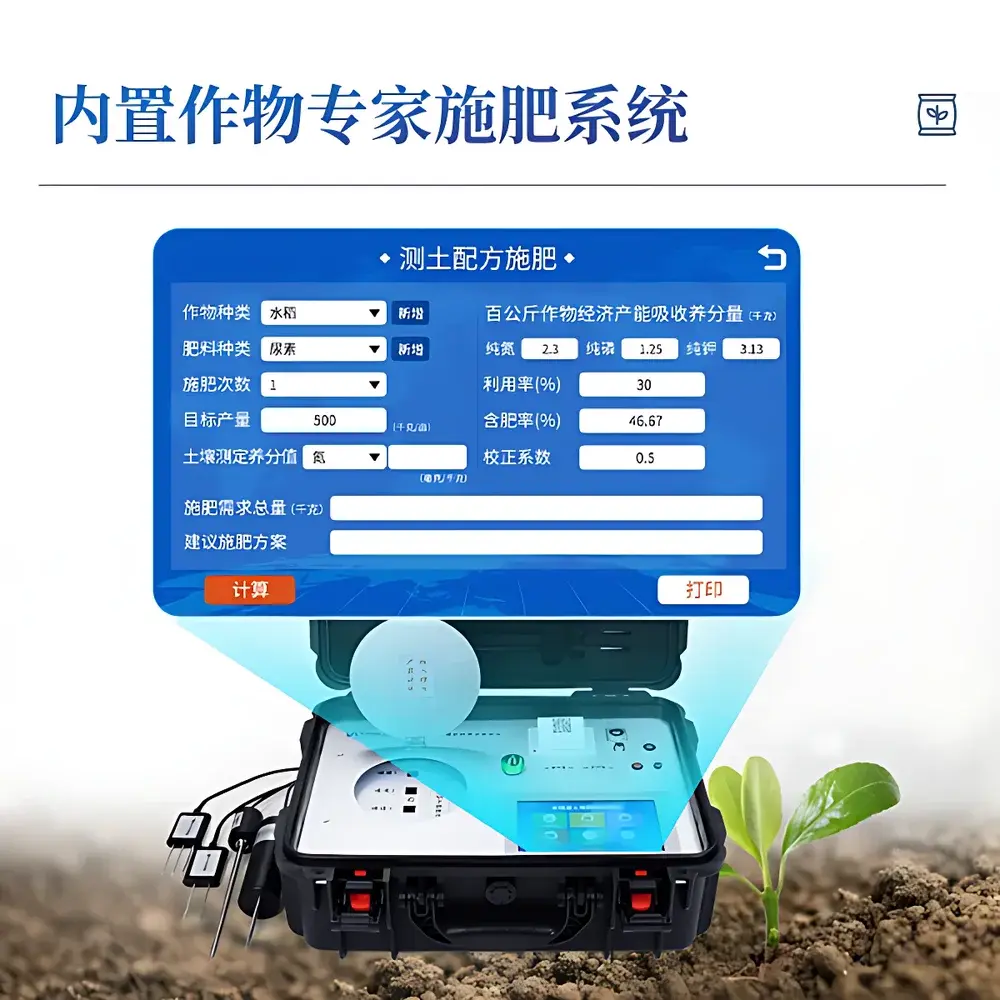
- Preloaded agronomic databases: 120+ crop-specific nutrient sufficiency ranges, deficiency symptom atlases (with leaf-level visual comparison), and regionally adjusted fertilization coefficients per FAO/IFDC guidelines.
Sample Compatibility & Compliance
The IN~HT500 accepts homogenized air-dried soil samples (2 mm sieve), liquid fertilizer dilutions, plant tissue digests (H₂SO₄-H₂O₂), and water extracts—compatible with standard USDA, ISO 14235 (organic C), ISO 13878 (total N), and EN 13651 (available P) sample preparation workflows. All assays are validated against NIST-traceable reference materials (e.g., SRM 2710a, 2711a). The system supports GLP-aligned data integrity: every measurement logs instrument ID, operator biometrics, GPS geotag, local time (NTP-synchronized via Wi-Fi), and full audit trail in encrypted cloud storage. Raw absorbance values and processed concentrations are exportable in CSV/Excel format compliant with FDA 21 CFR Part 11 requirements for electronic records and signatures when deployed with configured AgriCloud enterprise accounts.
Software & Data Management
Data acquisition and reporting are managed through the embedded AgriCloud Connect Suite—supporting offline operation with automatic sync upon network reconnection (Wi-Fi or Ethernet). Each measurement generates a unique digital record containing spectral metadata, calibration history, environmental context (soil moisture/temp/pH/EC), and operator credentials. The cloud dashboard enables cross-site trend analysis, batch report generation, and integration with third-party farm management software (via RESTful API). Mobile access is provided via iOS/Android apps and WeChat Mini Program—allowing remote review of historical datasets, map-based spatial visualization of nutrient gradients, and automated prescription map generation for variable-rate application. Local data export is supported via USB drive or direct PC connection; all tables retain column headers conforming to AOAC International data formatting conventions.
Applications
The IN~HT500 serves as a primary screening tool across agricultural extension services, precision farming operations, environmental consulting firms, and university field research programs. Typical use cases include: pre-plant soil fertility mapping (NPK + OM + pH + EC); in-season foliar nutrient status assessment; fertilizer quality verification (urea N, water-soluble P, KCl solubility); contaminated land triage (As, Cd, Pb, Cr screening per EPA Method 3050B equivalents); irrigation water nutrient load monitoring; and validation of compost maturity (C:N ratio estimation). Its 20-minute turnaround for routine NPK analysis—without centrifugation or filtration—meets ISO 17025-accredited laboratories’ criteria for rapid method validation when used within defined uncertainty budgets.
FAQ
What sample preparation is required for soil testing?
Air-dried, ground, and sieved (<2 mm) soil samples are extracted using standardized reagents included in the kit; no digestion or distillation is needed for routine NPK and organic matter.
Can the instrument be calibrated independently of factory service?
Yes—on-device calibration is fully automated and guided step-by-step; users may perform zero-point and span calibration using supplied standards at any time without tools or disassembly.
Is GPS location data embedded in exported reports?
Yes—each printed or cloud-uploaded record includes WGS84 latitude/longitude coordinates, altitude, and timestamp, supporting spatially referenced compliance reporting.
How is data security maintained during cloud transmission?
All communications use TLS 1.2 encryption; cloud-stored data is AES-256 encrypted at rest and accessible only via authenticated user sessions with configurable retention policies.
Does the system comply with international soil testing standards?
While not certified to ISO/IEC 17025 itself, the IN~HT500’s optical performance, repeatability, and documented uncertainty profiles align with method validation requirements in ISO 11260 (phosphorus), ISO 13878 (nitrogen), and ISO 14235 (organic carbon), facilitating adoption in accredited labs as a screening-tier instrument.
Related Products