


COMECAUSE IN~HT800 Advanced Field-Deployable Soil Nutrient & Environmental Multi-Parameter Analyzer
| Brand | COMECAUSE |
|---|---|
| Origin | Shandong, China |
| Manufacturer Type | OEM Producer |
| Instrument Class | Portable |
| Detection Principle | Colorimetric Spectrophotometry |
| Number of Detection Channels | 4 |
| Measurable Parameters | Soil NH₄⁺-N, NO₃⁻-N, Available P, Exchangeable K, Total N/P/K, Organic Matter (Tyurin & Extraction Methods), Ca, Mg, S, Si, B, Fe, Cu, Mn, Zn, Cl, Mo, Pb, As, Cr, Cd, Hg, Ni, Al, F, Ti, Se, pH, EC, Moisture |
| Measurement Range | 0.001–9999 (unitless absorbance-derived concentration scale) |
| Repeatability | ≤0.03% (using K₂Cr₂O₇ standard solution) |
Overview
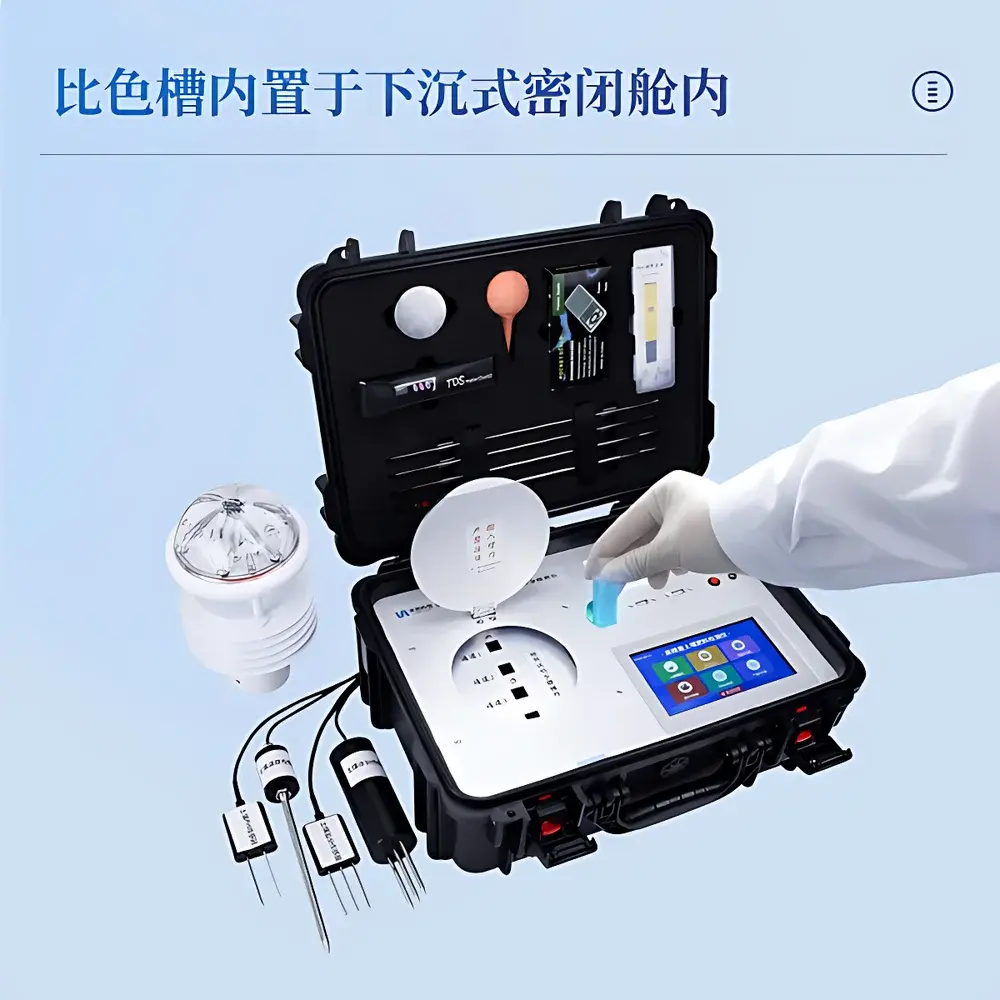
The COMECAUSE IN~HT800 is a field-deployable, Android-based multi-parameter analyzer engineered for precision soil nutrient assessment and integrated environmental monitoring in agricultural research, extension services, and precision farming operations. It operates on standardized colorimetric spectrophotometric principles—compliant with AOAC, ISO 11260, and ASTM D5088 methodologies—where analyte-specific reagents react with extracted soil, fertilizer, or plant tissue samples to generate chromogenic complexes. Absorbance is measured at four fixed wavelengths (680 nm red, 420 nm blue, 510 nm green, 590 nm orange) using solid-state optical modules, enabling quantitative determination of nitrogen, phosphorus, potassium, organic matter, micronutrients, and heavy metals. Unlike laboratory benchtop analyzers, the IN~HT800 integrates real-time in-situ soil physical sensors (moisture, temperature, pH, EC) and ambient air quality sensors (PM₂.₅, PM₁₀, CO, SO₂, NO₂, O₃, T/RH, wind, pressure, rainfall), forming a unified data acquisition platform aligned with FAO’s Digital Agriculture Framework and USDA NRCS soil health monitoring protocols.
Key Features
- Four-channel fixed-wavelength photometric detection system with thermally stabilized LED sources (lifespan >100,000 h); no moving parts or mechanical alignment required.
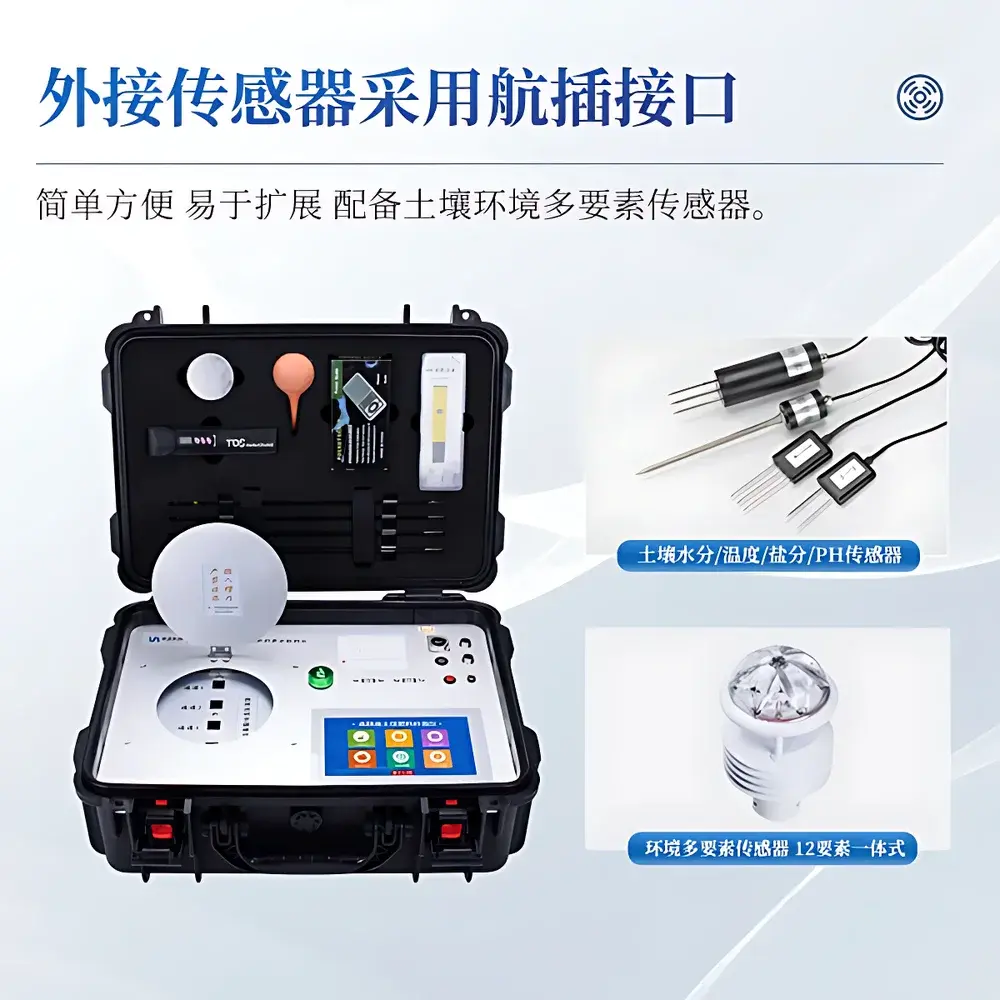
- Integrated sensor suite: 6.5 cm stainless-steel capacitance-type soil moisture probe (0–100% v/v, ±2% accuracy), 23 cm Pt100 soil temperature probe (−40 to +120 °C, ±0.2 °C), graphite-based EC sensor (0–20 mS/cm, ±1%), and solid-state soil pH electrode (0–14, ±0.2 units).
- 12-element meteorological module: ultrasonic anemometer (0–60 m/s, ±0.1 m/s), capacitive RH sensor (0–100% RH, ±3% RH), piezoresistive barometer (300–1100 hPa, ±0.25%), optical rain gauge (0–4 mm/min, ±4%), and electrochemical gas sensors (CO, SO₂, NO₂, O₃).
- Android 5.1 OS powered by quad-core ≥1.8 GHz CPU, 16 GB internal storage, 7.0-inch IPS LCD (1024×600), IP65-rated rugged housing with shock-absorbing PVC carry case.
- Dual authentication: fingerprint biometrics + password-protected multi-user accounts with role-based data access control.
- On-device GPS geotagging (WGS84), automatic time sync via Wi-Fi/NTP, and built-in thermal printer supporting QR-coded reports with channel ID, absorbance, concentration (mg/kg), operator ID, timestamp, and location metadata.
- Real-time cloud synchronization via Wi-Fi or Ethernet; dedicated agri-cloud portal with GLP-compliant audit trail, user-defined data export (CSV/Excel), and cross-device access via web dashboard, iOS/Android app, and WeChat Mini Program.
Sample Compatibility & Compliance
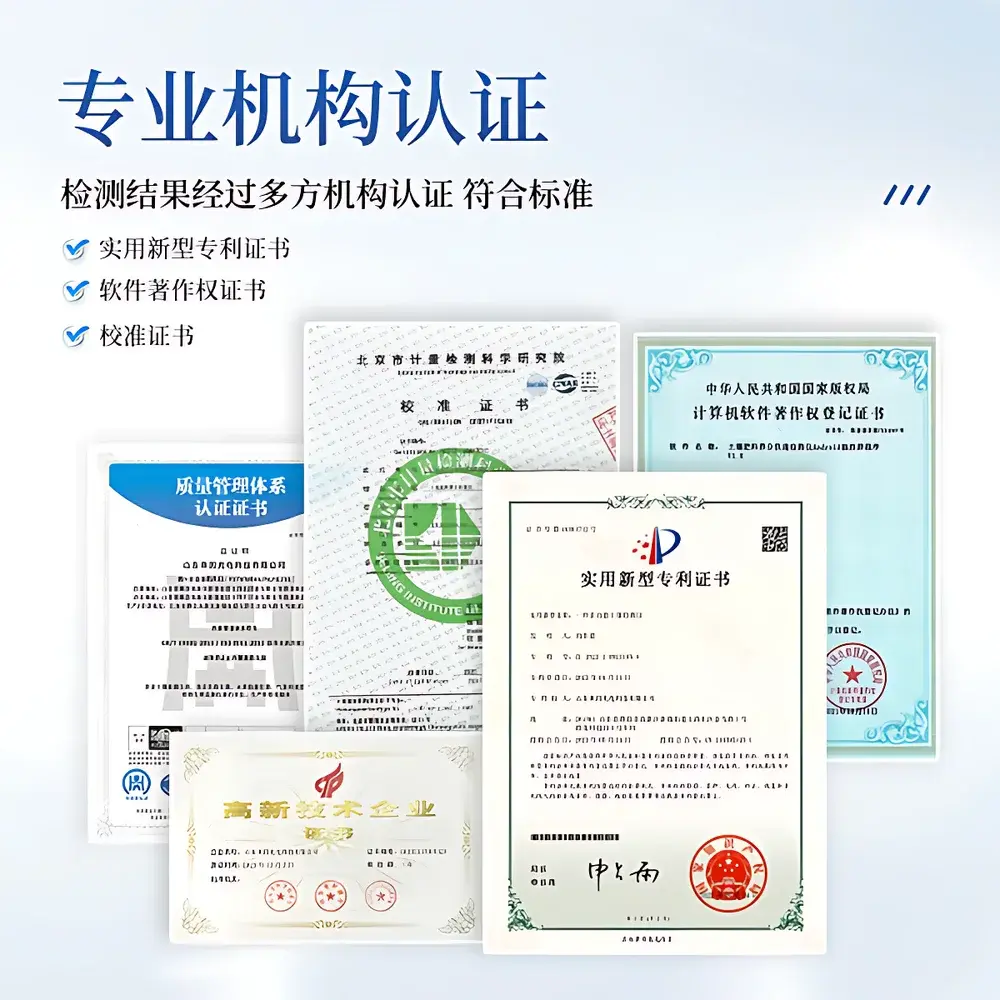
The IN~HT800 supports standardized extraction protocols for diverse matrices: air-dried <2 mm soil sieves (for NH₄⁺-N, NO₃⁻-N, Olsen-P, ammonium acetate-K), fertilizer slurries (NPK, urea, organics), plant tissue digests (Kjeldahl/HNO₃-HClO₄), and aqueous extracts (irrigation water, leachates). All colorimetric assays adhere to internationally recognized reference methods—including ISO 14253-1 (measurement uncertainty), ISO 11260 (soil phosphorus), and USP (method validation)—with documented linearity (R² ≥ 0.999), repeatability (≤0.03% CV), and stability (drift <0.3% over 60 min). The instrument meets IEC 61000-4 electromagnetic compatibility standards and carries China’s CCC certification. Its software architecture complies with FDA 21 CFR Part 11 requirements for electronic records and signatures, including secure login, audit logging, and electronic signature capture for QA/QC workflows.
Software & Data Management
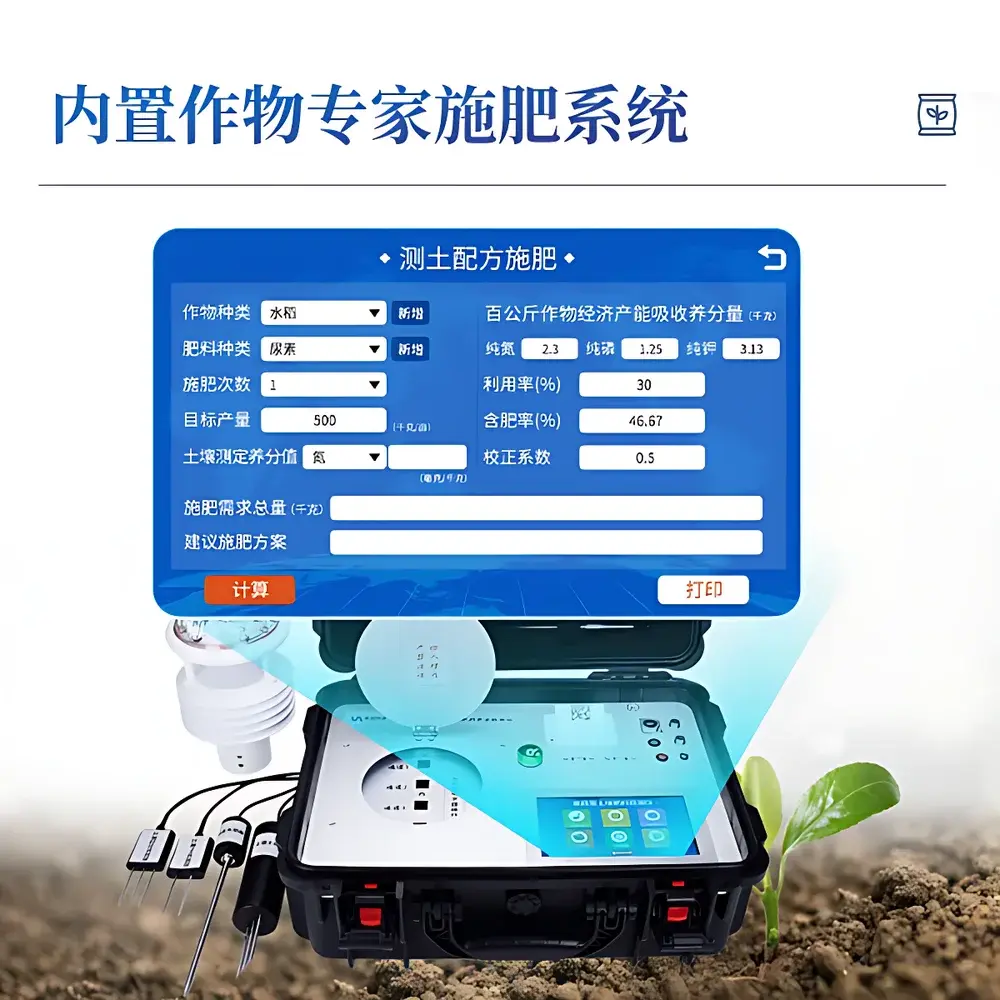
Embedded firmware includes guided step-by-step assay workflows—preloaded with SOPs for >120 parameters—and contextual video tutorials accessible directly from the home screen. Calibration is fully automated; no manual zeroing or wavelength recalibration is required. The cloud platform features a validated Soil Test Interpretation Engine that maps results against FAO-referenced critical nutrient thresholds and regional crop-specific sufficiency ranges (e.g., corn N: 20–30 mg/kg, wheat P: 15–25 mg/kg). Integrated Fertilizer Recommendation Module applies yield-goal modeling per ISRIC guidelines, factoring in soil test values, nutrient removal coefficients, and correction factors for organic amendments. All data exports retain full traceability: sample ID, GPS coordinates, analyst ID, instrument serial number, calibration batch IDs, and raw absorbance logs—enabling full audit readiness for ISO/IEC 17025-accredited labs.
Applications
The IN~HT800 serves as a primary field tool for university agronomy departments conducting spatial soil variability studies; extension agents delivering on-farm nutrient management advisories; certified crop advisors validating variable-rate fertilizer prescriptions; and organic certification bodies verifying heavy metal compliance (Cd, Pb, As per EU Regulation 2021/1165). In commercial agriculture, it enables rapid pre-plant soil screening across large fields (≤20 min for NPK triad, including extraction), supports irrigation scheduling via real-time volumetric water content tracking, and validates compost maturity through sequential organic matter and C:N ratio measurements. Its dual soil–atmosphere sensing capability also supports climate-smart agriculture initiatives—correlating soil moisture dynamics with evapotranspiration models and linking trace gas concentrations (NO₂, O₃) to crop stress phenotyping.
FAQ
Does the IN~HT800 require external lab validation for regulatory reporting?
No. Its colorimetric assays are method-validated against ISO and AOAC references; however, for official certification (e.g., organic input approval), users should cross-validate with accredited third-party labs per local jurisdiction requirements.
Can the device operate without network connectivity?
Yes. All assays, data logging, printing, and onboard calculation modules function offline. Cloud sync resumes automatically upon reconnection.
What is the calibration frequency and traceability protocol?
Factory-calibrated with NIST-traceable standards. No routine recalibration is needed; drift is monitored continuously and reported in every printout. Annual verification using supplied K₂Cr₂O₇ and CuSO₄ standards is recommended.
Is the soil pH electrode suitable for direct insertion into undisturbed field soil?
Yes. The proprietary solid-state pH probe requires no hydration gel or liquid junction—designed specifically for in-situ measurement in non-saturated soils per ASTM D4972.
How does the instrument handle turbid water samples (e.g., ponded irrigation runoff)?
Turbidity-compensated algorithms are embedded for N/P/K assays in suspended solids up to 500 NTU, validated per EPA Method 365.3 modifications.







