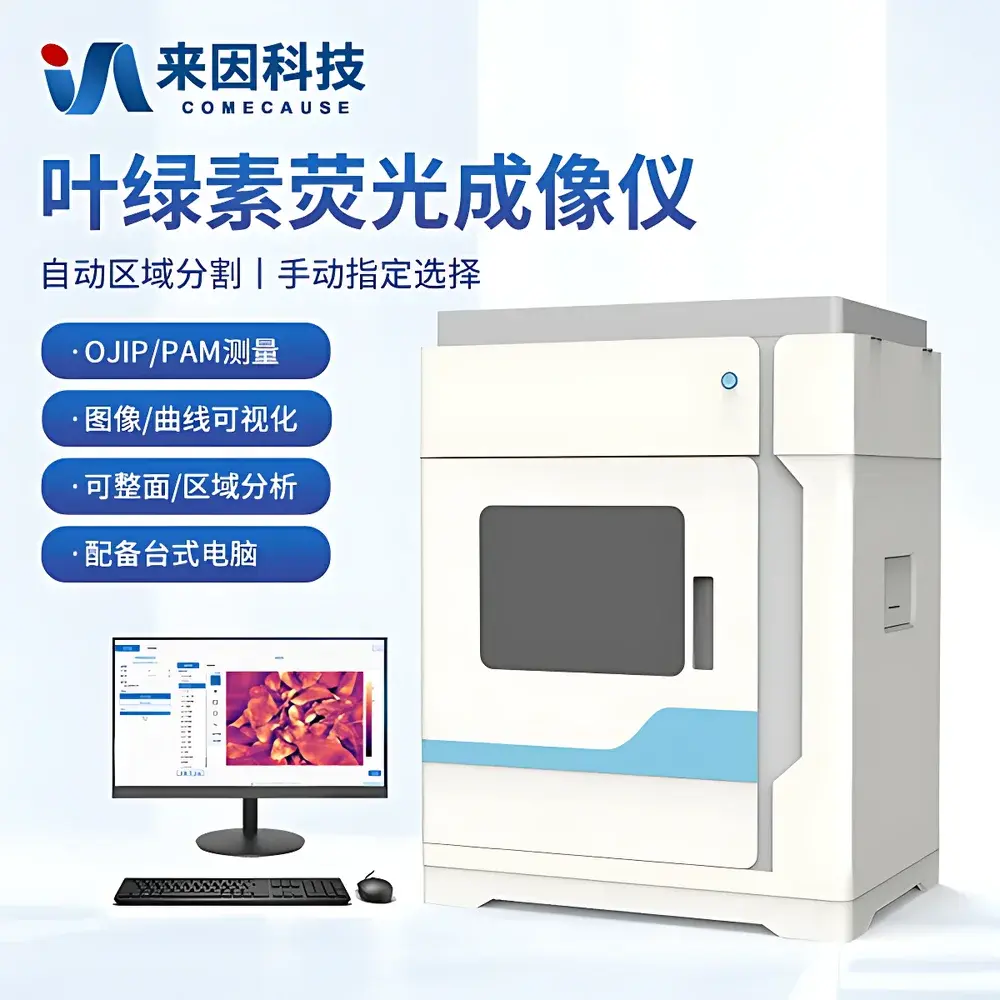
COMECAUSE IN~LeafClear Chlorophyll Fluorescence Imaging System
| Brand | COMECAUSE |
|---|---|
| Origin | Shandong, China |
| Manufacturer Type | Original Equipment Manufacturer (OEM) |
| Country of Origin | China |
| Model | IN~LeafClear |
| Price | USD 67,000 (FOB Qingdao) |
| Camera Resolution | 1608 × 1104 pixels |
| Pixel Size | 9 µm × 9 µm |
| Frame Rate | 100 fps |
| Bit Depth | 12-bit |
| Interface | USB 3.0 |
| Lens Focal Length | 12 mm |
| Maximum Aperture | f/2.8 (adjustable) |
| Horizontal FOV | 62.11° |
| Vertical FOV | 44.83° |
| Max Imaging Area | 50 cm × 35 cm |
| Excitation Wavelength | 450 nm (blue LED) |
| Actinic Light | 630 nm (red LED) |
| Far-Red Light | 730 nm |
| LED Irradiance Range | 1–100% (up to 1440 µmol·m⁻²·s⁻¹) |
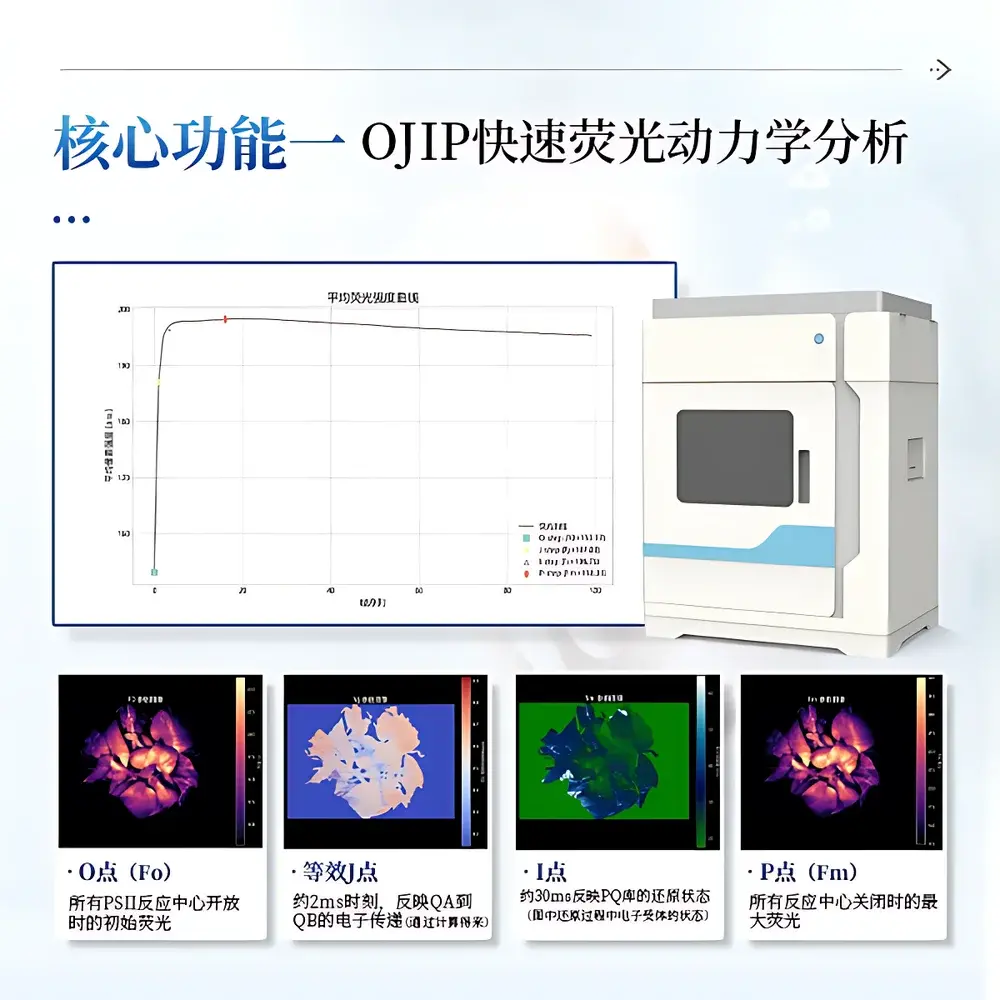
| OJIP Measurement Duration | 0.1–1.0 s (default 1 s) |
| PAM Dark Adaptation | 0–3600 s |
| PAM Saturation Pulse Intensity | 15–100% (450 nm) |
| Fluorescence Dynamic Range | 0–4095 (12-bit) |
| SNR | >100:1 |
| Repeatability (CV) | <3% |
| Linearity (R²) | >0.999 |
| Minimum Sampling Interval | 10 ms (OJIP), 100 ms (PAM) |
| Exposure Time | 100–1000 ms |
| Spatial Resolution | ~0.3 mm/pixel (at 50 cm × 35 cm FOV) |
Overview
The COMECAUSE IN~LeafClear Chlorophyll Fluorescence Imaging System is a research-grade, non-invasive optical platform engineered for quantitative spatial mapping of chlorophyll a fluorescence kinetics in intact plant leaves and small canopies. It operates on the biophysical principle that chlorophyll fluorescence yield is inversely proportional to photochemical energy conversion efficiency in Photosystem II (PSII), enabling real-time inference of electron transport chain functionality, reaction center integrity, and photoprotective capacity. The system integrates two complementary fluorescence methodologies—OJIP transient analysis and Pulse-Amplitude Modulated (PAM) fluorometry—within a single modular hardware architecture. Its high-sensitivity CMOS imaging sensor (12-bit, 100 fps), precisely calibrated multi-wavelength LED excitation array (450 nm, 630 nm, 730 nm), and optically optimized 12 mm f/2.8 lens enable reproducible acquisition of fluorescence parameters across defined spatial domains (max 50 cm × 35 cm). Designed for rigorous laboratory and controlled-environment phenotyping, the IN~LeafClear complies with foundational requirements for GLP-aligned plant physiology workflows, including traceable irradiance calibration, timestamped metadata logging, and deterministic exposure control.
Key Features
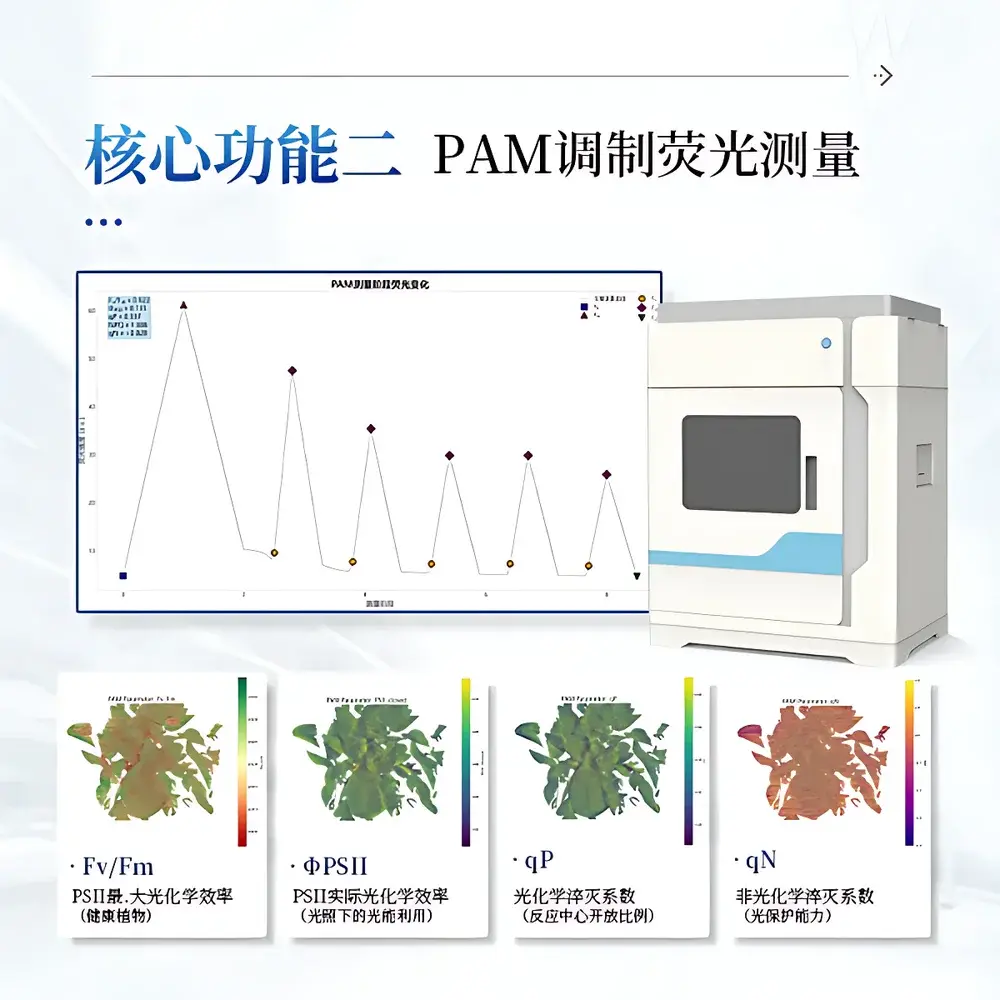
- Simultaneous dual-mode operation: native support for both OJIP fast transient kinetics (0.1–1.0 s, 10 ms resolution) and PAM-based dynamic quenching analysis (including qP, qN, NPQ, ΦPSII, ETR)
- High-fidelity imaging sensor: 1608 × 1104 pixel CMOS detector with 9 µm × 9 µm pixels, 12-bit digitization, and >100:1 signal-to-noise ratio for robust low-fluorescence detection
- Precisely regulated LED illumination: independently controllable 450 nm (excitation), 630 nm (actinic), and 730 nm (far-red) sources; irradiance adjustable from 1–100% (0–1440 µmol·m⁻²·s⁻¹) with <1 ms electrical response time
- Automated spatial segmentation: adaptive thresholding algorithm for leaf ROI identification; manual selection tools (rectangular, circular, freehand polygon) with real-time parameter averaging
- Comprehensive JIP-test parameter suite: calculates ABS/RC, TR₀/RC, ETo/RC, DI₀/RC, PIABS, M₀, Vj, Area, and other biophysically grounded indices derived from OJIP transients
- FDA 21 CFR Part 11–compatible audit trail: full logging of operator actions, instrument settings, measurement timestamps, and configuration changes
Sample Compatibility & Compliance
The IN~LeafClear accommodates detached leaves, potted seedlings, rosettes, and small vegetative shoots up to 35 cm in height. Its 50 cm × 35 cm field of view supports imaging of Arabidopsis thaliana trays (e.g., 6 × 4 well plates), young maize or rice plants, and multi-species microcosms under standardized growth chamber conditions. All optical components meet IEC 62471 photobiological safety standards for Class 1 LED sources. Firmware and software architecture adhere to ISO/IEC 17025 principles for measurement traceability: irradiance output is factory-calibrated against NIST-traceable spectroradiometric references, and each measurement session embeds embedded metadata (exposure duration, LED intensity %, lens aperture, ambient temperature if external sensor connected). The system supports experimental protocols aligned with ASTM E2912-21 (Standard Guide for Plant Phenotyping Using Optical Sensors) and EU COST Action FA1306 (Phenomics Standards Framework).
Software & Data Management
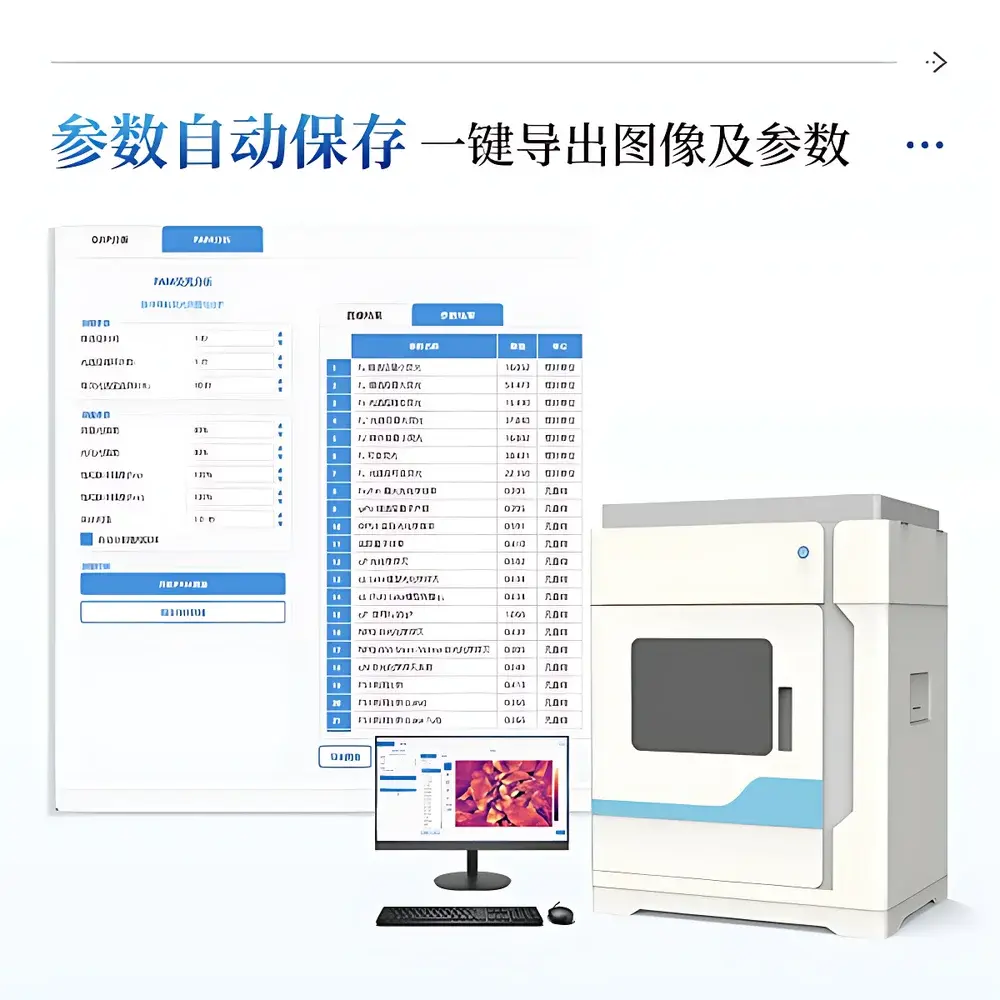
The IN~LeafClear Control Suite is a Windows-native application featuring bilingual (English/Chinese) GUI with context-sensitive tooltips for all instrument parameters. It implements hierarchical data management: raw image stacks (16-bit TIFF), processed parameter maps (PNG with embedded color scale metadata), and tabular results (CSV/Excel) are stored in a project-based directory structure with ISO 8601-compliant naming (e.g., “OJIP_001_FvFm_Map.png”, “PAM_002_NPQ_TimeSeries.csv”). All configuration files (.cfg) retain user-defined defaults—including dark adaptation duration, saturation pulse intensity, and sampling interval—for protocol reproducibility. Export functions include batch generation of publication-ready figures with scientific colormaps (Jet, Viridis), automatic annotation of scale bars and parameter units, and export of full metadata JSON sidecar files. Audit logs record every parameter change, image acquisition event, and export action with user ID and UTC timestamp—enabling full reconstruction of analytical provenance per GLP/GMP documentation requirements.
Applications
- Photosynthetic phenotyping: High-throughput screening of mutant libraries or breeding populations for PSII quantum yield (Fv/Fm), electron transport rate (ETR), and performance index (PIABS) under controlled light, temperature, or CO₂ regimes
- Abiotic stress physiology: Quantitative assessment of drought-induced photoinhibition via progressive decline in Fv/Fm and accumulation of non-photochemical quenching (NPQ); thermal tolerance profiling using ΦPSII kinetics during ramped heat treatments
- Agrochemical mode-of-action studies: Detection of herbicide-induced PSII inhibition (e.g., DCMU) through suppressed Fv/Fm and altered OJIP curve shape; evaluation of fungicide or insecticide phytotoxicity via early changes in qP and NPQ dynamics
- Ecophysiological field validation: Calibration of remote sensing indices (e.g., PRI, NDVI) using ground-truth fluorescence maps acquired under natural canopy conditions (via portable dark-adaptation hood)
- Education and training: Visualization of fundamental photosynthetic concepts—including QA reduction kinetics, plastoquinone pool redox state, and energy dissipation pathways—using live, spatially resolved fluorescence imagery
FAQ
What is the minimum detectable fluorescence signal level?
The system achieves sub-picomolar sensitivity in controlled dark-adapted conditions, with a lower limit of quantification (LLOQ) corresponding to ~0.5% of Fm under standard 450 nm excitation at 100% intensity.
Can the IN~LeafClear be integrated with environmental growth chambers?
Yes—USB 3.0 connectivity enables remote operation from outside climate-controlled rooms; optional external temperature/humidity sensors can be synchronized with fluorescence acquisition via TTL trigger signals.
Does the software support automated batch processing of multiple OJIP datasets?
Yes—scriptable macros allow sequential analysis of hundreds of images using identical JIP-test parameter definitions and region-of-interest masks.
Is calibration verification required between experiments?
While factory calibration remains stable, users are advised to perform daily verification using a certified neutral density filter and reference leaf standard (e.g., dried spinach leaf with known Fv/Fm = 0.82 ± 0.01) to confirm optical path consistency.
How does the system handle heterogeneous leaf surfaces (e.g., pubescence, wax bloom)?
The 450 nm excitation wavelength minimizes scattering artifacts; combined with adaptive histogram equalization and Gaussian smoothing during post-processing, it maintains quantitative fidelity across morphologically diverse species including wheat, barley, and Brassica napus.