
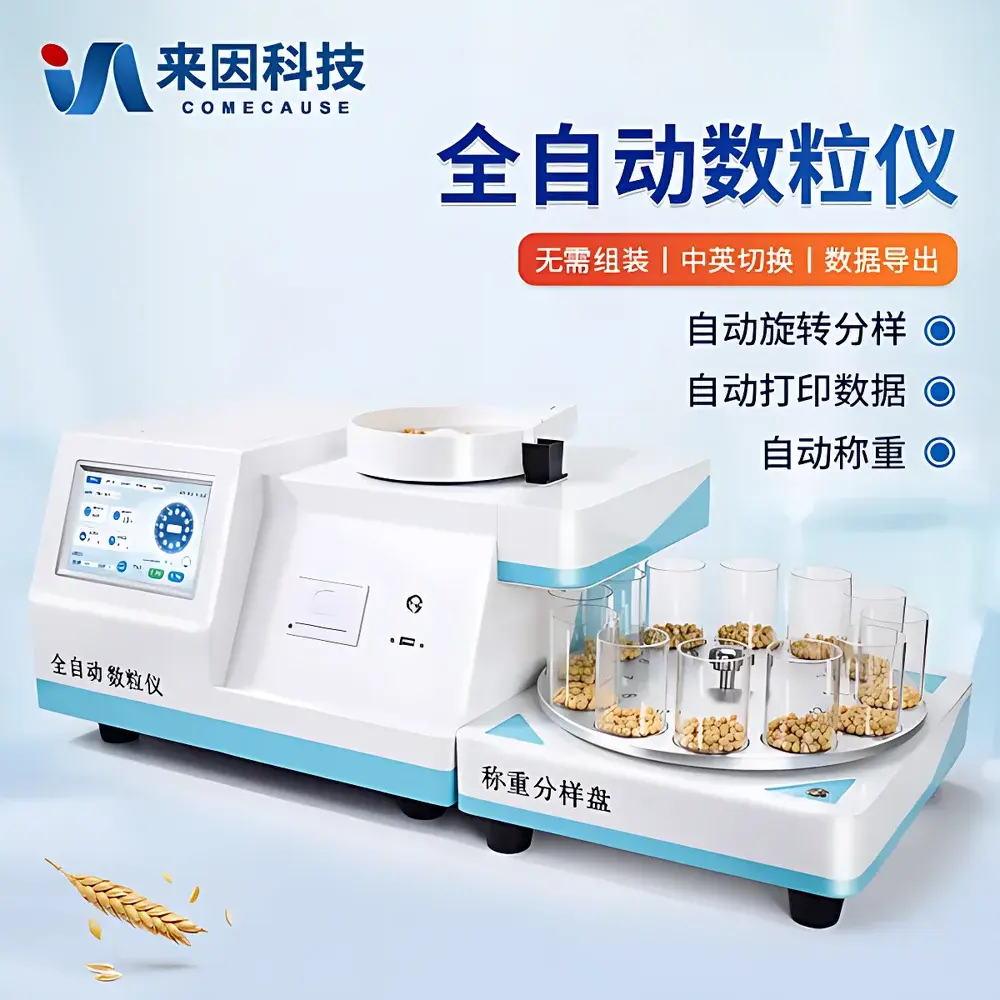
COMECAUSE IN*SL20 Automated Seed Counter for Corn, Rice, Sesame and Other Agricultural Seeds
| Brand | COMECAUSE |
|---|---|
| Origin | Shandong, China |
| Manufacturer Type | Direct Manufacturer |
| Country of Origin | China |
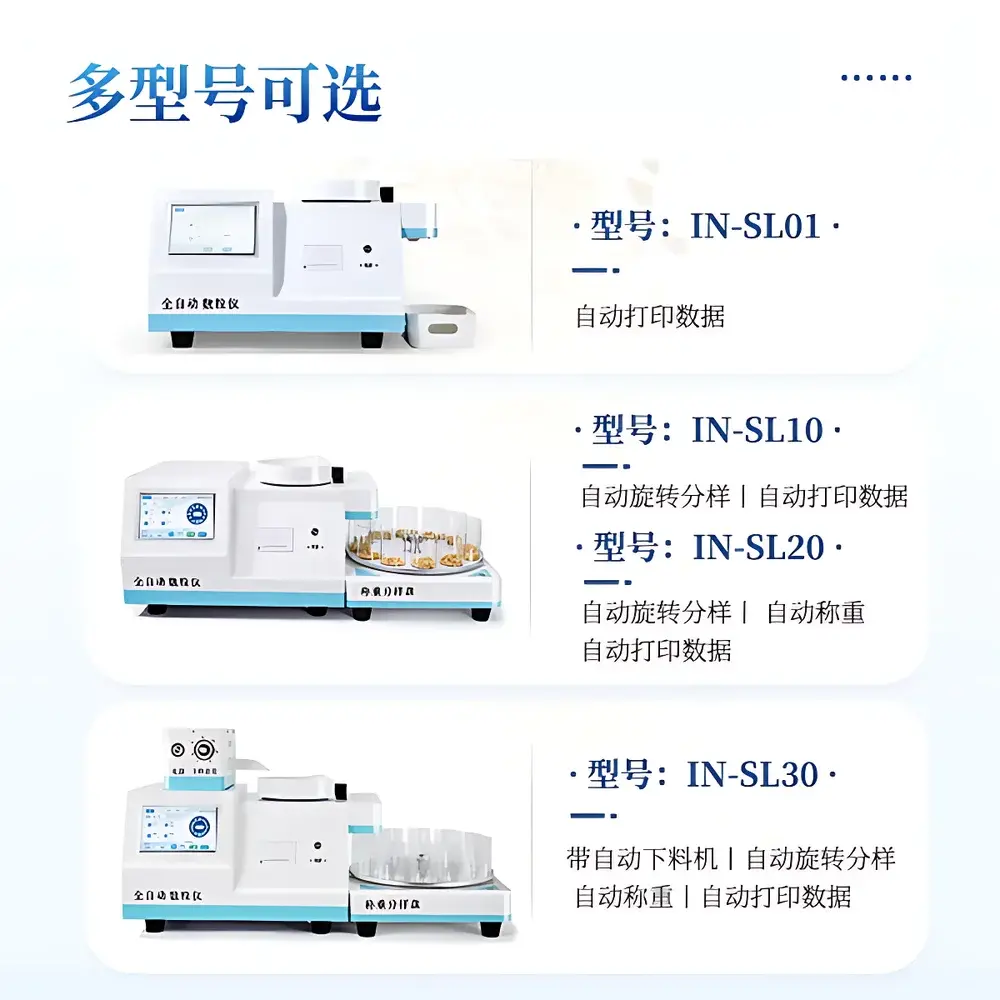
| Model | IN*SL20 |
| Instrument Category | Sample-Dividing Seed Counter |
| Applicable Seeds | Corn, rice, wheat, soybean, sesame, vegetable seeds, melon & vegetable seeds |
| Counting Accuracy | ±2‰ |
| Maximum Counting Speed | 1,000–2,000 seeds/min |
| Seed Length Range | 0.5–23 mm |
| Counting Capacity | 1–9,999 seeds per cup |
| Preset Stop Range | 1–9,999 (0000 = continuous mode) |
| Counting Disc Speed | 0–99 (adjustable, stepless) |
| Sensitivity Adjustment | 0–10 |
| Number of Sample Cups | 12 |
| Cup Dimensions | 60 mm (Ø) × 80 mm (H) |
| Main Unit Dimensions | 580 × 390 × 336 mm (W×D×H) |
| Weight | 24 kg |
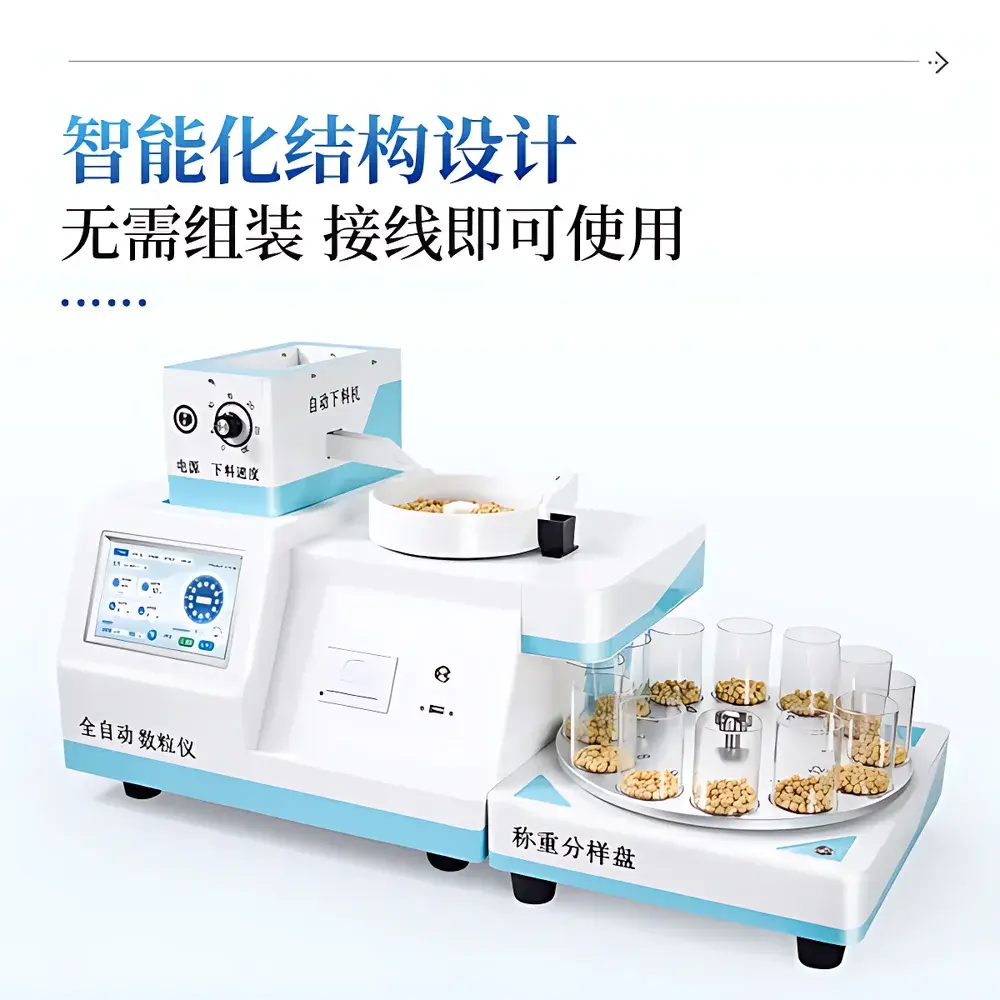
| Feeder Unit Dimensions | 360 × 390 × 197 mm (W×D×H) |
| Weight | 12 kg |
| Continuous Operation Time | ≥8 h |
| Operating Noise | ≤80 dB(A) |
| Ambient Temperature | −10°C to +50°C |
| Relative Humidity | <85% RH |
| Power Supply | AC 220 V, 50 Hz (export variants: 100/110/200/240 V, 50/60 Hz) |
| Integrated Features | Auto-weighing (thousand-seed weight calculation), thermal label printing, USB data export, bilingual UI (Chinese/English) |
Overview
The COMECAUSE IN*SL20 is an industrial-grade, sample-dividing automated seed counter engineered for high-throughput, high-reproducibility quantification of agricultural seeds in quality control, breeding, seed certification, and seed processing laboratories. It operates on a dual-stage optical counting principle: high-speed bulk feeding followed by precision low-speed verification using a calibrated vibration-driven rotating disc and multi-angle photoelectric sensing array. This architecture ensures robust discrimination of individual seeds—even those with irregular morphology, surface texture, or translucency—without reliance on image-based pattern recognition. The system integrates real-time mass measurement via built-in load cell, enabling automatic calculation of thousand-seed weight (TSW) per sample cup—a critical parameter standardized under ISO 6554, ISTA Rules, and GB/T 3543.7. Designed for GLP-compliant environments, the IN*SL20 supports audit-ready data traceability through timestamped records, operator ID tagging (via optional login), and immutable local storage.
Key Features
- Modular, field-upgradable hardware architecture supporting future expansion of seed-type libraries and calibration profiles.
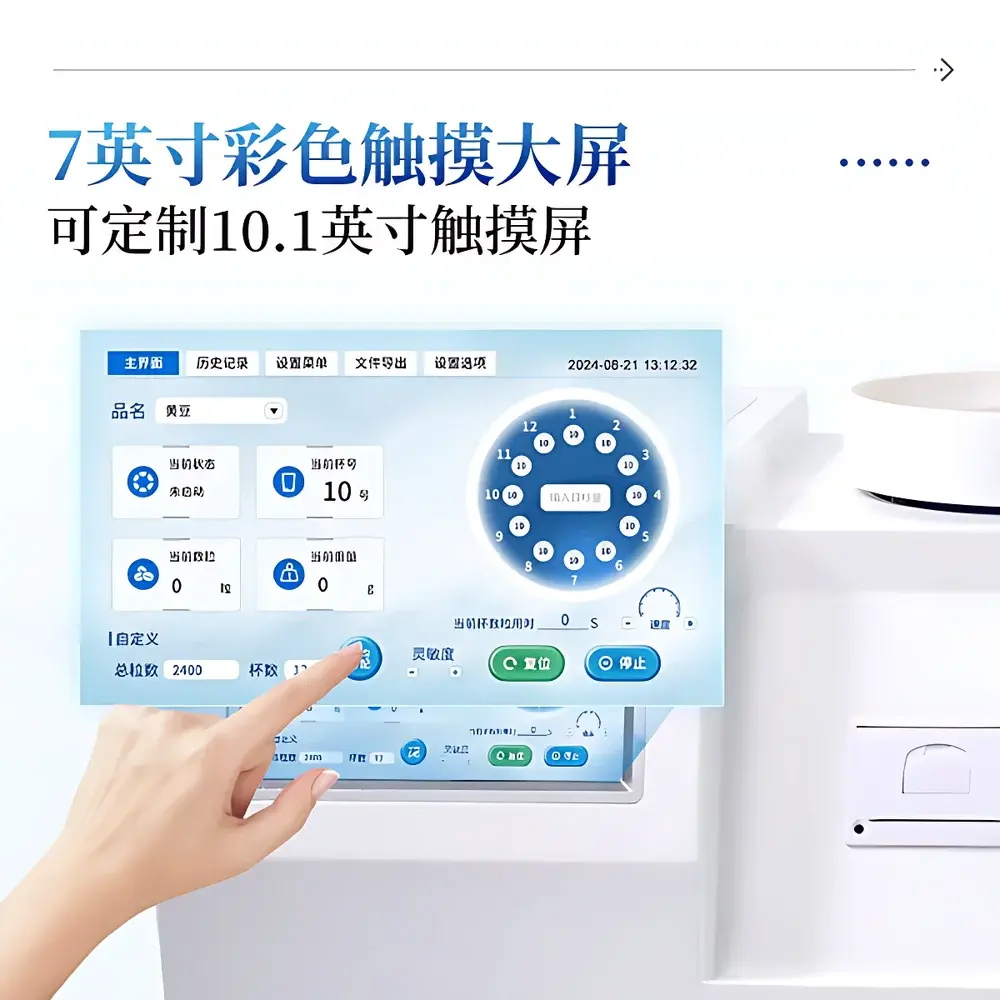
- 7-inch full-color capacitive touchscreen (optional 10.1-inch upgrade) with intuitive icon-driven interface and real-time status visualization (e.g., “Counting”, “Decelerating”, “Cup Full”, “Error”).
- Stepless speed control (0–99) of the counting disc, coupled with adaptive deceleration logic that triggers at 95% of preset count to eliminate overshoot from inertial carryover.
- Adjustable optical sensitivity (0–10) and programmable vibration profile (amplitude/frequency) to accommodate diverse seed geometries—from small sesame (0.5 mm) to large corn kernels (23 mm).
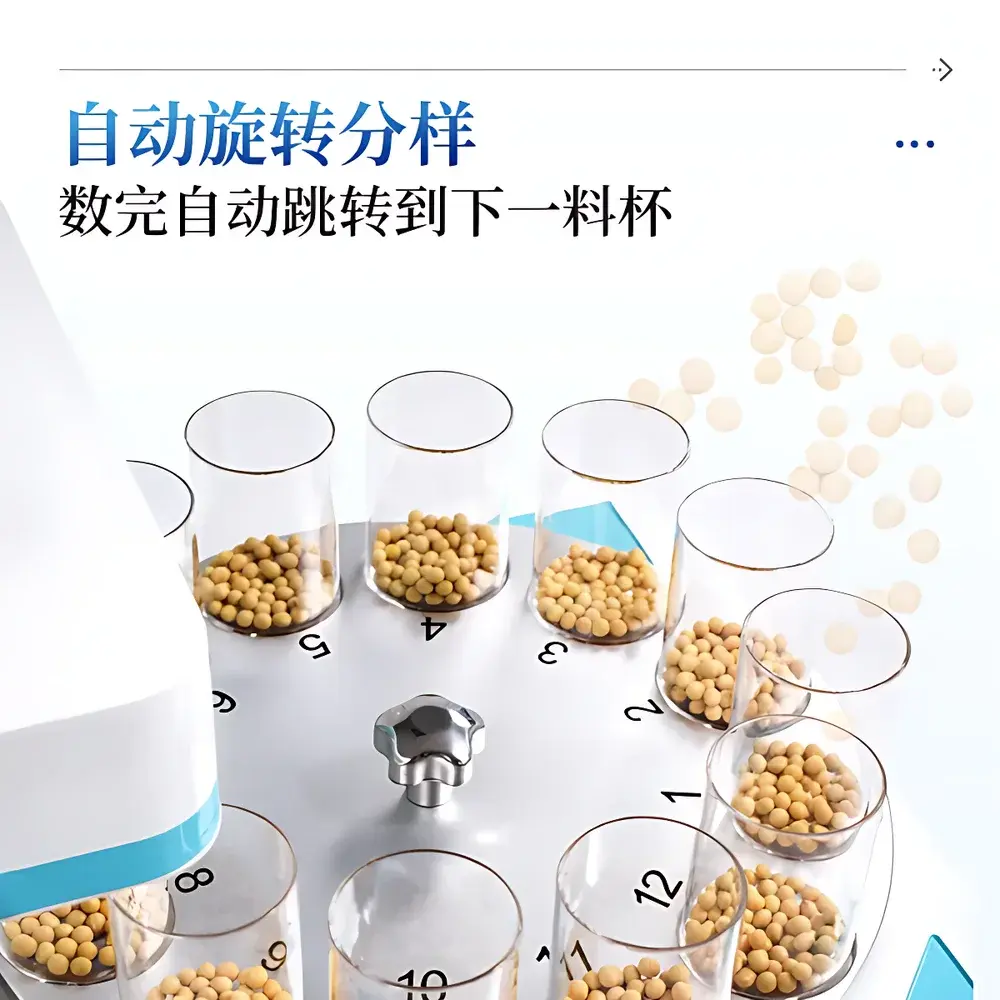
- 12-position rotating cup carousel with auto-indexing; seamless transition between cups enables uninterrupted filling during bagging or packaging operations.
- Integrated precision load cell (±0.01 g resolution) for concurrent weighing and TSW computation—no external balance required.
- Built-in thermal label printer producing adhesive-backed labels compliant with ISO/IEC 15459-2 serialization standards; printed output includes variety name, count, weight, TSW, date/time, and operator ID.
- Comprehensive data governance: local storage of ≥10,000 test records with searchable filters (variety, date range, TSW range); USB export in CSV format compatible with LIMS and statistical analysis tools (e.g., JMP, Minitab).
- Dual-language UI (English/Chinese) with one-touch switching; firmware supports UTF-8 character set for global variety nomenclature (e.g., Latin binomials, regional cultivar codes).
Sample Compatibility & Compliance
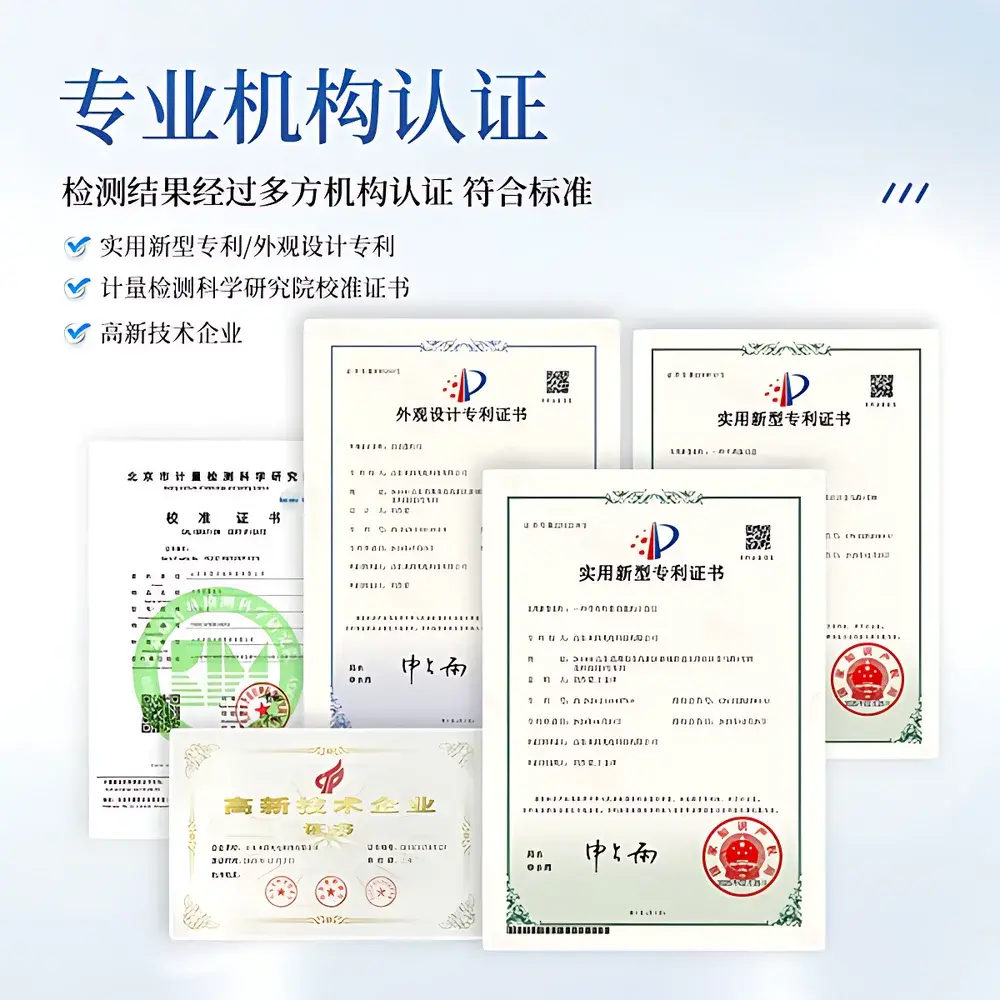
The IN*SL20 is validated for use with monocot and dicot seeds meeting ISO 6554:2022 (seed sampling and testing), ISTA Accreditation Standard Section 5.1 (counting methods), and national standards GB/T 3543.7–2019 (agricultural seed testing—determination of thousand-seed weight). Its mechanical and optical design accommodates seeds ranging from 0.5 mm (sesame, poppy) to 23 mm (large maize hybrids, pumpkin), including oblong (rice), reniform (soybean), and flattened (flax) morphologies. The system complies with IEC 61000-6-3 (EMC emissions) and IEC 61000-6-2 (immunity), and meets CE marking requirements for machinery safety (2006/42/EC). All firmware logs—including calibration events, error flags, and user actions—are time-stamped and retained for ≥12 months, satisfying FDA 21 CFR Part 11 requirements for electronic records when deployed in regulated seed certification labs.
Software & Data Management
Firmware v3.2+ implements deterministic real-time task scheduling with non-volatile memory write protection to prevent data corruption during power interruption. Each record contains: variety identifier, cup number, seed count, gross/net weight, calculated TSW, counting duration, ambient temperature/humidity (via internal sensor), operator ID (if enabled), and firmware revision. Data export via USB 2.0 generates ISO 8601-compliant CSV files with UTF-8 encoding and BOM header. Optional Ethernet/Wi-Fi module (IN*SL20-NET add-on) enables secure TLS 1.2 communication with central LIMS servers using RESTful API endpoints. Audit trail functionality logs all configuration changes (e.g., sensitivity adjustment, cup count modification) with user attribution and timestamp—fully traceable for ISO/IEC 17025 internal audits.
Applications
- Seed certification laboratories performing official variety purity and germination lot testing per ISTA or AOSA protocols.
- Plant breeding programs requiring rapid, unbiased replication of seed sub-samples for phenotyping trials (e.g., GWAS, QTL mapping).
- Commercial seed processors executing batch release checks against contractual count tolerances (e.g., 50,000 seeds per unit package).
- National agricultural research institutes conducting seed viability and vigor studies where TSW consistency directly correlates with field emergence rates.
- University teaching labs demonstrating principles of seed biometrics, statistical sampling theory, and metrology in biological systems.
FAQ
What seed types are validated for use with the IN*SL20?
Corn, rice, wheat, soybean, sesame, barley, oat, sorghum, millet, sunflower, brassica species, and most common vegetable and legume seeds—with length between 0.5 mm and 23 mm.
Does the system require external calibration weights or reference standards?
No. The integrated load cell is factory-calibrated to NIST-traceable standards; users perform routine verification using supplied 100 g and 500 g check weights included in the kit.
Can counting parameters be saved per crop variety?
Yes. Up to 200 user-defined variety profiles can be stored locally, each with optimized vibration speed, sensitivity, deceleration threshold, and TSW target range.
Is the thermal printer compatible with standard label stock?
It accepts 58 mm wide direct thermal labels (core diameter ≤30 mm, outer diameter ≤80 mm); no ribbon or ink required.
How is data integrity ensured during extended unattended operation?
All records are written to redundant flash memory partitions; power-loss recovery resumes from last stable state without data loss or duplication.




