

COMECAUSE IN*ZSS Advanced Plant Water Potential Analyzer (Pressure Chamber Method)
| [Brand | COMECAUSE |
|---|---|
| Origin | Shandong, China |
| Manufacturer Type | OEM/ODM Manufacturer |
| Country of Origin | China |
| Model | IN*ZSS |
| Measurement Range | 0–4.99 MPa (0–49.9 bar) |
| Display | 4.3-inch Color LCD Touchscreen |
| Pressure Vessel Capacity | 4 L |
| Max Working Pressure | 12 MPa |
| Resolution | 0.01 MPa |
| Data Storage | Up to 9999 Records |
| Power Supply | Rechargeable Li-ion Battery |
| Runtime | ≥24 h at Full Brightness |
| Dimensions (Instrument Box) | 520 × 330 × 206 mm |
| Dimensions (Pressure Chamber Box) | 530 × 420 × 206 mm |
| Net Weight (per Box) | ~12 kg |
| Interface | USB 2.0 for Data Export |
| Compliance | Designed for ASTM F3087-14 (Standard Guide for Plant Water Potential Measurements), ISO 10265 (Soil and Plant Hydrometry), and GLP-aligned data logging] |
Overview
The COMECAUSE IN*ZSS Advanced Plant Water Potential Analyzer is a field-deployable, high-precision pressure chamber instrument engineered for quantitative determination of plant water potential (Ψleaf) using the thermodynamic principle of equilibrium pressure balancing. It operates on the Scholander pressure chamber method—a physically grounded technique wherein excised plant tissue (e.g., leaf or stem segment) is sealed in a pressurized chamber, and external nitrogen gas pressure is incrementally applied until xylem sap is forced to the cut surface. At the precise moment sap reappears at the cut end—detected optically and acoustically—the applied pressure equals the magnitude of the original negative water potential in the sample. This value, expressed in megapascals (MPa), reflects the free energy status of water within the plant’s vascular system relative to pure water at atmospheric pressure and defines the direction and driving force of water movement across membranes and tissues.
Key Features
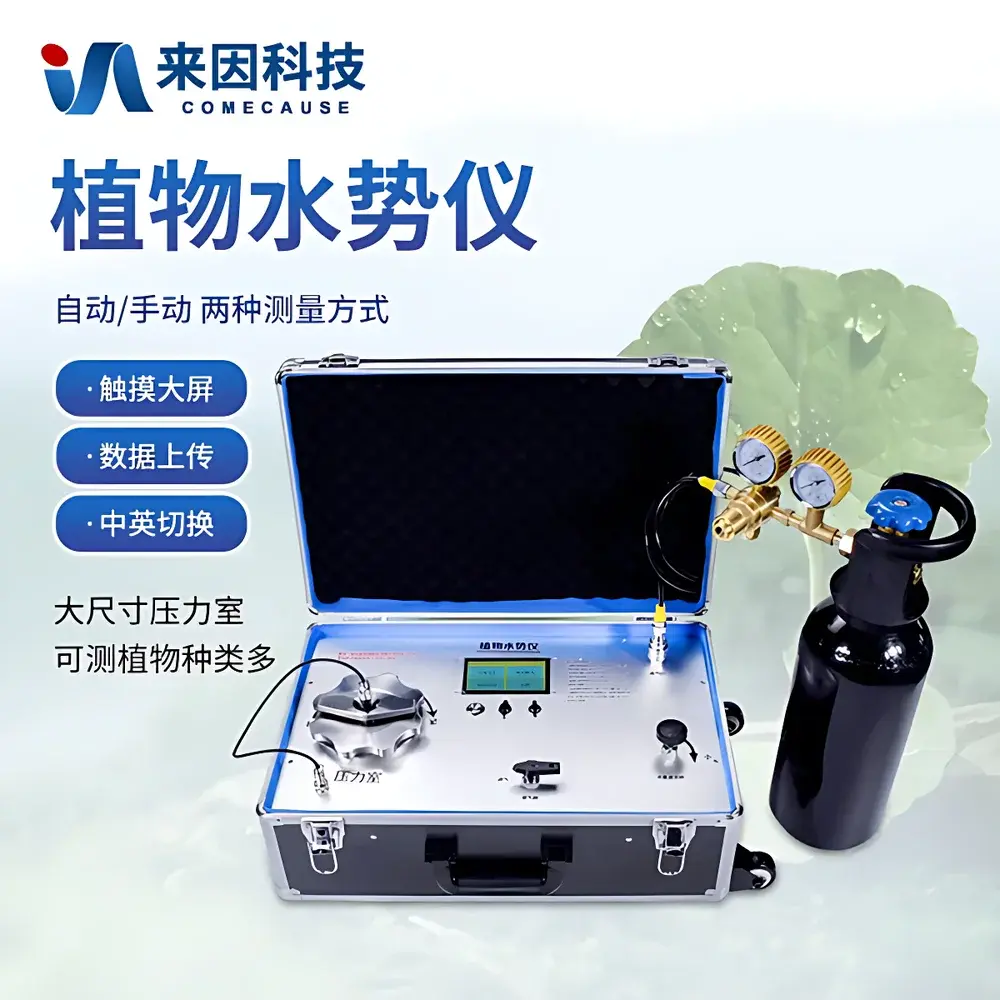
- 4.3-inch full-color capacitive touchscreen with intuitive bilingual (English/Chinese) UI and embedded operational guidance
- Dual-mode operation: fully automated pressure ramping with adjustable sensor sensitivity, plus manual pressure hold mode for experimental flexibility
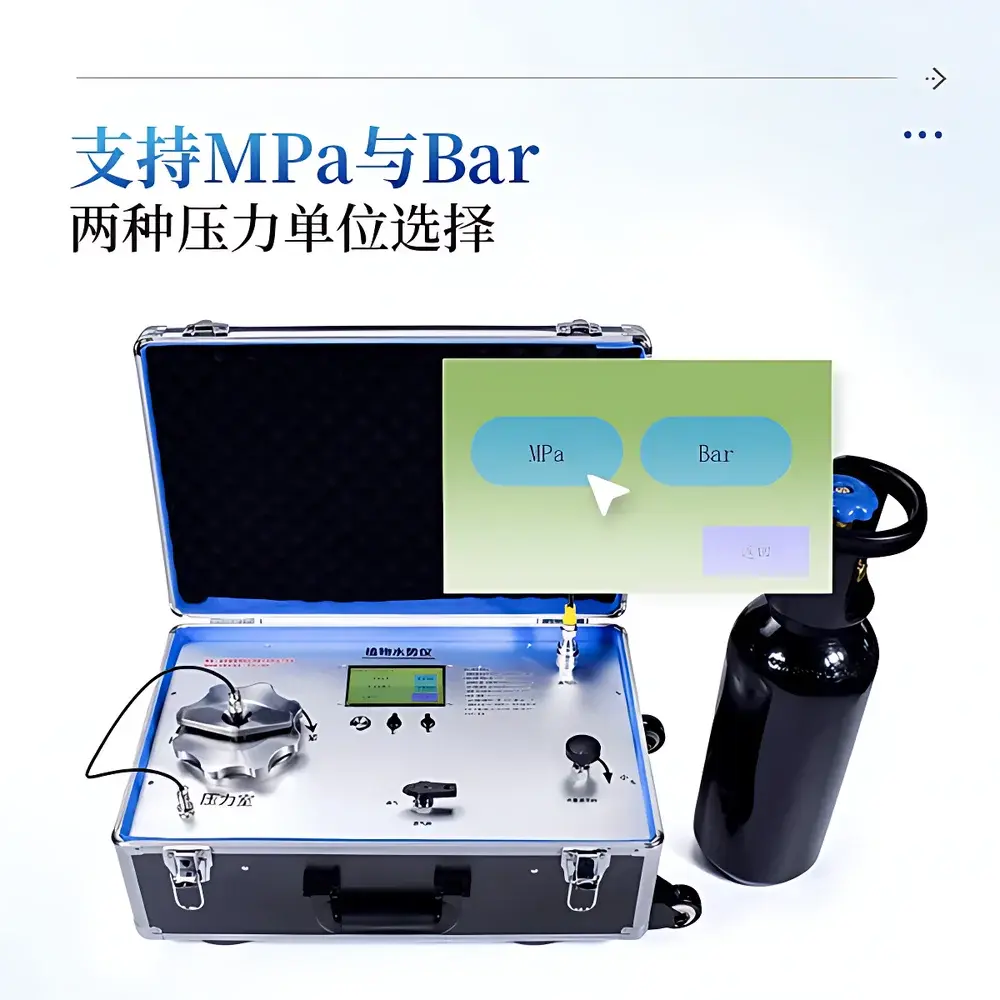
- Real-time unit switching between MPa and bar, with resolution of 0.01 MPa and repeatability ≤ ±0.02 MPa under controlled lab conditions
- Acoustic feedback (audible beep) upon successful sap detection or manual data capture
- Onboard non-volatile memory supporting up to 9999 timestamped measurements, each including date, time, unit, and operator ID field
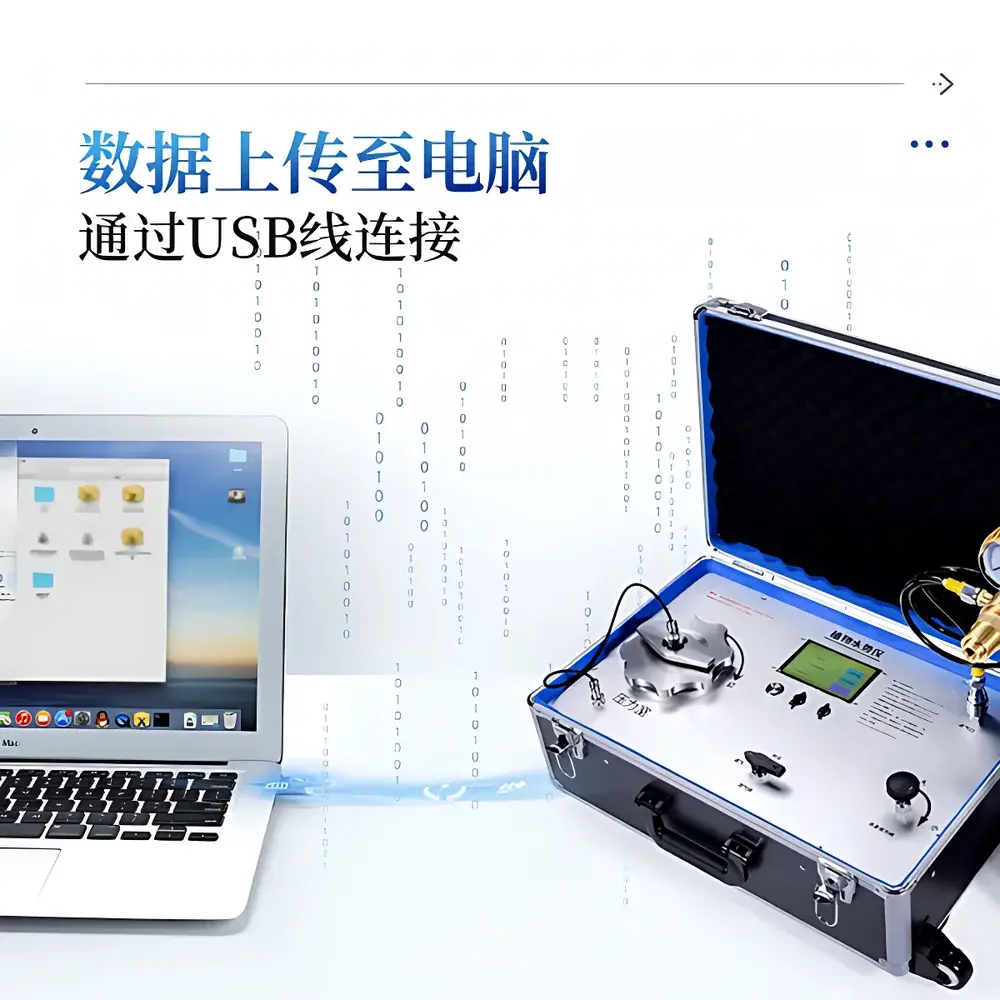
- USB 2.0 interface enabling direct connection to Windows-based PCs; proprietary software imports data into editable Excel (.xlsx) format with optional CSV export
- Integrated real-time clock, battery voltage monitoring, and LED status indicators for charging state and operational readiness
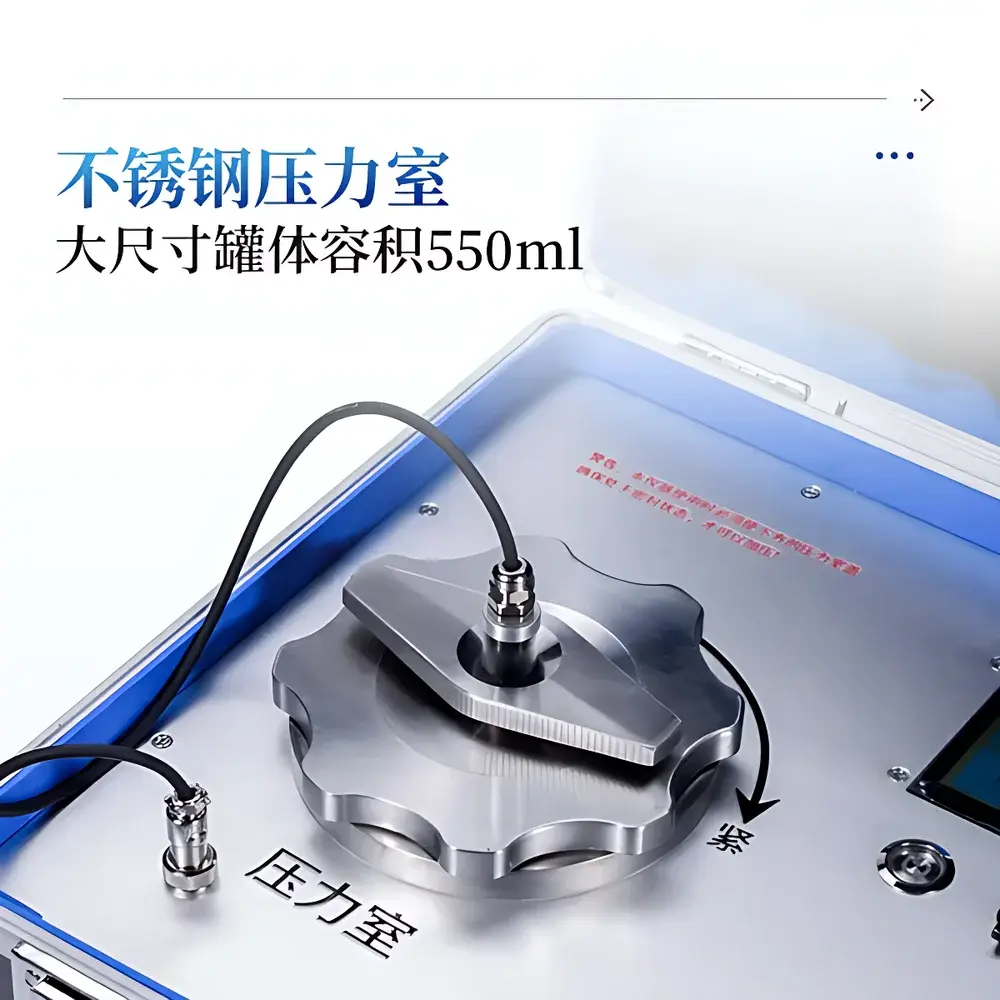
- Robust aluminum-alloy pressure chamber rated to 12 MPa burst pressure, with precision-machined sealing gasket and calibrated safety valve
- Modular dual-casing design: main control unit (520 × 330 × 206 mm) and dedicated 4 L pressure vessel enclosure (530 × 420 × 206 mm), both weighing ~12 kg for balanced portability and field stability
Sample Compatibility & Compliance
The IN*ZSS supports a broad spectrum of herbaceous and woody plant tissues—including leaves, petioles, stems, and small branches—provided sample dimensions conform to standard chamber loading protocols (max. diameter ≤ 28 mm, length ≤ 150 mm). It is validated for use with angiosperms and gymnosperms across agricultural, ecological, and silvicultural contexts. Instrument design adheres to core principles outlined in ASTM F3087-14 (“Standard Guide for Plant Water Potential Measurements”) and aligns with ISO 10265 for hydrometric instrumentation in plant-soil systems. Data logging architecture supports audit-trail functionality, including user-defined metadata fields, time-stamped records, and immutable timestamps—facilitating compliance with Good Laboratory Practice (GLP) requirements in regulated research environments. While not FDA 21 CFR Part 11 certified out-of-box, raw data files retain native integrity for integration into validated laboratory information management systems (LIMS).
Software & Data Management
The included desktop application (Windows 10/11 compatible) provides secure device enumeration via USB CDC class driver, automatic port detection, and one-click synchronization. Each imported dataset includes columnar fields: Sample ID, Date, Time, Measured Ψ (MPa), Unit, Operator, Notes, and Chamber Pressure Log (optional). Export options include formatted Excel workbooks with embedded headers and units, as well as delimiter-separated values for import into R, Python (pandas), or statistical platforms such as JMP or SAS. All exported files retain original acquisition timestamps without modification. Firmware updates are delivered via signed binary packages with SHA-256 checksum verification to ensure traceability and integrity.
Applications
- Irrigation scheduling in orchards and vineyards using predawn leaf water potential thresholds calibrated to species-specific stress responses
- High-throughput screening of drought-tolerant genotypes in breeding programs, where Ψleaf serves as a physiological proxy for root hydraulic conductivity and stomatal regulation efficiency
- Ecophysiological studies comparing water-use strategies across plant functional types (e.g., isohydric vs. anisohydric species) under controlled drought gradients
- Assessment of xylem embolism vulnerability curves through sequential sampling and pressure-volume analysis
- Validation of remote-sensing-based vegetation water stress indices (e.g., Crop Water Stress Index, CWSI) using ground-truth Ψleaf measurements
- Teaching laboratories in plant physiology and environmental botany, where students directly observe the linkage between environmental evaporative demand and plant-level water status
FAQ
What sample preparation steps are critical for reproducible water potential measurements?
Rapid excision (<10 s from cutting to chamber sealing), avoidance of direct sunlight during transport, and consistent sampling time (e.g., predawn or midday) are essential. Samples must be wrapped in moist paper towel and placed in sealed plastic bags with cold packs if delayed analysis is unavoidable.
Can the IN*ZSS measure soil water potential?
No—it is designed exclusively for plant tissue. Soil water potential requires tensiometers, gypsum blocks, or thermocouple psychrometers.
Is calibration required before each use?
The pressure transducer is factory-calibrated and retains accuracy over its service life. Users should perform a zero-pressure verification before first use each day using ambient air and the “Zero” function in the settings menu.
How does temperature affect measurement accuracy?
Ambient temperature fluctuations do not alter the fundamental pressure-equilibrium principle. However, extreme cold (<5°C) may delay sap exudation; warming samples to 20–25°C prior to loading improves response time without compromising physiological relevance.
Does the instrument support external sensors (e.g., PAR, air temperature)?
No—IN*ZSS is a dedicated water potential platform. Environmental co-variables must be recorded separately and synchronized post hoc using timestamps.




