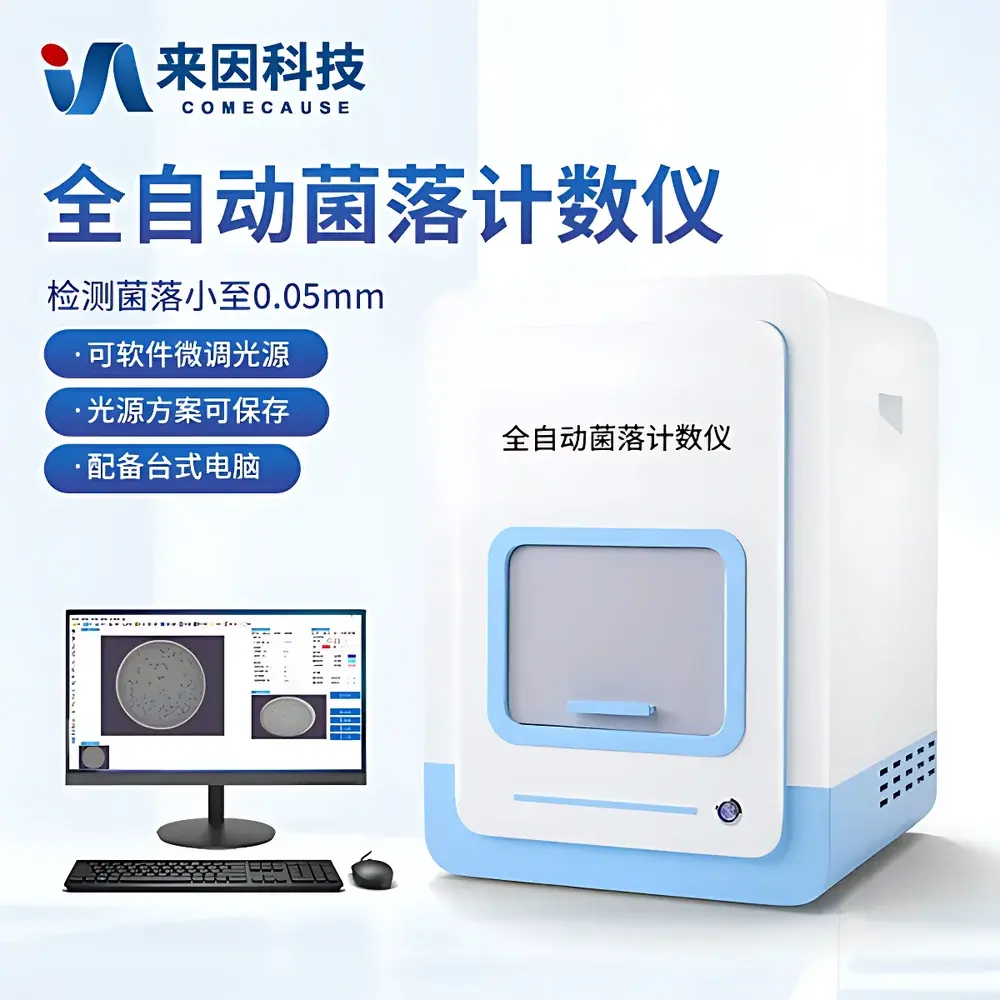
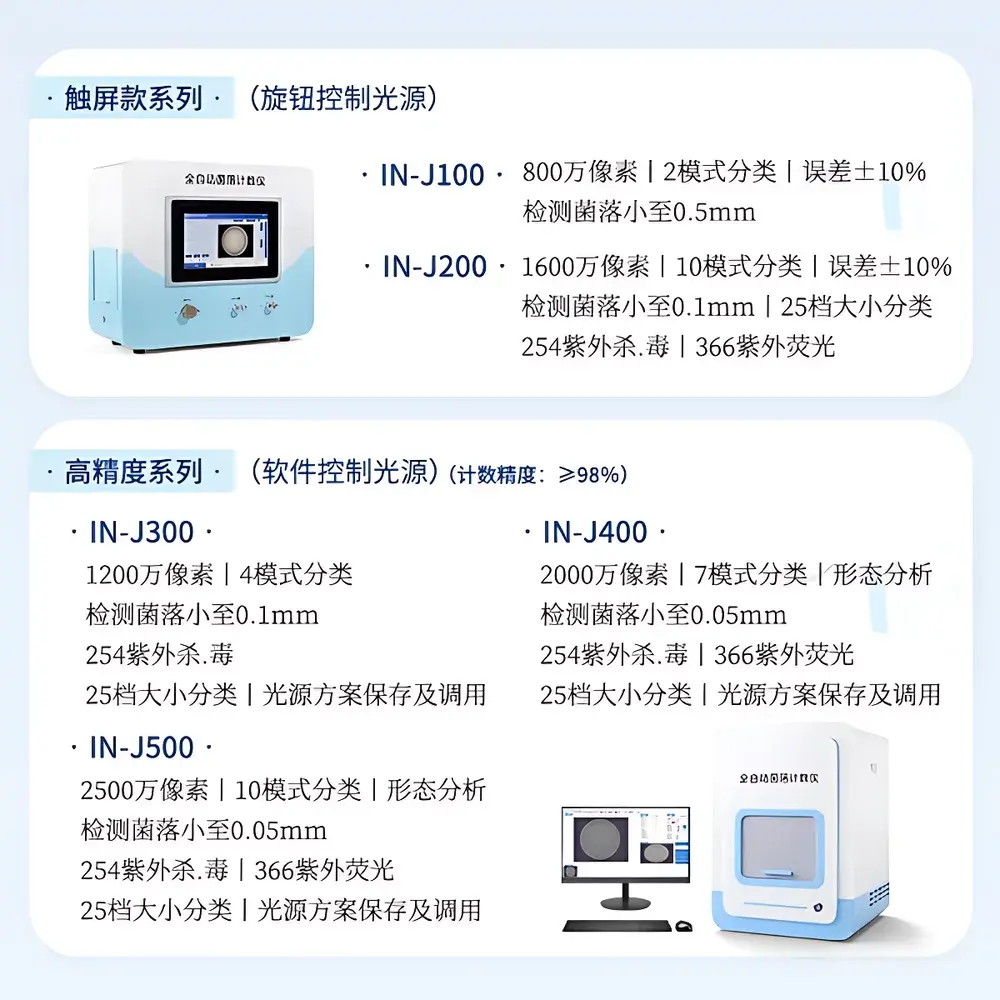
COMECAUSE IN-J500 Automated Colony Counter
| Brand | COMECAUSE |
|---|---|
| Origin | Shandong, China |
| Manufacturer Type | Original Equipment Manufacturer (OEM) |
| Product Category | Domestic |
| Model | IN-J500 |
| Sample Type | Petri Dish |
| Sample Diameter Range | 90–110 mm |
| Imaging Resolution | 1920 × 1080 |
| Counting Accuracy | ≤ ±10% |
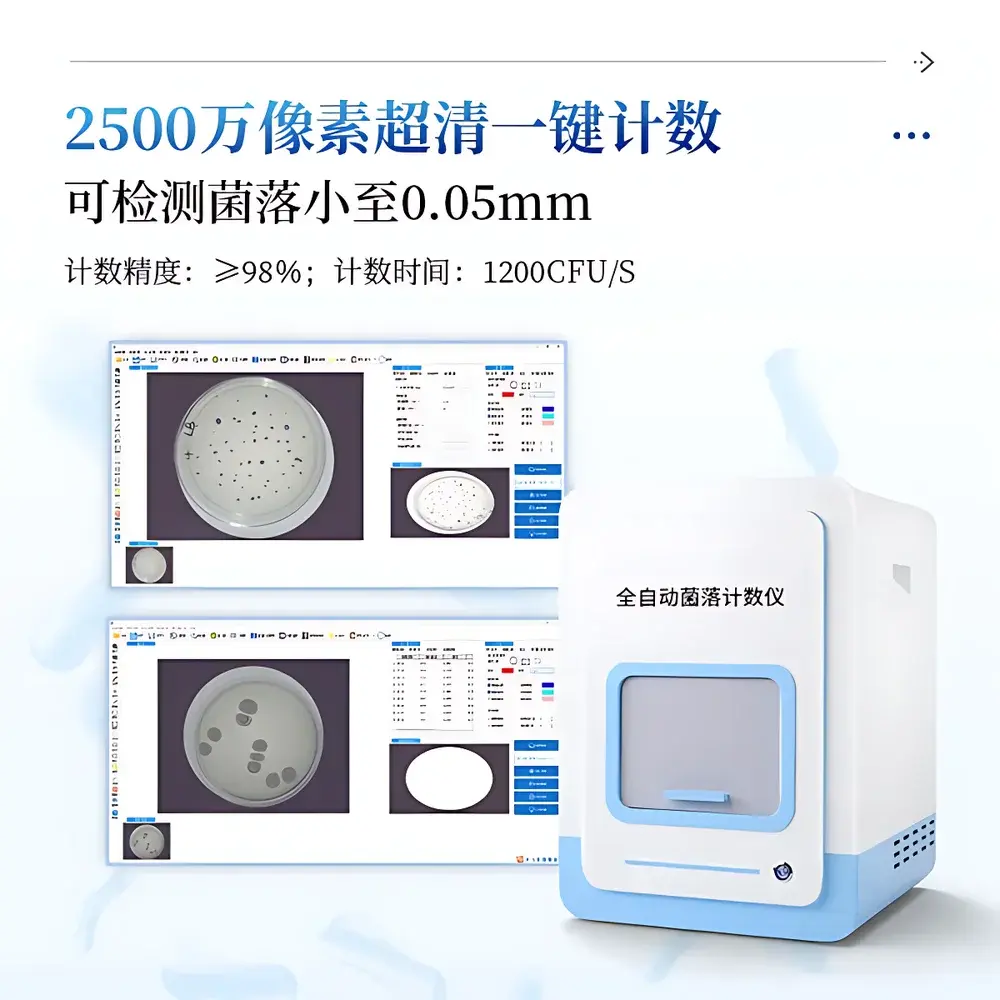
| Minimum Detectable Colony Size | 0.05 mm |
| Counting Speed | Up to 1200 CFU per second |
| Camera | 25 MP Color CMOS Sensor |
| Lens | 12 MP, 12 mm Fixed-Focal-Length Macro Lens |
| Illumination | Dual-Source (Top/Bottom), 360° Quad-Color LED + 254 nm UV (Sterilization/Mutagenesis) + 366 nm UV (Fluorescence Excitation) |
| Software | Embedded Windows-based Application with Audit Trail, Multi-User Authentication, PDF Export, Cloud Synchronization |
Overview
The COMECAUSE IN-J500 Automated Colony Counter is a high-throughput digital imaging system engineered for precise, reproducible colony enumeration in microbiological quality control and research workflows. It operates on the principle of high-resolution optical image acquisition followed by algorithm-driven morphological segmentation and classification—leveraging contrast, color, size, circularity, and spatial distribution to distinguish viable colonies from background noise, debris, or agar imperfections. Designed for compliance-critical environments—including food safety laboratories, pharmaceutical QC labs, clinical microbiology units, and academic research facilities—the IN-J500 supports standardized microbial enumeration per ISO 4833-1:2013, ISO 7218:2017, FDA Bacteriological Analytical Manual (BAM), and USP /. Its fully enclosed dark chamber eliminates ambient light interference, while dual independently controllable illumination pathways enable optimal contrast adaptation across diverse media types (e.g., chromogenic agars, selective membranes, fluorescent substrates) without manual hardware intervention.
Key Features
- Fully automated colony detection and enumeration with ≤ ±10% counting deviation against manual reference counts under validated conditions
- 25-megapixel color CMOS sensor paired with a 12-mm macro lens delivering sub-50-µm spatial resolution—enabling reliable detection of colonies as small as 0.05 mm in diameter
- Integrated quad-color visible-light LED ring (red, green, blue, white) with uniform 360° non-shadow illumination for consistent reflectance imaging
- Dual UV modules: 254 nm for internal chamber sterilization and mutagenic studies; 366 nm for fluorescence excitation of GFP-expressing strains, E. coli O157:H7 on CHROMagar™, or other fluorogenic substrates
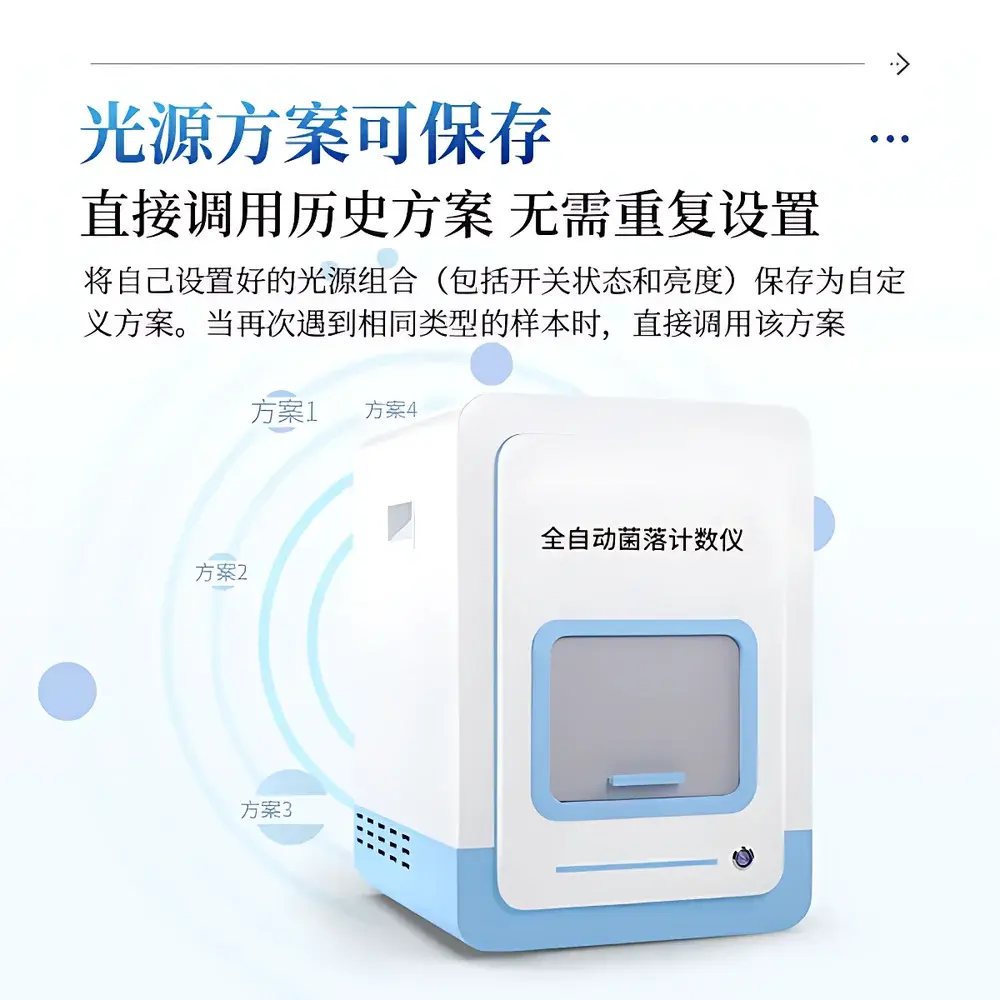
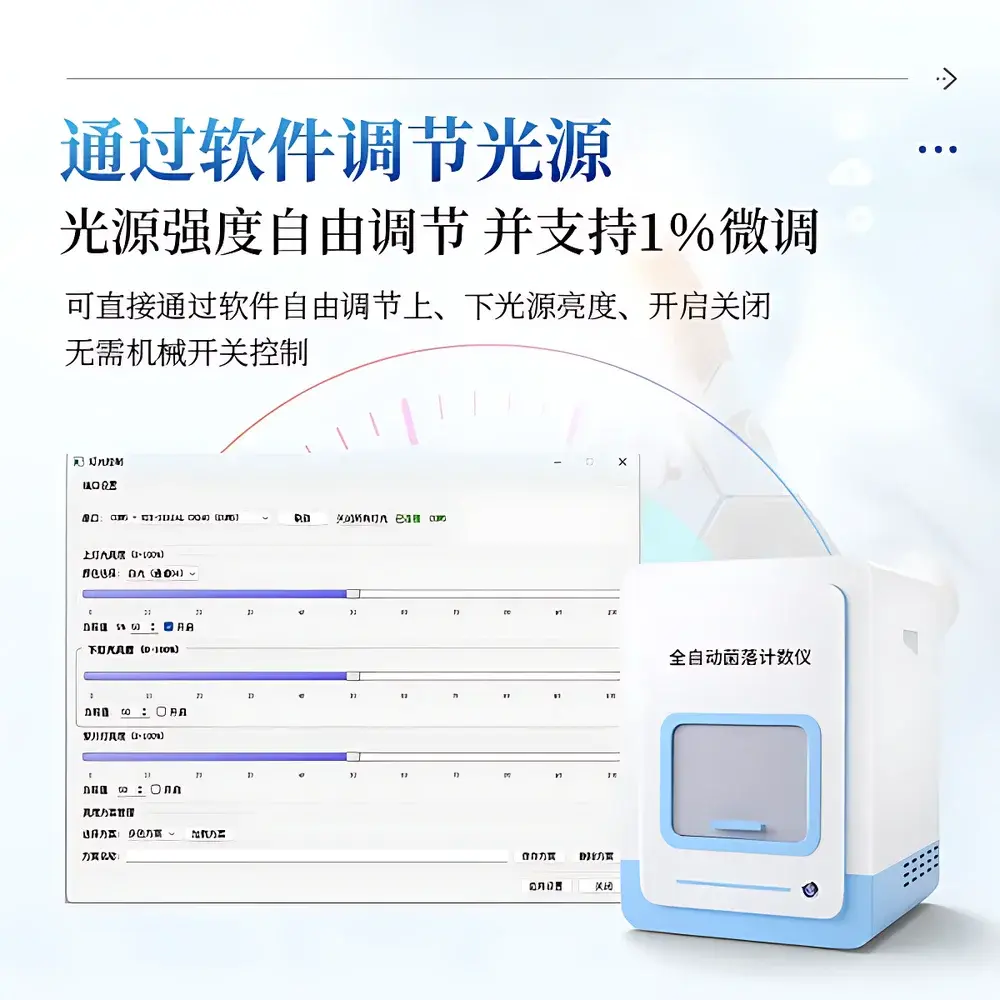
- Software-controlled top/bottom lighting—each source adjustable in 1% increments, independently switchable, and storable as user-defined illumination profiles
- Ten pre-optimized counting algorithms: Dispersed, Aggregated, Micro-colony, Large-colony, 3M Petrifilm™, Compact Dry™, RIDA™ membrane filters, Background-Matched, Monochrome, and Polychrome mode with interactive color sampling
- Real-time morphometric analysis: per-colony metrics including area (mm²), diameter (mm), perimeter (mm), circularity (0–1), and grayscale intensity profile
Sample Compatibility & Compliance
The IN-J500 accommodates standard petri dishes (90–110 mm diameter), pour plates, spread plates, membrane filters (including mixed cellulose ester and polycarbonate), and commercial rapid-test films (3M Petrifilm™, BioControl R.A.P.I.D., Hygiena SystemSURE™). It supports both opaque and translucent media, chromogenic and non-chromogenic formulations, and UV-fluorescent substrates. All operational parameters—including illumination configuration, threshold settings, and classification logic—are fully traceable and modifiable only by authorized users. The system complies with GLP and GMP data integrity requirements: audit trail logs capture timestamped records of user login/logout, parameter changes, count revisions, PDF export events, and cloud synchronization actions—fully aligned with FDA 21 CFR Part 11 electronic record and signature expectations.
Software & Data Management
The embedded Windows-based application features role-based multi-user authentication (administrator, analyst, reviewer), encrypted local database storage, and optional secure cloud backup via TLS 1.2–encrypted HTTPS API. Raw images, processed binary masks, and metadata (including dilution factor, plate ID, operator name, date/time stamp) are archived immutably. Statistical outputs—including total CFU/mL, log reduction values, size-distribution histograms (25-bin classification), and outlier flagging—are exportable as PDF reports with embedded digital signatures. Calibration is supported via automatic or manual pixel-to-mm conversion using calibration standards or known-diameter reference objects—ensuring metrological traceability of all dimensional measurements.
Applications
- Quantitative microbial load assessment in raw materials, finished products, and environmental swabs per ISO 4833-1 and AOAC Official Methods
- Validation of disinfection efficacy and antimicrobial surface testing (ASTM E2149, ISO 22196)
- Strain isolation and purity verification in bioprocessing and cell banking
- Fluorescence-based pathogen screening (e.g., E. coli expressing GFP or β-glucuronidase on selective media)
- Educational use in undergraduate microbiology labs for teaching enumeration principles and image analysis fundamentals
- Support for ISO/IEC 17025-accredited testing laboratories requiring documented method validation and instrument qualification
FAQ
Does the IN-J500 support regulatory-compliant audit trails?
Yes—the software maintains a tamper-evident, time-stamped audit log of all user actions, including login sessions, parameter modifications, manual corrections, report generation, and cloud sync events.
Can the system differentiate colonies of different colors on the same plate?
Yes—using Polychrome Mode, operators can click on representative colonies to extract dominant hue ranges; the algorithm then isolates and enumerates only those matching the selected spectral signature.
Is calibration required before each use?
No—once calibrated using a certified stage micrometer or standard plate, the system retains calibration parameters until manually updated; however, periodic verification per SOP is recommended for GLP/GMP adherence.
What file formats are supported for data export?
Raw images (TIFF, PNG), processed masks (PNG), summary statistics (CSV, XLSX), and finalized reports (PDF with embedded metadata and digital signature).
Does the instrument meet electromagnetic compatibility (EMC) and electrical safety standards for international deployment?
The IN-J500 conforms to IEC 61326-1 (EMC for laboratory equipment) and IEC 61010-1 (safety requirements for electrical equipment), with CE marking valid for EU markets; additional regional certifications (e.g., FCC, KC, RCM) may require localized testing.