
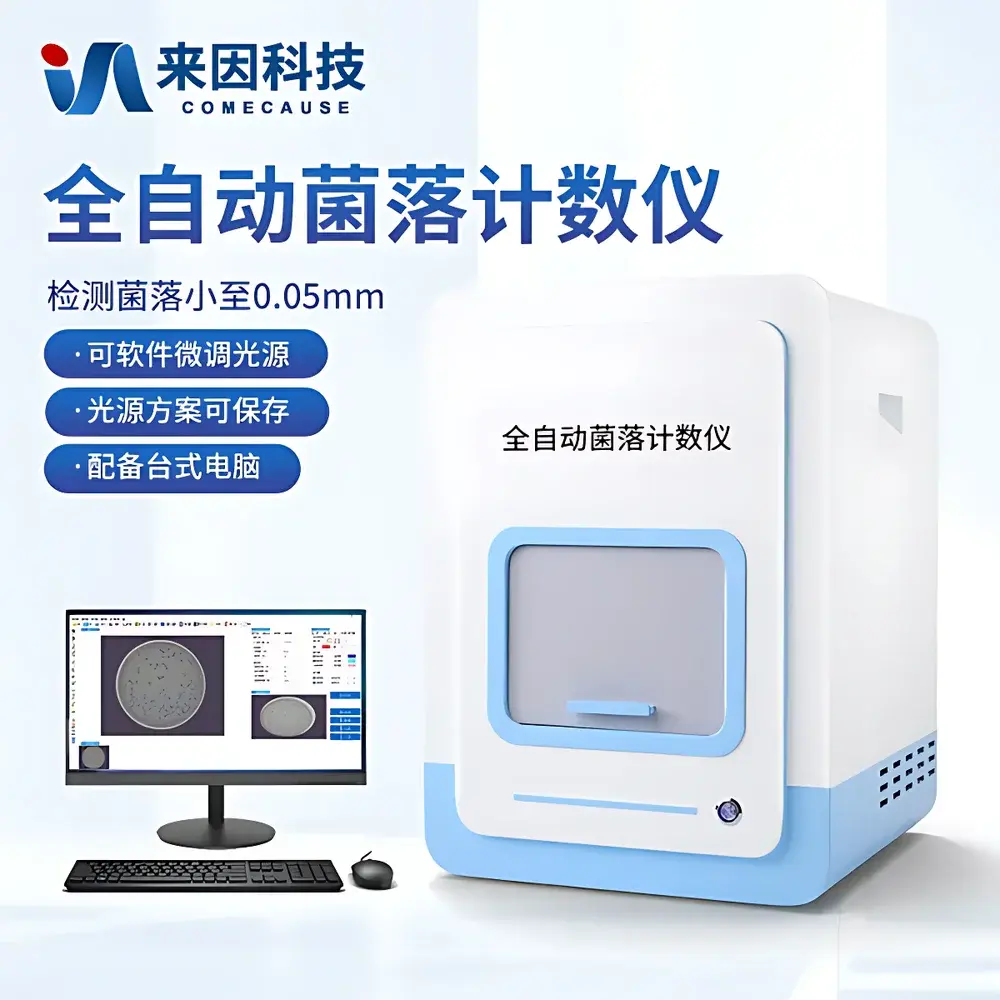
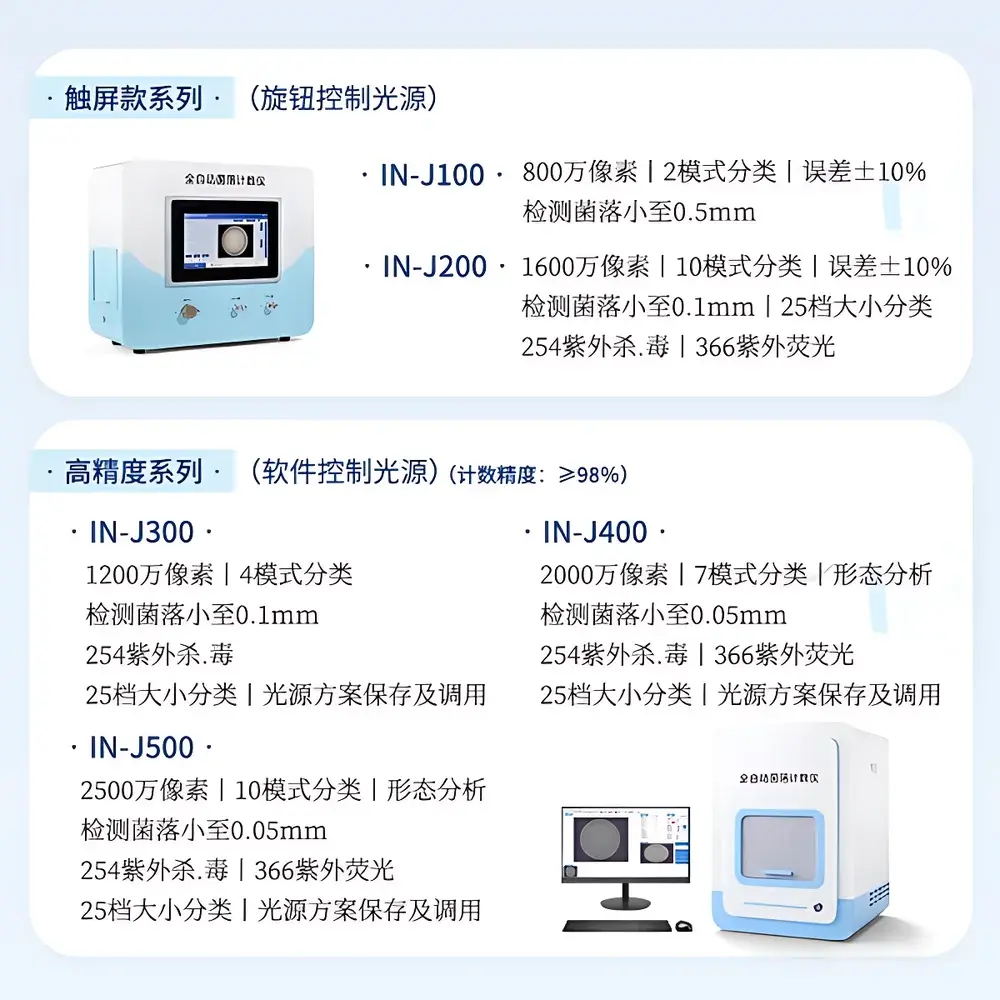
COMECAUSE IN-J500 Automated Colony Counter
| Brand | COMECAUSE |
|---|---|
| Origin | Shandong, China |
| Manufacturer Type | Direct Manufacturer |
| Instrument Type | Fully Automated Colony Counter |
| Sample Type | Petri Dishes |
| Sample Diameter Range | 90–110 mm |
| Imaging Resolution | 1920 × 1080 (Full HD) |
| Counting Accuracy | ≤ ±10% |
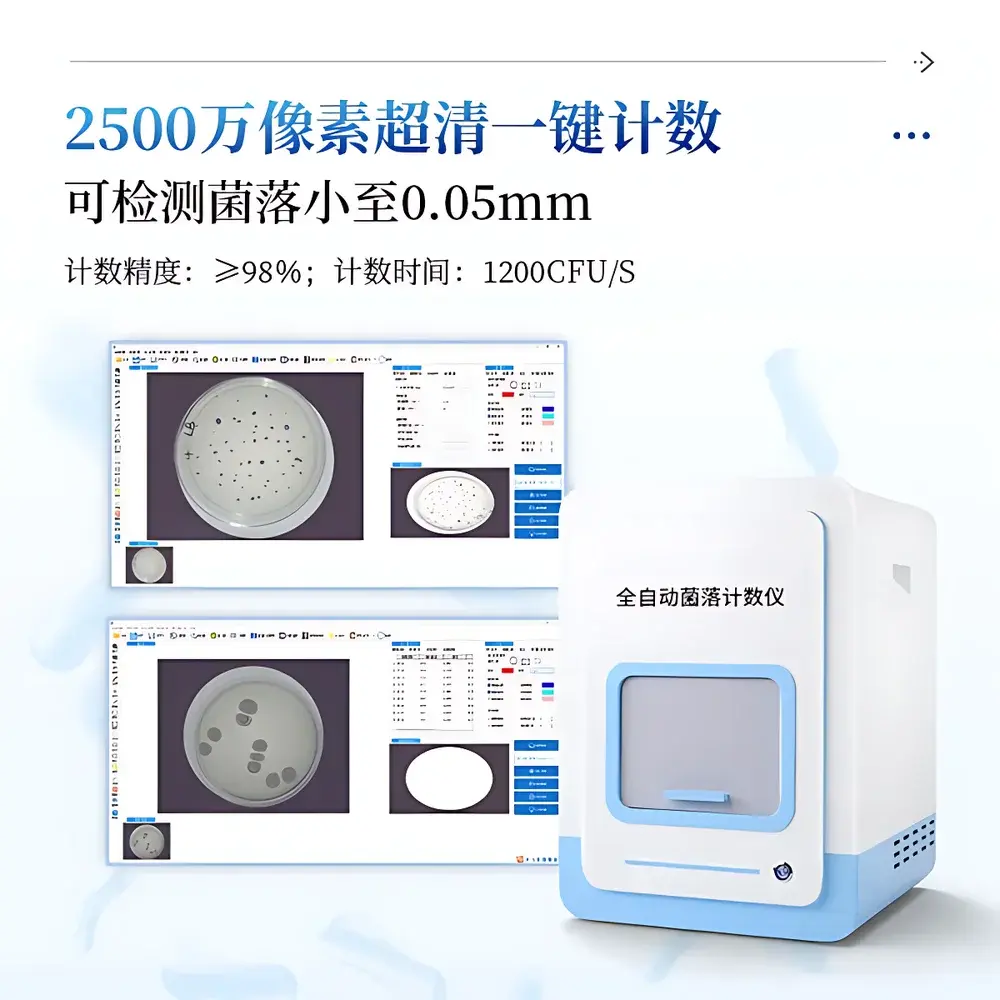
| Minimum Detectable Colony Size | 0.05 mm |
| Camera | 25 MP Color CMOS Sensor |
| Lens | 12 MP, 12 mm Fixed-Focal-Length Macro Lens |
| Illumination System | Dual-Source (Top & Bottom), 360° Quad-Color LED (White/Red/Green/Blue), 254 nm UV for Sterilization & Mutagenesis, 366 nm UV for Fluorescence Excitation (e.g., E. coli GFP assays) |
| Calibration | Pixel-to-mm Conversion (Auto & Manual Modes) |
| Data Export | PDF Reports with Immutable Raw Image Archive |
| Compliance | Audit Trail Enabled (ALCOA+ principles), Multi-User Role-Based Access, 21 CFR Part 11–Ready Configuration (Optional Validation Package Available) |
Overview
The COMECAUSE IN-J500 Automated Colony Counter is a high-precision digital imaging system engineered for quantitative microbiological analysis of standard Petri dishes (90–110 mm diameter). It operates on the principle of digital image acquisition followed by algorithm-driven morphological segmentation and classification—leveraging multi-spectral illumination (visible + dual-band UV) to enhance contrast between microbial colonies and heterogeneous agar backgrounds. Unlike manual or semi-automated counters reliant on fixed thresholding, the IN-J500 implements adaptive pixel-intensity mapping combined with geometric feature extraction (circularity, aspect ratio, solidity) to distinguish true colonies from debris, condensation droplets, or agar imperfections. Its optical architecture—a fully enclosed dark chamber with independently controllable top/bottom illumination—eliminates ambient light interference while enabling precise spectral tuning for diverse culture media (e.g., chromogenic, selective, or fluorescent substrates). Designed for GLP-compliant laboratories, the instrument supports traceable colony enumeration in accordance with ISO 4833-1:2013 (microbiology of food and animal feeding stuffs), ASTM D6912-20 (environmental microbiology), and USP / (microbial limits testing).
Key Features
- Fully automated colony detection and enumeration across 10 predefined counting modes: dispersed, clustered, micro-colonies (0.1–0.5 mm), large colonies (>2 mm), 3M Petrifilm™, Compact Dry™ (black grid), RIDA™ membrane filters, background-matched colonies, monochromatic colonies, and polychromatic colonies with color-specific selection.
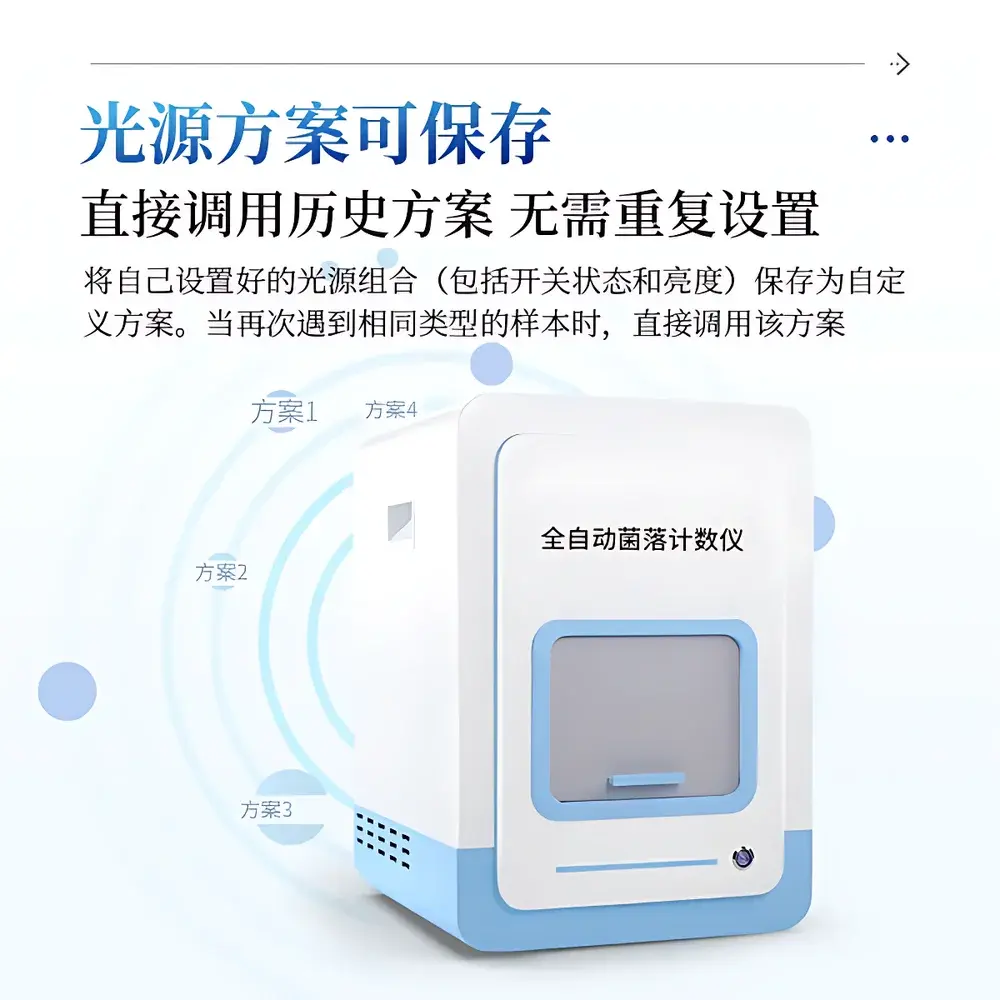
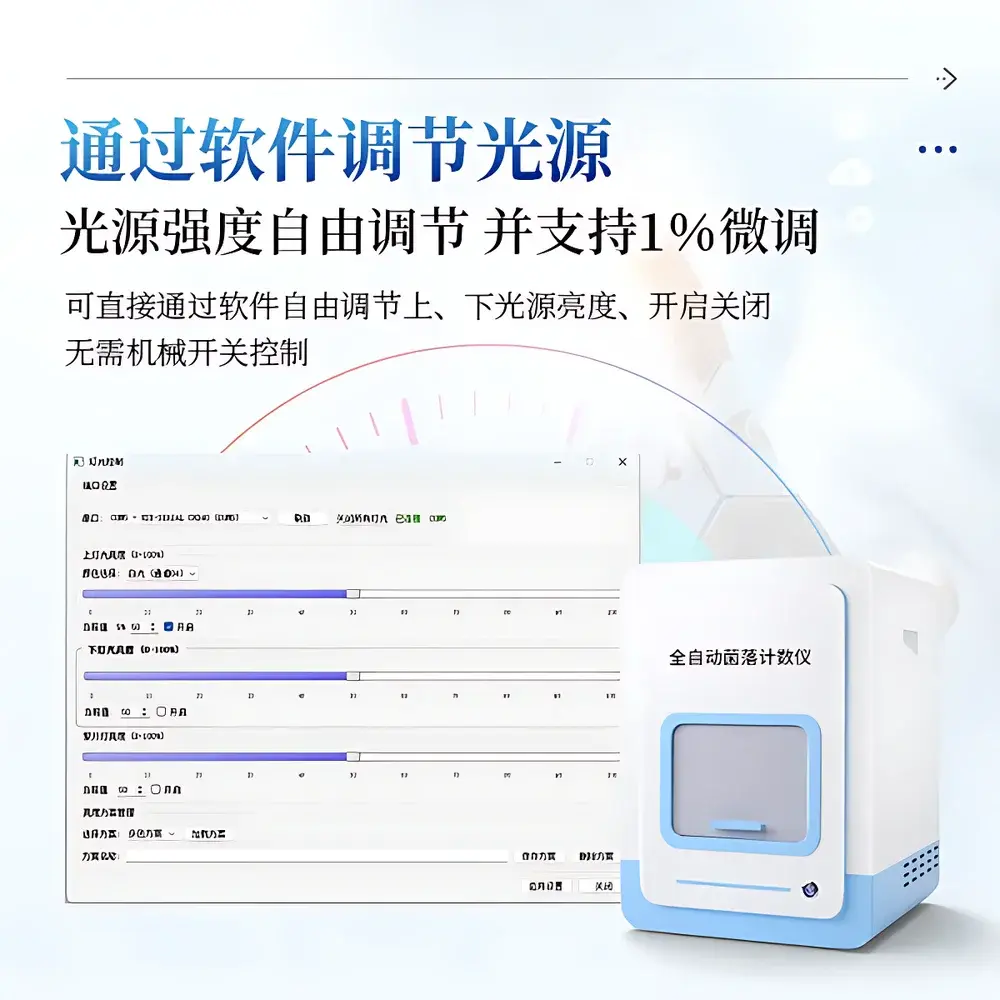
- Dual-source illumination system with software-controlled intensity adjustment (1% resolution) for both top and bottom LEDs; supports four visible wavelengths (white, red, green, blue) plus two UV bands (254 nm for sterilization/mutagenesis; 366 nm for fluorescence excitation).
- 25-megapixel color CMOS sensor paired with a 12-megapixel, 12 mm macro lens delivering sub-50 µm spatial resolution at working distance—enabling reliable detection of colonies as small as 0.05 mm in diameter.
- Integrated calibration module supporting both automatic (using pre-placed reference markers) and manual (user-defined scale bar) pixel-to-millimeter conversion for accurate morphometric quantification (diameter, area, perimeter, circularity).
- Real-time interactive correction tools: double-click to add/delete colonies; rectangular lasso for batch editing; intelligent impurity removal based on size, color, and shape thresholds.
- Comprehensive single-colony and population-level morphological analysis: per-colony metrics (area, diameter, circularity, Feret diameter, convex hull area) exported in CSV format; binned size distribution across 25 user-defined diameter intervals.
Sample Compatibility & Compliance
The IN-J500 accommodates all standard microbiological plating formats—including pour plates, spread plates, membrane filtration assemblies, and commercial rapid-test films (3M Petrifilm™, BioControl Compact Dry™, R-Biopharm RIDA™). Its mechanical stage and optical field-of-view are optimized for 90–110 mm Petri dishes; smaller dishes (e.g., 35 mm or 60 mm) may be centered using alignment guides without loss of resolution. The system meets functional requirements outlined in ISO/IEC 17025:2017 for test method validation and supports laboratory accreditation under CLIA, CAP, and FDA-regulated environments. All software operations—including user login, parameter changes, colony edits, and report generation—are recorded in an immutable audit trail compliant with ALCOA+ (Attributable, Legible, Contemporaneous, Original, Accurate) data integrity principles. Optional IQ/OQ documentation packages are available for GMP-aligned installations.
Software & Data Management
The proprietary IN-J500 Control Suite runs on Windows 10/11 (64-bit) and features bilingual UI (English/Chinese) with one-click language switching. It includes role-based access control (administrator, analyst, reviewer), encrypted local database storage, and optional cloud synchronization via secure HTTPS API endpoints. Statistical outputs are generated as tamper-evident PDF reports embedding original images, metadata (timestamp, operator ID, illumination settings, calibration status), and full audit logs. Raw image files (TIFF/RAW) and processed datasets (CSV, XLSX) are retained separately to support reanalysis. The software architecture is designed for integration with LIS/LIMS platforms via HL7 or RESTful webhooks, enabling automated result transfer to enterprise systems without manual export steps.
Applications
The IN-J500 serves critical roles across regulated and research-intensive domains: environmental monitoring (water, air, surface swabs), pharmaceutical cleanroom qualification (ISO 14644-1), sterility testing per USP , food safety verification (pathogen screening per ISO 6579-1), clinical microbiology (urine CFU/mL quantification), cosmetic challenge testing (ISO 11930), and academic research requiring high-throughput colony phenotyping. Its fluorescence capability enables selective enumeration of GFP-tagged strains or chromogenic media-based identification (e.g., E. coli O157:H7 on SMAC agar). When coupled with dilution series input, the software automatically computes CFU/mL or CFU/g values—including uncertainty propagation based on pipetting and plating variability.
FAQ
Does the IN-J500 comply with 21 CFR Part 11 requirements?
Yes—the system supports electronic signatures, audit trail logging, and data integrity controls. A validated 21 CFR Part 11 configuration package (including SOP templates and test protocols) is available upon request.
Can the instrument process non-standard dish sizes?
It is calibrated for 90–110 mm dishes. Smaller dishes (e.g., 35 mm or 60 mm) can be analyzed by centering them manually; however, magnification scaling must be verified using the built-in calibration tool.
Is remote operation or cloud-based data review supported?
Yes—via optional COMECAUSE Cloud Connect service, users can upload results securely and access dashboards, historical trends, and cross-laboratory comparisons from any authorized device.
What validation documentation is provided?
Standard delivery includes Factory Acceptance Test (FAT) report, User Requirement Specification (URS) alignment summary, and Installation Qualification (IQ) checklist. Operational Qualification (OQ) and Performance Qualification (PQ) protocols are customizable per client needs.
How is measurement traceability ensured?
All image-based measurements are anchored to NIST-traceable calibration standards. Each analysis session records the active illumination profile, lens focus position, and pixel-scale factor—ensuring reproducibility across instruments and timepoints.
Related Products



