
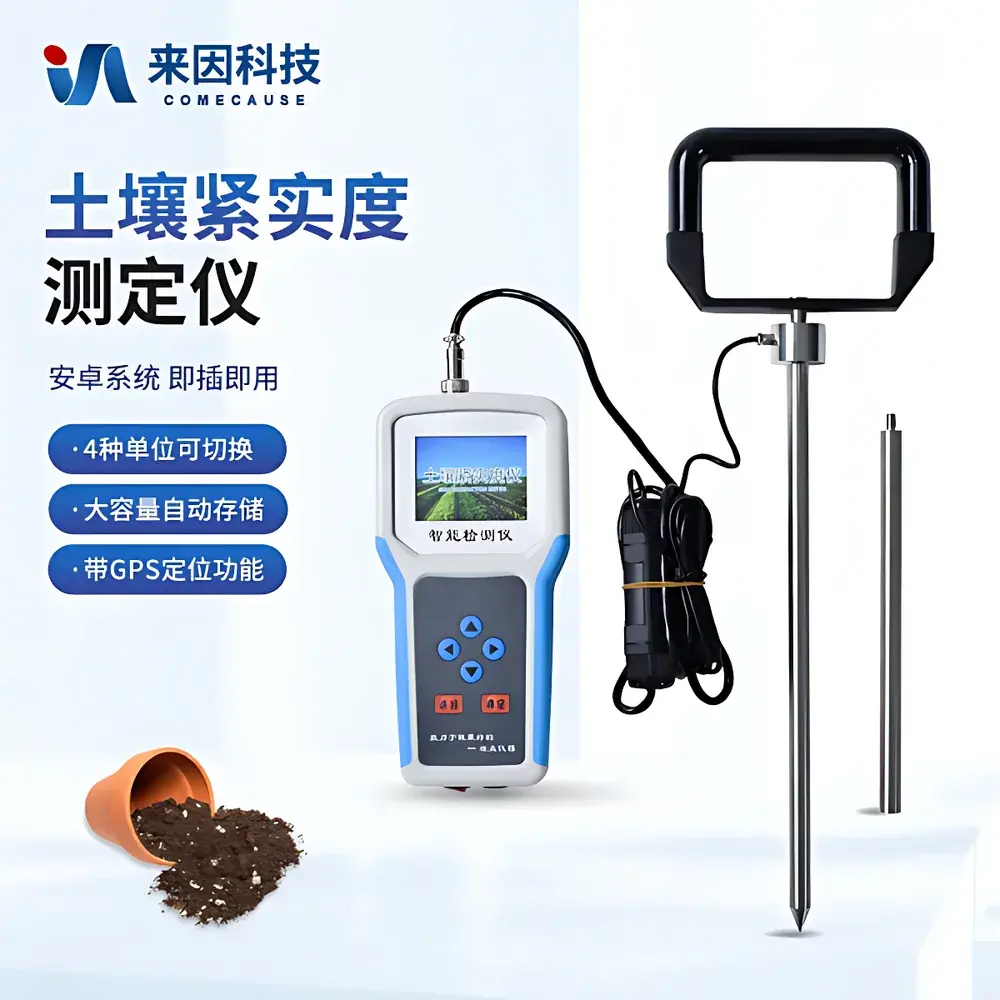
COMECAUSE JSD-2S Portable Soil Penetrometer
| Brand | COMECAUSE |
|---|---|
| Model | JSD-2S |
| Type | Handheld Penetrometer |
| Measurement Principle | Static Cone Penetration (Soil Resistance in kPa, kg/cm², lb, N/cm²) |
| Accuracy | ±0.1% FS (Full Scale) |
| Repeatability | ±0.05% FS |
| Operating Temperature | −20 to +70 °C |
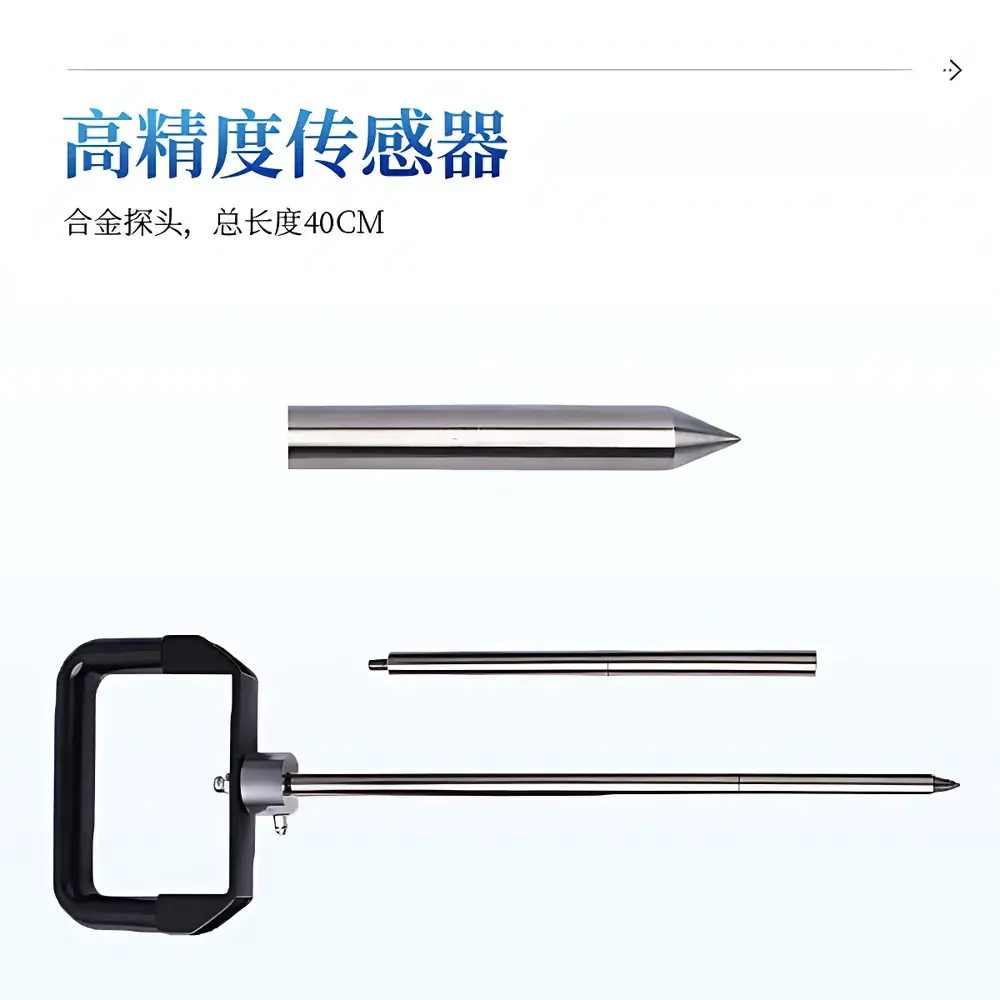
| Probe Material | Stainless Steel |
| Probe Dimensions | Φ12 mm × 300 mm |
| Cable Length | 2 m (Φ3 mm shielded) |
| Excitation Voltage | 5–12 V DC |
| Input Impedance | 735 ±35 Ω |
| Output Impedance | 700 ±3 Ω |
| Nonlinearity | ±0.05% FS |
| Sealing Rating | IP66 |
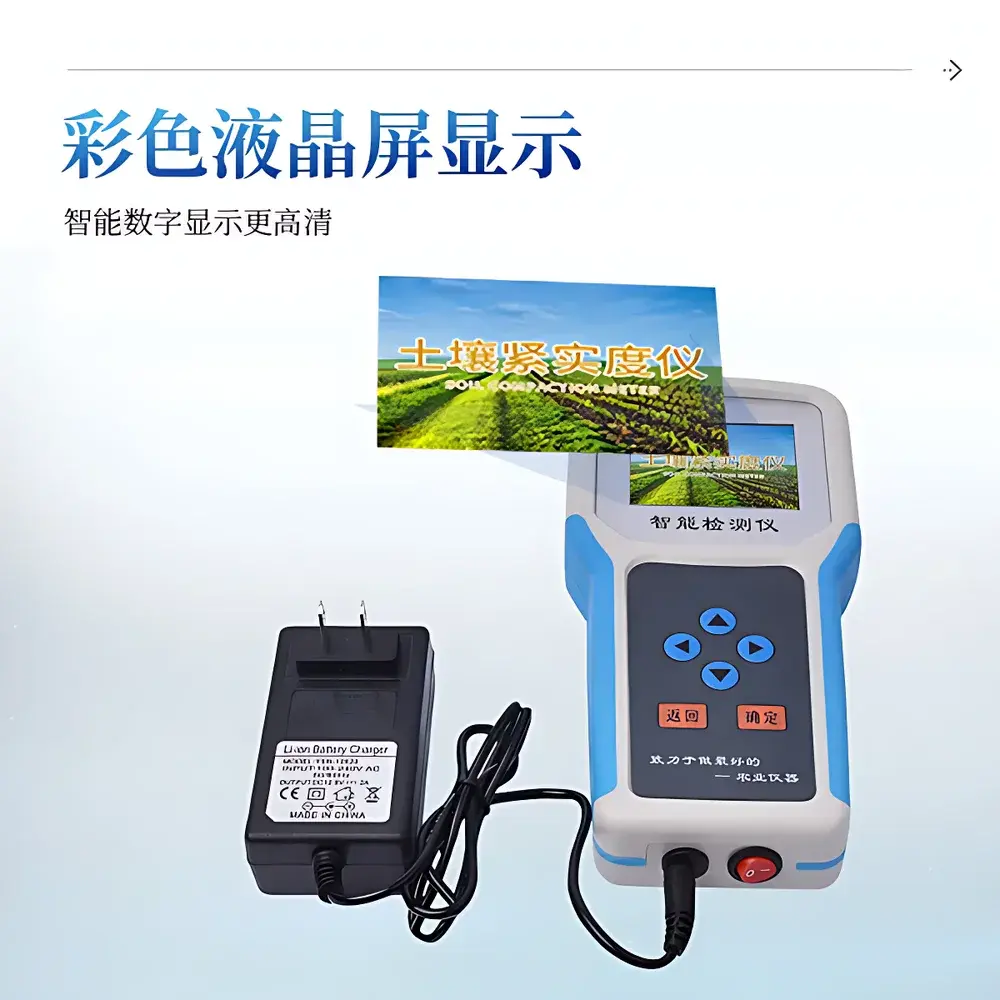
| Display | 2.4″ Color TFT LCD |
| Data Storage | Flash memory (100,000 records) |
| Sampling Interval | 1–180 s adjustable |
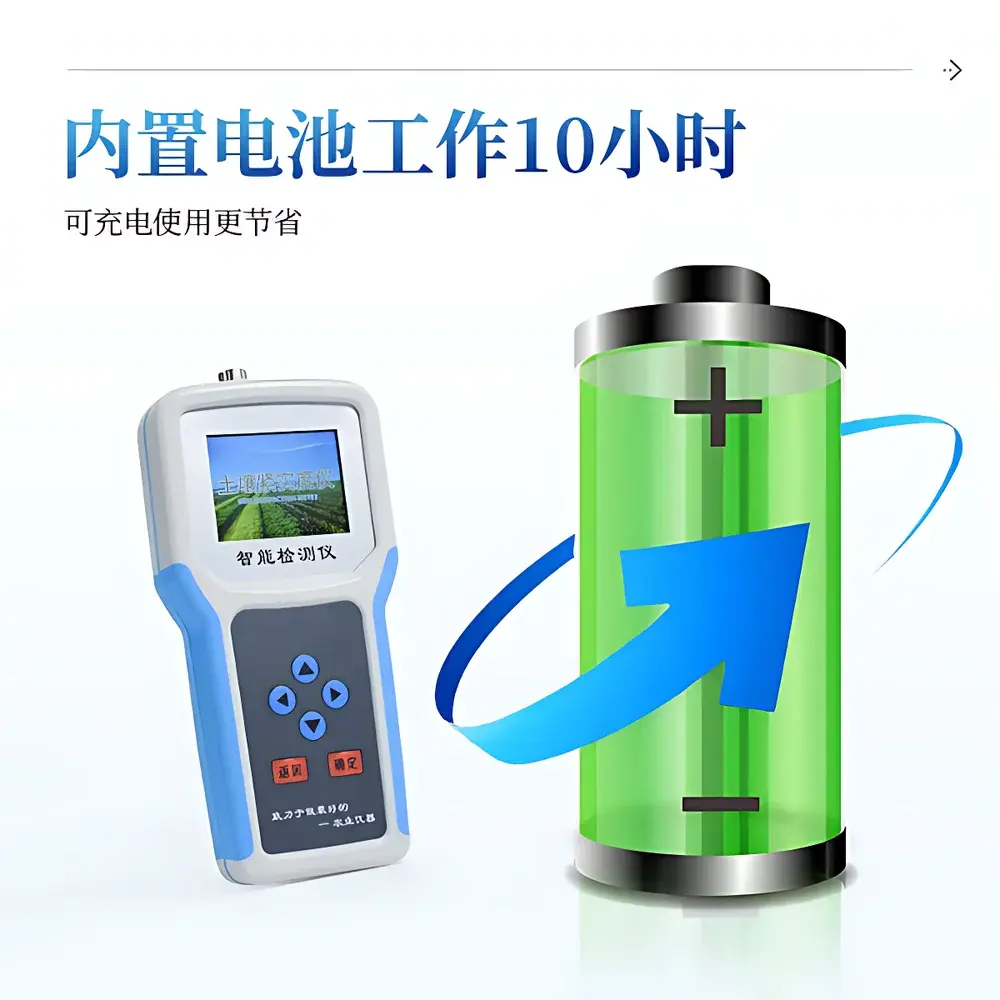
| Power | 12 V / 2500 mAh Li-ion battery (10 h operation, 3 h recharge) |
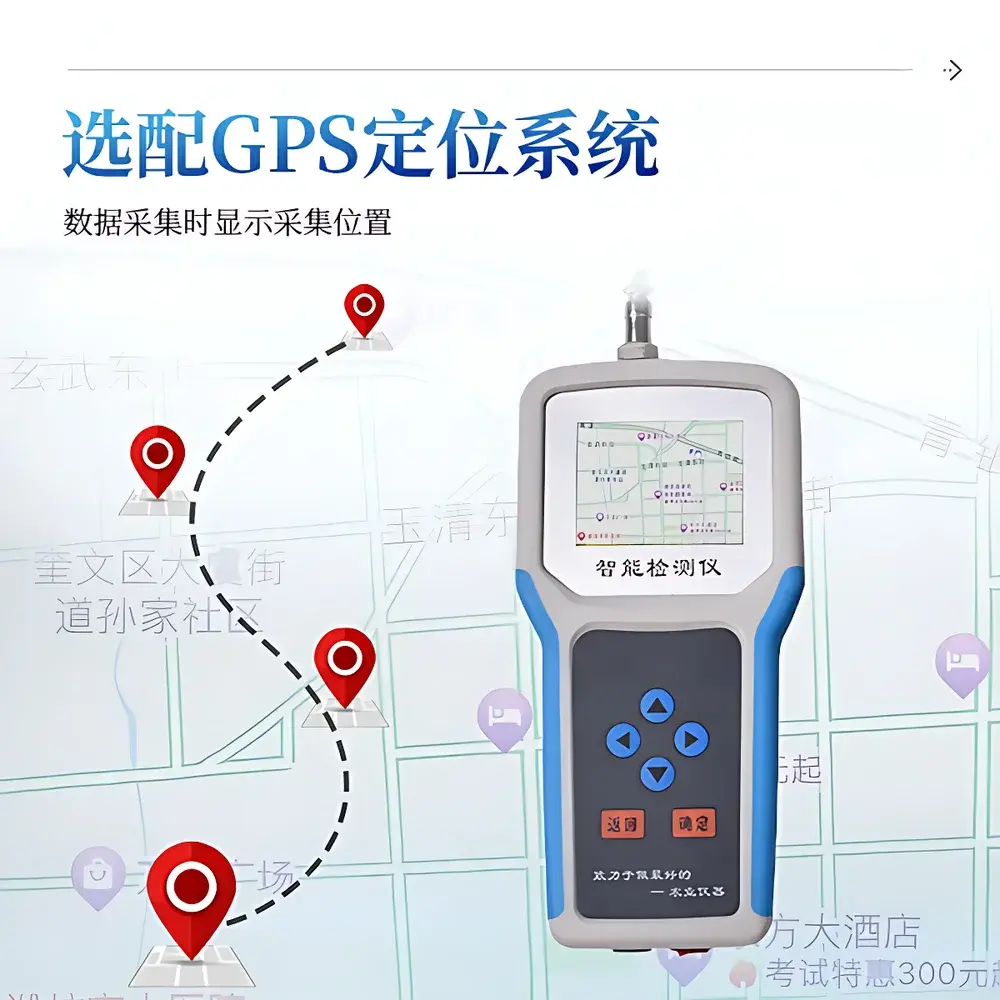
| Connectivity | USB (data export to Excel), RS485 (aviation connector), optional GPS & GPRS/2G/4G module |
| Weight | 3.2 kg (including aluminum case and extension rod) |
Overview
The COMECAUSE JSD-2S Portable Soil Penetrometer is an engineered field instrument designed for in-situ measurement of soil penetration resistance — a direct physical indicator of soil compaction, structural integrity, and root growth impedance. Based on the standardized static cone penetration principle, the device quantifies the force required to advance a calibrated stainless-steel probe vertically into undisturbed soil at controlled rates. This resistance (expressed in kPa, kg/cm², lb, or N/cm²) correlates strongly with soil bulk density, moisture content, texture, and organic matter distribution. Unlike dynamic impact methods, the JSD-2S employs a quasi-static loading regime, minimizing soil disturbance and enabling reproducible stratified profiling from surface to subsoil layers (up to 300 mm depth). Its design adheres to internationally recognized methodologies referenced in ASTM D5321 (Standard Test Method for Determining the Angle of Shearing Resistance of Soils by Direct Shear) and ISO 21501-4 (for sensor calibration traceability), supporting data comparability across agronomic, environmental, and geotechnical monitoring programs.
Key Features
- High-precision load cell with ±0.1% full-scale accuracy and <±0.05% repeatability — validated per ISO/IEC 17025-compliant calibration protocols
- IP66-rated stainless-steel probe (Φ12 mm × 300 mm) and sealed electronics housing for reliable operation in rain, dust, and high-humidity field environments
- Integrated 2.4″ color TFT display with real-time resistance curve visualization and depth-synchronized data tagging
- Configurable sampling interval (1–180 s) and automatic depth-stamped logging for multi-layer profiling without manual annotation
- Onboard flash memory storing up to 100,000 timestamped records; data export via USB to PC-compatible software generating CSV and Excel-ready reports
- Modular architecture supporting optional GPS geotagging and GPRS/2G/4G telemetry for remote deployment in long-term soil health networks
- Ergonomic aluminum carrying case (300 × 350 × 110 mm) with extendable rod (Φ12 mm × 200 mm) and integrated handle for operator fatigue reduction during repeated measurements
Sample Compatibility & Compliance
The JSD-2S is validated for use across mineral soils (sandy loam to clay), organic-rich topsoils, and managed agricultural substrates including no-till, cover-cropped, and irrigated fields. It accommodates variable moisture conditions within its operational range (−20 to +70 °C ambient), though optimal accuracy is maintained when soil water content remains below field capacity to avoid hydrostatic artifact. The probe geometry conforms to FAO-recommended dimensions for comparative penetrometer studies and aligns with USDA-NRCS technical note No. 22 on soil compaction assessment. All electrical components meet CE and RoHS directives; firmware supports audit-trail-enabled data logging compliant with GLP principles for research-grade documentation.
Software & Data Management
Data acquisition and post-processing are supported by COMECAUSE’s proprietary SoilPen Suite v3.2 — a Windows-based application enabling spectral filtering, depth-resolved resistance mapping, statistical aggregation (mean, SD, CV%), and overlay with external GIS layers. Raw files include embedded metadata: date/time stamp, GPS coordinates (if enabled), battery voltage, temperature, and sensor excitation status. Export formats include .csv, .xlsx, and .xml (compatible with R, Python pandas, and ArcGIS Pro workflows). The system supports 21 CFR Part 11-compliant user authentication and electronic signature modules upon request for regulated QA/QC applications.
Applications
- Agronomic site assessment: Identifying compaction layers (>2.0 MPa threshold) that restrict root elongation and water infiltration
- Tillage optimization: Quantifying effects of chisel plowing, subsoiling, or reduced-input practices on vertical soil resistance profiles
- Soil health monitoring: Longitudinal tracking of penetration resistance changes following organic amendment, cover cropping, or grazing management
- Environmental impact studies: Correlating compaction indices with runoff volume, nutrient leaching potential, and microbial activity metrics
- Forestry and reclamation: Evaluating soil rehabilitation progress on disturbed lands using standardized resistance thresholds
- Academic research: Supporting graduate-level investigations into soil–plant–water relationships under climate variability scenarios
FAQ
What is the recommended calibration frequency for the JSD-2S?
Annual factory recalibration is advised; field verification using certified reference loads (e.g., 10 kg, 50 kg traceable standards) should be performed before each intensive survey campaign.
Can the JSD-2S measure saturated or flooded soils?
Yes, but readings must be interpreted with caution: hydrostatic pressure contributes to apparent resistance. For saturated conditions, concurrent volumetric water content measurement (e.g., via TDR or capacitance sensor) is required for data correction.
Is the probe interchangeable with other COMECAUSE models?
No — the JSD-2S uses a proprietary strain-gauge transducer assembly and mating connector; probes are not cross-compatible with JSD-1 or JSD-3 series units.
Does the device support third-party telemetry platforms?
Yes — RS485 output provides Modbus RTU protocol compatibility, enabling integration with LoRaWAN gateways, SCADA systems, or custom IoT dashboards via standard serial-to-IP converters.
How does temperature affect measurement stability?
The integrated temperature-compensated load cell maintains specified accuracy across the full −20 to +70 °C operating range; internal thermal drift is corrected in firmware using dual-point compensation algorithms.







