
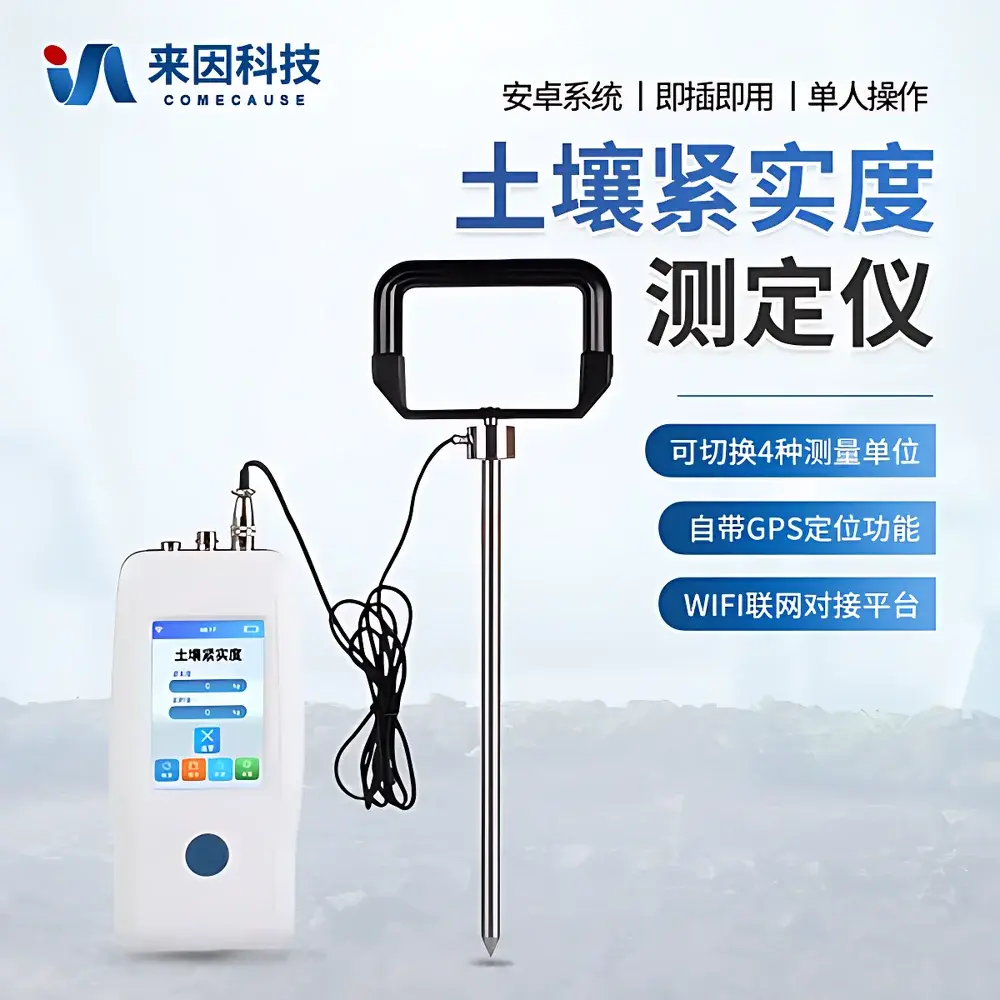
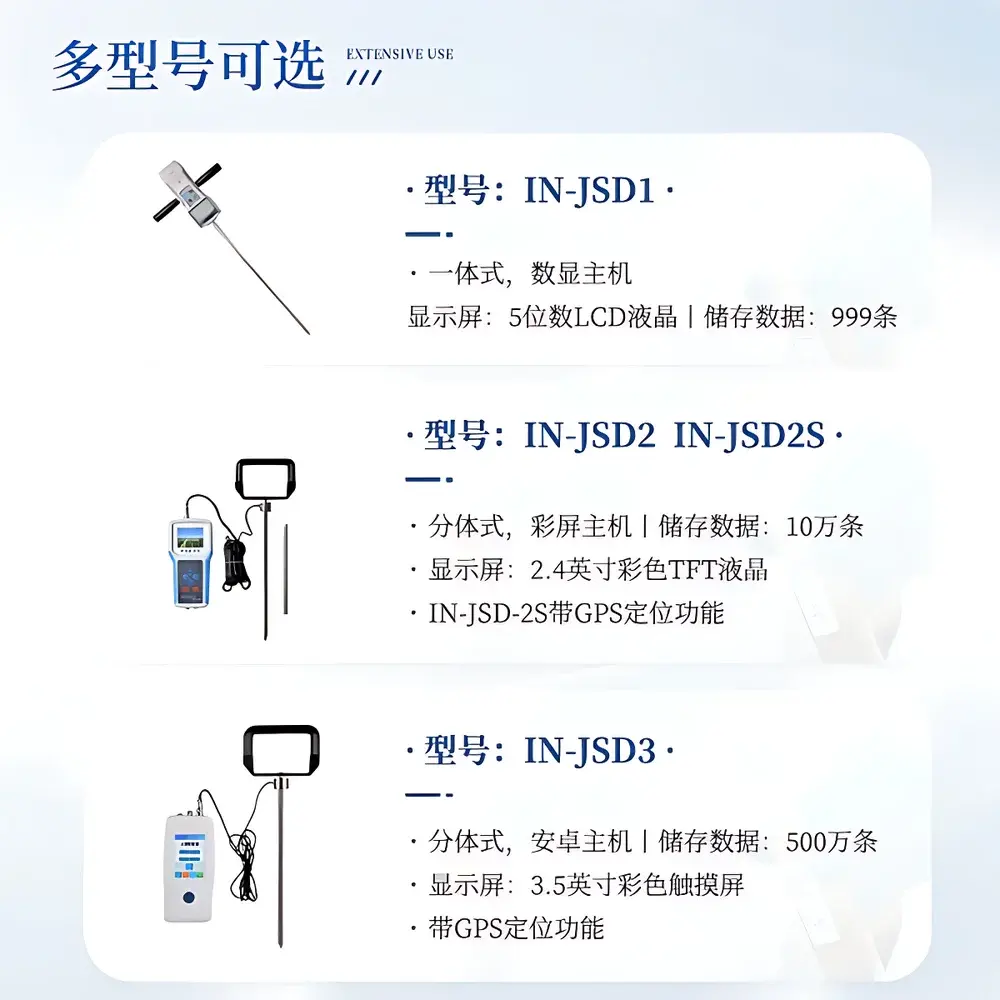
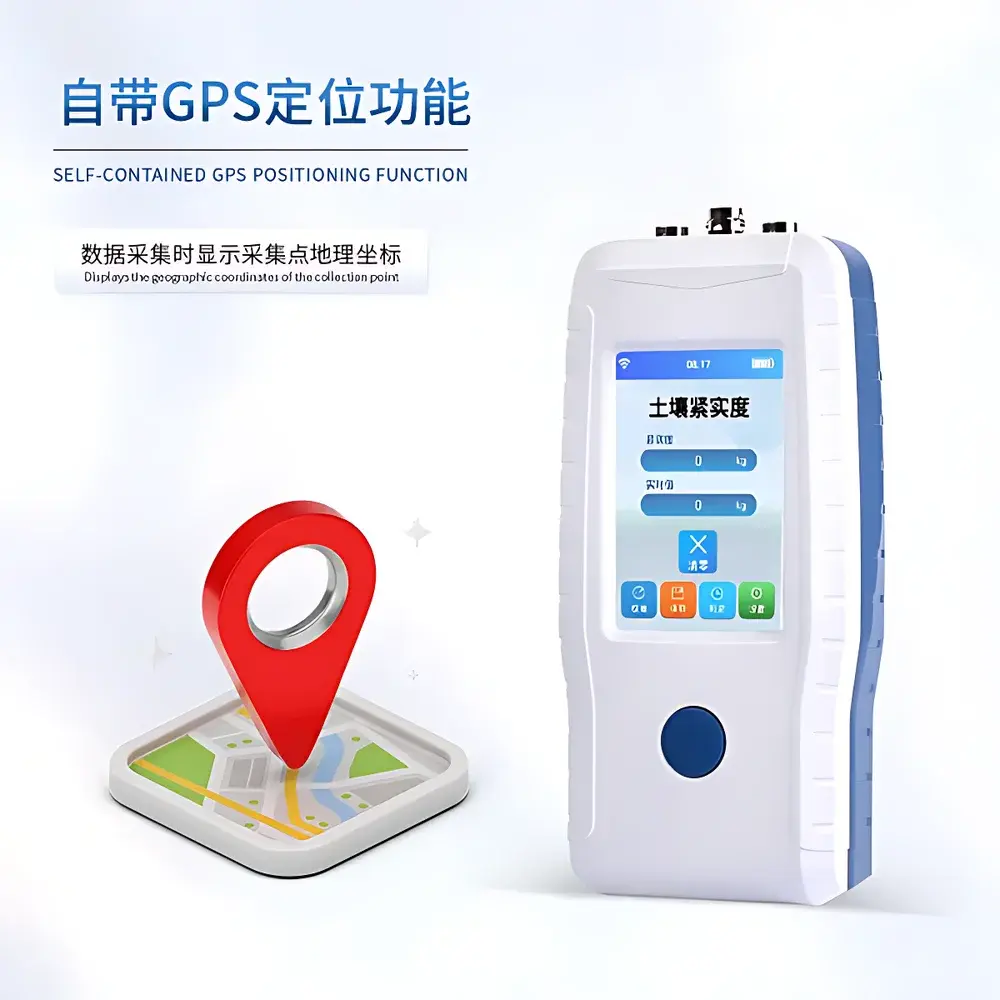
COMECAUSE JSD-3 Integrated Soil Compaction Tester
| Brand | COMECAUSE |
|---|---|
| Model | JSD-3 |
| Type | Handheld Soil Hardness Tester |
| Measurement Range | 0–100 kg |
| Accuracy | ±0.1 %FS |
| Operating Temperature | −20 to +70 °C |
| IP Rating | IP66 |
| Probe Diameter | 12 mm |
| Probe Length | 300 mm |
| Sensor Dimensions | Ø29 × 39.5 mm |
| Power Supply | DC 5 V / 2 A |
| Battery Capacity | 6000 mAh (10 h standby) |
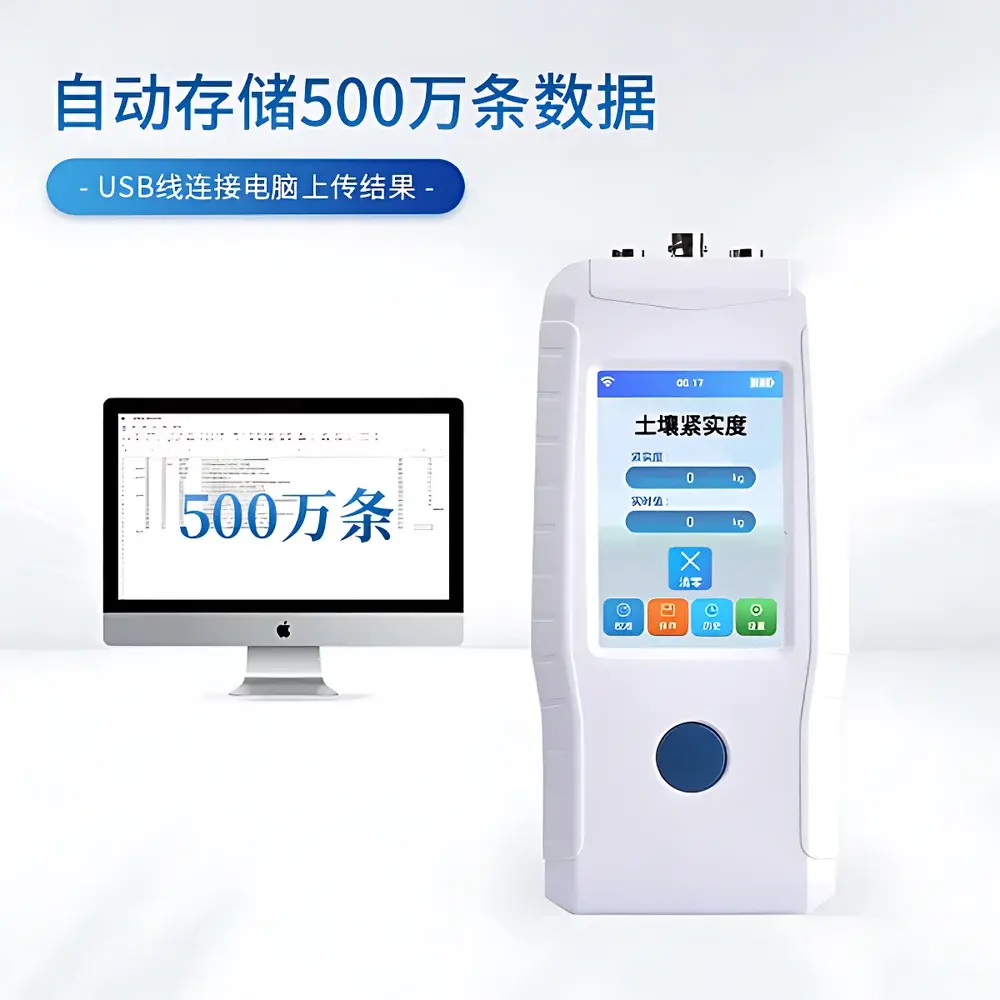
| Data Storage | 5 million records |
| Connectivity | Wi-Fi, GPS, USB-C, GPRS (optional) |
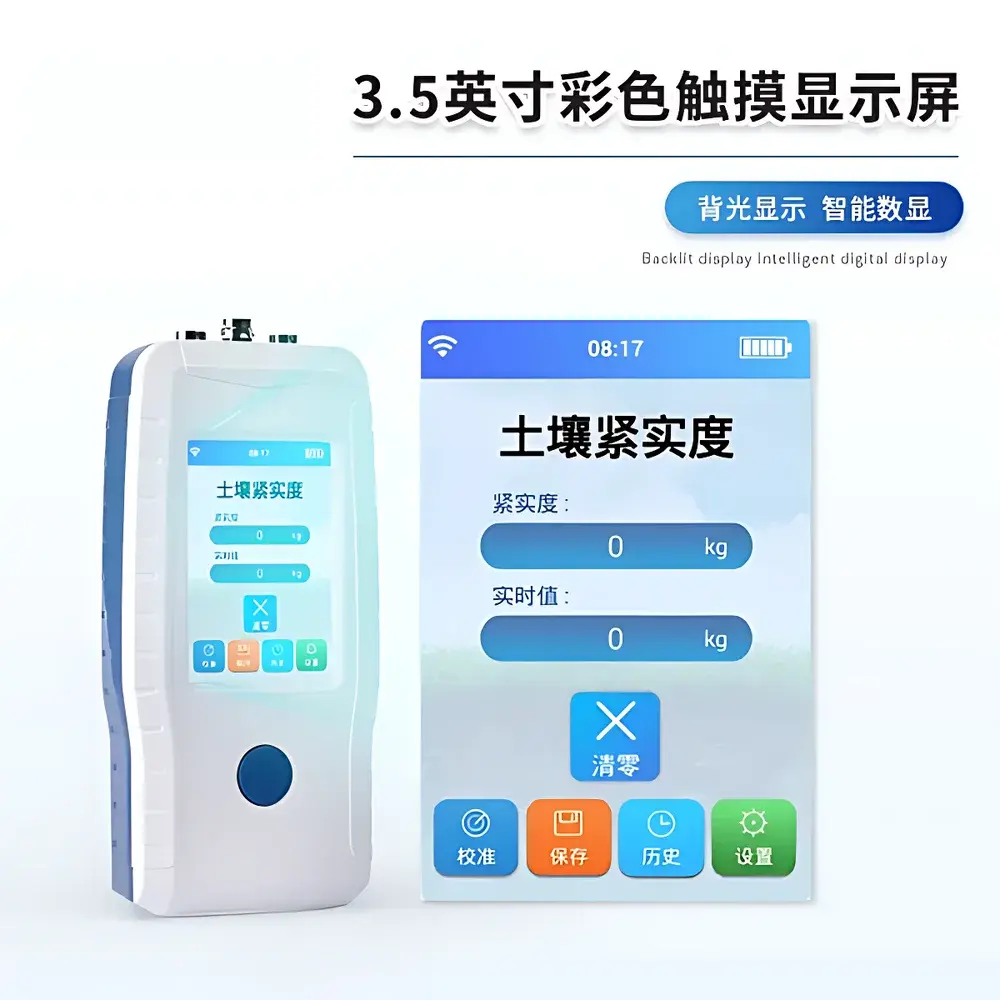
| Display | 3.5″ color touchscreen |
| Weight | 3.2 kg |
| Enclosure Material | Aluminum alloy case |
| Probe Material | Stainless steel |
Overview
The COMECAUSE JSD-3 Integrated Soil Compaction Tester is a field-deployable, handheld instrument engineered for direct in-situ measurement of soil penetration resistance — a key indicator of soil compaction, mechanical impedance to root growth, and overall soil physical condition. Based on the standardized cone penetrometer principle, the device applies controlled axial force via a stainless-steel cylindrical probe (Ø12 mm × 300 mm) driven vertically into undisturbed soil at a consistent rate. The resulting resistance force (expressed in kilogram-force, kgf, or converted to kPa using standard cross-sectional area assumptions) reflects the composite effect of soil bulk density, moisture content, texture, and structural stability. Unlike laboratory-based compression tests, the JSD-3 delivers real-time, spatially resolved field data without sample disturbance, supporting rapid assessment of tillage layer integrity, subsoil compaction layers, and post-harvest soil recovery dynamics. Its design complies with widely referenced methodologies including ASTM D5321 (Standard Test Method for Determining the Angle of Repose of Cohesionless Soils) and ISO 23470:2022 (Soil quality — Field measurement of soil penetration resistance), providing traceable, repeatable metrics suitable for agronomic decision support and environmental monitoring programs.
Key Features
- ARM Cortex-M3 processor with embedded Android OS for responsive operation and intuitive touch interface
- 3.5-inch high-contrast color TFT touchscreen with glove-compatible responsiveness
- Integrated GPS module enabling georeferenced data logging with WGS84 coordinates (±2.5 m CEP)
- Dual-mode connectivity: Wi-Fi for local network upload to cloud platforms; optional GPRS for cellular telemetry
- USB-C port supporting both charging and high-speed data export (up to 480 Mbps) to Windows/macOS systems
- Robust IP66-rated enclosure with stainless-steel probe and anodized aluminum structural components
- On-device storage capacity of 5 million timestamped readings with automatic rollover and file segmentation
- Configurable sampling modes: single-point push, continuous profiling (with depth indexing), and timed interval logging
- Low-power architecture: 6000 mAh Li-ion battery supports ≥10 h standby or ≥4 h active field use per charge
Sample Compatibility & Compliance
The JSD-3 is validated for use across mineral soils (sandy loam to clay loam), organic-rich topsoils (up to 25% OM), and moderately stony fields (<15% stone volume fraction <2 cm). It is not intended for highly gravelly, frozen, or saturated soils where probe deflection or slippage may compromise measurement fidelity. Calibration is performed against NIST-traceable dead-weight standards prior to shipment, with annual verification recommended per ISO/IEC 17025 guidelines. The instrument meets CE marking requirements for electromagnetic compatibility (EN 61326-1) and environmental robustness (EN 60529 for IP66). Data output formats (CSV, Excel-compatible .xlsx) align with FAO’s Global Soil Laboratory Network (GLOSOLAN) metadata standards and support integration into USDA NRCS SSURGO workflows and EU CAP monitoring frameworks.
Software & Data Management
Field-collected data are structured with mandatory metadata fields: UTC timestamp, latitude/longitude (WGS84), elevation (GPS-derived), operator ID, probe insertion depth (user-entered or auto-indexed), measured resistance (kgf), battery level, and ambient temperature. Exported files include embedded audit trails compliant with ALCOA+ principles (Attributable, Legible, Contemporaneous, Original, Accurate, Complete, Consistent, Enduring, Available). Optional desktop software (Windows/macOS) enables depth-resistance profile visualization, statistical summary (mean, SD, CV%), layer boundary detection via first-derivative analysis, and export to GIS-ready shapefiles (ESRI .shp). Cloud synchronization supports role-based access control, automated report generation, and API-driven integration with farm management information systems (FMIS) such as Climate FieldView™ and Granular®.
Applications
- Agronomic evaluation of tillage depth efficacy and compaction layer formation beneath traffic lanes
- Pre- and post-planting assessment of seedbed preparation quality in cereals, row crops, and horticulture
- Monitoring long-term effects of controlled traffic farming (CTF) and reduced tillage systems
- Validation of soil remediation interventions (e.g., deep ripping, bio-drilling, cover cropping)
- Environmental impact assessments for construction sites, forestry operations, and pipeline corridors
- Educational use in soil physics laboratories and extension training modules on soil health indicators
- Supporting UN SDG 15.3.1 (Land Degradation Neutrality) reporting through harmonized soil physical data collection
FAQ
What units does the JSD-3 display by default, and can they be converted?
The device displays results in kilogram-force (kgf); internal firmware supports real-time conversion to kPa (assuming 113.1 mm² effective probe area) and MPa upon export or via desktop software.
Is calibration required before each use?
No — factory calibration is stable under normal field conditions. However, zero-check verification (probe unloaded, sensor idle) is recommended before each deployment session.
Can the probe be replaced in the field?
Yes — the stainless-steel probe features a threaded M12×1.0 interface and can be swapped in under 60 seconds using the included hex key.
Does the device meet FDA or GLP requirements for regulated trials?
While not certified for pharmaceutical GLP, its audit-trail functionality, electronic signature support (via optional login), and 21 CFR Part 11–compliant data export mode make it suitable for agricultural research adhering to OECD Good Experimental Practice (GEP) standards.
How is depth controlled during measurement?
Depth is manually indexed by the operator using the calibrated aluminum rod (200 mm segments marked at 10 cm intervals); optional motorized depth feeders are available as OEM accessories.







