
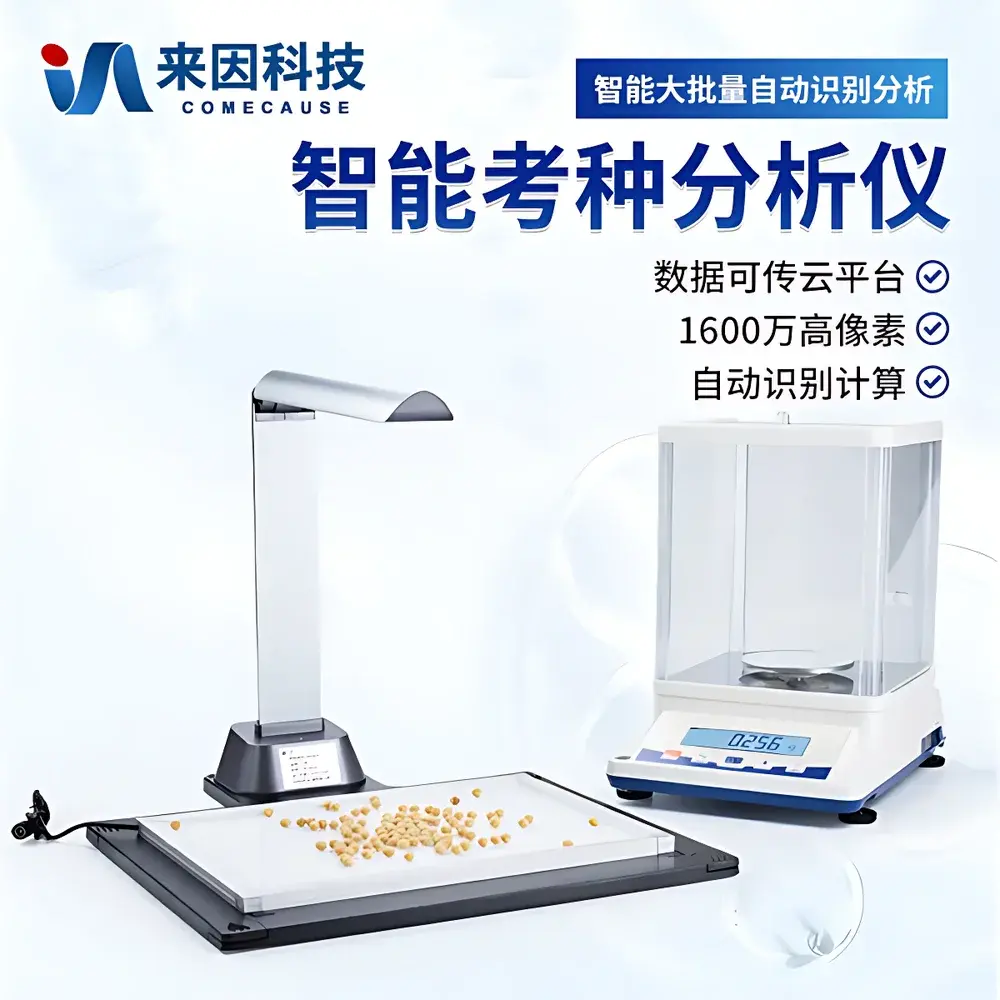

COMECAUSE IN-KZ02 Intelligent Seed Counting and Morphometric Analyzer
| Brand | COMECAUSE |
|---|---|
| Origin | Shandong, China |
| Manufacturer Type | Direct Manufacturer |
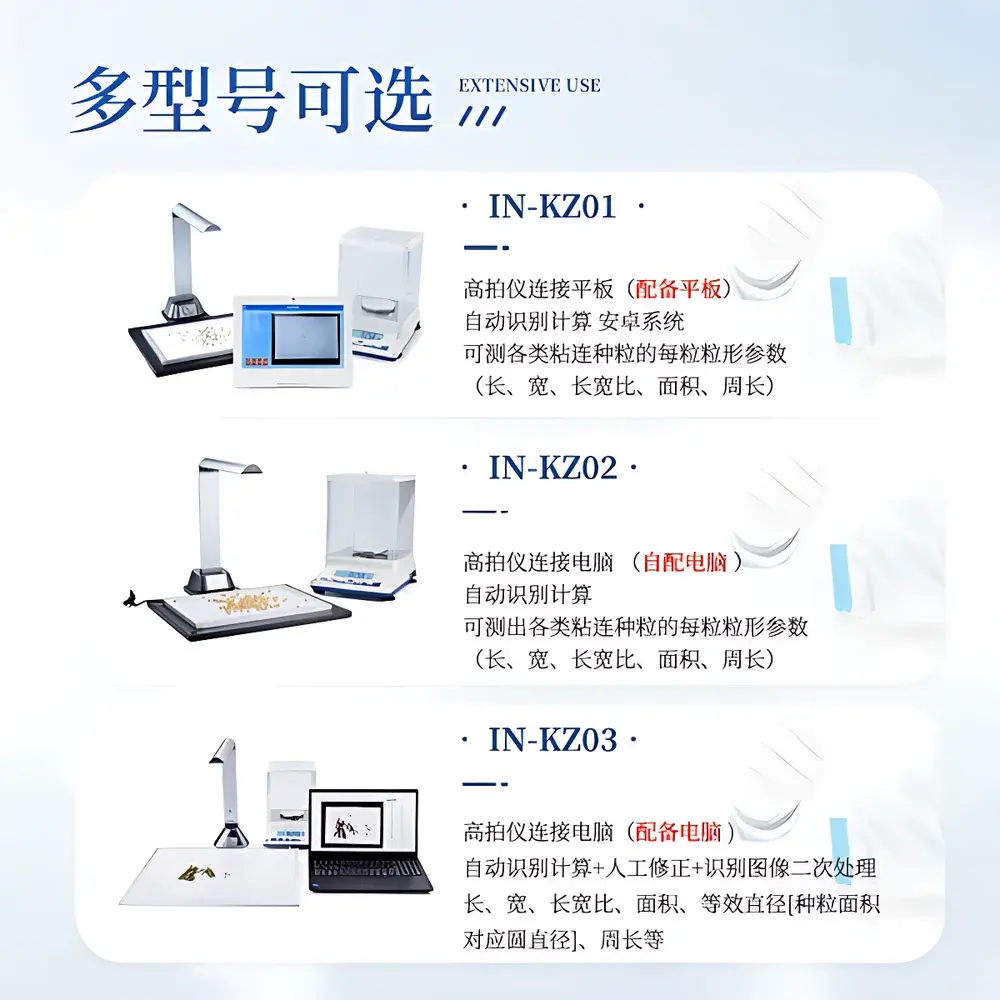
| Model | IN-KZ02 |
| Imaging Sensor | 16 MP Auto-Focus Color Camera |
| Backlight System | Uniform LED Illumination with Nano-Guide Plate & Reflective Layer |
| Seed Diameter Range | 0.5–20 mm |
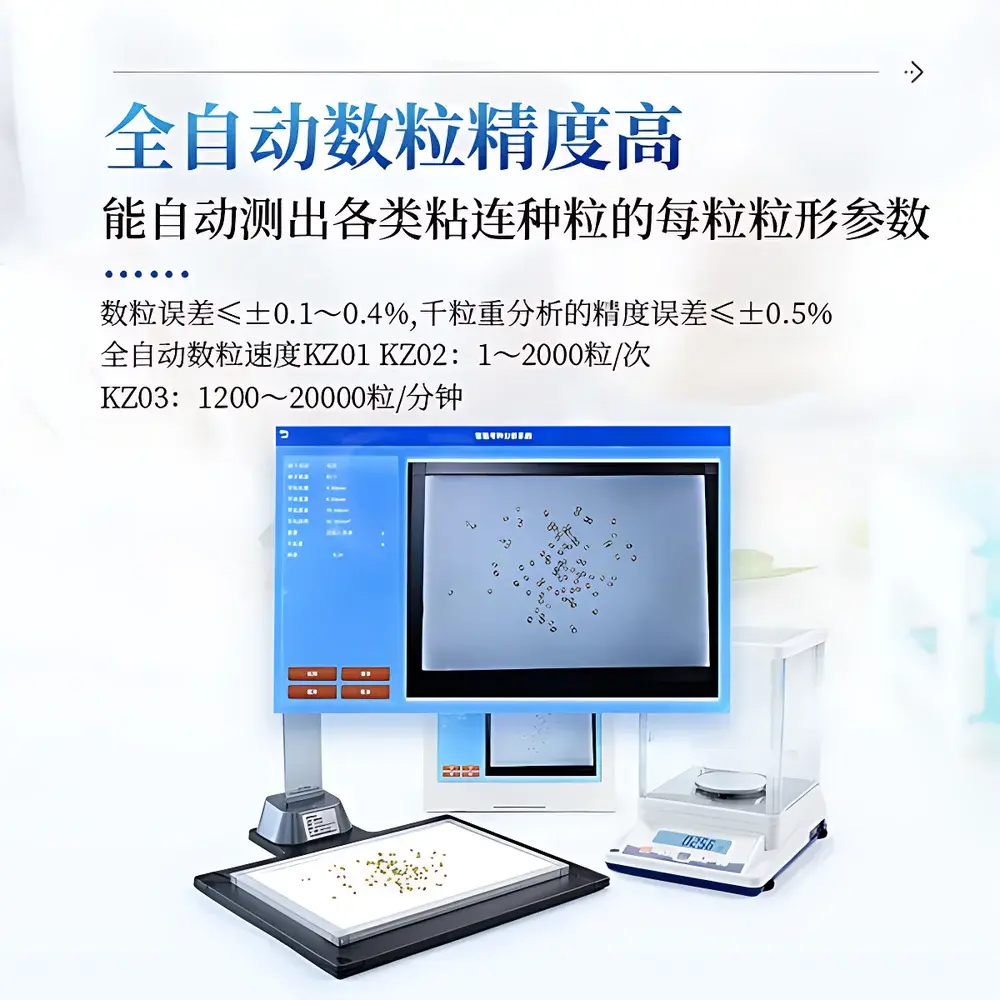
| Counting Accuracy | ≤ ±0.1–0.4% (1–2000 seeds per batch) |
| Thousand-Seed Weight (TSW) Accuracy | ≤ ±0.5% |
| Supported OS | Windows 10 or later |
| Output Format | Excel (.xlsx), PDF Summary Report |
| Language Interface | Embedded Bilingual (English/Chinese), One-Touch Switch |
| Compliance | Designed for ISO 5725 (accuracy & precision of measurement methods), ASTM D7250 (seed count standard practice), and GLP-aligned data traceability |
Overview
The COMECAUSE IN-KZ02 Intelligent Seed Counting and Morphometric Analyzer is a dedicated digital imaging instrument engineered for high-throughput, non-destructive seed phenotyping in agricultural research, breeding programs, and quality control laboratories. It operates on the principle of transmitted-light digital image acquisition combined with pixel-based morphological segmentation and geometric feature extraction. The system integrates a calibrated 16-megapixel auto-focus camera with a uniform, shadow-free LED backlight module—constructed using nano-structured light-guiding plates and reflective backing—to ensure consistent illumination across the entire imaging field. This optical architecture minimizes lens distortion and intensity gradients, enabling sub-millimeter dimensional fidelity for seeds ranging from 0.5 mm (e.g., lettuce, carrot) to 20 mm (e.g., maize, soybean). All image processing—including seed detection, contour delineation, convex hull computation, and Euclidean distance transformation—is performed in real time by an embedded algorithm suite grounded in classical computer vision theory, not AI black-box inference. The device is explicitly designed for compliance with standardized seed testing protocols, including those referenced in ISO 11539 (seed sampling), ISO 20712 (seed weight determination), and national agricultural metrology guidelines.
Key Features
- Optically optimized imaging station: 16 MP color CMOS sensor with hardware-level auto-focus and real-time lens distortion correction.
- Uniform backlight module: High-luminance LED array coupled with nano-engineered light-diffusing plate and specular reflector—ensuring <±2% intensity variation across 200 × 200 mm active area.
- Precision morphometric engine: Computes per-seed and population-averaged metrics—length, width, length-to-width ratio, perimeter, projected area—and exports raw pixel coordinates for third-party validation.
- Integrated mass correlation workflow: Direct input of sample mass (via external analytical balance) triggers automatic thousand-seed weight (TSW) calculation with error propagation reporting per ISO/IEC 17025 Annex A.3.
- Bilingual GUI with audit-ready operation log: Timestamped user actions, parameter settings, and result exports are locally archived with SHA-256 checksums—supporting GLP-compliant record retention.
- Zero-dependency analysis: Standalone Windows application requiring no cloud connectivity, database server, or runtime license—fully deployable in offline field stations or regulated QC environments.
Sample Compatibility & Compliance
The IN-KZ02 accommodates dry, intact, surface-smooth seeds with minimal translucency variability (e.g., rice, wheat, barley, sorghum, rapeseed, soybean, maize, sunflower, and legume species). For heterogeneous samples such as paddy rice containing both filled and unfilled grains (chaff, glumes, or immature kernels), pre-sorting via air separation or density grading is required prior to imaging—consistent with ISO 21572 and USDA FGIS standards. The system does not support highly irregular, clustered, overlapping, or moisture-sensitive specimens (e.g., fresh berries, mucilaginous seeds) without manual intervention. All measurement outputs adhere to the repeatability and reproducibility criteria defined in ISO 5725-2:2019, with TSW results traceable to NIST-traceable mass standards when paired with certified balances. Device firmware and software versioning are logged at every analysis session to satisfy FDA 21 CFR Part 11 electronic record requirements for audit trails.
Software & Data Management
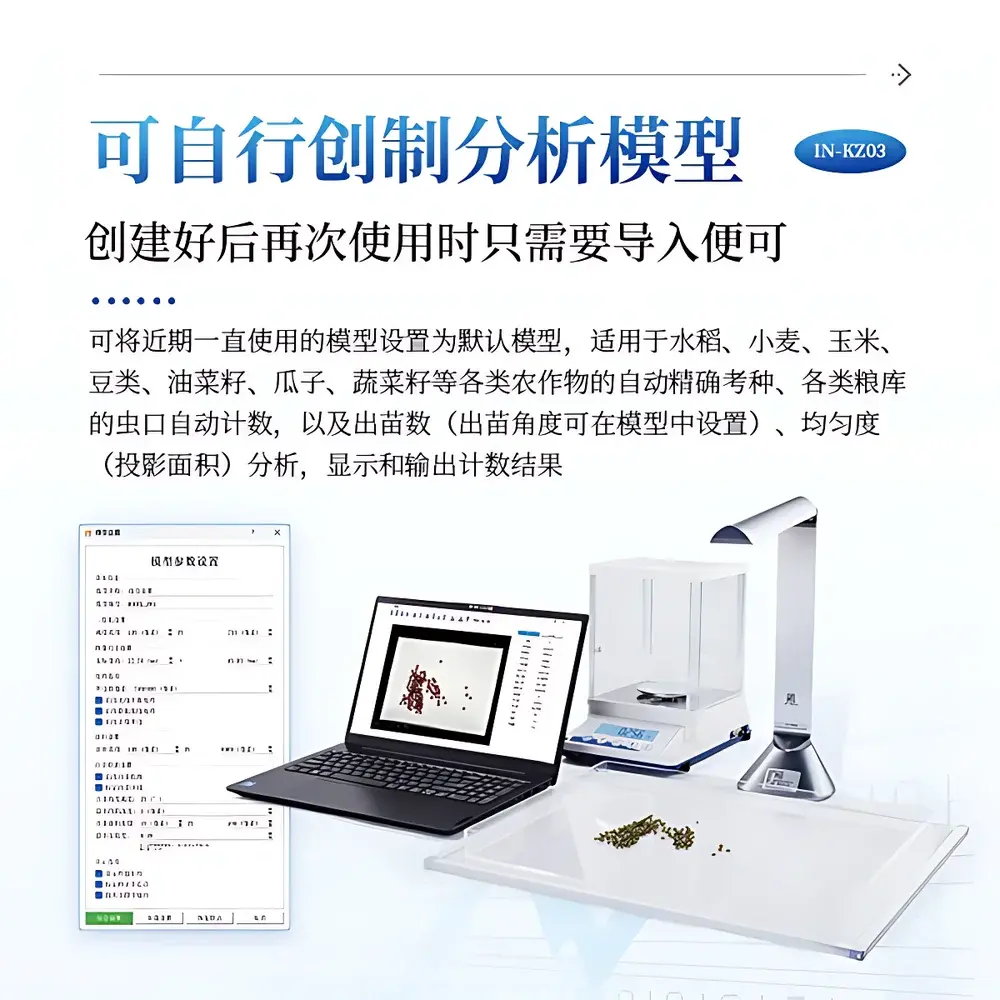
The proprietary Windows-native application (v3.2+, compatible with Windows 10/11 x64) features a deterministic, non-proprietary file architecture: all images are stored in lossless PNG format; metadata (exposure time, gain, scale factor, operator ID) is embedded in XMP headers; quantitative results are serialized in UTF-8 CSV and exportable to Excel (.xlsx) with formula-free worksheets. Batch analysis mode supports up to 99 samples per session, each assigned a unique alphanumeric ID. The software enforces mandatory field entry for sample ID, date, operator, and balance serial number—preventing incomplete dataset generation. Exported reports include statistical summaries (mean, SD, CV%, min/max), histogram distributions of size parameters, and scatter plots of length vs. width with linear regression overlay. No telemetry, usage analytics, or remote update mechanisms are implemented—ensuring full data sovereignty.
Applications
- Field trial yield estimation: Rapid quantification of harvested panicles or ears via seed count extrapolation.
- Seed lot certification: Verification of purity, germination potential proxies, and varietal identity consistency through morphometric clustering.
- Plant breeding pipelines: High-volume screening of segregating populations for grain shape QTLs (e.g., GWAS trait mapping inputs).
- Post-harvest quality assessment: Detection of mechanical damage, shriveling, or fungal discoloration via pixel-intensity thresholding and edge discontinuity analysis.
- Educational agronomy labs: Standardized teaching tool for seed morphology, statistical sampling theory, and metrological uncertainty concepts.
FAQ
Does the IN-KZ02 require calibration with physical reference standards?
Yes—users must perform initial scale calibration using a certified stage micrometer (NIST-traceable) and verify illumination uniformity annually per internal SOP-IM-004.
Can the system differentiate between viable and non-viable seeds?
No—viability assessment requires biochemical, electrical, or thermal methods; the IN-KZ02 performs only morphological and dimensional classification.
Is USB 3.0 connectivity mandatory for optimal performance?
Yes—the 16 MP sensor streams at 12 fps; USB 2.0 will throttle frame rate and increase shutter lag, degrading edge detection accuracy.
What is the minimum recommended sample mass for reliable TSW calculation?
At least 5 g for small seeds (10 mm), per ISO 20712 section 6.2.
Does the software support automated batch renaming or LIMS integration?
No—batch naming is manual; however, exported Excel files contain structured column headers compatible with common LIMS ingestion templates (e.g., CSV-to-SQL import scripts).




