


COMECAUSE IN-KZ03 Seed Analysis System
| Brand | COMECAUSE |
|---|---|
| Origin | Shandong, China |
| Manufacturer Type | OEM Manufacturer |
| Region of Origin | Domestic (PRC) |
| Model | IN-KZ03 |
| Price | USD 4,950 (FOB Qingdao) |
Overview
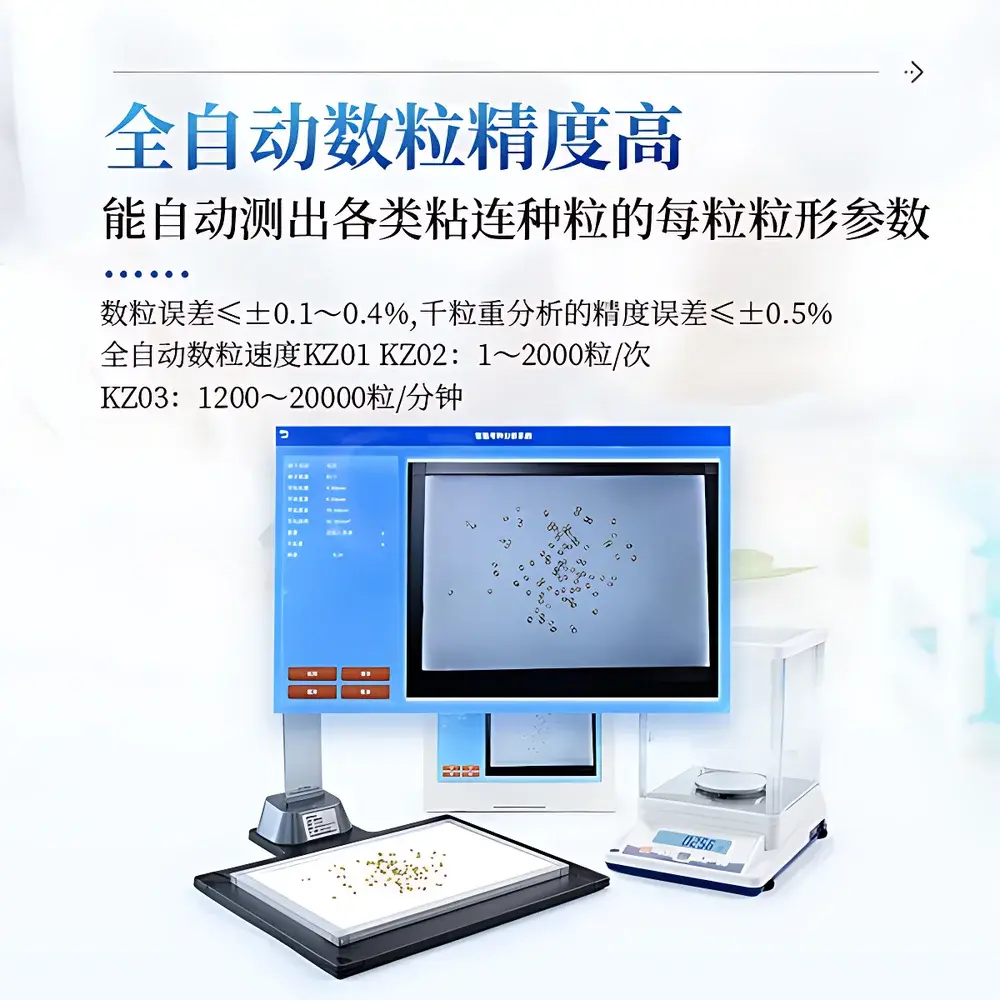
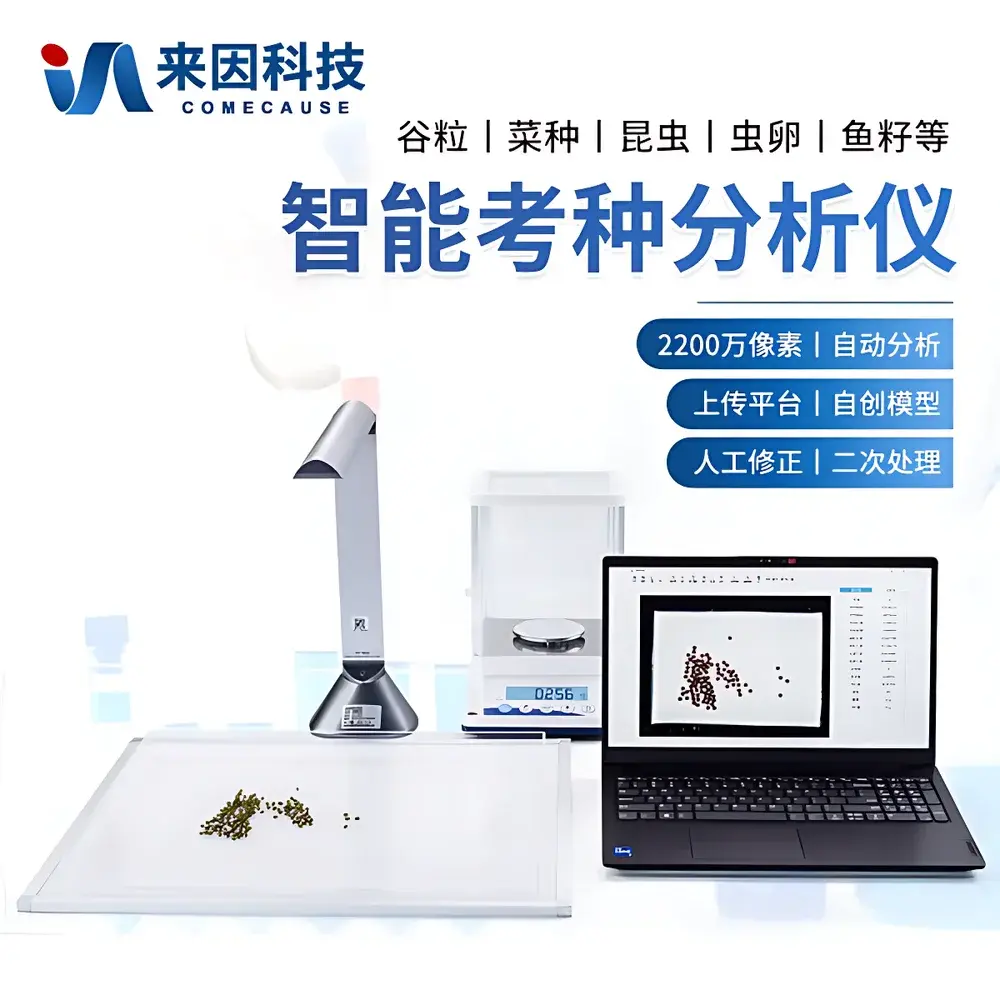
The COMECAUSE IN-KZ03 Seed Analysis System is an automated digital imaging platform engineered for high-throughput, metrologically traceable seed characterization in agricultural research, seed certification laboratories, grain storage facilities, and regulatory testing centers. It operates on the principle of high-resolution top-down color imaging combined with adaptive computer vision algorithms to extract morphometric, count-based, and classification metrics from static seed monolayers placed on a calibrated A3-format backlight stage. Unlike manual or semi-automated counting methods, the IN-KZ03 implements real-time optical distortion correction, uniformity-compensated illumination mapping, and pixel-to-millimeter spatial calibration—enabling sub-millimeter measurement reproducibility across heterogeneous seed batches. Its architecture supports both ISO 11557:2021-compliant seed purity analysis and FAO-recommended germination sample preparation workflows, serving as a dual-purpose instrument for official seed testing (ISTA-accredited labs) and post-harvest pest surveillance.
Key Features
- 22-megapixel industrial-grade CMOS camera with programmable exposure control and hardware-level lens distortion correction
- A3-format ultra-thin LED backlight panel (1189 × 841 mm) featuring spatial uniformity compensation algorithm (±1.2% irradiance variation across active area)
- Automated batch processing engine capable of analyzing 1,200–20,000 seeds per minute with counting accuracy ≤ ±0.4% (validated per ISO 5600-2:2022 Annex B)
- Dynamic particle segmentation using adaptive thresholding, watershed separation, and convex hull refinement for agglomerated or touching seeds
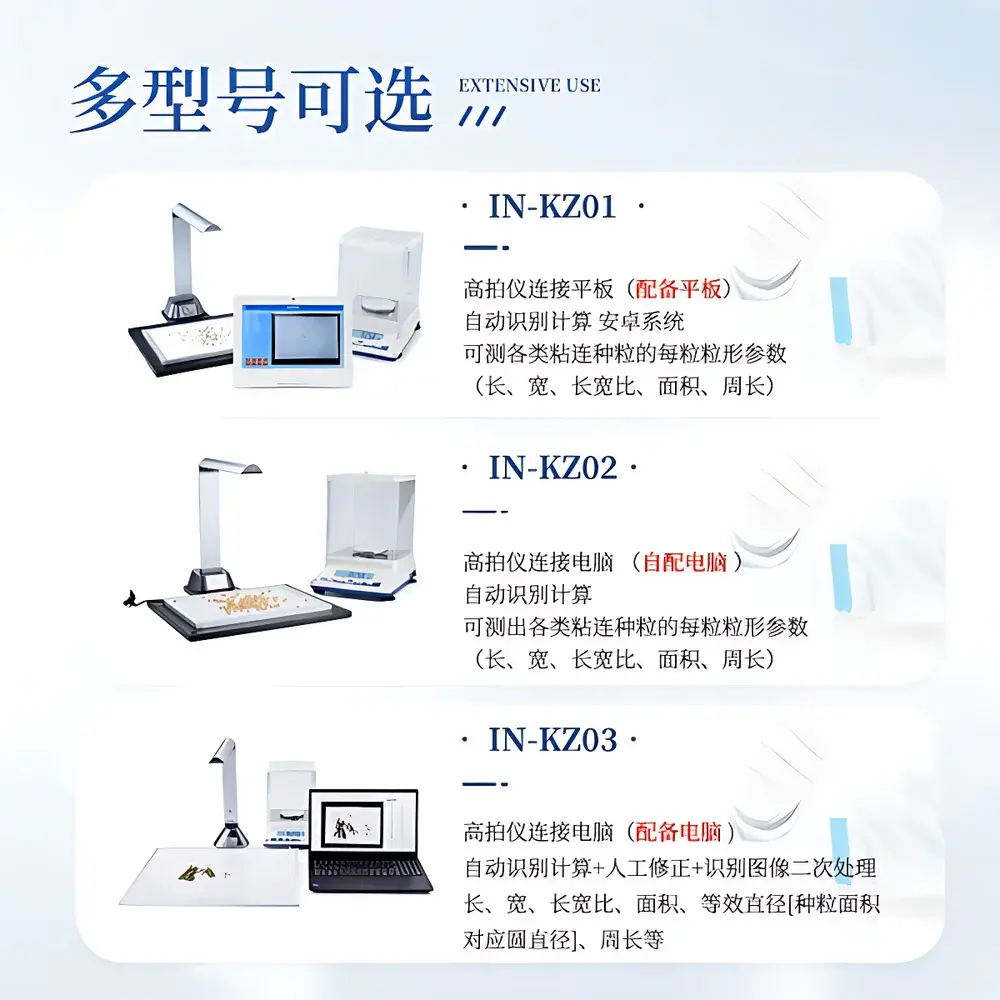
- Configurable morphometric output suite: length, width, aspect ratio, projected area, equivalent circular diameter (ECD), perimeter, and minimum bounding rectangle
- User-definable analysis models stored as XML-based configuration files—supporting species-specific parameter tuning without code modification
- Integrated RS232 interface for real-time weight acquisition from precision balances (e.g., 220 g / 1 mg resolution)
- Barcode scanner compatibility for sample traceability and LIMS integration (GS1-128 compliant)
- Manual correction layer with polygonal ROI selection, brush-based reclassification, and drag-and-drop object annotation
Sample Compatibility & Compliance
The IN-KZ03 accommodates seeds and biological particles ranging from 0.5 mm to 20 mm in maximum dimension—including paddy rice, wheat kernels, maize caryopses, rapeseed, soybean, sunflower achenes, vegetable seeds (e.g., tomato, lettuce), and entomological targets such as Sitophilus oryzae (rice weevil), aphid nymphs, silkworm eggs, and fish roe. For accurate differentiation between filled and unfilled grains (e.g., rice plump vs. chalky kernels), pre-processing via air-screen separation is recommended per ISTA Rule 5.3. The system meets functional requirements outlined in ISO 20412:2020 (seed purity analysis), ASTM D7220-18 (digital image-based particle sizing), and GB/T 3543.3–1995 (Chinese national standard for seed testing). All measurement logs include timestamped audit trails compatible with GLP documentation practices.
Software & Data Management
The proprietary COMECAUSE SeedVision™ software (v4.2+) provides a Windows-based GUI with role-based access control, configurable report templates (PDF/CSV/XLSX), and embedded statistical modules for coefficient of variation (CV%), skewness, kurtosis, and frequency distribution analysis. Raw images are saved in lossless TIFF format with embedded EXIF metadata (camera settings, calibration ID, operator ID). Exported CSV files conform to RFC 4180 standards and are directly importable into Excel, R, Python (pandas), or laboratory information management systems (LIMS). Software supports 21 CFR Part 11-compliant electronic signatures when deployed with optional PKI certificate integration. Default model libraries include pre-validated configurations for Oryza sativa, Triticum aestivum, Zea mays, Brassica napus, Glycine max, and Cucurbita pepo.
Applications
- Official seed purity testing (pure seed, inert matter, other crop seeds, weed seeds)
- Thousand-kernel weight (TKW) determination per ISO 5600-1:2022
- Grain storage infestation monitoring (insect count per kg grain)
- Seed lot homogeneity assessment via projected area distribution analysis
- Germination sample preparation validation (count accuracy verification prior to incubation)
- Varietal identification support through supervised learning on labeled training sets
- Research-grade morphometric phenotyping for breeding programs (e.g., seed size QTL mapping)
- Post-harvest quality control in certified seed production facilities
FAQ
Does the IN-KZ03 require annual recalibration?
No scheduled recalibration is mandated; however, users must perform daily verification using NIST-traceable reference standards (e.g., ceramic calibration grids) and document results per internal QA procedures.
Can the system distinguish between viable and non-viable seeds?
Not inherently—the IN-KZ03 performs morphological classification only. Viability assessment requires integration with external assays (e.g., tetrazolium staining, X-ray CT, or NIR spectroscopy).
Is offline operation supported?
Yes—full functionality remains available without network connectivity; data synchronization to central servers occurs upon reconnection.
What operating system versions are supported?
Windows 10 Pro (64-bit) and Windows 11 Enterprise (22H2 or later) with .NET Framework 4.8 and DirectX 12.
How is user training delivered?
COMECAUSE provides remote instructor-led sessions (8 hours), bilingual SOP documentation, and on-site commissioning support within Asia-Pacific regions.





