
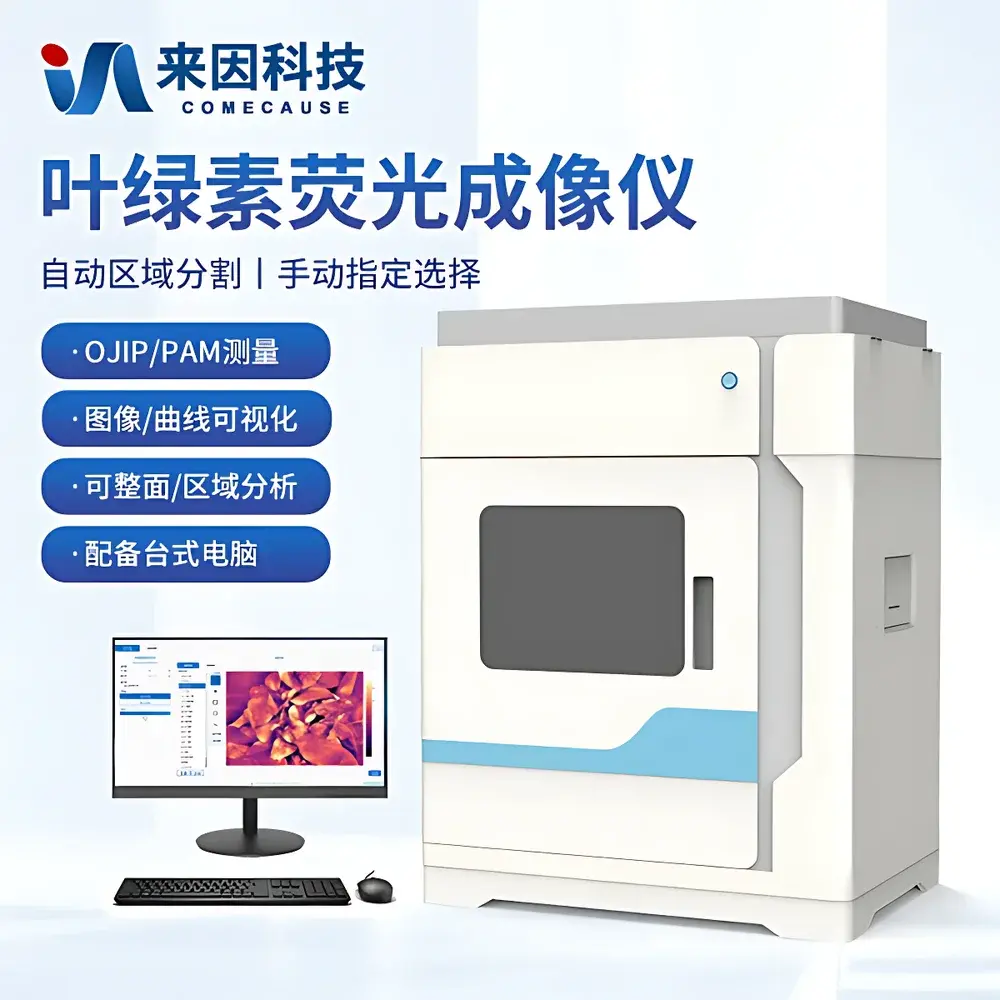
COMECAUSE IN-LeafClear Chlorophyll Fluorescence Imaging System
| Brand | COMECAUSE |
|---|---|
| Origin | Shandong, China |
| Manufacturer Type | Direct Manufacturer |
| Model | IN-LeafClear |
| Camera Resolution | 1608 × 1104 pixels |
| Pixel Size | 9 µm × 9 µm |
| Frame Rate | 100 fps |
| Bit Depth | 12-bit |
| Interface | USB 3.0 |
| Lens Focal Length | 12 mm |
| Max Aperture | F/2.8 (adjustable) |
| HFOV | 62.11° |
| VFOV | 44.83° |
| Max Imaging Area | 50 cm × 35 cm |
| Excitation Wavelength | 450 nm (blue LED) |
| Actinic Light | 630 nm (red LED) |
| Far-Red Light | 730 nm |
| LED Intensity Range | 1–100% (up to 1440 µmol/(m²·s)) |
| OJIP Duration | 0.1–1.0 s (default 1 s) |
| PAM Dark Adaptation | 0–3600 s |
| PAM Saturation Pulse Intensity | 15–100% (450 nm) |
| Fluorescence Dynamic Range | 0–4095 (12-bit) |
| SNR | >100:1 |
| Repeatability (CV) | <3% |
| Linearity (R²) | >0.999 |
| Minimum Sampling Interval | 10 ms (OJIP), 100 ms (PAM) |
| Spatial Resolution | ~0.3 mm/pixel (at 50 cm × 35 cm FOV) |
| Exposure Time | 100–1000 ms adjustable |
| LED Response Time | <1 ms |
Overview
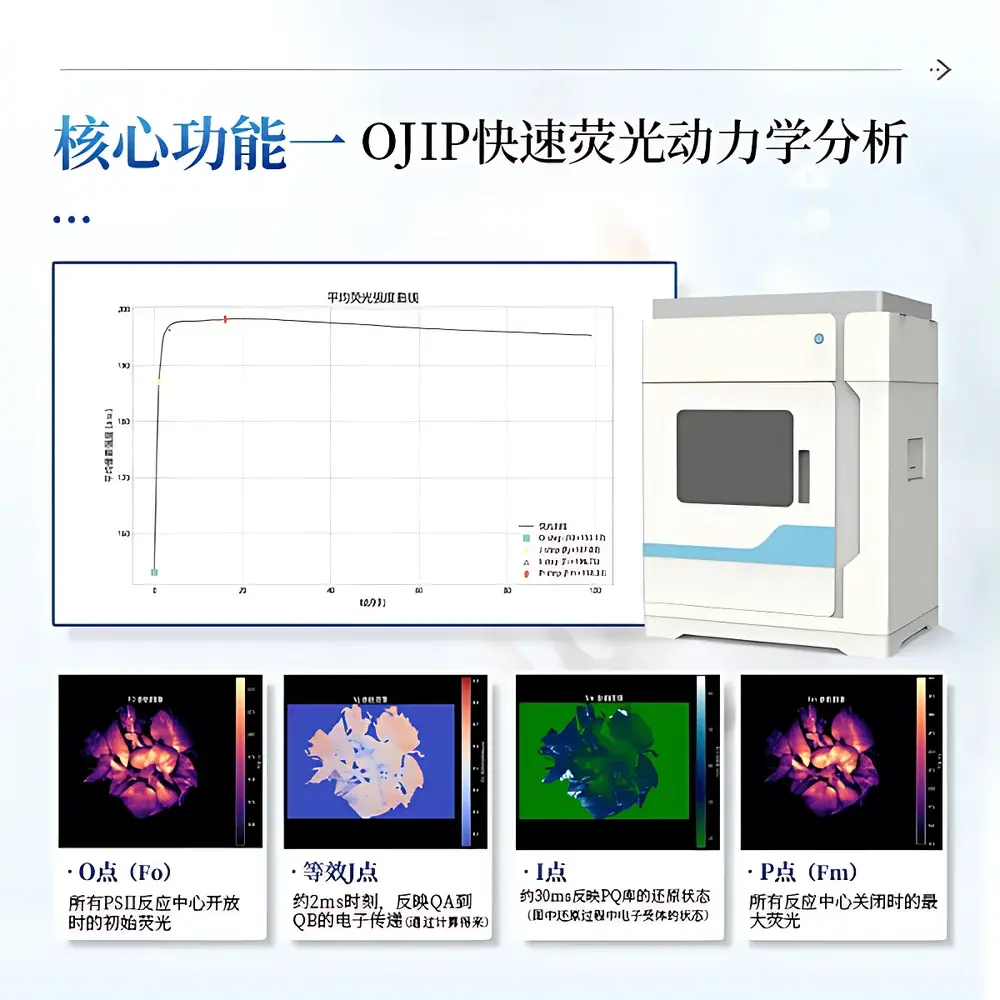
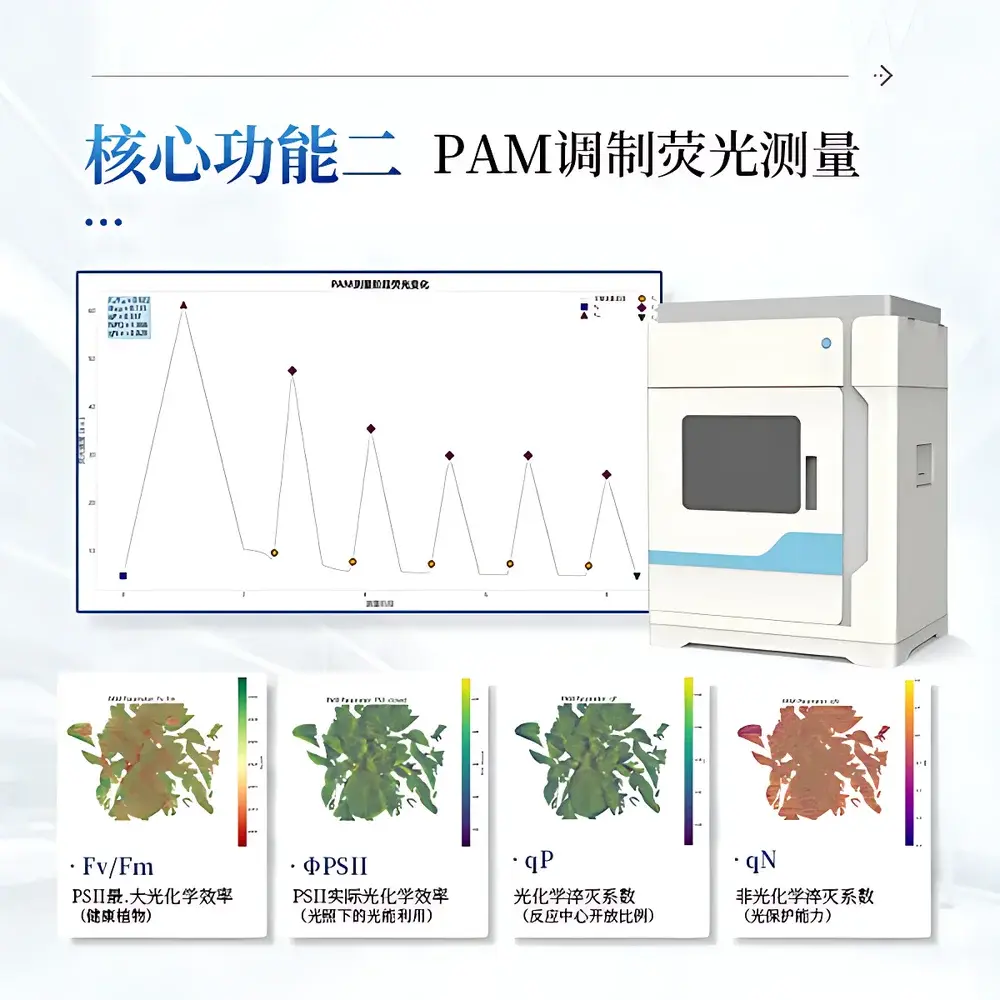
The COMECAUSE IN-LeafClear Chlorophyll Fluorescence Imaging System is a high-resolution, non-invasive optical platform engineered for quantitative spatial mapping of chlorophyll a fluorescence kinetics in intact plant tissues. It operates on the biophysical principles of photosystem II (PSII) photochemistry, leveraging pulse-amplitude modulation (PAM) and OJIP transient analysis to resolve functional heterogeneity across leaf surfaces at sub-millimeter resolution. The system captures fluorescence emission following controlled excitation by narrow-band LEDs (450 nm blue for saturation, 630 nm red for actinic illumination, and 730 nm far-red for QA reoxidation), enabling discrimination between photochemical quenching (qP), regulated non-photochemical quenching (NPQ), and constitutive energy dissipation. Its 12-bit CMOS sensor (1608 × 1104 pixels, 9 µm pitch) delivers high signal fidelity with >100:1 signal-to-noise ratio and <3% coefficient of variation—critical for detecting subtle, early-stage physiological shifts induced by abiotic or biotic stressors. Designed for laboratory and controlled-environment applications, the IN-LeafClear supports both rapid snapshot assessment (OJIP in ≤1 s) and time-resolved dynamic monitoring (PAM over minutes to hours), making it suitable for longitudinal studies under GLP-aligned experimental protocols.
Key Features
- Integrated dual-mode fluorescence acquisition: Simultaneous support for OJIP transient kinetics (10 ms temporal resolution) and PAM-based steady-state and dynamic quenching analysis
- Modular LED illumination architecture: Independently controllable 450 nm (excitation), 630 nm (actinic), and 730 nm (far-red) sources with intensity precision from 1% to 100% (0–1440 µmol·m⁻²·s⁻¹)
- High-fidelity imaging optics: Fixed 12 mm lens with F/2.8 variable aperture, 62.11° horizontal and 44.83° vertical field of view, optimized for uniform irradiance across 50 cm × 35 cm sample area
- Real-time parameter computation: On-device calculation of >40 biophysical indices—including Fv/Fm, ΦPSII, qP, NPQ, PIABS, Mo, Area, and JIP-test-derived flux ratios (ABS/RC, TRo/RC, ETo/RC, DIo/RC)
- Robust software architecture: Graphical user interface with real-time preview, dual-language (English/Chinese) toggle, hardware auto-detection, and parameter persistence across sessions
- Scientific-grade image processing: Adaptive contrast enhancement, Gaussian noise suppression, Jet colormap rendering with calibrated colorbar scaling, and pixel-wise statistical mapping
Sample Compatibility & Compliance
The IN-LeafClear accommodates detached leaves, whole seedlings, rosettes, and small potted plants up to 35 cm in height. Its open-chamber design permits integration with environmental control units (e.g., temperature/humidity chambers, CO2 incubators) for stress-response phenotyping. All fluorescence parameters adhere to internationally accepted conventions defined by the International Society of Photosynthesis Research (ISPR) and align with methodologies cited in ASTM E2961–14 (Standard Guide for Chlorophyll Fluorescence Measurements) and ISO 10211:2021 (Plant physiology — Measurement of chlorophyll fluorescence). While not certified for GMP production environments, the system’s audit-ready data logging—including timestamped parameter configurations, raw image metadata, and exportable CSV/Excel reports—supports traceability requirements under GLP-compliant research frameworks. Firmware and software updates are version-controlled and documented per ISO/IEC 17025:2017 Annex A.3 guidelines for measurement software validation.
Software & Data Management
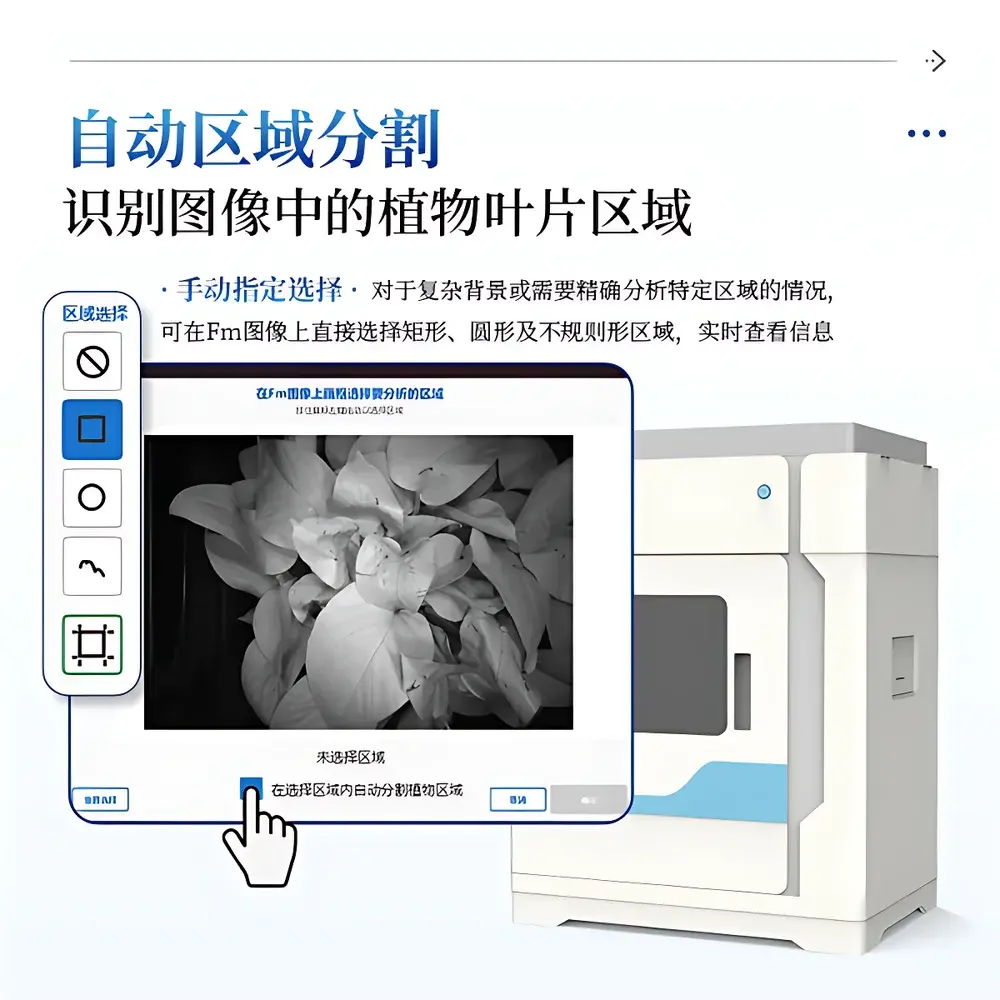
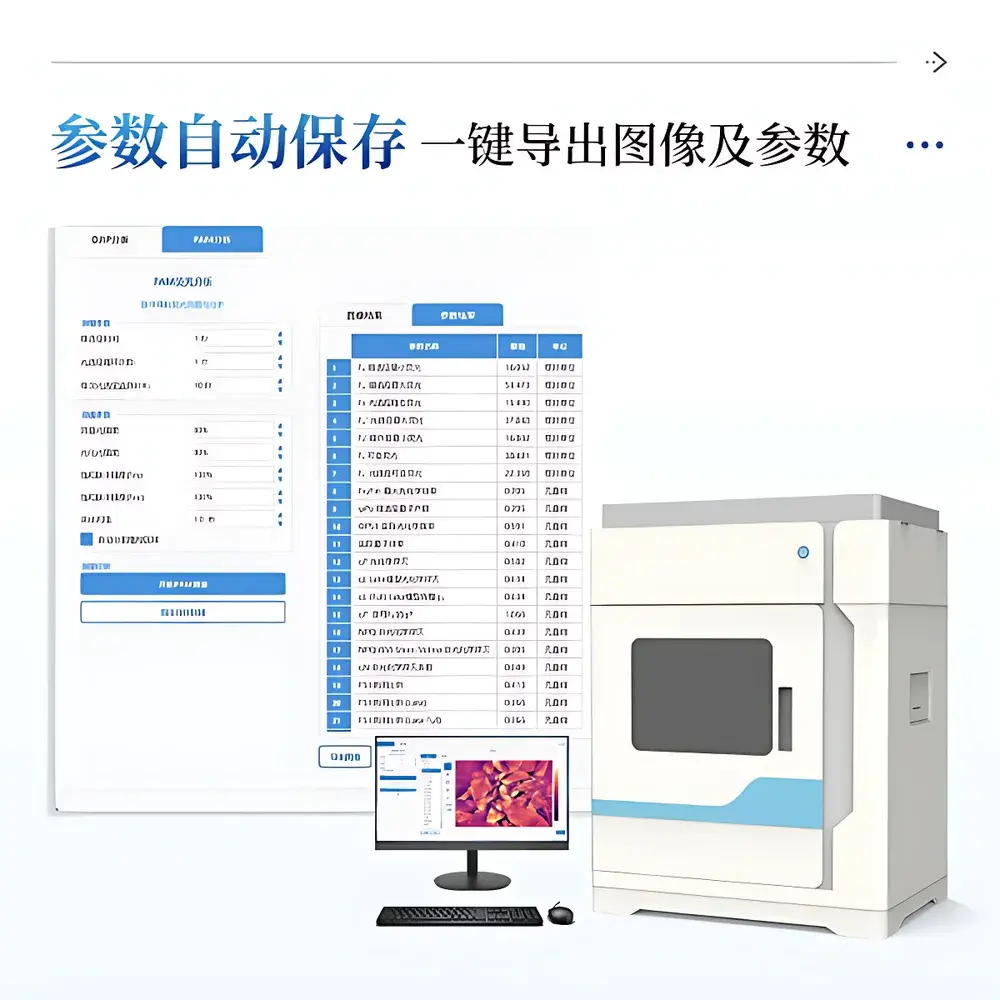
Data acquisition and analysis are managed via the proprietary IN-LeafClear Control Suite, a Windows-native application built on Qt framework with HDF5-based internal storage for lossless raw data preservation. Each session automatically logs instrument configuration (LED intensities, exposure time, sampling interval, dark adaptation duration), metadata (operator ID, sample ID, date/time), and calibration references. Users may define custom Regions of Interest (ROI) using polygonal, rectangular, or circular selection tools—or enable automated background-subtracted leaf segmentation via adaptive thresholding. All computed parameters are visualized as spatial heatmaps and exported as PNG (8-bit or 16-bit) with embedded scale bars and metadata EXIF tags. Tabular results export to CSV or XLSX with SI-compliant units and uncertainty annotations where applicable (e.g., Fv/Fm: ±0.005; ΦPSII: ±0.01). File naming follows ISO 8601-compliant convention: “OJIP_20240522_143217_FvFm.png”. Audit trails record all parameter modifications, export events, and software version changes—supporting 21 CFR Part 11 readiness when deployed with institutional electronic signature policies.
Applications
- Photosynthetic phenotyping: High-throughput screening of crop germplasm for PSII efficiency (Fv/Fm), electron transport rate (ETR), and photoprotective capacity (NPQ kinetics)
- Abiotic stress physiology: Quantifying drought-induced decline in quantum yield (ΦPSII), thermal dissipation onset (qN), and reaction center integrity (PIABS) prior to visible symptom expression
- Toxicology & agrochemical assessment: Detecting herbicide mode-of-action effects (e.g., DCMU inhibition of QB site) via OJIP curve shape distortion (J-I-P inflection shifts) and Fo elevation
- Ecophysiology field studies: Portable deployment for canopy-level fluorescence mapping using standardized light-adapted protocols compliant with FLUORWAVE and PhenoCam network standards
- Education & method development: Teaching core concepts of PSII photochemistry, including QA reduction kinetics, plastoquinone pool redox state (I-step), and antenna connectivity (Area parameter)
FAQ
What is the minimum detectable change in Fv/Fm that the IN-LeafClear can reliably resolve?
The system achieves ±0.005 absolute uncertainty in Fv/Fm under optimal conditions (dark-adapted leaves, SNR >100:1), enabling detection of sub-1% physiological shifts—sufficient to distinguish early drought response from baseline variability.
Can the IN-LeafClear be synchronized with external environmental controllers or gas exchange systems?
Yes. The USB 3.0 interface supports TTL-triggered acquisition, and the software SDK provides API hooks for third-party hardware synchronization (e.g., Li-Cor 6800, Walz GFS-3000) via RS-232 or Ethernet TCP/IP.
Is raw fluorescence intensity data accessible for custom algorithm development?
All unprocessed 12-bit frame sequences (including dark frames and flat-field references) are stored in HDF5 format and fully accessible via Python/Matlab APIs included in the Developer Package.
Does the system comply with FDA 21 CFR Part 11 for regulated preclinical research?
While the base configuration meets ALCOA+ data integrity principles, full Part 11 compliance requires institutional implementation of electronic signatures, role-based access control, and periodic software validation—features supported via optional Enterprise License module.
How is spatial calibration maintained across different working distances?
A built-in calibration routine uses a certified grid target to compute pixel-to-mm mapping at user-defined distances; calibration profiles are saved per lens configuration and applied automatically during image analysis.
Related Products




