
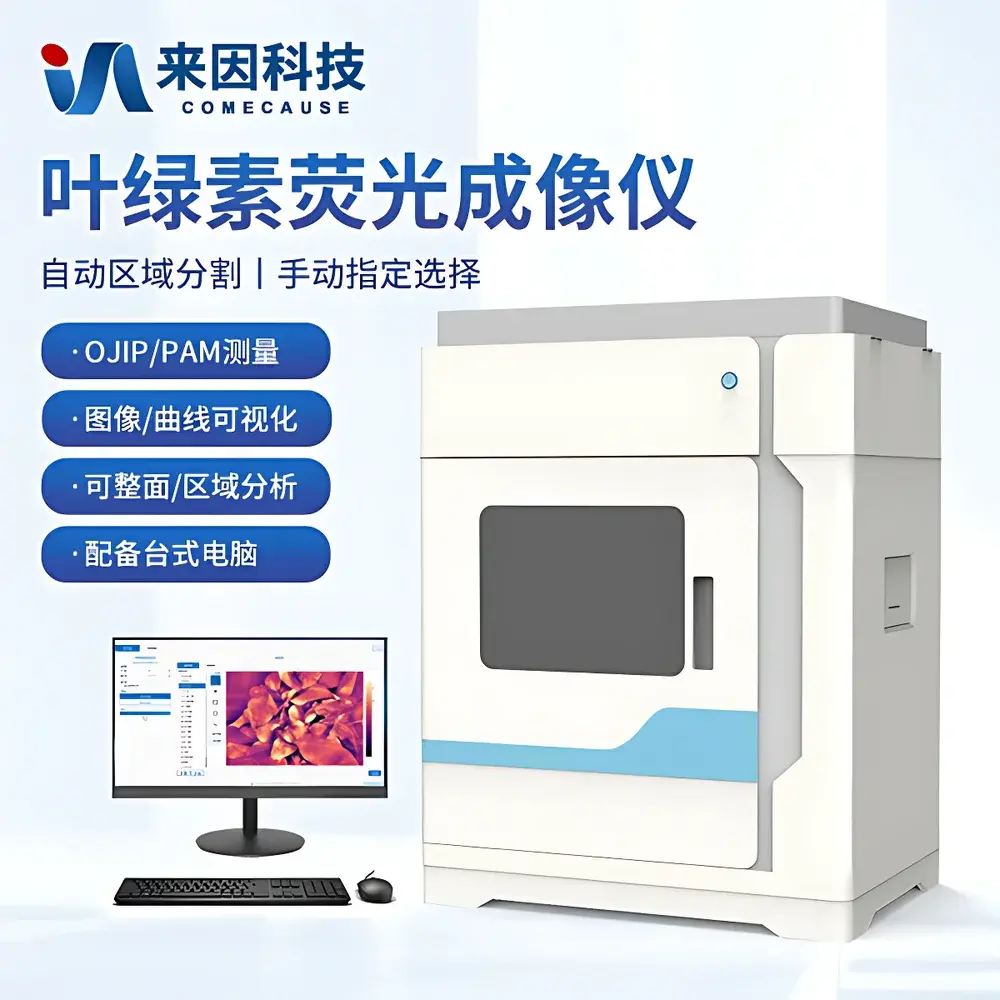
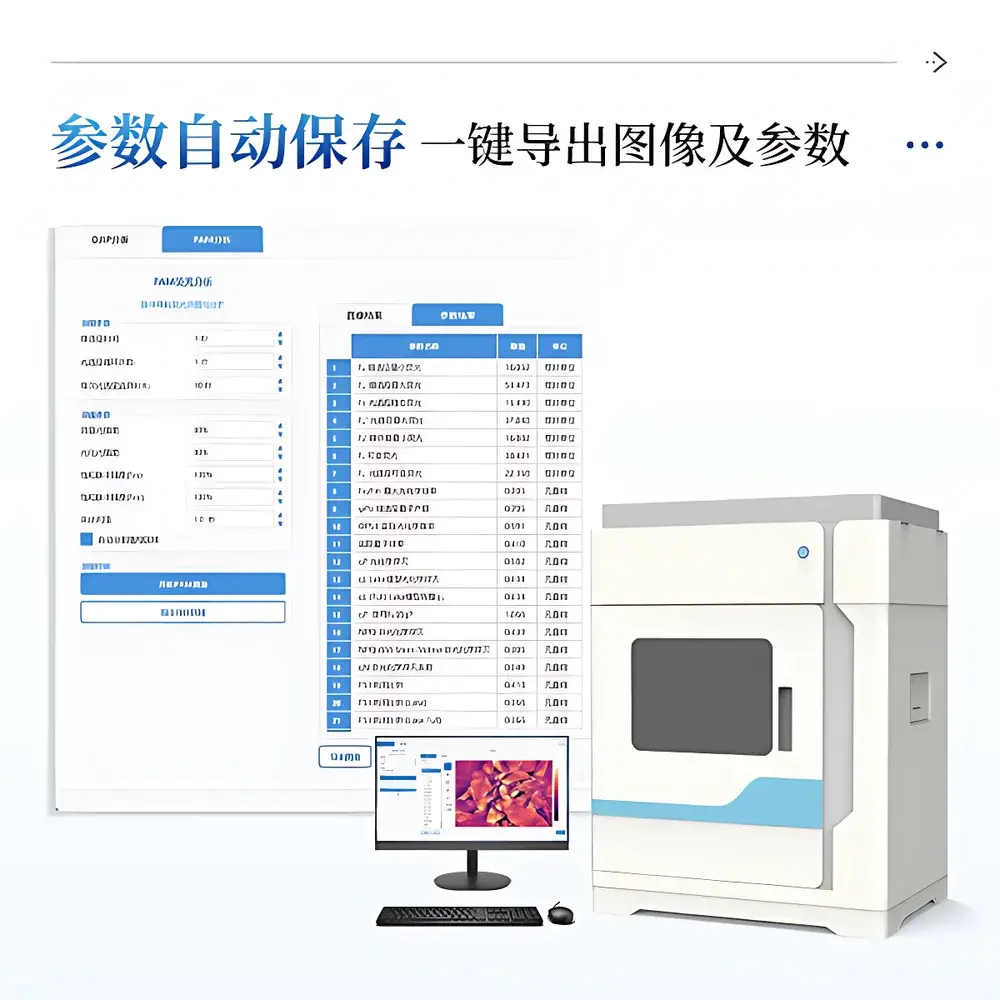
COMECAUSE IN.LeafClear Chlorophyll Fluorescence Imaging System
| Brand | COMECAUSE |
|---|---|
| Model | IN.LeafClear |
| Camera Resolution | 1608 × 1104 |
| Pixel Size | 9 µm × 9 µm |
| Frame Rate | 100 fps |
| Bit Depth | 12-bit |
| Interface | USB 3.0 |
| Lens Focal Length | 12 mm |
| Max Aperture | F/2.8 (adjustable) |
| HFOV | 62.11° |
| VFOV | 44.83° |
| Max Imaging Area | 50 cm × 35 cm |
| Excitation Wavelengths | 450 nm (blue), 630 nm (red), 730 nm (far-red) |
| LED Irradiance Range | 90–1440 µmol/(m²·s) |
| OJIP Acquisition Duration | 0.1–1.0 s (10 ms min. interval) |
| PAM Sampling Interval | 0.1–10.0 s (100 ms min. interval) |
| Fluorescence Dynamic Range | 0–4095 (12-bit), SNR > 100:1 |
| Repeatability (CV) | < 3% |
| Fv/Fm Accuracy | ±0.005 |
| ΦPSII Accuracy | ±0.01 |
| Spatial Resolution | ~0.3 mm/pixel at standard working distance |
| LED Response Time | < 1 ms |
Overview
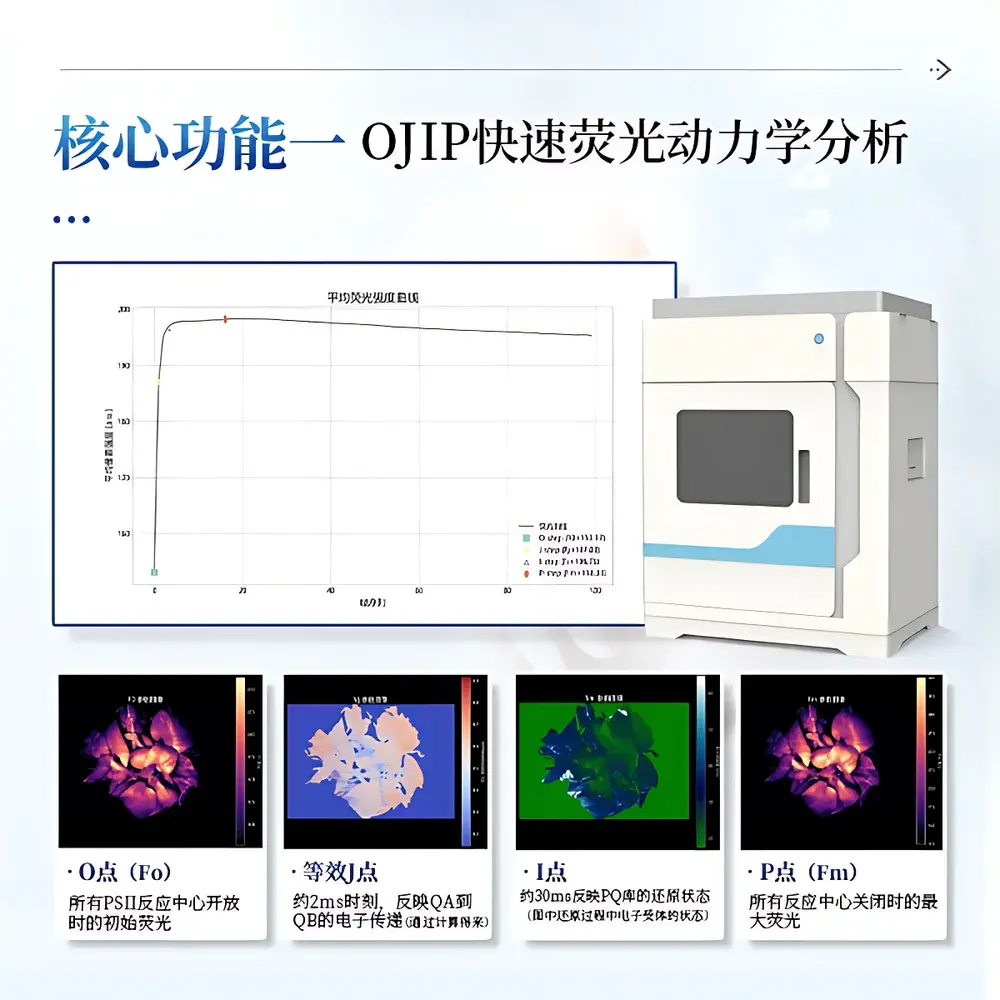
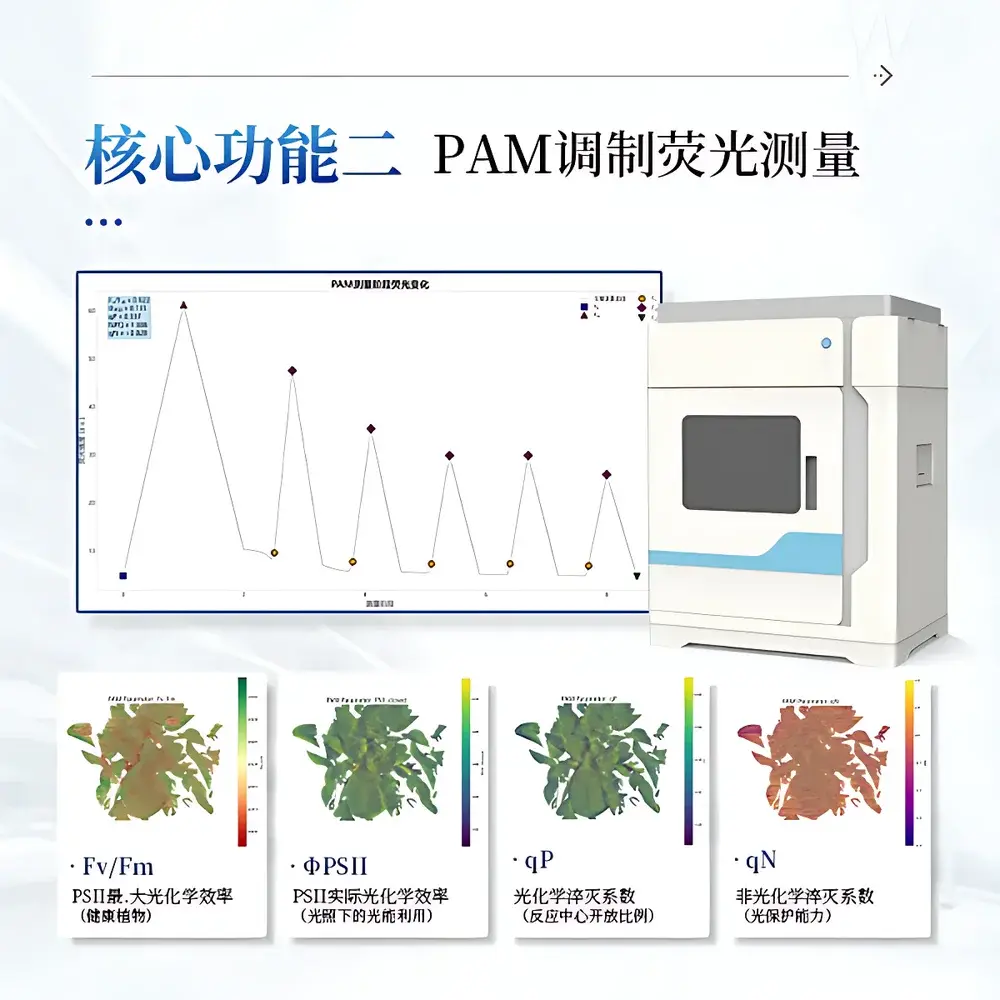
The COMECAUSE IN.LeafClear Chlorophyll Fluorescence Imaging System is a high-resolution, non-invasive optical platform engineered for quantitative spatial mapping of chlorophyll a fluorescence kinetics in intact plant leaves and small canopies. It operates on the biophysical principle that variable chlorophyll fluorescence reflects the functional status of Photosystem II (PSII) reaction centers—specifically, the redox state of the primary electron acceptor QA and the efficiency of downstream electron transfer. By combining pulse-amplitude modulation (PAM) fluorometry with OJIP transient analysis, the system captures both steady-state photochemical behavior and ultrafast (<1 s) fluorescence induction dynamics. This dual-mode capability enables rigorous assessment of PSII quantum yield, electron transport rate (ETR), non-photochemical quenching (NPQ), and integrated performance indices such as PIABS, all resolved across the entire imaged surface with sub-millimeter spatial fidelity. Designed for laboratory-based physiological phenotyping, the IN.LeafClear supports standardized experimental protocols aligned with established plant stress physiology frameworks—including those referenced in ISO 14212-2 (optical measurement of photosynthetic parameters) and ASTM E2829 (standard guide for plant stress evaluation using fluorescence imaging).
Key Features
- Simultaneous dual-mode operation: Integrated OJIP transient acquisition (0.1–1.0 s, 10 ms resolution) and PAM fluorometry (programmable dark adaptation, light acclimation cycles, and saturating pulse delivery)
- High-fidelity imaging sensor: 12-bit CMOS camera (1608 × 1104 pixels, 9 µm pixel pitch) with >100:1 signal-to-noise ratio and calibrated linear response (R² > 0.999)
- Precisely controlled multi-wavelength LED array: Independently tunable 450 nm (blue excitation), 630 nm (red actinic), and 730 nm (far-red background) sources, delivering irradiance from 90 to 1440 µmol/(m²·s) with <1 ms electrical response time
- Optimized optical path: Fixed 12 mm lens with F/2.8 variable aperture and wide field-of-view (HFOV 62.11°, VFOV 44.83°), enabling uniform illumination and imaging over 50 cm × 35 cm at standard working distance
- Robust hardware synchronization: Hardware-triggered acquisition ensures temporal alignment between LED pulses and image capture, eliminating jitter-induced artifacts in kinetic traces
- Modular architecture: Decoupled camera, LED controller, and PC interface allow for future expansion (e.g., integration with environmental chambers or robotic sample handling)
Sample Compatibility & Compliance
The IN.LeafClear accommodates detached leaves, potted seedlings, and small rosettes up to 35 cm in height. Its large field of view supports comparative imaging of multiple genotypes or treatments within a single frame, minimizing inter-run variability. The system complies with GLP-aligned data integrity requirements: all measurement metadata—including LED intensities, exposure times, saturation pulse settings, and dark adaptation durations—are automatically embedded in image headers and exported CSV logs. Audit trails record parameter modifications, user logins, and session timestamps. While not FDA-cleared, the software architecture supports 21 CFR Part 11 readiness through optional electronic signature modules and configurable audit logging—facilitating adoption in regulated agricultural biotechnology and crop science laboratories adhering to GxP principles.
Software & Data Management
The IN.LeafClear Control Suite provides a bilingual (English/Chinese), GUI-driven environment with real-time preview, parameter scripting, and batch processing workflows. Core analytical capabilities include:
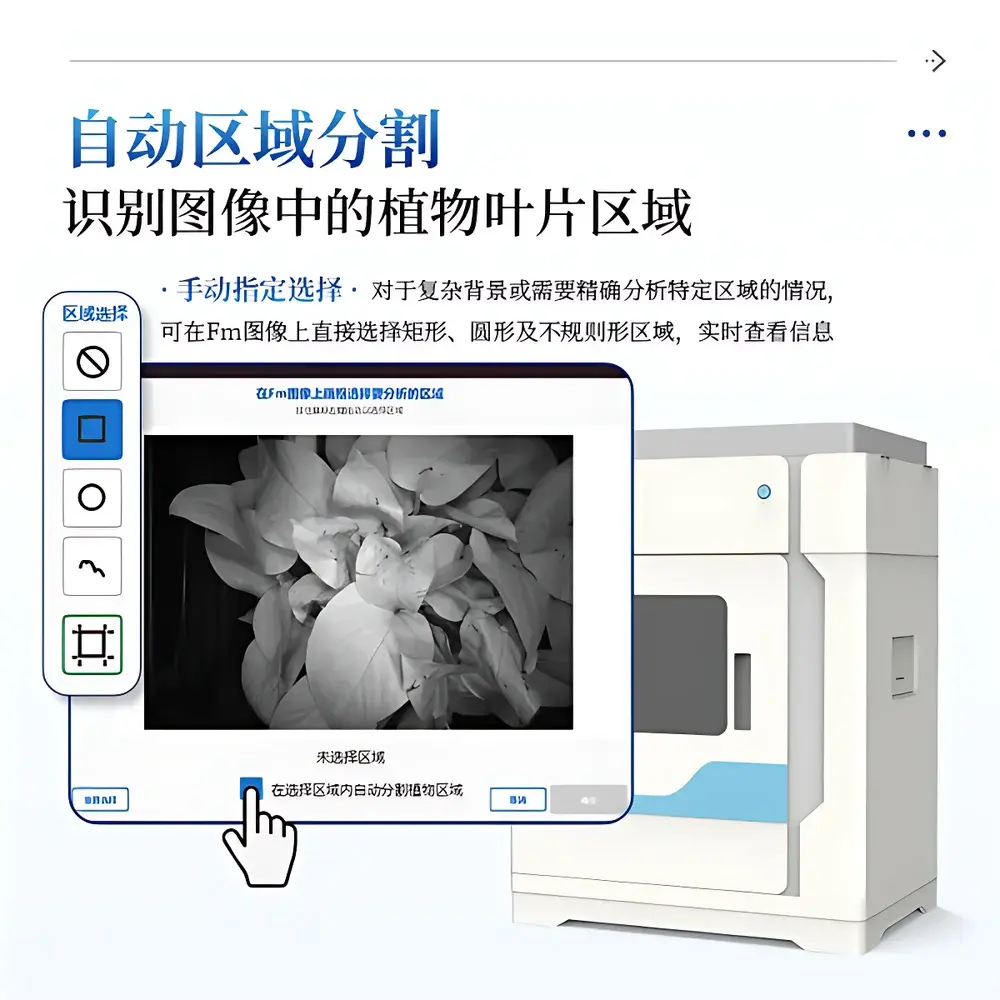
- Automated leaf segmentation using adaptive thresholding and morphological filtering; manual ROI selection (rectangular, circular, polygonal) with live statistical overlay
- Comprehensive JIP-test parameter derivation: ΦPo, ΦEo, ψEo, δRo, ABS/RC, TRo/RC, ETo/RC, DIo/RC, PIABS, M0, Vj, Area, Sm
- PAM-derived metrics: ΦPSII, qP, qL, qN, NPQ, NPQSV, Rfd, ETR, Fo′, Fm′, Fs/Fm′, and vitality indices
- Time-series visualization: Normalized OJIP curves, relative variable fluorescence (Vt), and dynamic PAM kinetics with synchronized pulse annotations
- Export pipeline: PNG images (full-resolution, embedded color scale), CSV/Excel tables (parameter matrices per ROI), and structured metadata JSON files compatible with FAIR data principles
All exported datasets retain traceable links to raw image frames and instrument configuration states.
Applications
The IN.LeafClear serves as a primary tool in plant phenomics pipelines for:
- Functional screening of genetic resources: Quantitative ranking of Fv/Fm, PIABS, and ΦPSII across mutant libraries or breeding populations under controlled abiotic stress (drought, heat, high light)
- Early stress diagnostics: Detection of sub-symptomatic photoinhibition via OJIP curve shape deviations (e.g., elevated Vj indicating QB-site limitation) prior to visible chlorosis
- Agrochemical mode-of-action studies: Temporal resolution of herbicide-induced electron transport inhibition (e.g., DCMU effects on Fm rise kinetics) or fertilizer-induced shifts in ETR capacity
- Ecophysiological field validation: Laboratory calibration of fluorescence signatures against field-measured gas exchange (A/Ci curves) and canopy reflectance (PRI, NDVI)
- Teaching and method standardization: Preconfigured protocols for undergraduate labs covering PSII photochemistry, NPQ induction kinetics, and stress response quantification
FAQ
What is the minimum detectable change in Fv/Fm under standard operating conditions?
The system achieves ±0.005 absolute accuracy for Fv/Fm, enabling detection of statistically significant differences ≥0.01 units across biological replicates when CV remains below 3%.
Can the IN.LeafClear be integrated with environmental growth chambers?
Yes—the USB 3.0 interface and TTL-compatible trigger I/O port support synchronization with third-party chamber controllers for automated dark/light cycling and temperature ramping.
Does the software support batch analysis of time-series OJIP datasets?
Yes—users may define analysis templates (e.g., Vj thresholding, PIABS calculation) and apply them across hundreds of image stacks via scriptable batch mode.
Is spectral calibration traceable to NIST standards?
Radiometric calibration of LED irradiance is performed using a NIST-traceable spectroradiometer (LI-COR LI-1800), with certificate of calibration provided with each system.
How is spatial resolution validated across the imaging field?
Resolution is empirically verified using USAF 1951 target imaging at multiple positions within the 50 × 35 cm FOV; measured modulation transfer function (MTF) confirms ≤0.3 mm effective resolution at center and ≤0.45 mm at corners.




