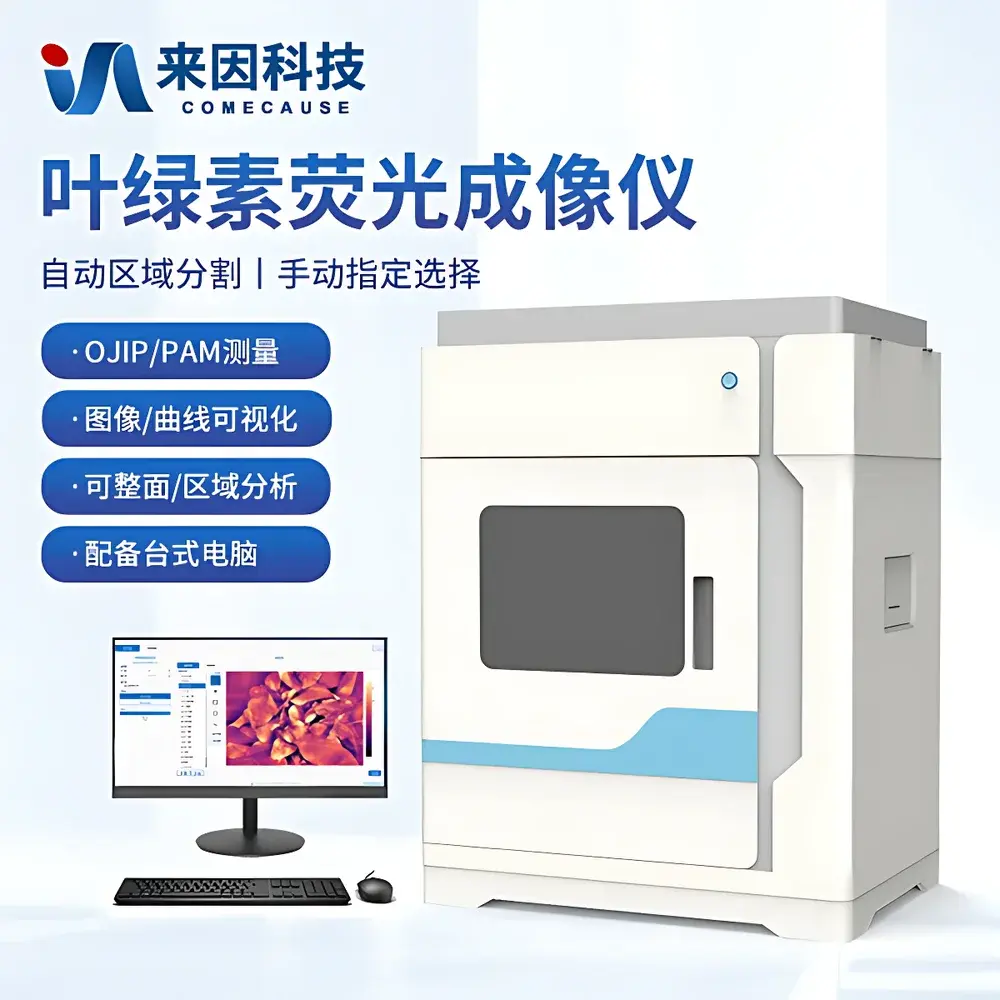
COMECAUSE IN-LeafClear Chlorophyll Fluorescence Imaging System
| Brand | COMECAUSE |
|---|---|
| Origin | Shandong, China |
| Manufacturer Type | Direct Manufacturer |
| Country of Origin | China |
| Model | IN-LeafClear |
| Price | USD 67,000 (FOB) |
| Camera Resolution | 1608 × 1104 pixels |
| Pixel Size | 9 µm × 9 µm |
| Frame Rate | 100 fps |
| Bit Depth | 12-bit |
| Interface | USB 3.0 |
| Lens Focal Length | 12 mm |
| Max Aperture | f/2.8 (adjustable) |
| HFOV | 62.11° |
| VFOV | 44.83° |
| Max Imaging Area | 50 cm × 35 cm |
| Excitation Wavelengths | 450 nm (blue), 630 nm (red), 730 nm (far-red) |
| LED Irradiance Range | 90–1440 µmol/(m²·s) |
| OJIP Duration | 0.1–1.0 s (default 1 s) |
| PAM Dark Adaptation | 0–3600 s |
| PAM Light Cycles | 1–100 |
| Sampling Interval | 0.1–10.0 s |
| Minimum OJIP Temporal Resolution | 10 ms |
| Minimum PAM Sampling Interval | 100 ms |
| Exposure Time | 100–1000 ms |
| Fluorescence Dynamic Range | 0–4095 (12-bit) |
| SNR | >100:1 |
| Repeatability (CV) | <3% |
| Linearity (R²) | >0.999 |
| Spatial Resolution | ~0.3 mm/pixel (at 50 cm × 35 cm FOV) |
| Fv/Fm Accuracy | ±0.005 |
| ΦPSII Accuracy | ±0.01 |
| qP/qN Accuracy | ±0.02 |
| NPQ Accuracy | ±0.1 |
| PIABS Accuracy | ±0.05 |
Overview
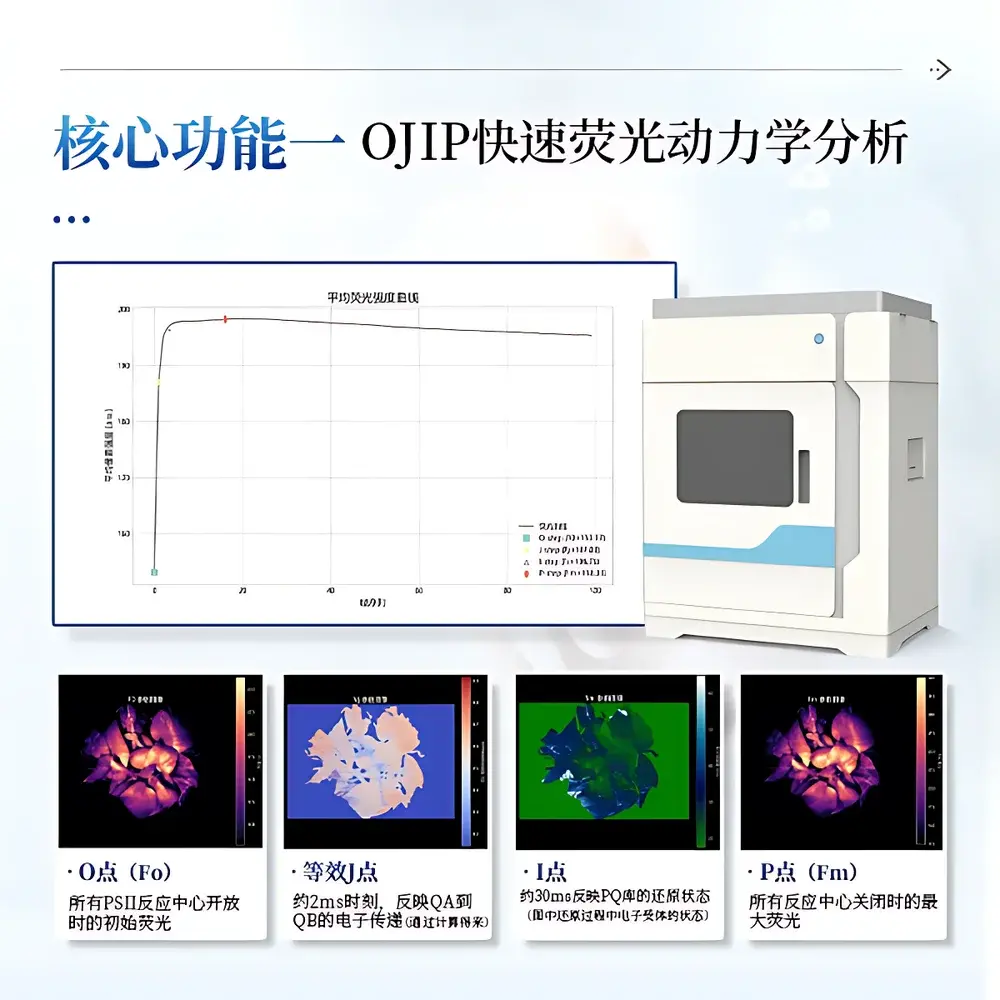
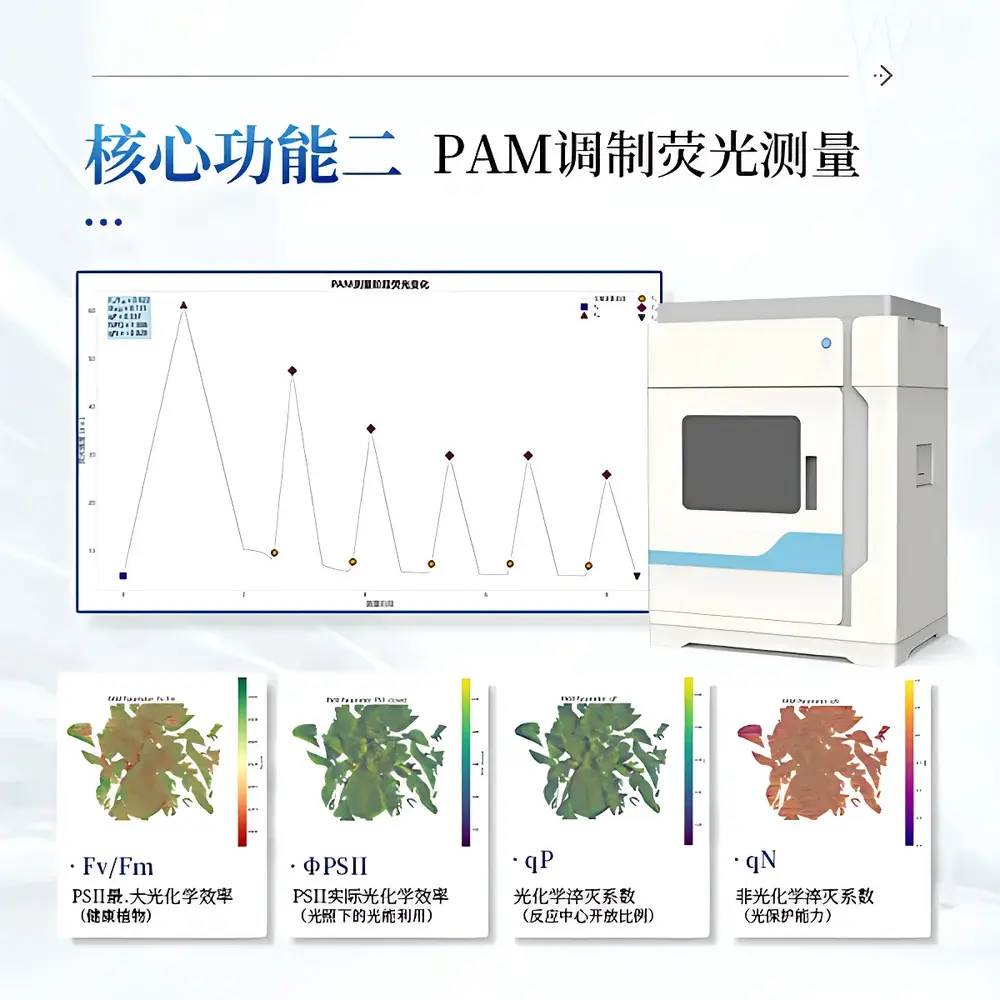
The COMECAUSE IN-LeafClear Chlorophyll Fluorescence Imaging System is a high-resolution, non-invasive optical platform engineered for quantitative spatiotemporal analysis of photosynthetic performance in intact plant tissues. It operates on the biophysical principle of chlorophyll a fluorescence induction—where transient changes in emitted fluorescence intensity reflect the redox state of the primary quinone acceptor (QA) and downstream electron transport capacity within Photosystem II (PSII). The system integrates two complementary measurement paradigms: (1) OJIP transient kinetics, capturing millisecond-scale fluorescence rise from initial (Fo) to maximal (Fm) fluorescence under saturating actinic light; and (2) Pulse-Amplitude Modulation (PAM) fluorometry, enabling real-time discrimination between photochemical quenching (qP), non-photochemical quenching (NPQ), and regulated energy dissipation under controlled light regimes. Designed for laboratory-based plant phenotyping and field-deployable experimental physiology, the IN-LeafClear delivers calibrated, spatially resolved fluorescence parameters across entire leaf surfaces—without physical contact or sample preparation.
Key Features
- High-fidelity CMOS imaging sensor with 1608 × 1104 resolution, 12-bit dynamic range, and 100 fps acquisition—optimized for low-light fluorescence detection and temporal fidelity.
- Dual-wavelength LED excitation module: 450 nm (blue) for PSII saturation pulses and OJIP initiation; 630 nm (red) as actinic light for PAM protocols; 730 nm (far-red) for QA reoxidation during Fo‘ determination.
- Precisely controllable irradiance (90–1440 µmol/(m²·s)) with 1% step resolution—enabling reproducible stress imposition and physiological calibration across experimental replicates.
- Optical configuration featuring a 12 mm f/2.8 lens with 62.11° horizontal and 44.83° vertical field of view—supporting uniform illumination and imaging over 50 cm × 35 cm areas at standard working distance.
- Integrated hardware synchronization between LED drivers, camera shutter, and data acquisition—ensuring sub-millisecond timing accuracy for OJIP (10 ms minimum interval) and PAM (100 ms minimum sampling).
- Modular software architecture supporting both standardized measurement workflows (e.g., ISO 10211-compliant dark adaptation sequences) and user-defined experimental protocols.
Sample Compatibility & Compliance
The IN-LeafClear accommodates detached leaves, whole rosettes, seedlings, and small potted plants up to 40 cm in height. Its open-stage design allows flexible positioning under controlled environmental chambers or growth cabinets. All fluorescence parameters—including Fv/Fm, ΦPSII, qP, NPQ, ETR, and PIABS—are calculated using internationally accepted algorithms derived from the JIP-test formalism (Strasser et al., 2004) and Schreiber’s PAM framework (Schreiber et al., 1986). The system supports GLP-compliant data traceability: each image and parameter set is time-stamped, linked to hardware configuration logs (LED intensity, exposure, binning), and retains full metadata for audit readiness. While not FDA 21 CFR Part 11-certified out-of-the-box, its CSV/Excel export structure and parameter versioning align with ISO/IEC 17025 documentation requirements for accredited plant physiology laboratories.
Software & Data Management
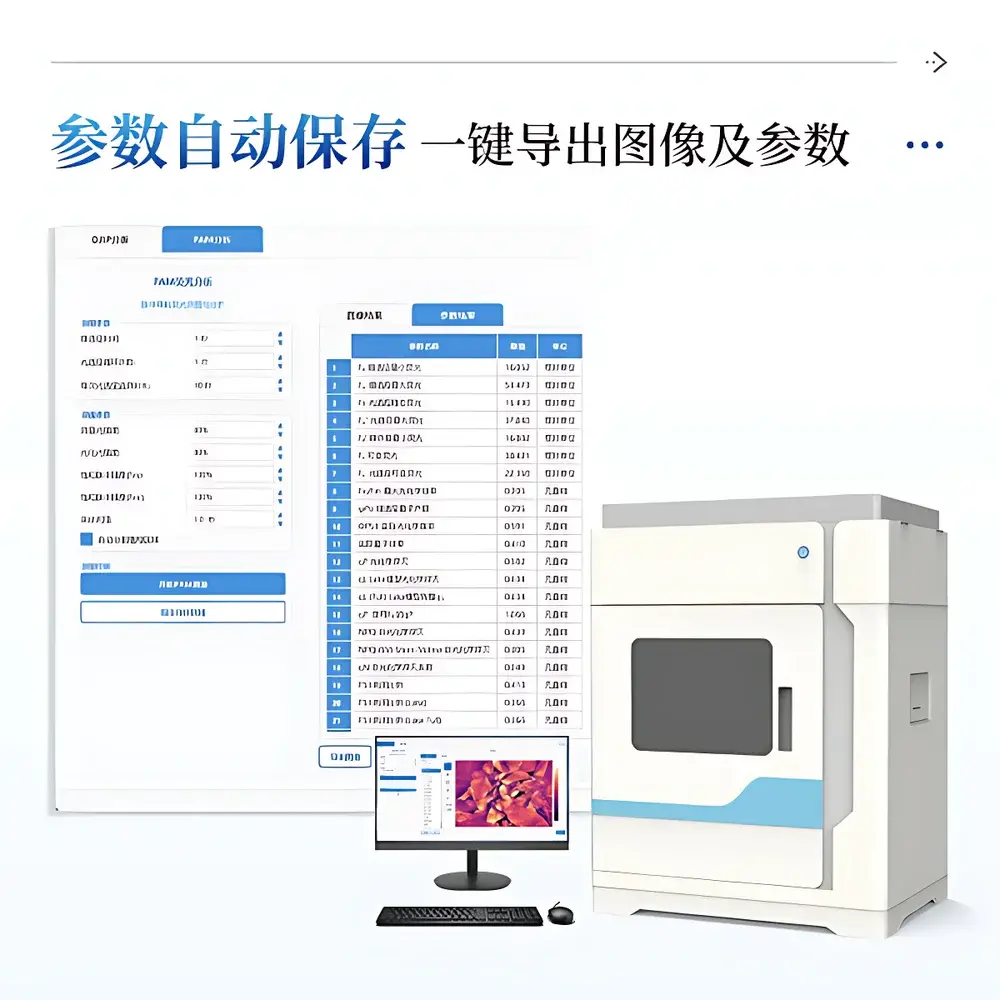
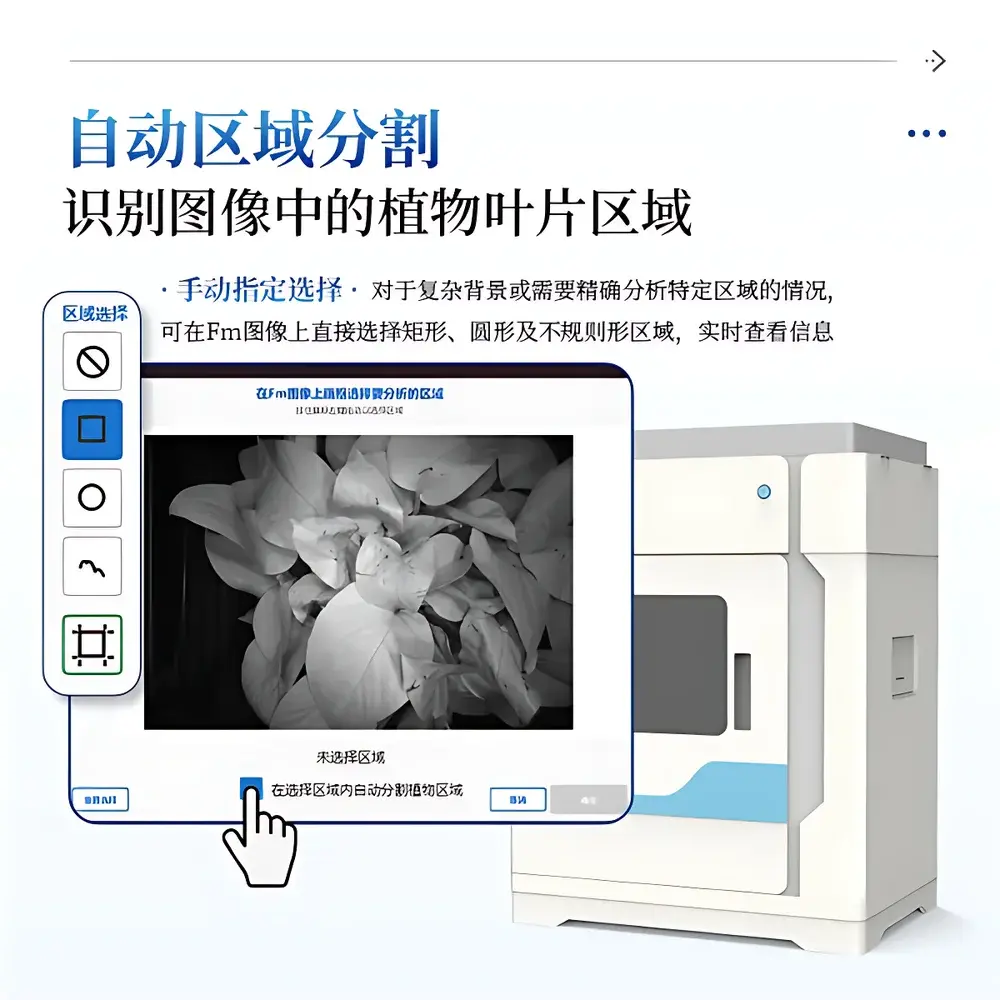
The IN-LeafClear Control Suite provides a dual-language (English/Chinese), GUI-driven interface with zero-code protocol scripting. Core capabilities include: automatic leaf segmentation via adaptive thresholding and morphological filtering; manual ROI selection (rectangular, circular, polygonal); per-pixel parametric mapping using scientifically validated color scales (e.g., Jet, Viridis); and synchronized multi-parameter visualization (OJIP curves, time-series Fs decay, spatial NPQ gradients). All raw images are saved in lossless PNG format at native resolution; numerical outputs—including mean, SD, min/max per ROI—are exportable to CSV or XLSX with configurable column headers and SI unit annotations. Configuration files (.cfg) store instrument settings (exposure, LED duty cycle, sampling rate) and persist across sessions. Batch processing enables retrospective reanalysis of datasets using updated algorithms without reacquisition.
Applications
- Photosynthetic Mechanism Studies: Quantification of PSII quantum yield, electron transport rate (ETR), antenna size (ABS/RC), and reaction center density (RC/CSm) under varying spectral quality and irradiance.
- Abiotic Stress Physiology: Early detection of drought-induced photoinhibition (declining Fv/Fm), thermal damage to oxygen-evolving complex (increased K-band in OJIP), and heavy metal disruption of plastoquinone pool redox kinetics (altered I-P phase amplitude).
- Crop Phenotyping: High-throughput screening of germplasm for thermotolerance (stable ΦPSII at 40°C), nitrogen use efficiency (correlation between PIABS and leaf N content), and herbicide mode-of-action validation (rapid Fv/Fm collapse post-application).
- Ecophysiological Field Monitoring: Portable deployment for comparative analysis of canopy-level fluorescence heterogeneity across microhabitats, elevation gradients, or successional stages—facilitating ecosystem-scale carbon assimilation modeling.
- Educational Use: Visual demonstration of photoprotective dynamics (NPQ induction/relaxation), light acclimation responses, and the biophysical basis of common agronomic indices (e.g., Rfd, Vitality Index).
FAQ
What is the minimum detectable change in Fv/Fm with this system?
The system achieves ±0.005 absolute accuracy in Fv/Fm under optimal signal-to-noise conditions (SNR >100:1), corresponding to ~0.6% relative change for a healthy reference value of 0.82.
Can the IN-LeafClear be integrated with environmental control systems?
Yes—via TTL trigger inputs and ASCII command protocol over USB serial emulation, enabling synchronized initiation of fluorescence measurement with chamber temperature/humidity ramping or CO2 perturbation events.
Is remote operation supported?
The software includes TCP/IP server mode for LAN-based control and live image streaming, compatible with standard VNC or TeamViewer deployments for off-site monitoring.
How is calibration maintained across long-term experiments?
A built-in reference tile with known reflectance and fluorescence yield is provided for daily intensity normalization; software also applies pixel-wise gain correction using dark-frame subtraction and flat-field illumination profiles.
Does the system support third-party data import/export for meta-analysis?
All exported CSV files conform to the Plant Phenomics Data Standard (PPDS v1.2) schema, including mandatory fields for species, genotype, treatment, timepoint, and measurement unit—ensuring interoperability with platforms such as PhenoFrontier and CropStore.