
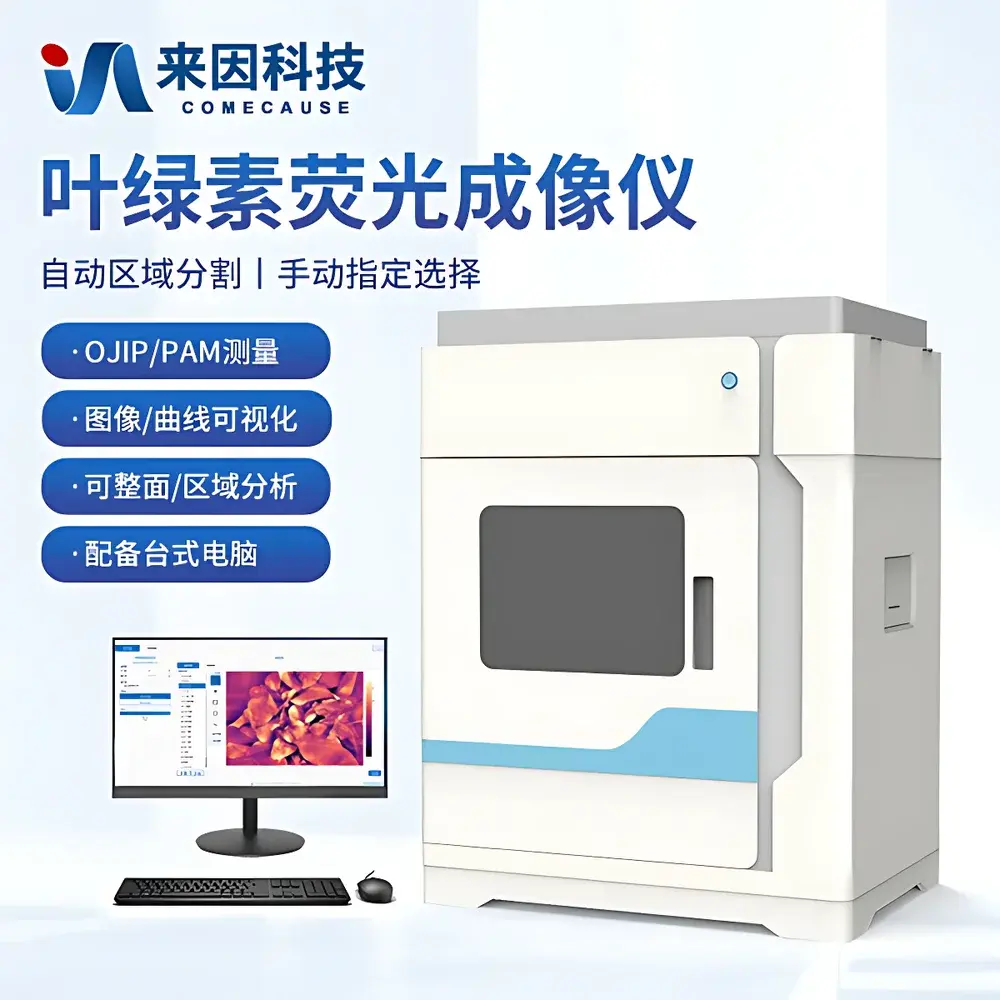
COMECAUSE IN-LeafClear Chlorophyll Fluorescence Imaging System
| Brand | COMECAUSE |
|---|---|
| Origin | Shandong, China |
| Manufacturer Type | Direct Manufacturer |
| Country of Origin | China |
| Model | IN-LeafClear |
| Camera Resolution | 1608 × 1104 pixels |
| Pixel Size | 9 µm × 9 µm |
| Frame Rate | 100 fps |
| Bit Depth | 12-bit |
| Interface | USB 3.0 |
| Lens Focal Length | 12 mm |
| Maximum Aperture | F/2.8 (adjustable) |
| Horizontal FOV | 62.11° |
| Vertical FOV | 44.83° |
| Max Imaging Area | 50 cm × 35 cm |
| Excitation Wavelength | 450 nm (blue LED) |
| Actinic Light | 630 nm (red LED) |
| Far-Red Light | 730 nm |
| LED Intensity Range | 1–100% (up to 1440 µmol·m⁻²·s⁻¹) |
| OJIP Duration | 0.1–1.0 s (default 1 s) |
| PAM Dark Adaptation | 0–3600 s |
| PAM Saturation Pulse Intensity | 15–100% (450 nm) |
| Minimum Sampling Interval | 10 ms (OJIP), 100 ms (PAM) |
| Fluorescence Dynamic Range | 0–4095 (12-bit) |
| SNR | >100:1 |
| Repeatability (CV) | <3% |
| Linearity (R²) | >0.999 |
| Spatial Resolution | ~0.3 mm/pixel (at 50 cm × 35 cm field) |
| Fv/Fm Accuracy | ±0.005 |
| ΦPSII Accuracy | ±0.01 |
| NPQ Accuracy | ±0.1 |
| PIABS Accuracy | ±0.05 |
Overview
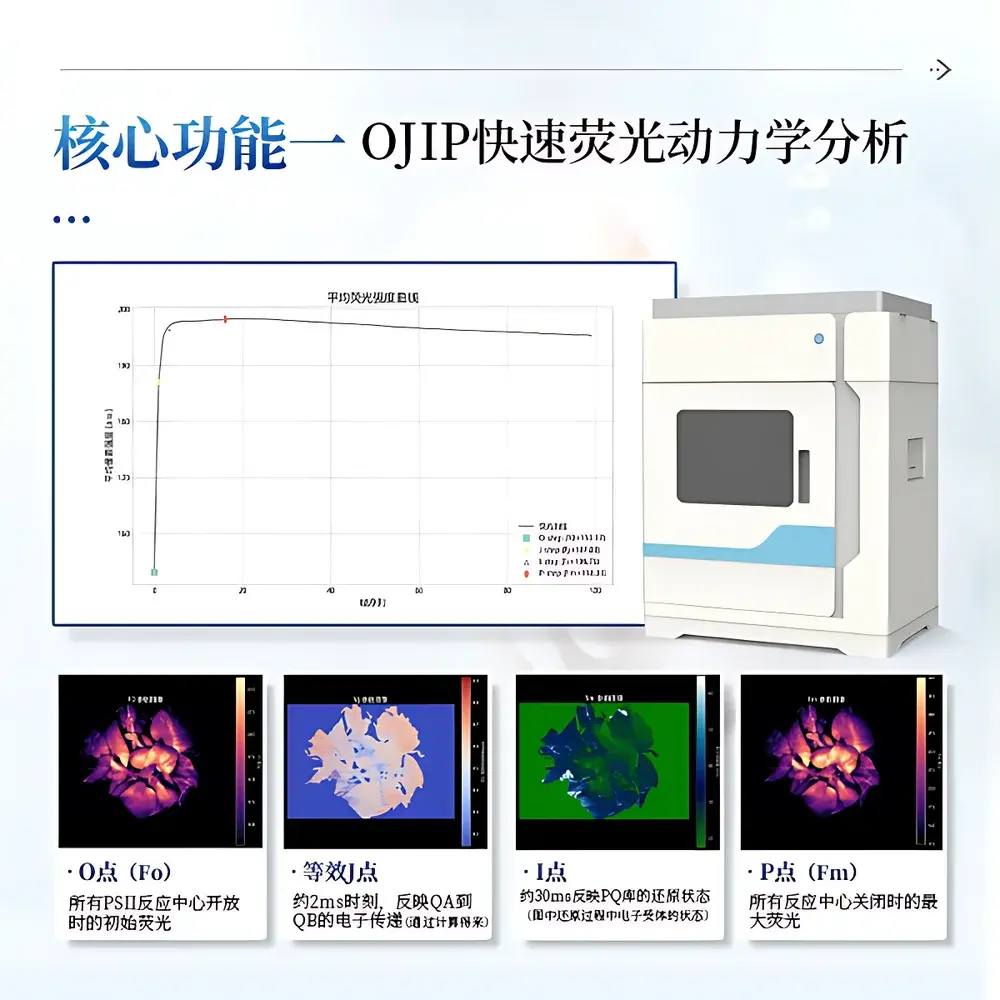
The COMECAUSE IN-LeafClear Chlorophyll Fluorescence Imaging System is a high-resolution, non-invasive optical platform engineered for quantitative spatial mapping of photosynthetic performance in intact plant tissues. It operates on the biophysical principle of chlorophyll a fluorescence induction—where light-driven electron transport through Photosystem II (PSII) modulates the quantum yield of emitted fluorescence. By combining pulse-amplitude modulation (PAM) and OJIP transient analysis, the system captures both steady-state photochemical efficiency and ultrafast kinetic responses (from milliseconds to seconds), enabling rigorous assessment of PSII integrity, electron transport capacity, energy dissipation mechanisms, and stress-induced physiological perturbations. Designed for laboratory-based plant phenotyping, the IN-LeafClear delivers pixel-resolved fluorescence parameters across defined regions of interest (ROIs), supporting hypothesis-driven research in controlled-environment physiology, field pre-screening validation, and longitudinal monitoring under abiotic or biotic challenge.
Key Features
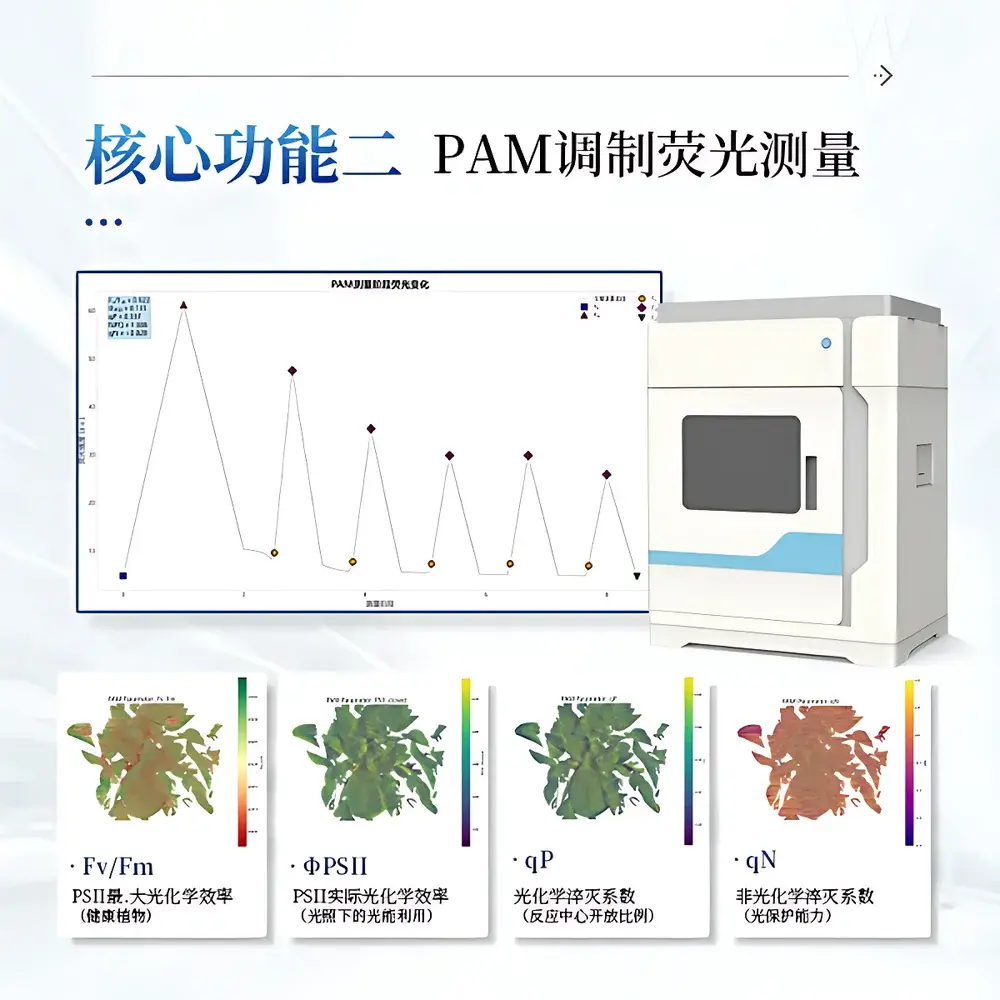
- Integrated Dual-Mode Fluorescence Acquisition: Simultaneous support for OJIP transient kinetics (0.1–1.0 s, 10 ms minimum sampling) and PAM-based dynamic quenching analysis (with configurable actinic illumination, saturation pulses, and far-red relaxation).
- High-Fidelity Imaging Hardware: Scientific-grade 12-bit CMOS sensor (1608 × 1104 pixels, 9 µm pixel pitch) coupled with an F/2.8 adjustable-aperture lens; delivers ~0.3 mm spatial resolution at standard working distance (50 cm × 35 cm field-of-view).
- Multi-Wavelength LED Illumination Engine: Independently controllable 450 nm (blue, excitation), 630 nm (red, actinic), and 730 nm (far-red, QA reoxidation) LEDs with calibrated intensity output up to 1440 µmol·m⁻²·s⁻¹ and 1%–100% fine-step control.
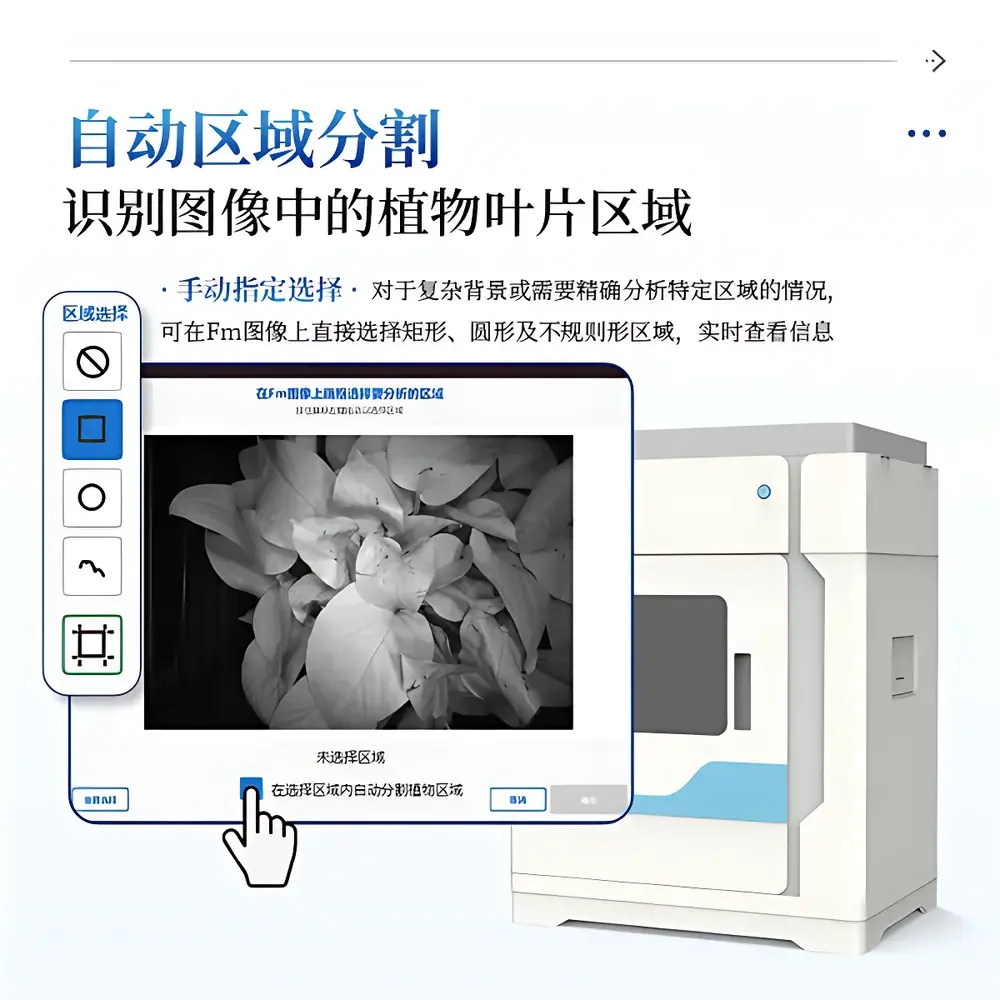
- Automated ROI Segmentation & Flexible Region Definition: Adaptive threshold-based leaf segmentation algorithm; manual selection tools for rectangular, circular, and freehand ROIs with real-time mean-intensity feedback and statistical overlay.
- Comprehensive Parameter Library: Computes over 40 validated biophysical indices—including Fv/Fm, ΦPSII, qP, qN, NPQ, ETR, PIABS, Mo, Area, ψEo, δRo, ABS/RC, TRo/RC, DIo/RC—and supports JIP-test-derived energy flux ratios per reaction center.
- Scientific Image Processing Pipeline: Includes Gaussian noise suppression, adaptive contrast enhancement, Jet-based pseudocolor mapping with scalable colorbars, and export-ready PNG image generation preserving native bit-depth and metadata.
Sample Compatibility & Compliance
The IN-LeafClear accommodates detached leaves, whole seedlings, rosettes, and small potted plants within its 50 cm × 35 cm imaging area. Its non-destructive, contactless measurement protocol ensures repeated assessments of the same biological sample over time—critical for longitudinal stress-response studies. The system adheres to internationally recognized experimental standards for chlorophyll fluorescence methodology, including protocols aligned with the International Society of Photosynthesis Research (ISPR) guidelines and ASTM E2974–23 (Standard Guide for Measurement of Chlorophyll Fluorescence in Plants). All parameter calculations follow peer-reviewed algorithms published in Photosynthesis Research and Journal of Experimental Botany. Data acquisition logs include timestamps, hardware configuration states, and user-defined experimental notes—supporting GLP-compliant documentation workflows and audit-ready traceability when integrated into institutional LIMS environments.
Software & Data Management
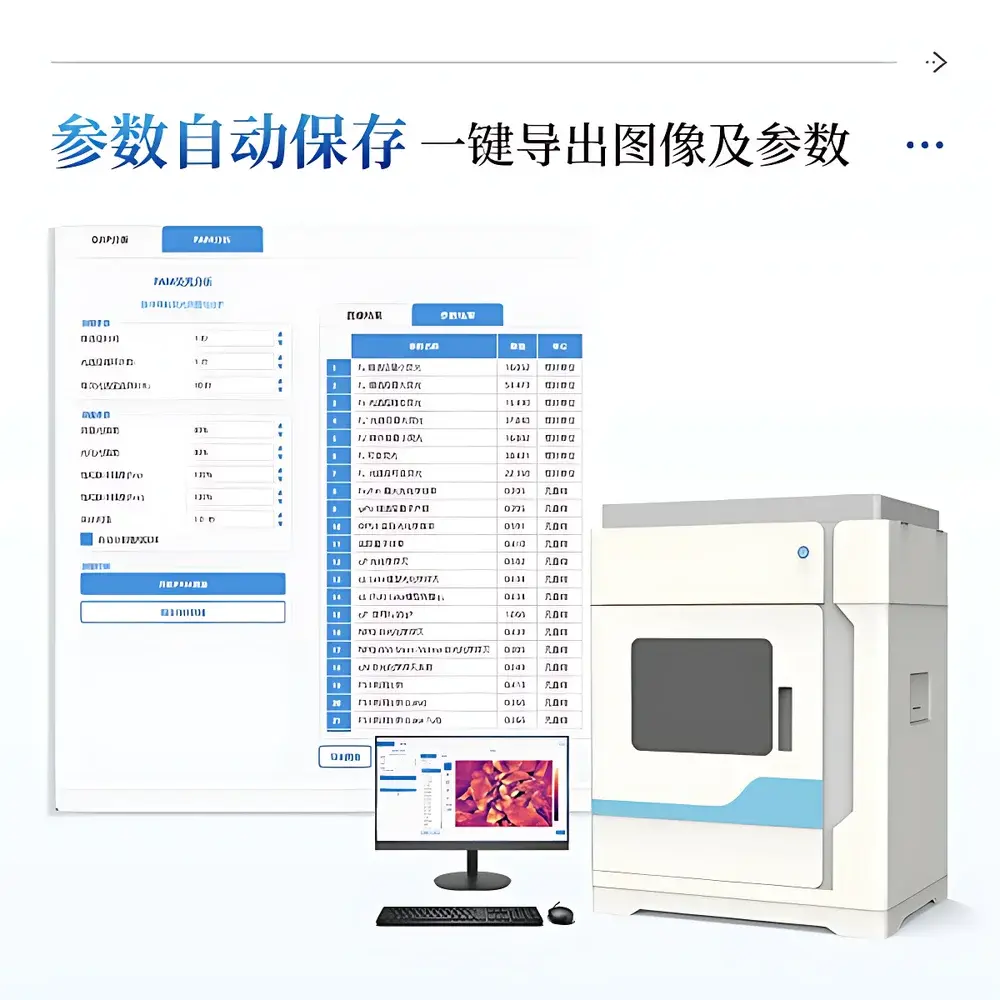
The proprietary IN-LeafClear Control Suite provides a bilingual (English/Chinese), GUI-driven interface built on Qt framework with deterministic real-time device synchronization. All instrument parameters—including LED intensities, exposure durations, dark adaptation intervals, PAM cycle counts, and saturation pulse thresholds—are stored in human-readable JSON configuration files with versioned backups. Measurement results are automatically archived in hierarchical folders using ISO 8601-compliant naming: [Mode]_[Timestamp]_[SampleID].csv for tabular outputs and [Parameter]_[Timestamp]_[ROI].png for annotated images. Export options include full-parameter CSV tables compatible with R, Python (pandas), and MATLAB; batch-export functionality enables high-throughput dataset curation. Software supports FDA 21 CFR Part 11–compliant audit trails when deployed on domain-authenticated Windows systems with role-based access controls enabled—facilitating regulatory submissions in agricultural biotechnology and crop protection R&D.
Applications
- Plant Physiology: Quantification of PSII photochemical efficiency, electron transport rate (ETR), and energy partitioning (ΦPo, ΦEo, ΦDo) under controlled photoperiods and CO2 conditions.
- Abiotic Stress Phenotyping: Early detection of drought-induced photoinhibition via progressive decline in Fv/Fm and PIABS; thermal tolerance screening using NPQ kinetics and ΦPSII resilience during heat ramp assays.
- Agronomic Trait Evaluation: High-throughput varietal comparison of nitrogen-use efficiency, light-acclimation capacity, and herbicide mode-of-action profiling via OJIP curve shape analysis (e.g., Vj, Vi, Sm).
- Ecophysiology & Climate Research: Spatial heterogeneity mapping of canopy-level photosynthetic vigor in response to elevated ozone, UV-B exposure, or soil heavy metal contamination.
- Pathogen & Pest Diagnostics: Pre-symptomatic identification of biotic stress through localized reductions in Fv/Fm and altered OJIP rise kinetics preceding visible necrosis or chlorosis.
FAQ
What is the minimum detectable change in Fv/Fm that the IN-LeafClear can resolve?
The system achieves ±0.005 absolute accuracy in Fv/Fm calculation under standardized dark-adapted conditions, supported by >100:1 signal-to-noise ratio and CV <3% inter-replicate repeatability.
Can the IN-LeafClear be used for time-series imaging over multiple days?
Yes—its non-invasive operation and automated ROI registration allow consistent spatial tracking of individual leaves or plants across repeated measurements without physical disturbance.
Does the software support batch processing of large datasets from multi-genotype trials?
Yes—the Control Suite includes scriptable batch analysis modules for parameter extraction, statistical grouping, and comparative heatmap generation across hundreds of samples.
Is remote operation or integration with environmental growth chambers possible?
The USB 3.0 interface supports stable long-cable connections (up to 3 m); optional TTL-trigger I/O ports enable hardware synchronization with chamber lighting controllers and climate loggers.
How is calibration maintained across extended usage periods?
The system performs automatic dark-frame subtraction before each acquisition; LED intensity calibration certificates are provided with each unit, and routine verification is supported via NIST-traceable reference fluorophores (e.g., quinine sulfate solutions).




