
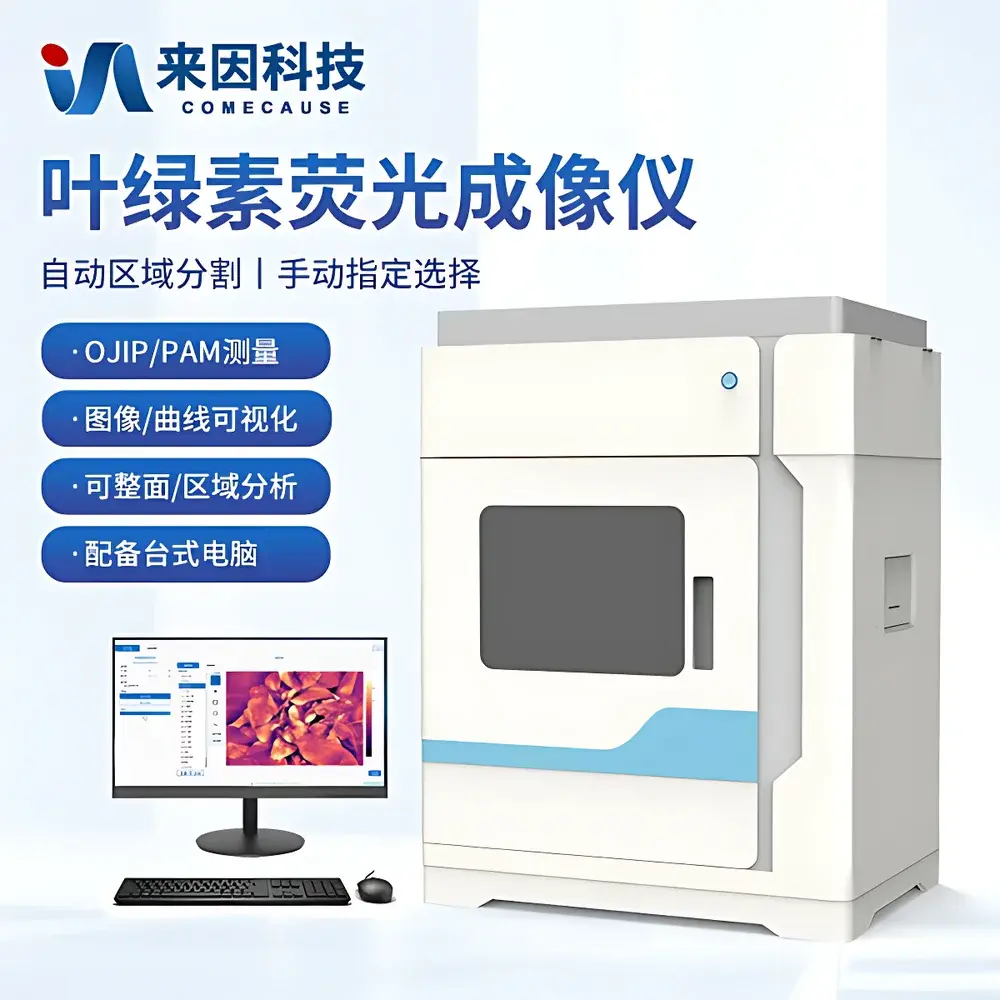
COMECAUSE IN/LeafClear Modular Chlorophyll Fluorescence Imaging System
| Brand | COMECAUSE |
|---|---|
| Origin | Shandong, China |
| Manufacturer Type | Direct Manufacturer |
| Model | IN/LeafClear |
| Camera Resolution | 1608 × 1104 (12-bit) |
| Pixel Size | 9 µm × 9 µm |
| Frame Rate | 100 fps |
| Lens Focal Length | 12 mm |
| Max Aperture | F/2.8 (adjustable) |
| HFOV | 62.11° |
| VFOV | 44.83° |
| Max Imaging Area | 50 cm × 35 cm |
| Excitation Wavelengths | 450 nm (blue), 630 nm (red), 730 nm (far-red) |
| LED Intensity Range | 1–100% (up to 1440 µmol·m⁻²·s⁻¹) |
| OJIP Duration | 0.1–1.0 s (10 ms min. sampling interval) |
| PAM Sampling Interval | 100 ms–10 s |
| Fluorescence Dynamic Range | 0–4095 (12-bit) |
| SNR | >100:1 |
| Repeatability (CV) | <3% |
| Fv/Fm Accuracy | ±0.005 |
| ΦPSII Accuracy | ±0.01 |
| Spatial Resolution | ~0.3 mm/pixel (at 50 cm × 35 cm FOV) |
| Response Time (LED) | <1 ms |
| Exposure Time | 100–1000 ms |
Overview
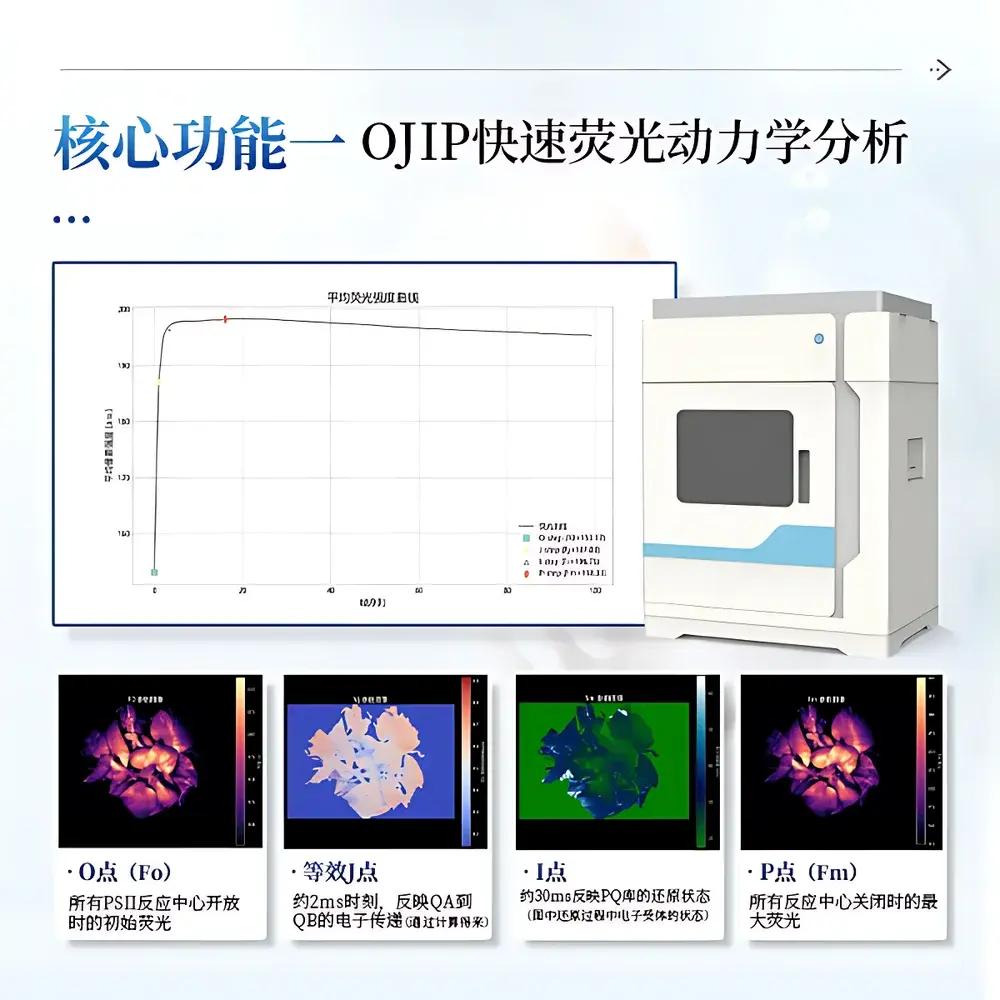
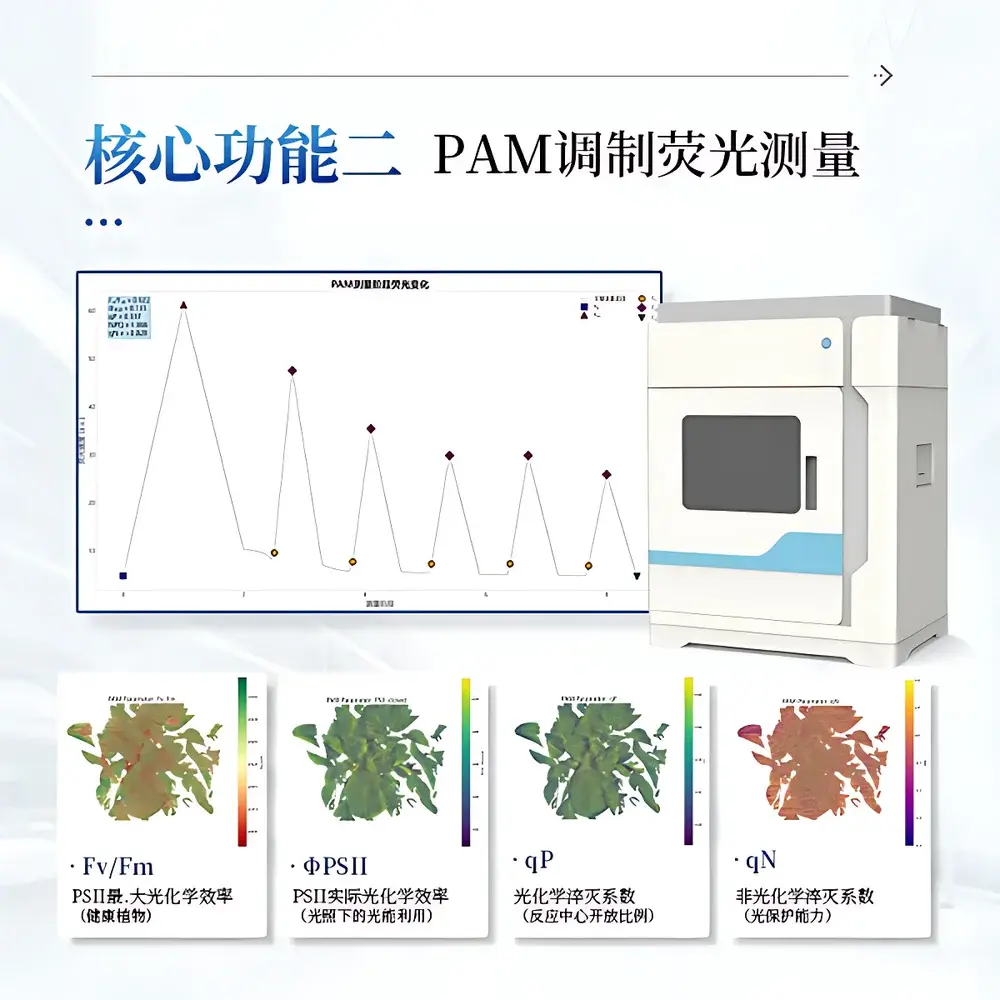
The COMECAUSE IN/LeafClear Modular Chlorophyll Fluorescence Imaging System is a high-precision, research-grade instrument engineered for non-invasive, quantitative assessment of photosynthetic performance in intact plant tissues. It operates on the biophysical principle of chlorophyll a fluorescence induction—where transient changes in fluorescence yield reflect the functional status of Photosystem II (PSII) reaction centers and downstream electron transport components. The system implements two complementary measurement paradigms: (1) OJIP transient analysis, capturing the millisecond-scale fluorescence rise from Fo to Fm under saturating actinic light, and (2) Pulse-Amplitude Modulated (PAM) fluorometry, enabling dynamic monitoring of PSII quantum yield, photochemical quenching (qP), and non-photochemical quenching (NPQ) under controlled light regimes. Its modular architecture supports scalable deployment—from benchtop phenotyping to greenhouse or growth chamber integration—while maintaining strict optical calibration traceability and temporal reproducibility required for longitudinal studies and multi-laboratory comparisons.
Key Features
- Modular hardware design with plug-and-play camera, LED excitation array, and controller units—enabling field-upgradable configurations and application-specific optimization.
- Dual-mode operation: OJIP kinetics (10 ms minimum sampling resolution) and PAM fluorometry (100 ms minimum sampling interval), both fully programmable via intuitive GUI.
- High-fidelity imaging sensor: 1608 × 1104 CMOS with 12-bit digitization, 9 µm pixel pitch, and >100:1 signal-to-noise ratio—optimized for low-light fluorescence detection without photobleaching artifacts.
- Triple-wavelength LED illumination system: 450 nm (blue, for PSII saturation pulses), 630 nm (red, for actinic light and PAM measurements), and 730 nm (far-red, for PSI-driven dark relaxation and Fo′ determination).
- Adjustable optical path: 12 mm focal length lens with F/2.8 variable aperture, delivering uniform irradiance across a 50 cm × 35 cm field-of-view at standard working distance.
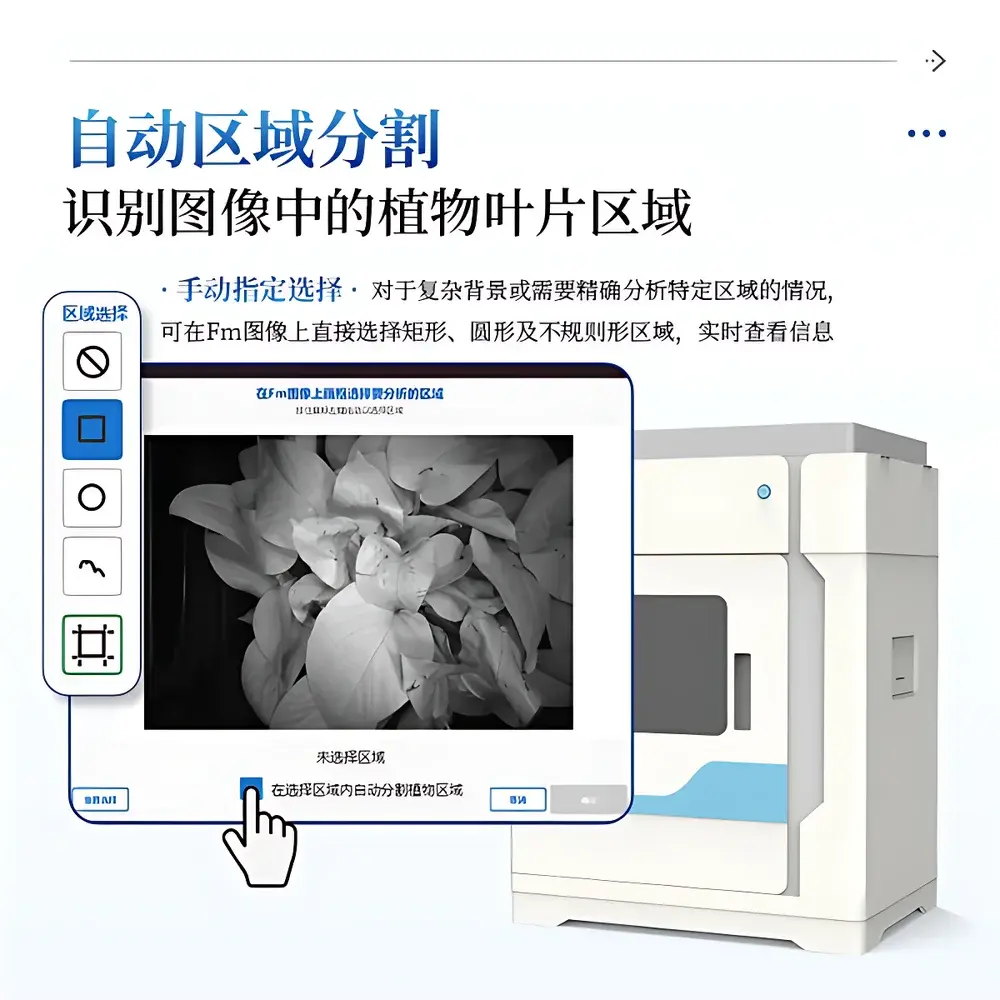
- Automated region-of-interest (ROI) segmentation using adaptive thresholding algorithms; manual polygonal, rectangular, and circular ROI selection with real-time parameter overlay.
- Comprehensive parameter computation engine compliant with established JIP-test conventions (Strasser et al., 2004) and PAM-derived metrics (Krause & Weis, 1991).
Sample Compatibility & Compliance
The IN/LeafClear system accommodates intact leaves, detached rosettes, seedlings, and small whole plants (up to 40 cm height) placed on standardized trays. It supports dark-adaptation protocols per ISO 10211-2:2021 (Plant physiology—Fluorescence-based photosynthetic efficiency testing) and enables full compliance with ASTM E2922-22 (Standard Guide for Chlorophyll Fluorescence Measurements in Plant Stress Studies). All fluorescence parameters—including Fv/Fm, ΦPSII, NPQ, PIABS, and qP—are calculated using open-source, peer-reviewed algorithms embedded in firmware. Data acquisition logs include timestamped metadata (LED intensity, exposure time, ambient temperature, user ID), satisfying GLP audit requirements for regulated environmental stress screening. No sample preparation, staining, or labeling is required—ensuring physiological integrity throughout repeated measurements.
Software & Data Management
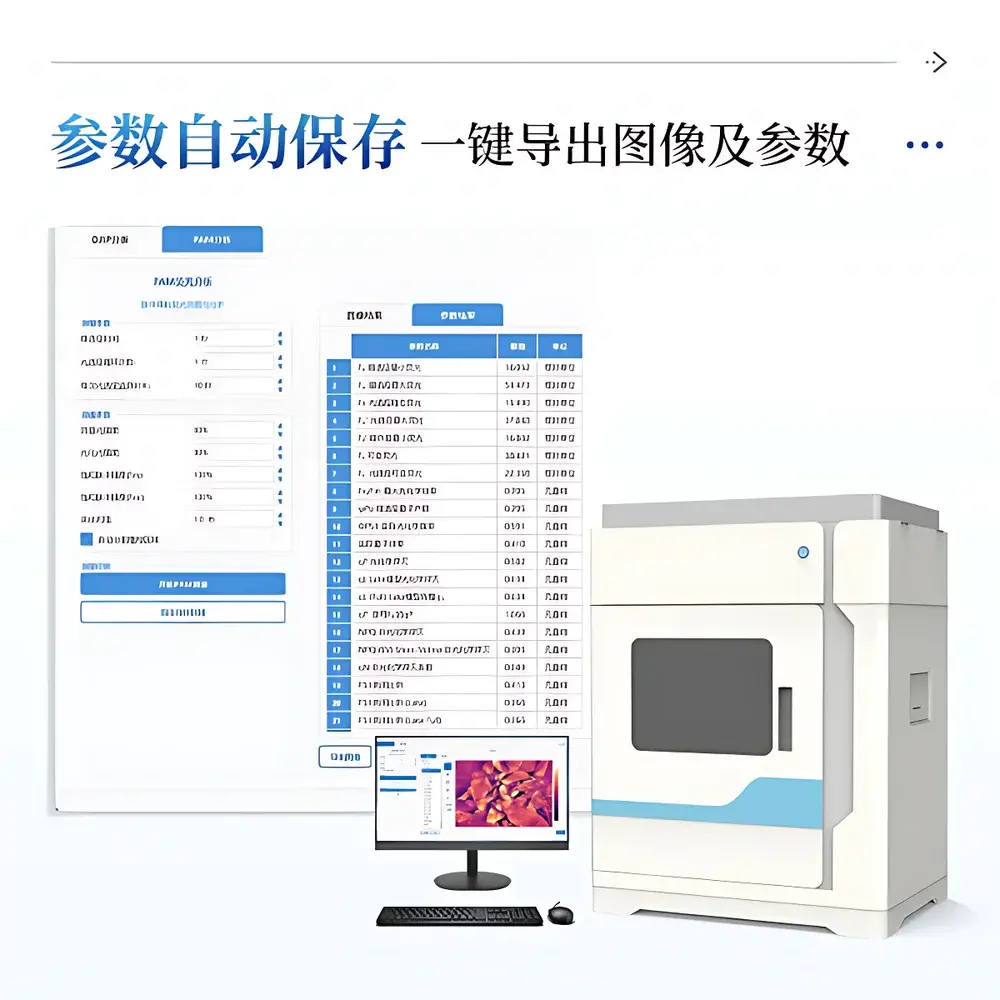
The proprietary IN/LeafClear Control Suite runs on Windows 10/11 (64-bit) and features bilingual UI (English/Chinese) with persistent language preference storage. Measurement protocols are saved as XML-configurable templates, supporting version-controlled experimental replication. All raw image stacks (16-bit TIFF), processed parameter maps (PNG with embedded color scale metadata), and tabular outputs (CSV/Excel) are exported with ISO 8601-compliant filenames (e.g., “OJIP_001_FvFm_Map.png”). Audit-trail functionality records every parameter change, device connection event, and export action—meeting FDA 21 CFR Part 11 electronic record requirements when used in GxP-aligned agricultural biotechnology workflows. Batch processing supports time-series alignment of multi-day PAM datasets, while statistical overlays (mean ± SD per ROI) facilitate comparative phenotyping across genotypes or treatments.
Applications
- Photosynthetic Mechanism Research: Quantification of PSII antenna size (ABS/RC), electron transport flux (ETo/RC), and energy dissipation partitioning (DIo/RC) via JIP-test analysis.
- Abiotic Stress Physiology: Early detection of drought-induced photoinhibition through progressive decline in Fv/Fm and PIABS; thermal tolerance profiling via ΦPSII kinetics during ramped heat exposure.
- Crop Phenotyping: High-throughput screening of elite germplasm for NPQ capacity, recovery kinetics after light stress, and fertilizer-responsive shifts in quantum yield efficiency.
- Ecophysiology & Climate Response: In situ mapping of canopy-level heterogeneity in photochemical efficiency across microclimatic gradients; validation of remote-sensing vegetation indices (e.g., PRI, NDVI) against ground-truth fluorescence metrics.
- Pathogen & Toxin Screening: Pre-symptomatic diagnosis of fungal infection or herbicide phytotoxicity via altered OJIP curve inflection points (J-I-P amplitude ratios) and accelerated Fo rise kinetics.
FAQ
What is the minimum detectable change in Fv/Fm that the system can reliably resolve?
The system achieves ±0.005 absolute accuracy in Fv/Fm calculation, supported by CV <3% repeatability across repeated measurements on homogeneous leaf tissue under controlled conditions.
Can the system be integrated with environmental control chambers or robotic phenotyping platforms?
Yes—the USB 3.0 interface and TTL-compatible trigger I/O ports allow synchronization with external climate controllers, conveyor systems, and automated positioning stages via LabVIEW or Python APIs.
Does the software support batch analysis of time-series PAM data across multiple genotypes?
Yes—time-aligned parameter extraction, normalization to baseline (t=0), and export of kinetic curves (ΦPSII vs. time, NPQ vs. light dose) are natively supported for up to 999 samples per batch.
How is calibration maintained across long-term deployments?
The system includes built-in reference LED checks and optional NIST-traceable fluorescence standards; factory recalibration is recommended annually or after major optical component replacement.
Is remote operation possible for greenhouse or field-deployed units?
Remote desktop access (via secure RDP or VNC) is fully supported; all data are stored locally on the host PC and can be synced to network drives or cloud repositories using configurable post-acquisition scripts.




