
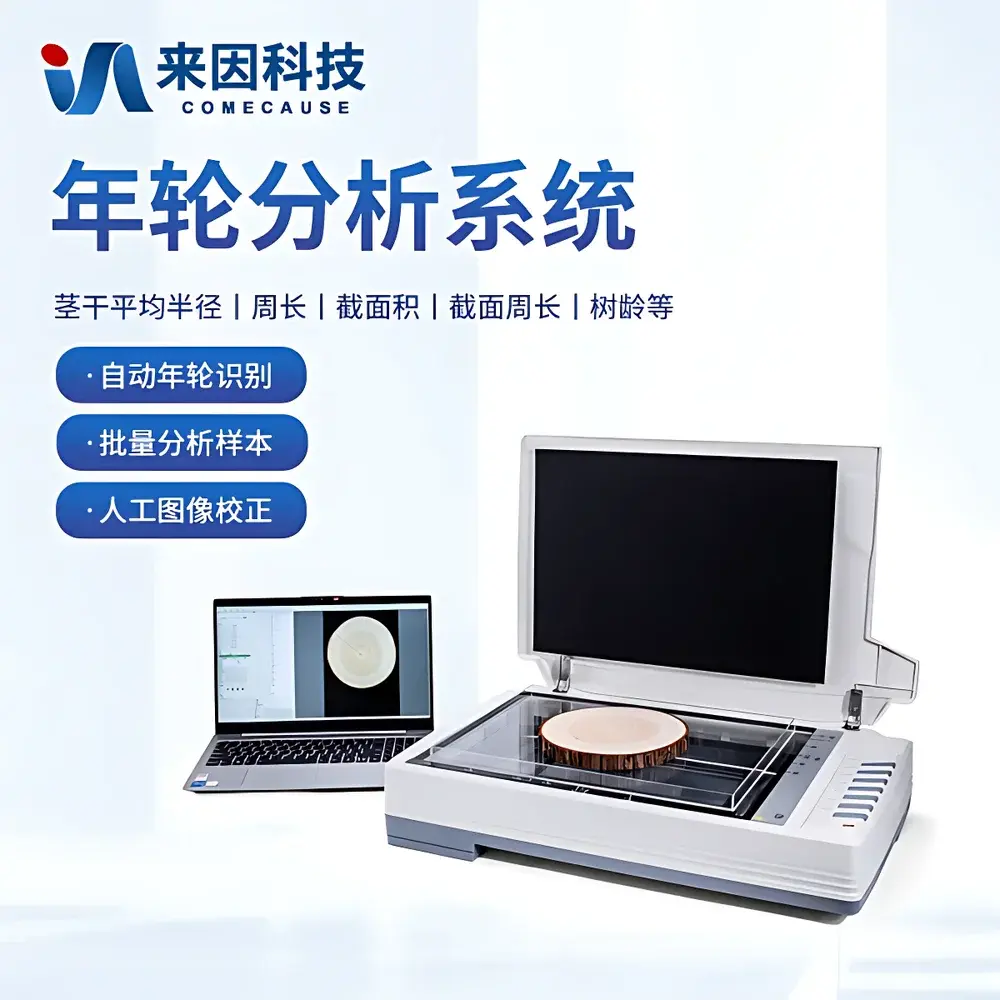
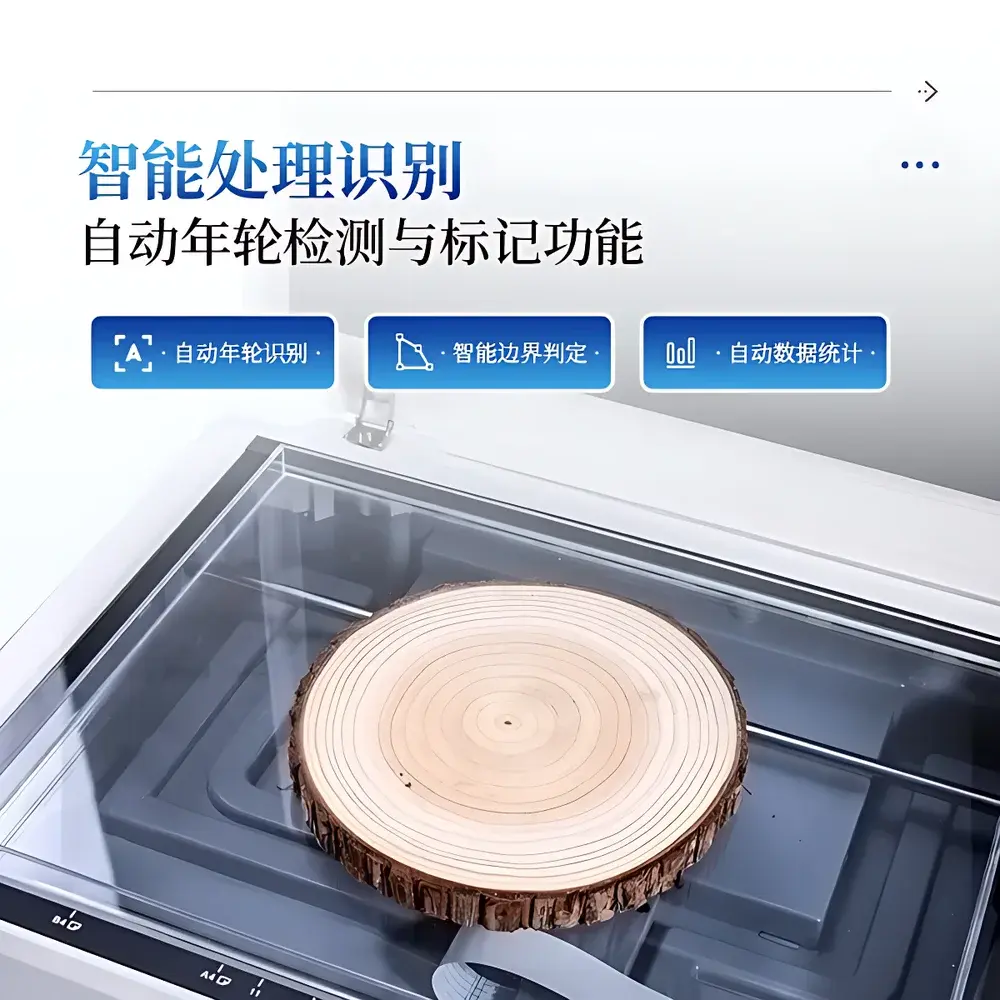
COMECAUSE IN-NL Tree Cross-Section Circumference & Dendrochronological Analysis System
| Brand | COMECAUSE |
|---|---|
| Origin | Shandong, China |
| Manufacturer Type | Direct Manufacturer |
| Product Origin | Domestic (China) |
| Model | IN-NL |
| Price | USD 5,300 (FOB) |
Overview
The COMECAUSE IN-NL Tree Cross-Section Circumference & Dendrochronological Analysis System is a precision digital instrumentation platform engineered for non-destructive morphometric and dendrochronological analysis of woody plant samples. It operates on the principle of high-resolution optical scanning combined with calibrated image-based metrology to quantify anatomical features—including cross-sectional circumference, diameter, area, radial growth increments, and annual ring count—with traceable spatial accuracy. Unlike manual caliper or tape-based field measurements—prone to operator-induced variability, parallax error, and irreproducible tension—the IN-NL system delivers standardized, audit-ready data by digitizing physical tree discs or increment cores under controlled illumination and geometric calibration. Its core measurement architecture conforms to ISO 13067:2014 (Wood — Determination of density and moisture content) and supports traceability requirements aligned with GLP-compliant forest research protocols. Designed explicitly for longitudinal ecological monitoring and timber resource assessment, the system bridges field sampling and laboratory-grade quantitative analysis without requiring destructive sectioning beyond standard core extraction.
Key Features
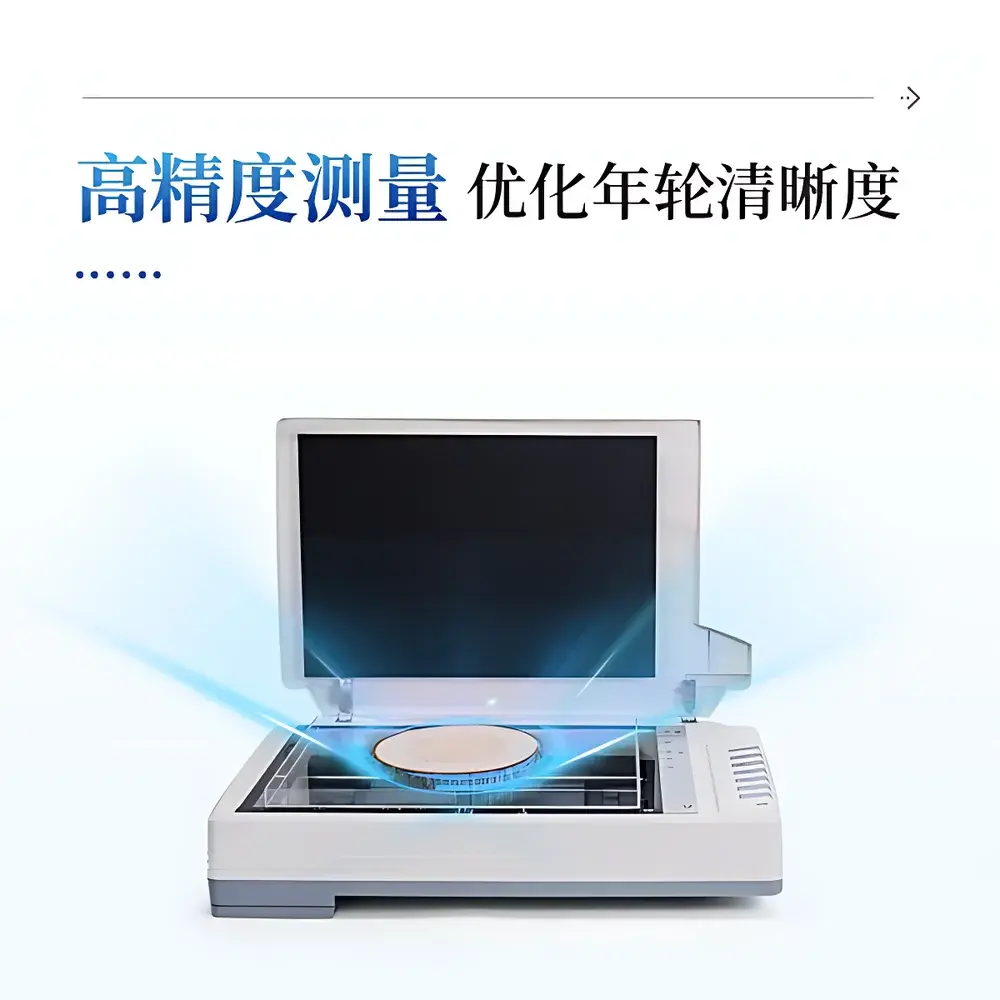
- High-fidelity A3-format optical scanning (31 × 44 cm active area) with configurable resolution up to 1800 × 3600 dpi, enabling sub-0.011 mm pixel-level measurement precision
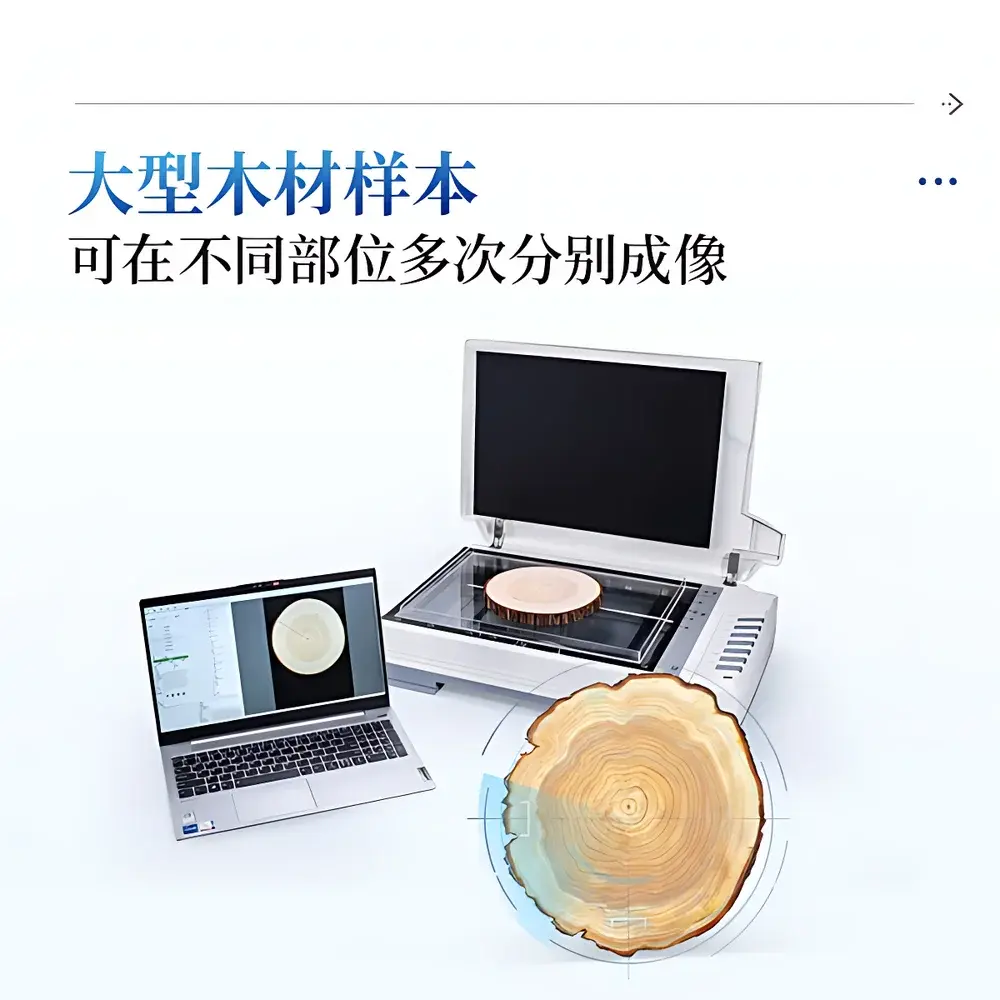
- Dual-mode sample handling: dedicated growth-core positioning fixture for cylindrical increment borings and adjustable disc-mounting stage for flat transverse sections
- Calibrated XY-axis spatial correction: independent linear scaling factors applied per axis to compensate for lens distortion and mechanical alignment drift
- Multi-channel spectral analysis: selective enhancement of grayscale, red, green, or blue channels to maximize contrast between earlywood/latewood boundaries in heterogeneous xylem tissue
- Interactive ring detection engine: semi-automated tracing with manual override for pixel-level correction of occluded, fused, or micro-ring structures (resolvable down to 0.2 mm)
- Dynamic path definition: user-defined linear, angular, or radial measurement trajectories that conform to natural ring curvature via spline interpolation
- Batch processing pipeline: concurrent analysis of ≥50 samples with synchronized metadata tagging (species, location, collection date, core ID)
Sample Compatibility & Compliance
The IN-NL system accommodates both solid wood discs (up to 40 cm diameter) and standard 5 mm increment cores extracted using Pressler or Haglöf-type borers. Its optical design minimizes specular reflection artifacts from resinous or uneven surfaces through diffuse LED illumination geometry. All measurement outputs—including circumference (mm), cross-sectional area (mm²), mean radius (mm), and ring count—are reported with embedded uncertainty estimates derived from pixel-to-mm calibration residuals. The software enforces ISO/IEC 17025-aligned data integrity practices: every analysis session logs timestamped operator ID, instrument serial number, calibration certificate expiry, and full image provenance (original scan + processed derivatives). Exported datasets include embedded EXIF metadata compliant with FAIR (Findable, Accessible, Interoperable, Reusable) principles for integration into national forest inventory databases (e.g., USFS FIA, EFISCEN).
Software & Data Management
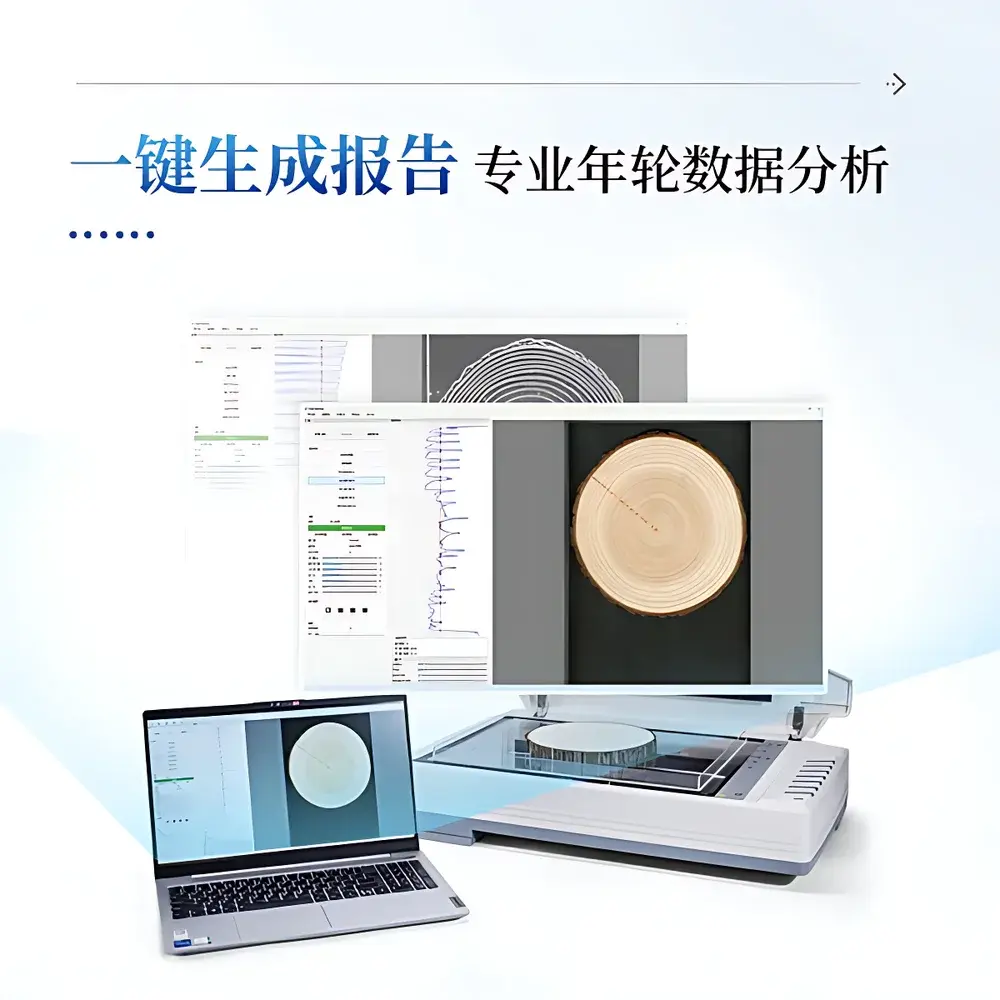
The Windows 10+ native application implements role-based access control and full 21 CFR Part 11–compliant audit trails, including immutable records of all parameter modifications, manual corrections, and export actions. Analytical results are stored in ACID-compliant SQLite databases with automatic daily backups and SHA-256 hash verification. Output formats include ISO-standard CSV (UTF-8 encoded with BOM), Excel (.xlsx) with embedded formulas for derived metrics (e.g., basal area increment), JSON-LD for semantic web interoperability, and publication-ready TIFF/PNG exports at 600 dpi. Integrated reporting templates generate peer-review-ready figures: ring-width chronologies with detrending curves, cumulative growth histograms, and spatial heatmaps of radial variation. Multi-language UI (English/Chinese) supports bilingual field teams without compromising technical terminology consistency.
Applications
- Forest Inventory & Carbon Accounting: Generates diameter-at-breast-height (DBH) equivalents from circumference scans, feeding allometric equations for aboveground biomass estimation per IPCC Tier 2 guidelines
- Dendroclimatology: Produces standardized ring-width indices for correlation with instrumental climate records (precipitation, temperature, drought indices) using COFECHA and ARSTAN workflows
- Urban Forestry Management: Tracks annual girth increment of street trees to assess root-zone constraints, soil compaction effects, and irrigation efficacy over multi-year cycles
- Timber Grading & Chain-of-Custody: Links scanned disc images to QR-coded log identifiers, enabling automated grade classification per ISPM 15 and PEFC chain-of-custody documentation
- Conservation Genetics: Quantifies inter-annual growth synchrony across relic populations to infer historical connectivity loss and effective population size decline
FAQ
What is the minimum measurable ring width supported by the IN-NL system?
The system resolves structural features down to 0.2 mm under optimal scanning conditions (1800 × 3600 dpi mode with contrast-enhanced channel selection).
Does the software support statistical chronology development (e.g., detrending, standardization)?
Yes—it exports ring-width series in standard .rwl format compatible with established dendrochronological toolchains including COFECHA, ARSTAN, and dplR.
Can the system analyze partially decayed or discolored samples?
Multi-spectral channel analysis and adaptive histogram equalization allow robust feature extraction from degraded xylem, though severe fungal hyphae infiltration may require manual segmentation.
Is hardware calibration traceable to national metrology institutes?
Each unit ships with NIST-traceable calibration targets; users perform routine verification using certified step gauges (included) with documented uncertainty budgets per ISO/IEC 17025 Annex A.3.
What file formats are accepted for pre-scanned images?
TIFF (uncompressed or LZW), PNG (8/16-bit), JPEG (baseline), and BMP (24-bit) with embedded ICC profiles are natively supported; no proprietary intermediate formats are generated.





