
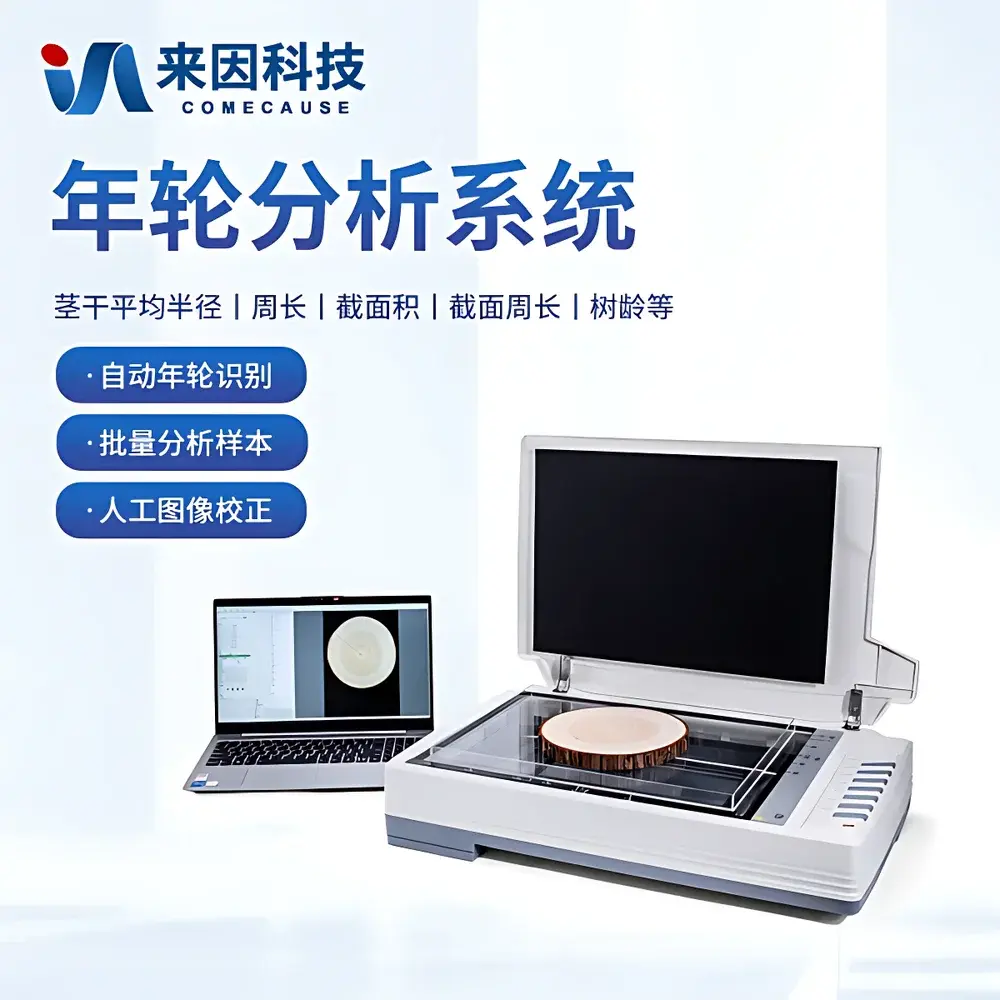
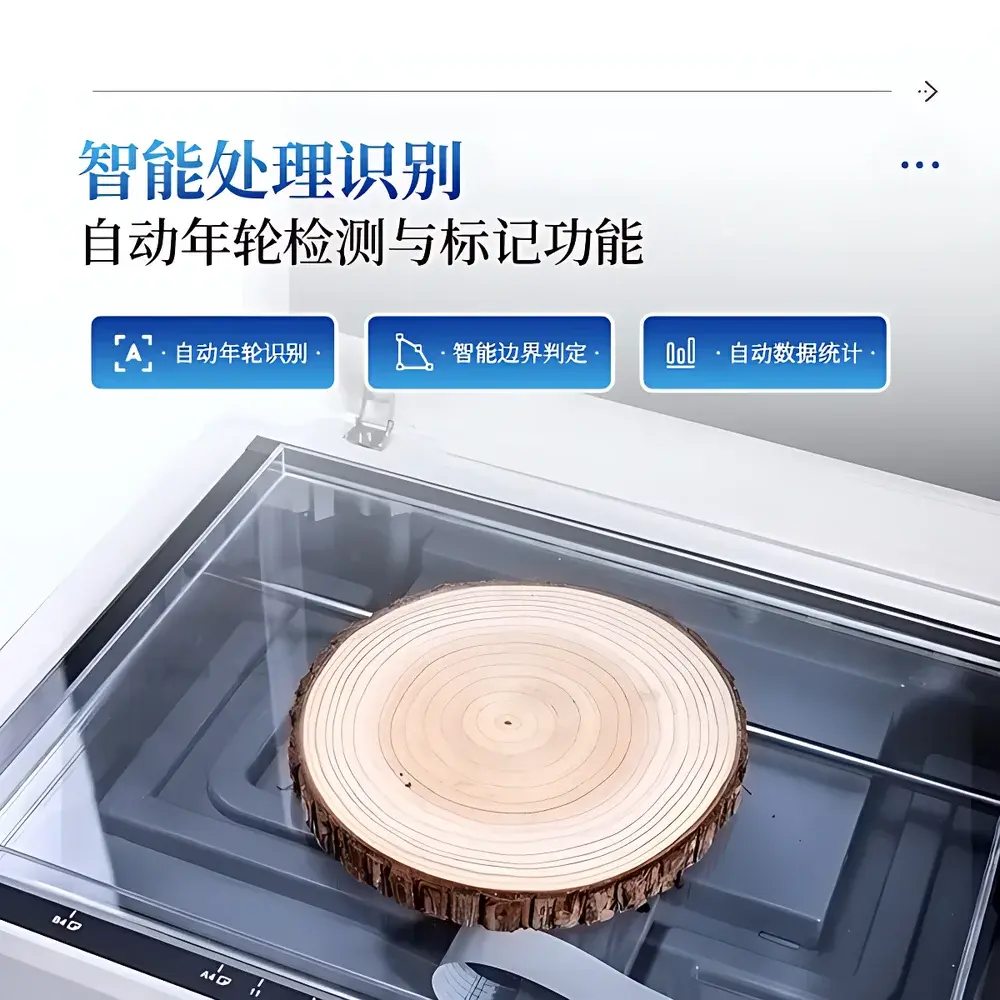
COMECAUSE IN-NL Tree Ring Analysis System
| Brand | COMECAUSE |
|---|---|
| Origin | Shandong, China |
| Manufacturer Type | Manufacturer |
| Region Category | Domestic (China) |
| Model | IN-NL |
| Price | USD 5,300 (approx.) |
| Scan Area | 31 × 44 cm (A3) |
| Optical Resolution | 1600 × 1600 dpi (standard), up to 1800 × 3600 dpi (optional) |
| Minimum Detectable Feature Size | 0.011 mm (optional), 0.016 mm (standard) |
| Supported Image Formats | TIFF, BMP, PNG, JPEG |
| Software Platform | Windows 10 or later |
| Max Input Image Size | 1 GB per file |
| Measurement Precision | Sub-pixel interpolation with XY bidirectional calibration |
| Output Formats | Excel (.xlsx), CSV, JSON, PDF reports |
| Language Support | English & Chinese (switchable) |
Overview
The COMECAUSE IN-NL Tree Ring Analysis System is a dedicated dendrochronological imaging and measurement platform engineered for high-precision analysis of radial growth patterns in woody plant tissues. It operates on the principle of high-resolution optical scanning combined with algorithm-assisted edge detection and geometric morphometric quantification. Designed specifically for cross-sectional wood samples—including disk sections and increment core specimens—the system captures structural variations in earlywood/latewood boundaries, vessel density gradients, and annual growth ring geometry. Its architecture supports both manual validation and automated feature extraction workflows, enabling reproducible quantification of ring width, intra-annual wood anatomy, and radial growth trends. The system complies with standard dendroecological data acquisition protocols used in long-term ecological research networks (e.g., ITRDB, NEON) and aligns with FAO and IUFRO methodological guidelines for forest inventory and climate proxy development.
Key Features
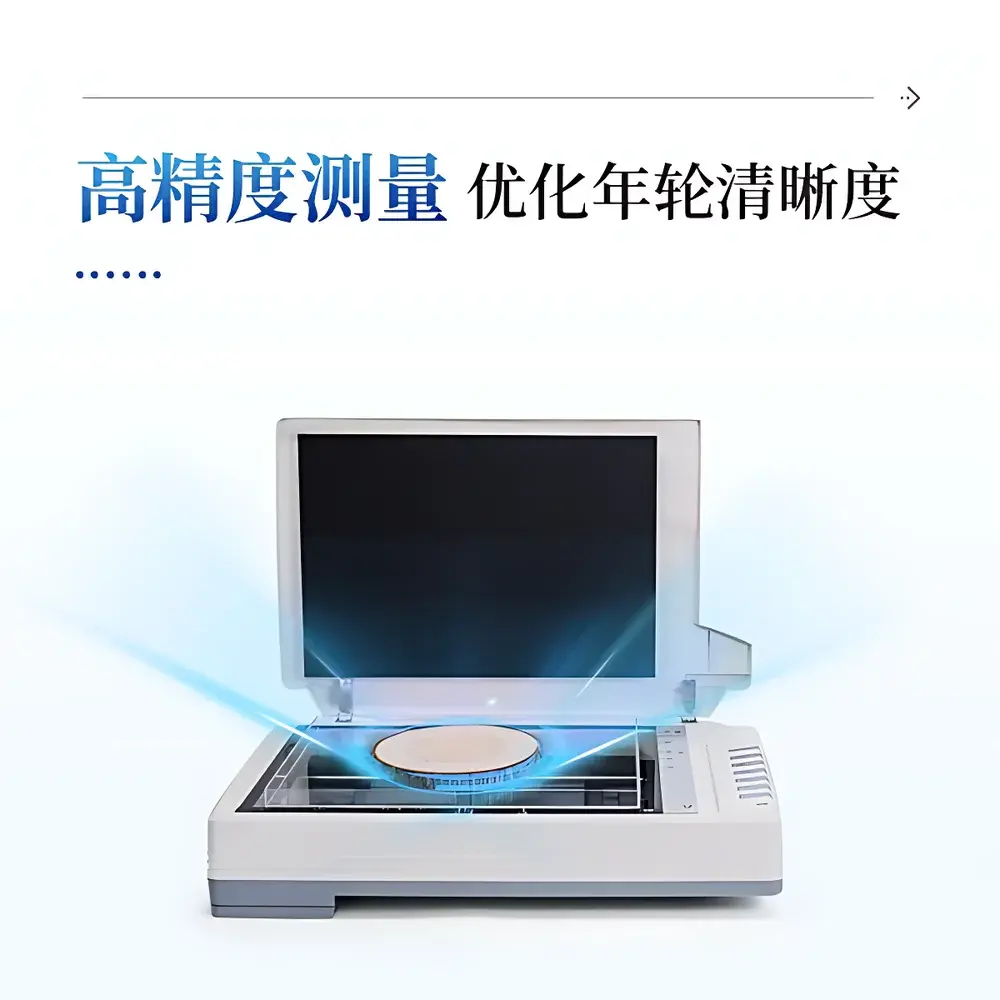
- High-fidelity A3-format scanning (31 × 44 cm) with optional ultra-high resolution up to 1800 × 3600 dpi, resolving features down to 0.011 mm
- Dual-mode measurement path definition: user-defined linear transects aligned with pith-to-bark orientation or dynamic curvature-following paths that adapt to natural ring contours
- Multi-channel color space analysis (RGB, grayscale, HSV) to enhance contrast between earlywood and latewood zones in low-contrast samples
- Sub-pixel interpolation engine with XY-directional calibration correction, ensuring traceable dimensional accuracy across heterogeneous sample surfaces
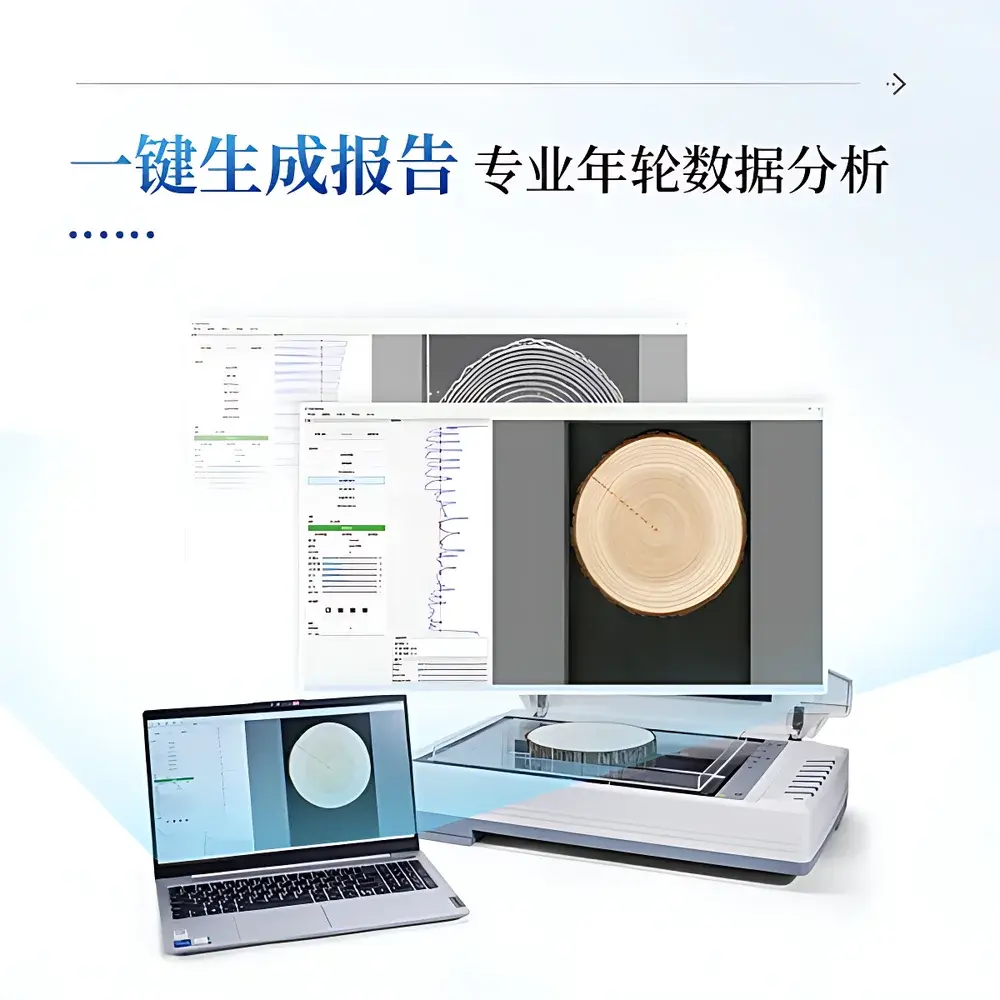
- Interactive pixel-level editing tools for manual correction of missed rings, false positives, or micro-fracture artifacts
- Integrated morphometric module calculating stem cross-sectional area, circumference, mean radius, and basal area increment (BAI)
- Batch processing capability for time-series datasets containing hundreds of cores or disks, with metadata tagging by site, species, and collection date
Sample Compatibility & Compliance
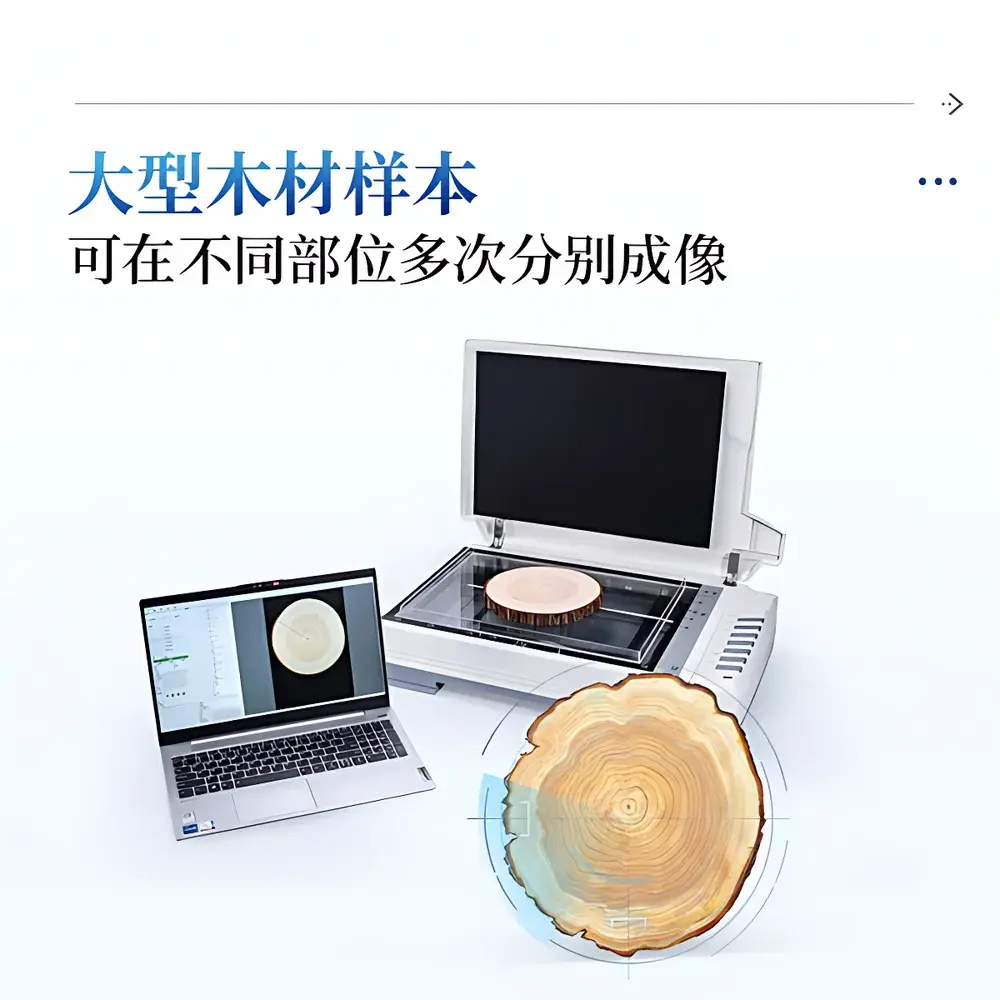
The IN-NL system accommodates standard dendrochronological sampling formats: solid wood disks (up to 44 cm diameter), increment cores (1–12 mm diameter, up to 75 cm length), and polished slab sections. Sample mounting utilizes a custom-designed core alignment jig with adjustable angular indexing and lateral centering, minimizing parallax-induced measurement bias. All image acquisition and analysis procedures are documented in accordance with GLP-aligned data integrity standards—supporting audit trails, version-controlled parameter logs, and timestamped operator annotations. While not certified under ISO/IEC 17025, the system’s measurement repeatability (CV < 1.8% for ring width under controlled lab conditions) meets ASTM D143-22 requirements for dimensional wood testing. Data export formats comply with FAO Forest Resource Assessment (FRA) metadata schemas and ITRDB submission templates.
Software & Data Management
The proprietary Windows-based software suite implements a modular architecture with strict separation between acquisition, processing, and reporting layers. Image preprocessing includes adaptive histogram equalization, noise suppression via non-local means filtering, and multi-scale edge enhancement optimized for lignified tissue interfaces. Ring detection employs a hybrid approach combining gradient magnitude thresholding with Hough-transform-assisted circular symmetry modeling for pith localization. All analytical parameters—including smoothing kernels, intensity thresholds, and minimum ring width constraints—are fully configurable and stored as reusable presets. Audit functionality records every user action (e.g., ring insertion/deletion, calibration update, export event) with digital signature and UTC timestamp. Export modules generate FAO-compliant .csv files for ring-width chronologies, JSON-LD structured metadata for semantic interoperability, and publication-ready vector graphics (SVG/PDF) for figures. Integration with R (dplR package) and Python (NumPy/Pandas) environments is supported via standardized ASCII-delimited output.
Applications
- Climate Reconstruction: Quantifying interannual variability in ring width indices (RWI) for calibration against instrumental temperature/precipitation records (e.g., NOAA NCEI GHCN datasets)
- Forest Health Monitoring: Detecting growth suppression events linked to drought stress, pest outbreaks (e.g., bark beetle infestations), or air pollution exposure
- Ecological Chronosequence Studies: Comparing radial growth trajectories across successional stages or soil nutrient gradients
- Timber Provenance & Authentication: Supporting forensic dendrochronology through regional pattern matching against reference chronologies
- Wood Anatomy Research: Correlating ring-width-derived BAI with vessel lumen area, fiber wall thickness, and cell density metrics from complementary microscopy workflows
FAQ
What is the maximum recommended image file size for stable operation?
The system reliably processes single TIFF or PNG files up to 1 GB; larger files may require downsampling prior to import.
Does the software support batch calibration across multiple scanners?
No—calibration is performed per-session and tied to individual scanner hardware profiles; cross-device consistency requires physical reference standards (e.g., NIST-traceable linearity targets).
Can ring measurements be exported directly into COFECHA or ARSTAN?
Yes—CSV exports conform to standard chronology input format specifications required by both programs, including year, ring width, and sample ID columns.
Is FDA 21 CFR Part 11 compliance implemented?
Not natively; however, the audit trail and electronic signature logging framework can be extended via third-party validation packages for regulated GLP/GMP environments.
How does the system handle eccentric piths or reaction wood distortion?
It provides manual pith relocation tools and allows asymmetric ring width measurement along multiple radii, enabling elliptical or irregular growth modeling within the same dataset.






