
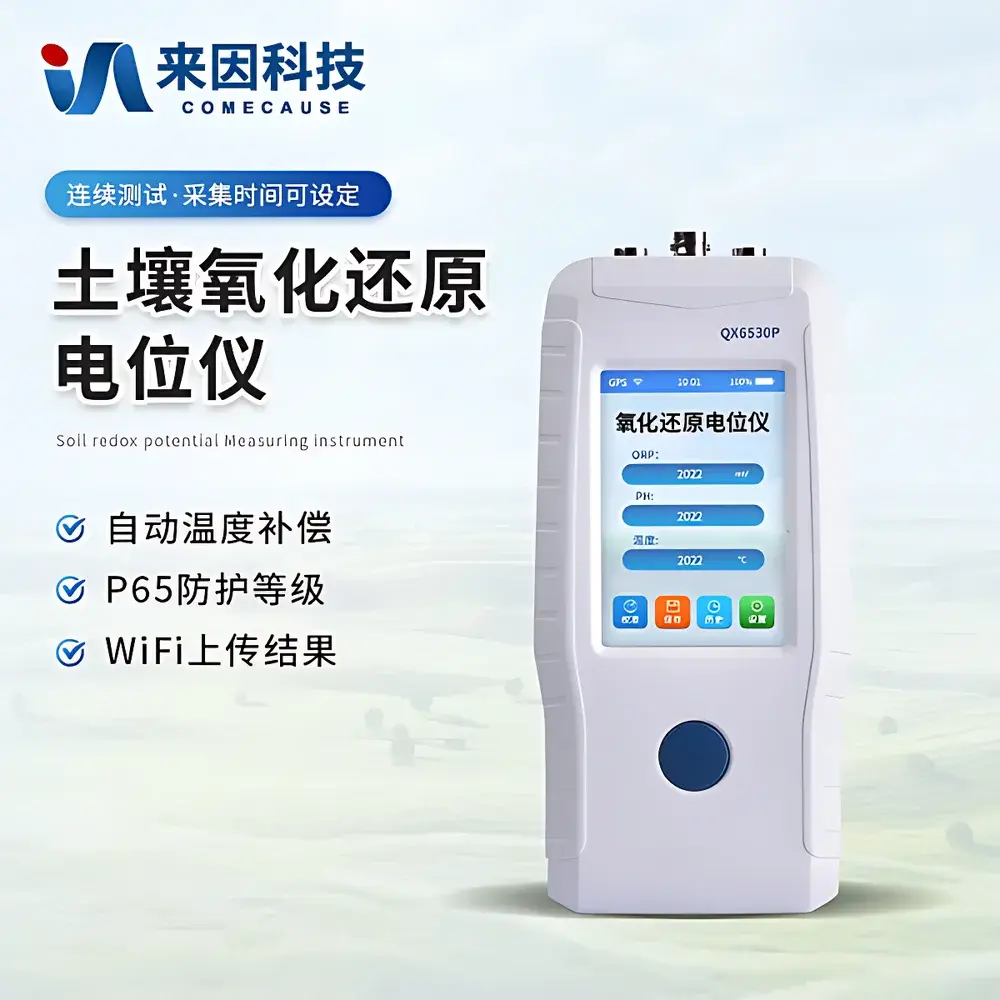
COMECAUSE QX6530P Soil Oxidation-Reduction Potential (ORP) Meter
| Brand | COMECAUSE |
|---|---|
| Origin | Shandong, China |
| Manufacturer Type | Manufacturer |
| Country of Origin | Domestic (China) |
| Model | QX6530P |
| Price | ¥5600 |
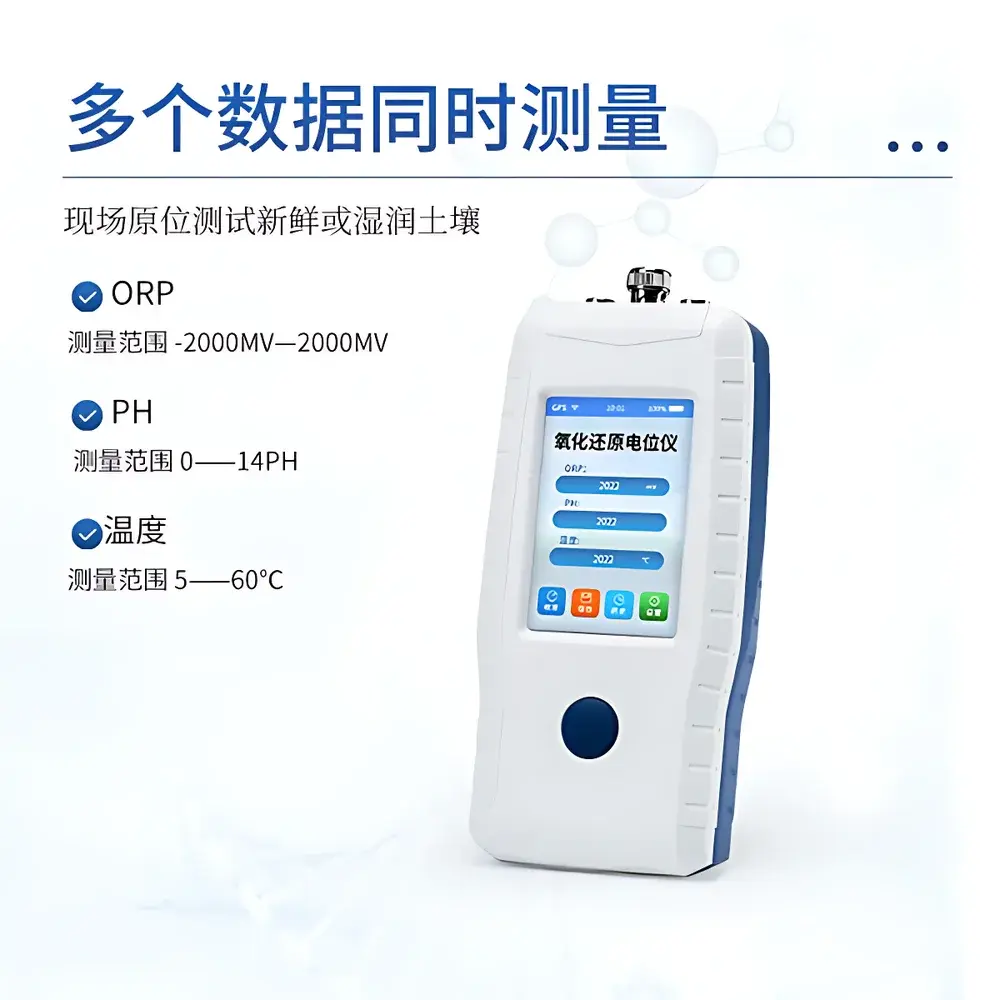
| ORP Range | −2000 to +2000 mV, Resolution: 0.1 mV, Accuracy: ±10 mV |
| pH Range | 0–14, Resolution: 0.1, Accuracy: ±0.05 |
| Temperature Range | 5–60 °C, Resolution: 0.1 °C, Accuracy: ±1 °C |
| Power Supply | DC 5 V / 2 A |
| Rated Power | 3 W |
| Battery Capacity | 6000 mAh |
| Dimensions (Packaging) | 500 × 380 × 180 mm |
| Weight | 4.1 kg |
| Processor | ARM Cortex-M3 |
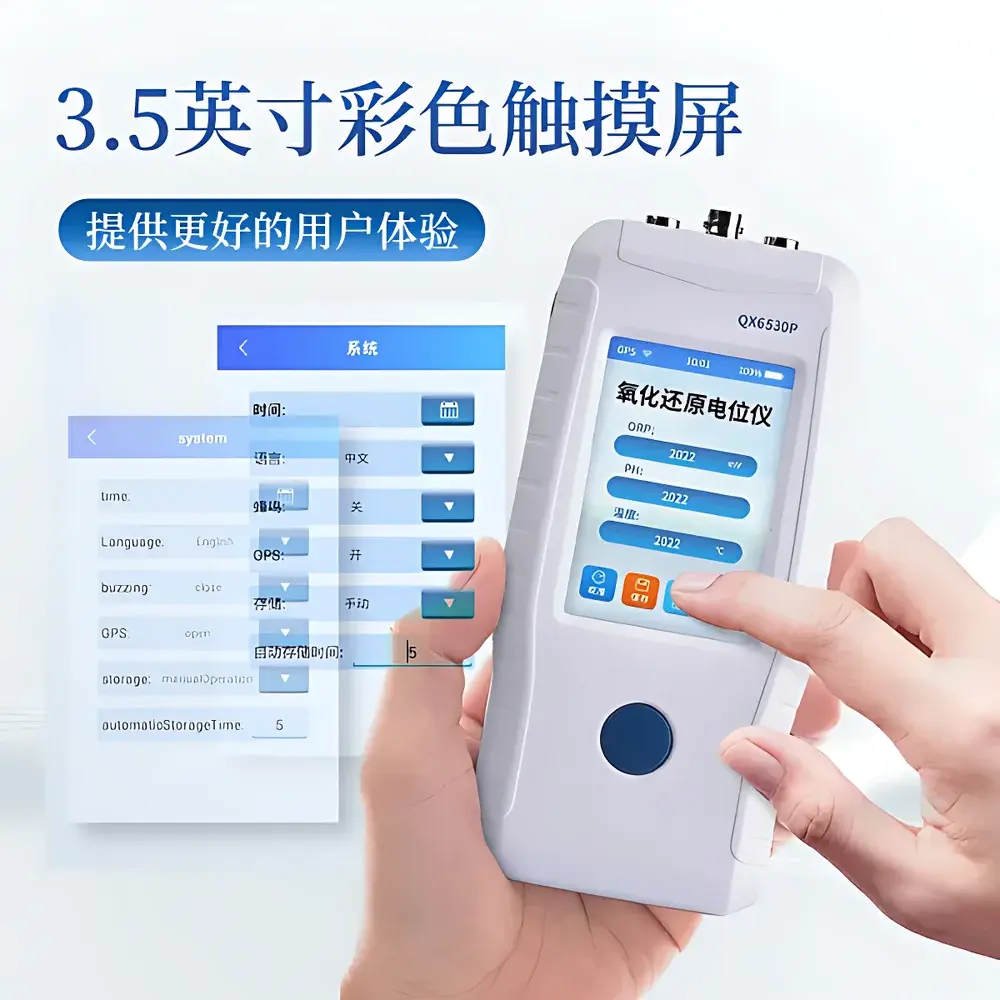
| Display | 3.5″ color touchscreen with auto-backlight and sleep timer |
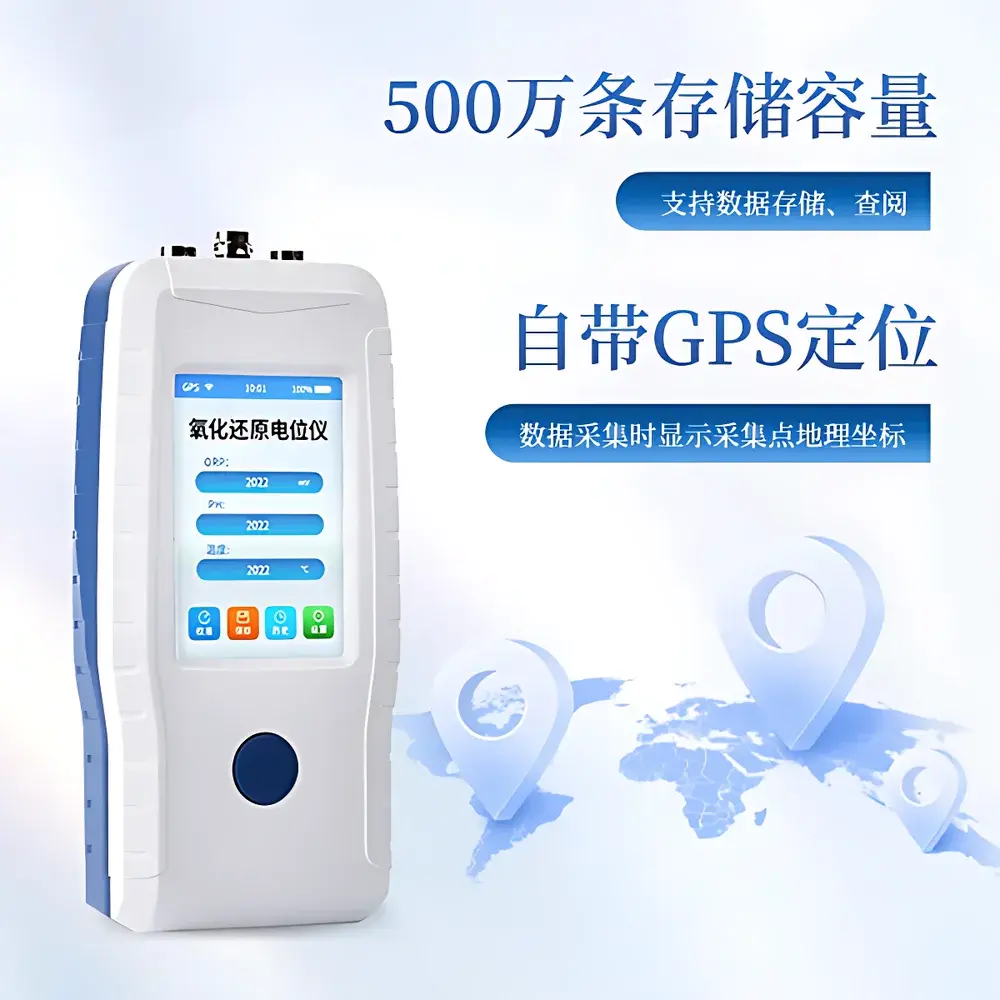
| Data Logging | Up to 5 million records |
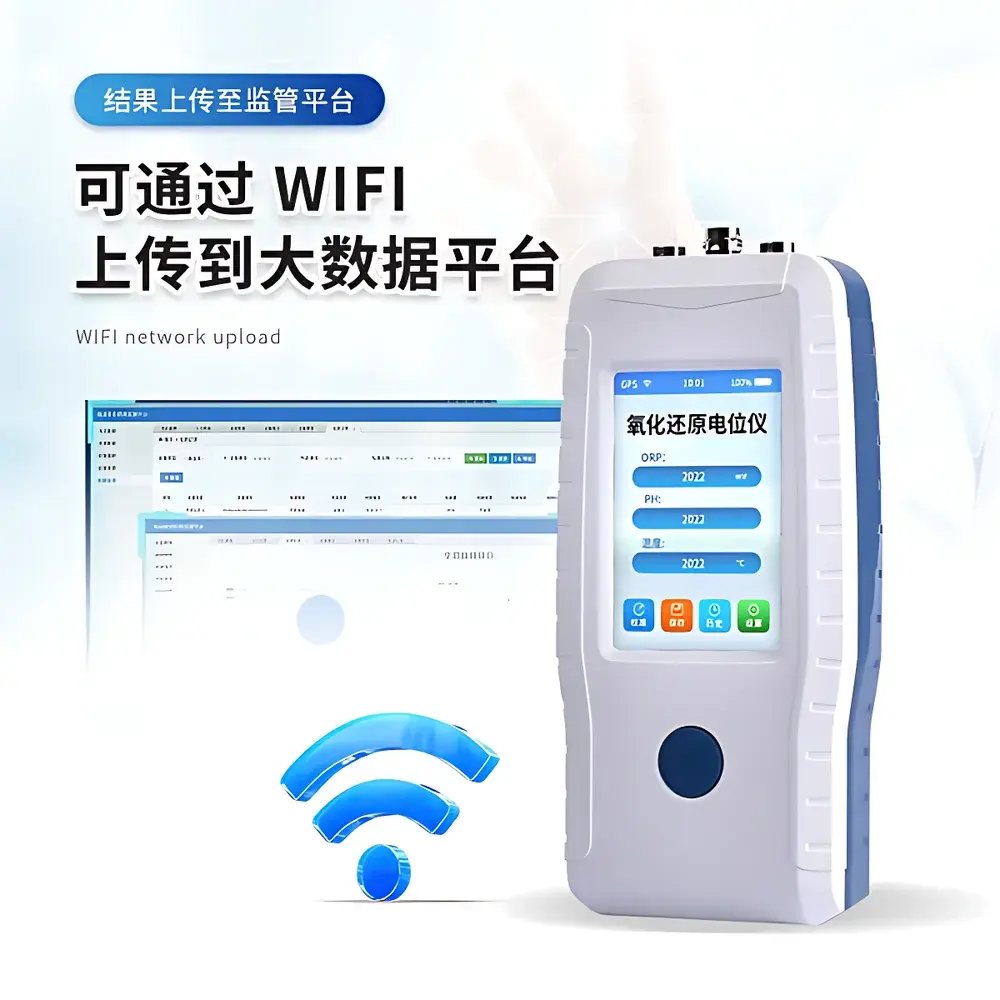
| Connectivity | USB-C, PC export (Excel), cloud platform upload |
| IP Rating | IP65 |
| Compliance | HJ 746–2015 |
Overview
The COMECAUSE QX6530P Soil Oxidation-Reduction Potential (ORP) Meter is a field-deployable, multi-parameter electrochemical instrument engineered for in situ measurement of redox potential (Eh), pH, and temperature directly in moist or freshly sampled soil matrices. It operates on the fundamental principle of potentiometric measurement: a noble-metal working electrode (typically platinum or gold) establishes an equilibrium potential relative to a stable reference electrode (Ag/AgCl or saturated calomel), generating a voltage signal proportional to the logarithm of the ratio of oxidized to reduced species in the soil solution—governed by the Nernst equation. Unlike discrete lab-based assays, the QX6530P enables real-time, non-destructive monitoring of dynamic redox transitions—critical for characterizing anaerobic microsites, tracking biogeochemical shifts during flooding or drying cycles, and assessing electron-accepting capacity in contaminated or carbon-rich soils. Its design bridges laboratory-grade metrological rigor with ruggedized portability, making it suitable for long-term environmental observatories, agricultural monitoring networks, and regulatory field surveys requiring traceable, standards-compliant data.
Key Features
- Integrated triple-sensor probe assembly: Pt-based ORP electrode, gel-filled Ag/AgCl reference electrode, and stainless-steel hollow rod housing with integrated temperature sensor—optimized for direct insertion into undisturbed soil profiles without slurry preparation.
- ARM Cortex-M3 microcontroller platform running embedded Android OS, enabling responsive touchscreen operation, configurable logging intervals (1 min to 24 h), and automatic temperature compensation (ATC) per NIST-traceable algorithms.
- High-resolution 3.5″ TFT display with ambient-light-adaptive backlight and programmable screen timeout—ensuring legibility under full sun or low-light field conditions.
- On-device data integrity management: 5 million record storage capacity; timestamped entries with GPS-tagging support (via paired smartphone); auto-lock function for stable endpoint reading; no post-processing or unit conversion required.
- Robust mechanical architecture: IP65-rated enclosure resists dust ingress and water jets from any direction; 4.1 kg operational weight balances portability with thermal mass stability during extended deployments.
- Flexible power architecture: Rechargeable 6000 mAh Li-ion battery (Type-C charging, compatible with standard 5 V/2 A mobile adapters); <3 W nominal draw supports >12 h continuous operation at 15-min logging intervals.
Sample Compatibility & Compliance
The QX6530P is validated for direct measurement in heterogeneous, high-ionic-strength, and organically complex soil media—including clay-rich paddy soils, peatlands, constructed wetland substrates, and urban compacted loams. It complies fully with the Chinese Environmental Protection Standard HJ 746–2015, “Determination of Soil Oxidation-Reduction Potential—Potentiometric Method,” which specifies electrode conditioning protocols, stabilization criteria (>60 s drift < 2 mV), and reporting conventions aligned with ISO 10390:2022 (soil pH) and ASTM D3740 (instrument calibration verification). While not certified to FDA 21 CFR Part 11, its audit-ready data export (CSV/Excel) and immutable timestamping meet GLP-aligned documentation requirements for academic, governmental, and third-party environmental monitoring programs.
Software & Data Management
Data acquisition and export are managed via the device’s native interface or through optional PC synchronization software (Windows/macOS compatible). All measurements include metadata: date/time, sensor ID, temperature, and user-defined site tags. Exported files contain raw mV, pH, and °C values alongside calculated Eh (vs. Standard Hydrogen Electrode, SHE) using built-in Nernst correction. Cloud integration supports secure HTTPS-based upload to custom LIMS or national environmental data platforms (e.g., China’s National Ecological Monitoring Network). No proprietary file formats are used—raw exports are plain-text CSV with UTF-8 encoding and comma delimiters, ensuring interoperability with R, Python (pandas), MATLAB, and GIS tools.
Applications
- Wetland Biogeochemistry: Quantifying redox zonation across soil depth gradients to model Fe/Mn oxide reduction, sulfate depletion, and methanogenesis onset during tidal inundation or seasonal saturation.
- Precision Agriculture: Early detection of root-zone hypoxia in orchards and vineyards—identifying subclinical stress before visible chlorosis or yield loss occurs.
- Urban Tree Health Monitoring: Assessing oxygen diffusion capacity in compacted tree pits and green infrastructure soils to inform aeration interventions and irrigation scheduling.
- Contaminated Site Assessment: Mapping redox boundaries in petroleum-impacted or metal-contaminated soils to delineate natural attenuation zones and optimize remediation endpoints.
- Cryosphere Research: Deploying in permafrost-affected regions to correlate Eh decline with active-layer thaw depth and CO2/CH4 flux measurements in long-term climate observatories.
FAQ
What reference electrode system does the QX6530P use?
It employs a gel-filled, double-junction Ag/AgCl reference electrode with KCl electrolyte, designed to minimize liquid junction potential drift in variable soil moisture and salinity conditions.
Can the ORP electrode be calibrated in the field?
Yes—using certified Zobell’s solution (220 mV ± 5 mV at 25 °C) or quinhydrone buffer (±5 mV accuracy), following HJ 746–2015 protocol; calibration status is stored and displayed on-screen.
Is temperature compensation applied automatically during ORP measurement?
Yes—the device applies Nernst-derived ATC in real time using the integrated Pt1000 sensor; manual offset adjustment is also available for specialized applications.
How is electrode fouling mitigated during repeated soil insertions?
The Pt working electrode features a polished, scratch-resistant surface; the stainless-steel hollow rod provides mechanical protection and facilitates cleaning with deionized water and soft brush between samples.
Does the instrument support traceable calibration certificates?
Factory calibration reports (including serial-numbered electrode test data and uncertainty budgets) are provided with each unit; accredited third-party calibration services are available upon request.







