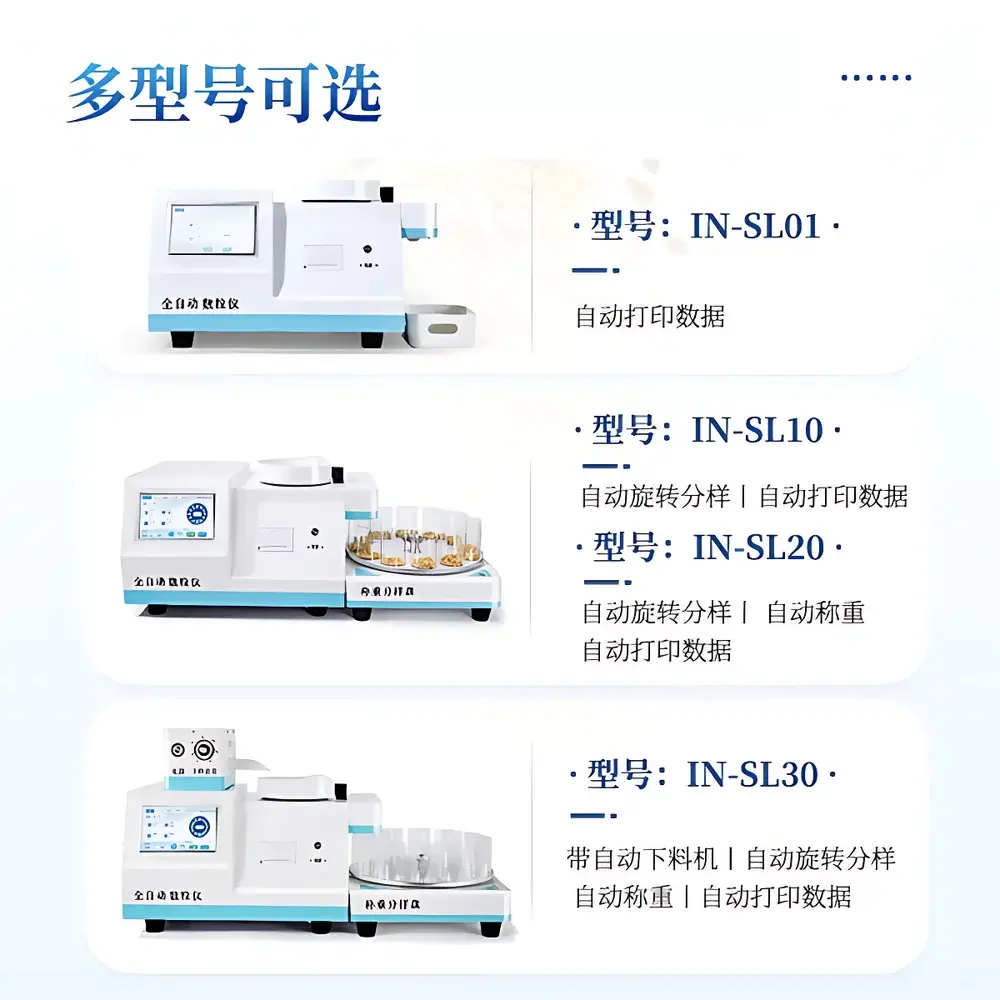
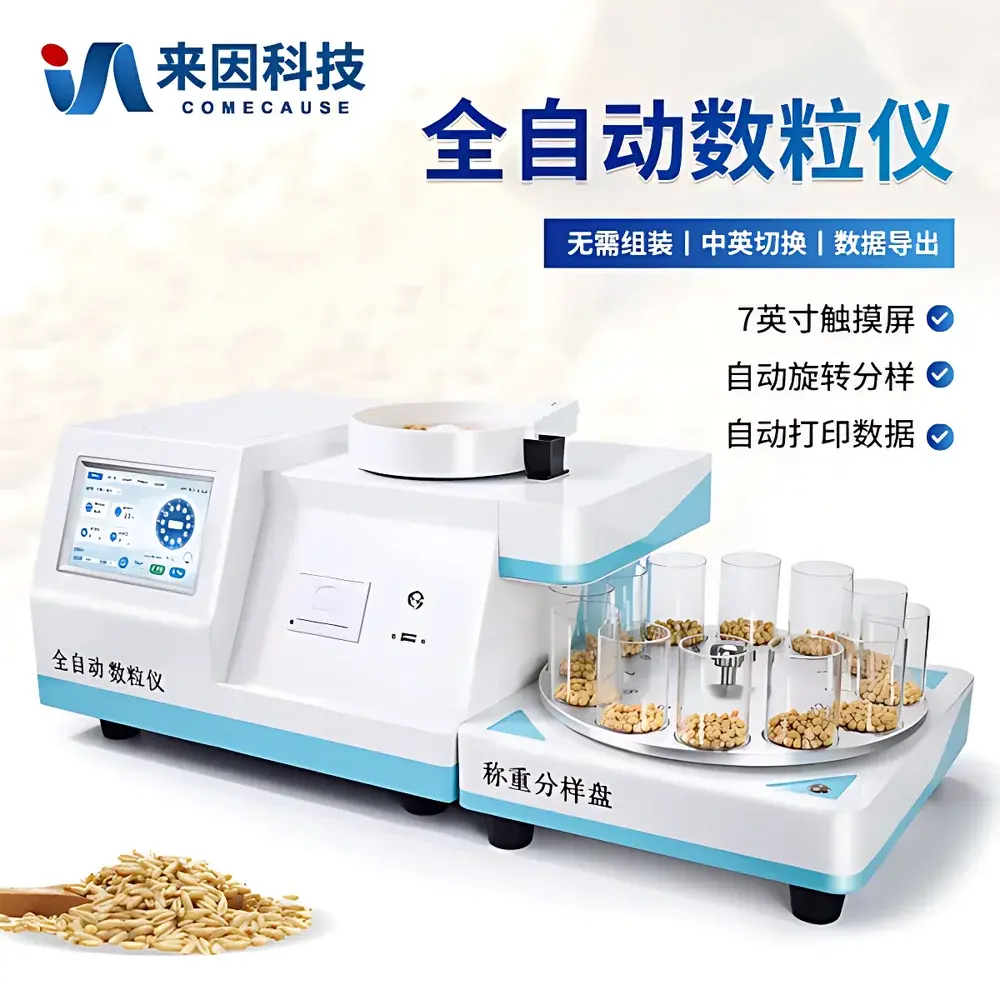
COMECAUSE IN-SL10 Fully Automatic Rotating Sample Divider and Seed Counter
| Brand | COMECAUSE |
|---|---|
| Origin | Shandong, China |
| Manufacturer Type | Direct Manufacturer |
| Product Category | Domestic |
| Model | IN-SL10 |
| Instrument Classification | Electronic Automatic Seed Counter |
| Application Scope | Corn, rice, wheat, soybean, sesame, vegetable seeds, melon & vegetable seeds, micro-parts, pearls, pharmaceutical tablets |
| Counting Accuracy | ±2‰ |
| Maximum Counting Speed | 1,000–2,000 seeds/min |
| Seed Length Range | 0.5–23 mm |
| Counting Capacity | 1–9,999 seeds per cup |
| Pre-set Stop Range | 1–9,999 (0000 = continuous mode) |
| Sample Cup Quantity | 12 |
| Cup Dimensions | Ø60 × 80 mm (H) |
| Main Unit Dimensions | 580(W) × 390(D) × 336(H) mm, 24 kg |
| Feeder Unit Dimensions | 360(W) × 390(D) × 197(H) mm, 12 kg |
| Continuous Operation Time | ≥8 h |
| Operating Noise | ≤80 dB(A) |
| Ambient Temperature | −10°C to +50°C |
| Relative Humidity | <85% RH |
| Power Supply | AC 220 V, 50 Hz (optional export voltages: 100/110/200/240 V, 50/60 Hz) |
| Touchscreen | 7″ color capacitive touchscreen (optional 10.1″ upgrade) |
| Data Output | USB flash drive export, built-in thermal label printer (adhesive-backed), on-device history storage with pagination and deletion |
Overview
The COMECAUSE IN-SL10 Fully Automatic Rotating Sample Divider and Seed Counter is an integrated precision counting and subsampling instrument engineered for high-throughput seed laboratories, agricultural research stations, seed certification agencies, and quality control departments in agribusiness. It employs optical detection combined with vibration-assisted single-layer dispersion and real-time photoelectric sensing to achieve reliable, non-destructive enumeration of heterogeneous particulate materials. Unlike manual or basic electronic counters, the IN-SL10 implements a closed-loop rotational sampling architecture—utilizing a motorized 12-position cup carousel—to enable simultaneous counting and volumetric division in a single workflow. This dual-function design complies with international seed testing standards including ISTA (International Seed Testing Association) Rule 5 (Sampling) and Rule 6 (Purity Analysis), supporting GLP-aligned documentation requirements through timestamped, traceable data capture.
Key Features
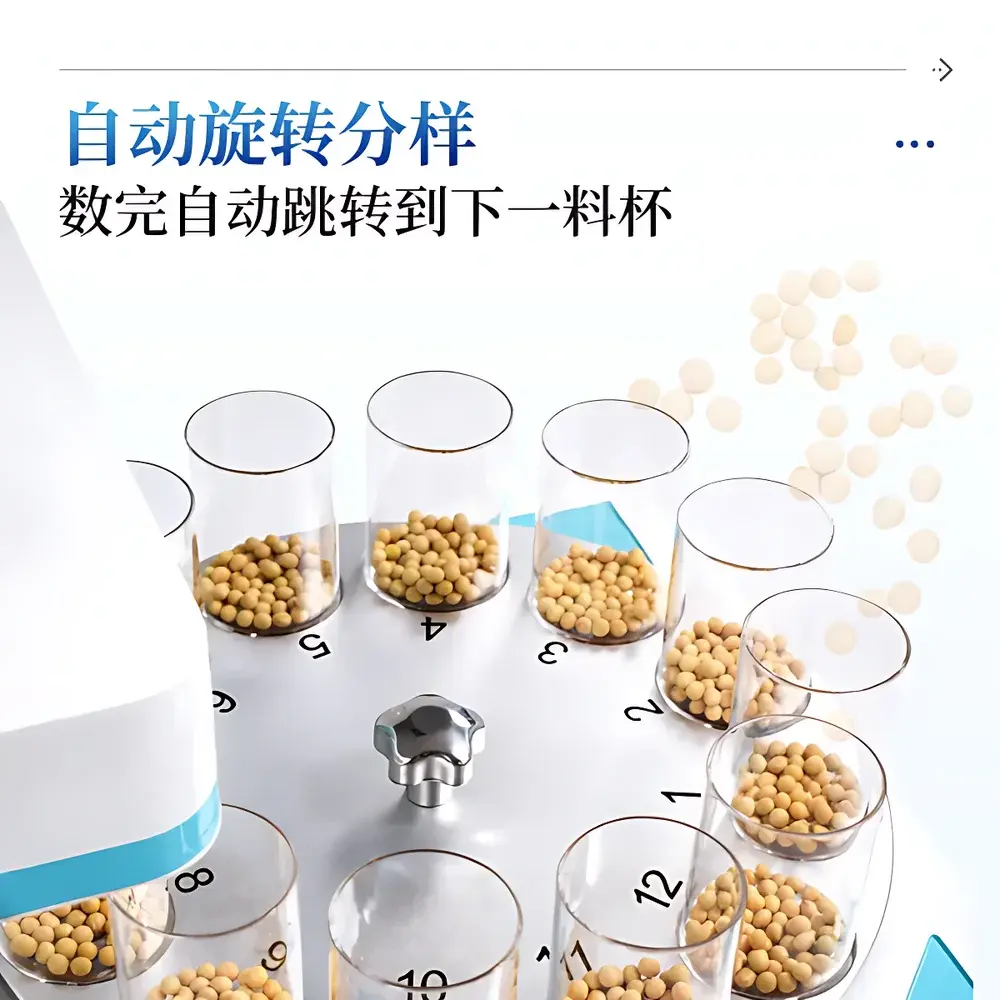
- Rotating 12-cup sample divider with programmable cup indexing and auto-advance logic—ensures uninterrupted material flow during bagging or vial filling.
- Intelligent deceleration algorithm: automatically reduces disc rotation speed when approaching the preset count threshold to minimize inertia-induced overcounting—critical for irregular or lightweight seeds such as lettuce or poppy.
- Adjustable vibration intensity (0–99) and optical sensitivity (0–10) to accommodate diverse seed morphologies—from spherical sesame (0.5 mm) to elongated maize kernels (up to 23 mm).
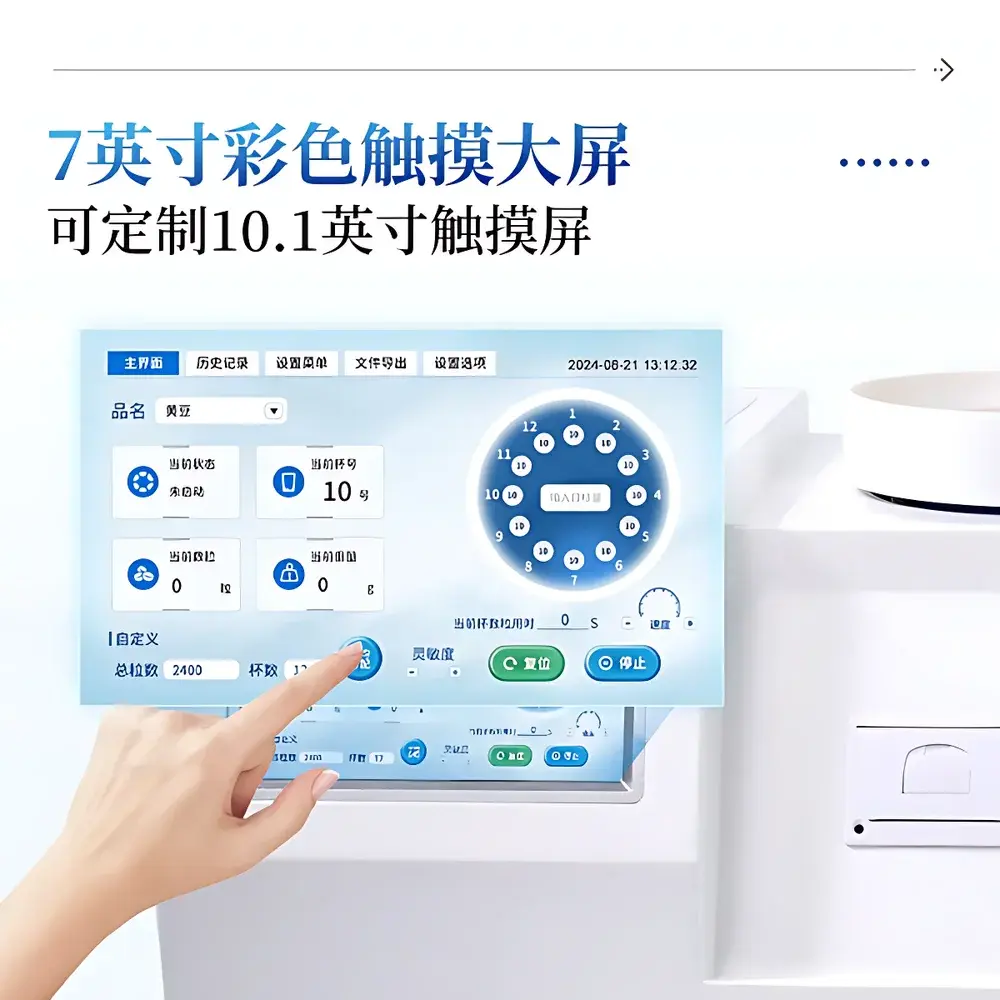
- 7-inch full-color capacitive touchscreen interface with bilingual (English/Chinese) toggle, intuitive icon-based navigation, and real-time status indicators (e.g., “Counting”, “Paused”, “Complete”, “Error”)
- Built-in thermal label printer producing adhesive-backed compliance labels—including variety name, count value, date/time stamp, and operator ID—for direct application to seed packets or sample vials.
- Comprehensive local data management: stores up to 10,000 test records with searchable fields (variety, count, time, cup ID); supports USB mass-storage export in CSV format for LIMS integration.
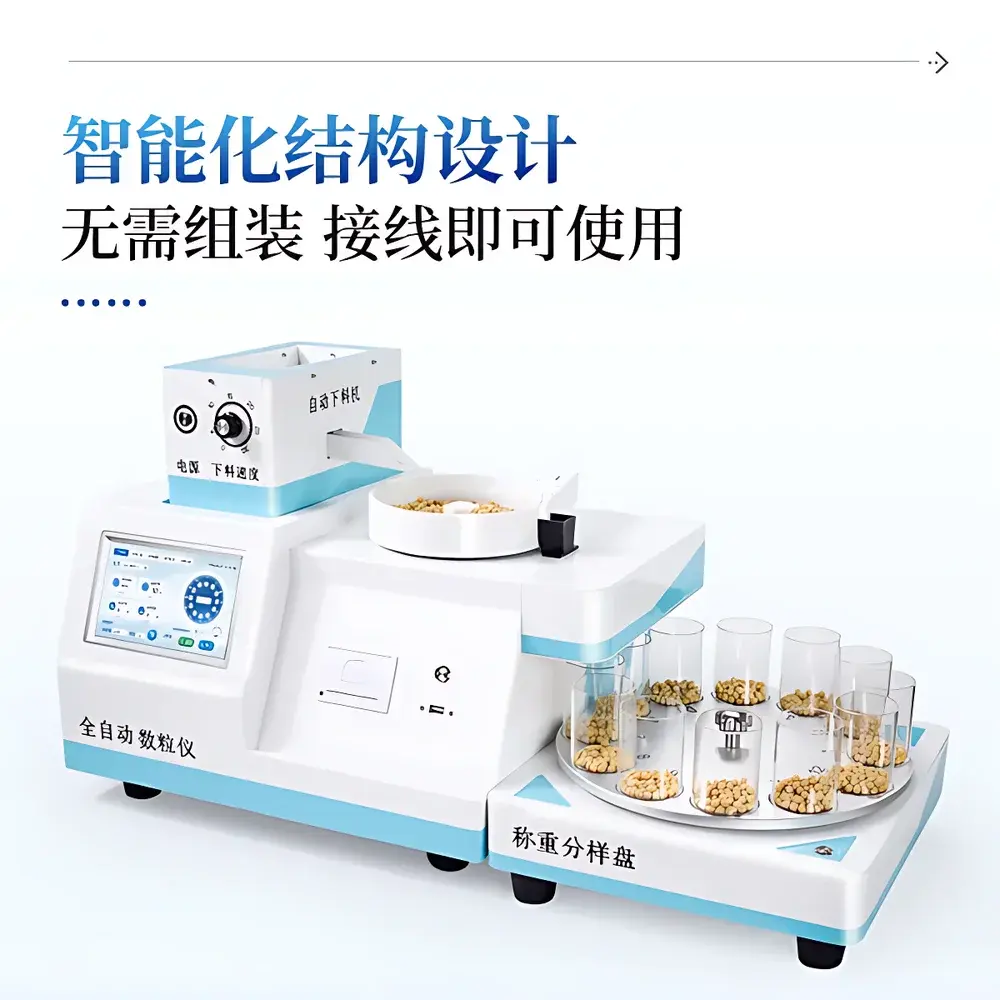
- No assembly required—factory-calibrated and pre-wired; powered via standard AC input with optional multi-voltage configuration for global deployment.
Sample Compatibility & Compliance
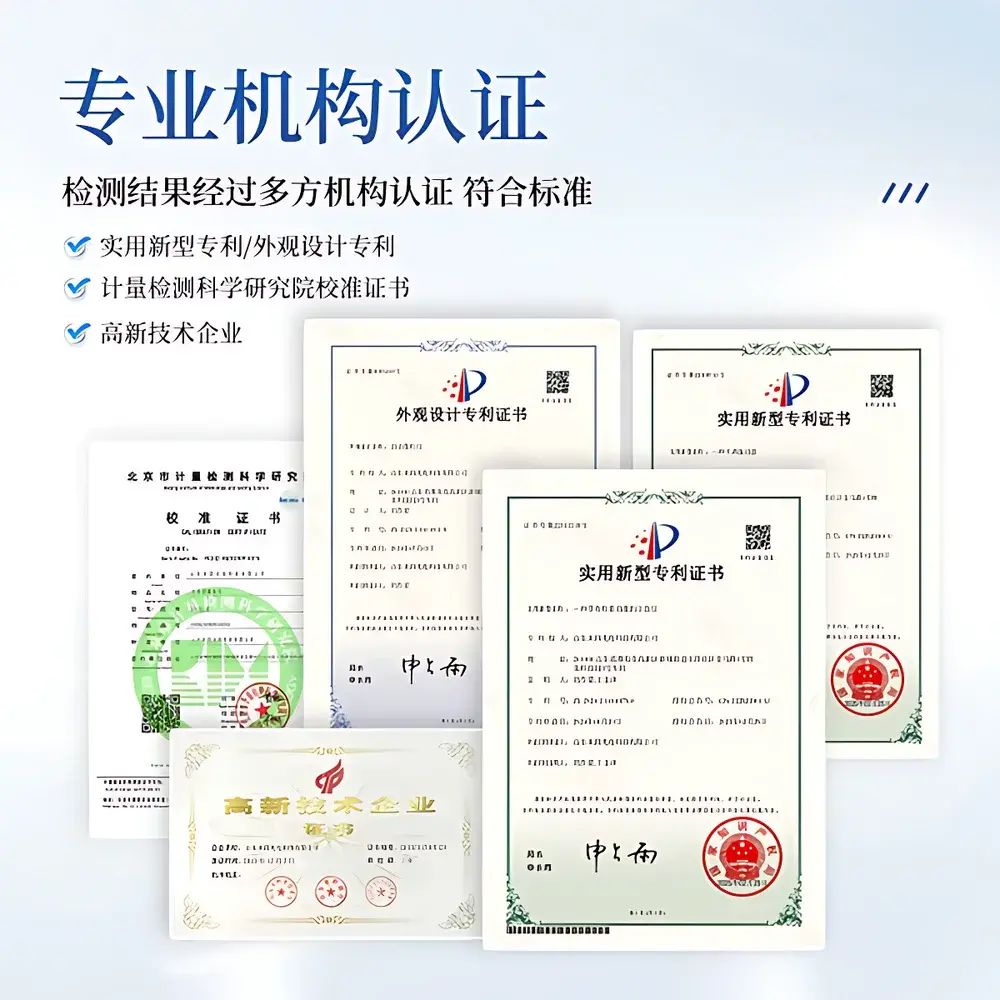
The IN-SL10 accepts dry, free-flowing particulates with minimal surface moisture (<12% RH) and no clumping or static adhesion. Validated use cases include cereal grains (wheat, barley, oats), legumes (soybean, mung bean), oilseeds (rapeseed, sunflower), horticultural seeds (tomato, cabbage, carrot), and non-agricultural items such as pharmaceutical tablets, micro-components, and cultured pearls. All mechanical and optical subsystems are designed to ISO 9001-certified manufacturing protocols. The device meets electromagnetic compatibility (EMC) requirements per IEC 61326-1 and safety standards under IEC 61010-1. While not FDA 21 CFR Part 11–certified out-of-the-box, audit-ready features—including immutable timestamps, user login tracking (via optional password protection), and full data export—support validation under GxP frameworks when deployed within controlled laboratory environments.
Software & Data Management
Firmware v2.4 provides deterministic state-machine control with zero-latency response to operator inputs. Each counting session generates a structured metadata record containing: variety identifier (user-defined), target count, actual count, elapsed time per cup, ambient temperature/humidity (if external sensor connected), operator code, and firmware revision. Historical logs are stored in non-volatile memory with cyclic overwrite protection. Exported CSV files contain UTF-8 encoding and comma-separated values compatible with Excel, JMP, and statistical analysis platforms. Optional firmware upgrades—delivered via USB—introduce enhanced calibration routines and expanded language support. No cloud connectivity or remote telemetry is implemented, preserving data sovereignty and aligning with institutional IT security policies.
Applications
- ISTA-compliant purity analysis: rapid generation of representative sub-samples for botanical purity, inert matter, and other crop seed testing.
- Seed lot certification: accurate replication of 1000-seed weight (TSW) determinations across multiple replicates with traceable variance metrics.
- QC release testing in seed processing facilities: verification of fill weight consistency via particle count correlation.
- Agronomic trial setup: preparation of uniform planting units across genotype blocks using programmable average division.
- Pharmaceutical excipient QC: enumeration of placebo tablets or coated granules where size distribution falls within 0.5–23 mm envelope.
- Educational labs: hands-on demonstration of statistical sampling theory, measurement uncertainty (±2‰), and human-factor mitigation in manual counting workflows.
FAQ
What is the minimum and maximum seed size the IN-SL10 can accurately count?
The system is validated for particles ranging from 0.5 mm (e.g., sesame, mustard) to 23 mm (e.g., large maize or pumpkin seeds), provided they are dry, non-sticky, and capable of single-layer dispersion on the counting disc.
Does the instrument require daily calibration?
No routine recalibration is required. Factory calibration remains stable over ≥12 months under normal operating conditions; users may perform verification checks using NIST-traceable reference samples.
Can the printer output be configured for regulatory label formats (e.g., ISTA, AOSA)?
Yes—the label template is editable via PC-based configuration utility; users may embed logos, barcodes (Code 128), and custom fields compliant with national seed labeling regulations.
Is technical support available outside China?
COMECAUSE provides English-language remote diagnostics, firmware updates, and application engineering support via secure web portal; regional distributors offer on-site service contracts in EU, Southeast Asia, and Latin America.
How is data integrity ensured during power interruption?
All active counting sessions are buffered in RAM with battery-backed retention; upon recovery, the unit resumes from last valid cup index without loss of intermediate counts or metadata.