
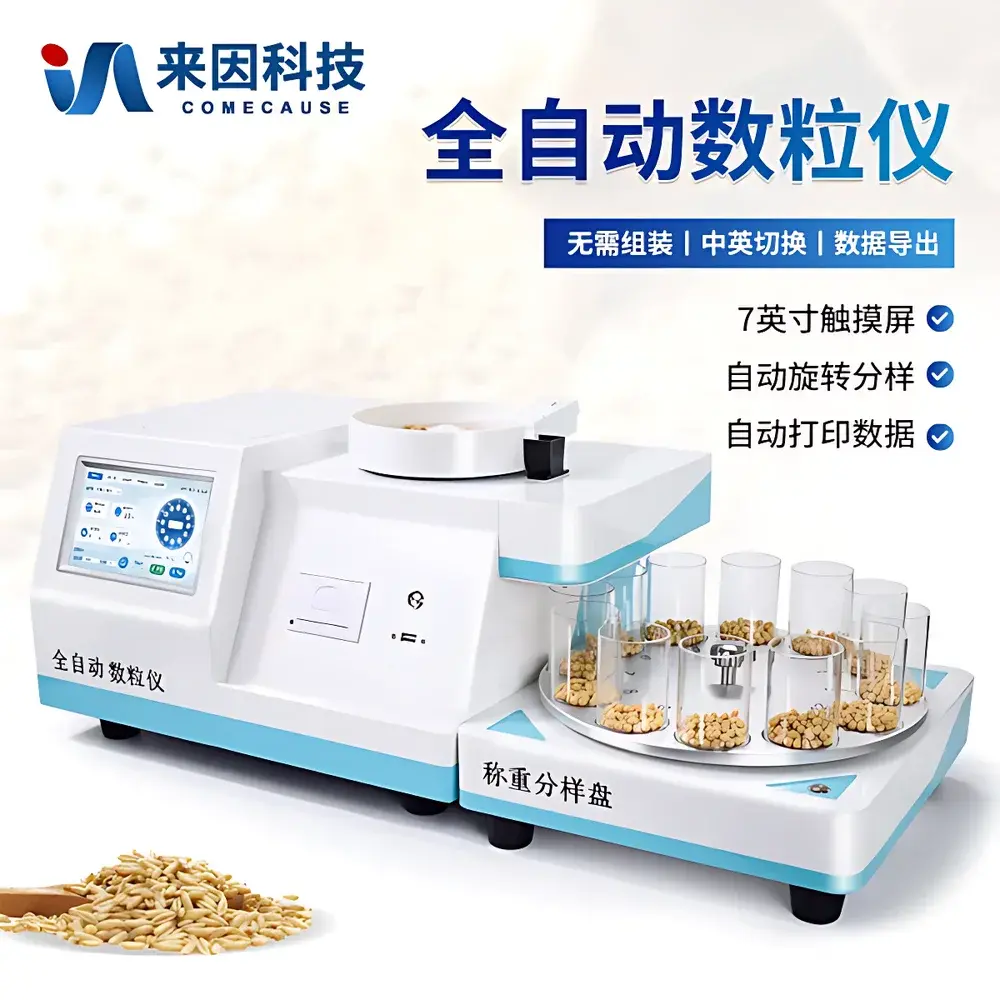

COMECAUSE IN-SL10 Intelligent Seed Counter
| Brand | COMECAUSE |
|---|---|
| Origin | Shandong, China |
| Manufacturer Type | Direct Manufacturer |
| Product Category | Domestic |
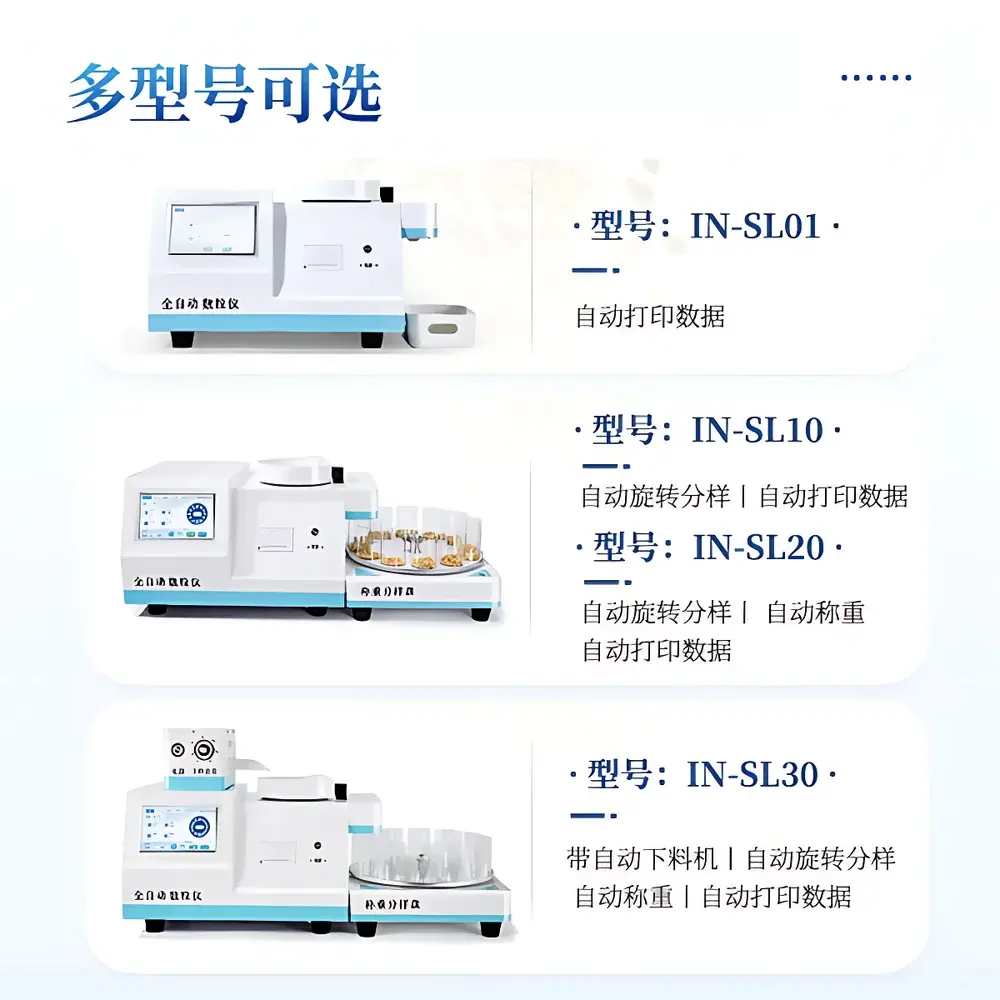
| Model | IN-SL10 |
| Instrument Classification | Electronic Automatic Seed Counter |
| Applicable Seeds | Maize, rice, wheat, soybean, sesame, vegetable seeds, melon & vegetable seeds |
| Counting Accuracy | ±2‰ |
| Maximum Counting Speed | 1000–2000 seeds/min |
| Seed Length Range | 0.5–23 mm |
| Counting Range | 1–9999 seeds |
| Sensitivity Adjustment | 0–10 (adjustable) |
| Dimensions | 580(W) × 390(D) × 336(H) mm |
| Weight | 24 kg |
| Operating Noise | ≤80 dB(A) |
| Operating Environment | Temperature –10°C to +50°C |
| Power Supply | AC 100/110/220 V, 50/60 Hz |
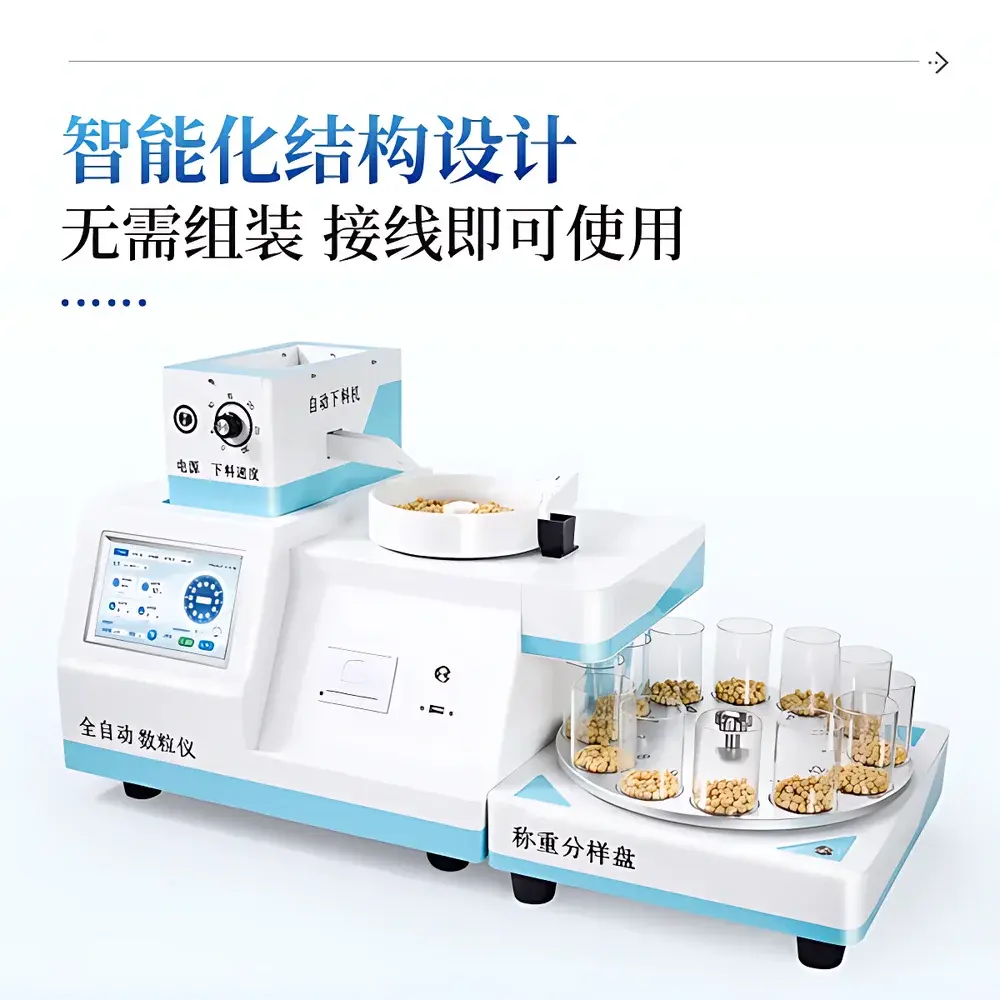
| Included Accessories | Main unit, 1 collection tray, 2 discharge chutes, 6 rolls of thermal label paper, power cord, user manual, certificate of conformity |
Overview
The COMECAUSE IN-SL10 Intelligent Seed Counter is a high-precision, fully automated electronic seed counting instrument engineered for laboratories, seed certification agencies, breeding stations, and quality control departments in agricultural research and commercial seed production. It operates on the principle of optical detection combined with controlled vibratory feed mechanics: seeds are dispersed uniformly across a transparent counting channel via an adjustable vibration plate, and each seed is detected by a high-resolution photoelectric sensor array. Real-time signal processing algorithms distinguish individual seeds based on silhouette, edge contrast, and transit time—enabling accurate enumeration even for irregularly shaped or clustered seeds such as sesame, soybean, or hybrid maize kernels. Designed for regulatory-grade repeatability, the system meets foundational requirements for seed lot sampling under ISO 5611 (Seed sampling), ISTA Rules (International Seed Testing Association), and national standards GB/T 3543.2–1995 (Crop seed testing—Part 2: Determination of purity). Its robust architecture supports daily throughput of up to 120,000 seeds per hour without calibration drift.
Key Features
- 7-inch full-color capacitive touchscreen interface with intuitive icon-based navigation and responsive haptic feedback
- Programmable preset counting mode: users define target count (1–9999); device automatically halts upon completion and triggers print output
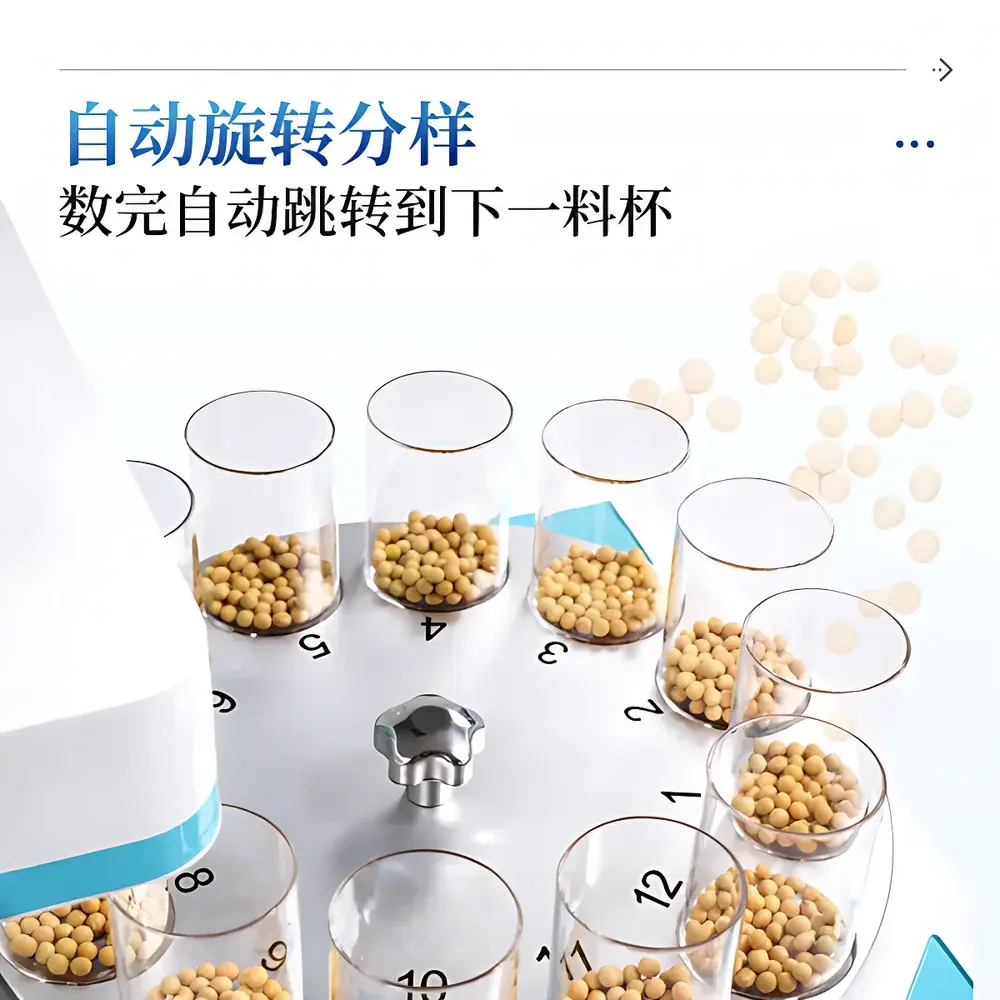
- Customizable seed profile library: store and recall species-specific parameters including vibration intensity (0–10 scale), feed rate, and optical sensitivity thresholds
- Integrated thermal direct-label printer: generates adhesive-backed labels with timestamp, sample ID, count value, operator ID, and batch code—designed for immediate affixing to seed packaging or sample vials
- Local data management: stores ≥10,000 measurement records with searchable metadata (date/time, seed type, operator, preset value)
- Bilingual UI support: seamless toggle between English and Simplified Chinese without firmware reload or restart
- USB mass-storage mode: export CSV-formatted datasets directly to external flash drives for LIMS integration or offline statistical analysis
- One-touch history purge function compliant with internal data retention policies
Sample Compatibility & Compliance
The IN-SL10 accommodates a broad morphological spectrum of agricultural seeds—from small, spherical sesame (0.5–1.0 mm diameter) to elongated rice grains (up to 23 mm length) and flattened soybeans. Its adaptive vibration control minimizes seed damage and jamming during high-speed feeding. All hardware and firmware comply with IEC 61000-6-3 (EMC emission limits) and IEC 61000-6-2 (immunity to electrostatic discharge and conducted RF disturbances). While not certified to FDA 21 CFR Part 11 out-of-the-box, the system supports audit-trail-ready operation when deployed with validated SOPs and external timestamped logging—making it suitable for GLP-aligned seed purity testing and GMP-adjacent QC workflows in certified seed enterprises.
Software & Data Management
Firmware v2.4.1 implements deterministic real-time counting logic with no reliance on AI inference or cloud connectivity—ensuring deterministic behavior in offline environments. Measurement logs include ISO 8601 timestamps, firmware revision, sensor status flags, and raw pulse-count diagnostics. Exported CSV files conform to ASTM E1447-22 data exchange conventions for seed testing laboratories. Optional PC software (COMEScan Suite v3.1, Windows 10/11 compatible) enables trend charting, statistical process control (SPC) chart generation (X-bar/R), and report templating compliant with ISTA Form 110.
Applications
- Official seed certification: rapid enumeration for purity analysis and germination test sub-sampling
- Plant breeding programs: high-throughput seed counting during F2–F5 generation advancement and bulk seed preparation
- Seed processing facilities: verification of packaged unit counts prior to labeling and distribution
- Agricultural extension services: field-deployable validation of seed quantity claims for subsidy disbursement audits
- Academic agronomy labs: reproducible seed mass-to-number conversion studies for yield modeling
FAQ
What is the recommended maintenance interval for the optical sensor and vibration mechanism?
Perform visual inspection and compressed-air cleaning of the counting channel and sensor window every 200 operating hours. Lubricate the vibration motor mounting points annually using food-grade silicone grease.
Can the IN-SL10 be integrated into a laboratory information management system (LIMS)?
Yes—via USB-host mode exporting timestamped CSV files; optional RS-232 serial output (DB9 port, TTL-level) available upon request for legacy LIMS integration.
Does the device support weight-to-count conversion for unknown seed lots?
No—the IN-SL10 performs optical enumeration only. For mass-based estimation, users must input known thousand-kernel weight (TKW) values manually and calculate approximate counts externally.
Is calibration traceable to national metrology institutes?
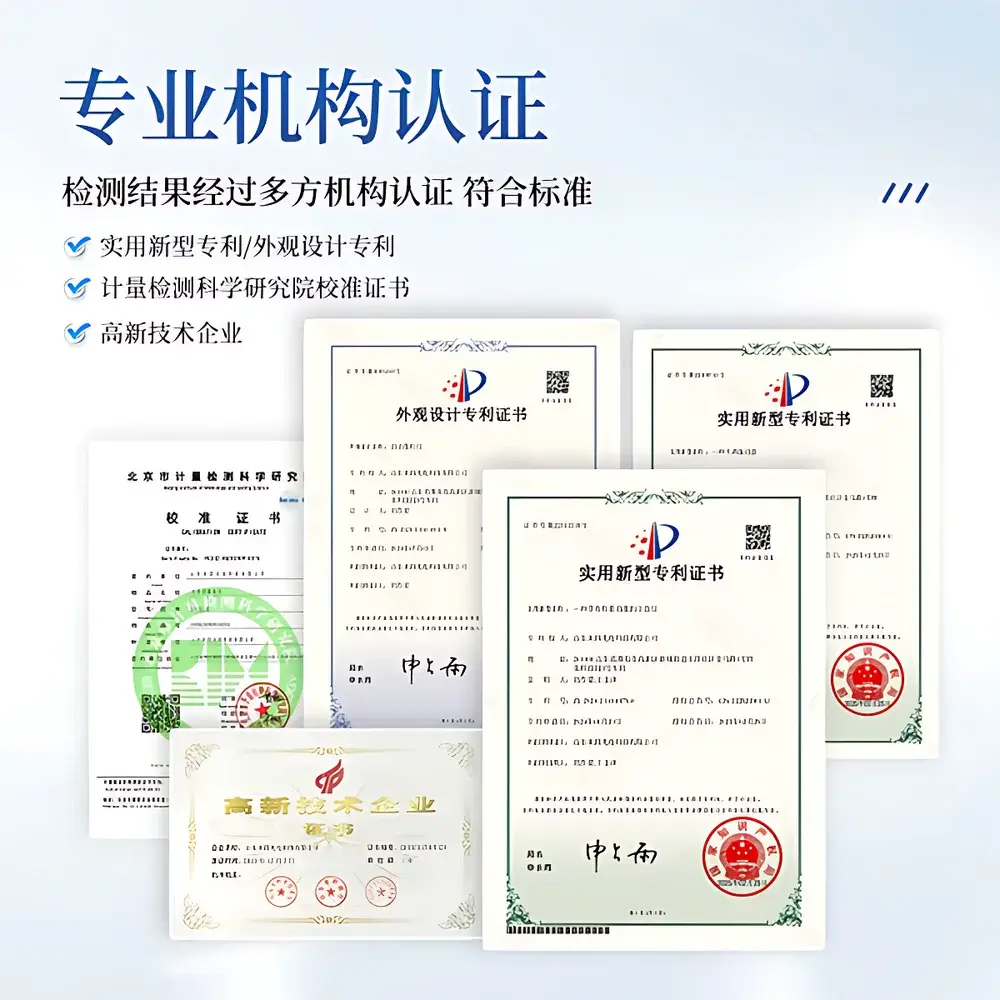
The system includes factory calibration against NIST-traceable seed reference standards (maize, rice, soybean). Certificate of Calibration (ref. CAL-INSL10-XXXXX) is supplied with each unit.
How does the instrument handle overlapping or adhering seeds?
Adjustable sensitivity (0–10) and variable vibration amplitude allow optimization for seed flow separation. For highly cohesive seeds (e.g., wet soybeans), pre-drying or anti-static treatment is advised per ISTA moisture guidelines.
Related Products







