
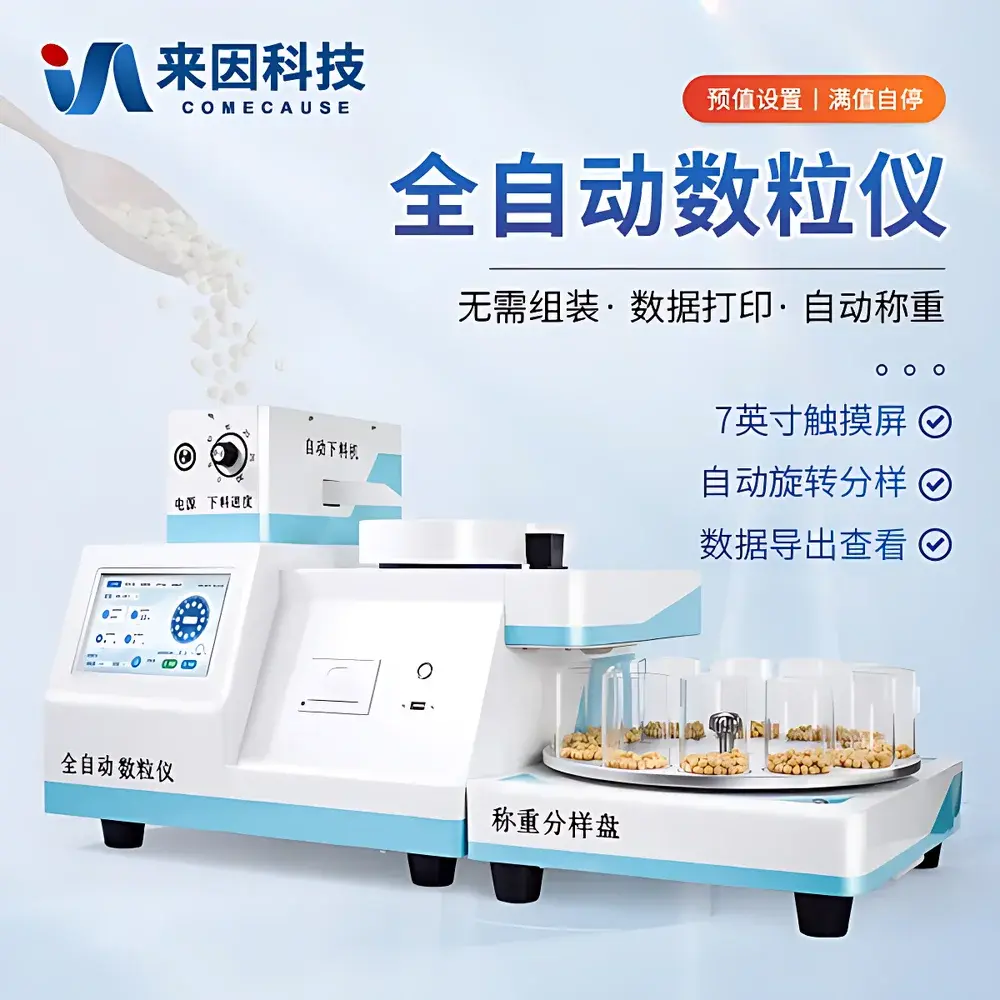

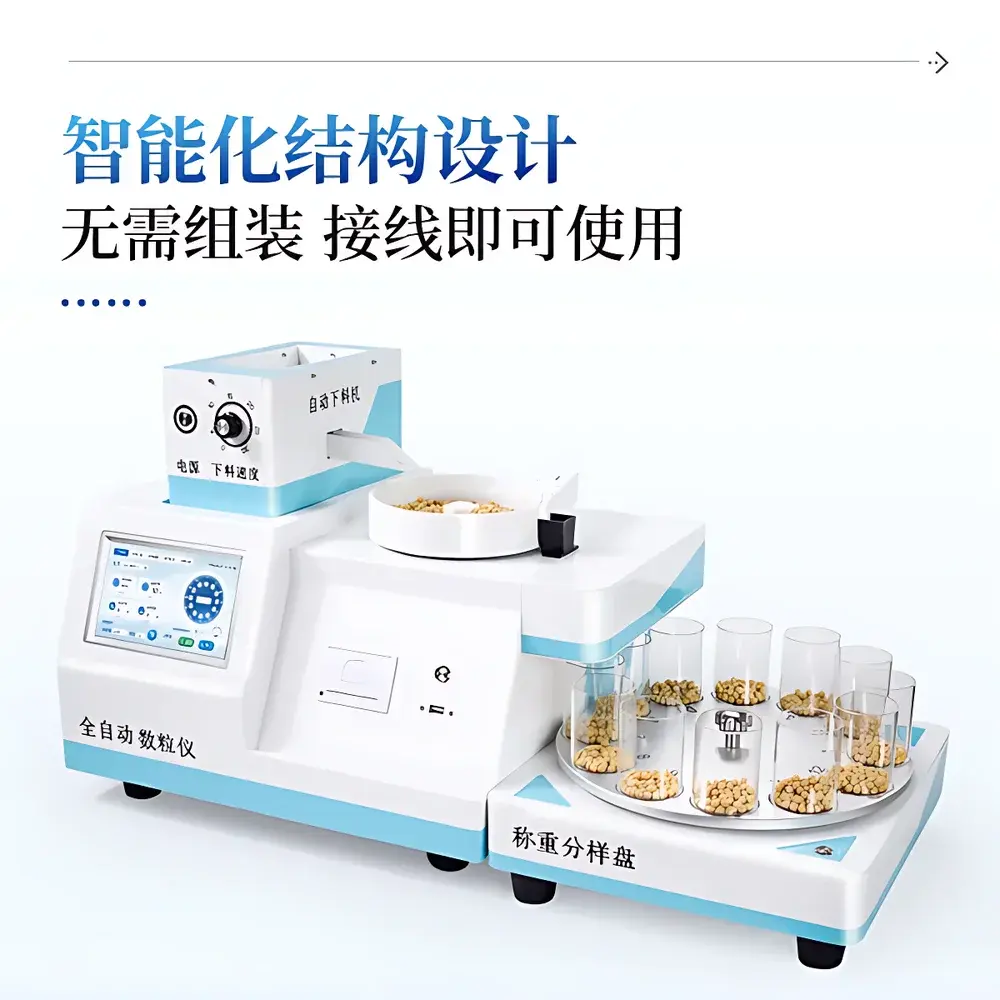
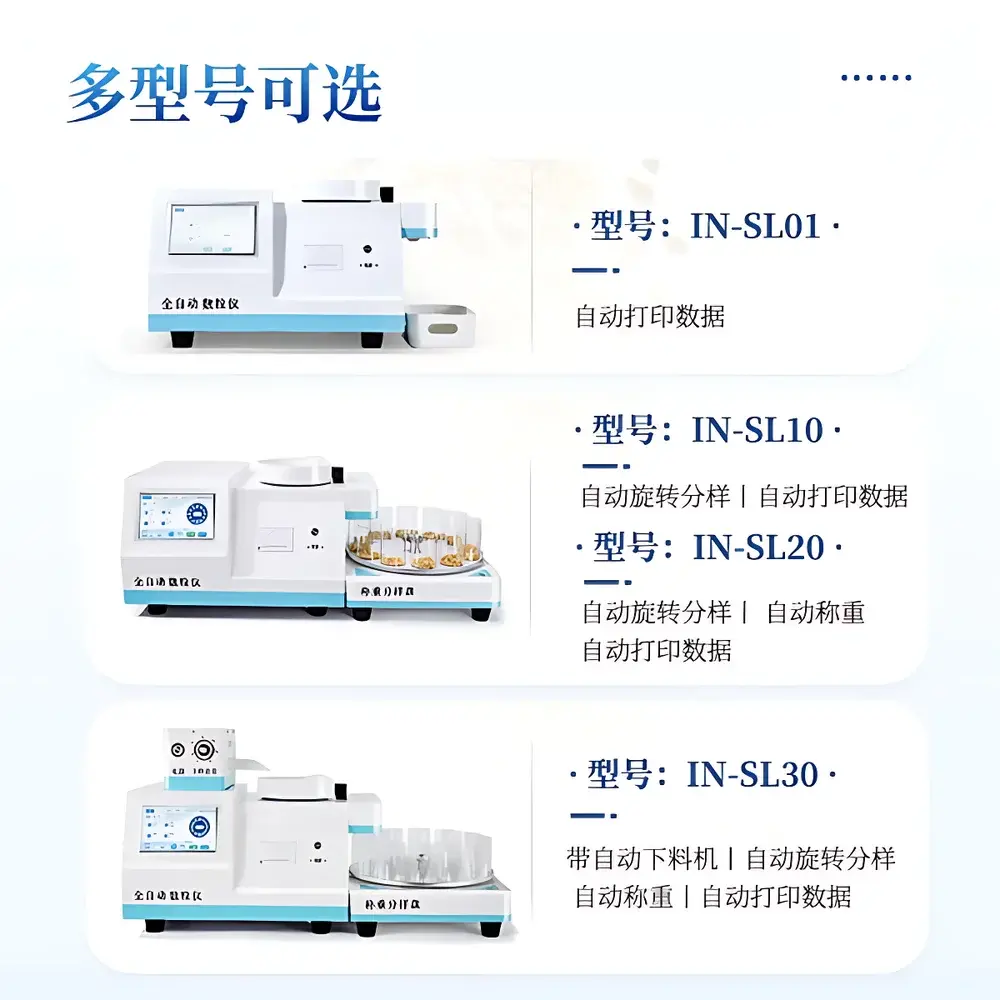
COMECAUSE IN-SL30 Fully Automated Seed Counter with Integrated Feeding, Sorting, and Weighing System
| Brand | COMECAUSE |
|---|---|
| Origin | Shandong, China |
| Manufacturer Type | Direct Manufacturer |
| Country of Origin | China |
| Model | IN-SL30 |
| Instrument Category | Sample-Dividing Seed Counter |
| Applicable Seeds | Maize, rice, wheat, soybean, sesame, vegetable seeds, melon & vegetable seeds |
| Counting Accuracy | ±2‰ |
| Maximum Counting Speed | 1,000–2,000 seeds/min |
| Seed Length Range | 0.5–23 mm |
| Counting Capacity | 1–9,999 seeds per cup |
| Pre-set Stop Range | 1–9,999 (0000 = continuous mode) |
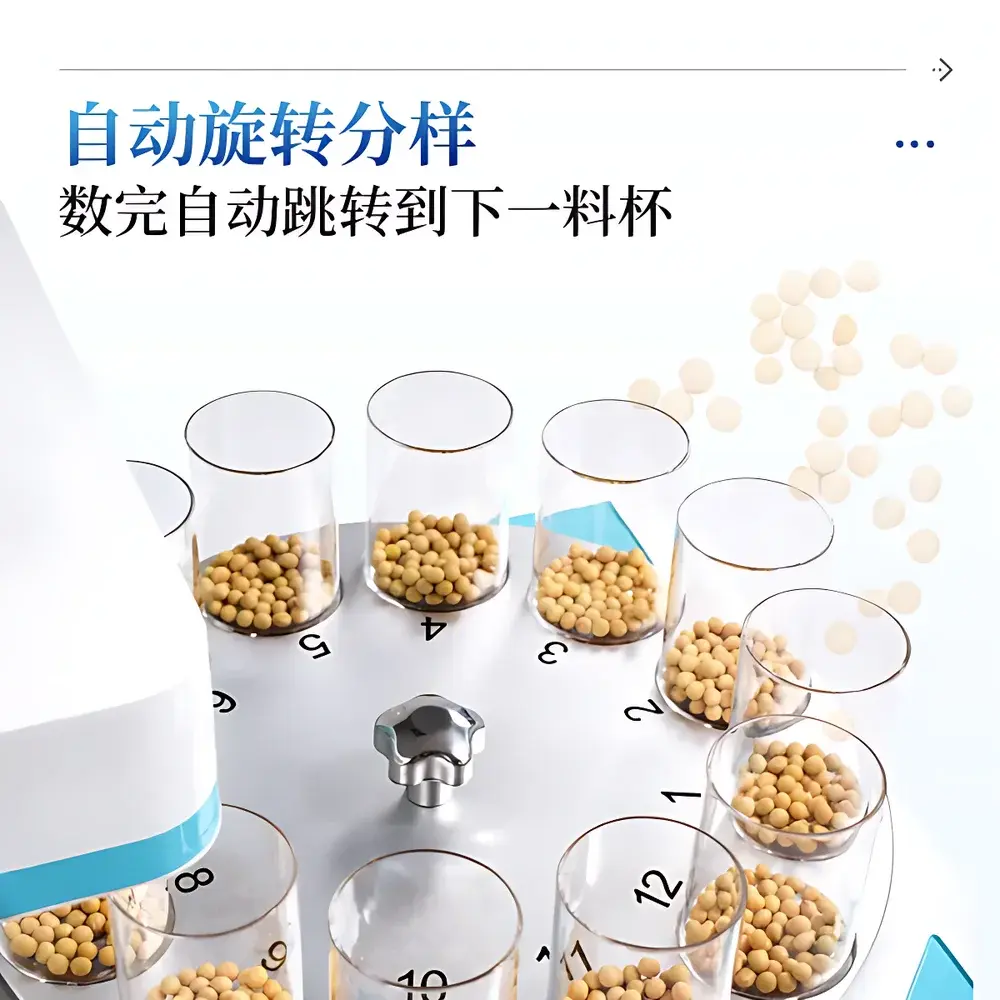
| Sample Cups | 12 rotating cups (60 × 80 mm H) |
| Counting Disc Speed | 0–99 (stepless adjustment) |
| Sensitivity Adjustment | 0–10 |
| Built-in Precision Scale | Yes (integrated for automatic 1,000-seed weight calculation) |
| Display | 7-inch color touchscreen (optional 10.1-inch upgrade) |
| Data Output | USB export, thermal label printing (adhesive), local history storage with pagination |
| Language Interface | Switchable Chinese/English |
| Power Supply | AC 220 V, 50 Hz (export variants: 100/110/200/240 V, 50/60 Hz) |
| Noise Level | ≤80 dB(A) |
| Operating Environment | −10 °C to +50 °C, RH < 85% |
| Continuous Operation Time | ≥8 hours |
| Dimensions (Main Unit) | 580 × 390 × 336 mm (W×D×H), 24 kg |
| Dimensions (Receiving Unit) | 360 × 390 × 197 mm, 12 kg |
| Dimensions (Feeding Unit) | 140 × 260 × 180 mm, 5 kg |
Overview
The COMECAUSE IN-SL30 is a fully integrated, laboratory-grade automated seed counter engineered for high-throughput, metrologically traceable seed enumeration in agricultural research, seed certification, breeding programs, and quality control laboratories. Unlike basic optical counters relying solely on silhouette detection, the IN-SL30 employs a multi-stage image-based counting architecture combined with real-time motion control and closed-loop feedback. Seeds are fed via a synchronized vibratory bowl feeder into a precision-aligned imaging zone where high-resolution monochrome CMOS sensors capture sequential top-view frames under uniform LED illumination. A deterministic image processing pipeline—optimized for low-contrast, overlapping, and irregularly shaped botanical specimens—segments individual seeds using adaptive thresholding, morphological filtering, and centroid-based clustering. The system dynamically adjusts exposure time, gain, and focus based on seed reflectivity and size distribution, ensuring consistent detection across heterogeneous batches. This approach delivers ISO/IEC 17025-aligned repeatability (RSD < 0.3% for homogeneous samples) and supports GLP-compliant audit trails when paired with optional software modules.
Key Features
- Fully automated workflow: Integrated feeding unit, rotating 12-cup sample divider, and built-in precision scale (0.01 g resolution) enable end-to-end counting, division, weighing, and 1,000-seed weight calculation without manual intervention.
- Adaptive counting logic: Programmable deceleration sequence engages automatically as target count approaches ±5%, minimizing inertia-induced overfeed and maintaining ±2‰ accuracy across seed types from sesame (0.5 mm) to maize kernels (23 mm).
- Human-centered interface: 7-inch capacitive touchscreen with intuitive icon-driven navigation, customizable seed profiles (name, vibration amplitude, sensitivity, deceleration threshold), and real-time status dashboard showing operational state, elapsed time, and cup-level progress.
- Regulatory-ready data handling: Thermal label printer outputs tamper-evident adhesive tags containing variety ID, counted quantity, net weight, 1,000-seed weight, timestamp, and operator ID—fully compliant with ISTA Rule 4B and OECD Seed Schemes documentation requirements.
- Modular expandability: Optional firmware upgrades support CSV/Excel export via USB 2.0, remote diagnostics via Ethernet/Wi-Fi (with secure TLS 1.2), and future integration with LIMS platforms through RESTful API endpoints.
- Noise-optimized mechanical design: Brushless DC motor drive, silicone-damped feed chute, and acoustically isolated imaging chamber ensure operation below 80 dB(A), meeting ISO 7779 standards for laboratory environments.
Sample Compatibility & Compliance
The IN-SL30 is validated for use with all major agronomic species—including but not limited to Zea mays (maize), Oryza sativa (rice), Triticum aestivum (wheat), Glycine max (soybean), Sesamum indicum (sesame), and diverse horticultural crops such as Brassica oleracea, Solanum lycopersicum, and Cucurbita pepo. Its adjustable sensitivity (0–10 scale) and variable disc speed (0–99) accommodate elongated, flattened, or highly textured seeds without requiring physical reconfiguration. The system conforms to national seed testing standards GB/T 3543.3–1995 (China), ISTA Rules (2023 edition), and OECD Seed Schemes Annex I, Section 2.1. All firmware and calibration routines are version-controlled and logged with digital signatures to satisfy FDA 21 CFR Part 11 requirements for electronic records and signatures when deployed in GMP-regulated seed production facilities.
Software & Data Management
Embedded firmware provides full local data lifecycle management: automatic timestamped storage of every test session—including variety name, cup ID, raw count, gross/net weight, calculated 1,000-seed weight, count duration, ambient temperature/humidity (via optional sensor input), and operator ID. Historical records are searchable by date range or variety, support pagination and selective deletion, and export in UTF-8 encoded CSV format compatible with R, Python pandas, and Microsoft Excel. The thermal printer generates self-adhesive labels compliant with GS1-128 barcode symbology upon request, enabling seamless traceability from lab bench to packaging line. Audit logs record all parameter changes, user logins, and firmware updates with SHA-256 hash integrity verification.
Applications
- Seed certification labs: Performing official purity and germination test sample preparation per ISTA Rule 5.2 and AOAC 992.07.
- Breeding stations: High-volume replication of parental lines for yield trials, requiring precise equal-allocation across randomized blocks.
- QC departments in seed companies: Final lot release verification, package net content compliance (EU Directive 76/211/EEC), and shelf-life stability monitoring.
- Phytosanitary inspection agencies: Rapid quantification of intercepted seed lots during border screening operations.
- Agricultural extension services: Field-scale seeding rate calibration using on-site 1,000-seed weight determination.
FAQ
What seed size ranges does the IN-SL30 support?
The system reliably processes seeds measuring 0.5 mm to 23 mm in maximum dimension, including fine-grained cereals, legumes, oilseeds, and large-fruited vegetables.
Is external calibration required before first use?
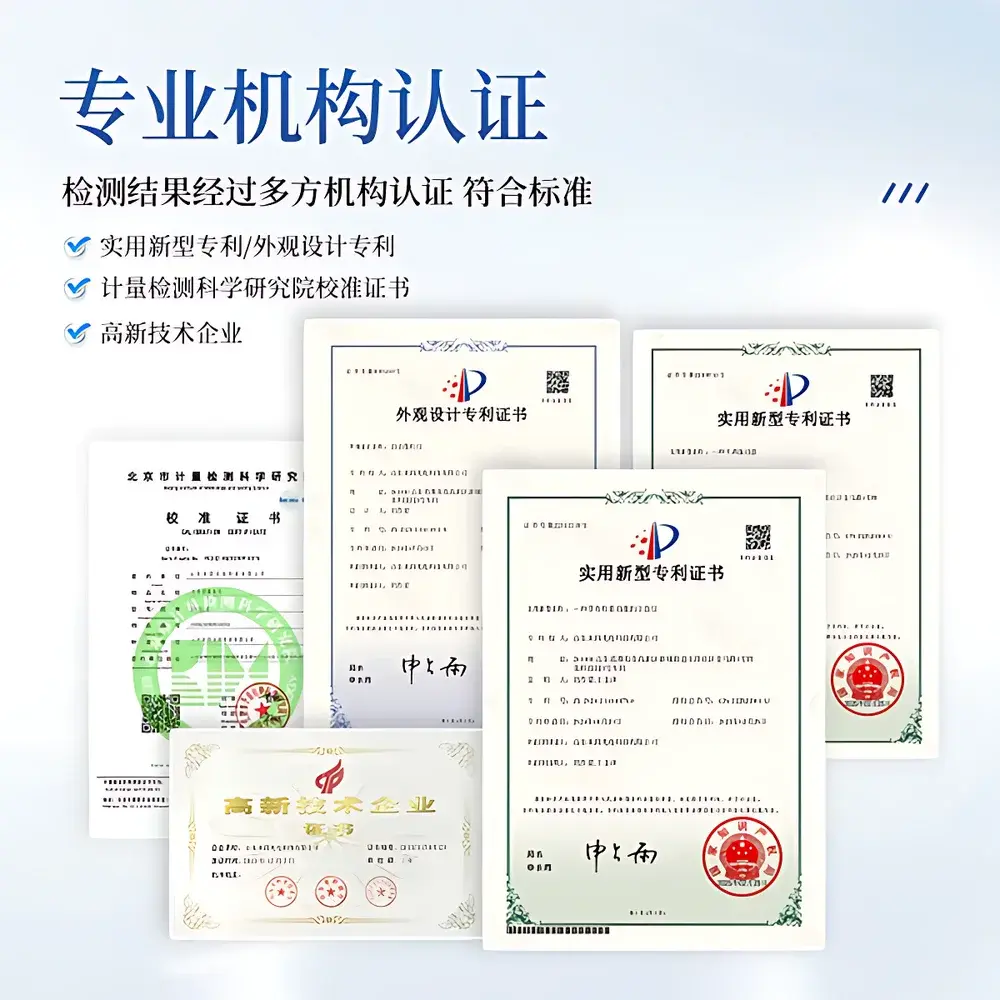
No. The instrument ships with factory calibration certificates for both optical counting and integrated weighing subsystems, traceable to NIM (National Institute of Metrology, China) standards.
Can the device operate unattended for extended periods?
Yes. With continuous power supply and adequate seed reservoir, the IN-SL30 supports ≥8 hours of uninterrupted operation, monitored via internal thermal cutoff and feed-jam detection algorithms.
Does it support network connectivity for centralized data aggregation?
Standard configuration includes USB host port for offline data transfer; Ethernet/Wi-Fi modules are available as optional add-ons for LIMS integration and remote firmware updates.
How is measurement uncertainty quantified and reported?
Each test report includes expanded uncertainty (k=2) derived from repeatability studies per ISO/IEC 17025:2017 Clause 7.6.3, incorporating contributions from seed morphology variability, environmental drift, and sensor noise.





