


COMECAUSE IN-SLM Handheld Raman Spectrometer
| Brand | COMECAUSE |
|---|---|
| Origin | Shandong, China |
| Manufacturer Type | Manufacturer |
| Country of Origin | China |
| Model | IN-SLM |
| Price | USD 16,800 (approx.) |
| Excitation Wavelength | 785 ± 0.5 nm |
| Laser Linewidth | < 0.08 nm |
| Laser Power | 0–500 mW (software-adjustable) |
| Spectral Range | 200–3800 cm⁻¹ |
| Spectral Resolution | 5 cm⁻¹ |
| Integration Time | 1 ms – 10 s (typical acquisition: 500 ms) |
| Detector | High-sensitivity CCD/CMOS with fluorescence suppression optics |
| Optical Design | Miniaturized confocal micro-optics |
| Operating Temperature | 0–50 °C |
| Operating Humidity | 5–80 % RH (non-condensing) |
| IP Rating | IP67 |
| Display | 5.5-inch capacitive touchscreen |
| Camera | 13 MP integrated visible-light camera with geotagging |
| Connectivity | USB-C, Bluetooth 5.0, Wi-Fi 5 (802.11ac), optional 4G LTE |
| Onboard Storage | 2 GB RAM + 16 GB eMMC (expandable to 8 GB + 32 GB) |
| Battery | 7.4 V / 3.5 Ah Li-ion, 4–6 h typical runtime |
| OS | Android 12 |
| Data Export | PDF reports with spectral overlay, metadata, GPS coordinates, timestamp, and audit trail |
Overview
The COMECAUSE IN-SLM Handheld Raman Spectrometer is a field-deployable, confocal micro-Raman instrument engineered for rapid, non-contact, and non-destructive molecular identification under ambient conditions. It operates on the fundamental principle of inelastic light scattering—Raman spectroscopy—where monochromatic 785 nm laser irradiation induces vibrational and rotational transitions in chemical bonds, generating a unique spectral fingerprint between 200 and 3800 cm⁻¹. Its miniaturized confocal optical architecture enhances spatial resolution and signal-to-noise ratio while suppressing fluorescence background—a critical advantage for challenging samples such as pharmaceuticals in blister packs, illicit substances in plastic bags, or pigments in gemstones. Designed for real-time decision-making at the point of need, the IN-SLM delivers laboratory-grade spectral fidelity without requiring sample preparation, solvent extraction, or vacuum environments.
Key Features
- Fluorescence-Resistant Confocal Optics: Integrated 785 nm diode laser with sub-0.08 nm linewidth and software-tunable power (0–500 mW) enables robust performance on highly fluorescent matrices—including dyes, biological tissues, and aged polymers—without hardware modification.
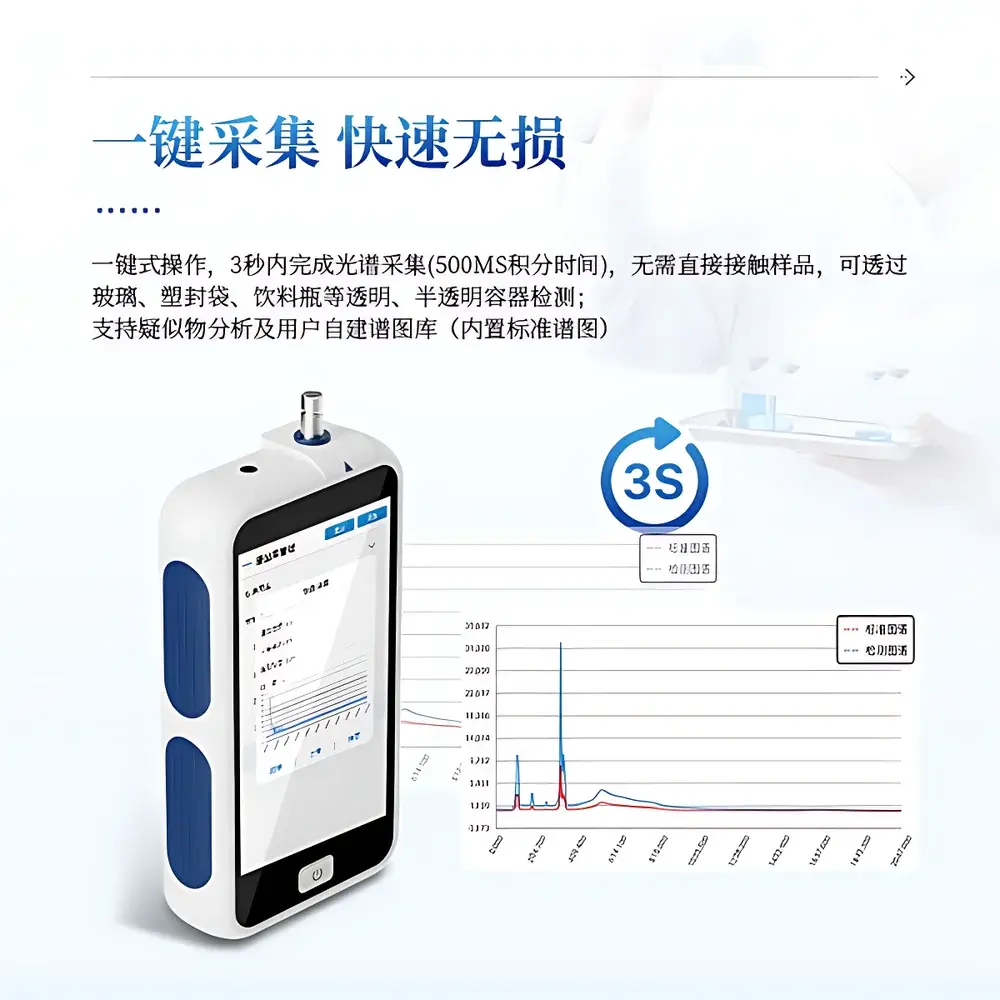
- Sub-Second Acquisition: Full-spectrum capture in ≤500 ms integration time; complete analysis—including spectral preprocessing, library matching, and PDF report generation—within 3 seconds under standard settings.
- Non-Invasive Through-Container Detection: Capable of acquiring high-fidelity Raman spectra through transparent and semi-transparent barriers including soda-lime glass, PET bottles, polyethylene bags, and laminated packaging—eliminating cross-contamination risk and preserving sample integrity.
- Embedded Intelligence & Audit Compliance: Android 12 platform supports role-based user accounts, full audit trail logging (per USP <797>, FDA 21 CFR Part 11, and GLP/GMP guidelines), timestamped GPS geotagging, and encrypted PDF export with embedded spectral metadata.
- Adaptive Spectral Library Framework: Preloaded onboard library covers >12,000 reference spectra across regulated categories: controlled substances (UNODC Annexes), explosives precursors (ATF/DEA lists), toxic industrial chemicals (TICs), agrochemicals (EPA Pesticide Chemical Code), pharmaceutical actives (USP-NF), and gemological standards (GIA reference set).
- Ruggedized Field Architecture: IP67-rated magnesium-alloy housing, MIL-STD-810H shock/vibration resistance, and thermal management optimized for continuous operation from −10 °C to 50 °C ambient—validated for use in forensic vans, port customs zones, manufacturing cleanrooms, and outdoor hazardous material response scenarios.
Sample Compatibility & Compliance
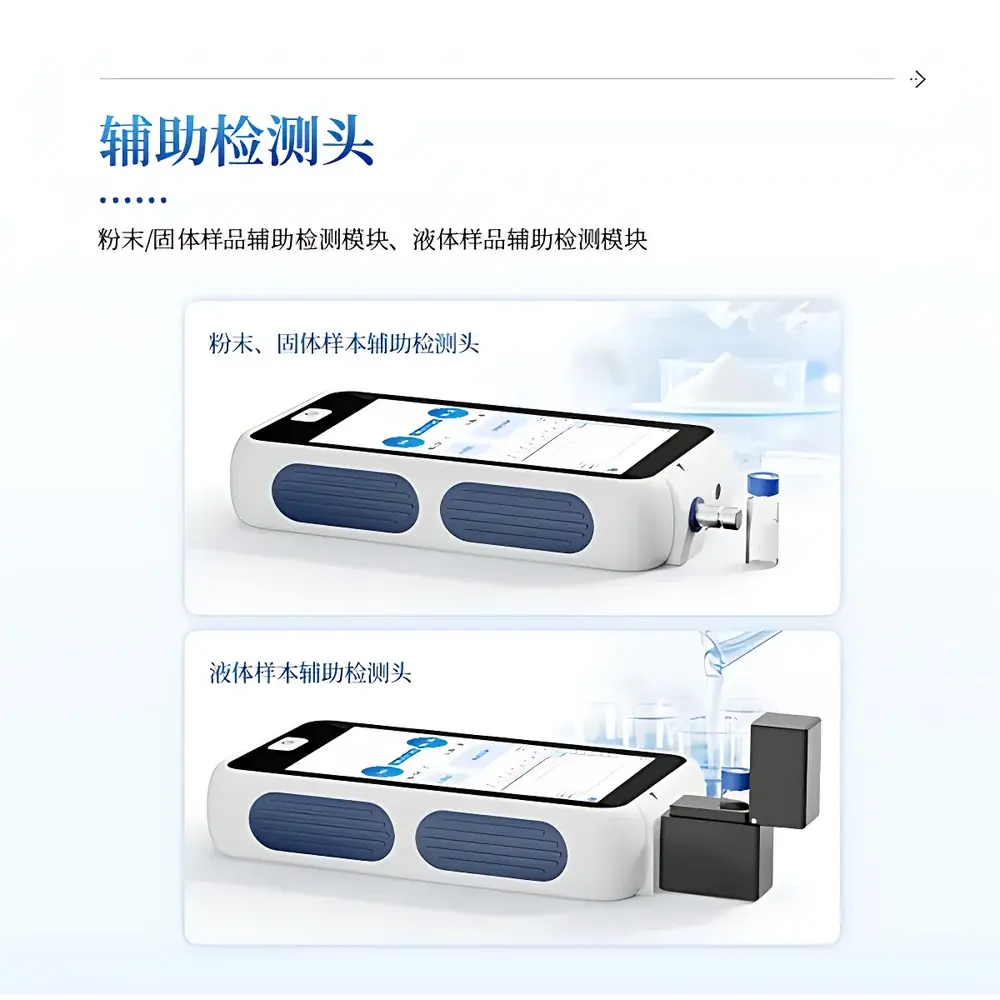
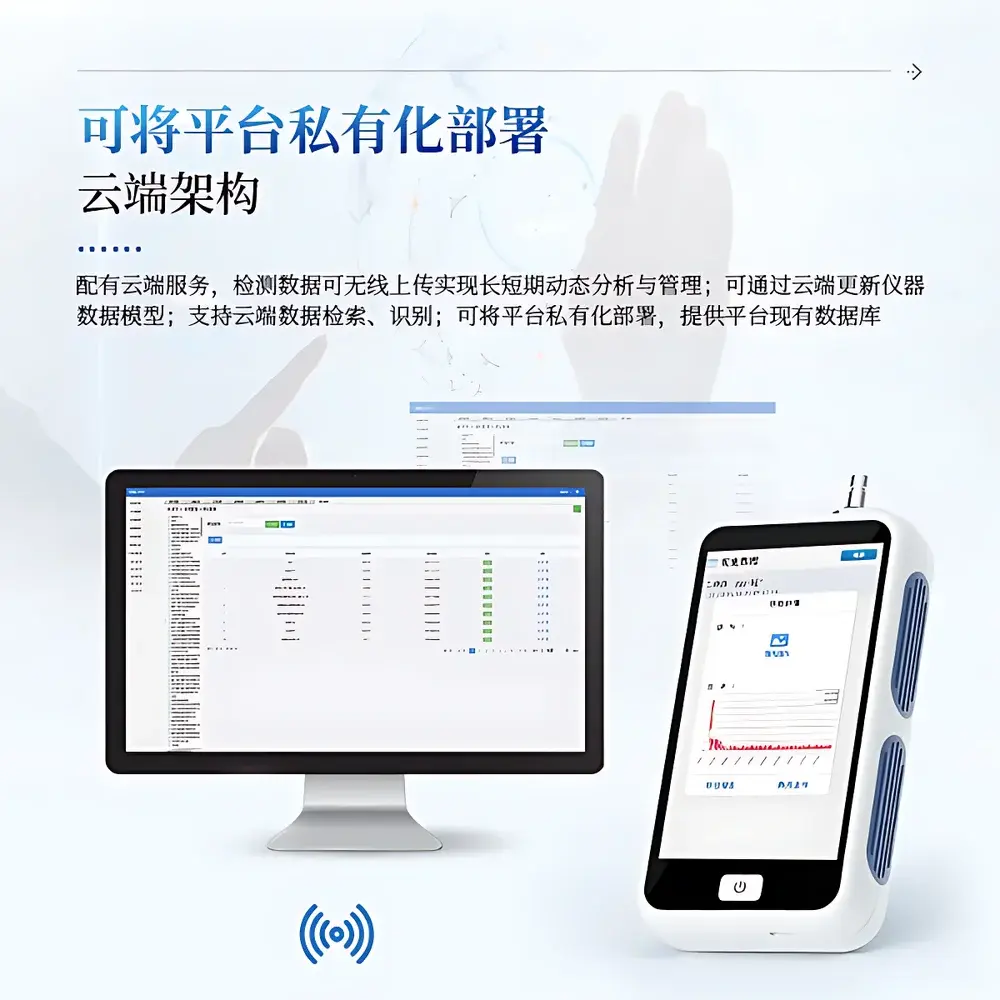
The IN-SLM accommodates solid powders, crystalline tablets, liquids, gels, and surface-coated substrates—regardless of opacity or color—provided minimal laser absorption occurs at 785 nm. It complies with IEC 60825-1:2014 (Class 3B laser safety), GB 7247.1–2012 (Chinese laser product safety standard), and ISO 8549-2:2020 (handheld spectrometer ergonomics). All spectral data workflows support ALCOA+ principles (Attributable, Legible, Contemporaneous, Original, Accurate, Complete, Consistent, Enduring, Available) for regulatory submissions to EMA, FDA, and NMPA. Optional private-cloud deployment enables on-premise spectral database hosting with SAML 2.0 authentication and SOC 2 Type II–certified infrastructure.
Software & Data Management
The proprietary RamanView™ software suite (v4.2+) runs natively on Android 12 and provides real-time baseline correction (Asymmetric Least Squares), cosmic ray removal, Savitzky-Golay smoothing, and vector-normalized correlation matching against user-defined spectral libraries. Cloud synchronization supports delta-updates of spectral models via TLS 1.3–secured API endpoints. All raw .spc files retain unprocessed detector counts, laser power calibration coefficients, and environmental sensor logs (temperature, humidity, GPS). Audit trails record every parameter change, spectrum acquisition, library edit, and report export—including operator ID, device serial number, and cryptographic hash of exported artifacts.
Applications
- Pharmaceutical Quality Control: Raw material verification (API identity), counterfeit drug screening, excipient homogeneity assessment in blister packs.
- Forensic & Law Enforcement: On-site identification of narcotics, explosives, clandestine lab reagents, and chemical warfare agent simulants per INTERPOL’s Raman Reference Database standards.
- Food & Agriculture Safety: Detection of adulterants (e.g., melamine in milk powder), pesticide residues on produce surfaces, mycotoxin contamination in grains.
- Jewelry & Gemology: Non-destructive differentiation of natural vs. synthetic diamonds, ruby vs. spinel, and treated vs. untreated emeralds using lattice vibration modes.
- Industrial Process Monitoring: Real-time polymer batch verification, catalyst deactivation tracking, and corrosion product identification on metallic substrates.
- Environmental Field Screening: Identification of hydrocarbon spills (PAHs, BTEX), heavy metal complexes in soils, and microplastic particle composition in water filtration systems.
FAQ
Why does fluorescence dominate when analyzing samples in thick glass containers?
Thick soda-lime glass exhibits strong Raman scattering and broadband fluorescence near 785 nm. Replace with fused silica (quartz) vials or reduce laser power and increase integration time to improve signal-to-background ratio.
What causes low-confidence matches despite good spectral quality?
Verify that detection threshold is set to 0.92 (default), laser power is ≥80% for low-absorbing samples, and search scope includes all relevant spectral libraries—not just “pharmaceuticals” or “explosives.” New compounds can be added to local libraries via spectral import with IUPAC-compliant naming and CAS registry validation.
How is electromagnetic interference mitigated during spectral acquisition?
The IN-SLM employs shielded coaxial detector cabling, synchronous lock-in amplification, and real-time outlier rejection algorithms trained on cosmic-ray-induced pixel spikes (per NASA CERN calibration protocols). For persistent noise, enable hardware averaging mode or relocate >3 m from RF transmitters or switching power supplies.
Is cloud-based analysis mandatory for spectral identification?
No. All core library matching, peak fitting, and report generation occur locally on-device. Cloud connectivity is optional—used only for remote model updates, federated library expansion, or enterprise-level analytics dashboards.
Can the instrument comply with 21 CFR Part 11 requirements for electronic records?
Yes. When configured with enabled audit trail, electronic signatures, and secure user authentication, the IN-SLM meets predicate rule requirements for electronic records and signatures in GxP-regulated environments. Validation documentation packages (IQ/OQ/PQ templates) are available upon request.





