
COMECAUSE IN-VistaFruit Fruit Phenotyping & Quality Analysis System
| Brand | COMECAUSE |
|---|---|
| Model | IN-VistaFruit |
| Origin | Shandong, China |
| Manufacturer Type | Direct Manufacturer |
| Country of Origin | China |
| Dimensions (W×D×H) | 1006 × 506 × 718 mm |
| Weight | 62 kg |
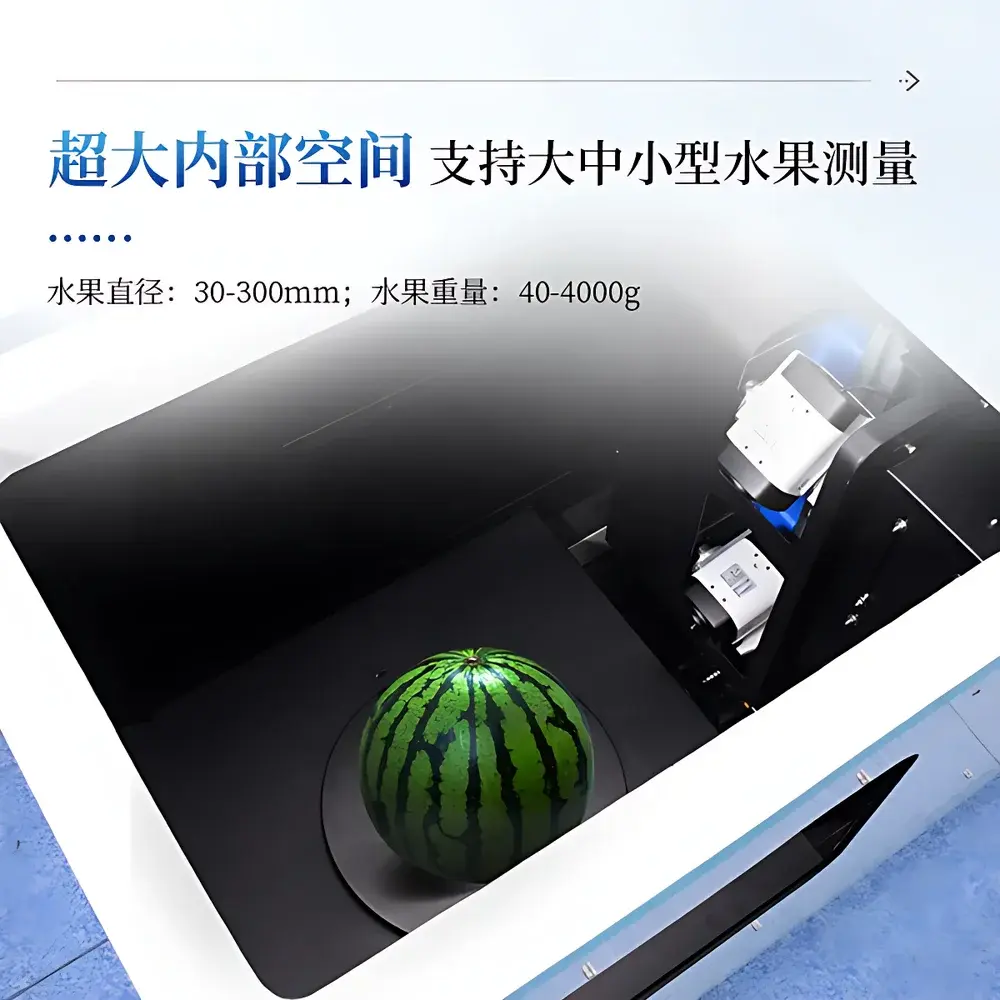
| Integrated Scale Range | 40–4000 g |
| Supported Fruit Diameter | 30–300 mm |
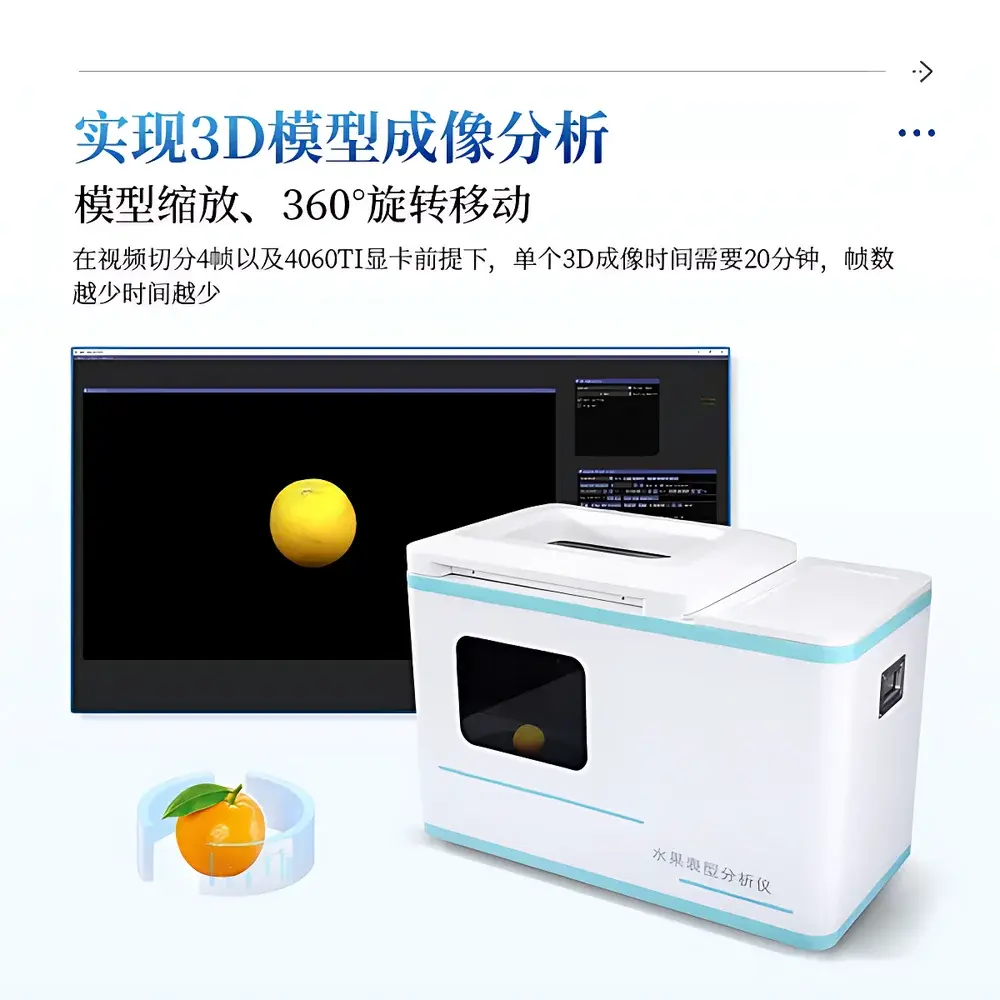
| 3D Reconstruction Time (RTX 4060 Ti, 4-frame input) | ~20 min per sample |
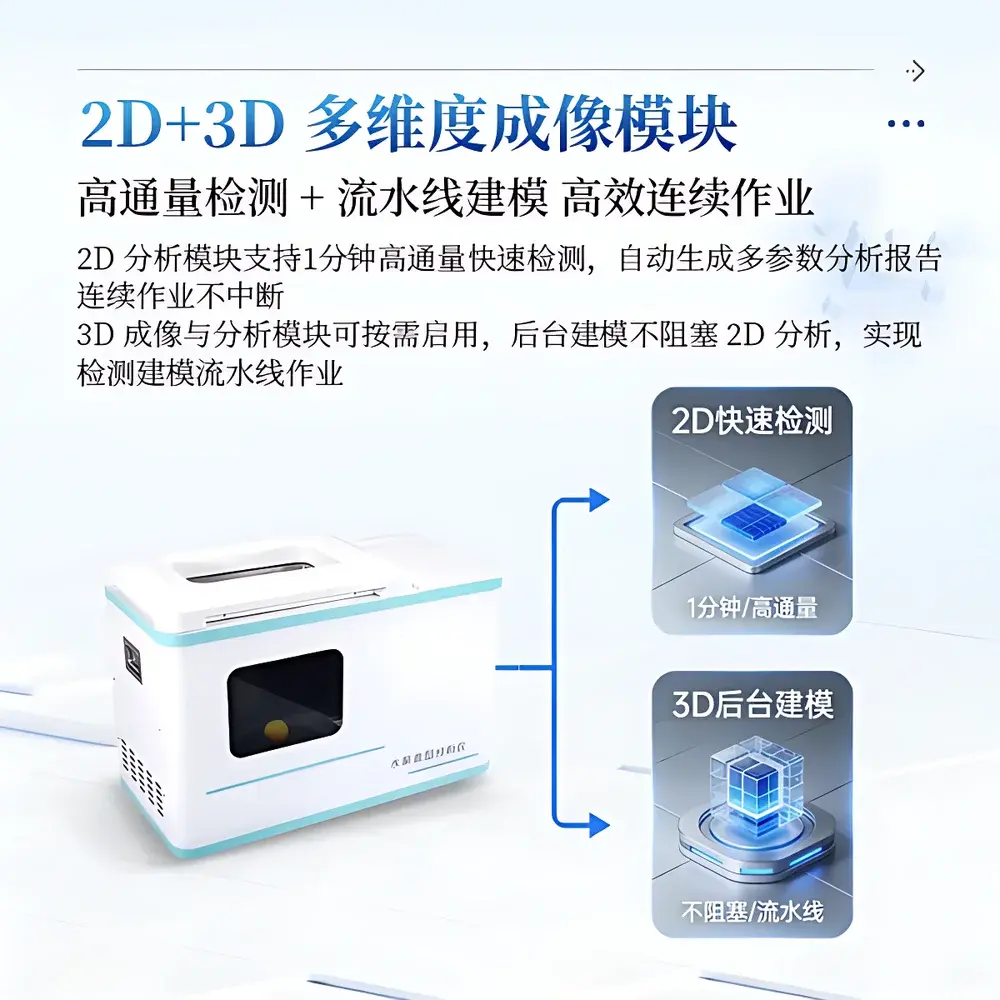
| Dual-Mode Operation | High-throughput 2D analysis (<1 min/sample) + on-demand 3D Gaussian Splatting modeling |
| Software | Multilingual (EN/CN), auto-focus & manual focus control, real-time dual-camera switching, cloud-sync enabled (device-ID bound), GLP-compliant data audit trail (timestamped, user-logged, immutable export) |
Overview
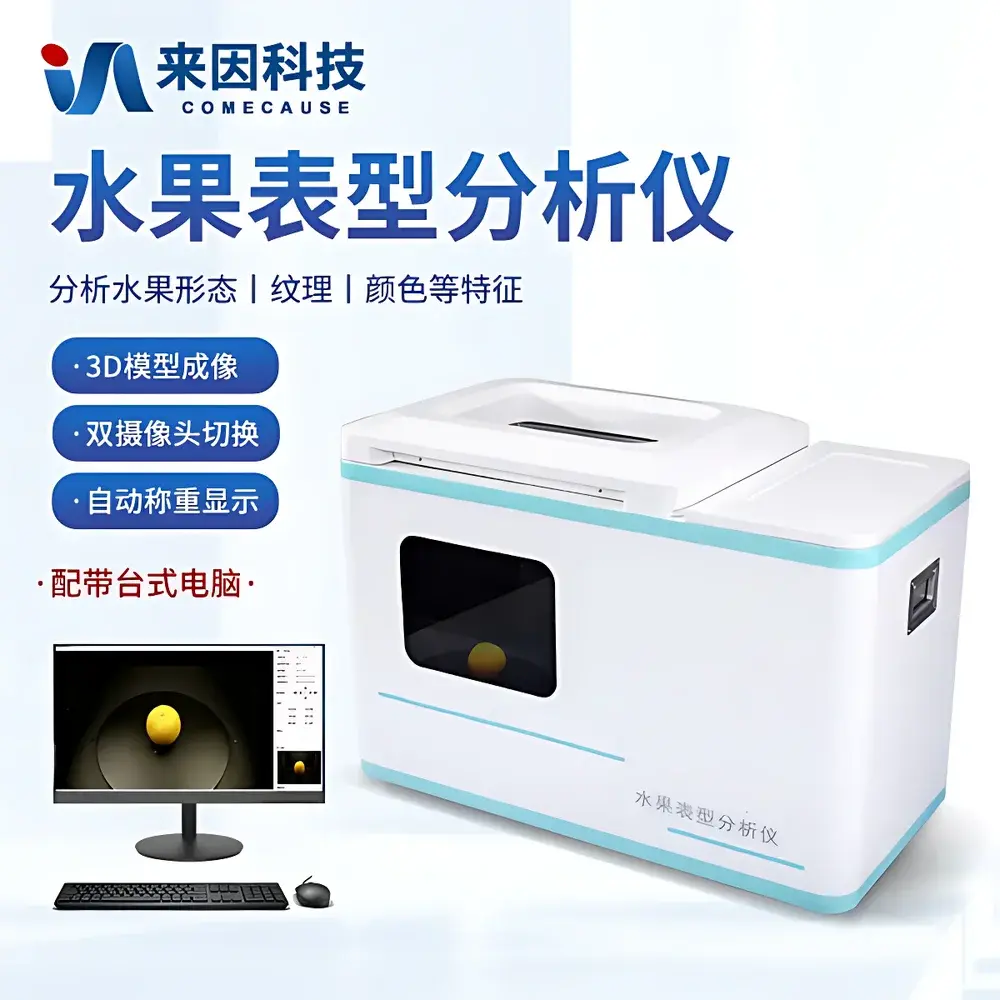
The COMECAUSE IN-VistaFruit is a benchtop fruit phenotyping and quality analysis system engineered for quantitative, non-destructive assessment of morphological, chromatic, and textural traits in horticultural produce. It integrates multi-view structured illumination imaging with AI-accelerated 3D Gaussian Splatting reconstruction to generate geometrically accurate, photorealistic digital twins of fruits—including apple, pear, citrus, watermelon, pomelo, lychee, peach, and Hami melon. Unlike conventional single-angle imaging systems, IN-VistaFruit captures synchronized RGB and depth data from multiple calibrated viewpoints, enabling robust surface topology estimation and eliminating occlusion bias. The core measurement principle combines computer vision–based volumetric estimation (via point-cloud integration and convex hull approximation), spectrally normalized color space mapping (CIELAB, HSV, grayscale, and direct RGB), and Haralick texture feature extraction from co-occurrence matrices. All analyses are traceable, repeatable, and aligned with international postharvest evaluation frameworks used in breeding programs, QC laboratories, and academic plant science departments.
Key Features
- Integrated high-precision load cell (40–4000 g range) with real-time weight synchronization to software—no external scale required
- Dual-camera imaging station with motorized stage control, software-driven autofocus, and manual fine-tuning capability
- Modular software architecture supporting concurrent 2D high-throughput screening and queued 3D model generation—ensuring uninterrupted workflow continuity
- Real-time 360° interactive 3D model manipulation: zoom, pan, rotate, and cross-sectional slicing via intuitive GUI
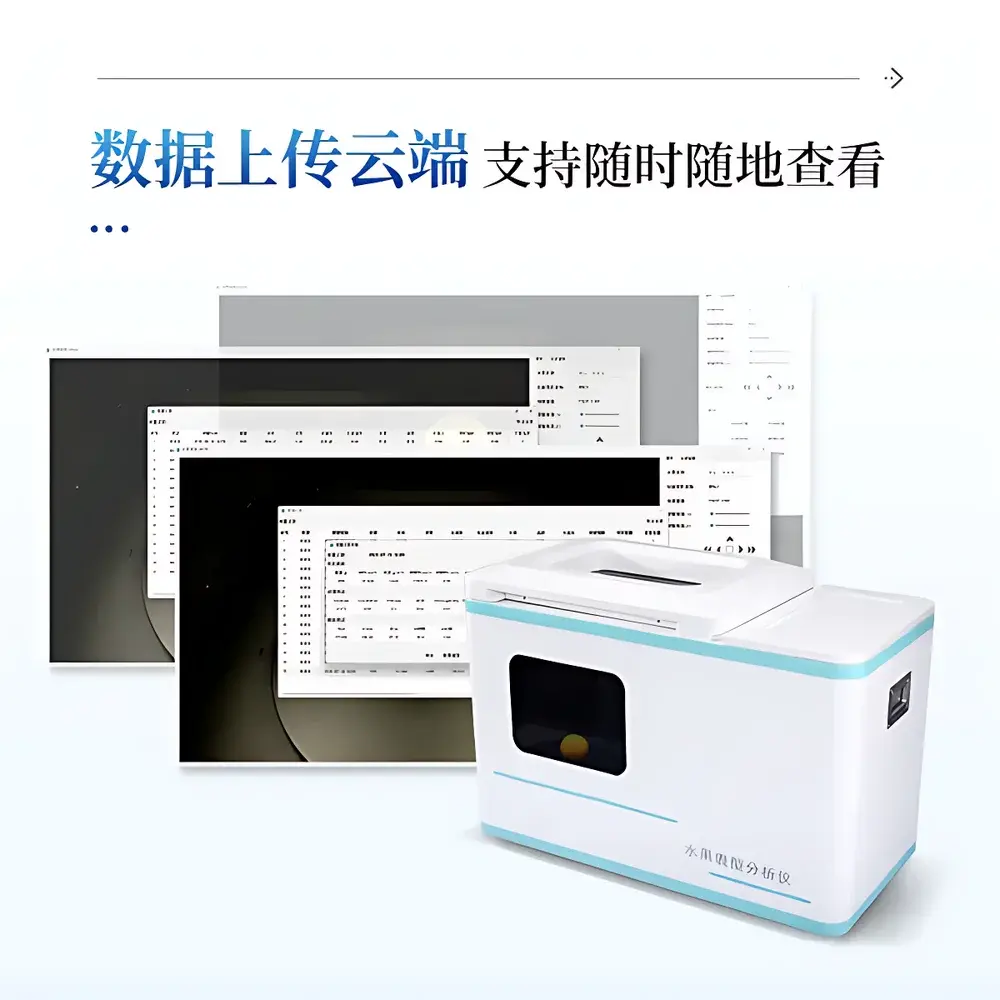
- Cloud-enabled data management: encrypted device-bound upload, timestamped records, role-based access control, and CSV/PDF export compliant with ISO/IEC 17025 documentation requirements
- Auto-resizing UI engine that dynamically adapts to host PC’s native display resolution (tested up to 2560×1440 @ 60 Hz)
- Fully localized interface with one-click English/Chinese language toggle—designed for multinational research teams and regulatory auditors
Sample Compatibility & Compliance
IN-VistaFruit is validated for whole-fruit analysis across major commercial cultivars with diameters between 30 mm and 300 mm. Its non-contact optical design eliminates mechanical stress or surface abrasion, preserving sample integrity for downstream assays (e.g., firmness testing, respiration rate measurement, or microbial load analysis). The system complies with ISO 9001 manufacturing standards and supports GLP/GMP-aligned operation through mandatory electronic signatures, audit-trail logging (user ID, timestamp, parameter changes), and FDA 21 CFR Part 11–ready data export protocols. All color metrics adhere to CIE 1931 and CIEDE2000 definitions; texture features conform to ASTM E1553-22 guidelines for image-based surface heterogeneity quantification.
Software & Data Management
The IN-VistaFruit Control Suite is a Windows-native application built on Qt 6.5 and CUDA-accelerated OpenCV libraries. It implements a dual-layer data structure: raw image stacks and metadata are stored locally in HDF5 format (lossless compression, checksum validation), while processed results—including 3D meshes (.obj), texture maps (.png), and analytical reports—are automatically synced to a TLS 1.3–secured cloud repository. Each analysis record contains full provenance: acquisition parameters (exposure time, white balance, lens focal length), hardware configuration fingerprint (GPU model, RAM allocation), and operator credentials. Batch reporting supports statistical aggregation (mean ± SD, CV%, ANOVA-ready tables) and export to JMP, R, or Python pandas environments via standardized JSON schema.
Applications
- Breeding program support: Objective selection of shape uniformity, skin gloss, blush distribution, and defect tolerance across F₁/F₂ populations
- Postharvest quality monitoring: Longitudinal tracking of shriveling, color degradation, or surface micro-cracking during cold storage or CA transport
- Supply chain QC: Automated pass/fail classification against retailer-defined thresholds (e.g., minimum L* > 52, maximum entropy 0.88)
- Phenomics database curation: Standardized trait ontology mapping (Crop Ontology, CO_333: fruit_shape_index) for FAIR-compliant data sharing
- Educational use: Interactive 3D visualization modules for teaching plant morphology, digital agriculture, and computer vision fundamentals
FAQ
What operating system and hardware specifications are required to run IN-VistaFruit software?
The system requires Windows 10/11 (64-bit), Intel Core i5-14400F or equivalent, 16 GB RAM, NVIDIA RTX 4060 Ti (8 GB VRAM) or higher, and 1 TB SSD. Driver support includes CUDA 12.2+, OpenCL 3.0, and DirectX 12 Ultimate.
Can the system analyze cut or halved fruits?
No—IN-VistaFruit is designed exclusively for intact, whole-fruit analysis. Internal tissue exposure or irregular geometry violates the assumptions of Gaussian Splatting surface reconstruction and compromises volumetric accuracy.
Is calibration traceable to national metrology institutes?
Yes—each unit ships with a NIST-traceable color chart (BCRA Series II) and certified reference sphere (diameter ±0.02 mm), accompanied by factory calibration certificates valid for 12 months.
How does the system handle specular highlights or wax-coated surfaces?
The multi-angle capture protocol inherently mitigates specular artifacts; additionally, polarization filters can be installed upon request to suppress reflection-induced color distortion in waxy cultivars such as ‘Fuji’ apple or ‘Shamouti’ orange.
Does the software support third-party API integration for LIMS or ELN systems?
Yes—the Control Suite exposes RESTful endpoints for automated job submission, status polling, and result retrieval using OAuth 2.0 authentication and JSON payloads. Full API documentation and Postman collection are provided under NDA.




