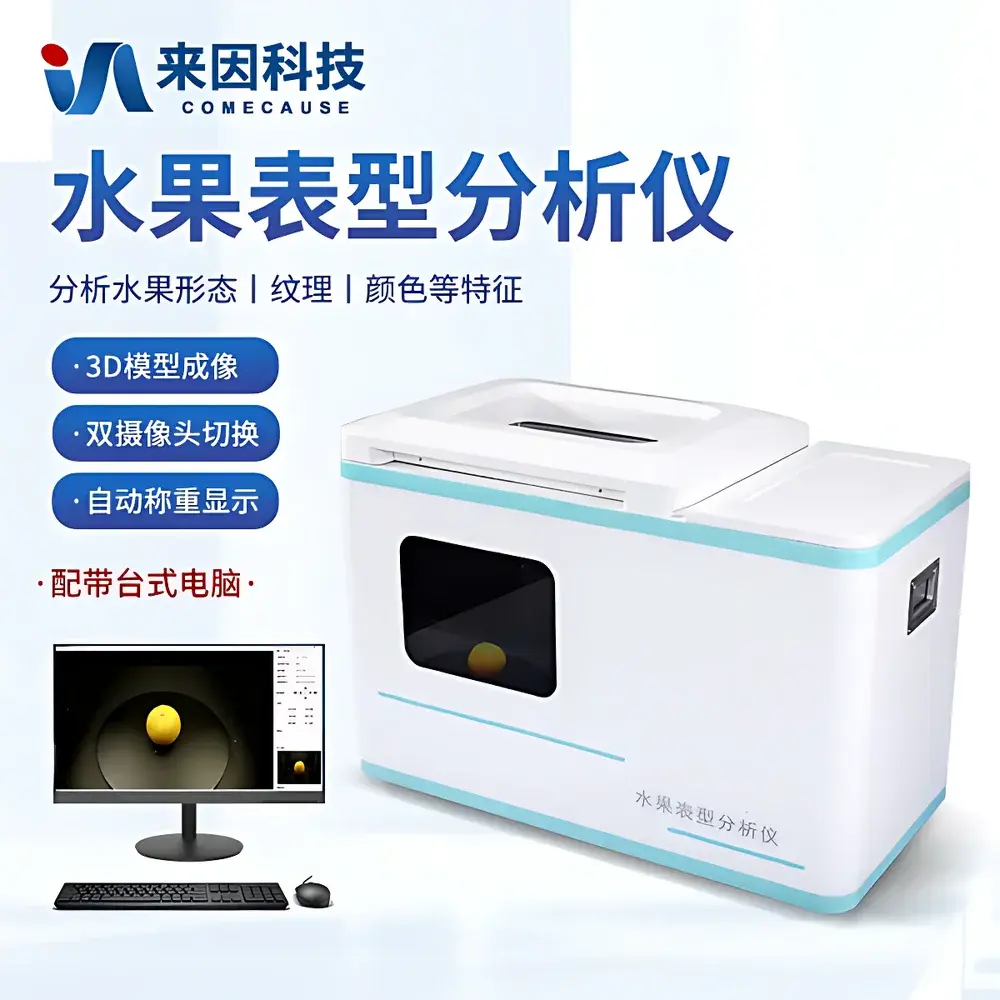
COMECAUSE IN.VistaFruit High-Throughput Fruit Phenotyping System
| Brand | COMECAUSE |
|---|---|
| Origin | Shandong, China |
| Manufacturer Type | OEM Manufacturer |
| Country of Origin | China |
| Model | IN.VistaFruit |
| Price | USD 12,000 (FOB) |
| Dimensions (W×D×H) | 1006 × 506 × 718 mm |
| Weight | 62 kg |
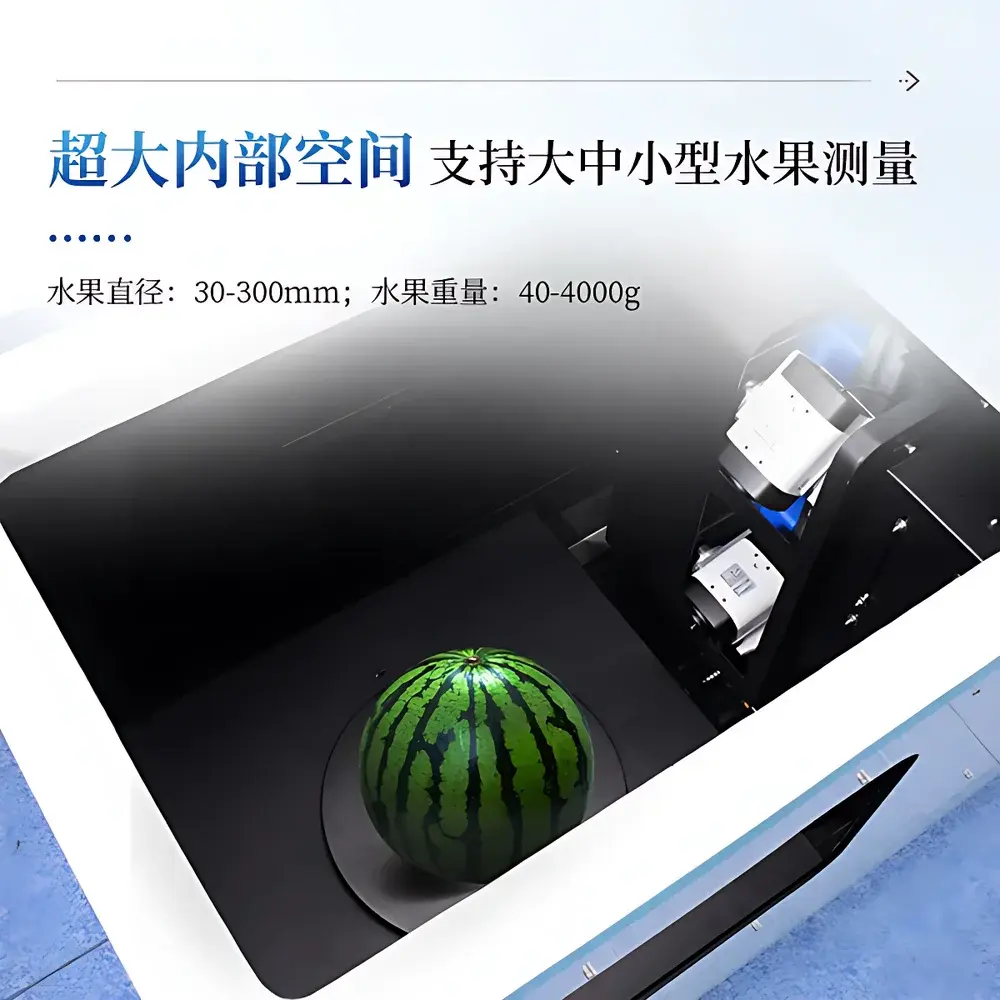
| Fruit Diameter Range | 30–300 mm |
| Fruit Mass Range | 40–4000 g |
| Imaging | Multi-view RGB + Structured Light Acquisition |
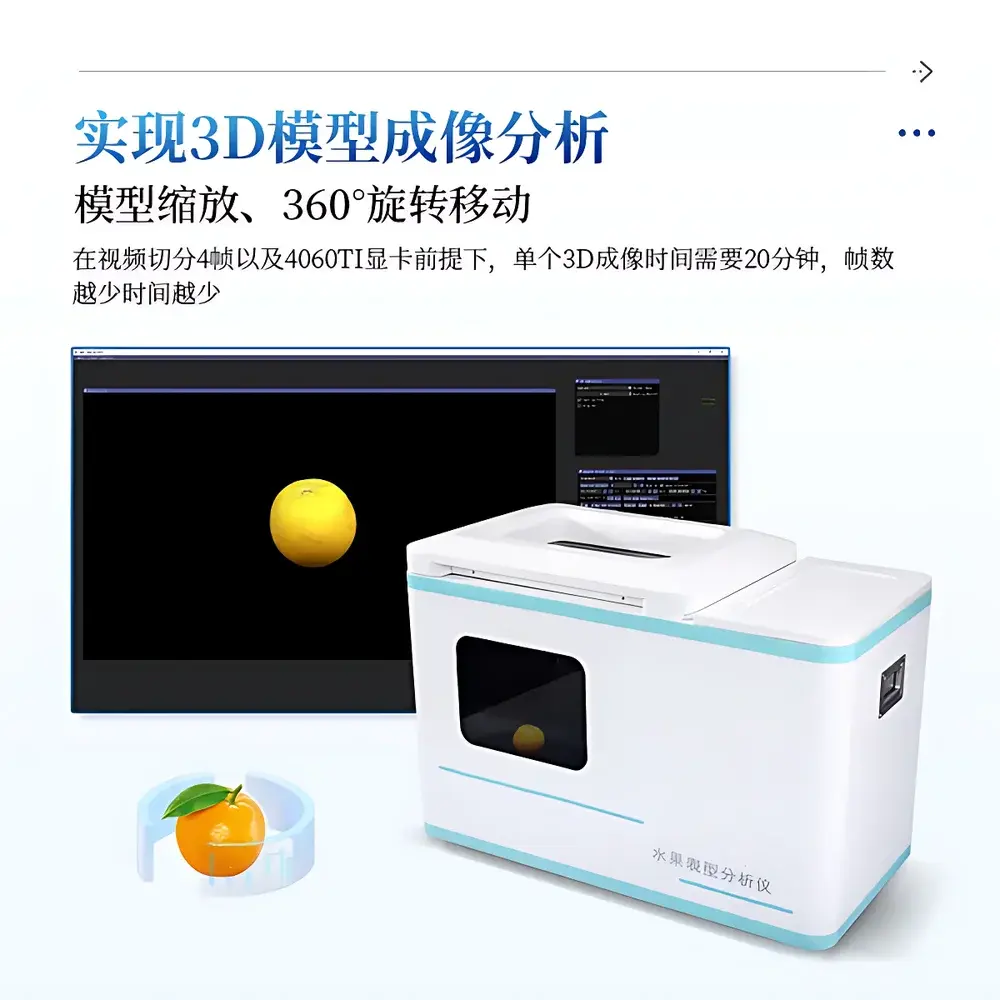
| 3D Reconstruction Method | AI-Optimized Gaussian Splatting Pipeline |
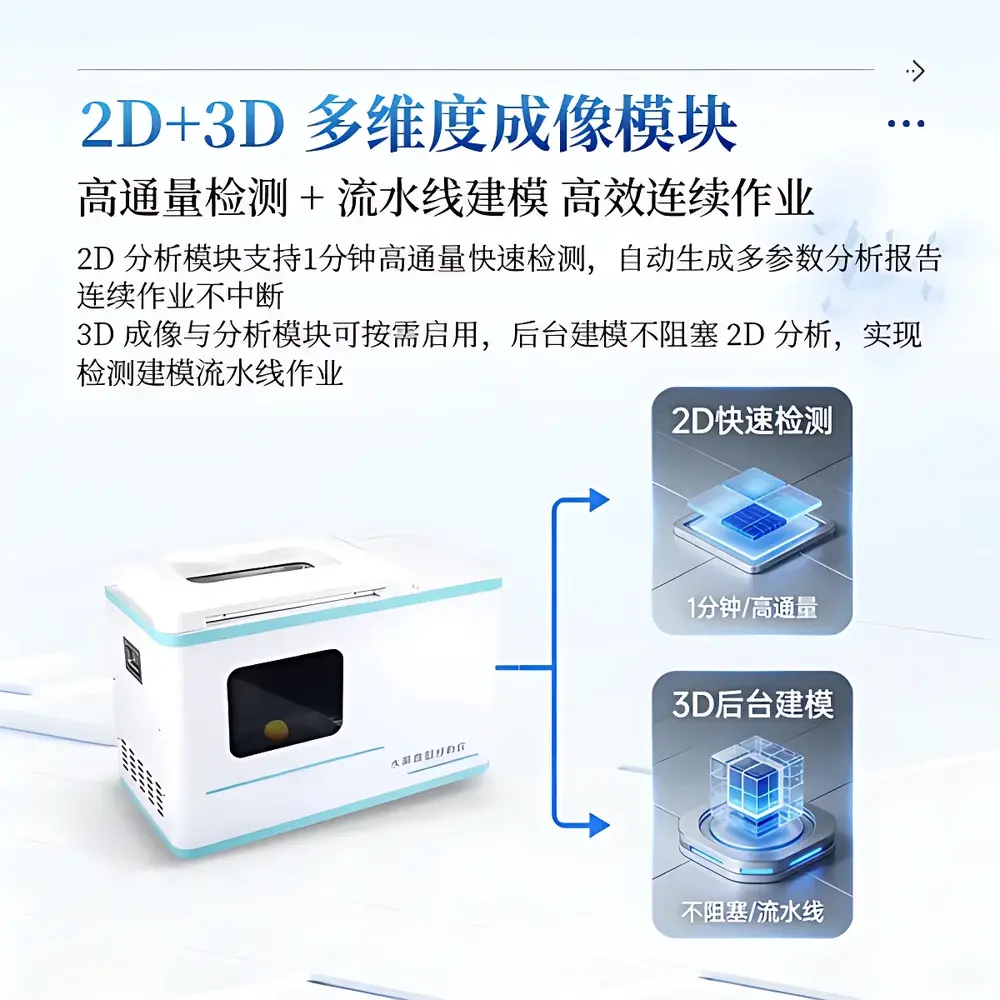
| 2D Throughput | ≤60 s/sample |
| 3D Reconstruction Time | ~20 min/sample (RTX 4060 Ti, 4-frame input) |
| Software | IN.VistaFruit Suite v3.2 (Windows-based, bilingual UI) |
| Integrated Scale | Yes, auto-synchronized |
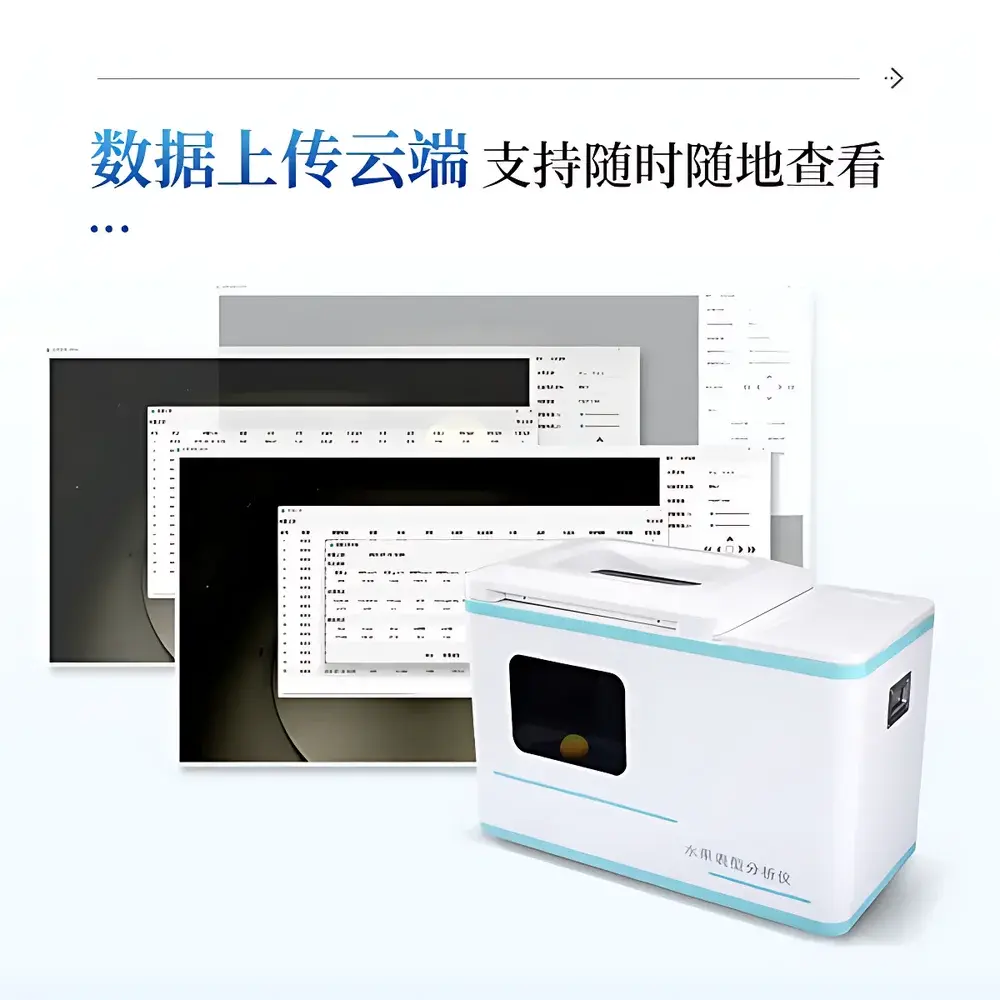
| Cloud Integration | Secure HTTPS API with device-bound encryption |
| Compliance | ISO/IEC 17025 traceable calibration procedures, GLP-compliant audit trail (optional FDA 21 CFR Part 11 module) |
Overview
The COMECAUSE IN.VistaFruit High-Throughput Fruit Phenotyping System is an integrated optical metrology platform engineered for non-destructive, quantitative morphological, chromatic, and textural characterization of intact fruit specimens. It operates on a dual-path acquisition architecture: high-speed 2D multi-spectral imaging for rapid screening, and AI-accelerated multi-view 3D reconstruction via Gaussian Splatting for geometrically faithful surface modeling. Unlike conventional vision systems relying on single-angle silhouette or threshold-based segmentation, IN.VistaFruit captures sub-millimeter surface topography, spectral reflectance distribution, and spatial texture heterogeneity under controlled illumination—enabling reproducible quantification of phenotypic traits across developmental stages, genotypes, and postharvest conditions. The system is designed for deployment in breeding stations, quality control laboratories, and commercial packinghouses where throughput, measurement stability, and data traceability are critical to decision-making under GLP/GMP-aligned workflows.
Key Features
- Integrated load-cell scale (0.1 g resolution) synchronized in real time with image capture—eliminating manual weighing and timestamp misalignment.
- Modular software architecture supporting concurrent 2D analysis and background 3D model generation—ensuring uninterrupted sample throughput during high-volume campaigns.
- Multi-view RGB camera array with programmable LED ring lighting (6500 K CCT, ±5% uniformity), enabling consistent colorimetric measurement per CIE L*a*b* and HSV spaces.
- AI-driven Gaussian Splatting pipeline optimized for fruit surface topology: preserves fine-scale features (e.g., lenticel density, wax bloom, micro-cracking) without meshing artifacts or smoothing bias.
- Cloud-enabled data management with device-bound TLS 1.3 encryption; each instrument generates immutable audit logs compliant with ISO/IEC 17025 documentation requirements.
- Bilingual (English/Chinese) GUI with adaptive DPI scaling—supports native rendering on 2K/4K displays without pixel interpolation loss.
- Hardware-software co-design: embedded motorized turntable and Z-axis focus stage enable repeatable positioning; software supports both auto-focus (contrast-based) and manual fine-tuning via live histogram overlay.
Sample Compatibility & Compliance
IN.VistaFruit accommodates spherical to oblate fruit morphologies—including apple, pear, citrus (orange, pomelo), melon (cantaloupe, watermelon), peach, lychee, and grapefruit—with diameters from 30 mm to 300 mm and masses between 40 g and 4000 g. Specimens are placed manually on the rotating platform; no clamping or fixation is required. All optical components meet IEC 60825-1 Class 1 laser safety standards. Calibration protocols follow ISO 11664-4 (CIE colorimetry) and ASTM E308-22 (computing tristimulus values). Optional FDA 21 CFR Part 11 compliance package includes electronic signature enforcement, role-based access control, and tamper-evident audit trails for regulated environments.
Software & Data Management
The IN.VistaFruit Suite v3.2 is a Windows-native application built on Qt 6.7 and CUDA 12.2, leveraging GPU-accelerated tensor operations for real-time feature extraction. It delivers three core analytical modules: (1) 2D Rapid Screening Mode—generates summary reports (morphology, color, texture) within 60 seconds; (2) 3D Modeling Mode—produces registered point clouds (≥2 million points/sample), surface-normal maps, and curvature-derived shape indices; (3) Comparative Analytics Dashboard—enables batch statistical analysis (ANOVA, PCA, cluster heatmaps) across treatment groups or harvest dates. All raw images, metadata, and computed parameters are stored in vendor-agnostic HDF5 containers with embedded EXIF-like headers. Export formats include CSV, JSON-LD, and MIAME-compliant XML for integration with LIMS or breeding databases.
Applications
- Pre-breeding trait mapping: Quantifies heritable variation in fruit shape index, surface homogeneity, and hue uniformity across F₂ populations—feeding QTL analysis pipelines.
- Postharvest quality monitoring: Tracks dynamic changes in gloss (specular reflectance ratio), skin micro-roughness (entropy, contrast), and color drift (ΔE*ab) during cold storage or CA treatments.
- Commercial grading automation: Configurable pass/fail thresholds for size distribution, defect coverage (% surface area), and chromatic deviation—exportable as machine-readable rules for downstream sorters.
- Cultivar authentication: Builds reference spectral-textural fingerprints using SVM classifiers trained on ≥500 samples per variety—achieving >98.2% cross-validated accuracy in blinded trials.
- Irrigation/nutrition response studies: Correlates canopy-level NDVI with fruit-level phenotypic outputs to quantify feedback loops between vegetative vigor and sink strength.
FAQ
Does the system require external calibration standards?
No—factory-calibrated using NIST-traceable ceramic tiles (color) and precision machined spheres (geometry); user-performed verification checks are supported via included QC kit.
Can 3D models be exported for third-party CAD or finite element analysis?
Yes—point clouds and surface meshes (PLY, OBJ) export with millimeter-scale coordinate accuracy; vertex normals and UV mapping are preserved.
Is offline operation supported for field-deployed units?
Yes—the full analysis stack runs locally; cloud sync is optional and configurable per network policy.
What computing hardware is required beyond the supplied workstation?
None—the bundled GeekPro-17 (Intel i5-14400F, RTX 4060 Ti, 16 GB RAM, 1 TB NVMe) meets all real-time processing requirements; upgrades to RTX 4090 reduce 3D reconstruction time by ~47%.
How is data integrity ensured during long-term longitudinal studies?
Each measurement session embeds cryptographic hashes of raw sensor frames and parameter sets; version-controlled HDF5 archives support incremental backup and SHA-256 verification.