
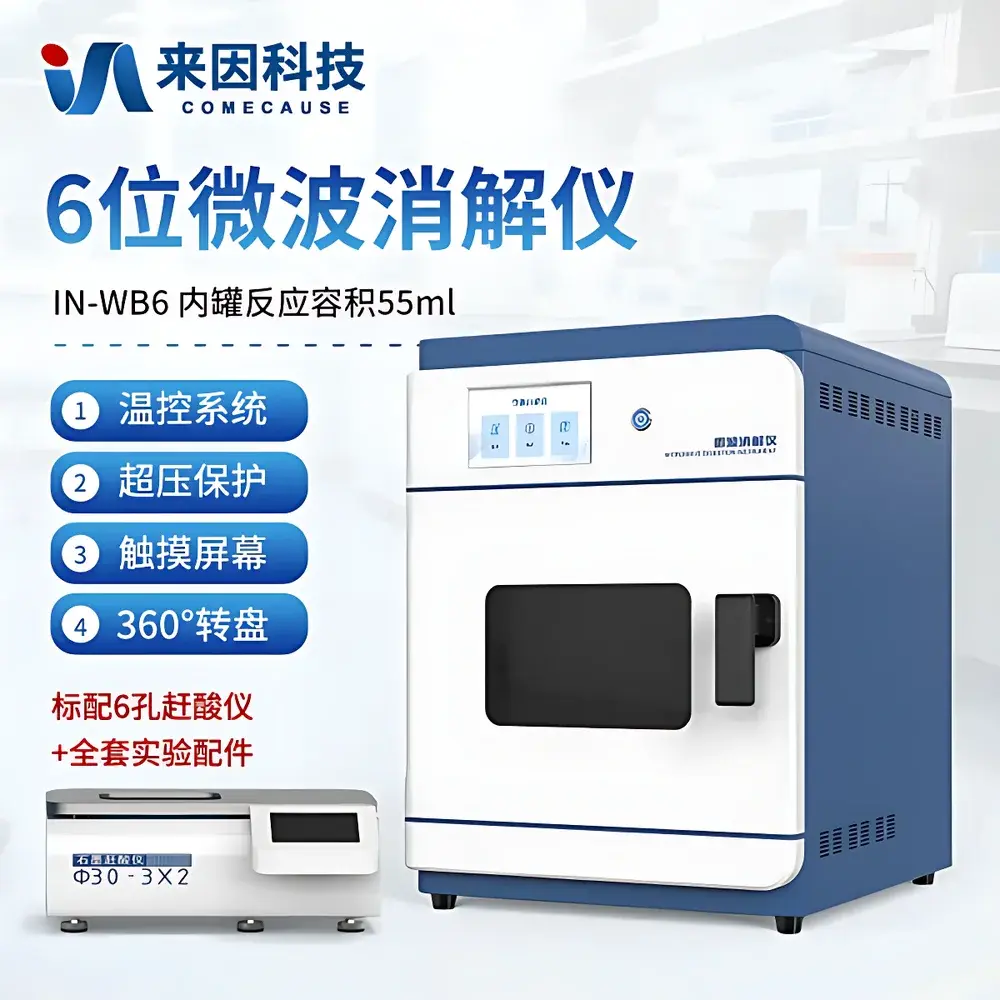
COMECAUSE IN-WB6 Industrial-Grade Microwave Digestion System
| Brand | COMECAUSE |
|---|---|
| Origin | Shandong, China |
| Manufacturer Type | Direct Manufacturer |
| Country of Origin | China |
| Model | IN-WB6 |
| Price | USD 4,500 (approx.) |
| Cavity Grade | Industrial-Grade |
| Batch Capacity | ≥6 Samples |
| Max Temperature | 300 °C |
| Max Pressure | 1500 psi |
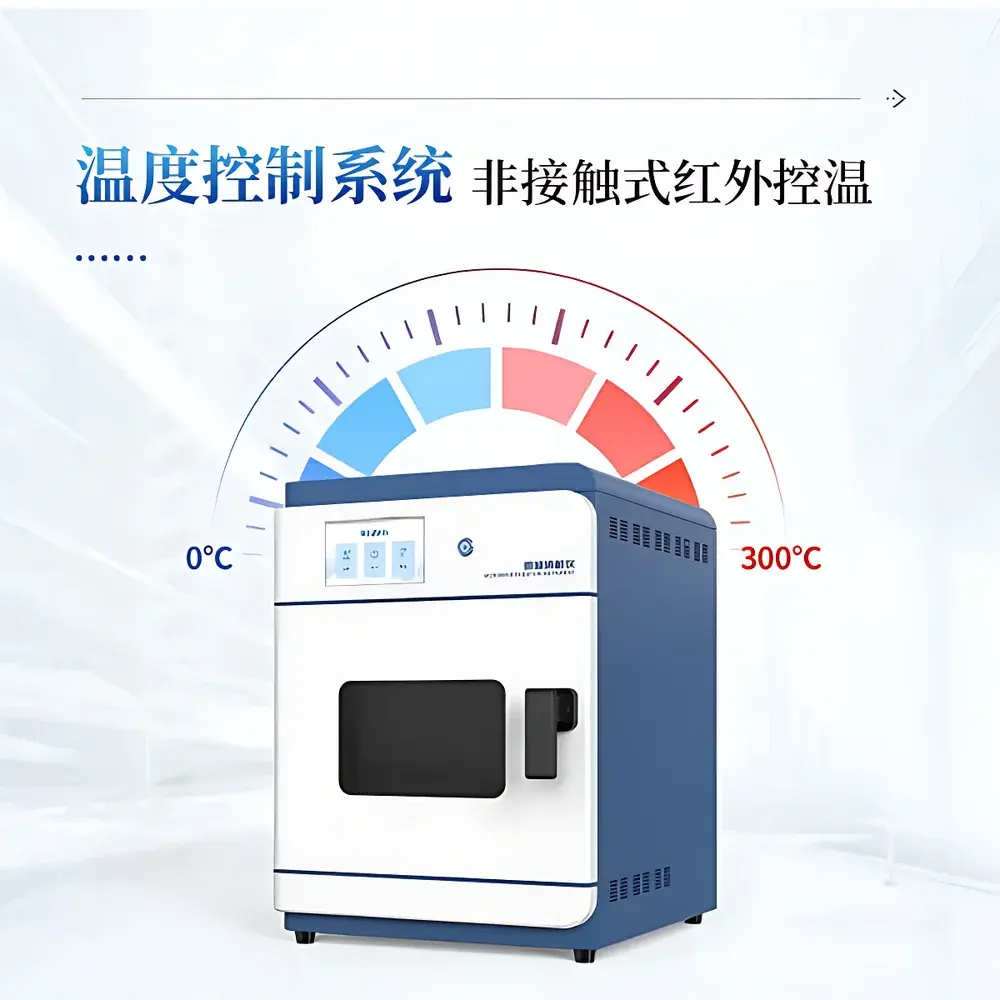
| Temperature Control | Non-contact Infrared, 0–300 °C, ±0.5 °C Accuracy |
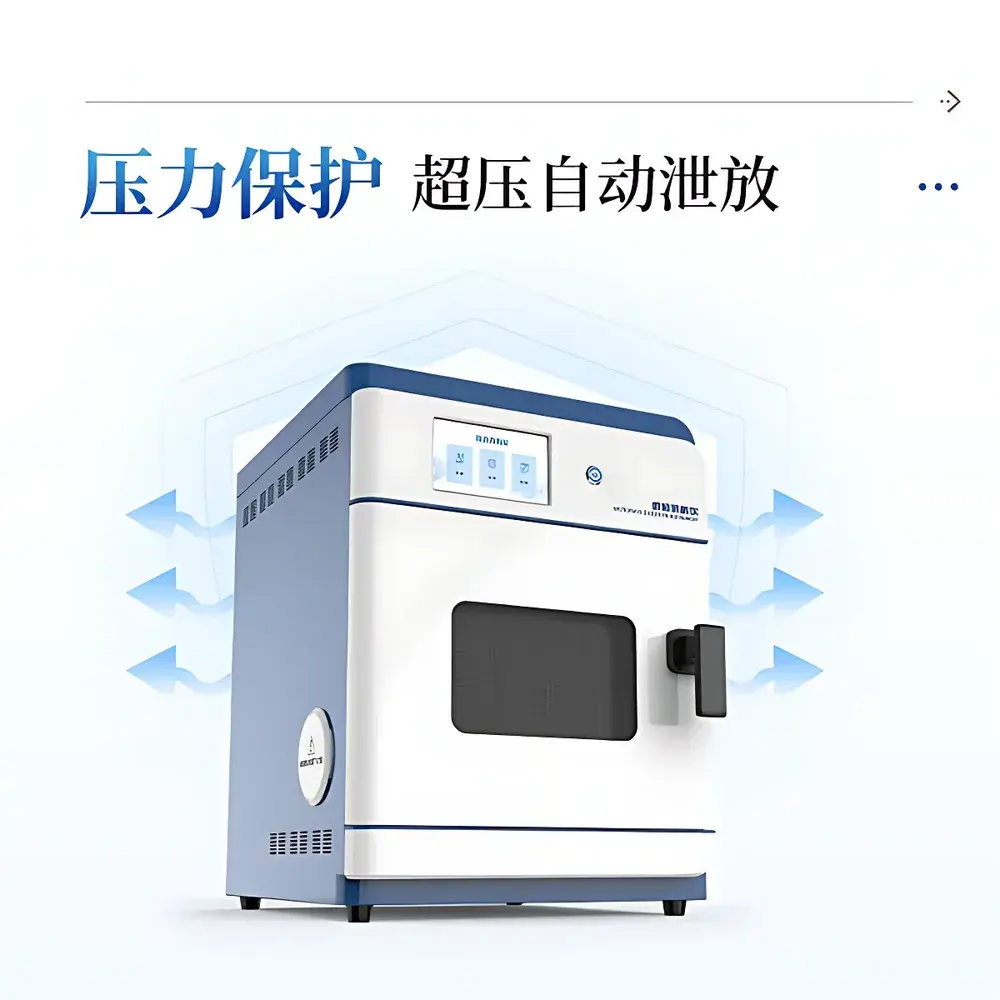
| Pressure Safety | Automatic Pressure Relief |
| Rotational Mode | 360° Continuous Unidirectional Rotation |
| Inner Vessel Material | PTFE |
| Outer Vessel Material | PEEK |
| Inner Vessel Volume | 55 mL |
| Dimensions (L×W×H) | 507 × 619.5 × 666 mm |
| Net Weight | 50 kg |
Overview
The COMECAUSE IN-WB6 Industrial-Grade Microwave Digestion System is a precision-engineered sample preparation instrument designed for closed-vessel microwave-assisted acid digestion under controlled high-temperature and high-pressure conditions. It operates on the fundamental principles of dielectric heating—where microwave energy (typically at 2450 MHz) couples directly with polar molecules (e.g., H₂O, HNO₃, HCl) and ionic species in the digestion matrix, inducing rapid molecular rotation and interionic friction. This volumetric, non-contact heating mechanism enables uniform thermal energy distribution throughout the sample, significantly reducing digestion time while minimizing volatile element loss (e.g., As, Hg, Se, Pb) compared to conventional hotplate or block digestion methods. The system complies with core methodological requirements outlined in EPA Method 3051A, ISO 11466, ASTM D5511, and GB/T 22982–2008 for trace metal analysis in environmental, food, clinical, and industrial matrices.
Key Features
- Industrial-grade stainless-steel cavity with reinforced waveguide shielding and multi-layer electromagnetic leakage protection (<0.5 mW/cm² at 5 cm, per IEC 61000-4-3)
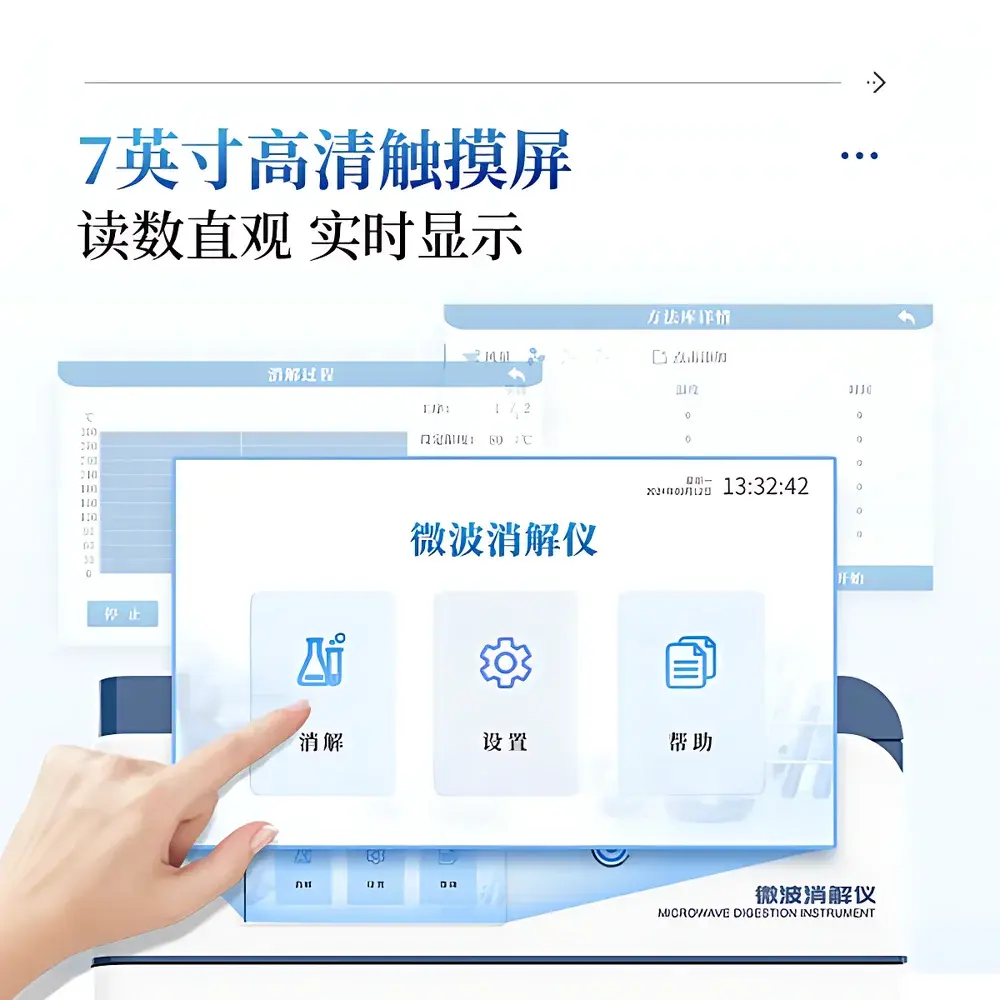
- Non-contact infrared temperature monitoring system with real-time graphical display of internal vessel temperature profiles and dynamic curve logging
- Automated pressure and temperature feedback control loop enabling precise ramp-hold-cool protocols per user-defined methods
- 360° continuous unidirectional rotation platform ensuring homogeneous microwave field exposure across all vessels—critical for inter-sample reproducibility (RSD < 3% for Cr in NIST SRM 1573a)
- Robust dual-vessel architecture: chemically inert PTFE inner liners (max 300 °C / 1500 psi) housed within high-strength PEEK outer sleeves with integrated pressure rupture discs
- Integrated safety interlocks including door position sensing, overpressure venting, and thermal cutoff at 320 °C
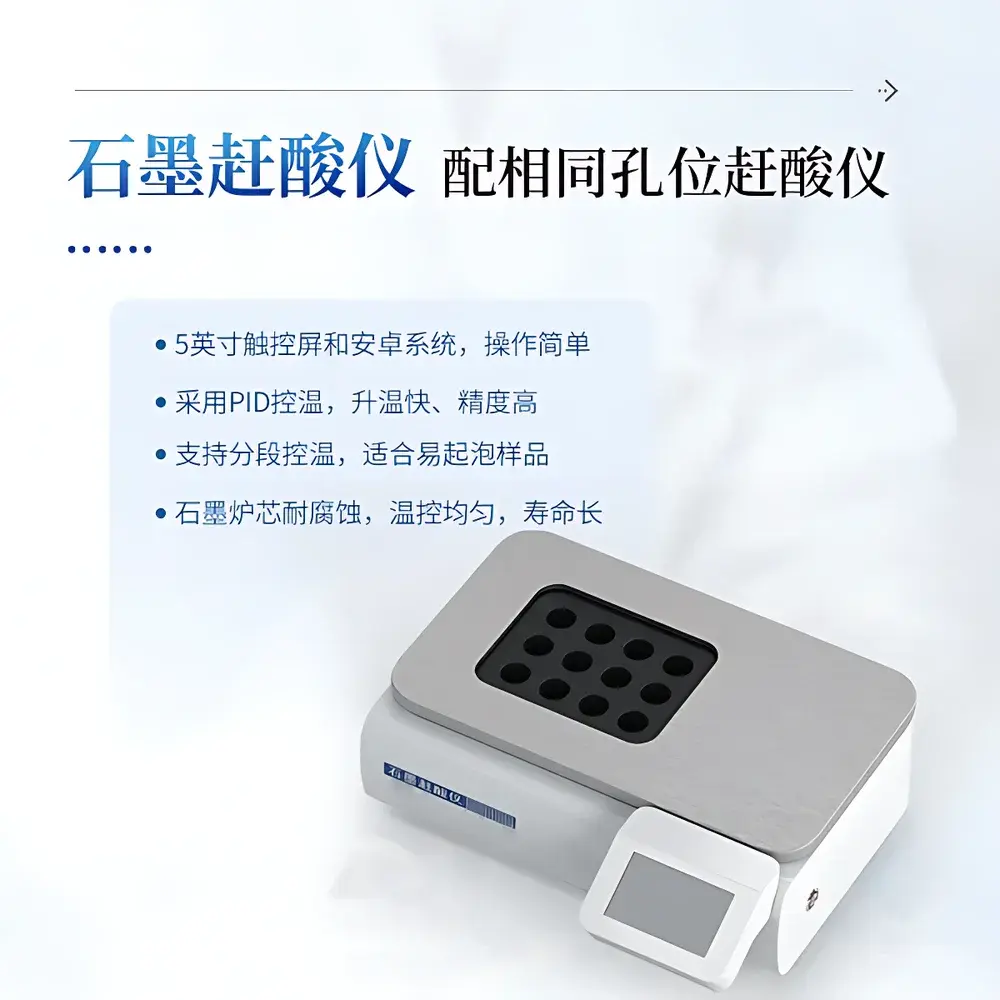
- Modular design supporting seamless integration with optional accessories—including a matched 6-position electric block digester (hot-block赶酸仪) with identical well geometry for post-digestion acid removal without sample transfer
Sample Compatibility & Compliance
The IN-WB6 accommodates a broad spectrum of solid and semi-solid matrices, including soils, sediments, biological tissues (plant/animal), food products, polymers, catalysts, and geological samples. Its 55 mL PTFE vessels support single-step or sequential digestion protocols using HNO₃, HCl, HF, H₂O₂, and aqua regia mixtures. All digestion methods are fully compatible with downstream elemental analysis techniques—ICP-OES, ICP-MS, AAS, and HG-AFS—and satisfy sample preparation prerequisites for GLP-compliant laboratories. The system’s hardware and firmware architecture align with data integrity expectations under FDA 21 CFR Part 11 when paired with validated software configurations; audit trails, electronic signatures, and method locking are supported via optional LIMS interface modules.
Software & Data Management
The embedded control interface provides intuitive method programming with up to 20 customizable digestion programs, each supporting multi-stage temperature/pressure ramps, hold times, and cooling profiles. Real-time telemetry—including vessel temperature, cavity pressure, microwave power output (%), and rotational status—is continuously logged with timestamped CSV export capability. Optional PC-based software extends functionality with statistical process monitoring (SPC), calibration certificate management, and automated report generation compliant with ISO/IEC 17025 documentation standards. All raw sensor data are stored locally on encrypted internal memory and can be exported via USB 2.0 port without requiring cloud connectivity.
Applications
- Environmental testing: heavy metal quantification (Cd, Pb, Ni, Zn) in wastewater sludge, fly ash, and contaminated soil per EPA SW-846 3051A/3052
- Food safety: determination of toxic elements in infant formula, seafood, and spices under EU Commission Regulation (EU) No 836/2012
- Clinical & pharmaceutical QC: residual catalyst metal analysis (Pd, Pt, Rh) in active pharmaceutical ingredients (APIs)
- Materials science: digestion of rare-earth magnets, battery cathodes (NMC, LFP), and ceramic precursors prior to compositional verification
- Academic research: method development for novel digestion matrices including microplastics, biochar, and nanocomposites
FAQ
What safety certifications does the IN-WB6 hold?
The system meets CE marking requirements (EMC Directive 2014/30/EU and Low Voltage Directive 2014/35/EU), and its cavity design conforms to IEC 61000-4-3 for radiated immunity and IEC 61000-4-2 for ESD protection.
Can the IN-WB6 be used for HF-containing digestions?
Yes—PTFE inner vessels are fully resistant to hydrofluoric acid at concentrations ≤5 mL HF per 55 mL vessel volume; however, strict adherence to PPE protocols and fume hood operation is mandatory.
Is method validation support available?
COMECAUSE provides application notes, certified reference material (CRM) digestion protocols, and on-site IQ/OQ documentation packages upon request for GxP-regulated environments.
How is maintenance performed on the magnetron and waveguide?
The magnetron features a rated lifespan of ≥3000 h; waveguide inspection ports allow visual assessment without disassembly, and scheduled cleaning of the cavity interior and turntable bearings is recommended every 200 operating hours.
Does the system support remote monitoring?
Local Ethernet port enables networked status polling and alarm notification via Modbus TCP; full remote control requires optional software license and firewall-configured secure access.



