
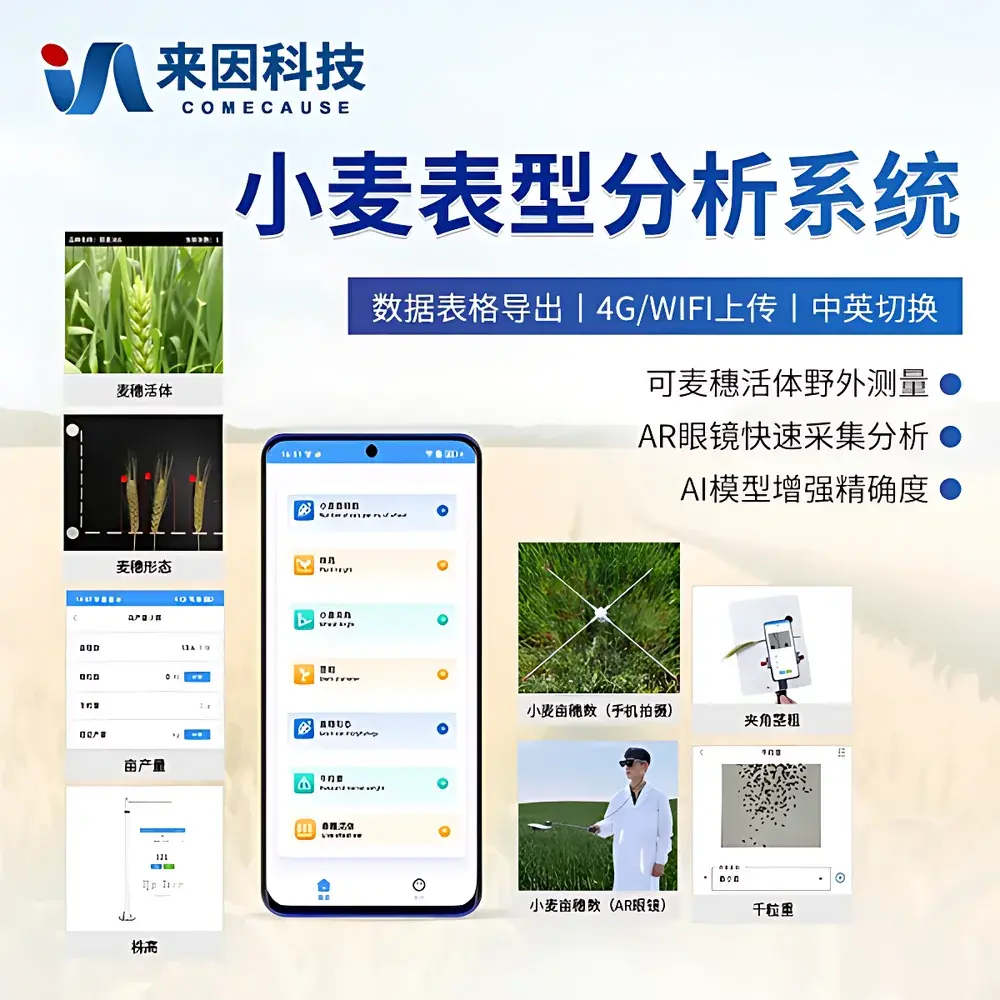
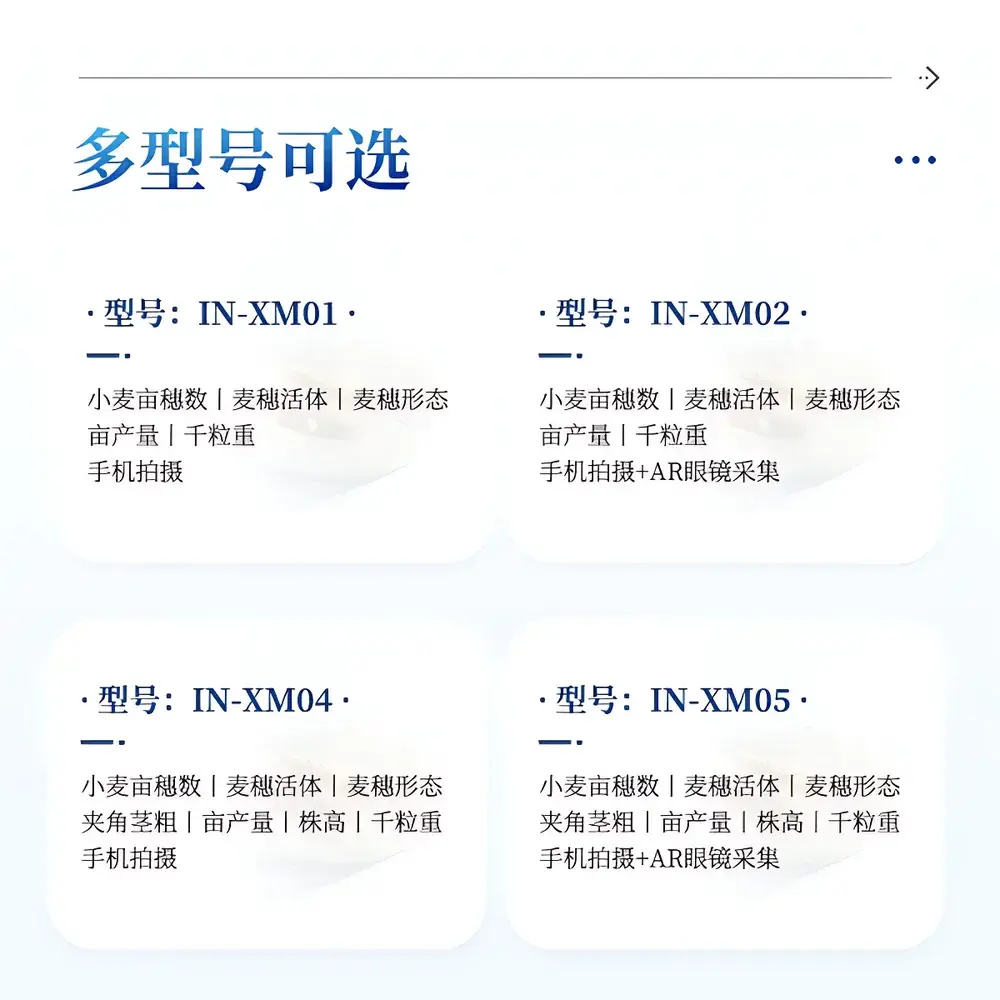

COMECAUSE IN-XM05 Augmented Reality Wheat Phenotyping System
| Brand | COMECAUSE |
|---|---|
| Origin | Shandong, China |
| Manufacturer Type | Direct Manufacturer |
| Product Category | Domestic |
| Model | IN-XM05 |
| Price | USD 5,200 (FOB) |
| Field-of-View Coverage | 1000 mm × 1000 mm × (610–1920) mm |
| 穗数 Measurement Accuracy | ≤ ±3% |
| Spike Length Accuracy | ±1% |
| Spikelet Count Error | ≤ ±3 units |
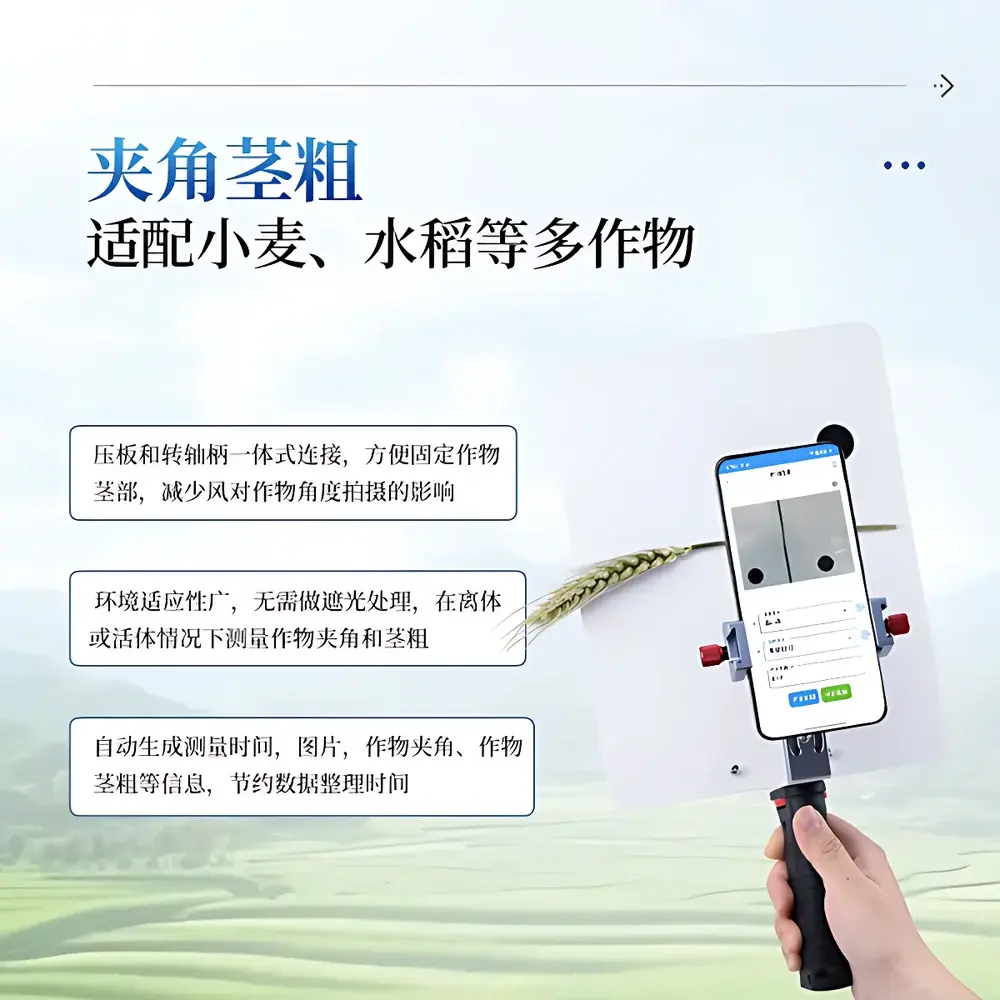
| Leaf-Stem Angle Range | 0–180° |
| Angle Accuracy | ±1° |
| Stem Diameter Range | 0–8 cm |
| Diameter Accuracy | ±1 mm |
| Thousand-Kernel Weight Range | 0–300 g |
| TKW Accuracy | ±2% |
| Plant Height Range | 5–260 cm |
| Height Accuracy | ±1 mm |
| Camera Resolution | 4000 × 3000 |
| Dual-Camera Setup | 50 MP + 12 MP |
| AR Display | 2K-resolution optical see-through AR glasses |
| On-device OS | Android |
| Local Storage | 128–256 GB |
| Data Export Format | Excel (.xlsx) with GPS timestamp, image metadata, and phenotypic parameters |
| Cloud Sync | Wi-Fi / 4G-enabled automatic upload |
Overview
The COMECAUSE IN-XM05 Augmented Reality Wheat Phenotyping System is a field-deployable, modular instrumentation platform engineered for high-throughput, non-destructive acquisition of morphological and architectural traits in wheat (Triticum aestivum) and related cereal crops. Unlike conventional stationary phenotyping platforms, the IN-XM05 integrates real-time augmented reality (AR) visualization with edge-based computer vision and deep learning inference to enable in situ, operator-guided measurement of six core phenotypic dimensions: tiller density per unit area (spike count), spike morphology (length, spikelet number), leaf-stem angle, stem diameter, thousand-kernel weight (TKW), and plant height. Its measurement architecture relies on calibrated photogrammetry, structured-light-assisted depth mapping (for height and angle), and AI-driven pixel-level segmentation trained on multi-season, multi-genotype wheat imagery. Designed for compliance with FAO Crop Ontology standards and aligned with MIAPPE v1.1 metadata requirements, the system delivers traceable, auditable phenotypic data suitable for QTL mapping, genomic selection pipelines, and breeding program decision support.
Key Features
- Real-time AR-guided field imaging: 2K-resolution optical see-through AR glasses overlay measurement frames, scale references, and live confidence indicators directly onto the user’s field of view—eliminating manual framing errors and enabling hands-free, one-person operation.
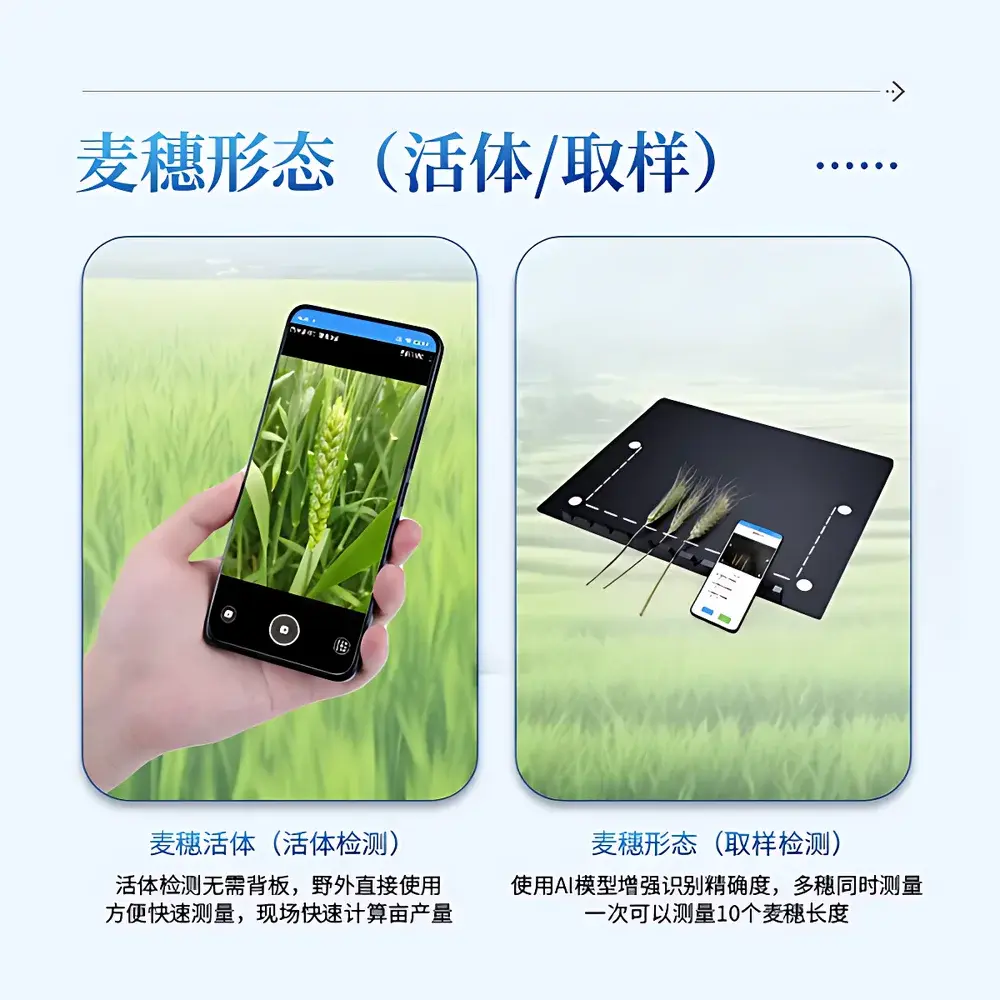
- Modular sensor suite: Interchangeable optical modules support four distinct measurement modes—spike density (1 m² quadrat), spike morphology (5–25 cm), leaf-stem angle & stem diameter (0–180° / 0–8 cm), and plant height (5–260 cm)—all calibrated against NIST-traceable dimensional standards.
- Edge-AI processing: On-device inference (TensorFlow Lite) performs spike detection, spikelet localization, angle regression, and height triangulation without cloud dependency; full batch analysis of up to 60 images completed in <120 seconds.
- Environmental robustness: Automatic white balance, perspective correction for oblique capture, and ambient-light-invariant segmentation ensure consistent accuracy across variable field conditions—from overcast mornings to midday solar zenith angles—without need for shading tents or controlled lighting.
- Regulatory-ready data governance: All measurements embed EXIF metadata (GPS coordinates, UTC timestamp, device ID, operator ID), support audit trails, and comply with ISO/IEC 17025 documentation principles for laboratory-developed tests (LDTs) in agronomic research.
Sample Compatibility & Compliance
The IN-XM05 supports live (in planta) and ex situ (harvested sample) phenotyping across wheat growth stages from tillering through physiological maturity. It is validated for use with common winter and spring wheat cultivars (e.g., Norin 10 derivatives, CIMMYT elite lines) and exhibits cross-species utility for rice (Oryza sativa) and oilseed rape (Brassica napus) in leaf-angle and stem-diameter modules. All measurement protocols adhere to standardized phenotyping descriptors defined in the Wheat Phenotyping Handbook (CIMMYT, 2022) and align with OECD Test Guideline 211 (Plant Biotechnology). Data output conforms to ISA-Tab format for integration into BreedBase and BrAPI-compliant databases. The system meets CE marking requirements for portable electronic instrumentation (2014/30/EU EMC Directive) and RoHS 3 compliance for restricted substances.
Software & Data Management
The embedded Android application provides role-based access control, offline-first operation, and synchronized cloud backup via encrypted HTTPS endpoints. Measurement workflows enforce mandatory metadata entry (plot ID, growth stage code, observer initials) prior to image capture. All raw images, processed masks, and numerical outputs are stored locally with SHA-256 checksums for integrity verification. Export packages include annotated JPEGs, CSV summaries, and Excel workbooks containing calculated yield proxies (theoretical yield = spikes/m² × average spikelets × TKW × 0.001). Audit logs record every parameter modification, export event, and firmware update—supporting GLP-aligned data review cycles. Integration with third-party LIMS and ELN systems is enabled via RESTful API (BrAPI v2.0 compliant).
Applications
- High-resolution mapping of canopy architecture QTLs: Quantitative linkage analysis of leaf angle distribution and stem rigidity traits under drought or high-density planting regimes.
- Field-scale yield forecasting: Integration of real-time spike count, spikelet density, and TKW estimates into APSIM-Wheat simulation inputs for pre-harvest yield projection at sub-field resolution.
- Functional validation of gene-edited lines: Rapid phenotyping of CRISPR-Cas9 knockouts targeting TaDEP1, TaGW2, or TaSPL14 orthologs across replicated field trials.
- Phenomic selection training sets: Generation of >10,000 labeled images/year for supervised model retraining—accelerating development of next-generation cultivar-specific detectors.
- Extension service digitization: Deployment by national agricultural research systems (NARS) for participatory varietal selection (PVS) with farmer cooperatives using bilingual (EN/ZH) interface and voice-assisted guidance.
FAQ
Does the system require internet connectivity to perform measurements?
No. All image capture, AI inference, and calculation occur on-device. Internet connectivity is required only for cloud synchronization, software updates, or remote data review.
Can the AR glasses be used with prescription lenses?
Yes. The 2K optical waveguide display is compatible with standard over-glasses mounting frames and accommodates diopter adjustments from −6D to +4D.
How is measurement traceability ensured across multiple operators and sites?
Each unit ships with a factory calibration certificate referencing NIST SRM 2036 (dimensional standard). Field recalibration is performed using included stainless-steel reference rods with engraved metrology marks traceable to ISO 3611.
Is the software compatible with Windows-based desktop analysis environments?
Yes. Exported Excel files contain structured worksheets compatible with R (phenoptr, breedR), Python (scikit-phenotype), and SAS/STAT for downstream statistical modeling and mixed-effects ANOVA.
What maintenance is required for long-term field deployment?
No routine calibration is needed within 12 months. Lens cleaning with ethanol-moistened microfiber cloth and quarterly firmware validation against reference test images are recommended best practices.
Related Products




