
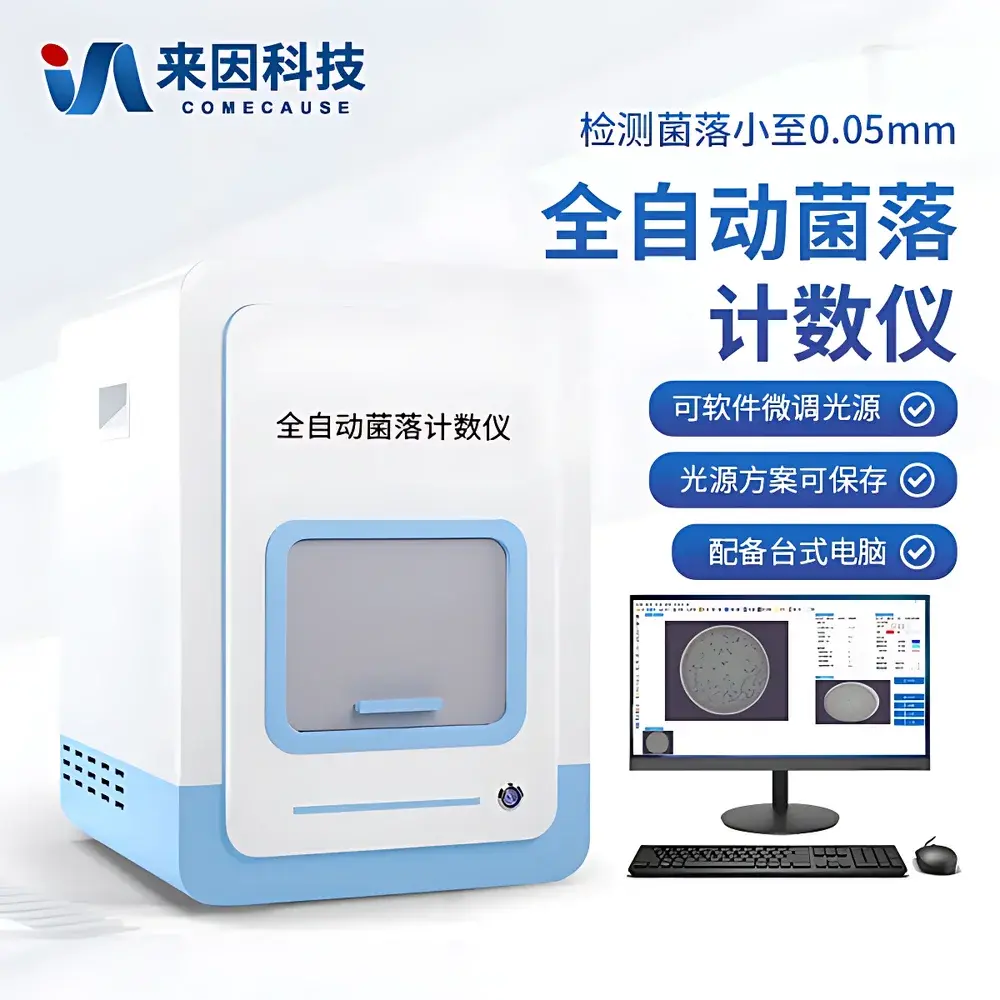
COMECAUSE IN-YJ400 Automated Colony Counter and Zone-of-Inhibition Analyzer
| Brand | COMECAUSE |
|---|---|
| Origin | Shandong, China |
| Manufacturer Type | OEM Manufacturer |
| Country of Origin | China |
| Model | IN-YJ400 |
| Price | USD 13,800 (FOB Qingdao) |
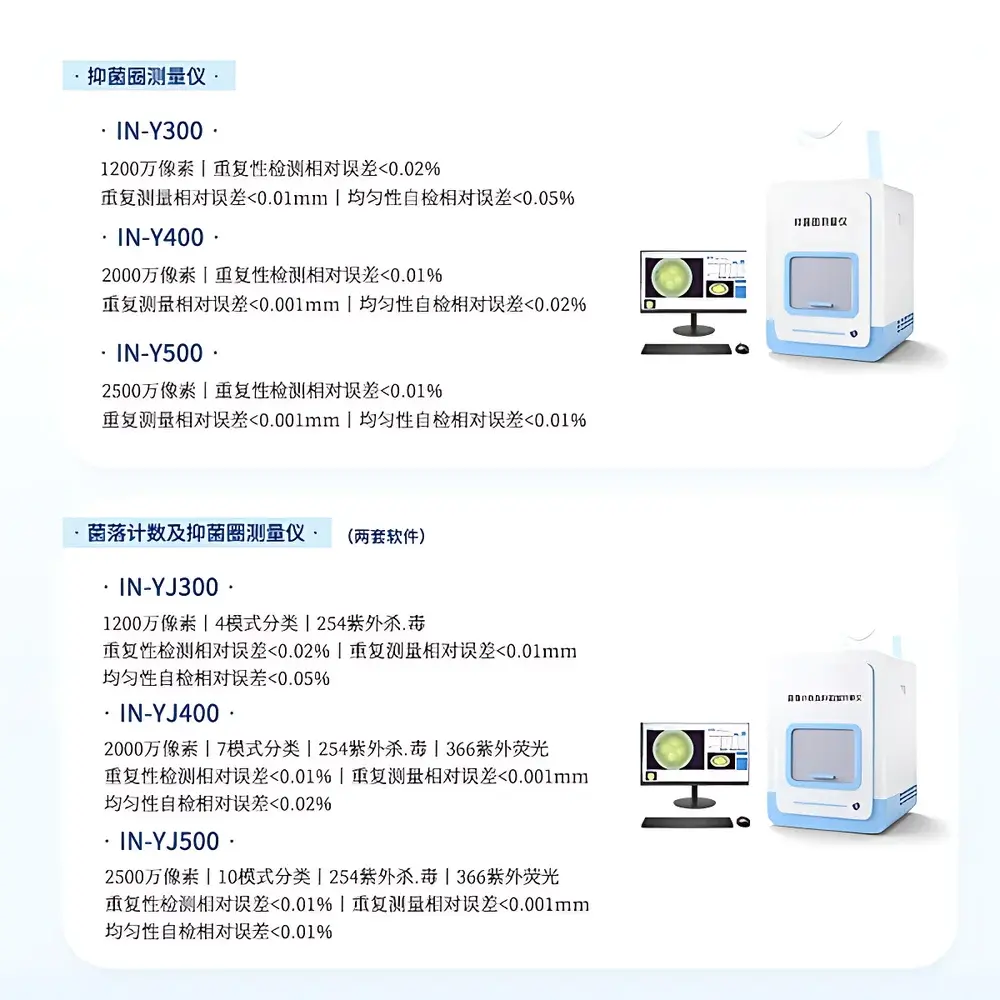
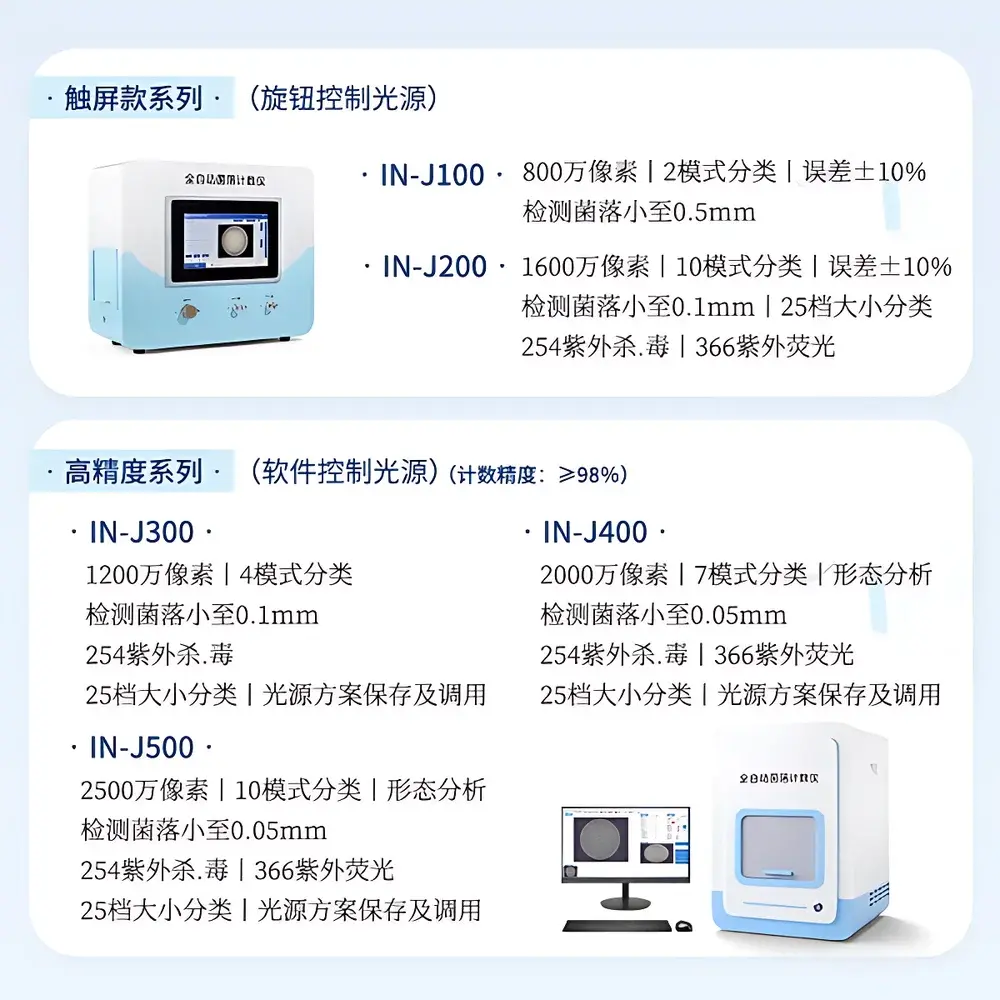
| Imaging Sensor | 20 MP color CMOS |
| Lens | 12 MP, 12 mm focal length |
| Minimum Detectable Colony Size | 0.05 mm |
| Counting Accuracy | ≥98% |
| Counting Speed | 1200 CFU/s |
| Petri Dish Compatibility | 90–110 mm diameter |
| Illumination | Dual independent top/bottom LED lighting (RGB + white), 254 nm UV sterilization lamp, 366 nm UV fluorescence excitation lamp |
| Software | Integrated colony analysis and zone-of-inhibition quantification module with FDA 21 CFR Part 11–compliant audit trail, multi-user account management, and cloud-sync capability |
Overview
The COMECAUSE IN-YJ400 Automated Colony Counter and Zone-of-Inhibition Analyzer is a dual-function digital imaging platform engineered for quantitative microbiological assessment in regulated and research environments. It operates on the principle of high-resolution digital image acquisition coupled with algorithmic segmentation and morphometric analysis—enabling precise enumeration of viable microbial colonies and objective measurement of antimicrobial inhibition zones. Unlike manual or semi-automated systems, the IN-YJ400 employs calibrated pixel-to-millimeter mapping, adaptive illumination control, and multi-spectral optical detection to resolve overlapping, low-contrast, or fluorescently labeled colonies without user-dependent thresholding bias. Its closed-chamber dark-box architecture eliminates ambient light interference, while integrated 254 nm UV irradiation ensures routine chamber decontamination between runs—critical for maintaining assay integrity in GLP- and GMP-aligned workflows.
Key Features
- 20-megapixel color CMOS sensor with 12-mm fixed-focal-length lens, delivering sub-50 µm spatial resolution at standard petri dish working distance
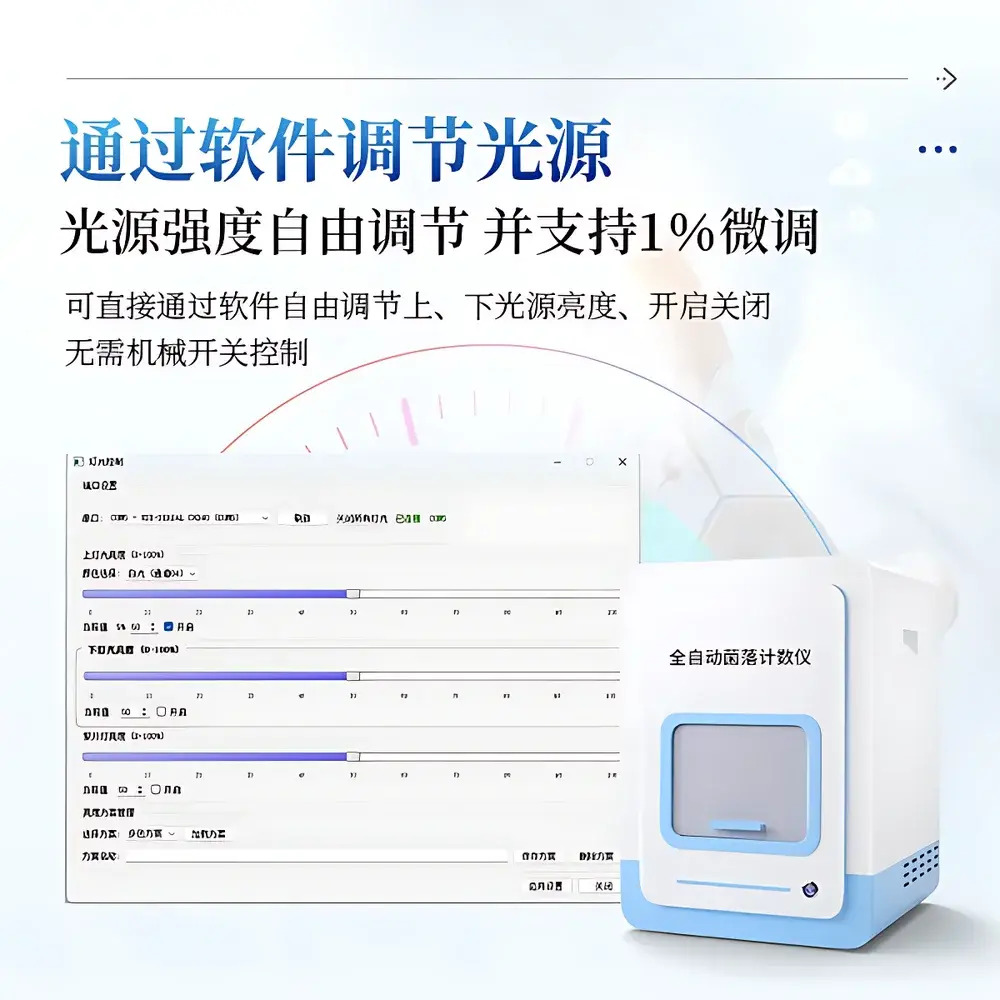
- Dual independent illumination system: top-mounted RGB+white LED ring (360° uniform diffusion) and bottom-transmitted white LED; both adjustable in 1% brightness increments via software interface
- Dedicated UV modules: 254 nm for internal chamber sterilization and 366 nm for GFP-expressing strains (e.g., E. coli DH5α-pGLO) and CompactDry™/RIDA™ chromogenic media
- Seven pre-optimized colony recognition modes—including clustered, micro-colony, high-background, and membrane-filter configurations—each trained on >10,000 annotated images from ISO 4833-1:2013 and USP <61> reference datasets
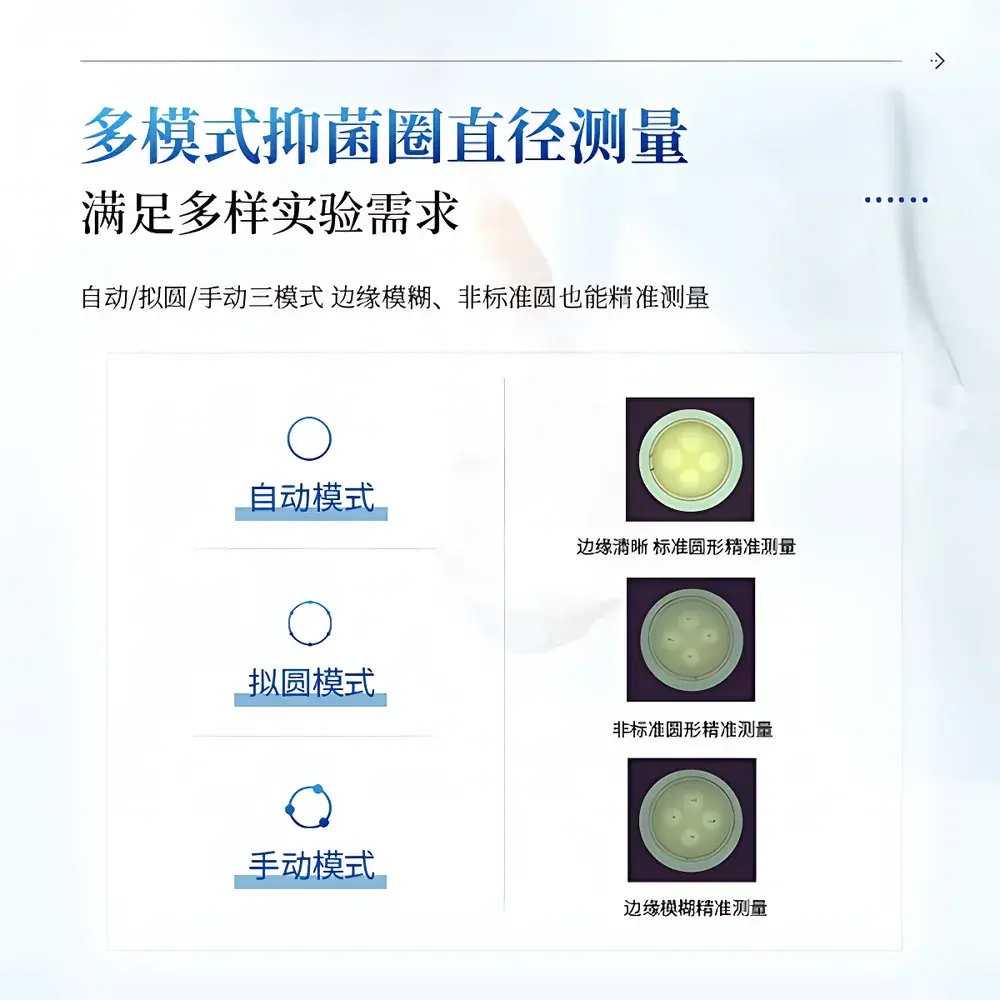
- Zone-of-inhibition analysis engine supporting USP monograph-compliant single-dose assay and Chinese Pharmacopoeia 2025 Edition two- and three-dose bioassay protocols
- Traceable calibration: auto-calibration using intrinsic camera parameters; manual calibration via physical ruler (colony mode) or NIST-traceable stainless-steel standard plate (inhibition zone mode)
Sample Compatibility & Compliance
The IN-YJ400 accommodates standard 90–110 mm petri dishes, as well as smaller formats (e.g., 35 mm, 60 mm) positioned centrally within the field of view. It supports all common solid media—including TSA, PCA, MacConkey, VRBA, mEndo, and chromogenic formulations—and is validated for use with membrane filtration (e.g., Millipore HA filters), filter papers, and CompactDry™ dry-reagent plates. All measurement algorithms adhere to ISO 4833-1:2013 (microbial enumeration), ISO 20776-1:2021 (antimicrobial susceptibility testing), and CLSI M02-A13 (disk diffusion). The system’s audit trail functionality complies with FDA 21 CFR Part 11 requirements for electronic records and signatures, including immutable timestamps, operator ID logging, and change history for every image annotation, parameter adjustment, or result export.
Software & Data Management
The proprietary COMECAUSE MicroScan Suite v4.2 provides bilingual (English/Chinese) GUI with role-based access control. Each user operates within an isolated data partition; raw images, processed masks, and metadata are stored in AES-256 encrypted local SQLite database with optional AWS S3 or on-premise NAS synchronization. All statistical outputs—including total CFU, log reduction, zone diameter (mm), potency (IU/mL), and inter-assay CV%—are exportable in PDF (with embedded digital signature), CSV, and XML formats. The audit trail captures every action: login/logout events, brightness adjustments, calibration updates, manual corrections, and report generation—retained for ≥36 months per GLP archival standards. Cloud integration enables remote monitoring, cross-laboratory method harmonization, and real-time QC dashboarding.
Applications
- Antibiotic potency testing in pharmaceutical QC labs per USP <81> and ChP 2025
- Environmental monitoring of cleanrooms and water systems per ISO 14644 and EPA Method 1603
- Food safety validation per ISO 6579-1 (Salmonella), ISO 16649-2 (E. coli), and AOAC 990.12
- Bioburden assessment of medical devices under ISO 11737-1
- Research-scale screening of novel antimicrobial peptides or phage lysates
- Teaching laboratories requiring reproducible, hands-on microbiology quantification
FAQ
Does the IN-YJ400 support regulatory submissions to FDA or EMA?
Yes—the system meets FDA 21 CFR Part 11 requirements for electronic records, including audit trail, electronic signatures, and data integrity controls. Validation documentation (IQ/OQ/PQ templates) and traceable calibration certificates are provided.
Can it distinguish colonies of similar morphology but different species?
It does not perform taxonomic identification. However, when combined with chromogenic or fluorogenic media (e.g., CHROMagar™, BLAST™), its multi-channel illumination and hue-saturation-value (HSV) segmentation enable species-discriminatory counting based on color and fluorescence response.
What is the uncertainty associated with zone diameter measurement?
Under repeatability conditions (same operator, same plate, same lighting), the standard deviation is ≤0.001 mm; under intermediate precision (different days, operators), relative standard deviation remains ≤0.02% per ISO 5725-2.
Is cloud data storage mandatory?
No—cloud sync is optional. All core functions operate offline; cloud features are enabled only upon explicit user configuration and authentication.
How is firmware updated?
Updates are delivered via secure HTTPS download through the MicroScan Suite interface; each release includes SHA-256 checksum verification and rollback capability.





