
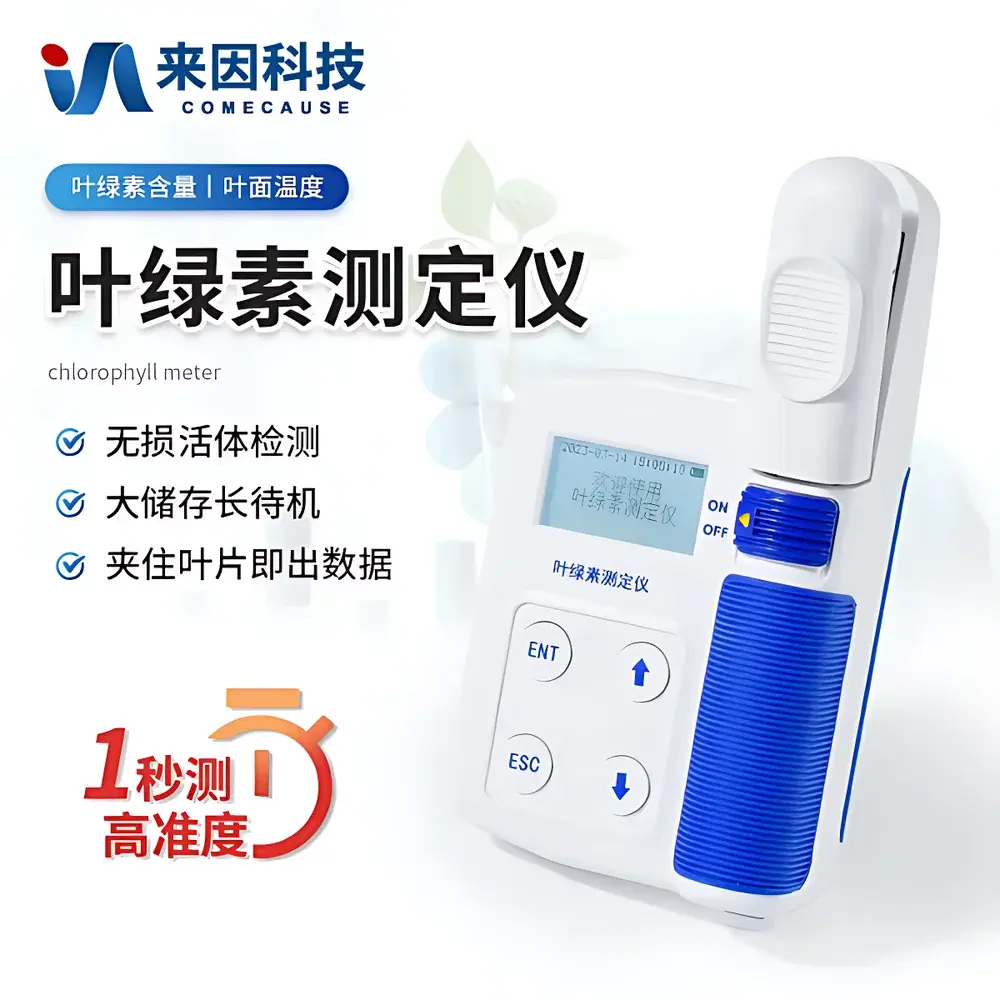
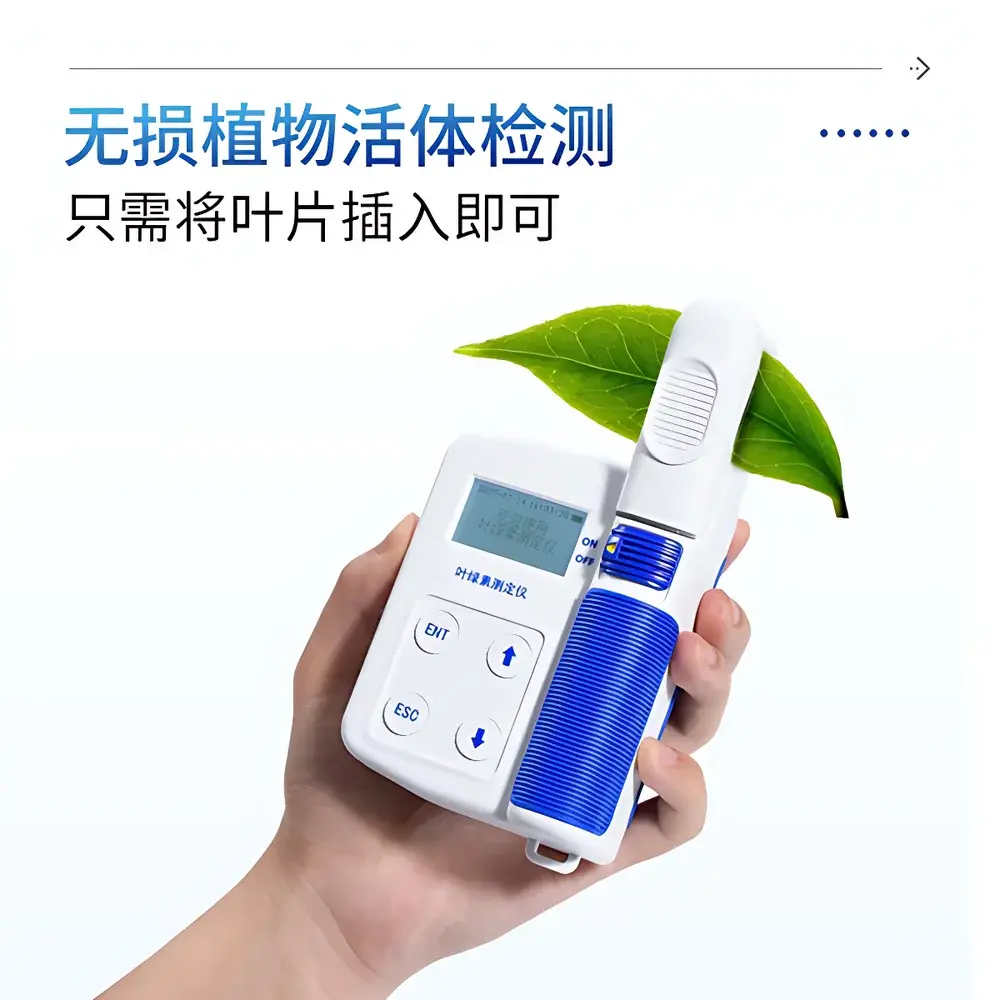
COMECAUSE IN-YL02 Portable Chlorophyll Meter
| Brand | COMECAUSE |
|---|---|
| Origin | Shandong, China |
| Manufacturer Type | Direct Manufacturer |
| Model | IN-YL02 |
| Measurement Range | 0.0–99.99 SPAD |
| Measurement Time | <0.8 s |
| Measurement Area | 2 mm × 3 mm |
| Accuracy | ±1.0 SPAD (at 0–50 SPAD, 25 °C) |
| Operating Temperature | −10 °C to 50 °C |
| Leaf Temperature Range | −10 °C to 99.9 °C |
| Leaf Temperature Accuracy | ±0.5 °C |
| Repeatability | ±0.3 SPAD (0–50 SPAD) |
| Data Storage | 16 GB internal flash memory (grouped storage supported) |
| Display | High-contrast LCD |
| Power | 4.2 V Li-ion rechargeable battery (3000 mAh) |
| Weight | 230 g |
| Humidity Limit | ≤85% RH (non-condensing) |
Overview
The COMECAUSE IN-YL02 Portable Chlorophyll Meter is a field-deployable optical instrument engineered for rapid, non-destructive quantification of relative chlorophyll content in intact plant leaves. It operates on the principle of dual-wavelength absorbance spectroscopy—specifically leveraging differential absorption at 650 nm (strongly absorbed by chlorophyll a) and 940 nm (minimally absorbed, serving as a reference for leaf thickness and structural interference). By calculating the ratio of transmitted intensities at these two wavelengths, the device outputs a dimensionless SPAD (Soil-Plant Analysis Development) index—a validated proxy strongly correlated with chlorophyll concentration per unit leaf area (µg/cm²), particularly within the physiologically relevant range of 0–50 SPAD. Unlike destructive chemical extraction methods (e.g., acetone-based spectrophotometry per ASTM D7467 or ISO 10254), the IN-YL02 enables repeated longitudinal monitoring of individual leaves without compromising plant integrity, making it indispensable for nitrogen status assessment, phenotyping trials, and stress physiology studies under natural or controlled environments.
Key Features
- Non-invasive, real-time measurement: Insertion-based leaf clamping mechanism ensures consistent optical path length; no tissue excision or solvent handling required.
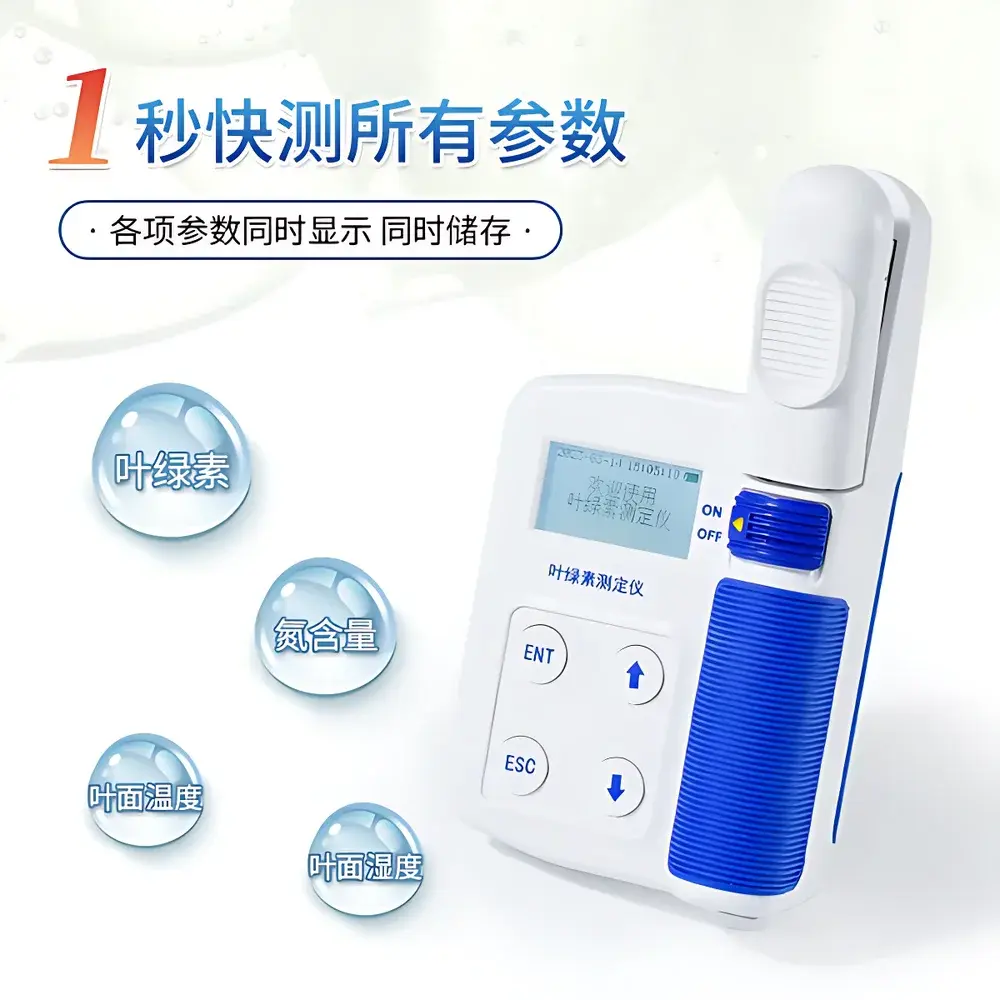
- Dual-parameter acquisition: Simultaneous display and storage of SPAD value and leaf surface temperature (measured via integrated thermistor) on a single high-contrast LCD screen—enabling immediate correction for thermal effects on chlorophyll fluorescence yield.
- High metrological fidelity: ±1.0 SPAD accuracy (0–50 SPAD, 25 °C) and ±0.3 SPAD repeatability meet ISO 17025-aligned calibration traceability requirements for field-grade physiological instrumentation.
- Robust data architecture: 16 GB onboard flash memory supports grouped data logging (e.g., by plot, treatment, date), timestamping, and direct export via USB-C interface—no proprietary software required for CSV or TXT file retrieval.
- Field-optimized ergonomics: Weighing only 230 g with an IP54-rated enclosure, the unit operates continuously for >12 hours on a single 3000 mAh Li-ion charge and functions reliably from −10 °C to 50 °C ambient conditions.
- Bilingual operational interface: Seamless toggle between English and Chinese language modes—designed for international research teams and multi-regional agronomic deployments.
Sample Compatibility & Compliance
The IN-YL02 accommodates broadleaf species (e.g., maize, wheat, soybean, rice, Arabidopsis thaliana) and conifer needles within its 2 mm × 3 mm measurement aperture. Its optical design minimizes edge effects and compensates for minor variations in leaf thickness and epidermal scattering. While SPAD values are not absolute chlorophyll concentrations, they are empirically calibrated against laboratory HPLC-validated standards per USDA-ARS protocols and exhibit strong linear correlation (R² > 0.92) with total chlorophyll a + b across C3 and C4 species. The instrument complies with IEC 61000-4 electromagnetic compatibility standards and meets GLP documentation requirements for field data capture—including audit-trail-capable timestamping and user-defined group identifiers for traceable experimental metadata.
Software & Data Management
Data export is performed natively via USB-C connection to Windows/macOS/Linux systems using standard mass-storage class (MSC) protocol—no drivers or vendor-specific applications needed. Exported files include .CSV records containing SPAD, leaf temperature, measurement time (UTC), group ID, and sequence number. Optional microSD card slot (not included) allows offline backup and transfer to GIS platforms or statistical analysis suites (R, Python pandas, JMP). Firmware updates are delivered via signed binary packages verified through SHA-256 checksums, supporting secure version control in regulated agricultural research settings governed by FDA 21 CFR Part 11 principles for electronic records.
Applications
- Nitrogen use efficiency (NUE) monitoring: Tracking SPAD dynamics during vegetative and reproductive stages to optimize top-dressing timing and dosage—reducing fertilizer over-application and nitrate leaching risks.
- Abiotic stress phenotyping: Quantifying chlorophyll degradation kinetics under drought, salinity, heavy metal exposure, or ozone fumigation per OECD TG 227 guidelines.
- Crop breeding pipelines: High-throughput screening of chlorophyll retention traits in segregating populations—accelerating selection for stay-green genotypes in cereals and legumes.
- Urban forestry & landscape management: Assessing photosynthetic capacity of ornamental trees and shrubs to inform irrigation scheduling and pruning interventions.
- Educational field labs: Teaching plant physiology concepts including light absorption spectra, photosynthetic pigment composition, and environmental modulation of pigment synthesis.
FAQ
What does SPAD actually represent—and how does it relate to absolute chlorophyll concentration?
SPAD is a unitless index derived from the logarithmic ratio of red (650 nm) and infrared (940 nm) transmittance. It correlates strongly—but non-linearly—with chlorophyll a + b content (µg/cm²) when calibrated against species-specific regression models. Absolute quantification requires lab-based validation; SPAD serves best as a comparative metric within genotype or treatment groups.
Can the IN-YL02 be used on rolled, hairy, or waxy leaves?
Yes—its pressure-controlled clamp ensures uniform contact, and the 940 nm reference channel mitigates interference from cuticular wax and trichomes. However, extreme leaf curling (>45° curvature) may reduce measurement consistency and is flagged in the operator manual.
Is temperature compensation applied automatically during SPAD calculation?
No—leaf temperature is measured independently and displayed alongside SPAD. Users must apply empirical correction factors (e.g., −0.15 SPAD/°C above 25 °C for wheat) based on published species-specific thermal response curves.
How frequently should calibration verification be performed?
We recommend daily verification using the supplied ceramic calibration tile before field deployment. Full recalibration by an accredited service center is advised every 12 months or after 5,000 measurements—documented in accordance with ISO/IEC 17025 Clause 6.5.
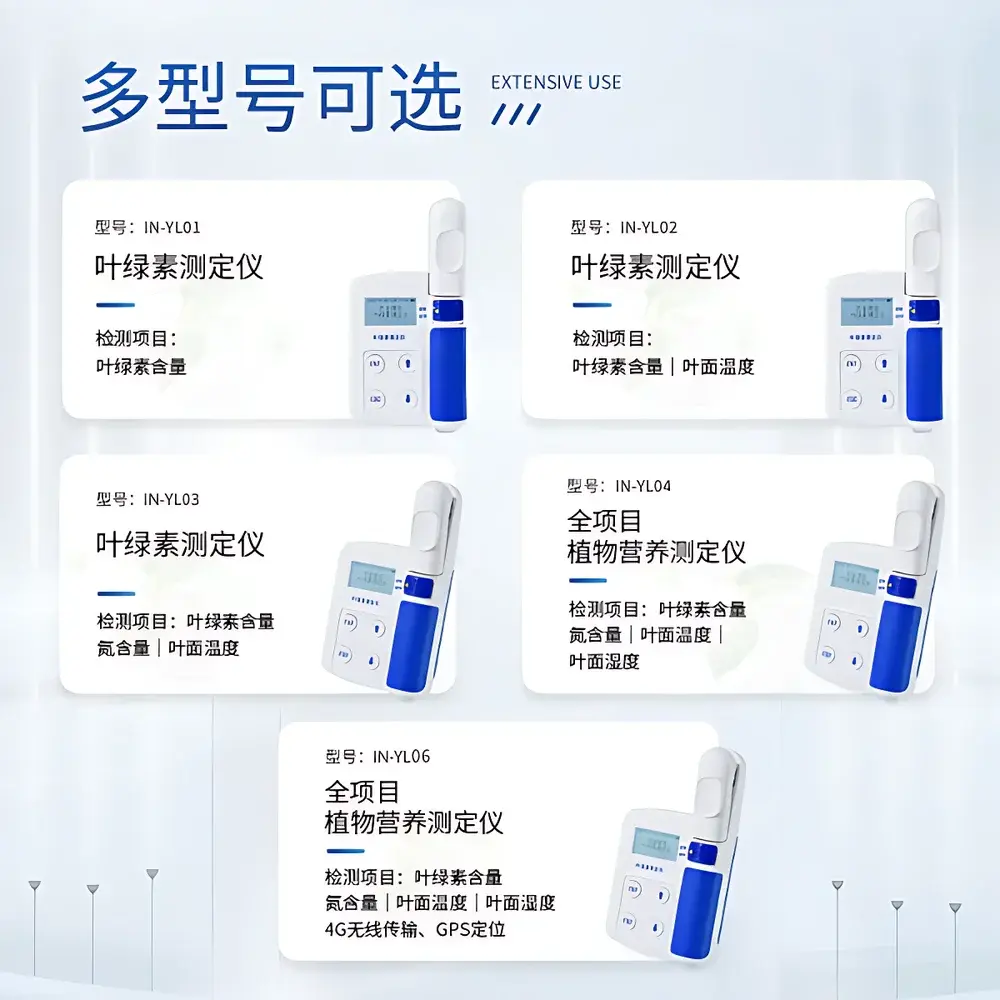
Does the instrument support GPS-tagged measurements?
The base IN-YL02 model does not integrate GNSS. However, its timestamped CSV output is fully compatible with post-hoc georeferencing using external GPS loggers or mobile mapping apps that record concurrent location stamps.





