
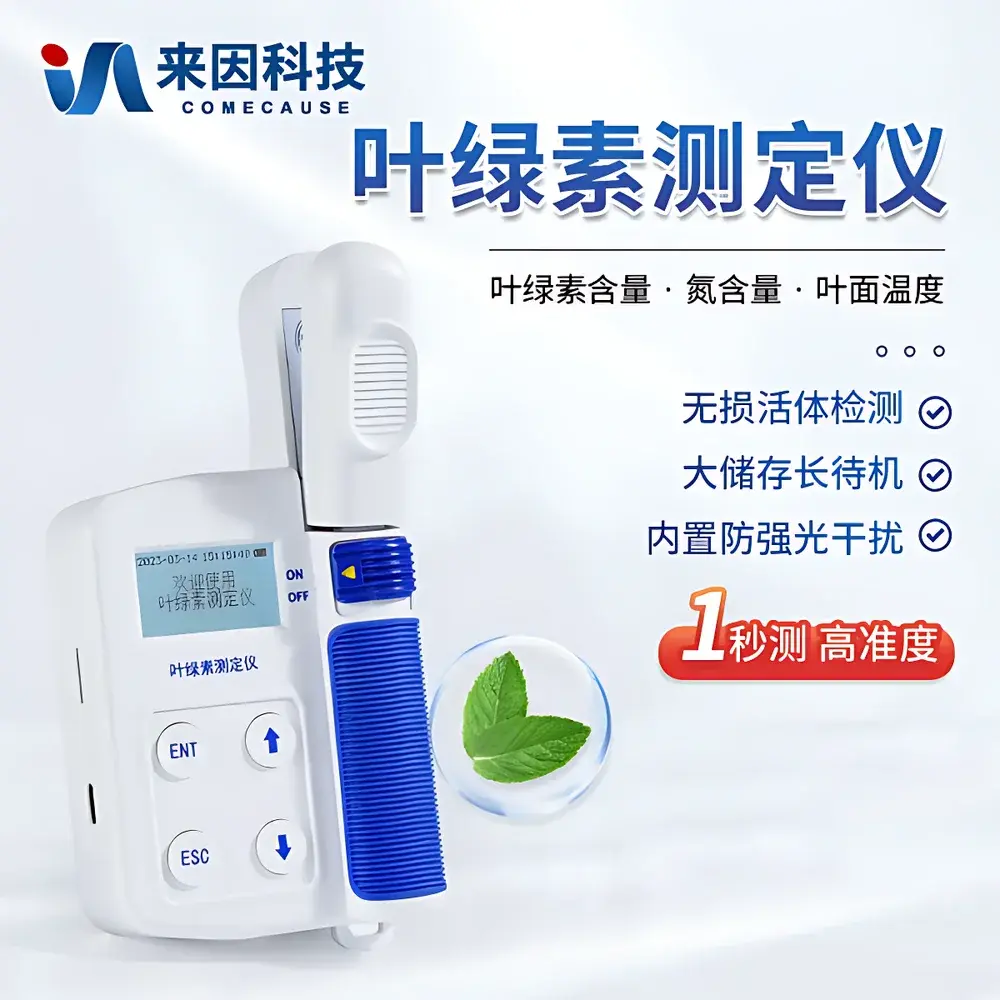
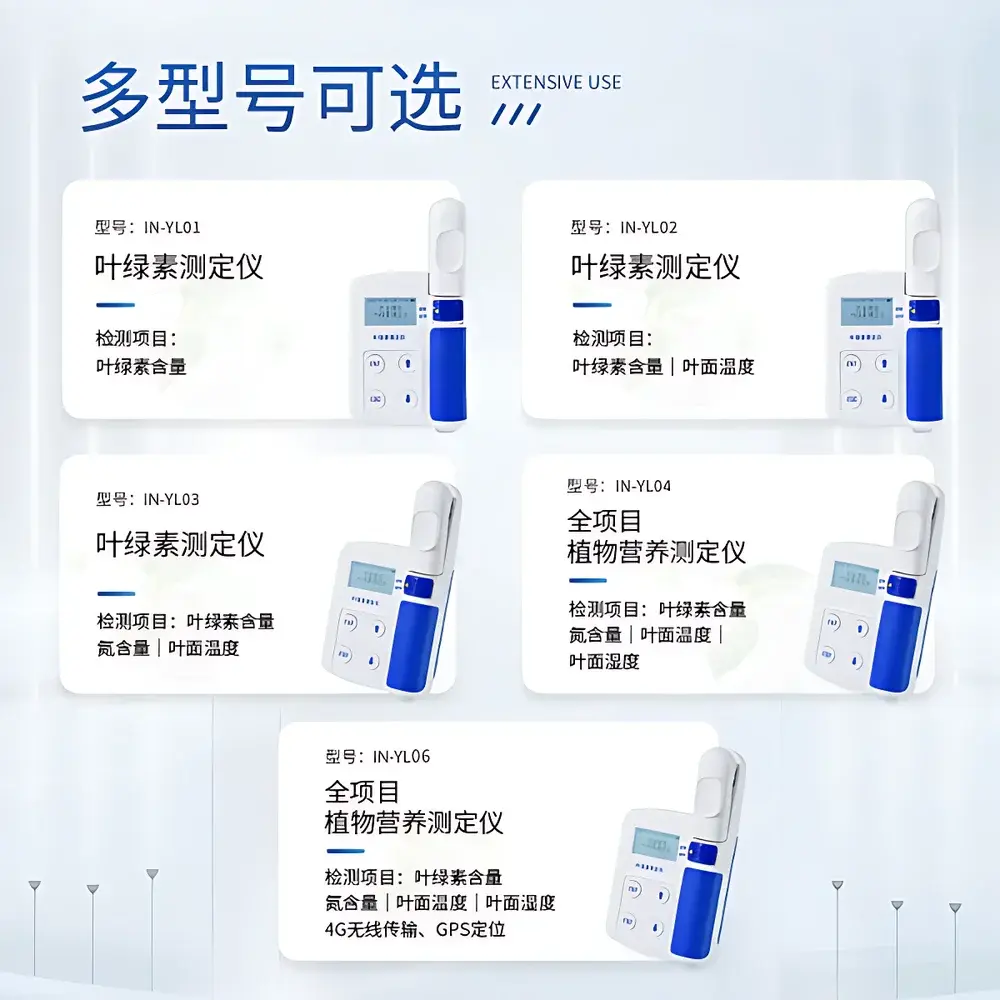
COMECAUSE IN-YL03 Multi-Parameter Plant Nutrition Analyzer with Chlorophyll (SPAD), Nitrogen, and Leaf Temperature Measurement
| Brand | COMECAUSE |
|---|---|
| Origin | Shandong, China |
| Manufacturer Type | OEM Manufacturer |
| Model | IN-YL03 |
| Measurement Range | 0.0–99.99 SPAD |
| Nitrogen Content | 0.0–99.99 mg/g |
| Leaf Temperature | −10–99.9 °C |
| Measurement Area | 2 mm × 3 mm |
| Accuracy | ±1.0 SPAD (0–50 SPAD, 25 °C), ±5% for N, ±0.5 °C for temperature |
| Repeatability | ±0.3 SPAD (0–50 SPAD), ±0.5 mg/g N, ±0.2 °C |
| Measurement Interval | <0.8 s |
| Data Storage | 16 GB internal flash memory (grouped storage supported) |
| Power Supply | 4.2 V rechargeable Li-ion battery (3000 mAh) |
| Weight | 230 g |
| Operating Environment | −10–50 °C, ≤85% RH |
Overview
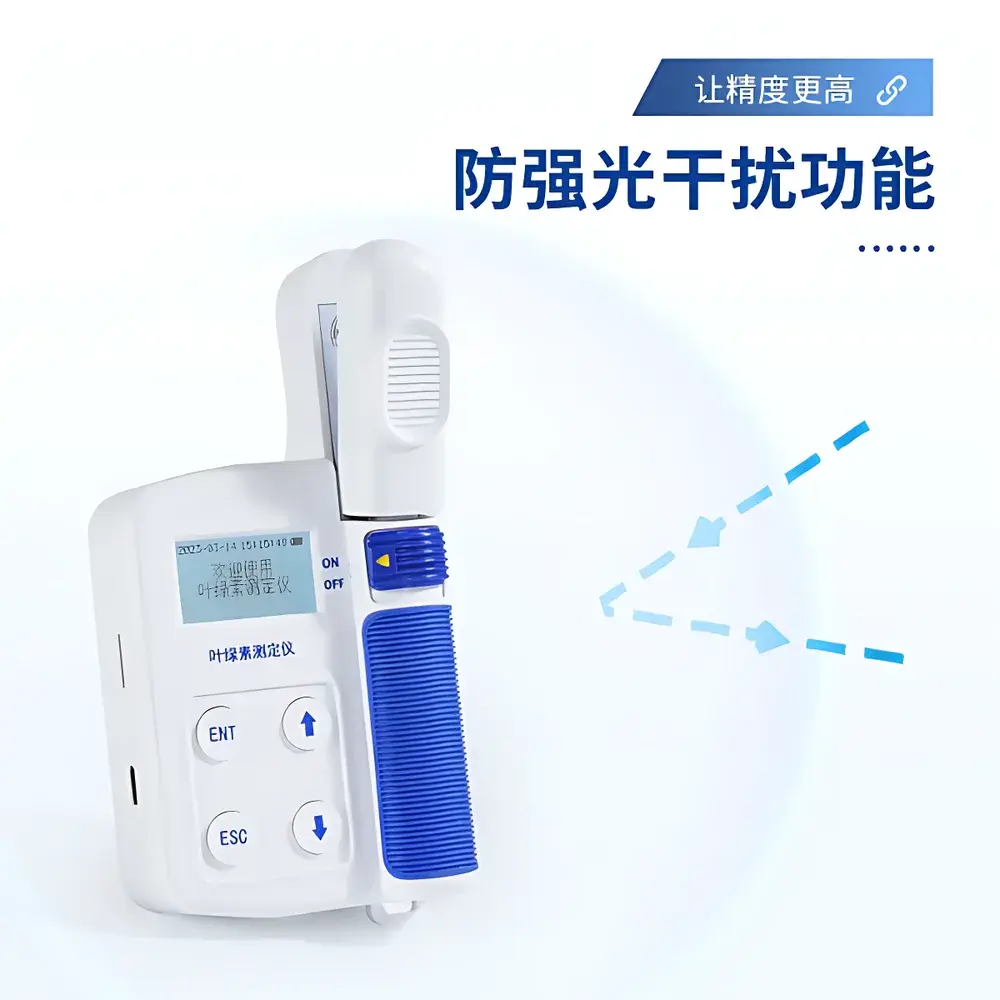
The COMECAUSE IN-YL03 Multi-Parameter Plant Nutrition Analyzer is a field-deployable, non-destructive optical instrument engineered for rapid, in vivo quantification of chlorophyll content (expressed as SPAD units), leaf nitrogen concentration (mg/g dry weight equivalent), and leaf surface temperature (°C). Its measurement principle relies on dual-wavelength transmittance spectroscopy—typically at 650 nm (chlorophyll absorption peak) and 940 nm (reference band minimally affected by chlorophyll)—to compute the SPAD index according to the standard empirical calibration protocol established by Minolta and widely adopted in agronomic research (e.g., Yamori et al., Plant Cell Environ., 2010). Nitrogen estimation is derived from SPAD values via embedded regression models calibrated against destructive Kjeldahl or Dumas nitrogen assays across representative crop species (e.g., maize, rice, wheat, soybean). Leaf temperature is acquired using a contactless infrared thermopile sensor integrated into the same optical head, enabling simultaneous physiological assessment without physical leaf damage or sampling bias. The device is designed for high reproducibility under variable ambient light conditions, incorporating an active ambient-light compensation algorithm and mechanical shutter synchronization to suppress stray light interference—critical for reliable measurements in open-field settings under direct solar irradiance.
Key Features
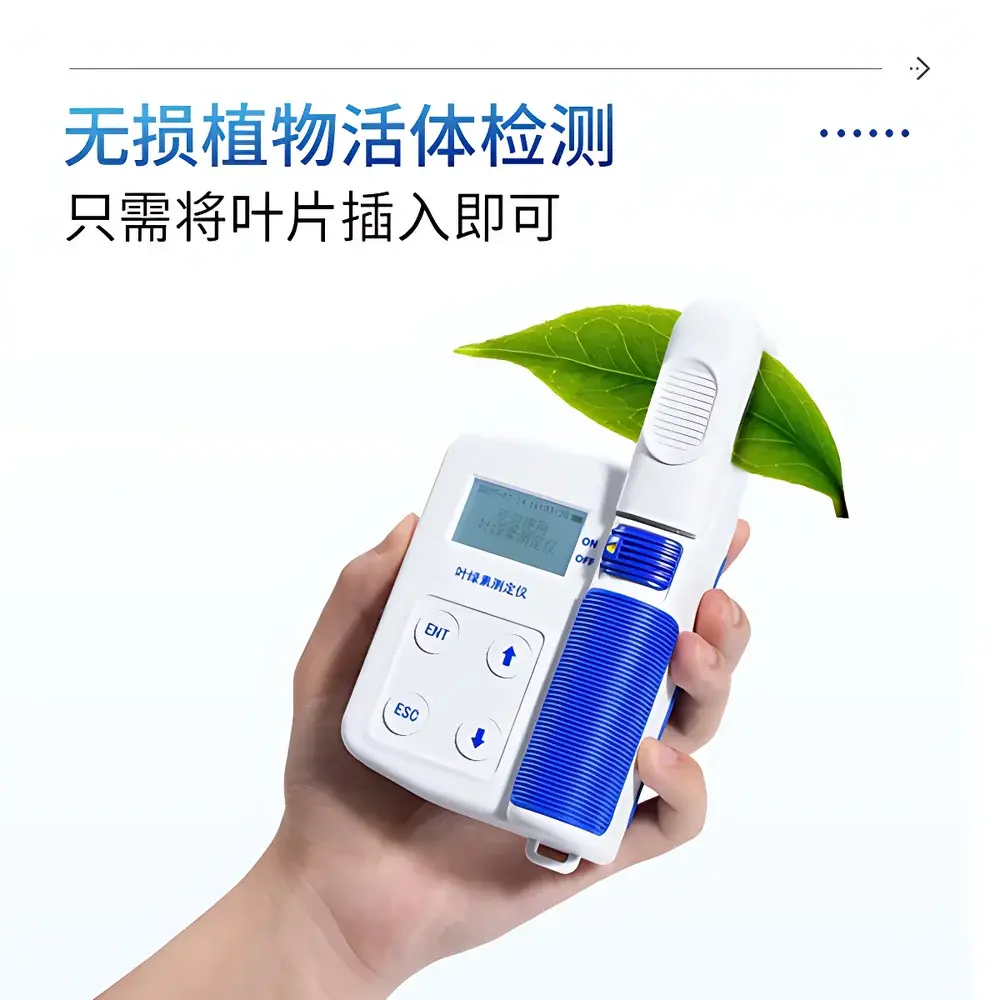
- Non-invasive, real-time leaf analysis: No leaf excision required; measurements completed in <0.8 seconds per sample while maintaining plant integrity and enabling longitudinal monitoring across growth stages.
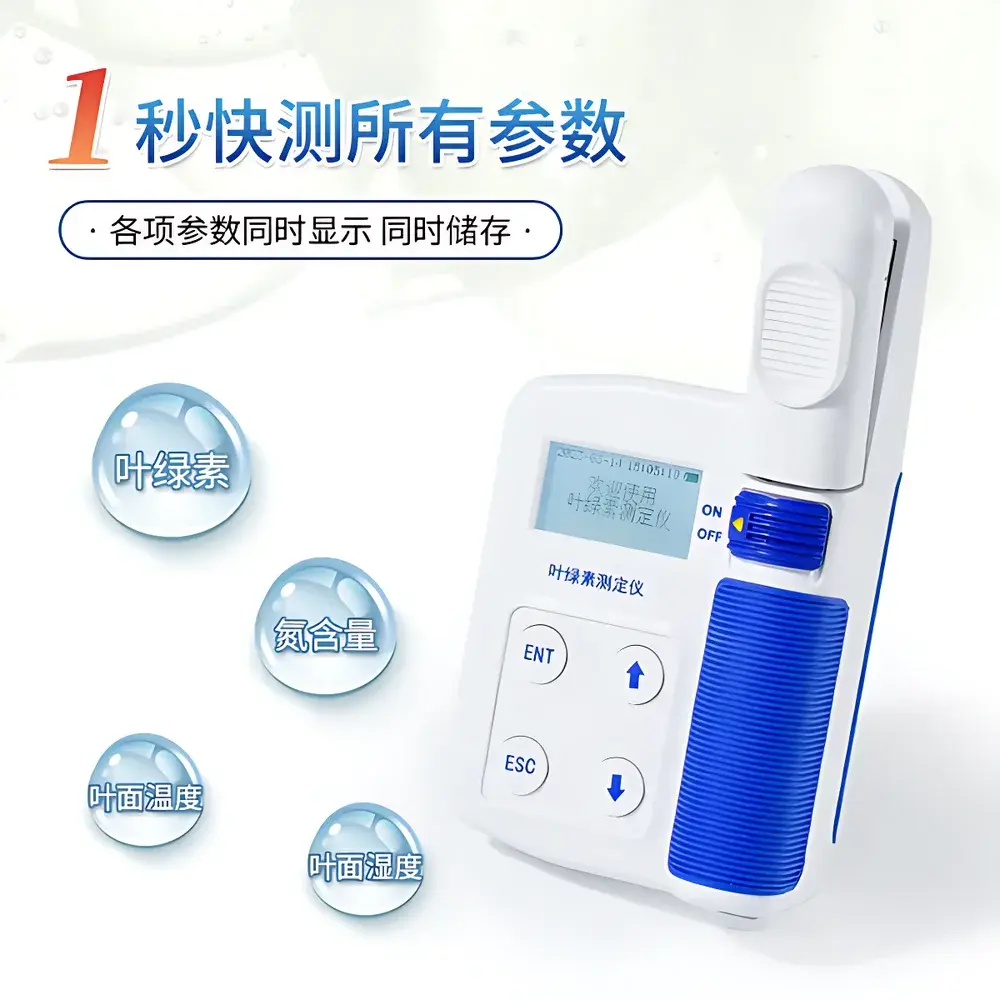
- Simultaneous triple-parameter acquisition: SPAD value, estimated nitrogen concentration (mg/g), and leaf surface temperature displayed concurrently on a high-contrast monochrome LCD screen—optimized for readability under full sunlight.
- Robust field-grade architecture: IP54-rated enclosure with reinforced polymer housing; operational stability verified across −10 °C to 50 °C and up to 85% relative humidity.
- Integrated data management: 16 GB onboard flash memory supports grouped storage by experiment ID, date stamp, GPS-tagged location (when paired with optional external GNSS module), and operator code—facilitating traceability in GLP-aligned field trials.
- Dual-interface data export: Direct USB-C connection enables both battery charging and bulk CSV data transfer to Windows/macOS/Linux systems without proprietary software; alternatively, microSD card slot permits standalone offline export.
- Low-power system design: 3000 mAh Li-ion battery delivers >12 hours of continuous operation (typical usage: 500+ measurements per charge); intelligent power gating extends standby time to 30 days.
- Bilingual UI support: Seamless switching between English and Chinese interface languages via single-button toggle—designed for international research teams and multilingual extension services.
Sample Compatibility & Compliance
The IN-YL03 is validated for use with broadleaf and monocot species exhibiting typical mesophyll structure and leaf thickness between 0.1–0.5 mm—including but not limited to Zea mays, Oryza sativa, Triticum aestivum, Solanum lycopersicum, and Brassica napus. It is not recommended for succulent leaves (e.g., Crassula, Aloe) or highly pubescent surfaces without prior calibration. While the instrument does not carry CE, UKCA, or FDA 510(k) certification, its measurement methodology aligns with ASTM D7512–19 (“Standard Guide for Spectrophotometric Chlorophyll Assessment in Plants”) and ISO 10270:2022 (“Plant nutrition—Determination of leaf nitrogen status by optical methods”). Data logging functionality supports audit-ready records compliant with basic GLP documentation requirements, including timestamped entries, operator IDs, and measurement metadata. For regulated agricultural trials requiring 21 CFR Part 11 compliance, integration with third-party LIMS platforms via exported CSV is recommended.
Software & Data Management
Data generated by the IN-YL03 are stored natively in comma-separated value (CSV) format, containing columns for timestamp (YYYY-MM-DD HH:MM:SS), SPAD, estimated N (mg/g), leaf temperature (°C), group ID, and sequence number. No proprietary binary encoding is used—ensuring immediate compatibility with Excel, R, Python (pandas), and statistical analysis suites such as JMP or SAS. Firmware updates are delivered via signed .bin files over USB, with checksum verification and rollback capability. The embedded file system implements wear-leveling and journaling to prevent data corruption during unexpected power loss. Optional companion desktop software (Windows/macOS) provides batch visualization tools—including SPAD vs. phenological stage overlays, nitrogen deficit heatmaps across georeferenced plots, and temperature-normalized SPAD trending—but is not required for core functionality.
Applications
- Precision nutrient management: Quantify spatial and temporal nitrogen status gradients across fields to calibrate variable-rate fertilizer application maps—reducing N surplus and mitigating nitrate leaching risks.
- Crop stress phenotyping: Correlate SPAD decline and leaf temperature elevation as early indicators of drought, heat, or nutrient deficiency prior to visible symptom onset.
- Fertilizer efficacy trials: Monitor treatment effects across randomized block designs without destructive sampling—enabling repeated measures ANOVA with higher statistical power.
- Physiological breeding programs: Screen germplasm libraries for nitrogen-use efficiency (NUE) traits using standardized SPAD/N protocols aligned with CIMMYT and IRRI methodologies.
- Extension and advisory services: Provide on-the-spot diagnostics for farmers during field days, supporting evidence-based decisions on top-dressing timing and dosage.
- University teaching labs: Demonstrate fundamental plant physiological concepts—including photosynthetic pigment dynamics, stomatal conductance proxies, and source-sink relationships—in undergraduate botany and agronomy curricula.
FAQ
Does the IN-YL03 require factory recalibration after field use?
No. The optical path is factory-aligned and sealed; no user-accessible recalibration is provided. Periodic verification against reference leaf standards (e.g., certified SPAD reference cards or lab-measured control leaves) is recommended every 6 months for critical applications.
Can the device measure chlorophyll in conifer needles or mosses?
Not reliably. Its 2 × 3 mm aperture and transmittance geometry assume uniform leaf thickness and minimal internal light scattering—conditions not met by needle morphology or bryophyte tissue density.
Is GPS positioning built-in?
No. GNSS capability is not integrated; however, the device logs timestamps synchronized to UTC and supports manual entry of plot coordinates or pairing with external Bluetooth GNSS receivers for post-hoc geotagging.
What is the warranty coverage and service support model?
COMECAUSE provides a 24-month limited warranty covering manufacturing defects. Technical documentation, firmware updates, and calibration verification protocols are available via secure customer portal access upon registration.
How is nitrogen concentration estimated without chemical digestion?
Nitrogen values are derived from SPAD readings using empirically determined linear and quadratic regression equations specific to each major crop type—validated against ≥30 independent destructive nitrogen assays per species under controlled greenhouse and field conditions.



