
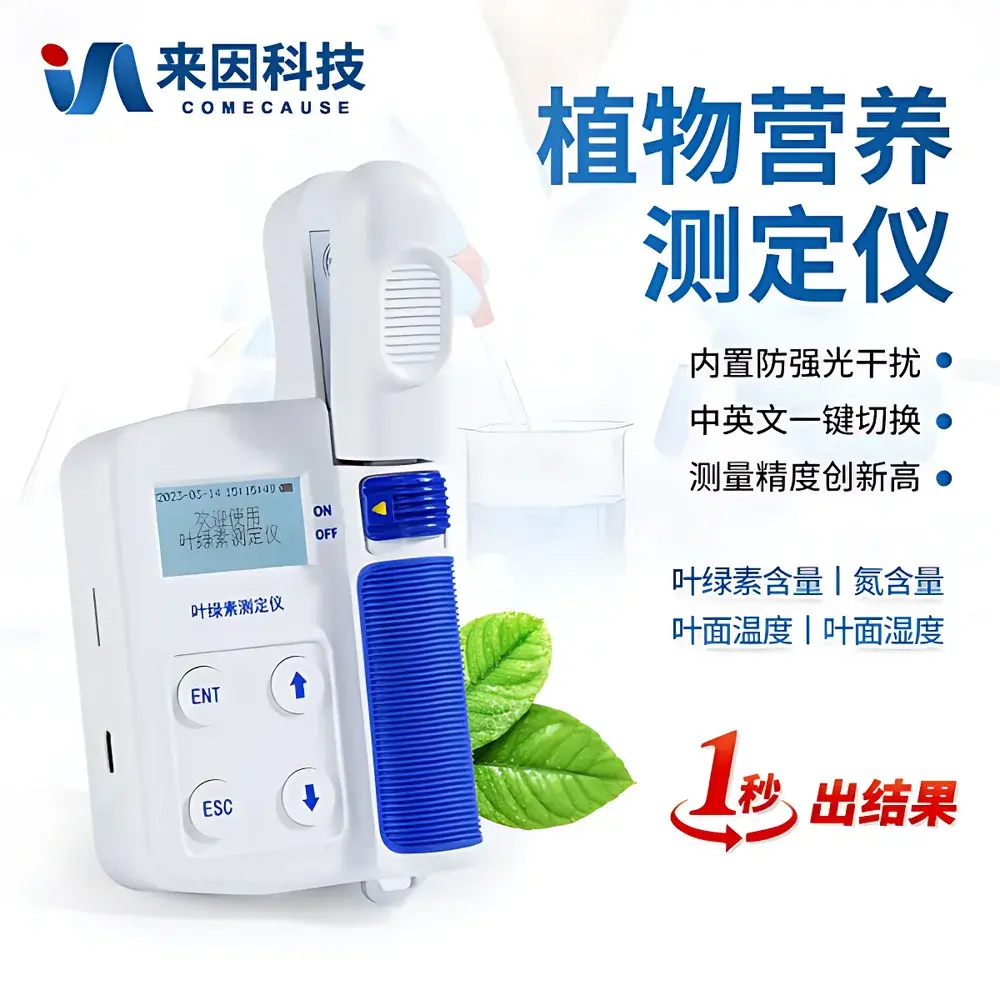
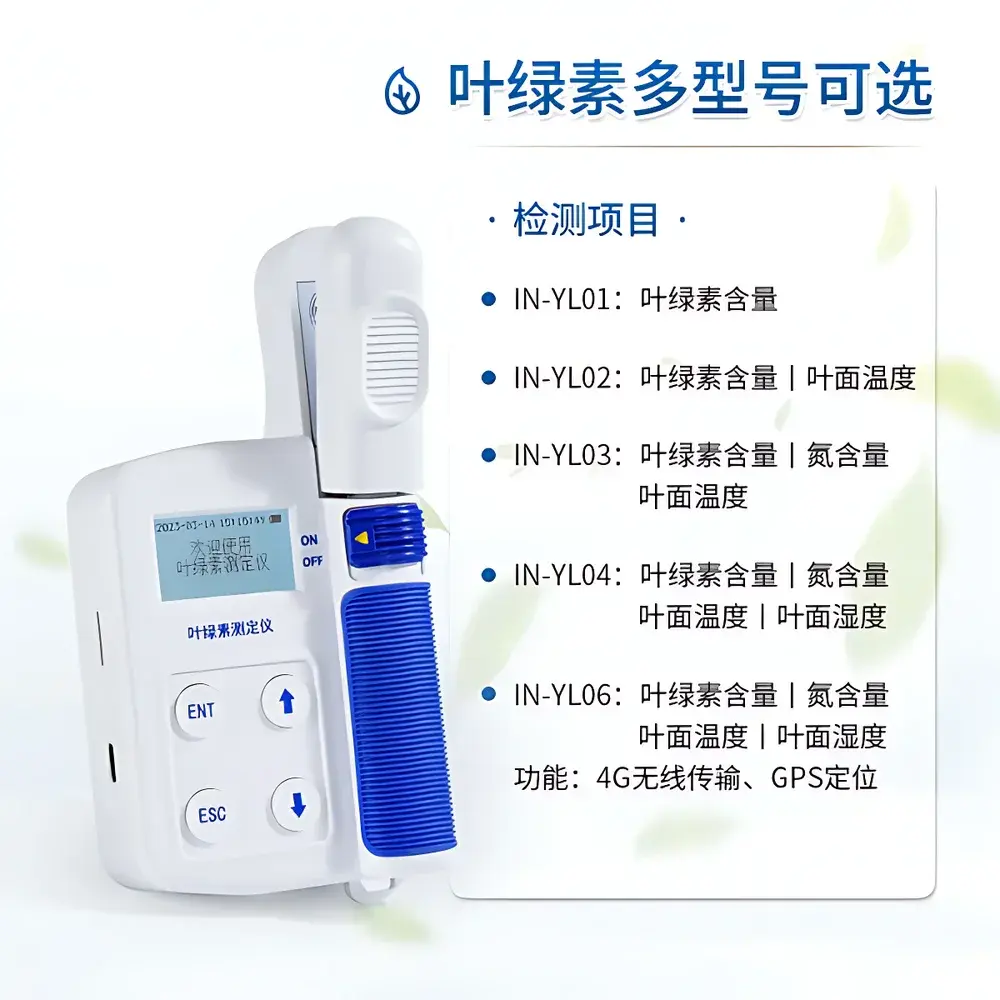
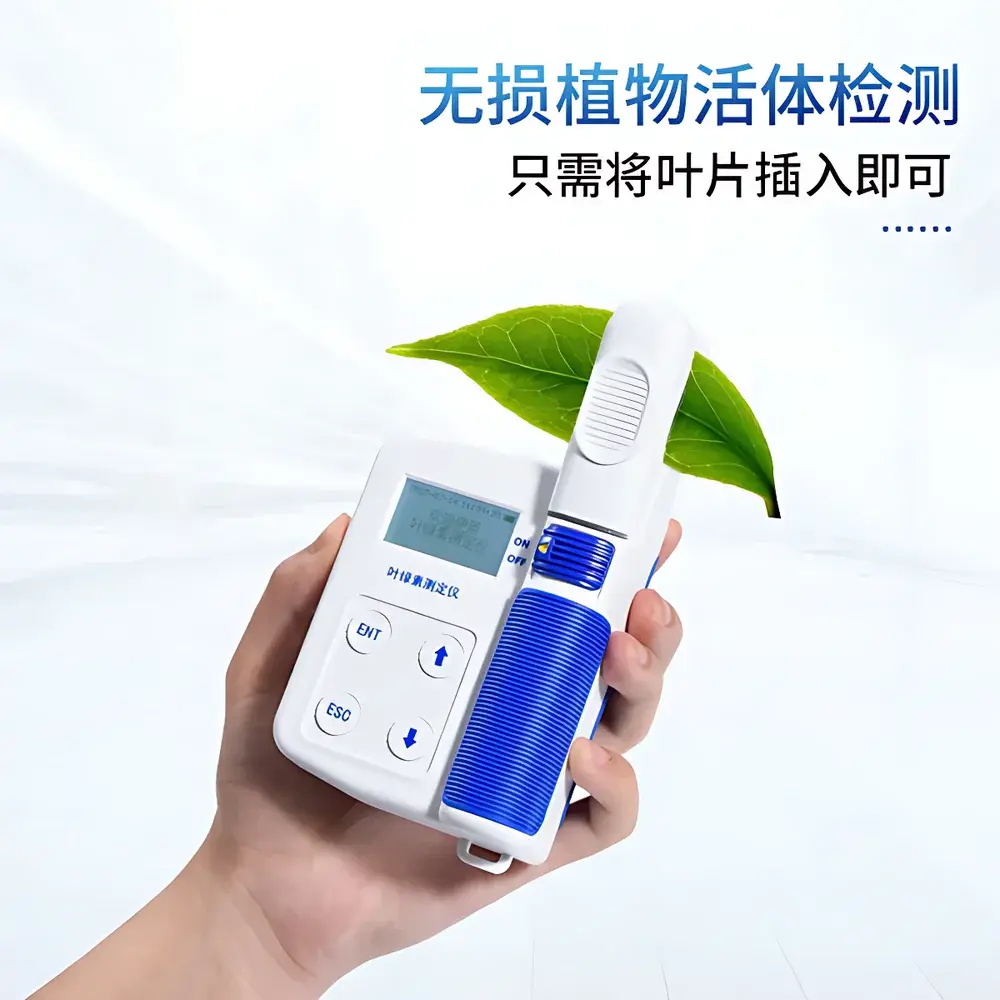
COMECAUSE IN-YL04 Portable Chlorophyll & Nitrogen Content Meter
| Brand | COMECAUSE |
|---|---|
| Origin | Shandong, China |
| Manufacturer Type | Direct Manufacturer |
| Model | IN-YL04 |
| Measurement Range | 0.0–99.99 SPAD |
| Measurement Time | <0.8 s |
| Measurement Area | 2 mm × 3 mm |
| Accuracy | ±1.0 SPAD (at 0–50 SPAD, 25°C) |
| Operating Temperature | −10°C to +50°C |
| Nitrogen Range | 0.0–99.99 mg/g |
| Leaf Moisture | 0.0–99.9 %RH |
| Leaf Temperature | −10.0–99.9 °C |
| Repeatability | ±0.3 SPAD |
| Data Storage | 16 GB internal flash memory |
| Power | 4.2 V rechargeable Li-ion battery (3000 mAh) |
| Weight | 230 g |
| Display | High-contrast LCD |
| Interface | USB-C for data export & charging |
| Language | Dual-language (English/Chinese), switchable |
Overview
The COMECAUSE IN-YL04 is a field-deployable, non-destructive optical meter engineered for rapid, in vivo quantification of chlorophyll content (expressed as SPAD units), leaf nitrogen concentration (mg/g), leaf surface temperature (°C), and relative humidity (%RH). It operates on the principle of dual-wavelength absorbance photometry—specifically measuring differential attenuation of red light (≈650 nm) and near-infrared light (≈940 nm) through intact leaf tissue. This ratio-based optical method correlates strongly with chlorophyll-a and chlorophyll-b concentrations, enabling indirect but highly reproducible estimation of photosynthetic pigment density without tissue extraction or chemical reagents. The instrument’s core optical path is calibrated against reference leaf standards traceable to NIST-traceable spectrophotometric protocols, ensuring metrological consistency across measurement sessions and environmental conditions. Designed for continuous longitudinal monitoring, the IN-YL04 supports real-time physiological assessment during critical growth stages—from seedling establishment to reproductive development—without compromising plant integrity or experimental validity.
Key Features
- Non-invasive leaf insertion design: Requires no clipping, grinding, or solvent extraction; preserves sample viability and enables repeated measurements on the same leaf over time.
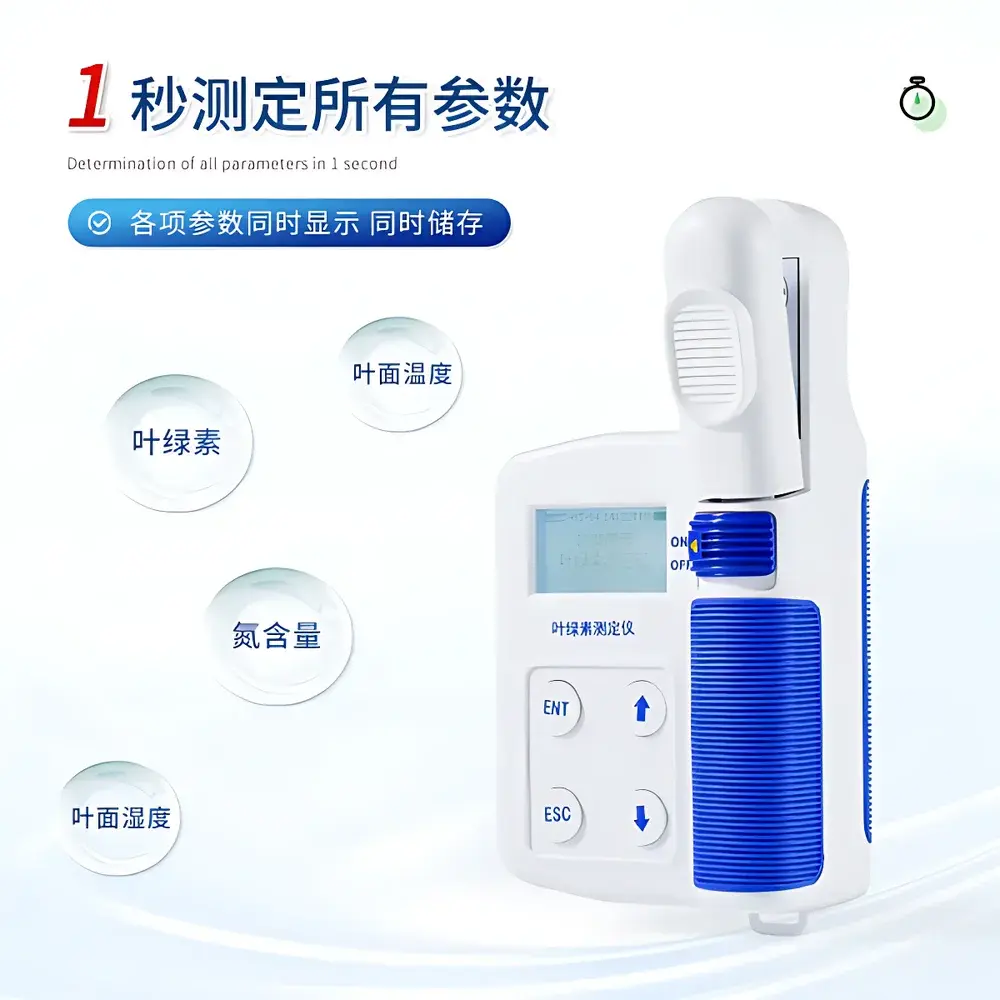
- Simultaneous four-parameter acquisition: SPAD value, nitrogen-equivalent concentration (mg/g), leaf surface temperature (±0.2°C repeatability), and surface moisture (%RH) are captured and displayed in real time on a single high-contrast LCD screen.
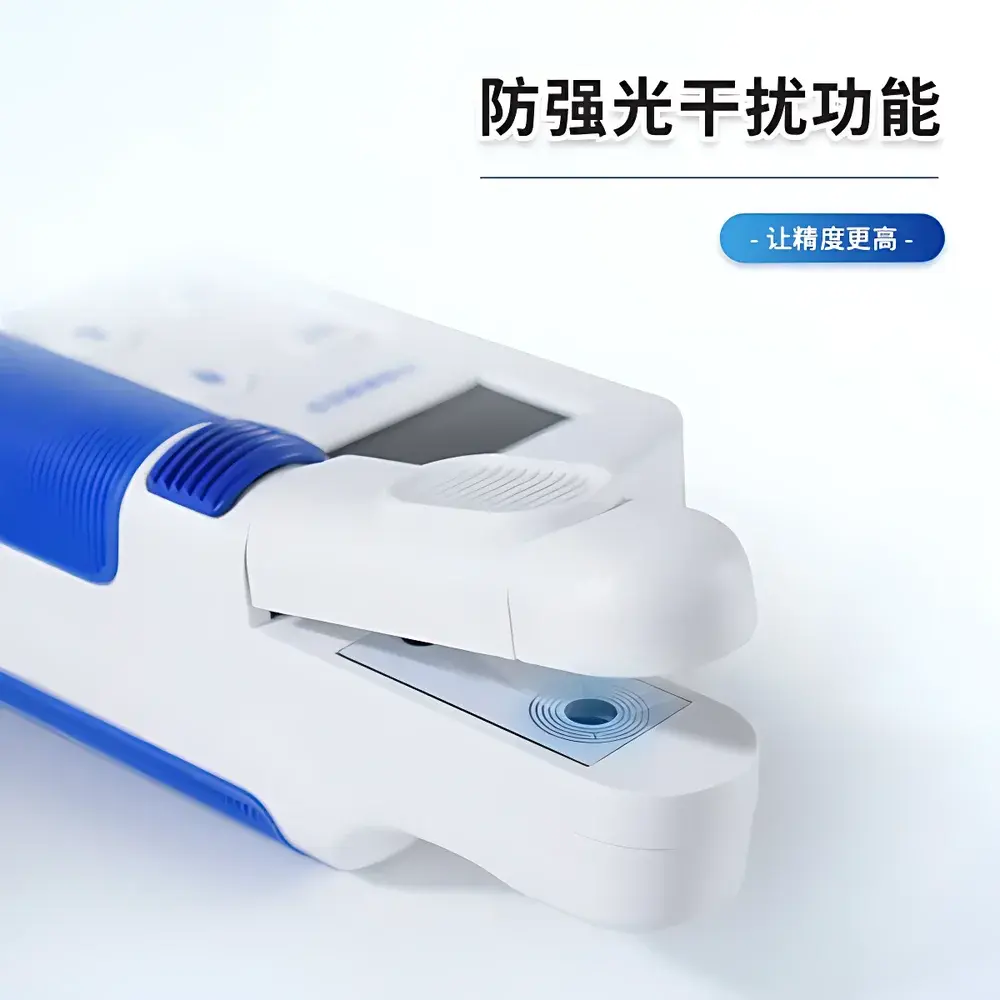
- Optical interference mitigation: Integrated ambient light compensation algorithm and narrow-band LED sources minimize spectral drift under variable solar irradiance (e.g., full sun, overcast, or shaded canopy conditions).
- On-device data management: 16 GB embedded flash memory supports grouped storage by experiment ID, date stamp, GPS-tagged location (optional external module), and operator code—structured for GLP-compliant recordkeeping.
- Low-power architecture: Optimized sensor duty cycling and deep-sleep mode extend battery life to >12 hours of continuous field use per full charge (3000 mAh Li-ion, protected against overcharge/over-discharge).
- Dual-language UI with hardware-level toggle: Switch between English and Chinese interfaces without firmware reload or software dependency—critical for multinational research teams and field technicians.
Sample Compatibility & Compliance
The IN-YL04 accommodates monocot and dicot species with leaf thickness ≤1.2 mm and midrib width ≤3 mm—including but not limited to maize, wheat, rice, soybean, Arabidopsis thaliana, poplar, and grapevine. Its 2 mm × 3 mm aperture ensures representative sampling of interveinal mesophyll while excluding major vascular bundles that may skew absorbance ratios. All optical components comply with IEC 61000-4-2 (ESD immunity) and IEC 60529 IP54 ingress protection standards for dust and water resistance. While not certified to ISO 17025 for accredited testing laboratories, the instrument meets functional requirements outlined in ASTM D6708 (Standard Practice for Statistical Assessment of Instrument Performance) and supports data traceability aligned with FDA 21 CFR Part 11 when used with audit-trail-enabled export workflows (e.g., timestamped CSV with device serial number and calibration log hash).
Software & Data Management
Data export occurs via native USB-C interface—no proprietary drivers or upper-layer software required. Files are saved in UTF-8 encoded CSV format with column headers: “Timestamp_UTC”, “SPAD”, “N_mg_g”, “Temp_C”, “RH_percent”, “Group_ID”, “Operator_ID”, and “Battery_V”. Optional SD card slot (microSDHC up to 128 GB) enables offline batch transfer. Firmware v2.3+ supports automatic time synchronization via connected PC and includes checksum validation for exported datasets. For integration into institutional LIMS or agronomic analytics platforms (e.g., FarmOS, AgriWebb), the CSV schema conforms to FAO’s Crop Ontology metadata templates for leaf physiological traits (CO_020:chlorophyll_content_spad, CO_021:nitrogen_concentration).
Applications
- Precision nutrient management: Correlating SPAD trends with soil nitrate assays to optimize top-dressing schedules and reduce N leaching in cereal cropping systems.
- Phenotyping pipelines: High-throughput screening of chlorophyll stability QTLs in controlled-environment phenomics platforms or field-based breeding nurseries.
- Stress physiology studies: Quantifying early drought-induced chlorosis or ozone-mediated photooxidative damage before visible symptom onset.
- Ecological monitoring: Long-term tracking of forest canopy vitality along pollution gradients or elevation transects.
- Teaching laboratories: Demonstrating Beer-Lambert law applications, plant nitrogen use efficiency (NUE), and non-destructive assay principles in undergraduate plant science curricula.
FAQ
Is the IN-YL04 suitable for thick-leaved or succulent species?
The 2 mm × 3 mm measurement aperture is optimized for herbaceous and thin-mesophyll leaves. For species with leaf thickness >1.2 mm (e.g., Aloe vera, Agave), contact measurement may yield attenuated signal-to-noise; users should validate correlation with destructive HPLC chlorophyll assays prior to deployment.
How often does the instrument require recalibration?
Factory calibration remains stable for ≥12 months under normal field use. Annual verification against NIST-traceable leaf standards (e.g., SPAD-502PLUS Reference Leaf Set) is recommended for GLP-regulated studies.
Can measurement data be synchronized with GIS or farm management software?
Yes—CSV exports include UTC timestamps and support manual geotagging. When paired with optional Bluetooth GPS dongles (e.g., Garmin GLO 2), coordinates are appended automatically for spatial interpolation in QGIS or ArcGIS.
Does the device meet regulatory requirements for pesticide residue or food safety trials?
No—the IN-YL04 measures physiological proxies only and is not validated for residue detection, heavy metal analysis, or compliance with Codex Alimentarius MRL testing protocols.
What is the warranty coverage and service support structure?
COMECAUSE provides a 24-month limited warranty covering defects in materials and workmanship. Field-serviceable modules (battery, USB port, display) are available through authorized regional technical centers in EU, North America, and APAC zones. Firmware updates are distributed via secure HTTPS portal with SHA-256 signature verification.
Related Products




