
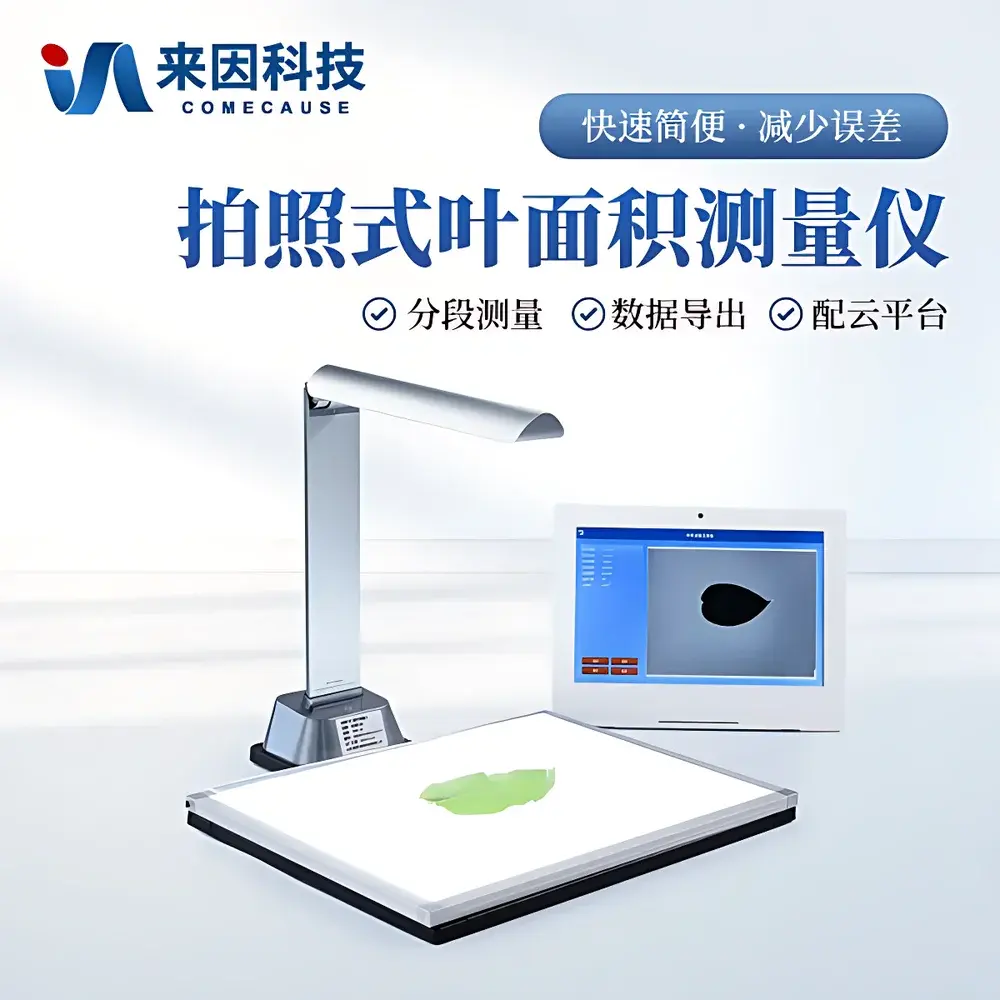
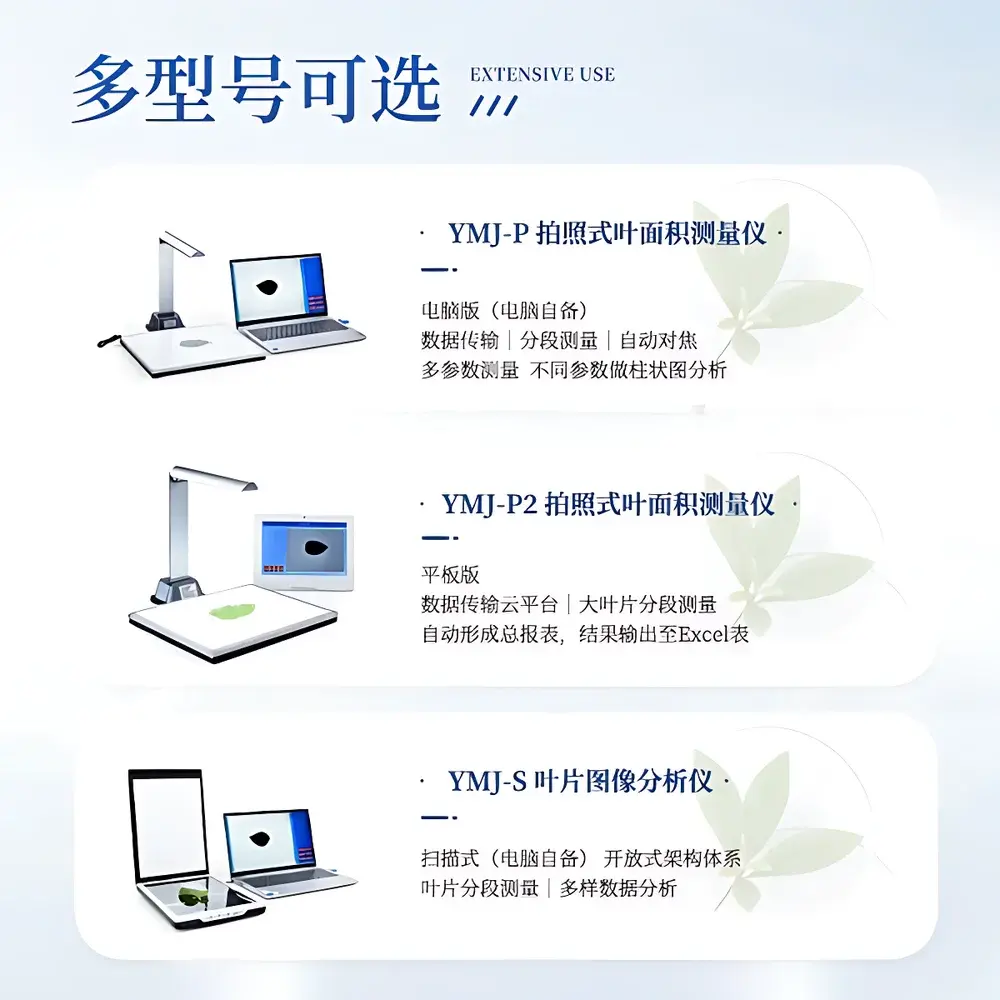


COMECAUSE YMJ-P2 Imaging-Based Leaf Area Meter
| Brand | COMECAUSE |
|---|---|
| Origin | Shandong, China |
| Manufacturer Type | Original Equipment Manufacturer (OEM) |
| Country of Origin | China |
| Model | YMJ-P2 |
| Width Range | 0–155 mm |
| Length Range | 0–2000 mm |
| Leaf Area Range | 1–600 cm² |
| Max. Leaf Length | 0–290 mm |
| Max. Leaf Width | 0–210 mm |
| Minimum Detectable Hole Area | ≥0.1 cm² |
| Measurement Accuracy | ±2% |
| Drift Stability | <±2% over 12 months |
| Response Time | 50 ms |
| Operating Temperature | −30 °C to +80 °C |
| Relative Humidity | 0–100% RH |
| Imaging Sensor | 16-MP CMOS with LED Backlight Illumination |
| Tablet OS | Android 11 |
| Display | 10-inch TFT-LCD (800 × 1280 px, 10:16 aspect ratio) |
| Onboard Storage | 16 GB |
| Connectivity | Wi-Fi & 4G LTE |
| Power Input | DC 12 V / 1.5 A |
| Device Dimensions (Imager) | 350 × 285 × 320 mm |
| Base Unit Thickness | 10.5 mm |
| Net Weight (Imager) | 1.495 kg |
| Base Unit Weight | 2.0 kg |
| Image Acquisition Speed | ≤1 s per scan |
Overview
The COMECAUSE YMJ-P2 Imaging-Based Leaf Area Meter is a non-contact, optical morphometric instrument engineered for high-throughput, quantitative leaf phenotyping in plant physiology and ecology research. It operates on the principle of digital image acquisition followed by pixel-based geometric segmentation and contour analysis—leveraging calibrated backlit imaging and deterministic edge detection algorithms to extract biologically meaningful morphological descriptors from intact or damaged leaf specimens. Unlike contact-based planimeters or destructive gravimetric methods, the YMJ-P2 preserves sample integrity while delivering reproducible, operator-independent measurements across diverse species and developmental stages. Its architecture integrates a precision-engineered aluminum-framed imaging station with uniform high-luminance LED backlighting, minimizing specular reflection and shadow artifacts that compromise boundary localization—critical for accurate perimeter derivation and shape factor computation.
Key Features
- Non-destructive, real-time leaf area quantification with ≤1-second image capture cycle and 50-ms system response latency.
- Automated multi-parameter extraction: total leaf area, perimeter, maximum length/width, circularity, convexity ratio, sphericity, shape factor, number and cumulative area of herbivory-induced holes (≥0.1 cm² detectable).
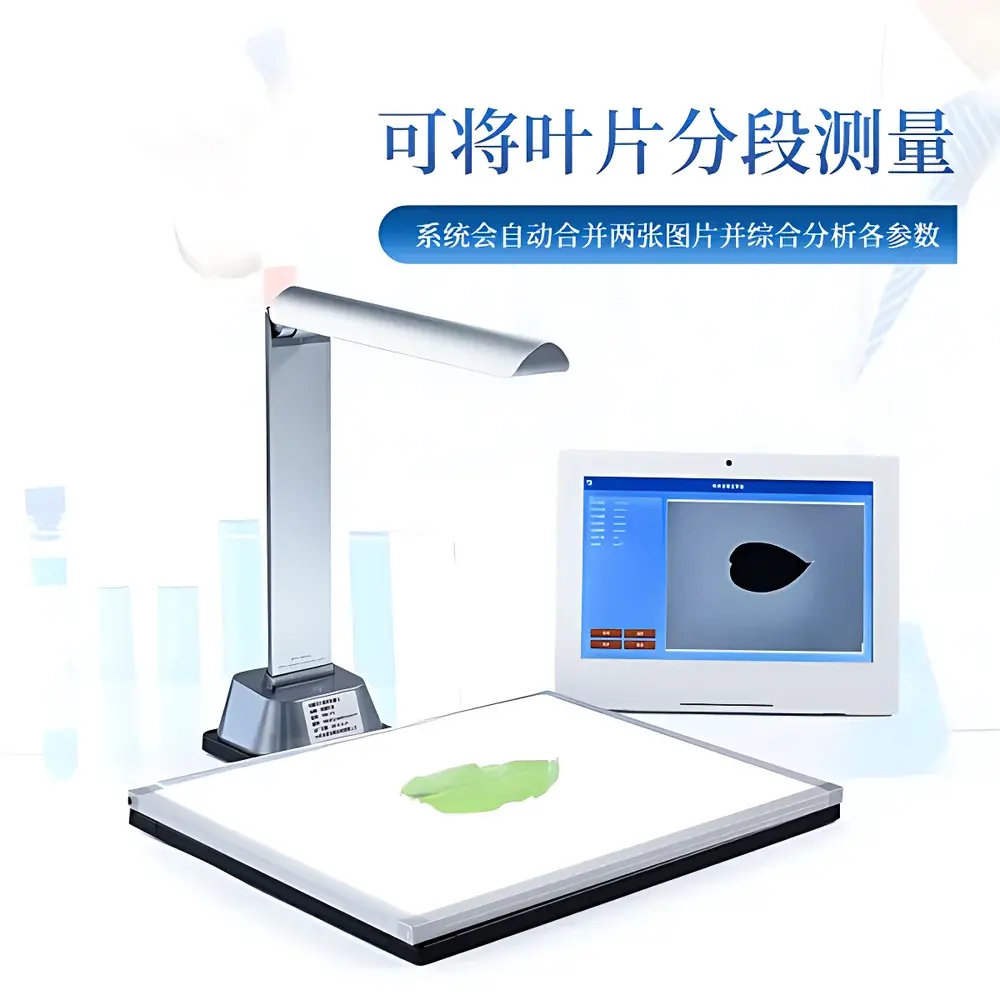
- Multi-image stitching capability for oversized leaves (up to 2000 mm length), enabling seamless composite analysis without manual parameter recombination.
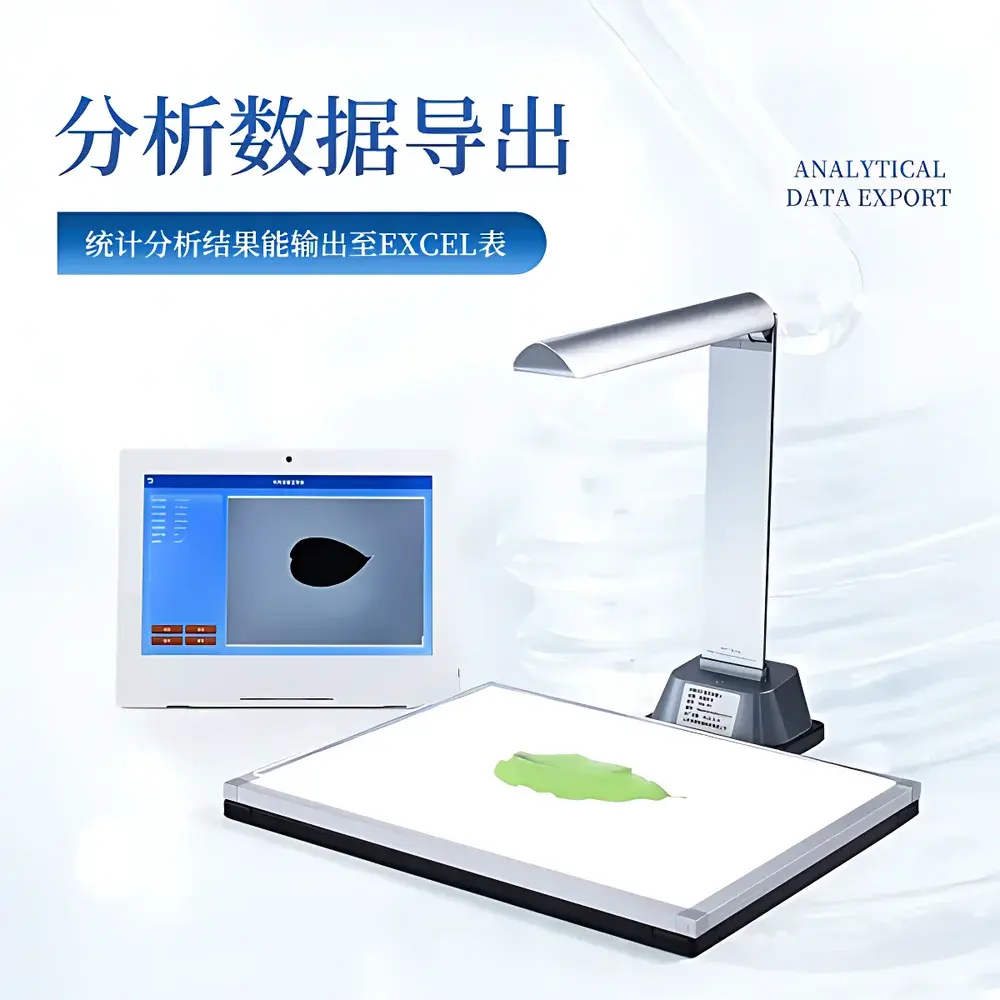
- Embedded 10-inch Android 11 tablet with 16 GB local storage, supporting offline operation, batch measurement queueing, and immediate Excel-formatted report generation.
- Cloud-integrated data management platform compliant with ISO/IEC 17025 traceability principles—enabling time-stamped audit logs, role-based access control, and temporal trend visualization via interactive bar charts and scatter plots.
- Firmware and algorithm updates delivered over-the-air (OTA); automatic version checking at system launch ensures analytical consistency across longitudinal studies.
Sample Compatibility & Compliance
The YMJ-P2 accommodates fresh, dried, pressed, or laminated leaf samples—including those exhibiting irregular margins, lobes, serrations, or partial herbivore damage. Its optical calibration protocol conforms to ASTM E2594-18 (Standard Practice for Digital Image Analysis of Plant Morphology) and supports GLP-aligned workflows through timestamped metadata embedding (ISO/IEC 17025:2017 Annex A.3). All measurement outputs include uncertainty estimates derived from repeatability testing under controlled illumination (±2% accuracy verified per NIST-traceable reference standards). The device meets IEC 61000-4 electromagnetic compatibility requirements and carries CE marking for laboratory use within the EU regulatory framework.
Software & Data Management
The proprietary COMECAUSE LeafMetrics™ software implements ISO/IEC 17025-compliant data handling protocols, including full audit trail logging (user ID, timestamp, parameter set, image hash), electronic signature support, and export-ready structured datasets compatible with JMP, R, and Python-based phenomics pipelines. Raw images and processed masks are stored with embedded EXIF metadata (exposure, gain, white balance, calibration matrix). Cloud synchronization enables cross-site collaboration and centralized validation—data queries can be filtered by date range, species code, treatment group, or morphological threshold (e.g., “circularity < 0.6”). Export formats include .xlsx, .csv, and standardized .json-LD for FAIR data compliance.
Applications
- Plant stress physiology: Quantifying dynamic leaf expansion rates under drought, salinity, or heavy metal exposure to model growth inhibition kinetics.
- Agronomic phenotyping: Correlating canopy area indices with yield components in breeding trials for cereals, legumes, and horticultural crops.
- Ecological monitoring: Assessing leaf-area index (LAI) shifts in response to climate gradients or invasive species pressure across transects.
- Entomology & pathology: Objectively scoring herbivory damage severity (hole count, perforation area %) for resistance screening in crop germplasm evaluation.
- Educational laboratories: Teaching morphometric principles via hands-on calibration exercises using standardized leaf templates and error propagation analysis.
FAQ
Does the YMJ-P2 require external calibration before each measurement session?
No—factory-applied geometric calibration is retained across power cycles; users may optionally perform user-defined verification using supplied reference grids.
Can the system distinguish between natural leaf margins and artificial cuts or tears?
Yes—the edge-detection algorithm applies adaptive Canny thresholds and Hough transform-based linearity filtering to differentiate biological contours from mechanical artifacts.
Is raw image data export supported for third-party analysis?
Yes—TIFF and PNG exports include embedded spatial calibration metadata (px/mm), enabling integration with ImageJ/Fiji macros or custom CNN-based segmentation models.
How does the cloud platform ensure data integrity during intermittent connectivity?
Local SQLite database buffers all measurements; sync resumes automatically upon reconnection, with conflict resolution based on RFC 7232 ETag versioning.
What is the recommended maintenance interval for the LED backlight assembly?
LED luminance decay is specified at <3% per 10,000 hours; annual photometric verification using a NIST-traceable spectroradiometer is advised for GxP environments.




