
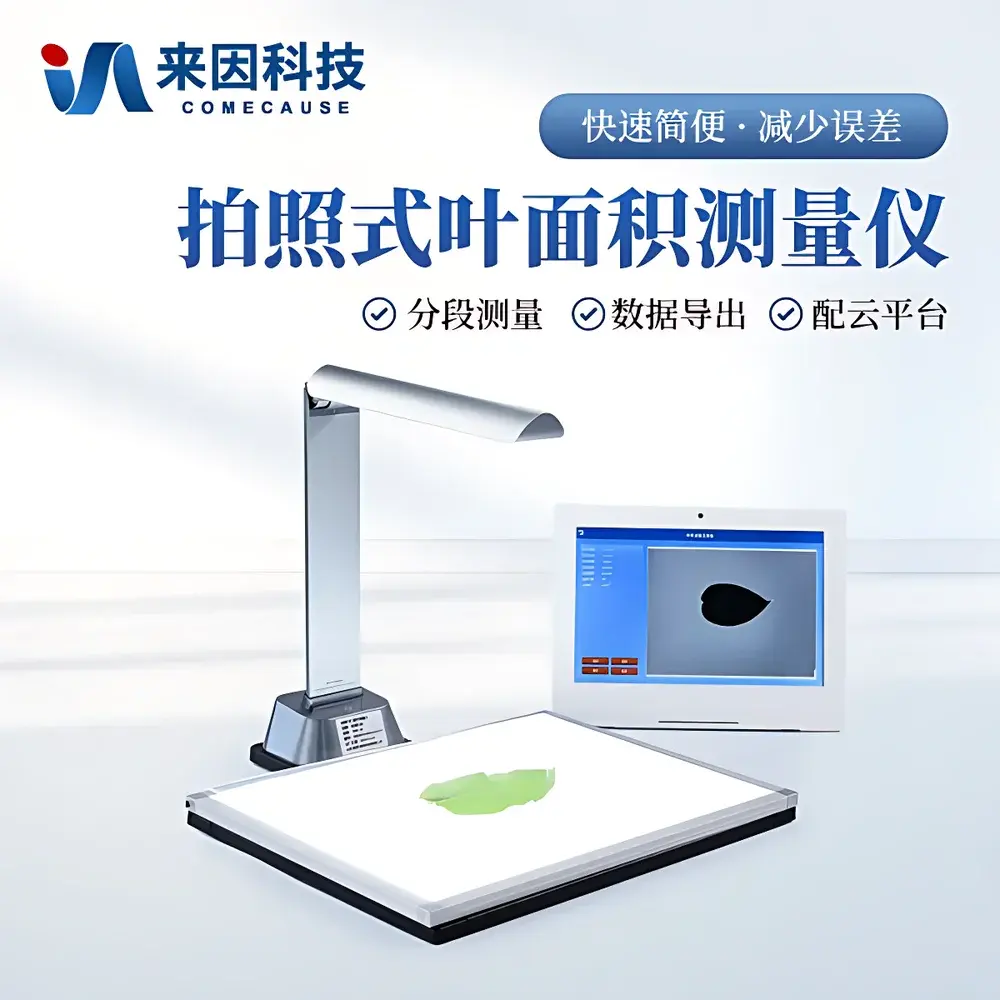

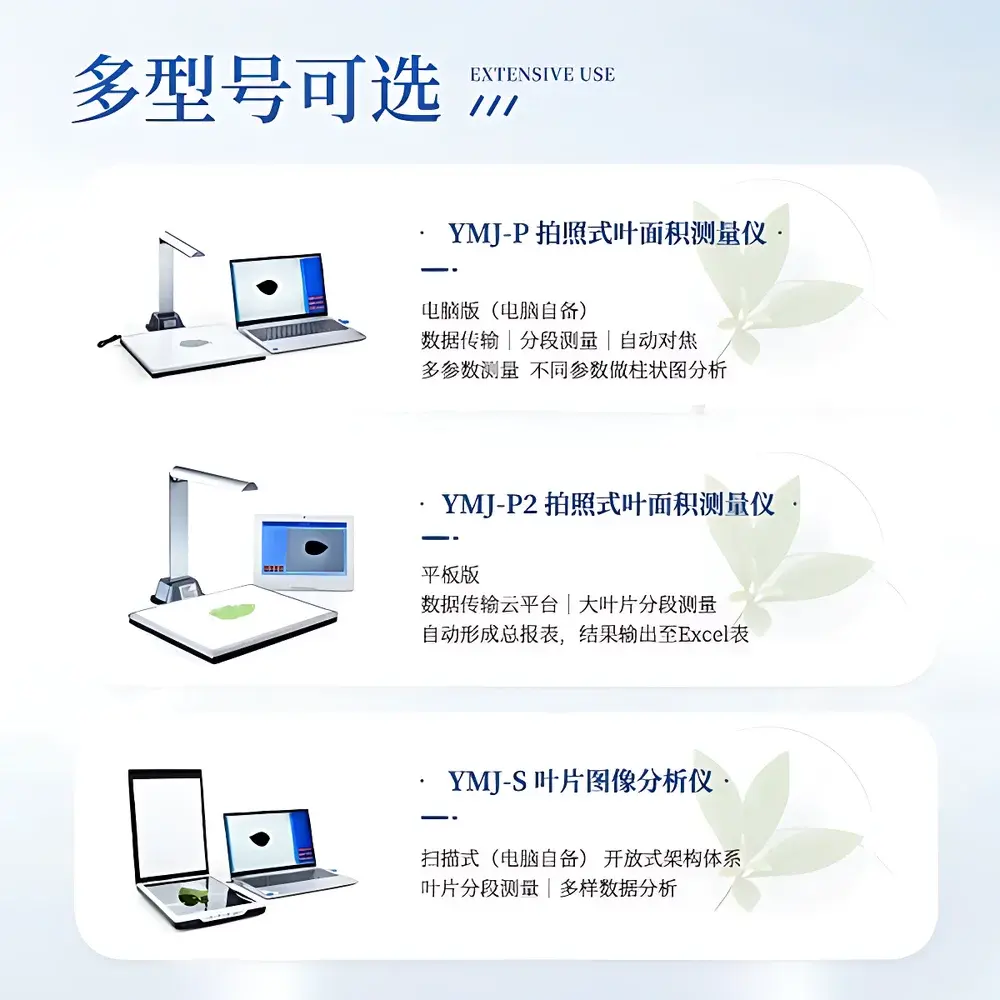

COMECAUSE YMJ-P2 Portable Digital Leaf Area Analyzer with High-Resolution Imaging and Cloud-Enabled Phenotypic Analytics
| Brand | COMECAUSE |
|---|---|
| Origin | Shandong, China |
| Manufacturer Type | OEM Manufacturer |
| Country of Origin | China |
| Model | YMJ-P2 |
| Price | USD 950 (FOB) |
| Width Measurement Range | 0–155 mm |
| Length Measurement Range | 0–2000 mm |
| Leaf Area Range | 1–600 cm² |
| Max. Leaf Length | 0–290 mm |
| Max. Leaf Width | 0–210 mm |
| Minimum Detectable Hole Area | ≥0.1 cm² |
| Accuracy | ±2% |
| Long-Term Stability (1 year) | <±2% |
| Response Time | 50 ms |
| Operating Temperature | −30°C to +80°C |
| Relative Humidity | 0–100% RH |
| Camera Resolution | 16 MP |
| Imaging Platform | LED-backlit aluminum gantry (350 × 285 × 320 mm) |
| Tablet | 10″ Android 11 (800 × 1280 px, 16 GB storage, Wi-Fi/4G) |
| Power Supply | DC 12 V / 1.5 A |
Overview
The COMECAUSE YMJ-P2 Portable Digital Leaf Area Analyzer is a non-destructive, image-based phenotyping instrument engineered for high-throughput, quantitative assessment of leaf morphometrics in plant physiology, agronomy, and ecological research. It operates on the principle of digital image acquisition followed by pixel-based geometric segmentation and calibration-driven area conversion—leveraging standardized optical geometry, uniform LED backlighting, and sub-pixel edge detection algorithms to convert 2D projections into biologically meaningful metrics. Unlike legacy contact-based or manual grid-counting methods, the YMJ-P2 eliminates physical compression artifacts and operator-dependent bias, enabling reproducible measurement of intact, fresh, or dried leaves—including those with complex geometries or biotic damage (e.g., herbivory-induced holes). Its design adheres to the foundational requirement of plant phenotyping: that morphological data must be traceable, scalable, and interoperable across experimental units, timepoints, and research sites. As such, the YMJ-P2 serves not only as a leaf area meter but as a foundational node in structured phenomics workflows—feeding calibrated morphometric inputs into downstream models of photosynthetic capacity, canopy radiation interception, and water-use efficiency.
Key Features
- High-fidelity 16-megapixel top-down imaging system with uniform high-luminance LED backlighting, ensuring consistent contrast and minimal shadow distortion across heterogeneous leaf surfaces.
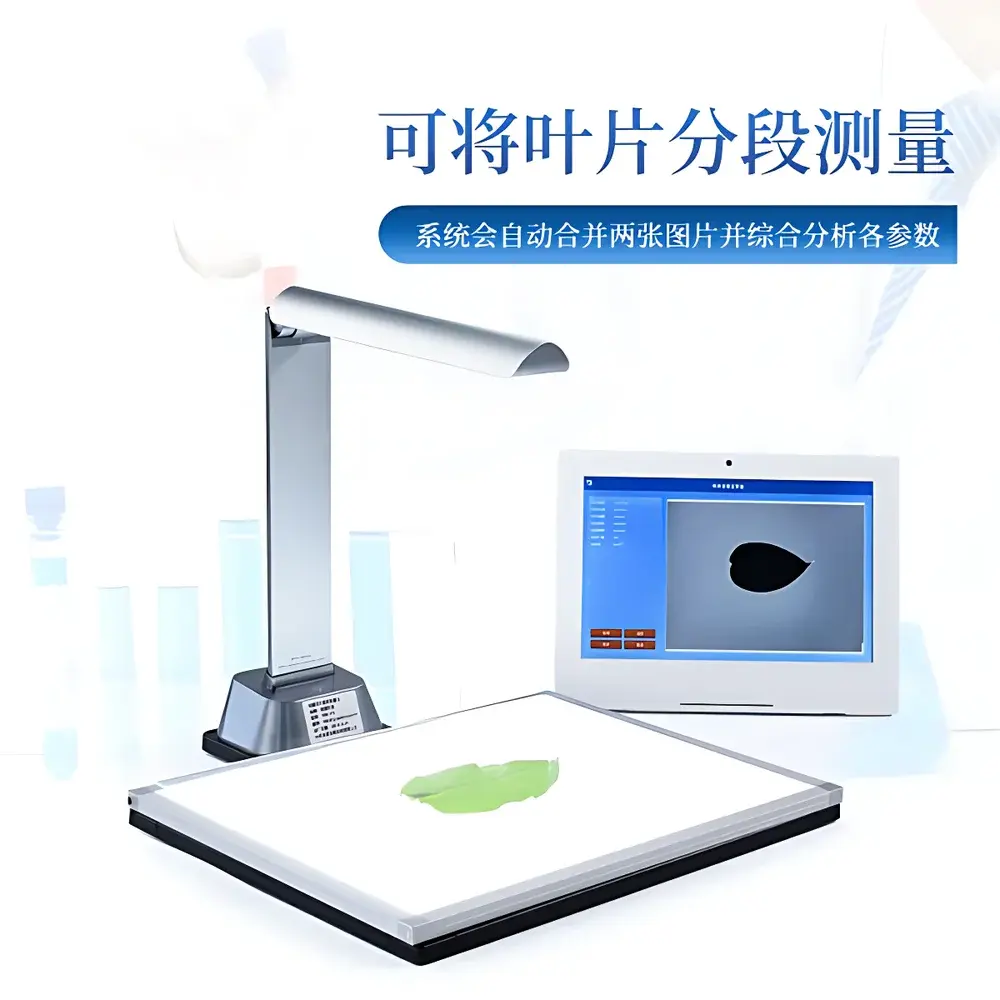
- Proprietary real-time image processing engine supporting simultaneous extraction of 12+ morphometric parameters: projected leaf area, perimeter, maximum length/width, circularity, convexity ratio, sphericity, shape factor, number and total area of insect holes, and segmented multi-leaf analysis with auto-merge capability.
- Integrated 10-inch Android tablet (Android 11, 16 GB internal storage) with embedded GUI optimized for field-deployable operation—no external PC required.
- Cloud-synchronized data architecture compliant with FAIR principles (Findable, Accessible, Interoperable, Reusable); supports timestamped metadata tagging, hierarchical sample categorization, and role-based access control.
- Automated firmware and algorithm updates via secure OTA (Over-the-Air) protocol; version history and update logs maintained for auditability.
- Robust aluminum-frame mechanical platform (350 × 285 × 320 mm) with integrated hard-surface document stage, rated for continuous operation under ambient conditions ranging from −30°C to +80°C and 0–100% RH.
Sample Compatibility & Compliance
The YMJ-P2 accommodates a broad spectrum of dicot and monocot leaf types—including compound, lobed, needle-like, and senescing specimens—without requiring dissection or flattening. Leaves up to 290 mm in length and 210 mm in width are measured in a single frame; larger specimens may be captured in registered segments and computationally stitched. The system meets ISO 11727:2016 (Plant biology — Terminology and definitions for leaf area index measurements) for projection-area-based LAI estimation and aligns with ASTM E2918-21 guidelines for digital image-based morphometric validation. All measurement protocols support GLP-compliant documentation: each analysis generates an immutable digital record containing raw image, processed mask, calibration log, operator ID, timestamp, environmental metadata (if externally sourced), and checksum-verified export files. Data integrity is further ensured through built-in audit trail functionality per FDA 21 CFR Part 11 requirements.
Software & Data Management
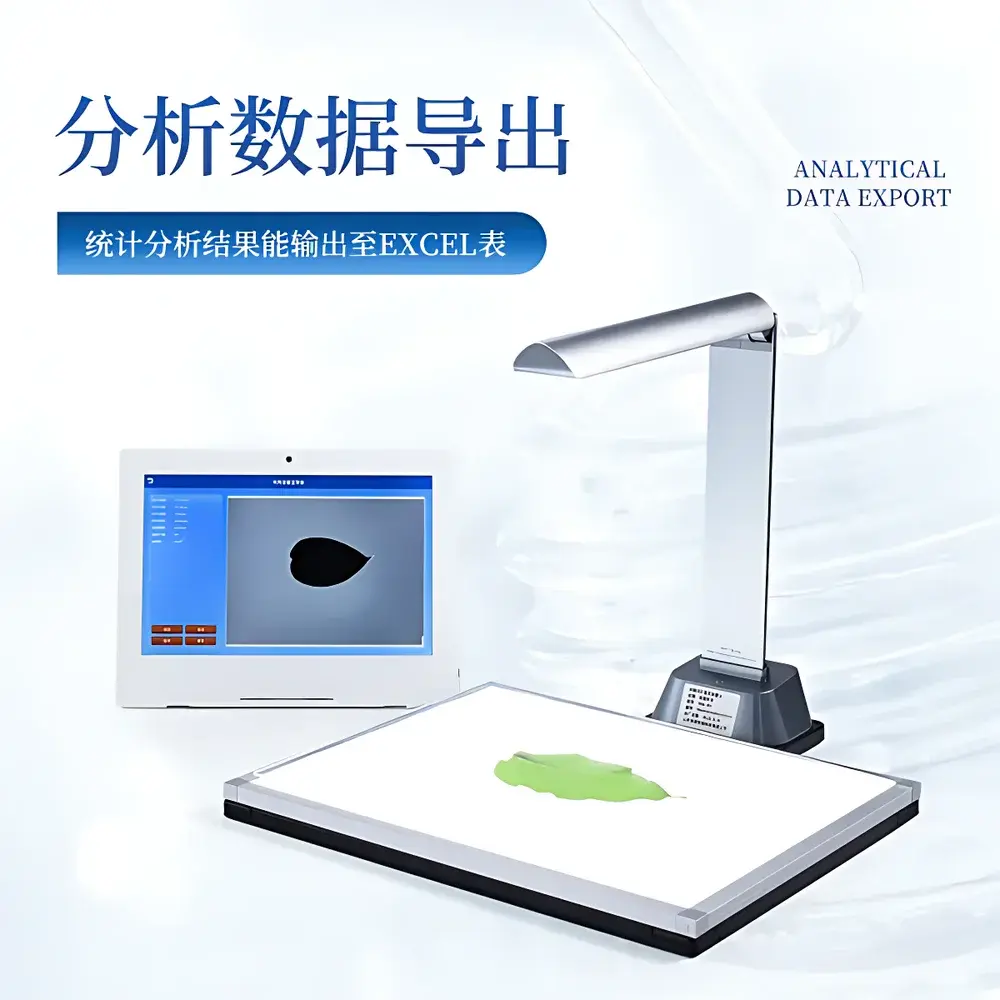
The embedded software suite provides dual-mode operation: standalone local analysis and cloud-integrated workflow management. Local mode delivers immediate on-device quantification with Excel-compatible CSV/XLSX export. Cloud mode enables centralized database ingestion via encrypted HTTPS transmission, supporting temporal trend analysis, cross-trial comparison, and parameter-specific visualization (e.g., boxplots of circularity distribution across genotypes). Users may define custom filters (e.g., “leaves >150 cm² collected between May–July 2024”), generate annotated summary reports, and export interactive charts (bar, scatter, time-series) directly to PDF or PNG. All exported datasets include embedded metadata headers conforming to MIAPPE v1.1 (Minimum Information About a Plant Phenotyping Experiment) standards. Data retention policies, user permissions, and API endpoints are configurable by system administrators to meet institutional IT governance frameworks.
Applications
- Crop breeding programs: High-throughput screening of leaf morphology traits (e.g., erectness index, hole resistance score) across thousands of F₂ or RIL populations to identify QTLs associated with drought resilience or pest tolerance.
- Ecophysiology studies: Quantifying dynamic leaf expansion rates under controlled abiotic stress (drought, salinity, elevated CO₂), correlating morphometric shifts with gas exchange and chlorophyll fluorescence parameters.
- Agroecosystem monitoring: Estimating leaf area index (LAI) and canopy porosity at plot scale to parameterize radiative transfer models used in precision irrigation scheduling and yield forecasting.
- Entomological impact assessment: Automated quantification of herbivory severity via standardized hole-counting and damaged-area ratios—enabling objective comparison of biocontrol efficacy across treatment groups.
- Educational laboratories: Teaching core concepts in plant allometry, scaling laws, and functional trait ecology using real-time, student-collected datasets with immediate visual feedback.
FAQ
Does the YMJ-P2 require calibration before each use?
No. The system employs factory-calibrated optical geometry and self-validating reference patterns embedded in the imaging stage. A one-time user verification step (using supplied calibration card) is recommended upon initial setup or after major firmware updates.
Can the device measure leaves with overlapping or folded edges?
It is optimized for flat-lay imaging. Overlapping or severely folded leaves introduce parallax and occlusion errors; users should gently separate or flatten specimens prior to capture. For 3D structural analysis, complementary stereo-imaging or LiDAR modules are recommended.
Is raw image data stored alongside processed metrics?
Yes. Every analysis retains the original TIFF/JPEG image, binary mask, and JSON-formatted metadata package—accessible for reprocessing or third-party validation.
How is data security managed in cloud mode?
All transmissions use TLS 1.3 encryption; stored data resides in ISO 27001-certified infrastructure with AES-256 encryption at rest. Institutions may deploy private cloud instances or on-premise servers via Docker containerized deployment.
What maintenance is required for long-term accuracy?
Annual verification against NIST-traceable area standards is advised. Routine cleaning of the LED diffuser plate and camera lens with lint-free optical wipes ensures sustained optical fidelity.





