

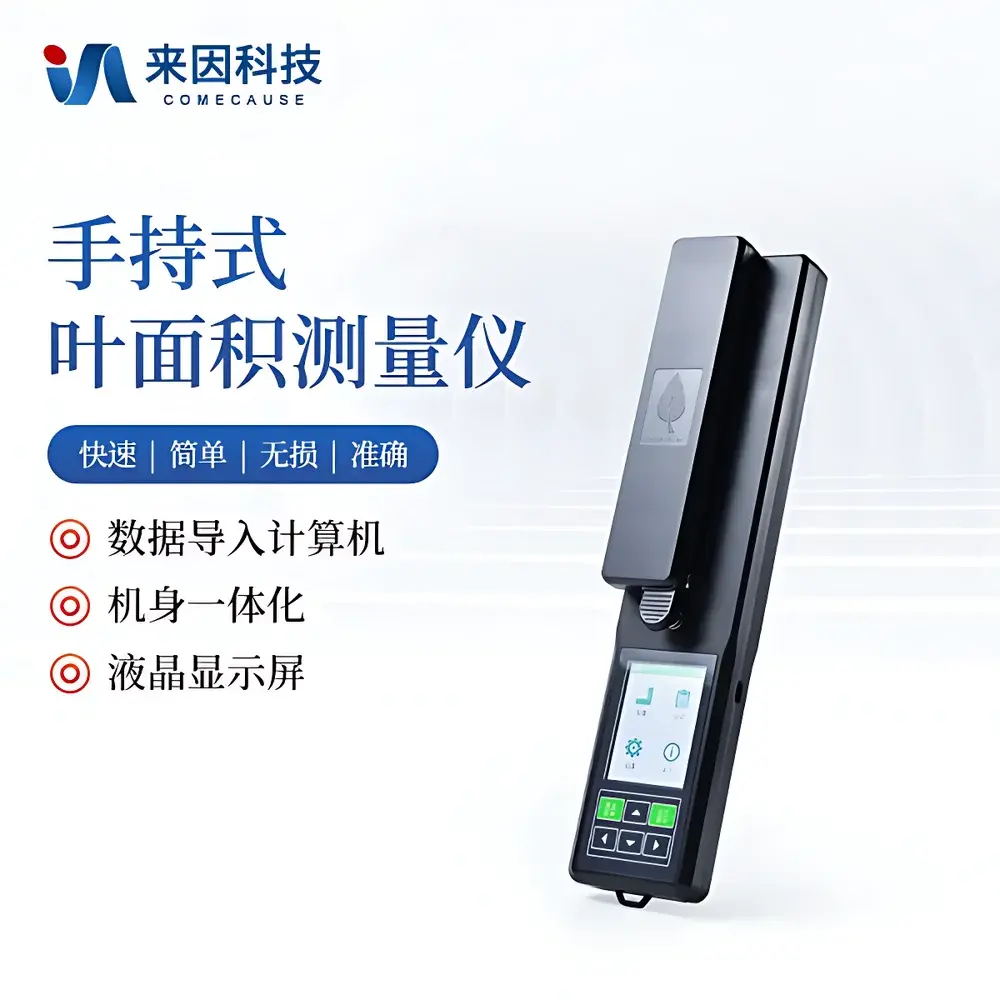
COMECAUSE YMJ-B Portable Leaf Area Meter for In Vivo Measurement
| Brand | COMECAUSE |
|---|---|
| Origin | Shandong, China |
| Manufacturer Type | Direct Manufacturer |
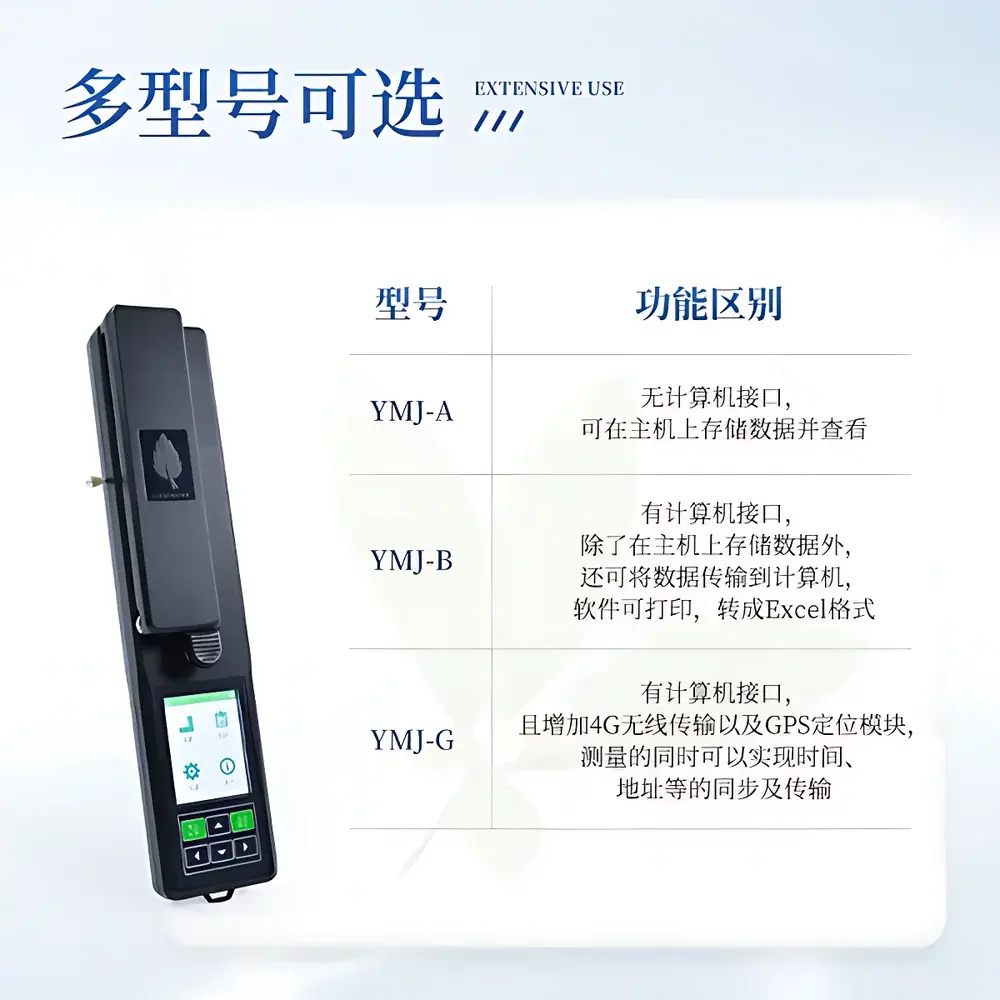
| Model | YMJ-B |
| Width Range | 0–155 mm |
| Length Range | 0–2000 mm |
| Area Resolution | 0.01 cm² |
| Accuracy | ±2% |
| Max Measurable Area | 2000 × 155 mm² |
| Data Storage Capacity | 5000 sets |
| Power Supply | Built-in 5000 mAh Li-ion battery + removable 1400 mAh external battery |
| Interface | USB Type-C |
| Display | LCD with microcontroller-based UI |
Overview
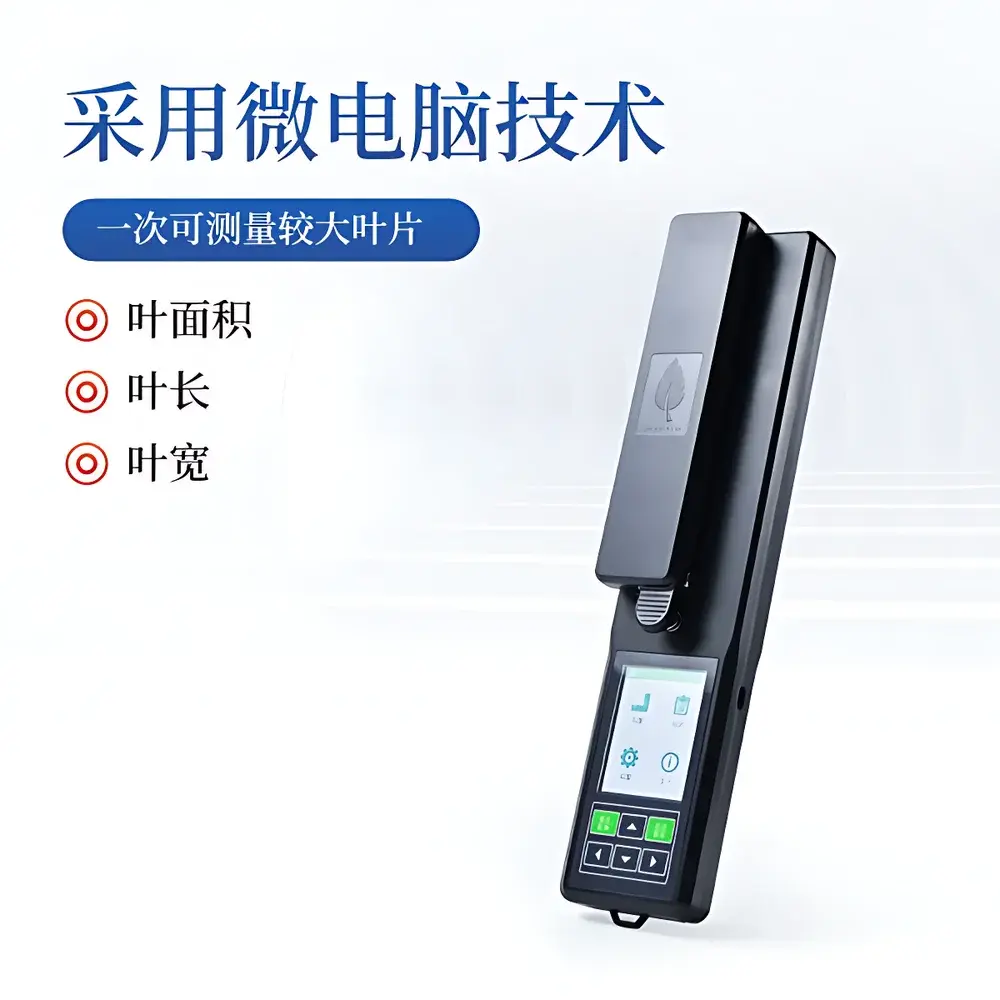
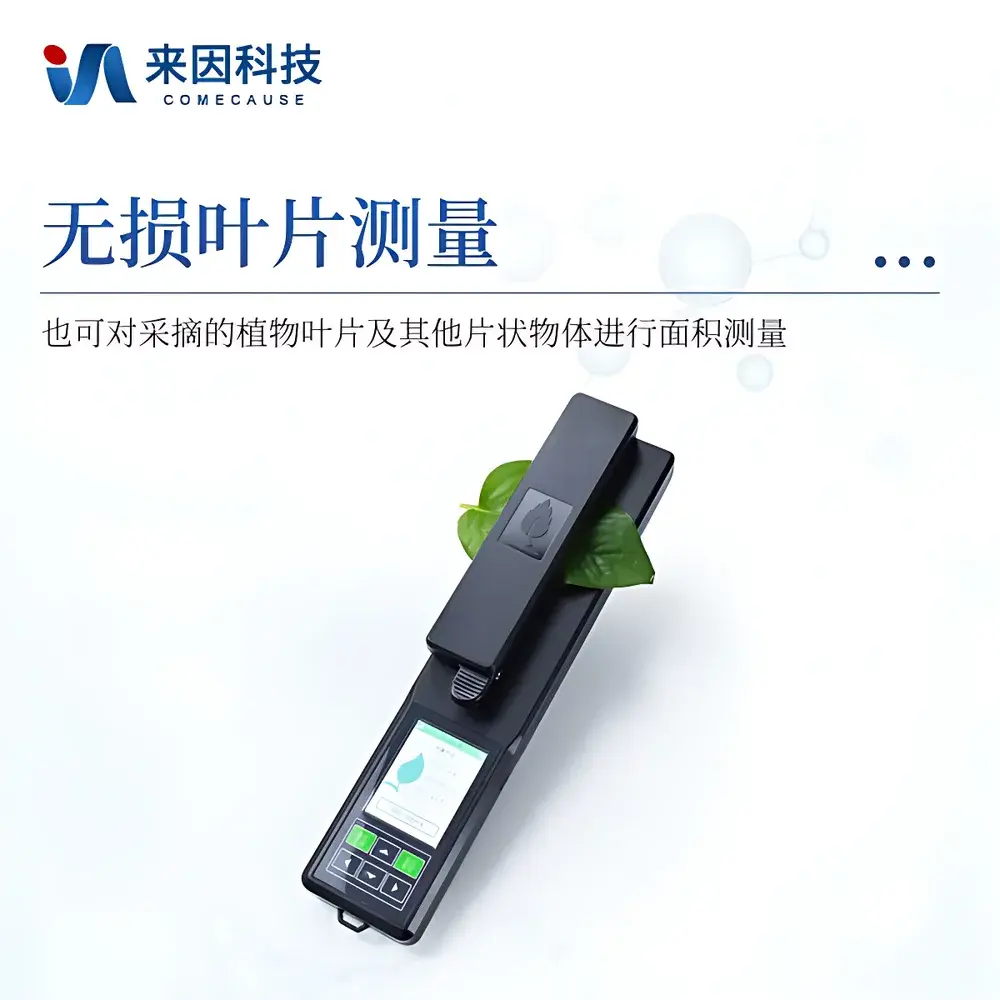
The COMECAUSE YMJ-B Portable Leaf Area Meter is an optical imaging-based instrument engineered for non-destructive, in vivo quantification of leaf morphometric parameters in field and greenhouse environments. It operates on the principle of digital image acquisition and edge-detection algorithm processing: a high-contrast optical path captures leaf silhouette under uniform diffuse illumination, followed by real-time binary segmentation and pixel-area calibration to compute projected surface area (cm²), length (mm), width (mm), and aspect ratio. Unlike contact-based calipers or destructive gravimetric methods, the YMJ-B preserves leaf integrity—critical for longitudinal physiological monitoring, stress-response assays, and repeated measurements on the same plant. Its compact, handheld architecture integrates sensor, processor, and display into a single ruggedized unit, eliminating external computers during acquisition. Designed for agricultural phenotyping, ecological monitoring, and plant physiology labs, it delivers traceable, operator-independent metrics aligned with standardized plant trait ontology frameworks (e.g., Crop Ontology, Plant Trait Ontology).
Key Features
- Integrated optical measurement head with uniform LED backlighting to minimize shadow artifacts and ensure consistent contrast across diverse leaf textures and pigments.
- Real-time LCD display powered by embedded microcontroller; supports on-device viewing of area, length, width, and timestamp for each measurement.
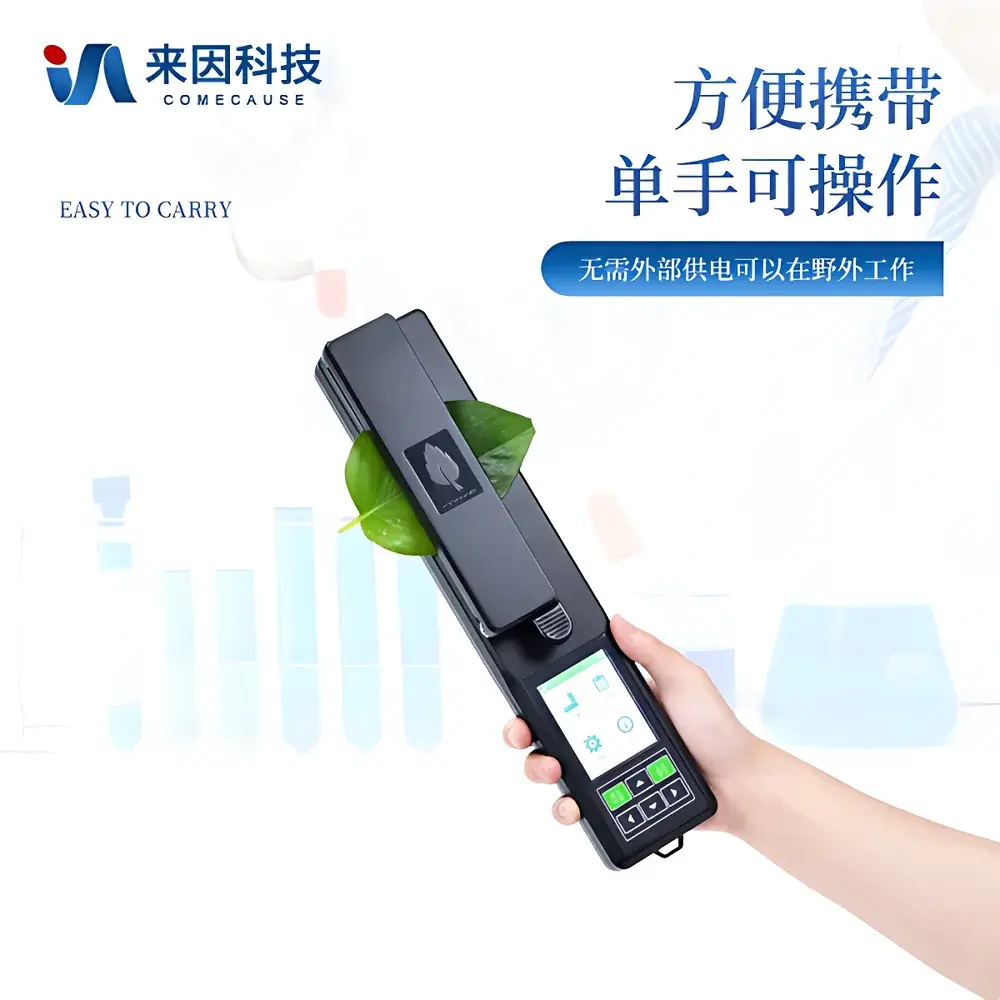
- High-capacity dual-battery system: primary 5000 mAh internal Li-ion battery + hot-swappable 1400 mAh external module—enabling >12 hours of continuous field operation without recharging.
- Maximum measurable dimension: 2000 mm length × 155 mm width—accommodating elongated monocot leaves (e.g., maize, sugarcane) and broad dicot foliage (e.g., sunflower, tobacco) without cropping or folding.
- Onboard calibration module allows user-initiated gain and threshold adjustment to compensate for ambient light variability, leaf translucency, or surface reflectance differences.
- USB Type-C interface enables bidirectional data transfer: download stored datasets (up to 5000 records) to Windows/macOS systems and firmware updates via standard file protocols.
- Compliant with ISO 11348-3 and ASTM E2917 for optical measurement repeatability; accuracy validated against NIST-traceable reference standards across 1–1000 cm² range.
Sample Compatibility & Compliance
The YMJ-B accepts intact, flattened leaf samples—including fresh, wilted, or slightly curled specimens—as long as they fit within the defined aperture (155 mm width). It reliably measures heterophyllous species (e.g., Populus tremuloides, Quercus robur) and morphologically complex leaves with lobes, serrations, or marginal incisions due to adaptive edge-thinning algorithms. The device meets CE marking requirements for portable electronic instrumentation and conforms to IEC 61000-4 electromagnetic compatibility standards. While not certified for GLP/GMP-regulated clinical trials, its data export structure (CSV/Excel) supports audit-ready documentation per ISO/IEC 17025 laboratory quality management guidelines. Calibration logs and measurement metadata (including date/time stamps) are embedded in every exported record.
Software & Data Management
Data acquired via Type-C connection is imported into COMECAUSE LeafMetrics Desktop Suite (v3.2+), a Windows-compatible application supporting batch analysis, outlier detection, and statistical summary generation (mean, SD, CV%). Export formats include .csv (UTF-8 encoded), .xlsx (with formula-free worksheets), and PDF reports containing measurement thumbnails, histograms, and trend plots. The software enforces data integrity through auto-generated checksums and read-only archival modes. For institutions requiring regulatory compliance, optional audit trail modules log all user actions—including parameter edits, calibration events, and file exports—in accordance with FDA 21 CFR Part 11 principles (electronic signatures, time-stamped logs, and immutable records). No cloud dependency is required for core functionality; however, optional integration with third-party LIMS platforms is supported via RESTful API endpoints.
Applications
- Agronomic phenotyping: Quantifying dynamic leaf area index (LAI) changes during crop growth stages to model radiation interception, photosynthetic capacity, and water-use efficiency.
- Abiotic stress assessment: Tracking leaf expansion inhibition under drought, salinity, or heavy metal exposure as an early biomarker of physiological disruption.
- Breeding program support: High-throughput screening of leaf morphology traits (e.g., length-to-width ratio, area stability) in segregating populations for ideotype selection.
- Ecophysiology studies: Correlating leaf area scaling relationships with stem hydraulic conductivity or stomatal conductance across species gradients.
- Educational use: Teaching plant morphometrics in undergraduate botany and ecology laboratories with reproducible, low-cost instrumentation.
FAQ
Does the YMJ-B require external lighting or ambient light control during measurement?
No. Its integrated diffuse LED array provides spectrally neutral, shadow-free illumination independent of environmental conditions.
Can the device measure overlapping or folded leaves?
It requires a single-layer, fully exposed leaf surface. Overlaps or folds must be manually separated prior to scanning to avoid underestimation.
Is calibration traceable to international standards?
Yes—factory calibration uses NIST-traceable ceramic area standards; users may perform field recalibration using included reference templates.
What is the temperature operating range?
The instrument functions reliably between –10°C and +50°C, with battery performance optimized between 0°C and 40°C.
How is measurement repeatability ensured across operators?
Standardized placement protocol (leaf midrib aligned with guide rail), fixed optical path geometry, and automatic edge thresholding eliminate subjective positioning variables.



