



COMECAUSE YMJ-S Scanning Leaf Area Analyzer
| Brand | COMECAUSE |
|---|---|
| Origin | Shandong, China |
| Manufacturer Type | Direct Manufacturer |
| Model | YMJ-S |
| Width Range | 0–155 mm |
| Length Range | 0–2000 mm |
| Scanning Area | 220 × 300 mm |
| Optical Resolution | 4800 dpi |
| Area Resolution | 0.001 cm² |
| Length/Width Resolution | 0.01 cm |
| Operating System Compatibility | Windows 7 or later (Windows 10 recommended) |
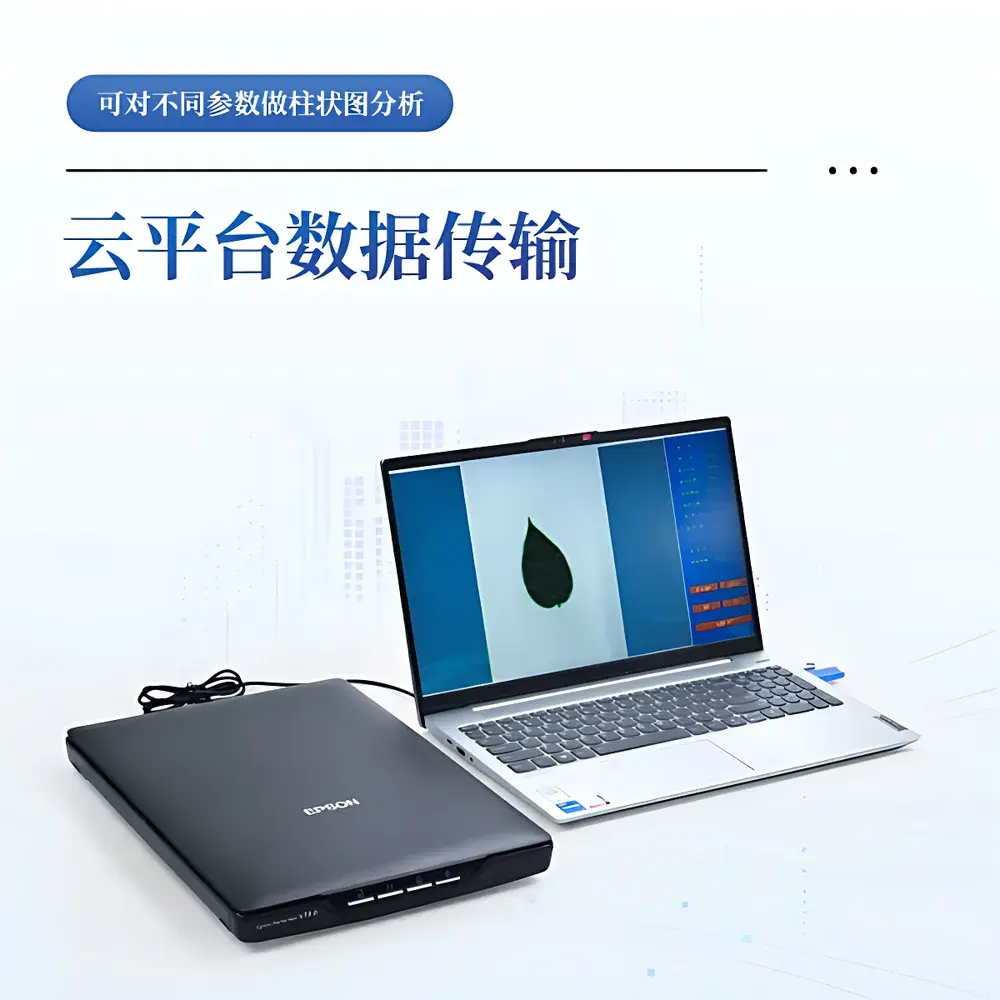
| Data Export | Excel (.xlsx), CSV, Cloud Platform (charting: bar, line |
Overview
The COMECAUSE YMJ-S Scanning Leaf Area Analyzer is a precision optical instrument engineered for non-destructive, high-resolution quantification of leaf morphometric parameters in plant science research. It operates on the principle of calibrated digital image acquisition and pixel-based contour segmentation—leveraging a fixed-focus, uniform-illumination scanning platform to capture high-fidelity grayscale or color leaf images under controlled lighting conditions. Unlike contact-based mechanical methods, this system preserves sample integrity while delivering traceable, operator-independent measurements. The instrument implements standardized optical geometry (orthogonal top-down imaging at known working distance and magnification) to ensure geometric fidelity across scans. Its architecture supports both field-deployable configurations (with portable power adapters and ruggedized housing options) and laboratory-integrated setups, enabling consistent measurement protocols across heterogeneous experimental environments—from greenhouse phenotyping trials to long-term ecological monitoring stations.
Key Features
- High-resolution flatbed scanning platform with 4800 dpi optical resolution and active LED illumination array for shadow-free, glare-minimized image capture
- Calibrated scanning area of 220 × 300 mm—optimized for broadleaf specimens up to 155 mm wide and 2000 mm long (via multi-pass tiling for elongated leaves)
- Automated leaf-edge detection algorithm trained on diverse angiosperm morphology, including lobed, serrated, and pinnate leaf types
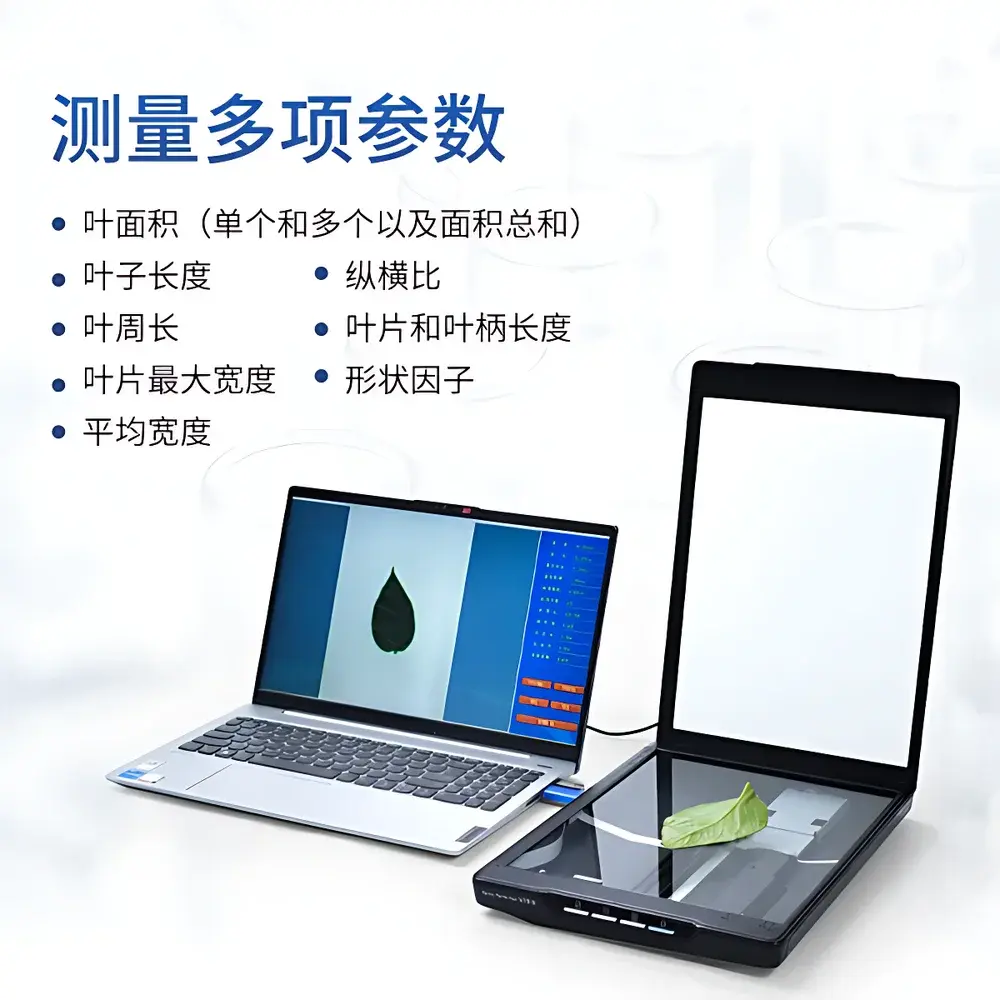
- Real-time calculation of 12+ morphometric parameters per scan: projected leaf area (single/multiple/sum), length, maximum width, mean width, perimeter, aspect ratio (length/width), shape factor (4π·area/perimeter²), petiole length, and leaf blade length
- On-device preview and manual correction mode for edge refinement—supporting user-defined ROI masking and background subtraction
- Integrated USB 3.0 interface compatible with standard Windows 7–11 x64 systems; no external frame grabber or driver installation required
Sample Compatibility & Compliance
The YMJ-S accommodates fresh, pressed, or dried leaf samples without chemical treatment or mounting media. Specimens must be planar and lie flat within the scanning area; curvature-induced parallax is mitigated by adjustable pressure lid and diffused backlighting. The system complies with ISO 5725-2:2019 (accuracy and trueness of measurement methods) and aligns with ASTM E2917-22 guidelines for optical measurement uncertainty estimation in botanical applications. All measurement algorithms are deterministic and version-locked—ensuring GLP-compliant audit trails when used with timestamped cloud synchronization. While not FDA 21 CFR Part 11-certified out-of-the-box, the software architecture supports third-party digital signature integration for regulated environments requiring electronic record validation.
Software & Data Management
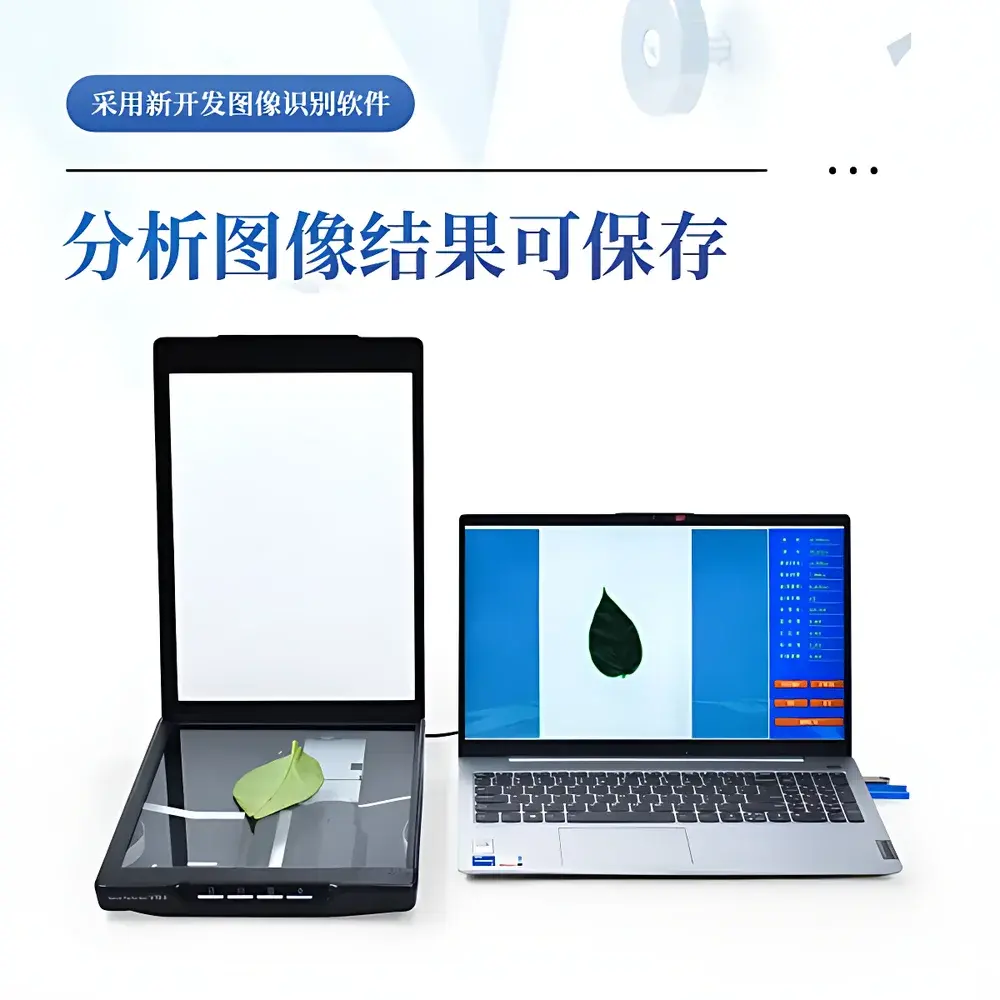
The proprietary LeafMorph Analysis Suite (v3.2+) provides a modular GUI for acquisition, batch processing, and statistical reporting. Raw TIFF images and metadata (timestamp, operator ID, calibration ID) are stored locally in ACID-compliant SQLite databases. Batch analysis workflows support folder-based auto-import, parameter filtering (e.g., “area > 5 cm²”), and outlier flagging based on Z-score thresholds. Export modules generate ISO-standardized Excel reports (ISO/IEC 20248-compliant headers), CSV files for R/Python ingestion, and structured JSON payloads for LIMS integration. Cloud synchronization uses TLS 1.3-encrypted HTTPS POST to the COMECAUSE AgriData Hub—a secure, GDPR-aligned platform offering role-based access control, time-series dashboards (line/bar charts), comparative cohort analysis, and automated PDF report generation with embedded confidence intervals.
Applications
This instrument serves as a foundational tool in quantitative plant phenomics. In crop physiology, it enables longitudinal tracking of LAI (Leaf Area Index) dynamics under drought, nutrient stress, or elevated CO₂ treatments—supporting QTL mapping of canopy architecture traits. Ecologists use its reproducible outputs to correlate leaf morphology with site-specific NDVI, soil moisture gradients, or herbivory indices. In forest pathology, pre- and post-infection scans quantify necrotic lesion expansion rates with sub-millimeter spatial resolution. Breeding programs integrate YMJ-S data into selection indices for ideotype development—e.g., optimizing specific leaf area (SLA) in wheat or leaf dissection index in Brassica. Its compatibility with herbarium voucher digitization also facilitates meta-analyses across historical collections, provided specimen flattening protocols meet GBIF imaging standards.
FAQ
What leaf thicknesses can the YMJ-S accommodate?
The scanning lid applies gentle, uniform pressure (≤1.2 kPa); specimens up to 3 mm thick (e.g., mature olive or camphor leaves) are fully supported without compression artifacts.
Is calibration verification traceable to NIST standards?
Yes—each unit ships with a certified reference target (10×10 mm grid, ±0.5 µm line width tolerance) and calibration certificate valid for 12 months from date of manufacture.
Can the software process overlapping leaves in a single scan?
No—overlapping regions introduce segmentation ambiguity. The protocol requires individual placement or use of semi-transparent separation films (included) for multi-leaf batches.
Does the cloud platform support API access for custom integrations?
Yes—RESTful JSON APIs (OAuth 2.0 authenticated) are available under enterprise licensing, supporting automated data pull, metadata tagging, and webhook-triggered notifications.
How is measurement repeatability validated across operators?
The system enforces mandatory calibration before each session and logs operator ID, ambient light level (via integrated photodiode), and focus stability metric—enabling ANOVA-based Gage R&R analysis per ISO/IEC 17025 requirements.




