
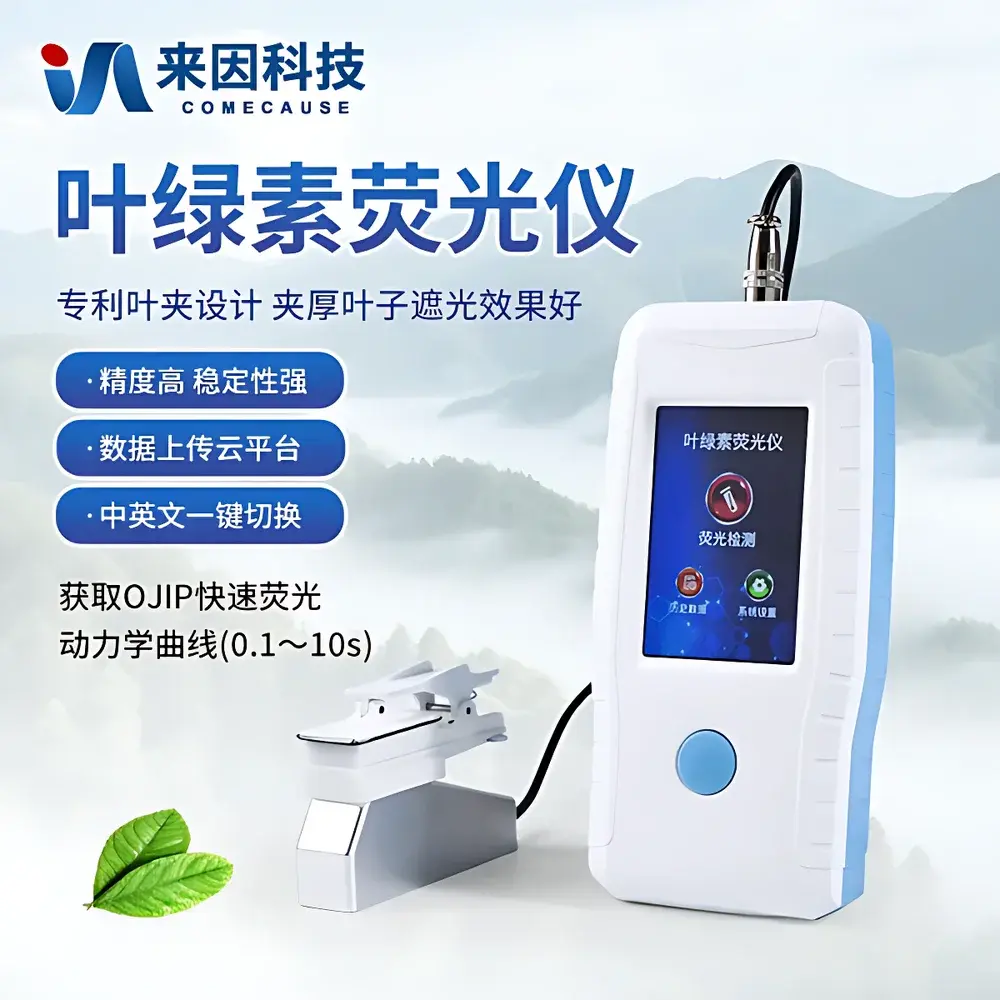
COMECAUSE IN/YS100 Portable Chlorophyll Fluorescence Analyzer
| Brand | COMECAUSE |
|---|---|
| Model | IN/YS100 |
| Measurement Range | Fo, Fj, Fi, Fm(Fp) |
| Measurement Duration | 3 min |
| ADC Resolution | 16-bit |
| Operating Temperature | -15–40 °C |
| Light Source | 455 nm LED |
| Maximum Actinic Irradiance | 23,000 μmol·m⁻²·s⁻¹ |
| Sampling Rate | up to 10 μs |
| Sensor | PIN photodiode with fluorescence bandpass filter |
| Gain Settings | 6 adjustable levels (1×, 2.3×, 4.2×, 5.6×, 15.6×, 20×) |
| Storage Capacity | 99,999 datasets |
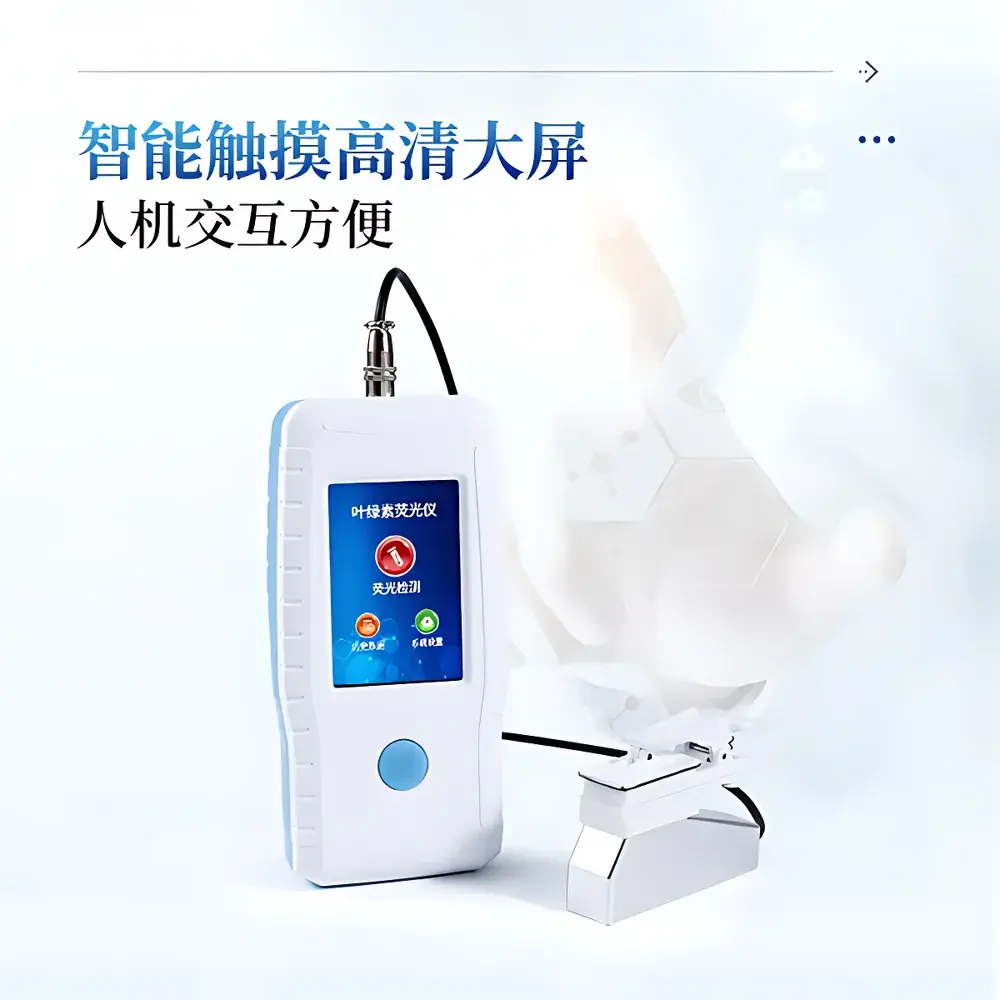
| Display | 3.5″ capacitive touchscreen (320 × 480 px) |
| Battery | 3.7 V / 10.5 Ah Li-ion, 20 h standby |
| Weight | 500 g (host: 380 g, probe: 120 g) |
| Dimensions | 180 × 85 × 40 mm |
| Humidity Range | 0–90% RH (non-condensing) |
| Storage Temperature | -20–50 °C |
Overview
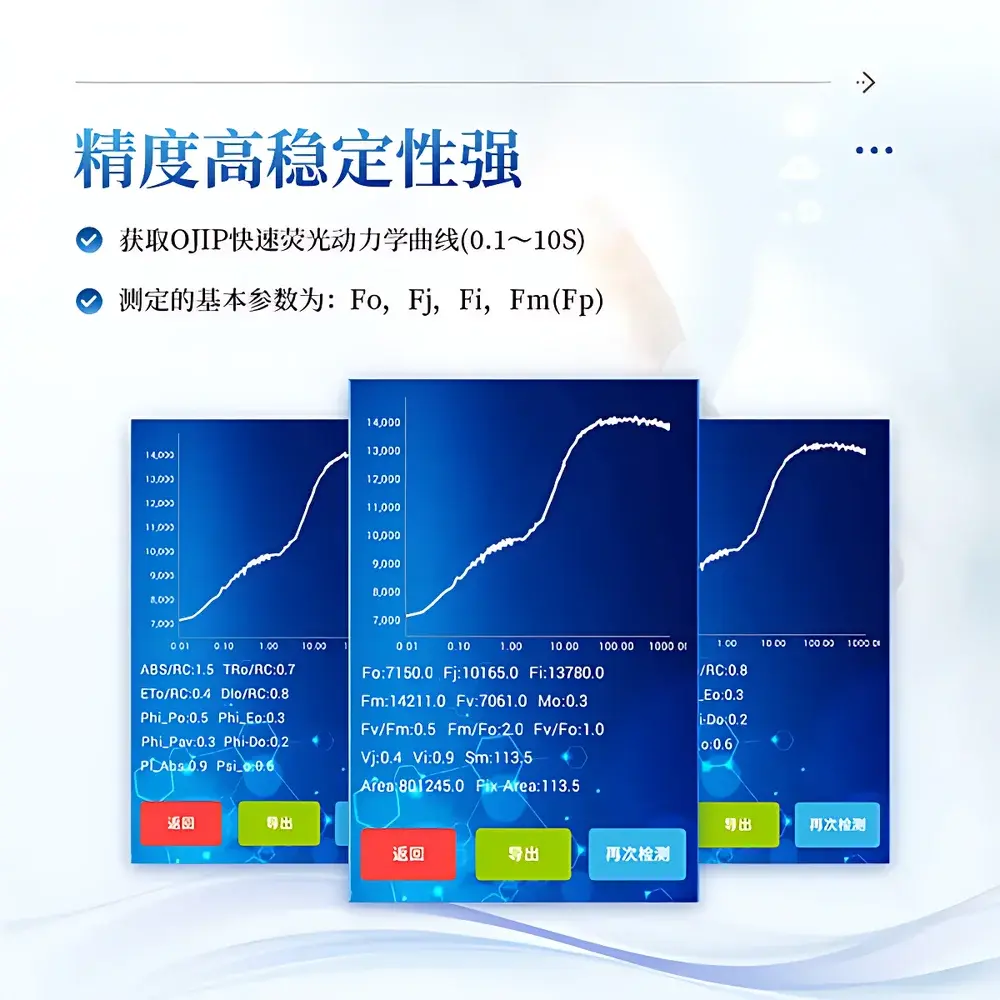
The COMECAUSE IN/YS100 Portable Chlorophyll Fluorescence Analyzer is a field-deployable, high-resolution instrument engineered for quantitative assessment of photosynthetic performance in higher plants, algae, and cyanobacteria. It operates on the principle of pulse-amplitude modulated (PAM) chlorophyll a fluorescence kinetics, enabling non-invasive, real-time monitoring of Photosystem II (PSII) photochemical efficiency and electron transport dynamics. The device captures the OJIP transient—a characteristic polyphasic fluorescence rise from minimal (Fo) to maximal (Fm) fluorescence—within a 0.1–10 s time window, providing foundational parameters (Fo, Fj, Fi, Fm) for subsequent biophysical modeling. Its compact architecture, integrated 455 nm blue LED actinic source, and high-speed 16-bit analog-to-digital conversion support reproducible acquisition of rapid fluorescence transients under ambient or controlled conditions.
Key Features
- High-temporal-resolution acquisition: 10 μs minimum sampling interval ensures fidelity in resolving early O-J phase transitions critical for stress-induced PSII damage detection.
- Adjustable actinic irradiance: 0–23,000 μmol·m⁻²·s⁻¹ range enables standardized light-response curve generation per ISO 10260 and ASTM E2912 protocols.
- Six-step sensor gain calibration: Optimizes signal-to-noise ratio across diverse sample types—from low-fluorescence mosses to high-pigment succulents—without manual reconfiguration.
- Onboard computation of 26 biophysical indices: Including Fv/Fm (maximum quantum yield), ΦPo (quantum yield of primary photochemistry), PIAbs (performance index on absorption basis), and Sm (specific energy fluxes), all derived directly from raw OJIP data using established JIP-test algorithms.
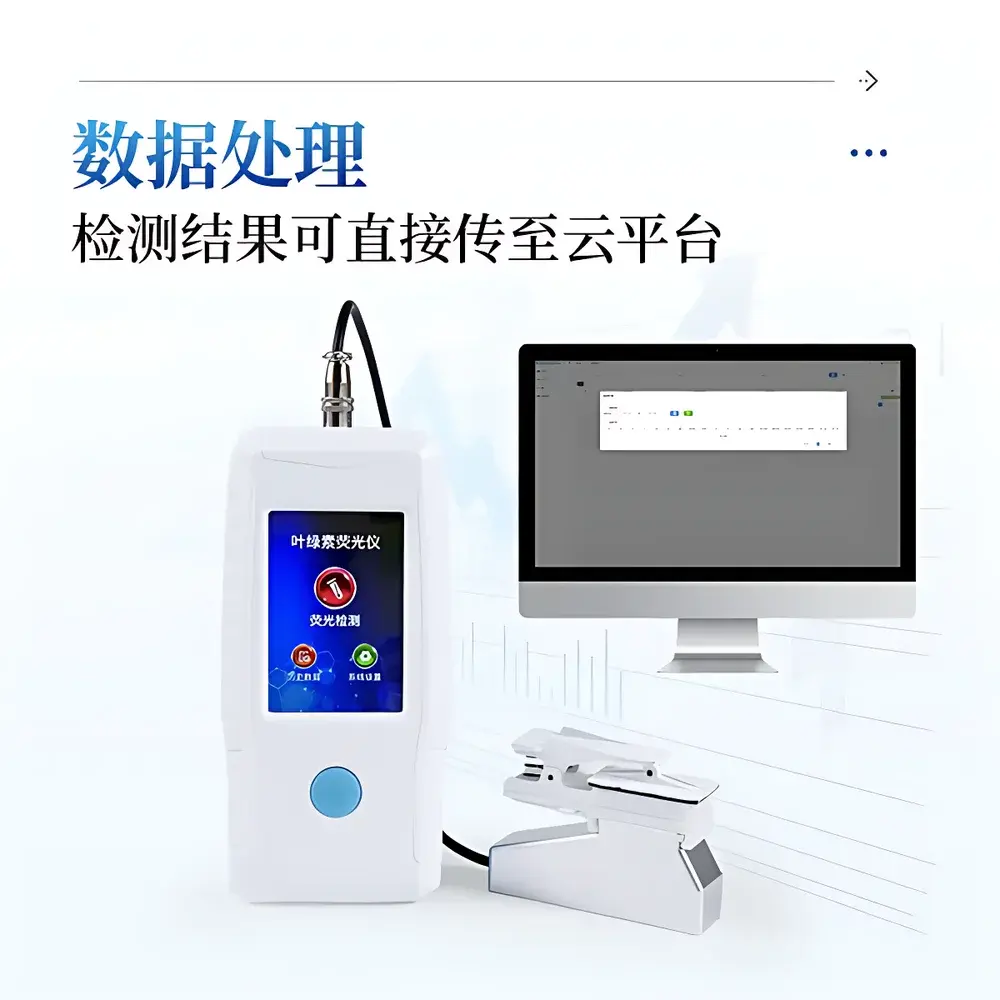
- Dual-mode data export: Local USB-C/Type-A connectivity and Wi-Fi-enabled cloud synchronization (HTTPS-secured) facilitate GLP-compliant audit trails and remote platform integration.
- Robust environmental tolerance: Certified operation from –15 °C to +40 °C and 0–90% RH supports extended deployment in temperate forests, alpine meadows, greenhouse trials, and arid-field phenotyping studies.
Sample Compatibility & Compliance
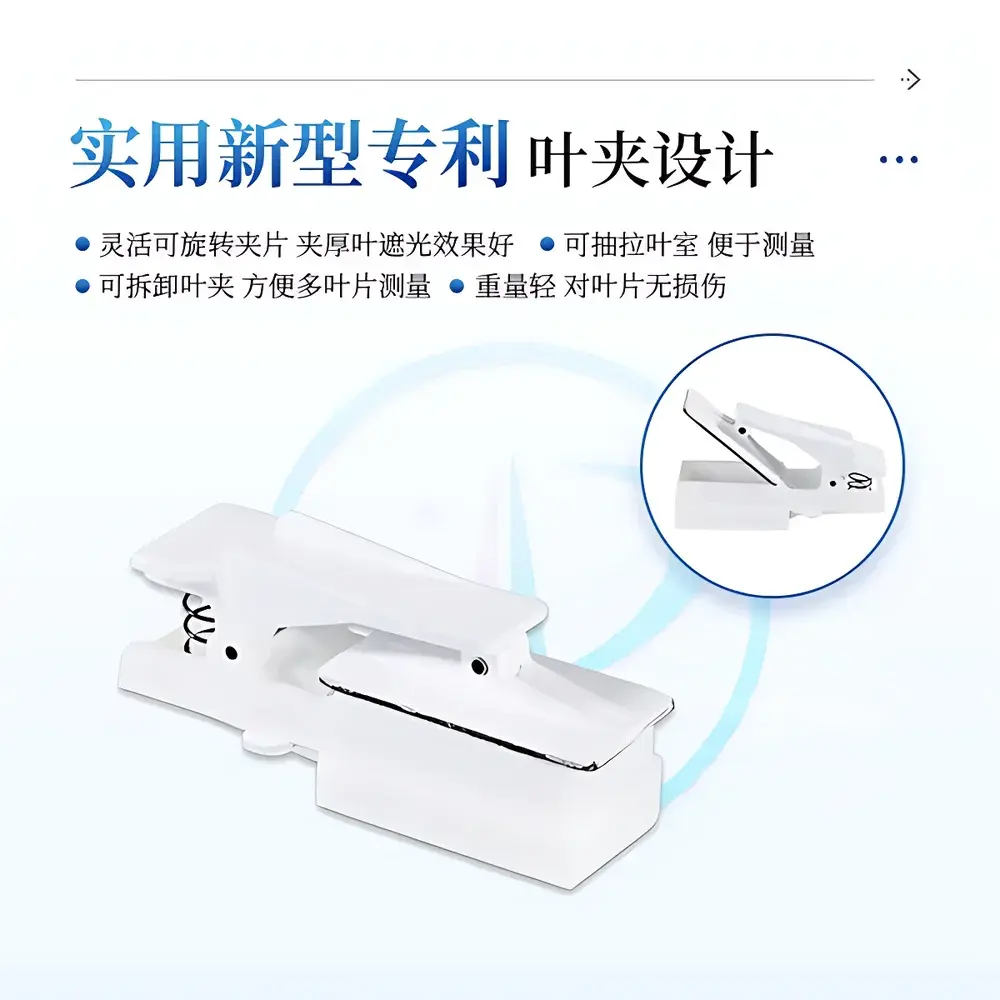
The IN/YS100 accommodates intact leaves (≥1 cm²), detached leaf discs, seedlings, lichens, and microalgal suspensions in cuvette mode. Its contactless optical design eliminates pressure artifacts common in clamp-based systems. All firmware and measurement routines comply with ISO 14040 (LCA framework for ecological instrumentation), and data structures conform to MIAME/MINSEQE metadata standards for plant phenomics. The device supports 21 CFR Part 11–compatible electronic signatures when paired with validated cloud platforms, satisfying GxP requirements for regulated crop science trials.
Software & Data Management
Built-in firmware v3.2 provides full local data lifecycle control: automatic timestamped storage (99,999 entries), selective deletion, Excel (.xlsx) export via USB host mode, and real-time waveform visualization. Cloud synchronization uses TLS 1.3 encryption and assigns immutable dataset IDs; exported files include embedded EXIF-like metadata (GPS coordinates if enabled, ambient temperature, battery level, gain setting, firmware version). Third-party API access enables integration with PlantCV, R-based photosynthesis modeling packages (e.g., photosynthesis and plantecophys), and LIMS systems supporting HL7 or FHIR standards.
Applications
- Early-stress phenotyping: Detection of drought-, heat-, or heavy-metal-induced PSII inhibition prior to visible symptom onset via Vj, ABS/RC, and DIo/RC deviations.
- Crop breeding programs: High-throughput screening of Fv/Fm and PIAbs across segregating populations under controlled-environment chambers or field plots.
- Ecophysiological field studies: Diurnal tracking of ΦEo and ΨEo in native species across elevation gradients or successional stages.
- Algal biotechnology: Quantification of light saturation kinetics and non-photochemical quenching (NPQ) induction rates in photobioreactor cultures.
- Education & training: Real-time classroom demonstration of JIP-test theory using live OJIP curve overlays and parameter sensitivity analysis tools.
FAQ
What is the minimum leaf area required for reliable Fo measurement?
A surface area ≥1 cm² is recommended; smaller samples require gain adjustment and dark-adaptation extension (>20 min) to stabilize baseline fluorescence.
Does the instrument support dark-adapted and light-adapted protocols per OECD TG 202?
Yes—built-in dark-adaptation timer (0–60 min) and programmable actinic ramp sequences fully align with OECD Test Guideline 202 for aquatic plant toxicity assessment.
Can raw OJIP time-series data be exported for third-party kinetic modeling?
Yes—CSV exports contain unprocessed fluorescence intensity (a.u.) vs. time (ms) at native 10 μs resolution, with metadata headers for traceable reanalysis.
Is firmware update performed over Wi-Fi or only via USB?
Both methods are supported: OTA updates via secure Wi-Fi and offline .bin file installation via USB mass storage mode.
How is thermal drift compensated during extended field measurements?
The system incorporates dual-point LED temperature monitoring and auto-gain recalibration every 5 minutes above 30 °C, referenced against internal thermal reference diodes.




