
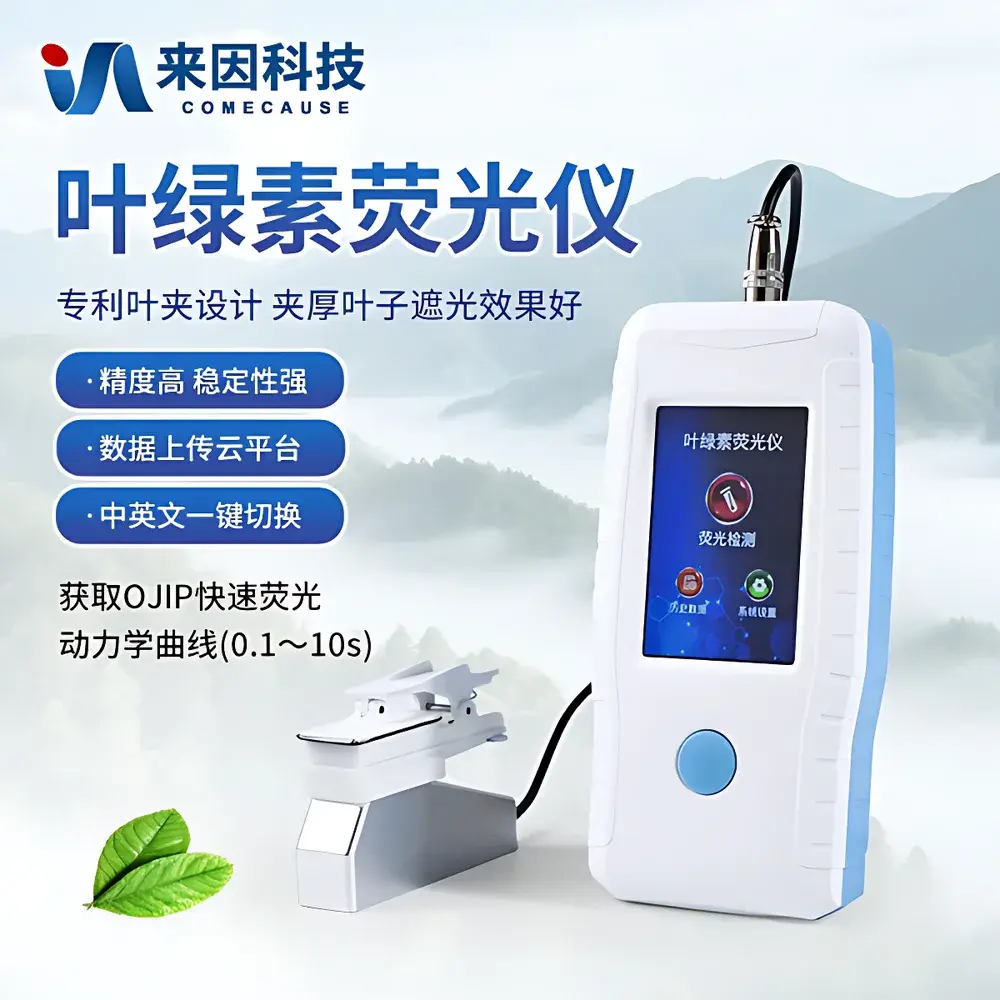

COMECAUSE IN-YS100 Portable Chlorophyll Fluorometer
| Brand | COMECAUSE |
|---|---|
| Model | IN-YS100 |
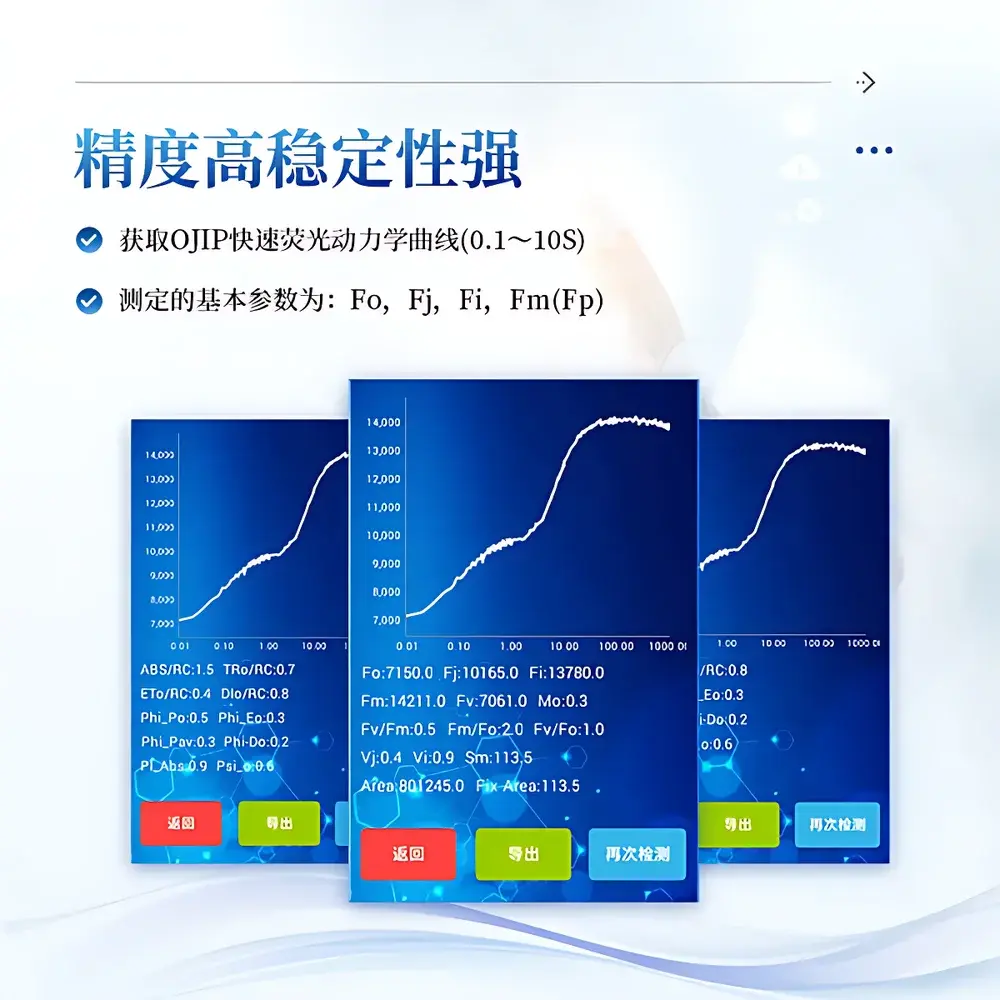
| Measurement Parameters | Fo, Fj, Fi, Fm (Fp) |
| Measurement Duration | 3 min |
| ADC Resolution | 16-bit |
| Operating Temperature | -15–40 °C |
| Light Source | 455 nm Blue LED |
| Photosynthetic Photon Flux Density (PPFD) | 0–23,000 µmol·m⁻²·s⁻¹ |
| Sampling Rate | up to 10 µs |
| Sensor | PIN photodiode with fluorescence bandpass filter |
| Gain Settings | 6 adjustable levels (1×, 2.3×, 4.2×, 5.6×, 15.6×, 20×) |
| Storage Capacity | 99,999 datasets |
| Display | 3.5″ capacitive touchscreen (320 × 480 px) |
| Battery | 3.7 V / 10.5 Ah Li-ion, ~20 h standby |
| Weight | 500 g (host: 380 g, probe: 120 g) |
| Dimensions | 18 × 8.5 × 4 cm |
| Humidity Range | 0–90 % RH |
| Storage Temp. | -20–50 °C |
Overview
The COMECAUSE IN-YS100 Portable Chlorophyll Fluorometer is a field-deployable, high-resolution instrument engineered for non-invasive assessment of Photosystem II (PSII) photochemical performance in vivo. It operates on the principle of chlorophyll a fluorescence induction kinetics—measuring the transient re-emission of absorbed light energy as fluorescence following controlled actinic and saturating pulse illumination. This biophysical signal reflects the redox status of the PSII electron acceptor side (QA) and the efficiency of photochemical quenching versus thermal dissipation pathways. The IN-YS100 captures the complete OJIP transient (0.1–10 s), enabling quantitative analysis of energy flow from photon absorption through primary charge separation to downstream electron transport. Its design adheres to established biophysical conventions defined by the JIP-test (Strasser et al., 2004), ensuring compatibility with peer-reviewed physiological interpretation frameworks used across plant science laboratories worldwide.
Key Features
- Full OJIP kinetic curve acquisition with microsecond-scale temporal resolution (down to 10 µs sampling interval)
- Integrated 455 nm blue LED excitation source delivering calibrated PPFD up to 23,000 µmol·m⁻²·s⁻¹ for precise saturation pulse delivery
- High-fidelity optical detection system featuring a thermally stabilized PIN photodiode coupled with a narrowband fluorescence bandpass filter (centered at ~685 nm, FWHM < 10 nm)
- Six-step programmable sensor gain control (1× to 20×), optimized for dynamic range adaptation across diverse species and stress conditions
- Onboard computation of 26 standardized biophysical parameters—including Fv/Fm, ΦPSII, qP, NPQ, ABS/RC, TR0/RC, ETR, and PIAbs—calculated in real time using JIP-test algorithms
- 3.5″ capacitive touchscreen interface with intuitive menu navigation, configurable brightness/touch sensitivity, and dual-language (English/Chinese) support
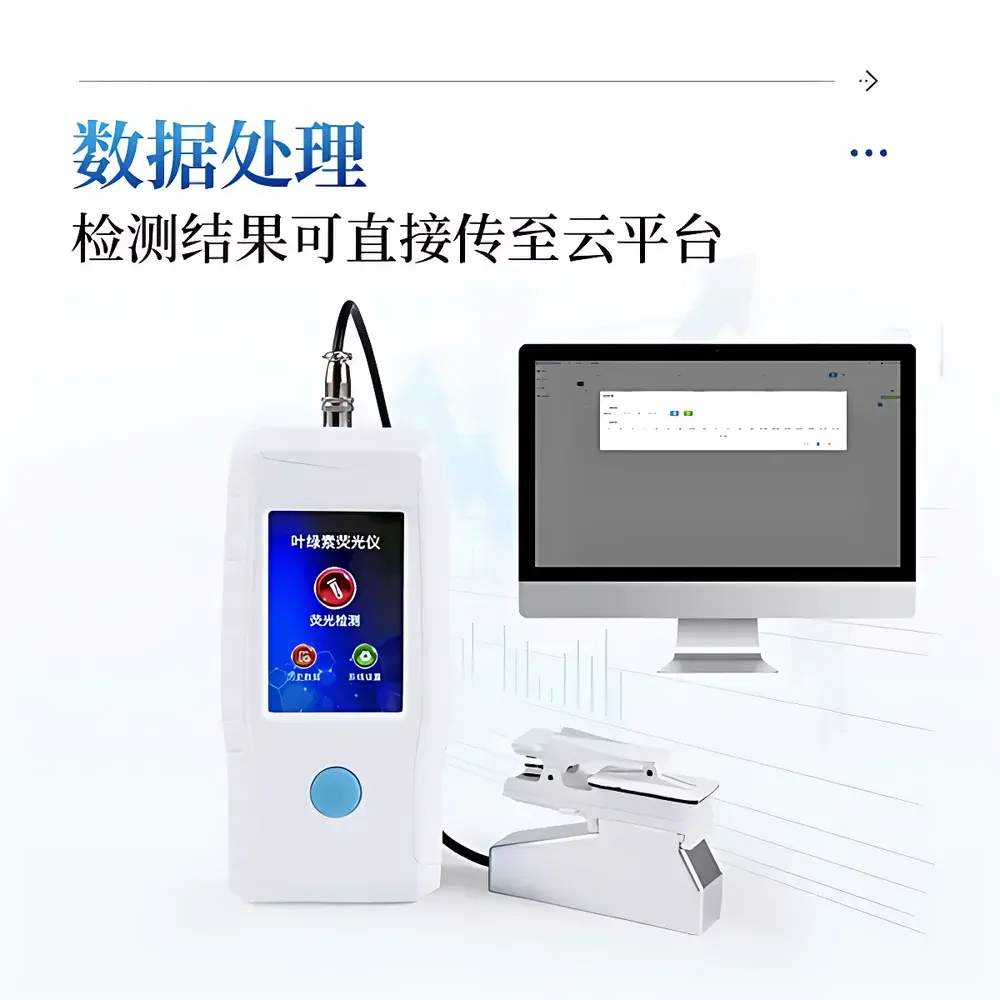
- Robust data management architecture: local storage of up to 99,999 measurements; USB-C and Wi-Fi connectivity for secure export to Excel or cloud-based platforms compliant with GLP audit trails
Sample Compatibility & Compliance
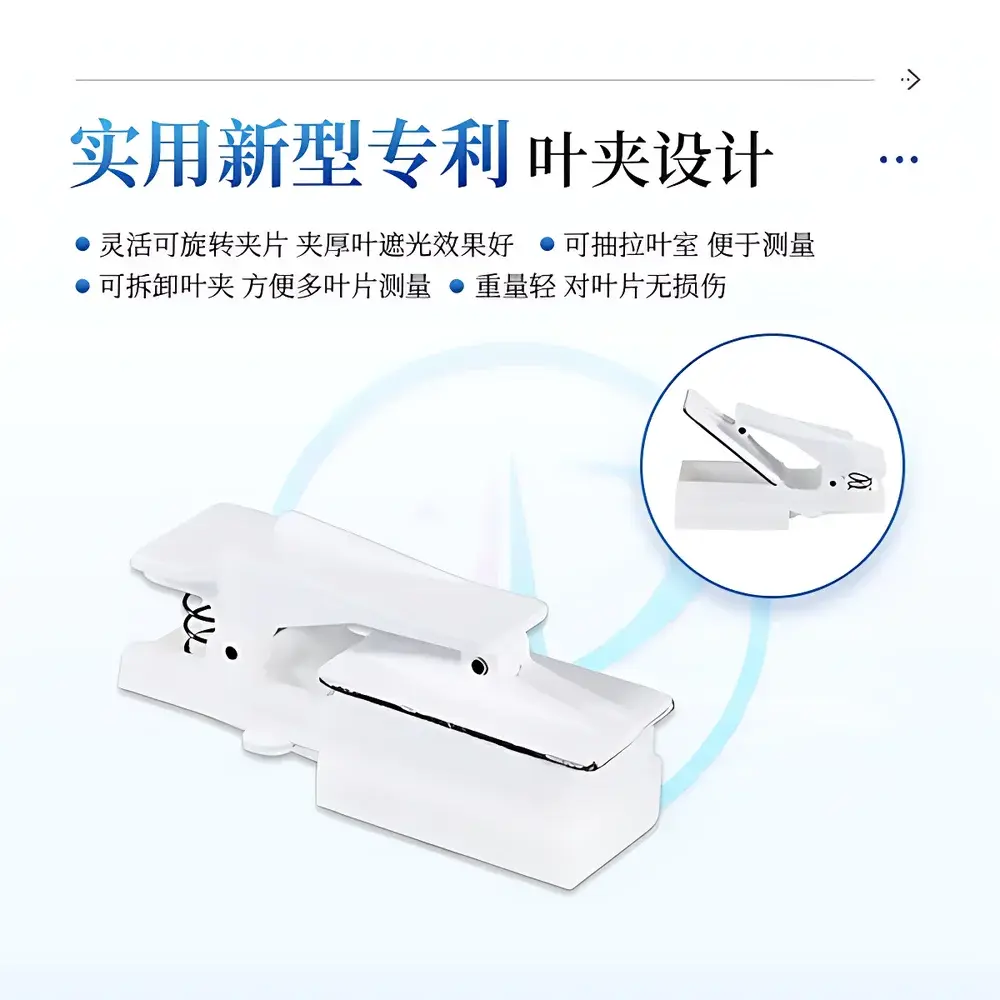
The IN-YS100 is validated for use with intact leaves of angiosperms, gymnosperms, ferns, and bryophytes under both dark-adapted and light-adapted conditions. Its compact probe head (120 g) enables rapid, repeatable clamping without mechanical damage or pressure-induced artifacts. All optical and electronic components meet IEC 61000-6-3 (EMC emission) and IEC 61000-6-2 (immunity) standards. Firmware supports timestamped metadata logging (operator ID, GPS coordinates via paired mobile device, ambient temperature/humidity if external sensors are connected), facilitating traceability required for ISO 17025-accredited laboratories and USDA/NRCS field protocols. Data export formats comply with MIAME/MINSEQE-compliant metadata schemas for integration into FAIR-aligned plant phenotyping repositories.
Software & Data Management
Data acquisition, visualization, and post-processing are supported via the proprietary COMECAUSE FluoroView Suite (v3.2+), compatible with Windows 10/11 and macOS 12+. The software implements automated baseline correction, curve normalization, and statistical outlier detection per measurement set. Export options include CSV, Excel (.xlsx), and HDF5 formats with embedded parameter definitions conforming to the Plant Phenomics Ontology (PPO). Cloud synchronization uses TLS 1.3 encryption and supports role-based access control (RBAC), meeting requirements for FDA 21 CFR Part 11 compliance when configured with electronic signatures and audit log retention (≥18 months). Raw binary files retain full 16-bit ADC resolution for reprocessing with updated algorithms.
Applications
- Stress Physiology: Early detection of abiotic stress responses—including drought, heat, chilling, salinity, and heavy metal exposure—prior to visible symptom development
- Crop Phenotyping: High-throughput screening of germplasm for photosynthetic resilience in breeding programs aligned with CIMMYT and IRRI field trial standards
- Ecological Monitoring: Long-term tracking of forest canopy vitality, invasive species competitiveness, and climate-driven shifts in photosynthetic capacity across elevation gradients
- Environmental Toxicology: Quantification of herbicide mode-of-action (e.g., PSII inhibitors like atrazine) and pollutant-induced photoinhibition in bioindicator species
- Educational Research: Undergraduate and graduate teaching modules on plant energy transduction, including hands-on OJIP interpretation and parameter correlation analysis with gas exchange (e.g., LI-6800 or GFS-3000 synchronized workflows)
FAQ
What does Fv/Fm represent, and why is it considered a benchmark parameter?
Fv/Fm quantifies the maximum quantum yield of PSII photochemistry in dark-adapted samples. A value near 0.83 indicates optimal functionality; reductions below 0.75 typically reflect chronic photoinhibition or structural damage to PSII reaction centers.
Can the IN-YS100 measure under ambient light conditions?
Yes—the instrument supports both dark-adapted (standard Fv/Fm) and light-adapted protocols, calculating ΦPSII, qP, and NPQ using multiphase flash sequences synchronized with natural irradiance.
Is calibration required before each measurement session?
No routine optical calibration is needed; however, users are advised to perform daily dark-current verification using the built-in shutter function and validate LED output stability annually against NIST-traceable spectroradiometric standards.
How is data integrity ensured during field deployments?
Each dataset includes embedded CRC-32 checksums, firmware version stamps, and operator-defined project tags. Wi-Fi uploads generate SHA-256 hashes logged alongside timestamps for forensic auditability.
Does the device support third-party API integration for automated phenotyping platforms?
Yes—RESTful API documentation and Python SDK are available under commercial license for integration with LemnaTec Scanalyzer, PhenoSpex, or custom robotics systems operating on ROS 2 middleware.




