
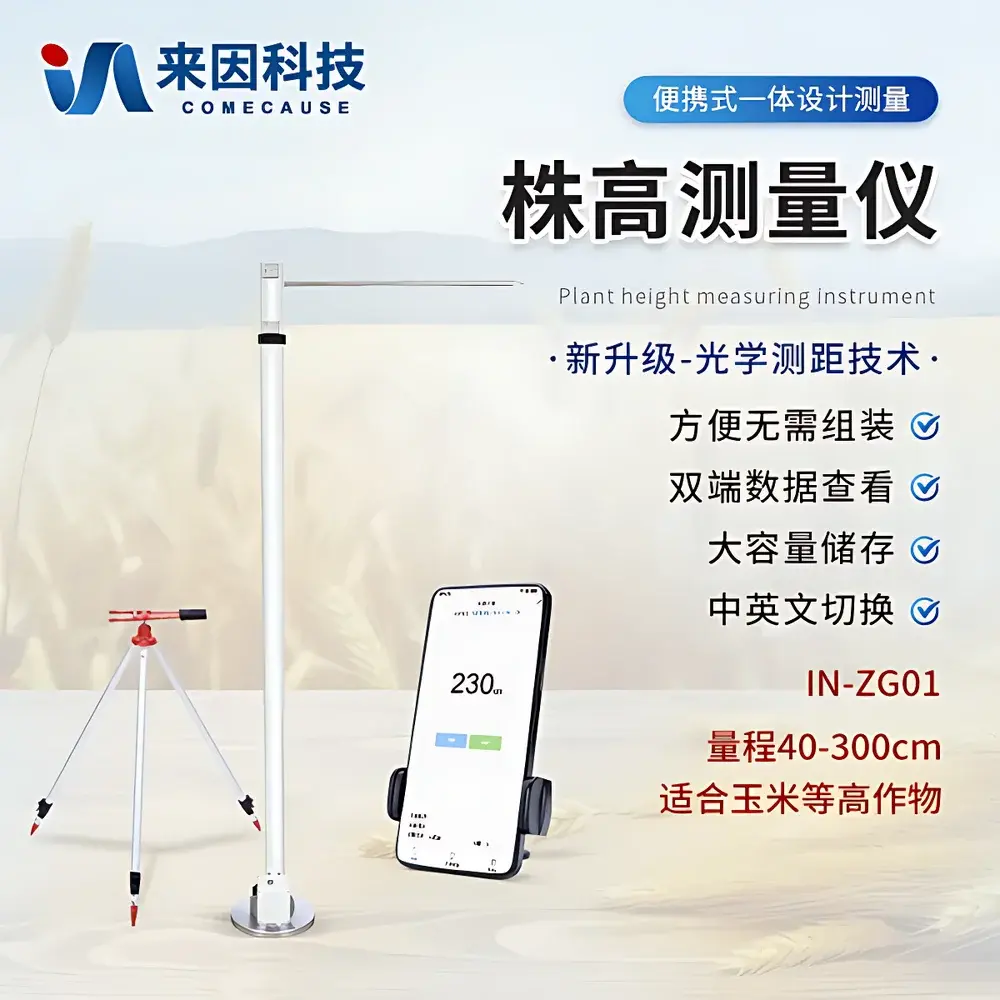
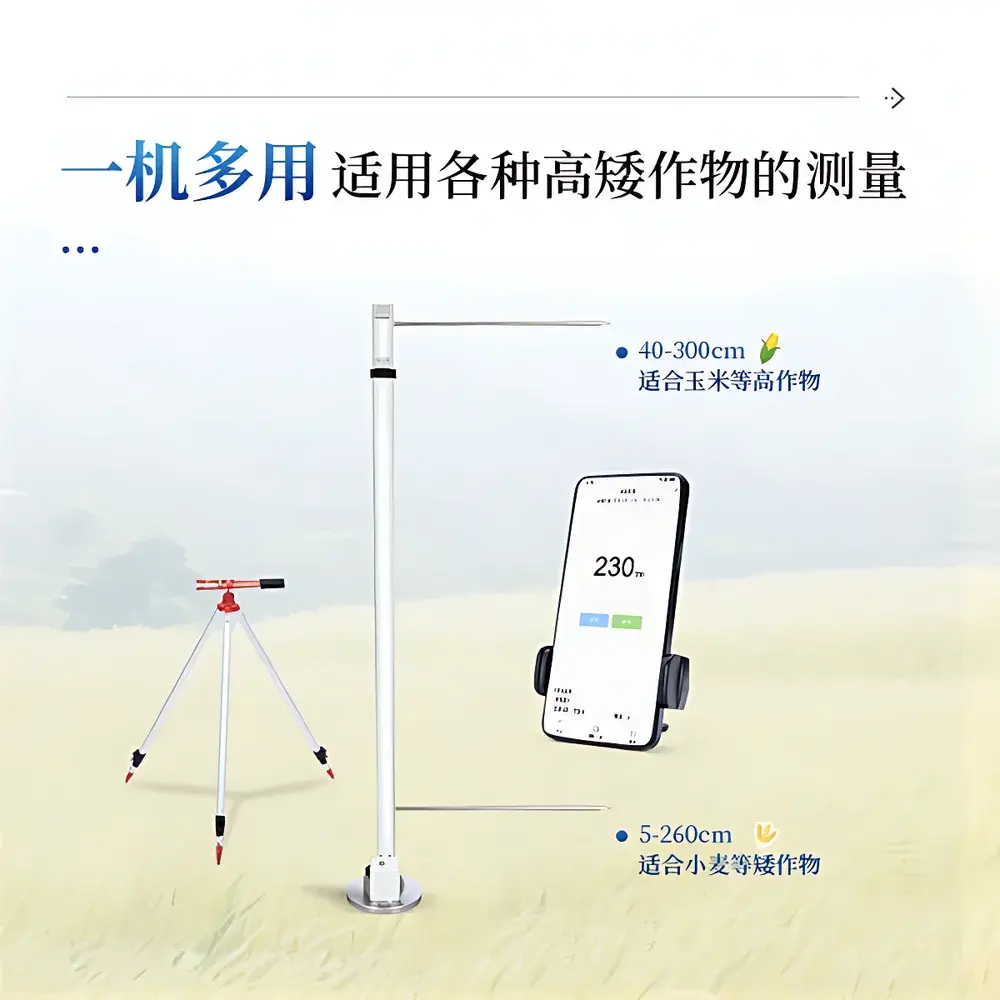
COMECAUSE IN-ZG01 Portable Optical Crop Height Measurement System
| Brand | COMECAUSE |
|---|---|
| Model | IN-ZG01 |
| Origin | Shandong, China |
| Manufacturer Type | Direct Manufacturer |
| Measurement Range | 40–300 cm |
| Accuracy | ±1 mm |
| Measurement Principle | Non-contact optical time-of-flight (ToF) distance sensing |
| Housing Material | Anodized aluminum alloy |
| Operating System | Android-based embedded OS |
| Battery Life | >10 hours continuous operation |
| Onboard Storage | 128 GB internal flash memory |
| Wireless Connectivity | Wi-Fi 5 (802.11ac) and LTE Cat-4 |
| Max Working Distance from Sensor Rod | 10 m |
| Display Language | Switchable English/Chinese UI |
| Data Export Format | CSV, Excel (.xlsx), Geo-tagged JPEG |
Overview
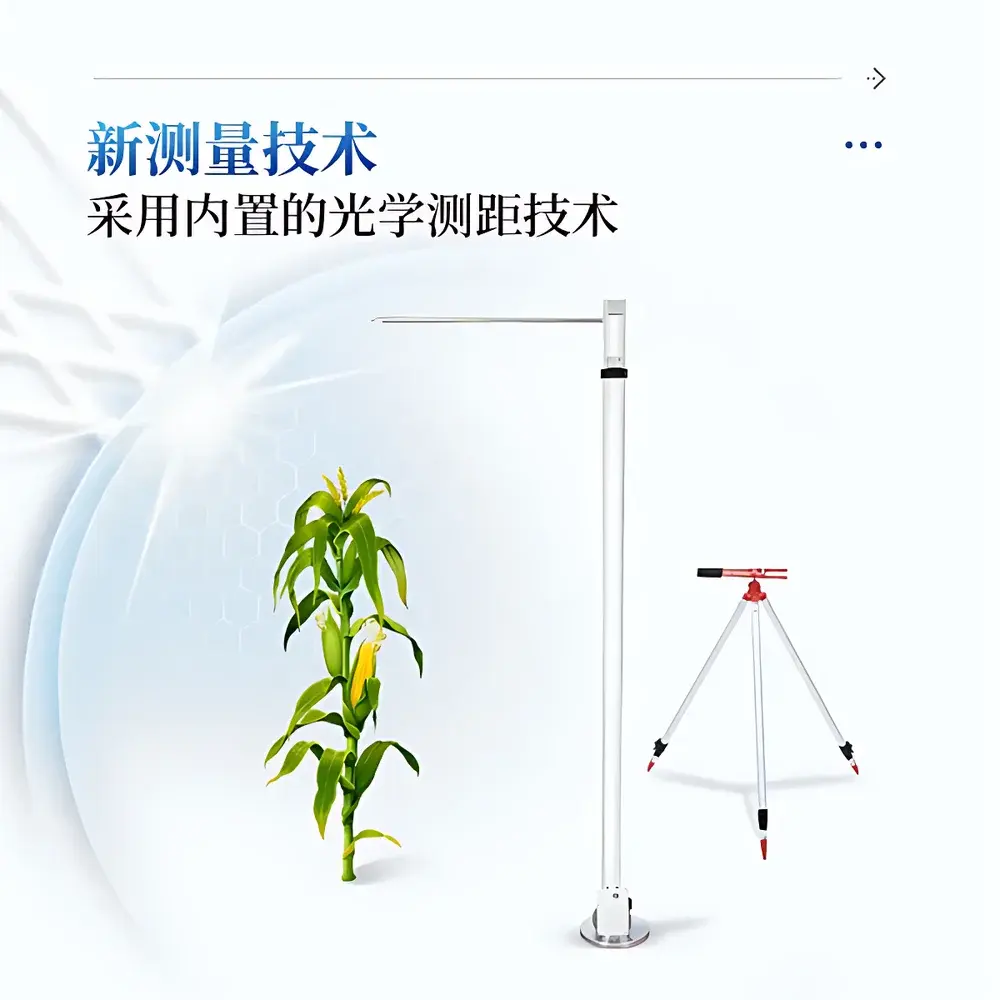
The COMECAUSE IN-ZG01 Portable Optical Crop Height Measurement System is an engineered field instrument designed for high-throughput, non-destructive phenotypic assessment of plant canopy height in agricultural research, breeding trials, and precision farming applications. It operates on a calibrated time-of-flight (ToF) optical distance sensing principle—emitting near-infrared pulses from a sealed, ambient-light-immune emitter and precisely timing their reflection from the topmost vegetative surface. Unlike image-based or manual ruler methods, this approach eliminates parallax error, operator dependency, and lighting variability, delivering repeatable height values traceable to NIST-traceable calibration standards. The system integrates a rigid, tripod-mounted sensor rod with integrated bubble level and ground-stabilizing feet to ensure vertical alignment within ±0.3°, critical for minimizing cosine error across heterogeneous field conditions. Its modular architecture separates sensing, computation, and visualization functions: the rod houses the ToF sensor and inertial measurement unit (IMU); the Android-based handheld unit runs proprietary firmware for real-time processing; and cloud synchronization enables centralized data governance.
Key Features
- Optical ToF sensing with sealed optical path—no external light leakage, enabling consistent performance under full sunlight, overcast, or low-light canopy conditions.
- Integrated digital inclinometer and precision leveling vial ensure sensor rod perpendicularity; mechanical stability verified per ISO 9001 assembly protocols.
- Self-contained Android computing module with 4 GB RAM and quad-core processor—executes on-device height calculation, geotagging, and metadata annotation without cloud dependency.
- 128 GB onboard eMMC storage retains timestamped records including GPS coordinates (±2.5 m CEP), crop species code, observer ID, environmental notes, and synchronized high-resolution JPEGs (≥12 MP).
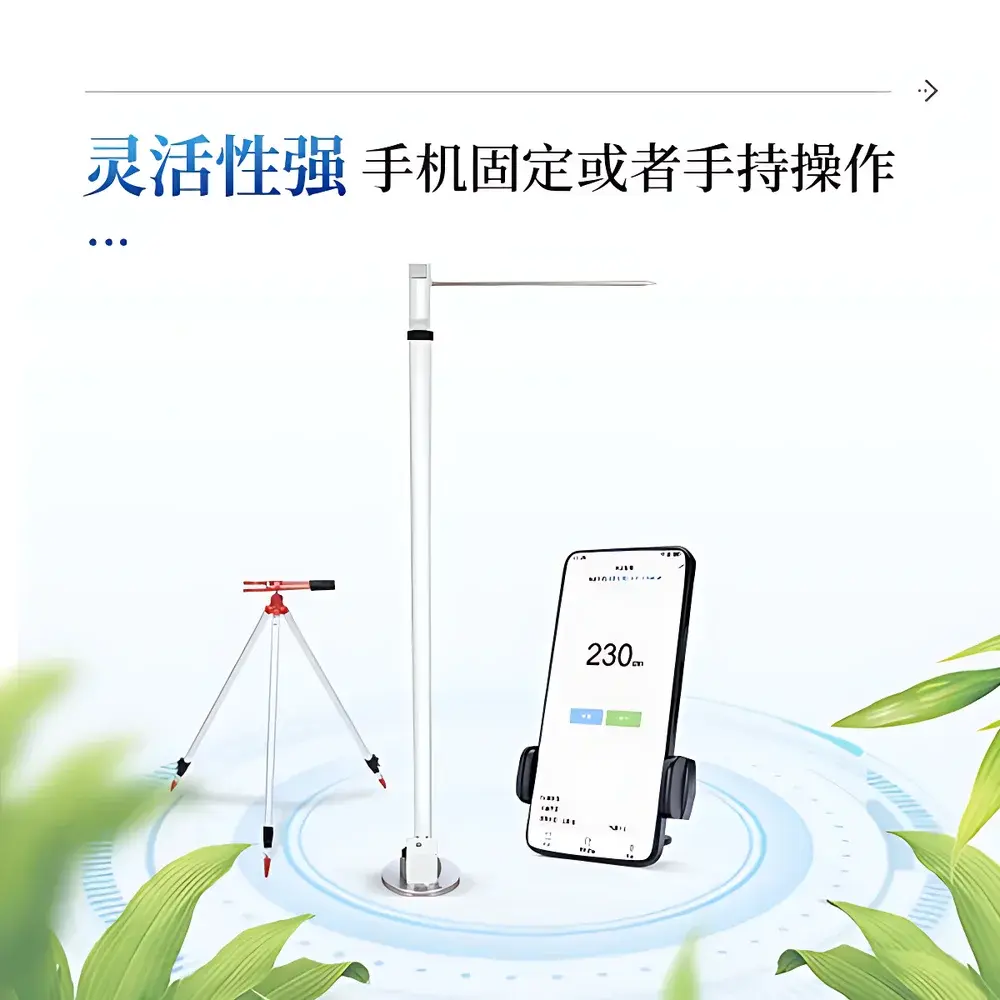
- Wireless operational radius up to 10 m between sensor rod and handheld unit—supports flexible deployment in dense stands, trellised vines, or uneven terrain without cable constraints.
- Compliant with GLP-aligned data integrity requirements: all measurements generate immutable audit logs with user authentication, device ID, firmware version, and UTC timestamps.
Sample Compatibility & Compliance
The IN-ZG01 accommodates morphologically diverse crop types—including cereals (wheat, rice, barley), row crops (maize, soybean, cotton), horticultural species (tomato, pepper, strawberry), and perennial systems (alfalfa, sugarcane)—without hardware modification. Its 40–300 cm vertical range covers seedling emergence through late reproductive stages across temperate and subtropical agroecosystems. The system conforms to IEC 61326-1:2013 (EMC for laboratory equipment), IP54 ingress protection rating for dust and water resistance, and RoHS 2011/65/EU material compliance. All firmware and data export modules support FAIR data principles (Findable, Accessible, Interoperable, Reusable), with metadata structured according to MIAPPE v1.1 guidelines for plant phenotyping.
Software & Data Management
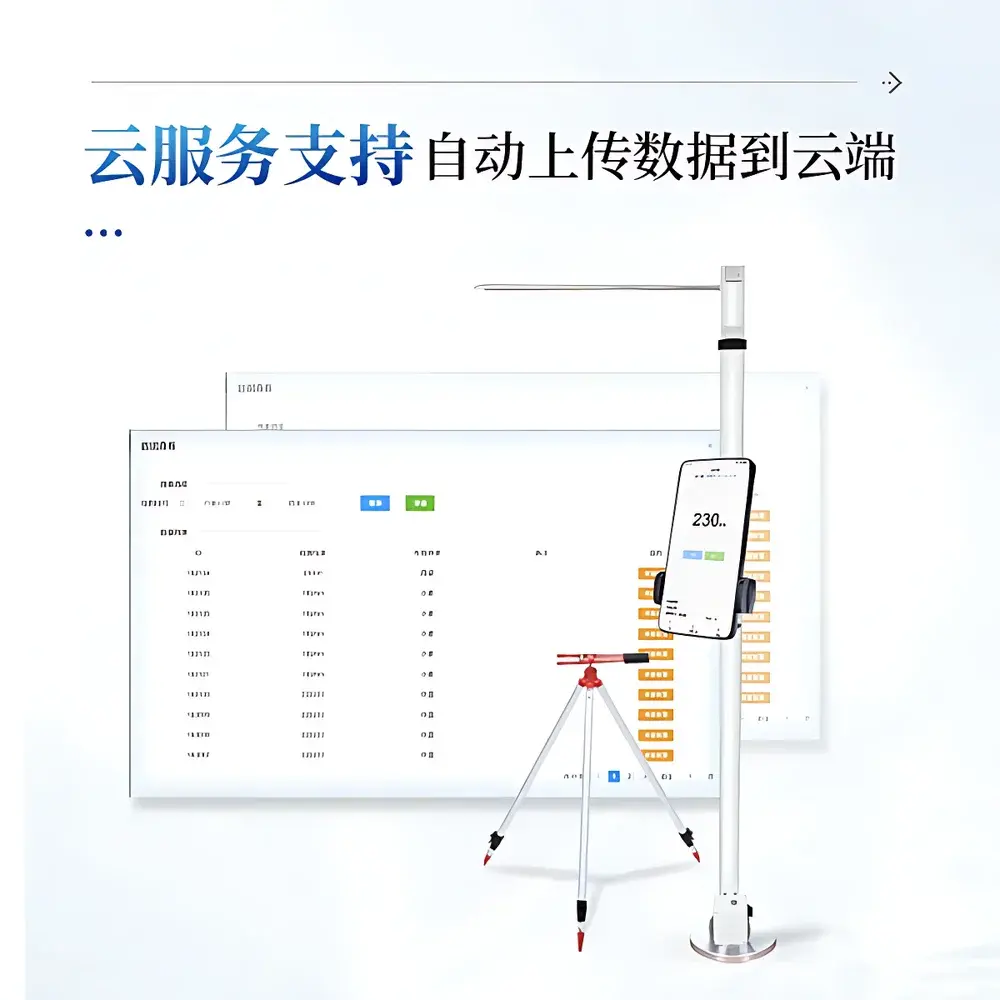
The proprietary PhenomField™ application provides dual-mode operation: offline field acquisition and post-acquisition desktop analysis via Windows/macOS desktop client. Raw ToF signal outputs, corrected height values, and EXIF-embedded geospatial metadata are stored in vendor-neutral HDF5 containers. Excel (.xlsx) exports include auto-generated summary sheets with mean, SD, CV%, and outlier flags per plot. Cloud synchronization (via AWS-hosted PhenomCloud™) supports role-based access control, versioned dataset history, and API-driven integration with BreedBase, FieldBook, or custom LIMS platforms. Audit trails comply with FDA 21 CFR Part 11 requirements for electronic records and signatures when enabled via organizational administrator configuration.
Applications
- High-resolution temporal monitoring of growth rate dynamics in drought, heat, or nutrient-stress trials.
- Validation of UAV-based canopy height models using ground-truth reference measurements.
- QTL mapping studies requiring precise, operator-blind phenotypic scoring across replicated field plots.
- Growth stage classification (e.g., BBCH scale) for automated irrigation or pesticide scheduling.
- Post-harvest residue height assessment for conservation tillage compliance reporting.
- Phenotyping platform integration in controlled-environment phenomics facilities (growth chambers, glasshouses).
FAQ
What calibration standards are used for factory verification of measurement accuracy?
Each unit undergoes end-of-line calibration against certified gauge blocks traceable to CNAS-accredited metrology labs; annual recalibration is recommended per ISO/IEC 17025 guidelines.
Can the system operate without smartphone connectivity?
Yes—full functionality (measurement, storage, geotagging, local export) is available offline; cloud sync occurs only upon network reconnection.
Is raw ToF signal data accessible for custom algorithm development?
Yes—HDF5 file exports include unprocessed pulse return waveforms, IMU orientation quaternions, and ambient light sensor readings.
How is measurement repeatability validated across operators?
Inter-operator CV% is ≤1.2% (n=30 repeated measures on maize at V6 stage), as documented in the system’s Performance Qualification Report (PQR) supplied with each shipment.




