
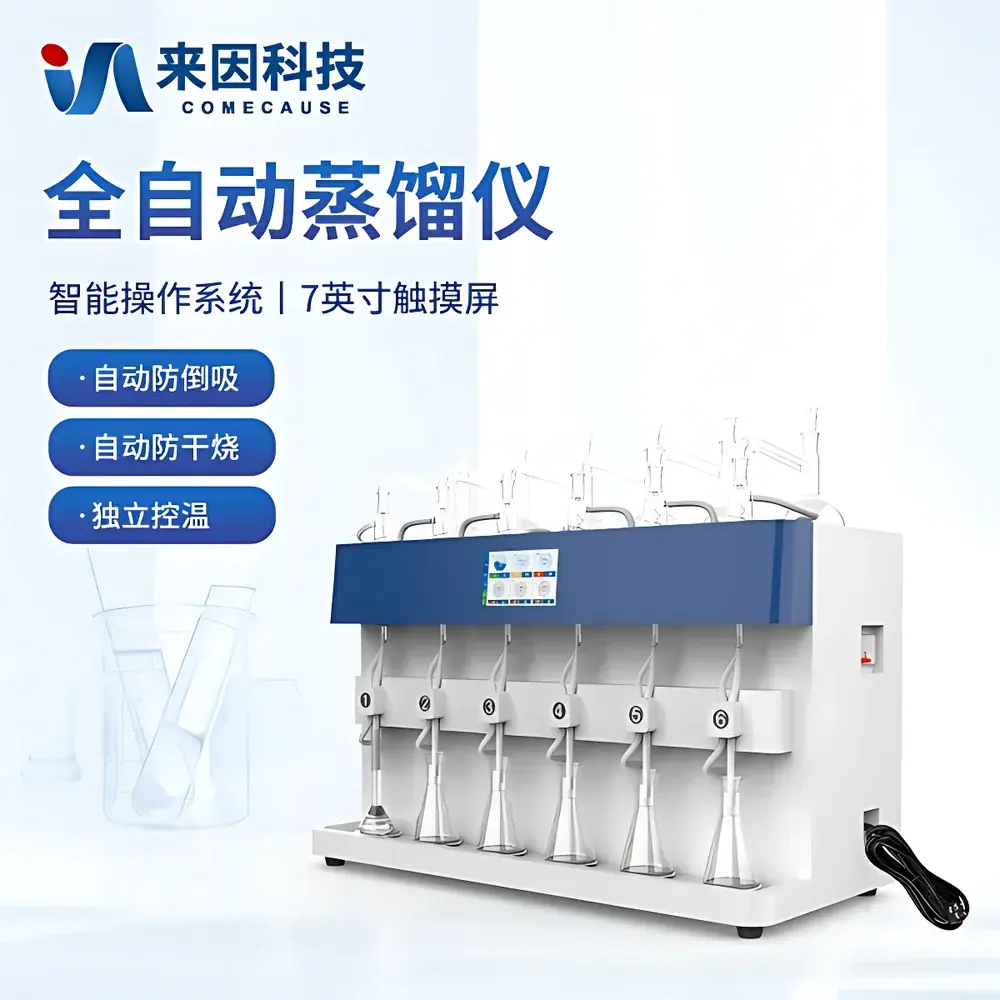
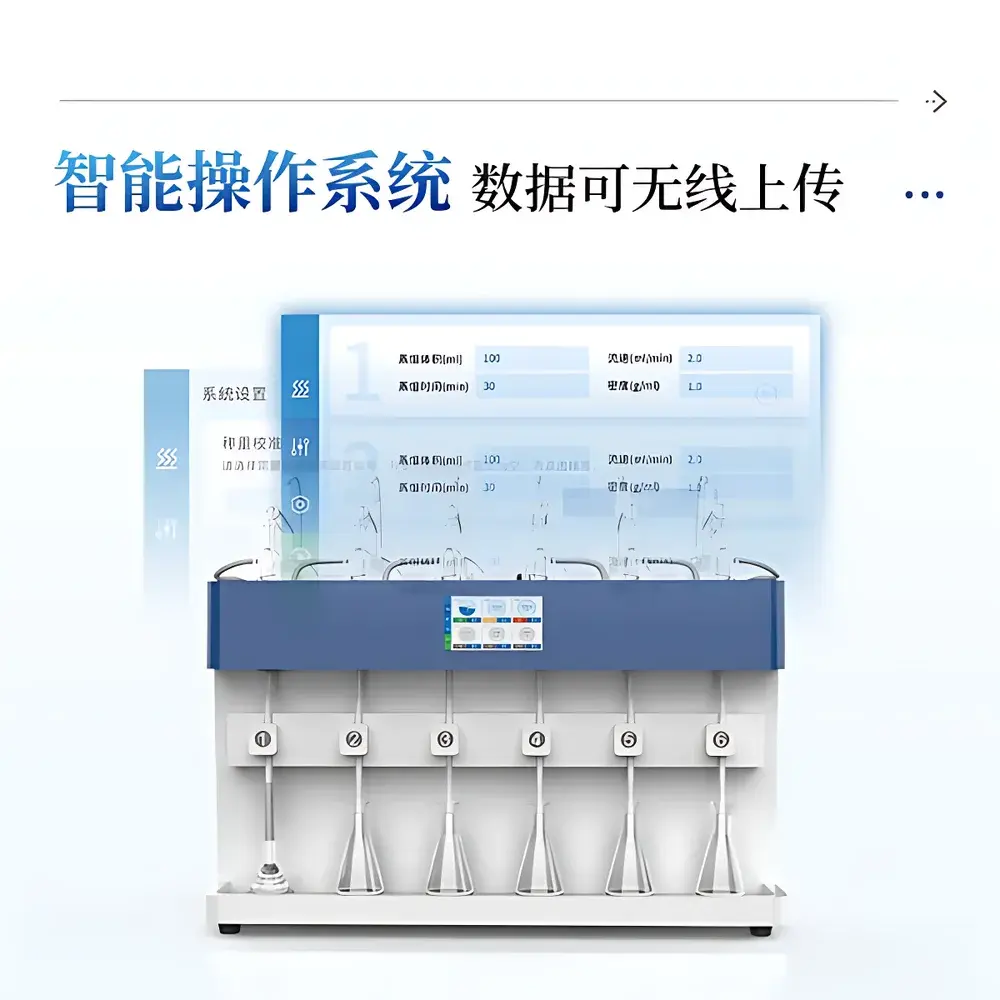
COMECAUSE IN-ZLA Automated Distillation System
| Brand | COMECAUSE |
|---|---|
| Origin | Shandong, China |
| Manufacturer Type | Direct Manufacturer |
| Model | IN-ZLA |
| Price | USD 1,400 (FOB) |
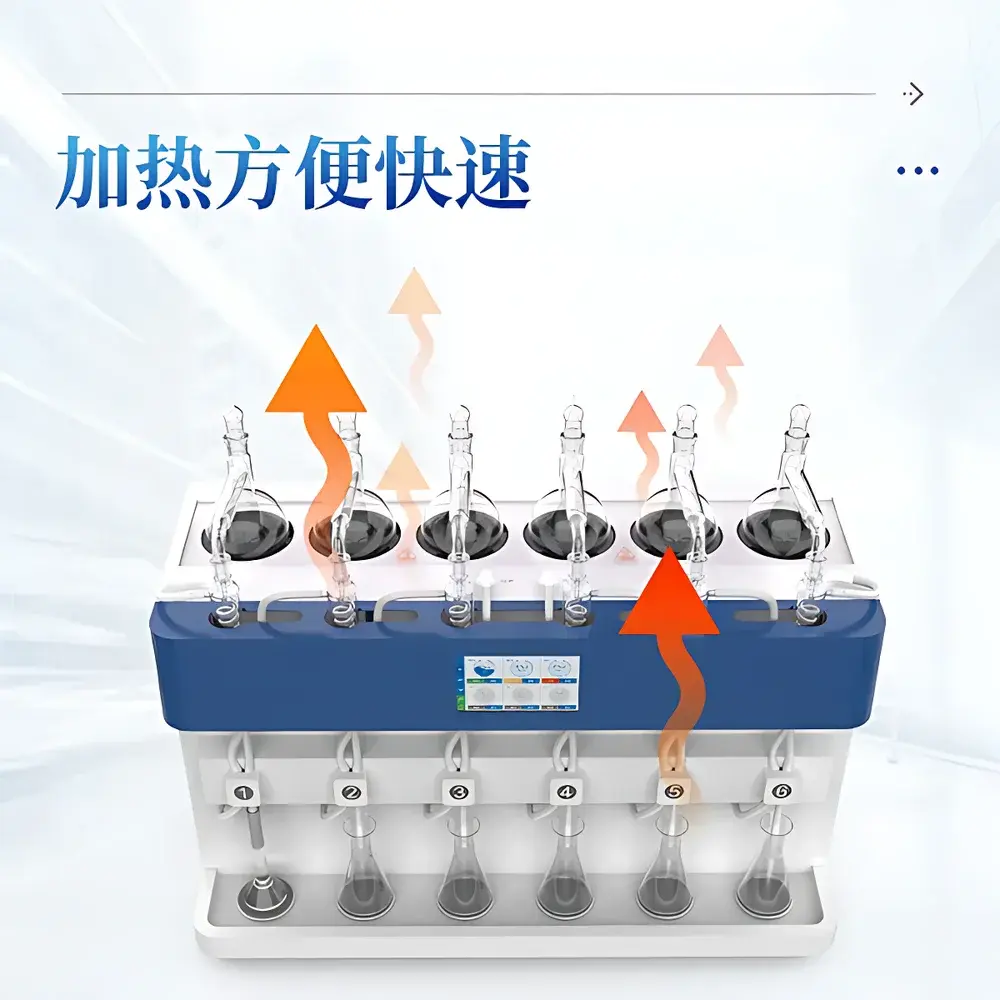
| Heating Method | Far-Infrared Ceramic Radiant Heater (Flame-Free) |
| Cooling Method | External Chilled Water Circulator or Tap Water |
| Warm-up Time | <20 min |
| Distillation Endpoint Control | Time-Based & Mass-Based Dual Mode |
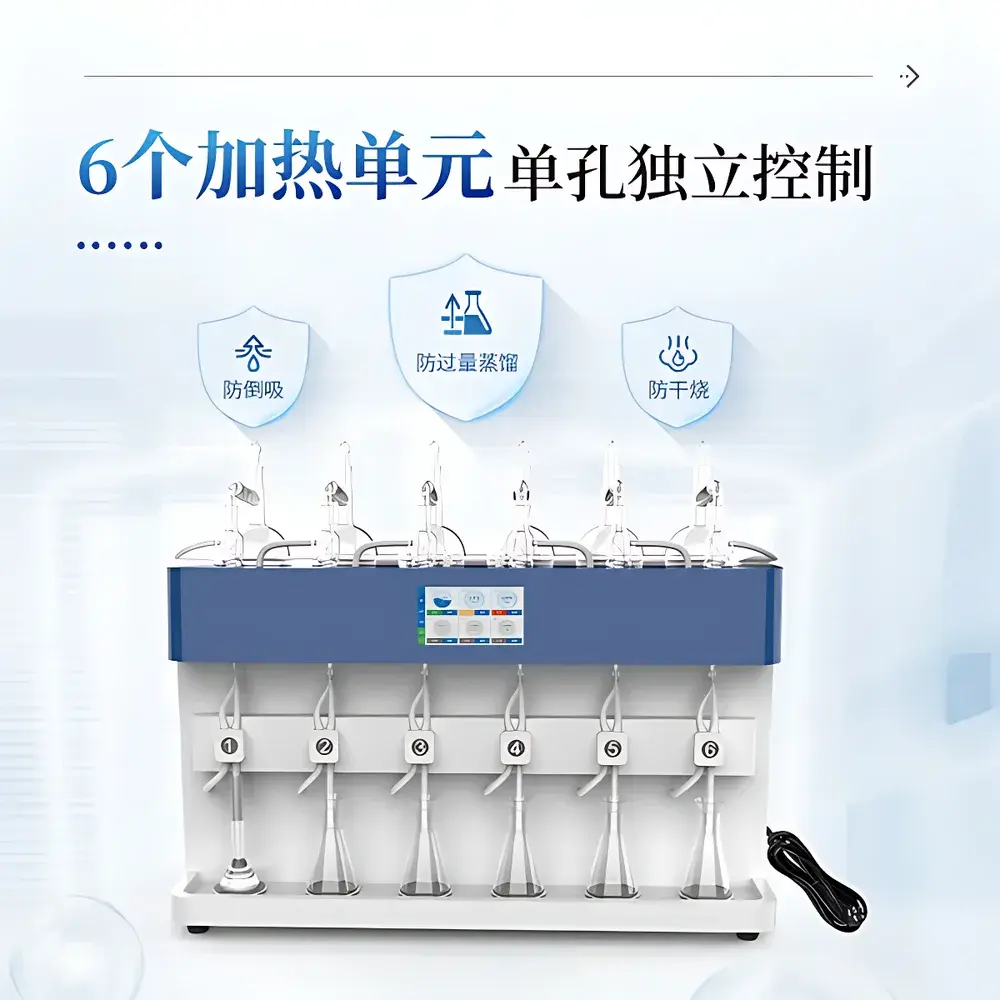
| Heating Units | 6 Independent Channels |
| Maximum Heating Power per Channel | 600 W |
| Rated Total Power | 3800 W |
| Operating Temperature Range | Ambient to 400 °C |
| Distillation Volume Range | 0–500 mL |
| Precision | ±0.1 mL |
| Distillation Flow Rate | 0–10 mL/min |
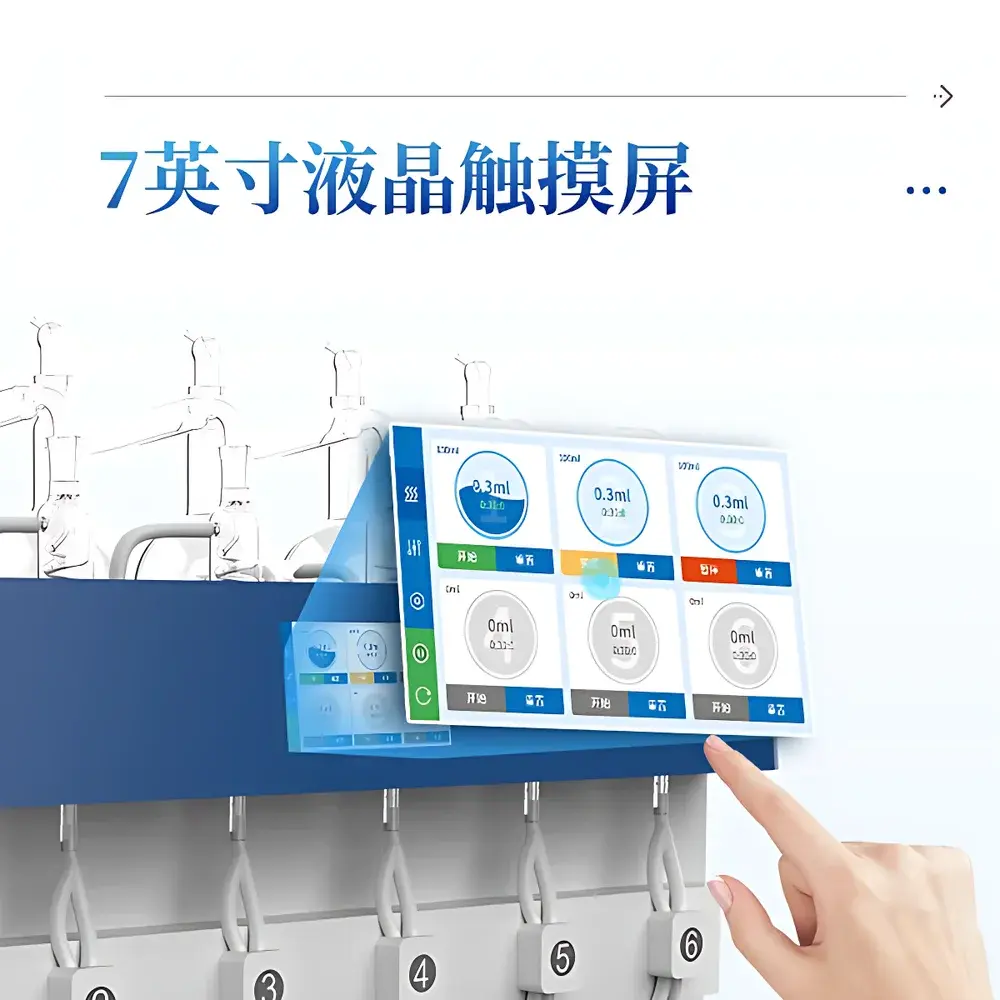
| Display | 7-inch Full-Color TFT Touchscreen |
| Built-in Methods | 18 Preloaded Standard Methods (e.g., HJ 537, HJ 1226, GB 5009.266) |
| Method Storage Capacity | ≤1000 Protocols |
| Safety Features | Anti-Suckback Valve, Overheating Protection, Dry-Run Prevention (Dual-Temperature + Flow Monitoring), Automatic Pressure Release, Leakage Current Protection |
| Auto-Cleaning Function | Yes |
| Airtightness Verification | Yes |
| OTA Firmware Update | Yes |
| Dimensions (W×D×H) | 920 × 417 × 555 mm |
| Net Weight (w/ Glassware) | 75 kg |
| Power Supply | 220 V, 50 Hz |
Overview
The COMECAUSE IN-ZLA Automated Distillation System is an integrated, programmable distillation platform engineered for high-throughput, method-driven sample preparation in environmental, food safety, and regulatory testing laboratories. It operates on the principle of controlled thermal volatilization followed by condensation and quantitative collection — a process critical for analyte isolation prior to downstream analysis (e.g., spectrophotometry, titration, or GC). Unlike conventional glassware-based setups requiring manual intervention, the IN-ZLA integrates heating, condensation, liquid-level monitoring, endpoint detection, and safety interlocks into a single modular architecture. Its far-infrared ceramic heating modules deliver uniform thermal energy transfer to 500 mL round-bottom flasks without open flame or hot-surface hazards, while dual-mode endpoint control (time + mass) ensures reproducible distillate volumes across all six independent channels. Designed for compliance with GLP/GMP workflows, the system supports audit-ready operation through timestamped method execution logs, electronic signature-capable software, and traceable parameter history.
Key Features
- Six fully independent distillation channels — each with individual power control, real-time temperature monitoring, and programmable start/stop timing.
- Dual-mode endpoint detection: precise mass-based termination (±0.1 mL accuracy) combined with configurable time limits (0–999 min), enabling robust method alignment with ISO, USP, and Chinese national standards (e.g., GB/T 5750.5, HJ 537, GB 5009.266).
- Far-infrared ceramic heating bowls ensure rapid thermal response (<20 min warm-up), uniform heat distribution, and extended service life — eliminating hot spots and reducing flask breakage risk.
- Integrated anti-suckback valves and pressure-equalization mechanisms prevent backflow during cooling cycles; dry-run protection combines real-time flow rate monitoring with dual thermal sensors to halt heating before flask desiccation.
- 7-inch capacitive touchscreen interface with intuitive navigation, multilingual support (English/Chinese), and onboard storage for up to 1000 user-defined methods — including 18 preloaded protocols aligned with HJ, GB, and ASTM reference methods.
- Automated post-run cleaning cycle with programmable rinse volume and duration; optional airtightness verification protocol validates system integrity prior to method execution.
Sample Compatibility & Compliance
The IN-ZLA accommodates standard 500 mL two-neck round-bottom flasks and delivers consistent performance across aqueous matrices, soil extracts, beverage samples, and complex biological digests. It meets functional requirements specified in multiple internationally recognized analytical standards, including but not limited to: HJ 537-2009 (ammonia nitrogen via distillation-titration), HJ 1226-2021 (sulfide by methylene blue spectrophotometry), GB 5009.225-2023 (ethanol in alcoholic beverages), and GB 5009.36-2023 (cyanide in food). The system’s firmware architecture supports 21 CFR Part 11-compliant data handling when deployed with validated third-party LIMS integration. All electrical components conform to IEC 61010-1 safety standards; leakage current protection and thermal cutoffs satisfy EN 60335-1 requirements for laboratory equipment.
Software & Data Management
The embedded operating system provides full method lifecycle management: creation, validation, versioning, and archival. Each run generates a timestamped record containing operator ID, method name, channel-specific parameters (target volume, max time, heating ramp profile), actual measured values (final mass, elapsed time, peak temperature), and system status flags (e.g., “anti-suckback activated”, “dry-run prevented”). Raw data exports in CSV format are compatible with common statistical packages (Minitab, JMP) and ELN platforms. Remote firmware updates (OTA) enable continuous compliance with evolving regulatory guidance without onsite technician visits. Optional API access allows integration with enterprise-level QA/QC dashboards and automated report generation pipelines.
Applications
- Environmental testing: Ammonia nitrogen, cyanide, phenols, sulfides, and azides in water, wastewater, soil, and sediment per EPA-aligned HJ methods.
- Food & beverage analysis: Ethanol quantification in spirits, methanol screening in fermented products, and volatile acidity determination in wine and vinegar.
- Pharmaceutical QC: Distillative isolation of active ingredients or residual solvents prior to HPLC or GC-MS confirmation.
- Academic research: Controlled fractionation of thermally labile compounds under inert atmosphere (with optional nitrogen purge kit).
- Regulatory compliance labs: Routine execution of GB 8538-2022 (natural mineral water), GB 5009 series (food contaminants), and ISO 5667-3 (water sampling preservation).
FAQ
What cooling options are supported?
The IN-ZLA accepts either a recirculating chiller (recommended for stable condensation at ambient temperatures >25 °C) or municipal tap water with adjustable flow valve. Minimum inlet pressure: 0.2 MPa.
Can the system be used for Kjeldahl nitrogen analysis?
Yes — it complies with HJ 717-2014 and AOAC 981.10 requirements for distillation in total nitrogen determination when paired with appropriate digestion and titration accessories.
Is method validation documentation available?
COMECAUSE provides IQ/OQ documentation templates and a factory-verified performance qualification report covering temperature uniformity, volume accuracy, endpoint repeatability, and safety interlock response times.
How is data integrity ensured during unattended operation?
All method executions are logged with digital signatures, immutable timestamps, and checksum-verified file exports. Audit trails include operator login events, parameter modifications, and alarm histories — supporting FDA 21 CFR Part 11 and EU Annex 11 compliance.
What maintenance is required for long-term reliability?
Routine tasks include quarterly calibration of load cells and thermal sensors using NIST-traceable references; annual inspection of silicone tubing, anti-suckback diaphragms, and ceramic heater emissivity. No consumables beyond standard lab glassware are required.



