


COMECAUSE IN-ZS300 Portable Soil Heavy Metal Analyzer
| Brand | COMECAUSE |
|---|---|
| Origin | Shandong, China |
| Manufacturer Type | Direct Manufacturer |
| Instrument Category | Portable |
| Detection Principle | Colorimetric Chemical Analysis |
| Number of Detection Channels | 4 |
| Test Matrices | Soil, Fertilizer, Food, Vegetables, Fruits |
| Detectable Elements | Pb, As, Cr, Cd, Hg, Ni, Al, F, Ti, Se, Fe, Zn, Mn, Cu |
| Measurement Range | 0.001–9999 (unitless absorbance-based quantification scale) |
| Repeatability | ≤0.03% (measured with K₂Cr₂O₇ solution) |
Overview
The COMECAUSE IN-ZS300 Portable Soil Heavy Metal Analyzer is an on-site field instrument engineered for rapid, semi-quantitative screening of heavy metal contaminants in environmental and agricultural matrices. It operates on the principle of colorimetric chemical analysis—where target metals (e.g., Pb, Cd, As, Cr, Hg) react with proprietary chromogenic reagents to form stable, light-absorbing complexes. Absorbance is measured at four precisely defined optical wavelengths (680 nm, 420 nm, 510 nm, and 590 nm) using solid-state LED sources and integrated fixed-position cuvette cells. This methodology complies with standardized wet-chemistry protocols referenced in ISO 11047:1998 (soil — determination of cadmium, lead and nickel by flame atomic absorption spectrometry after aqua regia extraction) and US EPA Method 7060A (colorimetric determination of chromium), adapted for field-deployable implementation. Unlike laboratory-grade ICP-MS or AAS systems, the IN-ZS300 is not intended for regulatory compliance-level quantification but serves as a validated triage tool for preliminary risk assessment, spatial mapping, and time-sensitive decision support in soil health monitoring programs.
Key Features
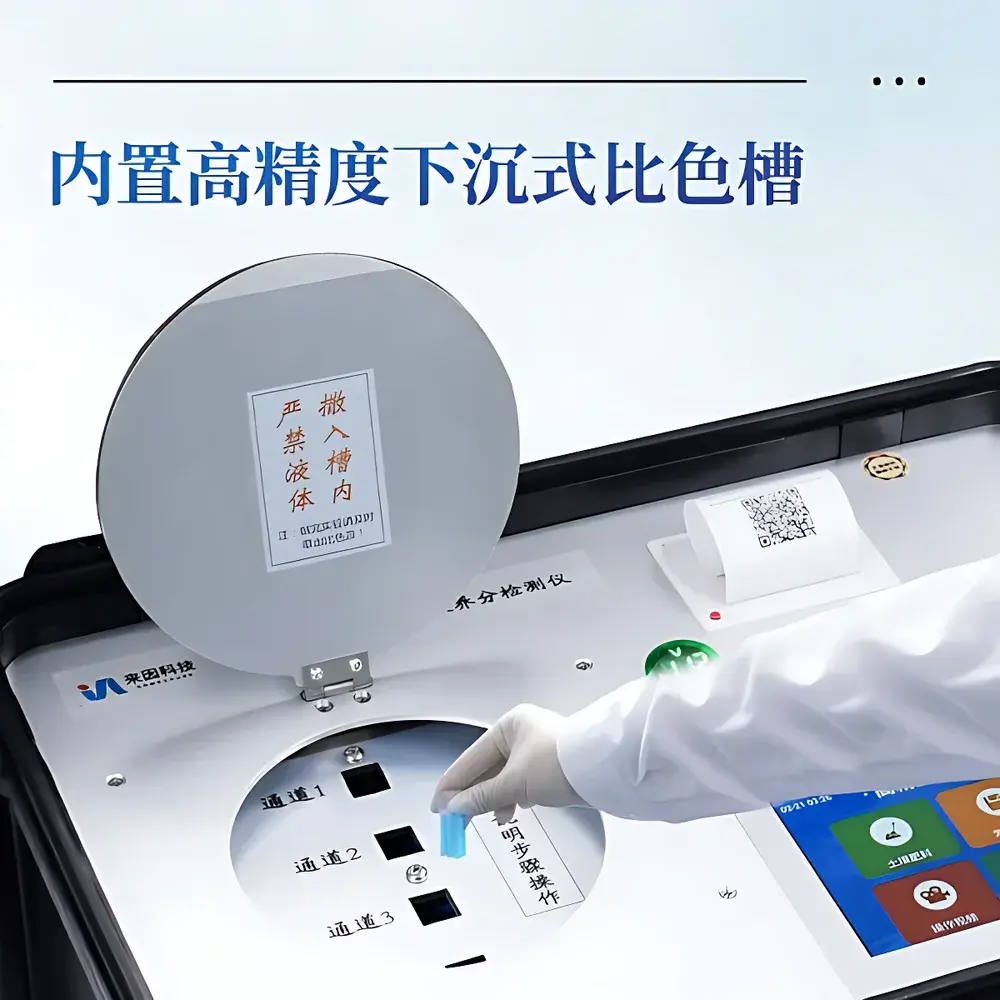
- Four-channel fixed optical path design with embedded, non-movable cuvette modules—eliminating mechanical alignment drift and ensuring long-term photometric stability.
- Dual authentication system: password + fingerprint login, supporting multi-user accounts with role-based access control for data integrity and audit readiness.
- 7.0-inch high-resolution LCD (1024 × 600) with adjustable backlight, optimized for daylight visibility during outdoor operation.
- Integrated GPS module providing real-time geotagging of every measurement—enabling GIS-compatible spatial data layering and contamination hotspot identification.
- Onboard Android 5.1 OS powered by quad-core CPU (≥1.8 GHz) and 16 GB internal storage—supporting embedded step-by-step procedural guidance, video-assisted sample preparation, and automatic calibration routines.
- Four independent narrow-band LED light sources (red: 680 ± 2 nm; blue: 420 ± 2 nm; green: 510 ± 2 nm; orange: 590 ± 4 nm), each rated for ≥100,000 hours of operational life and ±0.5% wavelength stability.
- IP65-rated enclosure with shock-resistant PVC engineering plastic carrying case—designed for transport across rough terrain and sustained field use.
- Internal 4800 mAh Li-ion battery enabling up to 10 hours of continuous operation; DC/AC dual-power capability with voltage monitoring and auto-save functionality upon power interruption.
- Thermal printer integrated for immediate hardcopy output—including test item, channel ID, absorbance value, calculated concentration (based on preloaded calibration curves), timestamp, GPS coordinates, and QR-coded traceability.
Sample Compatibility & Compliance
The IN-ZS300 supports standardized aqueous extracts prepared from air-dried, sieved (<2 mm) soil samples following established digestion protocols (e.g., HNO₃–HCl leaching per ISO 11466). It is validated for use with common agricultural inputs (fertilizers, composts), food commodities (leafy vegetables, fruits, grains), and processed food matrices—provided homogenization and extraction steps are performed according to onboard SOPs. While not certified under ISO/IEC 17025, the instrument’s repeatability (≤0.03% RSD, K₂Cr₂O₇ reference), linearity (≤0.1% error, CuSO₄ standard), and photometric stability (drift <0.3% over 60 min) meet technical criteria outlined in ISO 11047 Annex B for field-screening devices. Data security architecture aligns with GLP principles: all measurements include immutable timestamps, user IDs, location metadata, and version-controlled calibration logs—facilitating retrospective audit trails.
Software & Data Management
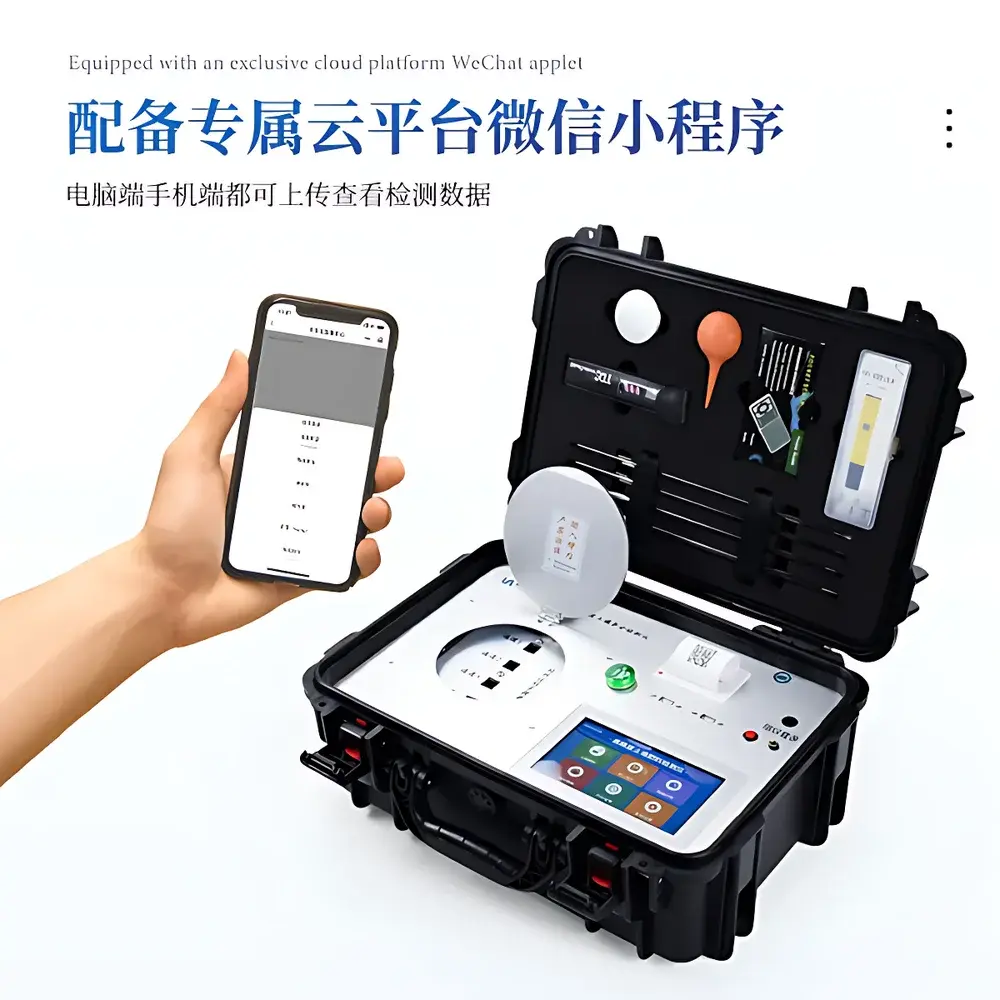
Instrument firmware includes native cloud synchronization via Wi-Fi, uploading encrypted datasets—including raw absorbance, derived concentrations, GPS coordinates, operator ID, and test method version—to a dedicated enterprise cloud platform. Each client receives a private subdomain and role-managed dashboard supporting multi-user collaboration, temporal trend visualization, and automated report generation (CSV/XLSX export). The platform integrates with external GIS layers and supports API-based interoperability with national soil monitoring databases (e.g., China’s National Soil Pollution Survey Platform). A companion WeChat Mini Program enables remote access to historical records, alert notifications, and cross-device data reconciliation. All software components—including the Android application—are covered under registered computer software copyright (Certificate No.: 2023SRXXXXXX), ensuring long-term maintenance and version consistency.
Applications
- Pre-survey contamination mapping: Rapid grid-based scanning of industrial brownfields, mining-affected zones, or peri-urban farmland to prioritize high-risk sampling locations for confirmatory lab analysis.
- Agricultural land risk classification: Supporting implementation of China’s “Soil Pollution Prevention and Control Action Plan” by enabling dynamic zoning of cultivated land into safe utilization, risk管控 (risk management), and strict control categories.
- Emergency response deployment: Providing first-response teams with actionable data within 60 minutes for Pb/As/Cd/Cr/Hg screening during spill incidents, illegal dumping events, or post-flood assessments.
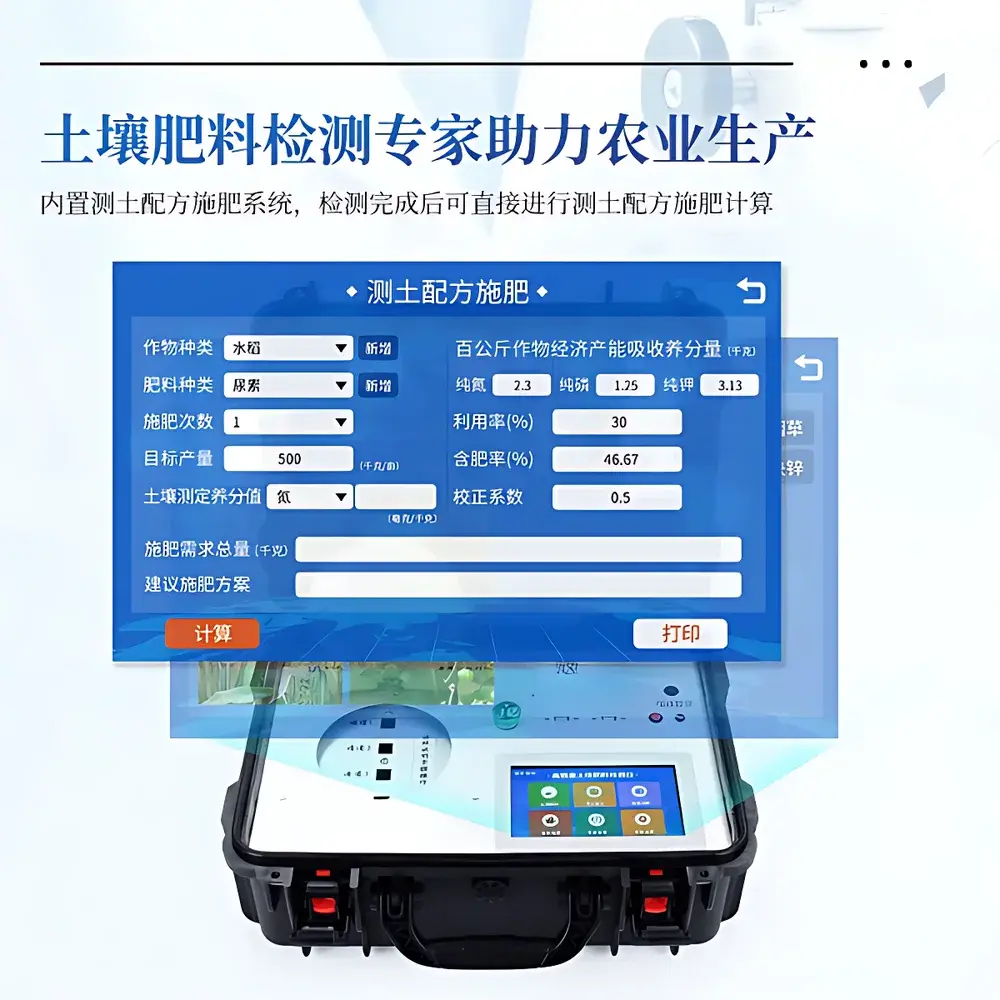
- Farm-level nutrient–contaminant co-monitoring: Simultaneous assessment of essential micronutrients (Fe, Zn, Cu, Mn) and toxic metals in soils and fertilizers—informing balanced fertilization strategies that avoid inadvertent heavy metal accumulation.
- Educational and extension use: Field training modules embedded in the UI reduce dependency on expert operators—making quantitative soil assessment accessible to extension agents, cooperatives, and certified agro-advisors.
FAQ
What detection principle does the IN-ZS300 employ?
It uses validated colorimetric chemical reactions coupled with photometric absorbance measurement at four discrete wavelengths—optimized for sensitivity to redox-active and complex-forming heavy metals.
Is the instrument suitable for regulatory reporting?
No. It is designed for rapid field screening and risk prioritization—not for definitive compliance testing under EPA, ISO, or national regulatory frameworks requiring accredited laboratory analysis.
How is calibration maintained during extended field use?
The system performs automatic zero-point and gain calibration before each test sequence using built-in reference standards; no manual recalibration or warm-up period is required.
Can data be exported in machine-readable formats for integration with LIMS?
Yes. All measurement records are exportable as timestamped CSV files via USB or cloud API, including geospatial metadata and instrument configuration logs.
What is the expected service life of the optical components?
LED light sources are rated for ≥100,000 hours; solid-state cuvettes exhibit no mechanical wear—ensuring photometric consistency over ≥5 years of routine use under IP65 conditions.







