
COMECAUSE ZSS Automated Plant Water Potential Meter
| Brand | COMECAUSE |
|---|---|
| Origin | Shandong, China |
| Manufacturer Type | Direct Manufacturer |
| Detection Range | 0–4.99 MPa (0–49.9 bar) |
| Accuracy | ±0.01 MPa |
| Display | 4.3″ Color LCD Touchscreen |
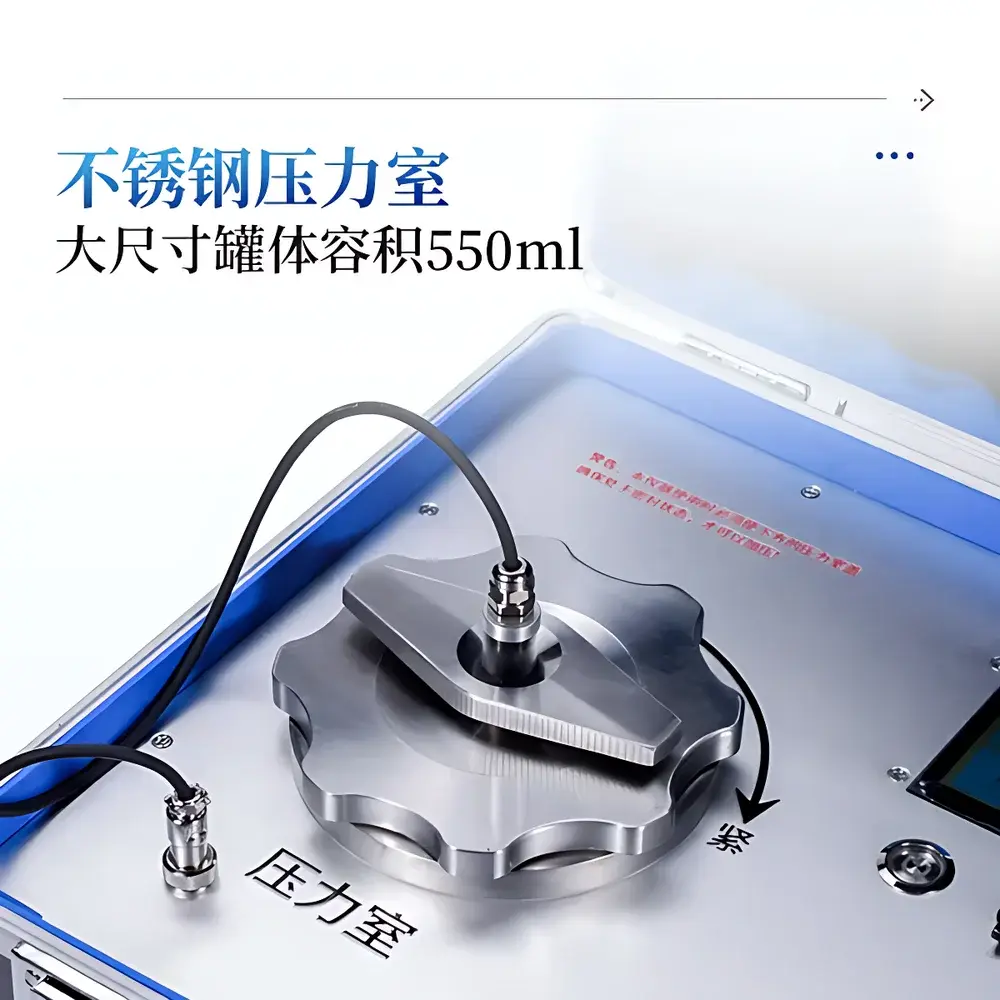
| Pressure Chamber Volume | 4 L, Rated Pressure: 12 MPa |
| Data Storage | Up to 9,999 records |
| Power Supply | Rechargeable Battery (24 h @ max brightness) |
| Dimensions (Instrument Box) | 520 × 330 × 206 mm |
| Dimensions (Pressure Chamber Box) | 530 × 420 × 206 mm |
| Net Weight | ~12 kg per box |
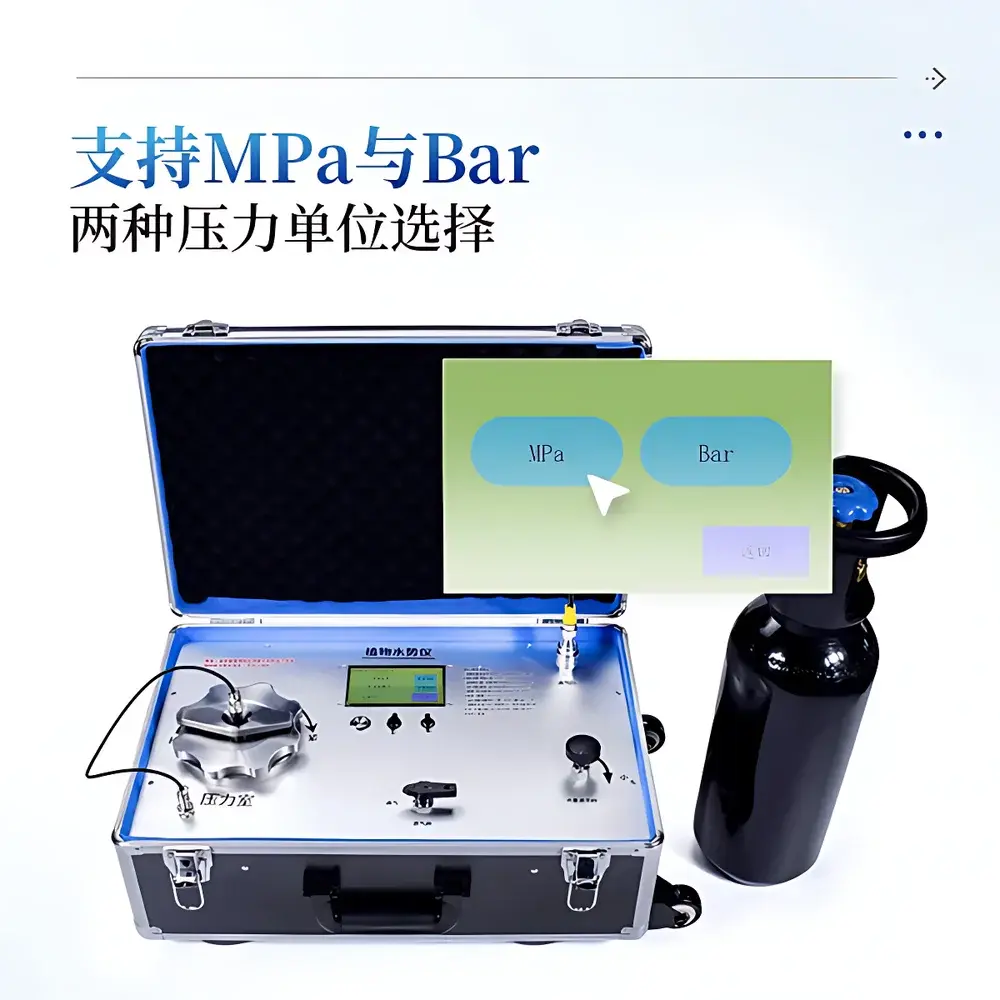
| Units | MPa / bar selectable |
| Compliance | Designed for GLP-aligned field and lab use |
Overview
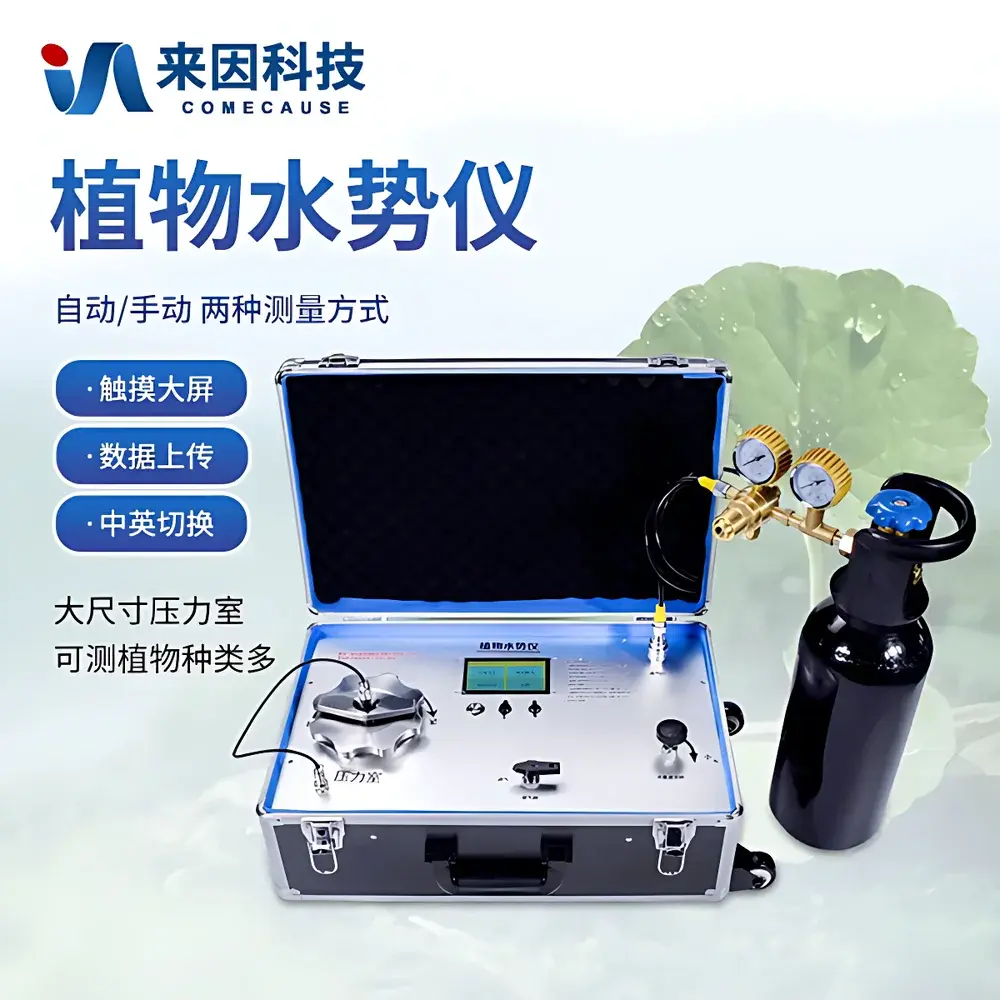
The COMECAUSE ZSS Automated Plant Water Potential Meter is a precision instrument engineered for the direct, rapid, and repeatable measurement of plant water potential (Ψplant) using the pressure chamber (Scholander bomb) principle. It operates on the thermodynamic definition of water potential as the energy status of water relative to pure, free water at atmospheric pressure and ambient temperature—expressed in megapascals (MPa). This instrument quantifies the tension (negative pressure) within the xylem sap column generated by transpirational pull across the soil–plant–atmosphere continuum (SPAC). When a leaf or stem segment is excised and placed inside the pressurized chamber, nitrogen gas is incrementally applied until xylem sap reappears at the cut surface—a visual endpoint detected by an integrated optical moisture sensor. The corresponding chamber pressure equals the magnitude of the original xylem tension, i.e., the plant’s water potential prior to excision. While inherently destructive per measurement, the ZSS system delivers laboratory-grade accuracy under field conditions, with full traceability, digital logging, and compliance-ready data handling.
Key Features
- Automated endpoint detection via high-sensitivity optical droplet sensor, eliminating subjective visual interpretation and improving inter-operator reproducibility.
- Dual-mode operation: fully automated pressure ramping with adjustable sensor sensitivity, or manual stepwise pressurization with real-time pressure feedback.
- 4.3-inch capacitive touchscreen with intuitive GUI supporting English and Chinese language switching—optimized for gloved operation in outdoor environments.
- Calibration traceable to NIST-traceable pressure standards; factory calibration certificate provided with each unit.
- Battery-powered architecture enables continuous operation for up to 24 hours at full display brightness; LED status indicators provide real-time charging feedback.
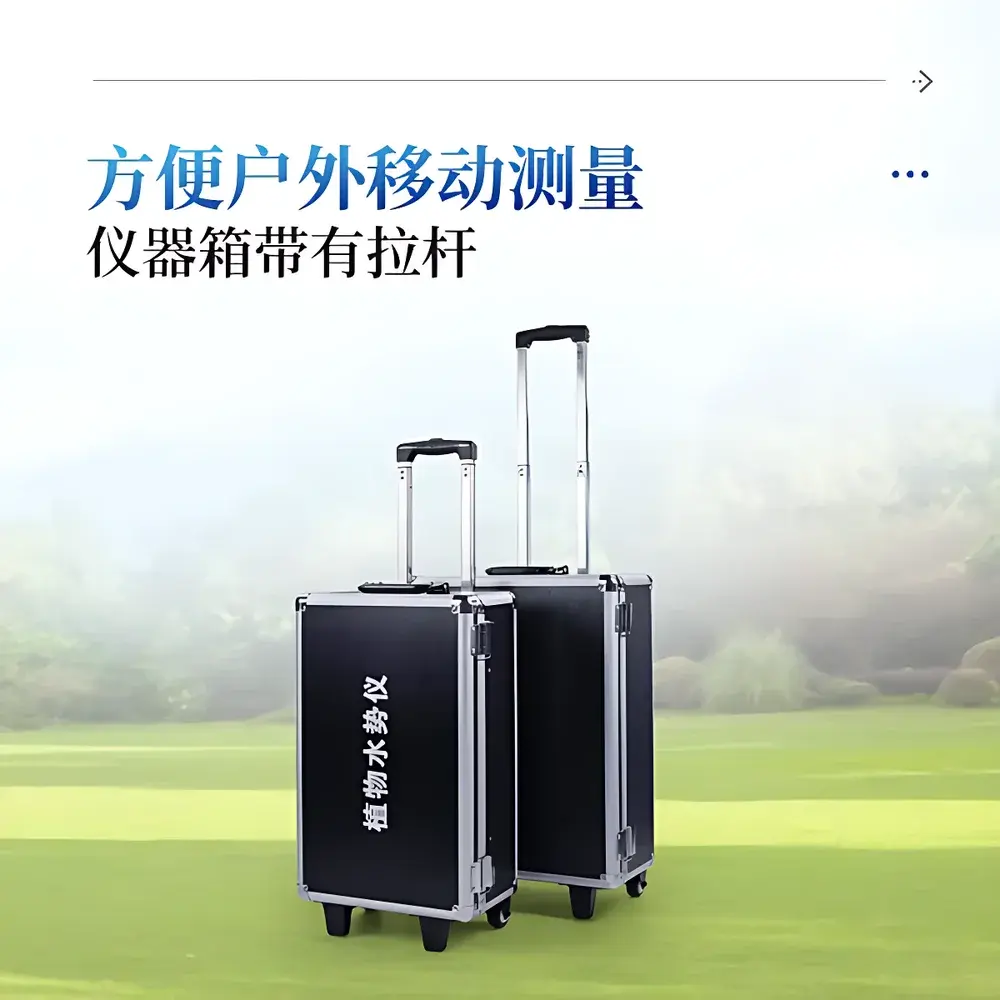
- Robust dual-box design: main control unit (520 × 330 × 206 mm) and reinforced 4-L pressure chamber (rated to 12 MPa), both housed in impact-resistant, weather-sealed enclosures.
- On-device clock, battery voltage monitoring, and embedded operational instructions ensure consistent protocol adherence across user skill levels.
Sample Compatibility & Compliance
The ZSS meter accommodates a broad range of plant tissues—including leaves, petioles, stems, and small branches—from herbaceous crops (e.g., maize, wheat, tomato), woody perennials (e.g., grapevine, almond, poplar), and native or ornamental species. Sample diameter constraints are governed by chamber port geometry (standard 25-mm inlet), with optional adapters available for tapered or irregular specimens. All measurements conform to ASTM D5237-22 (Standard Test Method for Determination of Plant Water Potential Using the Pressure Chamber Technique) and align with ISO 10931:2021 (Soil quality — Determination of plant-available water — Pressure plate method, where applicable to comparative validation). Data output meets minimum requirements for GLP documentation: timestamps, operator ID fields, environmental notes (optional), and pressure-stabilization duration are embedded in each record. USB-exported CSV/Excel files retain full metadata, enabling integration into LIMS or FDA 21 CFR Part 11–compliant platforms when paired with validated software.
Software & Data Management
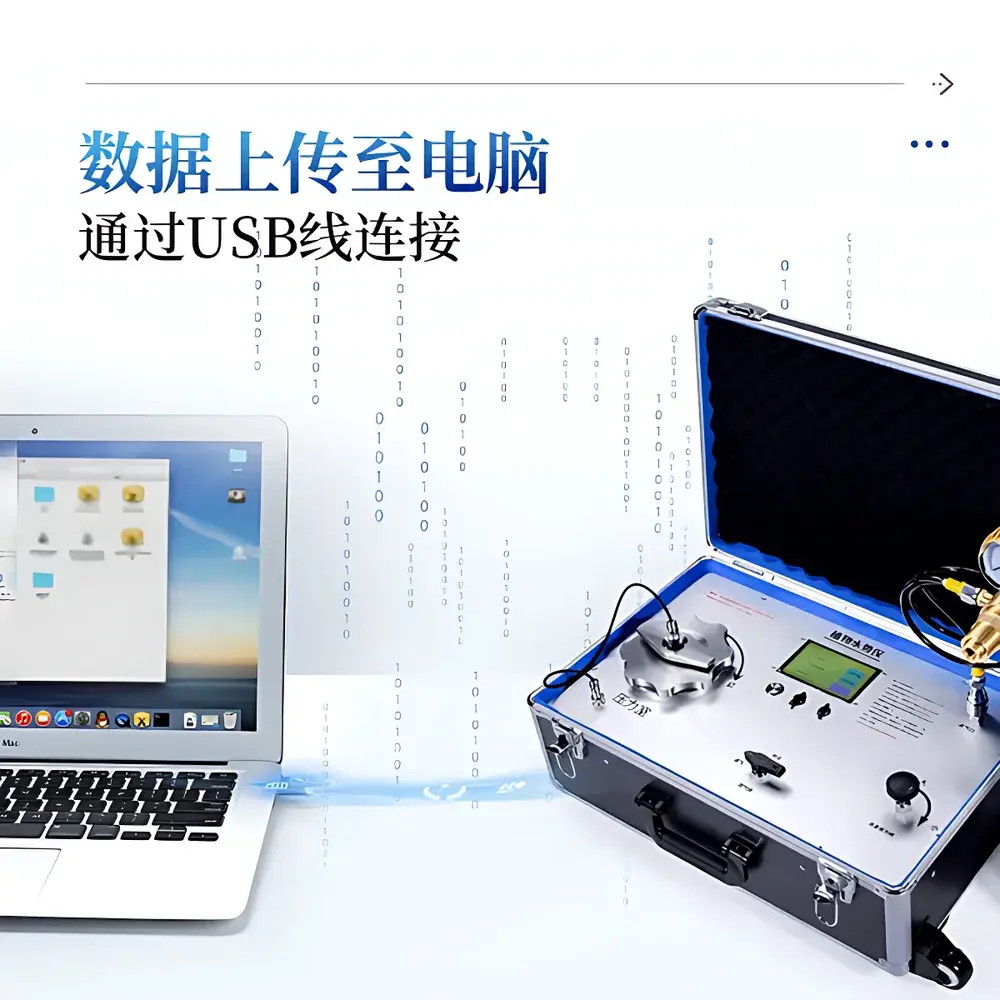
Data acquisition and post-processing are supported through COMECAUSE’s proprietary PC application (Windows/macOS compatible), which auto-detects the ZSS via USB virtual COM port. The software performs automatic synchronization of device clock, batch import/export of measurement logs, and generation of time-series plots (e.g., diurnal Ψplant trends), statistical summaries (mean, SD, min/max), and customizable reporting templates. Raw pressure curves—including ramp rate, stabilization time, and endpoint confidence index—are stored alongside final values. Export formats include .xlsx (for spreadsheet analysis), .csv (for R/Python ingestion), and PDF (for audit-ready reports). Firmware updates are delivered via signed binary packages with SHA-256 verification to ensure integrity and traceability.
Applications
- Agronomic irrigation scheduling: Enables physiological trigger-based irrigation—initiating water delivery when midday Ψplant falls below species-specific thresholds (e.g., −1.2 MPa for mature almond), reducing water use by 15–30% without yield penalty.
- Drought phenotyping: Supports high-throughput screening of breeding populations under controlled stress, generating quantitative water potential recovery kinetics (e.g., t½ for post-stress Ψplant rebound) as selection criteria.
- Ecophysiological research: Facilitates comparative studies of hydraulic architecture across taxa, including vulnerability curve construction (percentage loss of conductivity vs. Ψplant) when coupled with centrifuge or bench-dehydration protocols.
- Forestry and urban horticulture: Monitors long-term water status of mature trees to inform watering interventions, assess drought mortality risk, and evaluate root-zone remediation efficacy.
- Regulatory and certification programs: Provides defensible, instrument-derived evidence for sustainable water management claims in USDA Organic, Rainforest Alliance, or LEED-certified landscape projects.
FAQ
What is the fundamental measurement principle of the ZSS meter?
It applies the Scholander pressure chamber method: excised tissue is pressurized until xylem sap emerges at the cut surface; the required pressure equals the absolute value of pre-excision xylem water potential.
Can the ZSS be used on intact, non-excised plants?
No—this instrument requires tissue excision to establish a sealed interface with the pressure chamber; it does not support in situ, non-destructive sensing.
How often should the system be calibrated?
Annual recalibration against a certified deadweight tester or NIST-traceable pressure standard is recommended; field verification using reference samples (e.g., saturated salt solutions) should be performed before each intensive sampling campaign.
Is the pressure chamber compatible with inert gases other than nitrogen?
Yes—compressed air or argon may be substituted, though nitrogen is preferred to minimize oxidation of sensitive sap constituents during extended pressurization.
Does the device meet regulatory requirements for Good Laboratory Practice (GLP)?
The hardware and firmware support GLP-aligned workflows—including electronic signatures, audit trails, and data immutability—but formal GLP compliance depends on site-specific SOPs, personnel training, and third-party validation per OECD Principles of GLP.




