
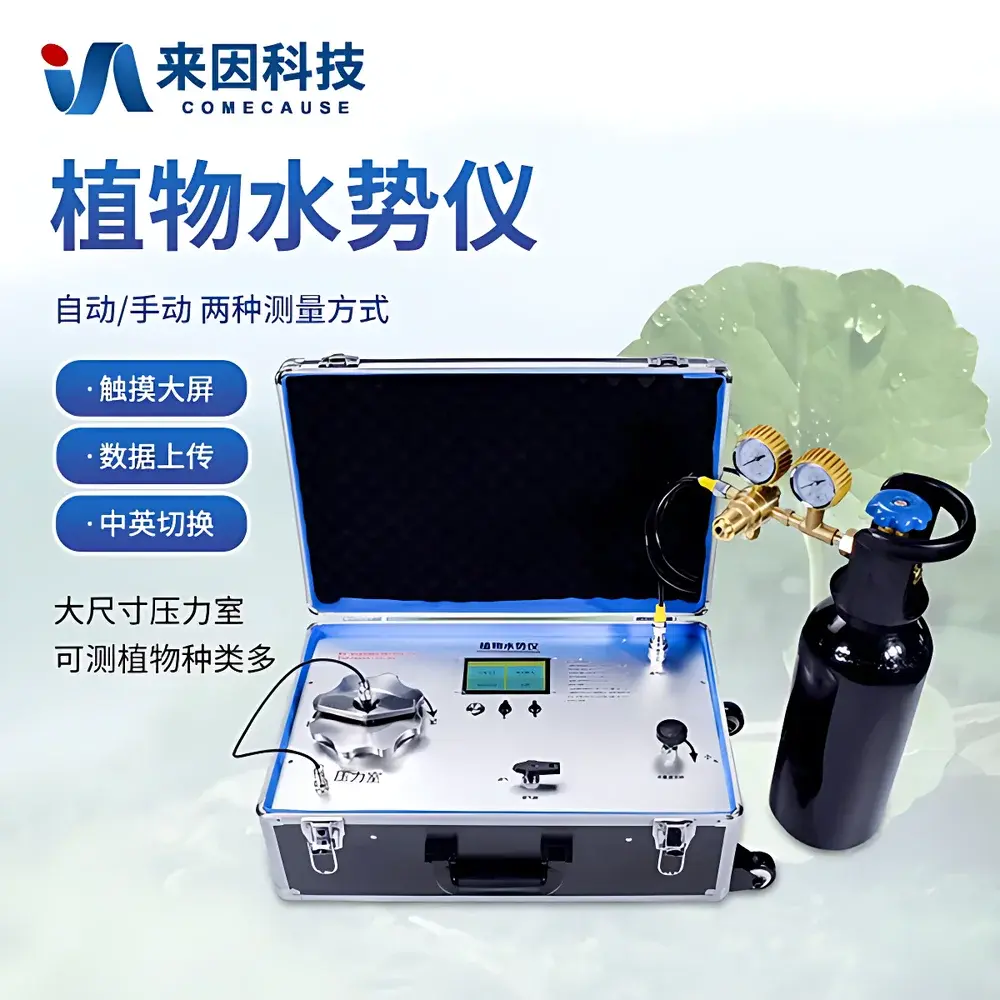

COMECAUSE IN-ZSS Digital Plant Water Potential Analyzer
| Brand | COMECAUSE |
|---|---|
| Origin | Shandong, China |
| Manufacturer Type | Direct Manufacturer |
| Country of Origin | China |
| Model | IN-ZSS |
| Pressure Range | 0–4.99 MPa (0–49.9 bar) |
| Display | 4.3-inch color LCD touchscreen |
| Resolution | 0.01 MPa |
| Battery Life | Up to 24 h at full brightness |
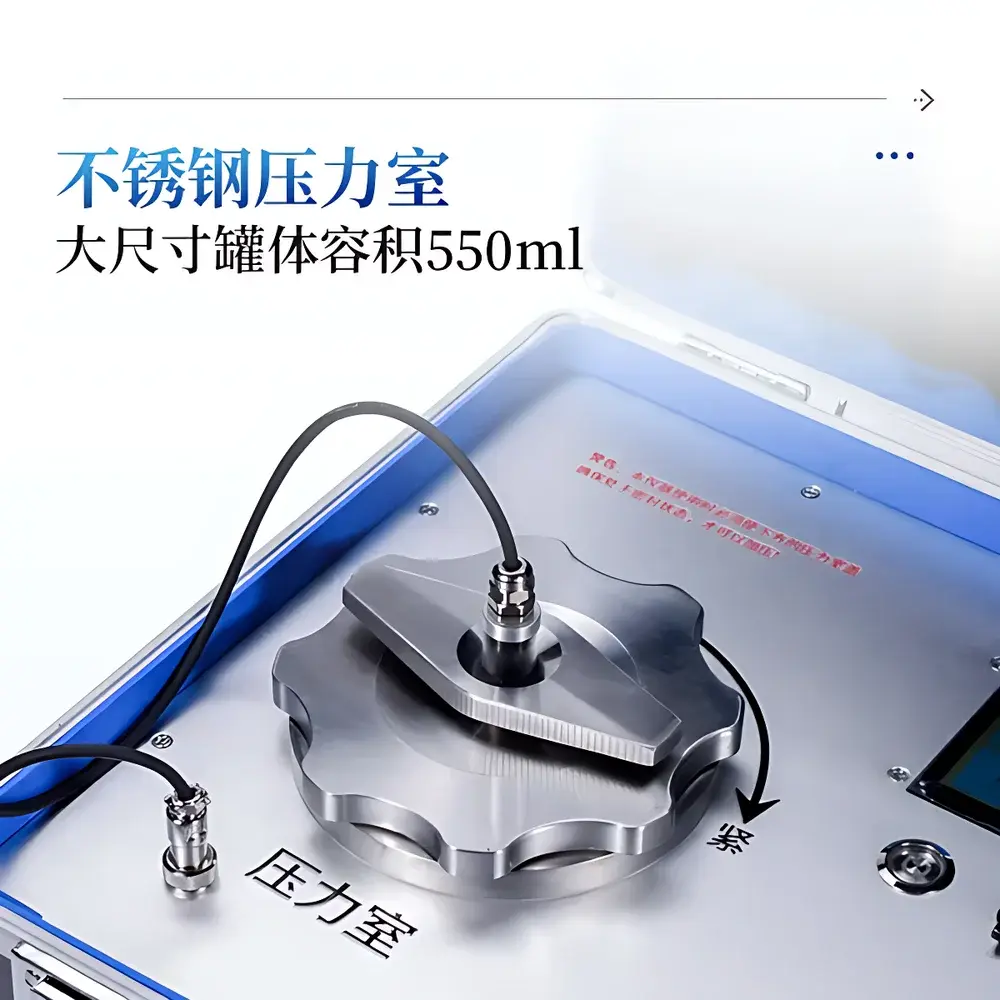
| Pressure Chamber Volume | 4 L |
| Max Chamber Pressure Rating | 12 MPa |
| Data Storage Capacity | 9,999 records |
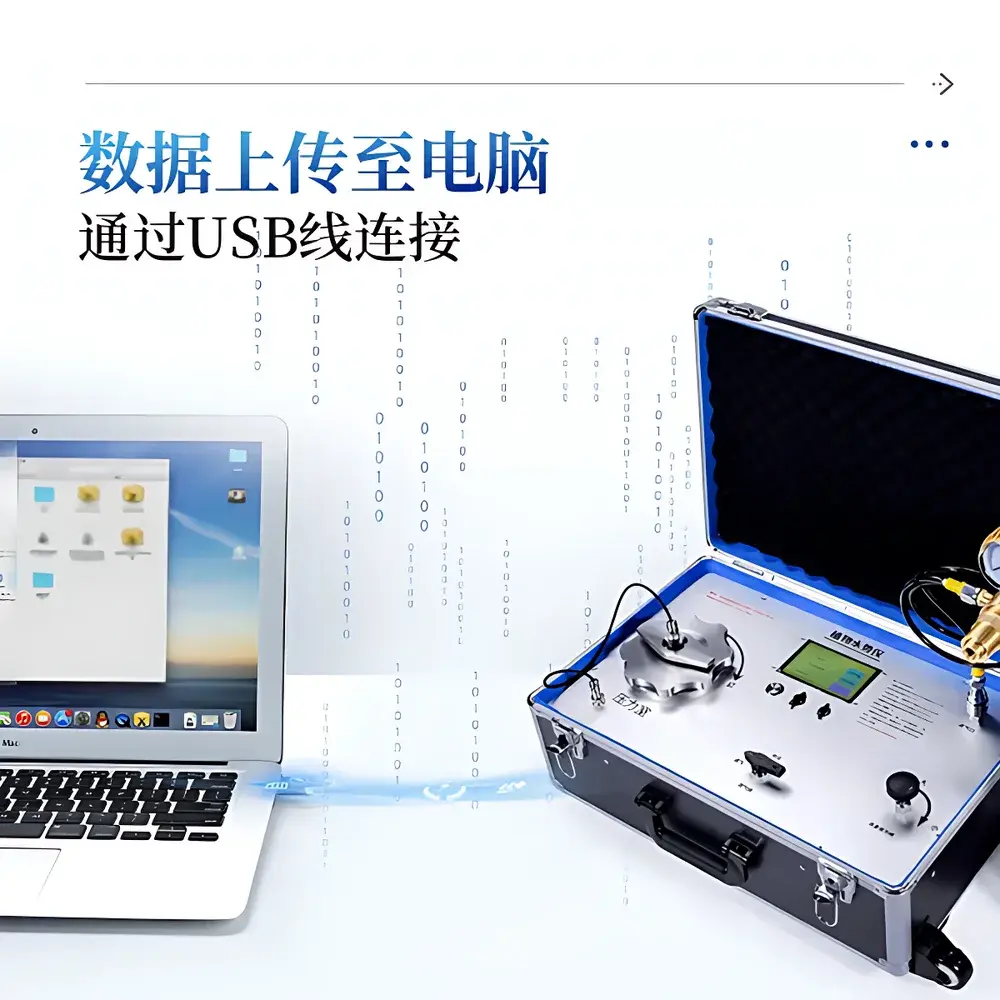
| Interface | USB for data export to Excel via proprietary PC software |
| Compliance | Designed for GLP-aligned field and lab workflows |
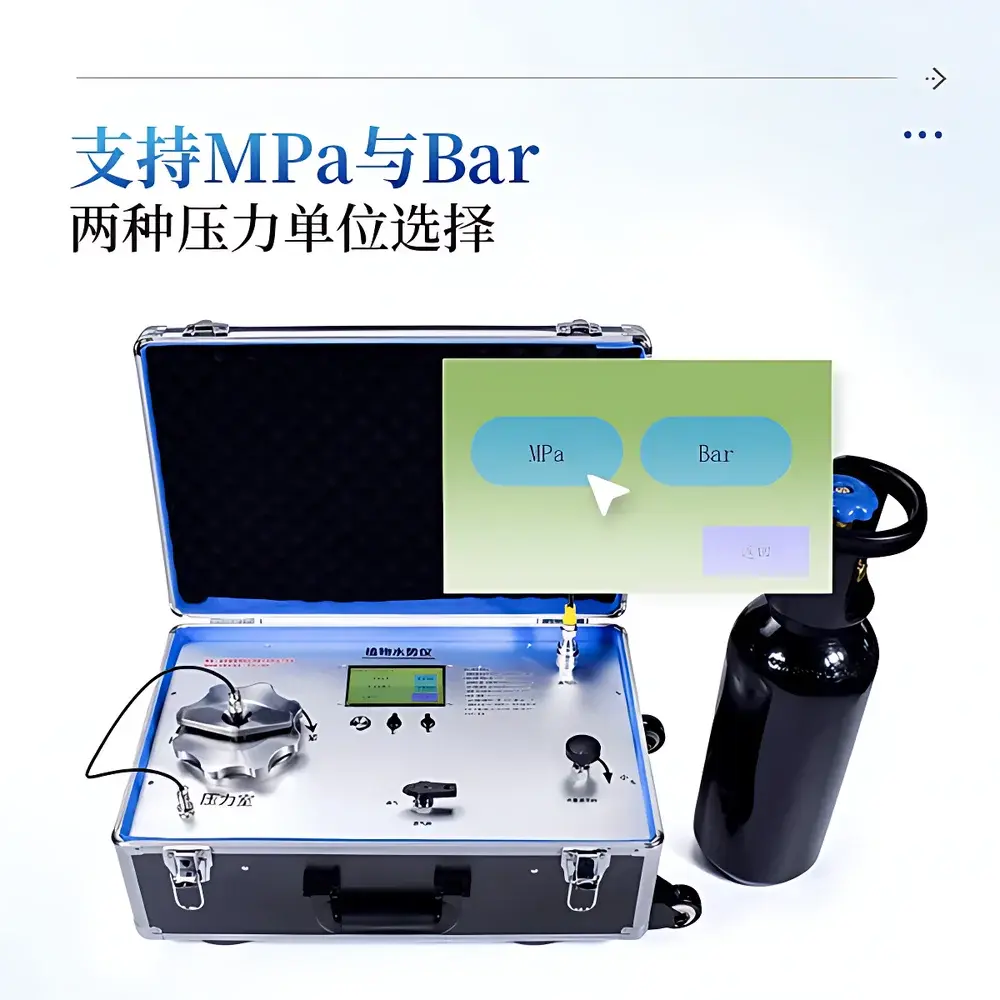
| Units | MPa or bar selectable |
Overview
The COMECAUSE IN-ZSS Digital Plant Water Potential Analyzer is a precision pressure chamber-based instrument engineered for direct, non-destructive measurement of plant water potential (Ψleaf or Ψstem) in situ and under controlled conditions. It operates on the fundamental principle of the pressure bomb method—grounded in thermodynamic equilibrium and the physical behavior of water under tension in xylem vessels. When a detached leaf or stem segment is placed inside the sealed chamber and pressurized with dry nitrogen gas, the external pressure counteracts the negative tension (suction) within the xylem. At the precise moment when the meniscus of xylem sap reappears at the cut surface—detected optically by an integrated moisture-sensitive probe—the applied pressure equals the absolute magnitude of the plant’s pre-cut water potential. This value, reported in MPa, quantifies the free energy status of water relative to pure water at atmospheric pressure and identical temperature—a critical biophysical parameter governing water movement across membranes, stomatal regulation, hydraulic conductivity, and whole-plant drought response.
Key Features
- 4.3-inch high-resolution color LCD touchscreen with intuitive bilingual (English/Chinese) menu navigation—designed for rapid operation in field, greenhouse, or laboratory settings.
- Dual-mode operation: fully automated pressure ramping with adjustable sensor sensitivity for reliable meniscus detection, or manual pressure control for fine-tuned experimental protocols.
- Unit flexibility: real-time switching between MPa and bar display formats to align with regional reporting conventions and peer-reviewed literature standards.
- Audible confirmation: sustained beep upon successful data capture in auto mode or manual record entry—ensuring unambiguous feedback during high-throughput sampling.
- Robust onboard memory: capacity for 9,999 timestamped measurements, each including date, time, pressure reading, unit selection, and operator ID (if configured).
- USB data transfer: seamless export to Windows-based PCs using dedicated software that auto-detects the COM port and generates standardized Excel (.xlsx) files compliant with FAIR data principles (Findable, Accessible, Interoperable, Reusable).
- Integrated system diagnostics: real-time battery voltage indicator, internal clock with calendar synchronization, and LED status feedback during charging cycles.
- Field-hardened mechanical design: dual-cased configuration (instrument console + pressure chamber) with IP54-rated enclosures, shock-absorbing foam lining, and ergonomic carry handles for extended outdoor deployment.
Sample Compatibility & Compliance
The IN-ZSS accommodates a broad range of plant tissues—including intact leaves, petioles, small branches (<25 mm diameter), herbaceous stems, and seedling shoots—without requiring destructive extraction or solvent treatment. Its 4 L chamber volume supports standard-sized leaf samples from dicots and monocots alike, while the 12 MPa pressure rating ensures compatibility with highly negative water potentials observed in drought-stressed woody species (e.g., Quercus, Pinus, Vitis). The instrument is designed to support Good Laboratory Practice (GLP) and Good Agricultural Practice (GAP) workflows: all measurements are timestamped, user-identifiable, and exportable with metadata required for audit trails. While not certified to ISO/IEC 17025, its operational repeatability (±0.02 MPa typical intra-day CV <3%) meets the performance expectations outlined in ASTM D7836-19 (Standard Guide for Plant Water Status Assessment) and aligns with methodologies referenced in USDA ARS drought phenotyping protocols and EU-funded H2020 plant resilience initiatives.
Software & Data Management
The included Windows-compatible desktop application provides secure, structured data handling without cloud dependency. Upon connection, the software auto-recognizes the device, reads stored records, and maps them to customizable templates—supporting batch export with optional columns for sample ID, treatment group, environmental notes, and operator signature. Exported Excel files include embedded headers compliant with MIAME and MINSEQE metadata standards, facilitating integration into LIMS environments or statistical platforms such as R, Python (pandas), or SAS. Audit log functionality tracks firmware version, calibration history (if performed), and last successful sync event—enabling traceability essential for regulatory submissions in crop registration trials or breeding program documentation under OECD GLP guidelines.
Applications
- Physiological drought phenotyping: Quantifying genotypic variation in water potential thresholds associated with stomatal closure, embolism resistance, and recovery kinetics across breeding populations.
- Irrigation scheduling: Establishing species- and growth-stage-specific irrigation triggers based on predawn (Ψpd) or midday (Ψmd) water potential benchmarks—reducing water use by 15–30% without yield penalty in vineyard, orchard, and row-crop systems.
- Ecophysiological research: Investigating water-use strategies across plant functional types (e.g., isohydric vs. anisohydric behavior), interspecific competition in mixed stands, and hydraulic vulnerability segmentation in forest canopies.
- Climate adaptation studies: Monitoring shifts in seasonal water potential dynamics under elevated CO2, warming, or altered precipitation regimes in Free-Air CO2 Enrichment (FACE) and warming chamber experiments.
- Restoration ecology: Screening native and introduced species for site-specific water potential matching in aridland reclamation projects—improving survival rates in post-mining or degraded rangeland contexts.
FAQ
What sample types are compatible with the IN-ZSS pressure chamber?
Leaves, petioles, herbaceous stems, and small woody twigs (≤25 mm diameter) from angiosperms and gymnosperms. Avoid heavily lignified or hollow-stemmed species unless validated for chamber sealing integrity.
How frequently should the system be calibrated?
No routine calibration is required; however, annual verification against a NIST-traceable dead-weight tester is recommended for ISO-compliant reporting environments.
Can the instrument operate in extreme ambient temperatures?
Yes—functional range: −10 °C to +45 °C. Battery performance degrades below 0 °C; pre-warming the unit and samples is advised for winter fieldwork.
Is the pressure chamber certified for safety compliance?
The chamber meets ASME BPVC Section VIII Div. 1 requirements for portable pressure vessels and carries CE marking per PED 2014/68/EU.
Does the software support multi-user access control?
Not natively; however, exported Excel datasets can be ingested into institutional LIMS or ELN systems with role-based permissions and electronic signature enforcement.
Related Products





